Founder Stories: John Martin, Former CEO of Gilead Sciences
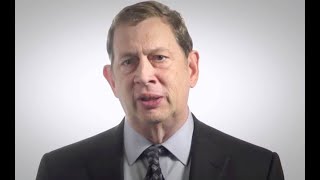
John Martin, former CEO of Gilead Sciences, studied chemistry and organic chemistry before getting an MBA to understand commercialization and teamwork. He discovered the antiviral ganciclovir at Syntex, built HIV programs at Bristol-Myers Squibb, then founded Gilead to focus on antivirals and global access to medicines.
Chapters
All right, well, good afternoon. My name is Robert Shoffner, and I am the director of MBA programs at Golden Gate University, and it's my pleasure to welcome you all to GGU Presents today. And we have a very special guest, John Charles Martin. Former CEO of Gilead Sciences, and has a very distinguished career. Before I get started, I'll just do a really quick overview of Golden Gate University. We are now in our 120th year. We started in San Francisco in 1901, have always been San Francisco-based, and the business school got started in 1908, so we're in our 113th year of existence. Golden Gate University has 17 degree programs, 23 certificate programs in graduate business education, so there's a lot of opportunities for marketing, business analytics, applied psychology, financial planning, the information technology, etc. The list goes on— leadership. So we do a— we offer a lot of things for students in terms of learning. Golden Gate has always been focused on the adult learners. It's— we, we feel that learning is a lifelong activity, and so you'll see that many of our programs feature flexibility that allows for work-life balance as well as a great learning environment. So that's a little bit about Golden Gate. Let me talk about our speaker for today. John Martin is— was the— he's the president and founder of the John Martin Foundation. As I said, he was the former CEO and Chairman of Gilead Sciences. Gilead Sciences was founded in 1987 right here in the Bay Area. John has a BS degree in chemical engineering from Purdue University, a PhD in organic chemistry from the University of Chicago, and he has an MBA degree from Golden Gate University. And he is a distinguished alumni. He's been a partner with Golden Gate, both as a student as well as really pioneering MBA program with Golden Gate University. It's now about 15 years old. And so we're gonna talk about that a little bit as we get into today. But John, welcome. Good to see you.
Thank you.
I just want to start off and ask you a few questions, uh, and, uh, really turn the floor over to you. I'm going to try to do less talking and, uh, let the, uh, our audience hear from you. One thing before I do that, uh, audience, there is a Q&A function. If you have a question you want to ask, please ask it there. We will be monitoring that, and we're going to save about 15 minutes at the end of the of talk today to answer questions. So, John, my first question for you is, your early academic studies were in the area of chemical engineering. Where did that interest come from and your desire to earn a PhD in the field of organic chemistry?
Yeah, I was probably destined. Both my parents are chemists. My father is also a PhD organic chemist. And also he spent his career in pharmaceutical industry. So I think I was programmed from an early age. In high school, my chemistry teacher said, that's great to go into chemistry, but for college, you should do chemical engineering because it's a much broader background that prepares you better for the real world. So I simply took his advice and went to— I lived in Indiana, so Purdue was at the very top of chemical engineering. It was an easy decision. To decide to attend Purdue University.
All right, Purdue has a great background in engineering overall, one of the leading schools in the country. How did you start to use your— once you've got the degrees in organic chemistry, how did you start to use your degree?
Yeah, so after Purdue, I went to University of Chicago for a PhD in organic chemistry. And again, was fortunate because I worked for a fellow that had led chemistry at a major pharmaceutical company called Squibb. It's now Bristol-Myers Squibb. He had left Squibb to start an academic program in Chicago that was— he was a professor of chemistry, biochemistry, and medicine. And I felt like certainly chemical engineering gave me a very, very broad background, but Working in his lab was just terrific for what I did for the rest of my career. And I think the thing fortunate comes in many times in my life, because when I finished a PhD, my professor's brother was head of R&D at the pharmaceutical company Syntex in Palo Alto. So he just set me to work for his brother. And it doesn't get easier than that.
Well, as you've mentioned just briefly here, you've worked for 3 organizations, uh, Stentex, Bristol-Myers Squibb, and Gilead Sciences during your career. Obviously you've done things since then, but those are 3 major organizations. And can you share with the audience what lessons did you learn during your career that enabled you to move to ever higher levels of responsibility? Because I look at— as I look at your CV, you kept on steadily moving up in the organizations that you were involved with.
Yeah, well, Syntex at the time I went was a small company. They were formed in Mexico, only moved to Palo Alto in the late '60s. They were small, very entrepreneurial. They're here in, uh, believe it or not, in late '70s, Silicon Valley already had all the entrepreneurship that you see in it today.. And being in that environment, Stanford University and various groups around that were collaborating, was just a terrific learning experience. I also had the good fortune of discovering a drug right away at Syntex. It's called ganciclovir. It's an antiviral that's used also in transplant patients to prevent opportunistic infections. And also parallel, I went right away to the Golden Gate MBA program in the evening and felt this could be— have a chemical engineering, more practical background. It just seemed obvious that an MBA could help the career. I finished that in 1984 and was immediately recruited for a substantial program to promotion at Bristol-Myers. And then at Bristol-Myers, I I was asked to build an antiviral program. We came up with two of the very important drugs for HIV, and that's, uh, those accomplishments is what led for me to go to Gilead to build a company that would just focus only on antivirals.
All right, so something caused you to say I've got this great background in chemistry, but I need to get an MBA. What sort of clicked for you to say I need to get some business background in order to fulfill my career objectives?
Yeah, it's, uh, maybe it's some nature of the practicality of chemical engineering, knowing that you can be— if you want to be esoteric in chemistry, it's better to stay in industry where it's more about publications. But having this practical education as an undergrad where you're designing things that people need immediately or working on things, products, just to make them better. Discovery in the pharmaceutical industry, you're working in a lab, you're making molecules, and then they go somewhere. But most of the time you don't know where they go. Other people handle the transition for drug development and commercialization. So I knew if I wanted to be a part of that, it'd be very advantageous to get an MBA degree.
All right. As you think about those days when you first started in the industry and pharma, where it was then and where it's gone now, what's some of the evolution that's taken place And you being one of the leaders of one of the leading— of a leading firm, how has it evolved through the years?
There's— we could talk about this all day. It's the scientific advances that happen over and over and over at a faster pace allows the industry to come up with products more and more rapidly that allow people live longer and healthier lives. And it's not just chemistry and biochemistry and biology. The revolutions in IT and data management and understanding how to design drugs by less of a trial and error mechanism has advanced the science enormously. Even, you know, I remember a friend of mine had a— we had a company in his garage when I worked at Syntex to make a reagent for sequencing DNA. Who would have known that a few years later we would be able to sequence entire genomes so rapidly? The technology back then was just developing. It was very crude. And today it's very straightforward to come up with DNA sequences, complete genome sequences of people, animals, and it greatly accelerates, uh, drug discovery and development.
You know, one of the things that we do in our MBA education at Golden Gate University is really teach our graduates how to work effectively in teamwork, in teams, and why teamwork is so effective. And as you just were talking, it sounds like, you know, the development of a new drug really involves not only the science of developing that drug, but you've got to have— you've got the analytics part of the team, you've got information technology, you've got all these sort of different things that have to come to bear, uh, in order to be efficient and to develop a new drug.
Yeah, yeah, you're absolutely right. So one of the things I did all these years at Gilead, uh, is have— once we had a commercial organization, we built a commercial organization very early because you really don't understand R&D and what you should do unless you have a presence in commercial markets. And once we had that commercial organization, we'd prepare spreadsheets that would send scientists and management out in the field with sales reps to better understand what the market needs. And that is a specific subject that was drilled into my head at go-to-gate university.
You remember which course that was?
Several of them. Oh, and I should say, I, my major, uh, was MBA in marketing, and I figured, uh, I knew all technical stuff. I wouldn't have trouble statistics or analytics or any of that, but marketing seemed like a black box to me and something I'd want to learn.
Well, one thing for sure, whatever industry that you're in, at some point in time You have to market what you have. You have to figure out how you're going to sell it in order to turn it into, you know, a commercial success. So it's good to have that knowledge. Anything stand out to you in your mind from your experience at Golden Gate as you earned your MBA degree?
Well, very enjoyable. The adult education, you appreciate because you're learning from people that have real jobs. Not just the faculty, but also the other students. So there's an extra level of energy and knowledge and sophistication when you work together as a team on a project, for instance. It, uh, one of the more difficult things, because as laboratory science, how much you accomplish day in and day out depends mostly on the number of hours you spend in the lab. So it, uh, it's a challenge to balance the time to go to night school several days a week. I often found myself, I'd drive up and, uh, park on Mission right when the parking was free parking, about an hour and a half out of the class, buy a burrito around the corner, come back to the car and get my typewriter out, final touches on some class assignment. But it was very, very fun. You know, I didn't really know that I'd learned so much by taking on the challenge.
So let me ask you, what was your secret? You're a busy executive. You've got a lot going on at Gilead, and you're pursuing a graduate education. How'd you balance your work and life?
Well, so that was while I was at Syntex. So as a laboratory scientist, when you first start, you work by yourself. You don't have anyone working for you. And then I started to have a larger group. But the, uh, it's just really hard work. That's the secret. You have to give up some things to go to night school, that's for sure.
You know, John, I'm going to have you come and do my orientations for future MBA students because it's one of the things I say, but it might mean more coming from you because I say you got to give up something in order to be able to do the work. It is a sacrifice and it is a time commitment.
Yeah, but you know, Robert, that's actually— I hadn't thought of it this way, but that's actually a certain aspect of the training because Every day when we go to work, you can't do everything you want to do. And it's thinking about the trade-offs more broadly of what could have an impact for the organization or for people using your products is part of the key to success, right?
John, as you became president of Gilead, you're shaping the company and charting out new directions. Et cetera, but something stood out in your mind about learning for your employees and about their education. And what caused you to suggest the creation of the Gilead MBA program at Golden Gate?
Yeah, so I probably, I guess I've worked in industry at that point for at least 2 decades. And one of the key things you do as a manager with, people report to you is talk about development goals every year. What do you need to do your job better? If you want to do it, what do you, what do you want to accomplish in your career? What do you need to do to accomplish that? And, uh, of course I could use myself as an example. Getting an MBA degree gives you a lot of additional skills, uh, gives you, uh, less quantitative skills to, you know, however you want it, softer skills. And it puts you in a position that you're identified. So if you get an MBA degree, people within your organization will say, wow, that guy's making the extra effort to qualify himself for new things. So year after year, I'd find very few people would undertake that night school component of it. And so I worked with people at Golden Gate University, put together a program that would make it much easier and entice more students or more Gilead employees to sign up and get that extra knowledge.
And you did it in such a way that the university was able to come to the students on campus.
Yeah.
It had a unique format. Feature of your alternating classes every other week and, and able to get through the program and fit in also your work that you have to do. Because I think one of the things you emphasized to the students was you've got the educational opportunity, but work comes first. So you've got to keep on top of your job, but also I'm going to give you the opportunity to do to do the study.
Yeah, yep. And, you know, there's just countless success stories of people that went through the program that are strong advocates for why the younger employees at the company should continue to avail themselves of the opportunity.
Yeah, um, so we're gonna, you know, we're, we're now in our 14th cohort of students, so it's, it's, it's, uh As I say, we've, we've done this for a number of years. There's been a number of outstanding graduates from the program, and I know students have seen value from it. And we just appreciate your vision and, and saying, let's get a program established, because I've had the honor to be a CEO of an organization, Citibank, on the West Coast. And so in that role, you know, always talk about developing employees and annual development plans and whatever, but you took that extra step to actually put something in place so people could really execute against it, if you will, in a measurable manner. And was that— that's something you— it sounds very much intentionally that you did.
Yeah, well, you know, I can't say that I was the biggest part of it because I went to your colleagues at GGU and we brainstormed about it. And it was a very forefront thinking thing because each week one class would be in person, one being virtual, and doing that 15 years ago was kind of unheard of. Today it seems so easy, but it Even, even it took a coronavirus pandemic to get people learn how to do virtual really good. And from the beginning, I would check with some of the employees taking the program, say, does the virtual thing work? Oh, that's done really well. It's great. You know, that, that was a key feature. Another very interesting thing, you know, being from the company, I thought, well, just the employees won't have to pay for this. They're putting in a lot of effort, company will benefit. The GGU staff at the time says, well, there should be like a 10% payment, not that material, but just one of those motivation things that clicks you to getting value from the efforts that you, you know, you're putting some of your own value into it. I don't know if it's still that way, but I wouldn't have thought of it that way. But when you hear it, it sounds like a really good idea.
Well, there still is that component to the program that certainly the participants are putting in some of their own capital, if you will, their skin in the game. And I think that's a valuable component to a program. It makes you be this, that much more diligent about it. Rather than you're getting something for free. You were a participant in the program, and now that they— if you were giving advice to new MBA students, what advice would you give them? What advice would you give them about pursuing higher education after they finished an MBA program? Or, or to, to pursue an MBA program?
Oh yeah, well, that's, that's an easy one.
It's, uh, it—
and, you know, it's a question if someone really has the interest. If someone has the interest, you give advice about what the alternatives are and how they might think about it. And just getting an MBA, there's so many different emphases, how to think about what you want to do. So it's, uh, almost a different discussion with anyone you talk to.
All right, and then I'm going to take the second part of what you talked about. After you've got the degree, how do you leverage it?
Now, well, first off, make sure you do a good job at work while you're going to night school so that you— that's the one thing that I always talk to people about is you can't not— you can't let off on work while you're going to night school because people think, wow, he's not motivated to do his job. Once you get the MBA, it's— I think as people go through an MBA program, they get a good idea of what types of things they might want to do going forward. They're qualified for more leadership roles within the company. It could be in a situation like I was in that I don't know, I would never know to this day if I was recruited for my scientific reputation, which was strong, or the fact that I had the additional MBA. But for whatever reasons, Bristol-Myers was quite confident in trying to recruit me, and they were very diligent about it to get me to come at the time to Syracuse, New York.
You know, one of the things, I'm going to put you on the spot, uh, Think about this past year and what's something you learned in this past year that you didn't know before?
Well, I'm sure everyone has this experience that virtual meetings work better than they had before and better than you expected, but that's simply because we all had to do it. So it's, you know, it was kind of a given that you'd work it out. People say that A lot of people tell me they haven't missed anything, but that can't hardly be true because when you're interacting with people in person and in a more dynamic environment, you find forks in the road that we may be missing now. And, you know, in my own day-to-day activities over last year, I can see some forks in the road I missed that, you know, I may not have missed. When California was shut down middle of March last year, I, on a Friday, the conference was canceled in Boston. I was leaving for on Friday, so I just didn't go to the airport. And I had trips planned for each of the next 10 weeks, several of them international, and I think all important. So I, I think it's really important to get this pandemic behind us and get back to our normal work going to scientific conferences around the world, meeting scientists, meeting physicians. A lot of the work I've done is with government officials where it works a lot better to educate government officials if you can do it in person.
And the reason I asked you that question is because there's this concept that's that's now about education is that education and learning is a lifelong experience. And I think there was a time perhaps in the recent past where, boy, I got that degree, I got this degree, I got that degree, I'm done. And I'll just put my head down, really work on my career, and that's it. But this last year has taught— if it's not taught us anything is, The world's accelerating at an ever faster pace, and you have to do lifelong learning to keep up.
Yeah, Robert, that reminds me, when I came to Gilead, it was all kinds of young people that you didn't have the older generation that, that you can tell who has done that lifelong learning because of where they are in the organization.
So I—
the head of R&D was a fellow named Norbert Bischoffberger. I still work Fantastic. And I tell him, you have these BS, you have PhD scientists. When they come to work for Gilead, they're all thinking, I never have to take a test again. And the job of us as managers is to help people know that you have to keep learning, and you still want to get an A on the test. It just fits your point so importantly. All right.
In the last year, I'm sure you've been involved in some, some, some projects regarding COVID-19. And just in general, what do you think about the whole situation with the pandemic in the last year? And what do you think's next for distribution of vaccines and the development of future vaccines for similar diseases.
Yeah, it's, uh, Robert, you're right. I've been heavily involved in that. I was on a conference call at 7 AM this morning talking about COVID and influenza and products that could accelerate protection. We may get this later, but Gilead brought Tamiflu for influenza to the market 20 years ago. Phenomenally important product and it's kept in reservoir for also pandemic influenza. In the past year, what we've all learned is when you have a new virus come out, not even the top experts know exactly what to say. You learn about the virus in real time and the disease in real time. So for instance, uh, the people I worked with in the spring, I would say, whatever you do, don't get sick now because no doctor knows how to treat this disease appropriately. And we've seen over the course of 2020 that medical practice has evolved quite a bit on how to treat COVID. The, uh, of course the most exciting thing, and it's great because everyone knows that the industry has been able to address the pandemic with a completely new technology. It's never been used before to come up with what we have now, two vaccinations. And to think about that being done in less than a year, even I'm stunned that it could be done so well.
Were the two new technologies— was it something that was there, it just hadn't been thought of to be used in that manner, or this is just entirely just something new?
Well, when I first went to Gilead, Gilead was working on this type of technology, making oligonucleotides or pieces of DNA or pieces of RNA, which contains the genetic information. So in theory, you can make it into a drug to affect gene expression or to create antibodies to a virus. But the practice of it took a few decades and many false starts, and many companies formed around it. But there are numerous companies now doing gene therapy and messenger RNA and siRNA that are having very substantial successes. In healthcare. The two vaccines that we have on the market now, one's from a biotech company in Boston and one's from a biotech company in Germany, and they've been working on this technology for a number of years. And both were moving toward having products a couple years from now, but they have all the technology, the experience, they've generated human data. So, uh, and just What happened, the COVID coronavirus came about in China and quickly moved around the world. And early January, China published the sequence of the virus, the DNA sequence. And that allowed these two companies to quickly come up with a sequence for the messenger RNA that they could use to create vaccines. And it's that type of a lot of analytical, chemical, biochemical techniques, and also understanding how to manage large amounts of data so you can figure out exactly what you want to make into a vaccine. Just phenomenal.
It really is. I'm going to come back to COVID in a bit, but I just wanted to touch upon something because I'm sure you saw it over during your career. HIV, a very devastating disease which we now can manage, but it seemed to take so long to come up with, here's an effective treatment, here's an effective, effective drugs. Is that just as a matter of technology was just not as advanced or harder disease to, to address?
Yeah, well, I think all of that. It's, uh, we were actually very impressed that HIV came around in sort of the early '80s and figured out more what it was about in the mid-'80s. The first drug was approved in '87, that's AZT, and people thought, wow, now we have a drug. Well, what no one knew is 4 months after a patient started taking it, they— the virus would mutate, become resistant. So it provided very little benefit. So the evolution, people put two drugs in combination and it worked a little bit better, but people still got resistance. And it wasn't until 1996 that the first three-drug regimens were approved. And that worked pretty well, except the pills— you have three drugs, each given multiple times a day, some with food, some without food, food, and with sufficient side effect profile that made patients feel bad. So people wouldn't take all their pills. They'd fail due to resistance. And because if you take 1 or 2, you're going to get resistance and lose the regimen and the whole class. What we did at Gilead was come up with very safe once-a-day drugs to simplify therapy, then combine them all into a single pill. The first of those was launched in 2006. 10 years after we characterized HIV, there was a 3-drug regimen. 10 more years, there was a single pill of 3 drugs just given once a day. That transformed HIV because you take all your medication or none. You don't take a partial regimen and get resistance. We saw outcomes improve, resistance plummet, people doing well, people not running out of treatment options. We continued to iterate better single-tablet regimens so people continue to have better outcomes and with better safety profiles because, as you know, a person with HIV will take the medication for the rest of their life. Each one of these steps along the way seemed very exciting at the time. But the continued innovation to improve AIDS care to where it is today, and to the fact that 90% of the people taking Gilead's medications for HIV are in low-income countries. That's just a phenomenal transition over the last decade.
Thank you for that, that, that history. As you think back, who are your competitors then, and, and, and who are the competitors now, and how's pharma going to operate in the future?
Well, I will say, uh, our first single tablet regimen launched in 2006. We had two drugs. The third drug we wanted was owned by both Bristol-Myers and Merck. They allowed us to work on the formulation of the three-drug regimen, which took a couple years because four of the formulations failed at human clinical studies. They didn't create the right by availability. You have to get the same exposure in the blood as you would if you gave each pill separately. Then negotiating that contract also took 2 years because you have 2 companies, different territories, all the antitrust considerations and competition considerations. But we worked it out. There's a lot of motivation on the part of all 3 companies. And we thought at the time, and all the people involved today, think that that's the model for how the pharmaceutical industry can work together to get better outcomes. And we've continued to do it. We have, you know, for instance, we have a very substantial large collaboration with Johnson Johnson to deliver unique combination pills for HIV. And we're seeing more and more of that because, you know, when you think about oncology, if you use a single drug, you develop resistance over time. So there's more and more collaborations among industry to move things along very rapidly.
That may be needed to have that collaboration to actually get something, to get the advances and the response, rapidity of response, uh, necessary to combat what may— we may not know. I saw— I heard, uh, Melinda Gates this morning, actually, and, uh, she was saying that we probably need to prepare for— I'm a downer here, but we probably need to prepare for— there's going to be future pandemics coming along. And I hope it's not the new norm, but certainly don't be surprised that there's something maybe on the horizon.
Yeah. I certainly am of that philosophy, and most people I know that work in infectious disease agree. And, you know, just the coronavirus we have now is the third in the last 20 years. There was SARS about 18 years ago, MERS more recently. They're both related to the virus that's circulating now. And because the virus we have now is replicating in so many people, That replication leads to mutations, and we're seeing those mutations emerge, and they're very concerning going forward. Influenza, we all get vaccinated every year because it changes so often, and we try to stay ahead and predict what the change is going to be, but you don't always get there. So, you know, this, this whole thing is kind of a call to action, and Hopefully people will have longer memory this time around. I gave a talk about 14 years ago to an Infectious Disease Society conference. My first two slides were one of the increase of airplane travel and the other's increase of cell phone or the processing power of cell phone. These things are making the world a lot smaller, As population grows, people have access to information, people travel more, the risk of pandemics grows proportionally larger. So I don't, you know, some people say let's wait, we won't have another one maybe until 100 years from now because of the 1918 flu pandemic, but no serious scientist in this field believes that we have 100 years to deal with the next one.
We've got two drugs out here right now. We got Pfizer, we got Moderna. Any thoughts on, you know, people that are getting ready to get the vaccine, one or the other, or both equally good, or—
You know, I know people that are working behind the scenes with both copies on how to interpret the data, roll it out. And, um, all of them, because they're in the medical field, have been vaccinated already. And I said, which one did you get? And, you know, it could be one or the other, but, um, there's not a substantial enough difference between them. And maybe there's not enough known yet, but there's no substantial difference that, uh, the people I know that got one or the other were just very, very happy they got vaccinated. It's a very emotional feeling that people have getting that work in the field, getting vaccinated. They said they never expect to feel that way in their life. It's a huge, huge accomplishment to be able to vaccinate people.
Of course, I think the most important thing is to be informed. Talk to your medical professional or do your reading and whatever. I know as an African American in my community, I tell people that's the things you should do, but don't not get the vaccine, even though there's a lot of caution because of Tuskegee experiments and other things in the history. But this is something where you really can't afford not to.
You're right. And it— that emotional thing is kind of something to be very, very careful about. Right here in California, there are people working in hospitals and clinics seeing patients that aren't getting vaccinated because someone will say, "You have to worry about the safety." Yet the safety is so well documented that it's important to address those concerns. To their extent of rationalist, to the point that it's kind of an irreversible step to get the needle in your arm. So you can kind of worry about it. But in this case, I've never seen the balance so far to people having enthusiasm to get the vaccine rather than be suspicious of it.
I heard a fascinating talk the other day, and it was by a gentleman who's a professor at, Stanford, but it was on the ethics of vaccine distribution. And it was just fascinating because he went on for like this. There's, there's all these— well, should essential workers get the vaccine first? Should teachers get the vaccine first? Should someone 65 and older get the vaccine first? Should— and, and who's more of an essential worker? Is it someone that picks up garbage, it is to the police, is it teachers? There's just all these ethical issues around this vaccine that we have to consider that are key questions.
Yeah, and you know, everyone's going to have a different opinion of that depending on who you are, right? It's very challenging. I'm of the— my in mind, and I was glad to see that it's come to that over the last month, that you want to open it up to large groups of people to create momentum in vaccination. And that's happening now. And the other thing is, is you can argue, well, if you vaccinate younger people who are more active, you can prevent the spread. But assuming that you're vaccinating at a consistent rate, I would argue to go by age, and then you're taking care of the people first who are the most likely to have serious consequences, serious illness, hospitalization, and death. And now you're preventing morbidity and mortality, but you're lowering the cost of healthcare system. That is always the barrier. When we have a shutdown, it's because there's a concern that healthcare system will get overwhelmed. Overwhelmed, not that more people get sick. And I'm very pleased to see it started out that way in some parts of the country, but it's that way now pretty much across the country. And it makes it simple. If you have a driver's license or another ID that says I'm this age, you just sign up and get vaccinated. And an additional flexibility is across the United States, there are many communities at the end of the day, if no one's coming around to get the vaccine, you can walk in at any age and get it. And making a simple distribution system like that greatly increases the efficiency and what gets what we want— the maximum number of people to be inoculated as quickly as possible.
Your thoughts? We did a tremendous job on developing vaccines. We're not doing such a great job on getting vaccine in the arms. Yeah. What do you think needs to happen?
Well, yeah, Robert, that's what I was talking about. And I heard Gavin Newsom give a talk this week where he says— he compared it to like an airline. Uh, you're waiting there, first class, first class people get off. Business class people get on, coach class people get on, and, you know, different categories of stuff. But they never wait till one class is filled before open the next class, or, you know, the plane may never board. And I thought that was a good analogy because the idea that you're going to vaccinate everyone in a certain category before going to the next one is a real burden on the distribution. What I think still needs to be done, it's done in some states. West Virginia has vaccinated a lot of people because they put it out in the pharmacies where you can just walk in and get it. And as we get more, as the vaccine supply strengthens and we get more of the critical medical infrastructure vaccinated, which is pretty much done, Having vaccines distributed through normal distribution channels of going to a pharmacy or your doctor's office to get it. There's just so many points of care that it could be hugely efficient. Right now we're doing it like mass vaccination programs and trying to set up infrastructure that didn't exist before this. So there's some growing pains for this first month or two. Does that help, Robert, and what you were getting at? Yep.
That got the answer— perfect answer. I'm looking through some of the questions here since we're at our Q&A time. Here's one. I'll just start with this one. Products within the solution are known as profit centers in pharma and biotech, but are also known as programs within R&D. How are these programs changing today given the changes in the value chain of pharma and drug commercialization? Any insights on the changes?
Uh, not really. There's always a tussle of healthcare, uh, because of the complexity, especially in the United States where there's so many different mechanisms and actions. Um, I do— I'm optimistic about the industry because we still need more solutions, and it's, uh, the The pharmaceutical industry is valued by people who take the medications, as I said, live longer and healthier lives. And every year we keep seeing innovations faster and faster and better and better. And there's no example superior to the turnaround of the coronavirus vaccines in less than a year.
How does one get in the pharma industry role without biotech experience? Are there cross-functional roles, but is biotech or scientific background really needed?
No. You know, people may think of a pharmaceutical company as all scientists, but by far the majority are scientists or physicians. There are a lot of physicians, too. You know, they're all just like any other company. There's a lot of IT and finance functions. Some of the people in the commercial functions are scientists, many are not. All companies have large legal departments. And one of the things I've noticed, and I've noticed a lot more because of having an MBA in marketing, so you see what's going on in the rest of the company. Innovation isn't just in the laboratory. Innovation is how to get these medicines to people who need them. And that's always a struggle. How do you get the medicine to where it needs to be? How do you determine who gets it? How do you work with the various government organizations and hospitals, et cetera, to, uh, figure out what people should be getting what medications or what other type of care? So there's opportunity no matter what your background is. There are opportunities in the pharmaceutical industry.
Of course, the model has been in the past for commercialization is that we've invested millions, if not billions of dollars, to develop our proprietary drugs, and so there hasn't been any incentives necessarily to share. Yeah. Uh, given where the world is today, do you think that there's opportunity for a new commercial model, uh, within the industry, or do you think that that model of it's our proprietary research and we've got to get a return to our shareholders will, will still be the prevailing model?
Well, The fact is, is that it's for-profit and that drives the investment into the industry. So that's a good thing. In terms of collaboration, we talked about just now about innovation. So one of the big innovations we did at Gilead for the first single tablet regimen is to work with Merck and Bristol-Myers. I believe I mentioned it's very difficult how to go through the regulatory aspects of that. It takes a lot of time. But what you find when you want to do something with other companies, you find like-minded people who understand that you're— it's not like you're giving up your piece of the pie, you're making the pie bigger for everyone. And that concept is often not realized, but finding like-minded people allows you to do those types of things.
Do you find that pharma is like any other industry, that there's a great need for leaders and managers? And, and that's a key aspect of our education here at Golden Gate, is to, in our educational programs, to prepare our future leaders, prepare managers, uh, because there's this—
there's not enough. Yep, it worked for me. It is absolutely true. It's, uh, it's surprising how often— how important it is to continue to build those skills, not only, for instance, get an MBA, but to continue to work on them throughout your life.
All right, uh, let me see if I get You touched upon something, and I'll just— you said that for your HIV drugs in particular, or at Gilead at least, that they are largely available in poorer countries. Is that— how did that come about?
Yeah, I thought that's what you wanted to know. So, uh, starting about 15 years— well, starting about 18 years ago, we thought we'll just make them available at no profit to countries, and that didn't work at all. And we quickly realized that you need to go about a very intelligent way where you deal with the regulatory bodies in these countries. You need to figure out distribution channels. And most importantly, we transferred our manufacturing processes to low-cost chemical manufacturers in India so that they could drive the prices down. And it was kind of an experiment. You could think of us as an economic experiment that you could do an MBA class on before or after as a case. But it worked extraordinarily well. The uptake went very rapidly. And remember, coming up with single-tablet regimens so that you don't have a lot of resistance if someone goes on and off drug. These regimens were ideally suited to low-income countries that may have poor infrastructure getting the drug to patients. And it's been phenomenal. The And by treating people, it's people who— HIV spreads from people who aren't being treated. If a person with HIV is treated, the virus goes too low in their body to transmit it. So in addition to allowing people to live a normal lifespan, this whole concept greatly reduces the spread of the virus by having a safe single tablet regimen. Regimen that you can use to treat anyone with HIV rather than what it was 10 and 15 years ago, waiting until someone gets sick and has compromised immune system before you treat them. It's been totally transformative, and it's, it's why global organizations, United Nations, can talk about ending the spread of HIV in our lifetimes.
You know, one of the things in the past year is we certainly have seen impacts from racial justice, social justice, and, and the impact of COVID on communities of color, poor communities. And just as you talk about what's been able to be accomplished in overseas markets, we have the highest healthcare system, highest costliest healthcare system in the world. Um, do we need government subsidies to bring that same sort of impact on these communities to make these treatments and drugs available here in the United States?
Uh, well, that, that's kind of the whole thing. One of the things of employees at Gilead are so proud of is having the impact in the United States and around the world. And a lot of it's just in policies. Up to about, uh, 14 years ago in the United States, to give an HIV test, you had to do a separate informed written consent and 30 minutes of pre-test counseling. That was a huge barrier because for one, if you just have a regular blood test, people would take it, but it have to go through all of that. They wouldn't do it. The healthcare system wasn't doing it and people weren't being diagnosed. Simply to get people comfortable with the fact we'll just treat HIV, like another disease. If you get a blood test, you can put an HIV test in there if you haven't had one for a while. It's what allowed a lot of additional patients to be identified, and especially in communities where there are disparities that haven't— that additional informed consent, pre-test counseling, a lack of trust makes it a lot harder to identify patients with HIV. Once people are identified, it's much easier to get them on drug, keep them on drug, and there are mechanisms to take HIV medications where ability to pay is not a barrier at all. That's all been well established over the last two decades in the United States.
Thank you. Uh, we're about at the top of the hour, but, uh, any final thoughts on MBA education in general, uh, on, on our healthcare today?
Yeah, well, uh, MBA education in general, I'm sure that, uh, working together in person will be coming soon, and that I think your students will appreciate that. And just by way of example, Robert, we've been working together since last July and having fun, and I look forward to meeting you for the first time in person.
Yes, do I. Yeah, so I think that's, that's a great way to sort of wrap up, is, is that, uh, we do look forward to being able to return to more normalized, uh, times of, uh, in-person education, but In the meantime, as you, you said, you know, when, when the program got started, we were able to offer online education as well as in-person education, that alternating each week. So we have a lot of experience in it, but nothing does quite replace being able to interface face-to-face, etc. But we'll hopefully— our vaccination protocol of getting vaccine in arms will improve, and that we'll be back to those times in the near future. I just want to thank you for all you've done for Golden Gate through the years, for all you're doing behind the scenes or on the front lines with this pandemic, and just thank you for being so generous with your time today. This has been an education for me, and I'm sure that the participants on the line that they have learned some, some valuable lessons as well as information. Thank you, Robert. Thank you. All right, we are going to stop the session at this time. Everyone on the line, thank you. If you need the information about the Golden Gate. I am at rshoffner@ggu.edu, and that's— I'll put it in the chat to everyone. Let me see, is there an everyone?
Can everyone—
everyone— oh well, there it is. So that's the way to get in touch with me. Uh, try to answer questions or get you put in contact with the right person. Everyone have a great day, stay safe and stay well, and I do look forward to that time when we can meet each other in person. Take care.
More from Joshua







Scientist Stories: Hans Waterham, The value of phenotypic assays in peroxisomal disorders




Scientist Stories: Joel Zlotogora, Genetic carrier screening programs for reproductive purposes