Founder Stories: Jonathan Milner, Founder of Abcam
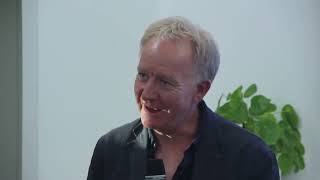
In this on‑stage interview, Jonathan Milner, founder of Abcam, recounts how a post‑doc’s frustration with finding antibodies sparked the idea to sell them online, leading to the creation of UpCam in 1998. He describes the unconventional early financing—mortgaging his house and securing a £11,000 cheque that was later matched with a £40,000 investment—to launch the company. Milner emphasizes resilience, recalling a cash‑flow crisis when he cycled through university departments on a bike with an ice‑bucket of antibodies, converting custom orders into a revenue stream that saved the business. He explains how a chance invitation to Cambridge Angels ignited his passion for angel investing, and outlines the club’s origins, culture, and its diminishing role in life‑science funding compared with tech‑focused investors. Milner discusses Cambridge’s thriving spin‑out ecosystem, the importance of a light‑touch tech‑transfer office, and the “valley of death” where early‑stage companies fall between angel and venture‑capital rounds, proposing the need for more “super‑angel” investors who can bridge that gap. He reflects on Brexit’s potential to erode talent and funding, while noting that most of his companies’ CEOs are European, underscoring the city’s international draw. Milner shares lessons on business‑model iteration, describing how Abcam ran parallel B2B and direct‑sales models before committing to the latter. He also explains why Abcam resisted acquisition offers, preferring to stay independent. Finally, he highlights his enthusiasm for AI in drug discovery, citing his company Healex, which uses AI to interrogate drug and disease databases, and predicts AI will transform life‑science research. Throughout, Milner offers practical advice on mentorship, adaptability, and the future of biotech entrepreneurship in Cambridge.
Chapters
So Jonathan, my first question is about your beginning as an entrepreneur in '98 when you started UpCam. How did you get the idea of starting an online business and a biotech business at the same time?
Well, I suppose what I've got to do is go back to a previous self of mine, which was pre-businessman, pre-entrepreneur, pre-investor. And my background is biology. So I was doing a couple of postdocs, and I ended up doing a postdoc in Cambridge University. And it was during— I'm doing breast cancer research, and it was during my breast cancer research that I had problems finding the right antibodies for my research. And this sounds crazy, but this was— you've got to remember, I tell my kids this, who are all teenagers now, but back in those days, there was very little in the way of ordering online or websites or anything like that. But I discovered that I could order books through this website that no one else had heard of called Amazon. And I just thought this was the best thing ever. And I suddenly had this sort of what I would call an entrepreneurial seizure where I thought, hang on a minute, you know, if you can order books, Why can't you order antibodies online? And that would have been the end of it. So bear in mind that, you know, this is— I'm a scientist, I'm an academic, I know nothing about business whatsoever. That would really have been the end of the story. But a little bit of luck and serendipity came into it. In that I was invited to a Christmas dinner, and it was a colleague of my wife's who— she was working in an art gallery, and she was married to an entrepreneur himself. And I was sat next to this entrepreneur at this Christmas dinner, and he said, what are you doing? And I said, well, I'm at the end of this postdoc, but I've got this idea for a business. And so he said to me, well, come and talk to me about it. So I turned up at his office, and we sketched out this plan. And he said, well, this is interesting. He said, you know, the future is ordering things online. He said, I failed— this is a chap called David Cleavely, who's an— he was in telecoms, believe it or not. And he said, I really want to get into the biotech world, because I failed my biology O-level. So he really was desperate to get in. So I said, "OK, we'll start, you know, let's start the business together." So he said to me, "Have you got any money?" And I laughed at him and I said, "Don't be silly, of course I haven't got any money." And he said, "Well, if you haven't got any money, I, you know, I'm not gonna put any money into the company." So he said, "Come back in a week's time." with some money. Okay, no kidding, this is exactly, this is exactly what happened. So I went away and I thought, well, you know, where do I get money from? And in those days, I mean, this is the crazy thing, we just bought a house. You could buy houses back in those days even on meager academic salaries, but we were mortgaged up to the hilt, but The banks were throwing money at people. And so I wrote off to remortgage the house, pretending that we were going to put in a new kitchen and a new bathroom. And literally, I kid you not, in 2 days, this check arrived for £11,000. So the next Saturday morning, I danced into David's office going, I've got the money, I've got the money. I've got £11,000. And David took one look at this cheque and he just said, it's not enough. I said, well, that's all I've got. So he said, okay, I'll put in £40,000 for your £11,000 and we'll get the company capitalized and started. So that's, that's essentially how we, how we got the company started.
Yeah, that's a nice story. Yeah, yeah. And, um, so I think, uh, uh, yeah, you spent some time with Upcam, but what's— what was the most important lesson in the early days, like when you started the company?
Um, I mean, I— there's probably many of you here who are entrepreneurs and you're starting your own company, and, um, there are so many lessons, you know, but I think the one that I found helped me the most was actually just having the resilience to keep going, to not give up. And that, that was probably the hardest thing of all because there were so many times when we were running out of money. I almost lost the company. There were really, really, really dark days. And I expect many of you here would appreciate, being entrepreneurs, how bad and how low things can get. But always having that sort of resilience of saying, I'm not going to give up. I'm going to keep going, keep going, and getting through, even when the money is running out and things are really desperate.
And it went well. Now I think Upcom is worth over £2 billion, right? It's—
yes, varies between £2 and £3 billion, but yeah, it's gone very well.
Very impressive.
Yeah, yeah, yeah. But one thing, I mean, I would say on the resilience front is that when things were very black and we were down to 2 weeks' worth of money and we were basically going to go bankrupt had no money whatsoever, spent everything, and I was absolutely desperate. And I did something because out of desperation, which put me out of my comfort zone, but it was probably the best thing I ever could have done. And that is that I had these products in this little tiny lab, it was the size of a cupboard, these antibody products in an ice bucket. And we weren't selling any. The website was getting plenty of hits, but these antibodies just weren't selling. So I took these antibodies on the back of my bike in an ice bucket, and I went around all of the university departments, and I knocked on the door, and I was just pleading with people in the labs, will you buy these antibodies? And it was, at first it was disheartening because they'd look in the ice bucket and they'd go, well, we don't need that antibody. Don't need an antibody to p53. Don't need an antibody HRP conjugate. But, and this is the interesting bit, and this is why I was so glad I did it, they said, but you could make me an antibody. And so I said, okay, I can make you an antibody. And so I'd take an order. For the antibody to be made, and then we'd make a custom antibody. And the custom antibody service at the university was hopeless, so I found that I could do it much better. And that actually got us through the cash flow. So the reason that Abcam survived is because we were taking these orders for custom antibodies. But immediately we could stop that. Stop the customer antibody. But I think the lesson that I learned there was go and visit your customer, get to know your customer, get to know, uh, what they want is really important.
Yeah. Um, so yeah, we will not, uh, uh, go in more into details on your, on your career at Upcam, but I want to explore more how you became a business angel. And how did this happen, basically? Like, when did you decide, OK, now I'm going to be an investor?
The honest answer to that is I sort of accidentally fell into it. Because being in Cambridge, I'd met a number of life science investors. And actually, they weren't life science investors. They were more tech investors than anything. And they invited me along to this thing called Cambridge Angels. So I went along to that, and David again, bless him, he's been my mentor, and he— without David, David Cleaver, the business would never have got off the ground. And we were at one of these events. This is early 2000s. I didn't have any money then. And he just turned around to me and he said, "Jonathan," he said, "don't you think this is the most exciting thing "you could possibly do in the world." And I sort of looked at him, and I thought about it, and then I went, "Do you know what, David? You're right. This is the most exciting thing." And he said, "The thrill of being involved with early-stage companies, where you can enable them to be successful, and then they can go on and change the world." there's no other— and I'm sure people in the room have this feeling— there's no other feeling like it. It's a real privilege to be able to do that. So that's how I got the bug.
You replicated what David did for you.
Exactly.
That's a nice story. Okay. And you mentioned Cambridge Angels, so just to explain a bit to the audience, we have, I think, a lot of people from Paris. Can you tell us a bit more about Cambridge Angels? What's— how does it work? Why is it they are together?
And yeah, yeah, sure. I mean, the Cambridge Angels, um, started really through, um, David Cleaver and a chap called Herman Hauser, um, who started a company called Acorn that then became, um, ARM Computers. And, uh, they basically just wanted to do a sort of investment club and an excuse to go to the cottages, have a nice meal, and have loads of nice wine. So this club just started from there. And then it just gradually grew and grew and grew. And we attracted more and more people. And the people that were coming in were all like-minded individuals. They were all successful business people who'd started their own business. They're all entrepreneurial. They all wanted to help companies get started and also have great fun as well.
Yeah, and it's really an interesting and an important part of the ecosystem in Cambridge, if I understood, like having Cambridge Angels in your capital is kind of an important step for the development of a startup in Cambridge.
That used to be the case, that certainly was, and To a certain extent it still is, but it's not so much now. So we've kind of moved, um, above that. And also Cambridge Angels, um, hasn't got, uh, a huge number of investments in the life sciences. It's got some.
Okay.
Um, so it, it's, it's not, not everything is controlled by the—
sure, sure, sure. Okay. Um, and so let's, let's focus a bit on, um, uh, the, the Cambridge ecosystem. I think something that we, we, yeah, we link to Cambridge is academic excellence, like this very high-standing research. Um, and in your opinion, what makes Cambridge a good, uh, environment for PhD or postdoc to, to move to, uh, entrepreneur entrepreneurial, uh, yeah, career and found their company? Like, what's the key, key things that are here, the key elements that are in Cambridge and maybe not somewhere else?
And I, I honestly think that, um, a hub like Cambridge, it grows on success. And what had happened is that a number of academics had spun out companies from the university. So people like Greg Winter, who recently got the Nobel Prize for antibody engineering, he started a company called Cambridge Antibody Technology. And others in the university, you know, academics, spun out companies. And I think all of the academics now look at that and say, 'Hey, you know, I can do this.' And so that feeds on itself, and then you get more and more spinouts coming out of the university.
That's inspiring for young people.
Exactly, inspiring. Yeah.
And what about, um, I don't know, tech transfer offices in the university? Do you think also they are helping, or they are active in this regard to spin out innovation?
Um, tech transfer is a really important point because, um If you get tech transfer wrong, you can actually suppress innovation. And Cambridge has gone through a number of sort of— more sort of having Cambridge Enterprise, and which helps to spin out companies, and then different models of how much investment they will take in return for the intellectual property that was generated within the university. And I think they've probably got it about right now, because you want a very light— the most important thing of all for universities is to have a very light touch on tech transfer, not to get so heavy that it just puts the entrepreneurs off, and they can't build the company.
I think it's a similarity with ecosystems like Boston, and maybe the San Francisco Bay Area, where universities are aware of this, but Yeah, not being too intrusive.
And I do think that Cambridge learned its lesson from the US, from Boston and the Bay Area, definitely.
That's interesting. So on the VC, you mentioned Cambridge Angels being less and less important in the ecosystem. Is it because they are being replaced by other kind of investors like venture capital or Is there a new way for startups to grow in Cambridge?
I, I didn't mean to say that Cambridge Angels is not important.
I didn't say that.
There's a lot of tech investors and not healthcare investors. So in the healthcare, there's more and more deals being done outside of Cambridge Angels is what I meant to, what I meant to say.
All right. Yeah. And so what about VCs in Cambridge? What do you think of their place in the ecosystem? Is it something that is fostering innovation, or are you lacking funds? What do you see in Cambridge?
Well, I mean, I think the VCs are— I don't know people's experience in the audience, but certainly they're hugely important. Because basically, the industry that we're in, especially in drug discovery, you need a lot of money. And that money is out of the range of normal angel investors. And you find it very difficult to be able to follow on. And that is really the— again, this may ring true with a number of you in the audience, but one of the problems that I encountered in my early career in angel investing is that I'd get the businesses off the ground, put the money in, the businesses would then require further funding. Angel investors typically haven't got enough money to follow on on the big rounds, which are requiring, you know, 1, 2, 3, 5 million, 10 million even, to actually fill that round. And at that point, the angel investors get wiped out and they don't get anything. The VCs come in, they clean up and make their return, and the angels get wiped out. And that's been a problem all the way along with— and that is the biggest danger of angel investing, especially in healthcare.
Yeah, okay, that's important. Something something you would change about Cambridge? Okay, you just named this issue. Is there anything else you would change in Cambridge to make it, uh, better?
Um, it's a very good question. I mean, one of the things that, um, I— if I had a magic wand, I would sort of have 10 people like me, you know, um, that can— that are able to bridge that gap between the early startup companies and the VC round, the Series A, the Series B, the Series C. And there's still too few, you know, investors which can bridge that gap. So where I would bridge a gap is I would be sort of— probably you'd call me a super angel, in that I've learnt my lesson in that when I get— involved with a company at an early stage, I'd be able to seed it, and then I'd reserve enough money to be able to follow on and not get wiped out in the Series A and the Series B round. And I just wish that there were more. If I could wave a magic wand, I would have more of those people, and then you could actually see companies going through successfully to get their Series A, Series B, Series C, because too many companies good companies get into that valley of death where they've raised the angel funding and then they can't find the VC funding for the Series A. And they may fall in between that spot where, you know, the investment is maybe like half a million for the angel funding, and then the sweet spot for VCs is $5-10 million, and they might require 2 million. And I've seen so many companies that end up in that sort of valley of death, if you like. And if there were more people like me, we could bridge that valley of death. That's what I would change.
OK. And in Cambridge Angels, there are not more people like you?
Well, as I say, most of the Cambridge Angels are in tech. In healthcare. I think there's only 4.
Oh, okay, all right.
4 in healthcare out of 50.
So it's not so—
I'm a sort of minority. All right. So that's another thing I would change. I would have much more, many more investors in this space.
Yeah, because usually Cambridge, we associate Cambridge with biology and life science quite a lot.
It's huge in other areas. It's huge in the Internet of Things, in Wi-Fi, in clean energy, silicon chips, and ARM semiconductors. There's loads more industries, it's not just healthcare.
So we have to say a few words about Brexit. So, sorry, so what do you think of Brexit in terms of impact on the innovation and on the biotech ecosystem?
Well, first thing is, I mean, obviously I voted remain, and then like everybody, um, was a bit shocked, uh, when, uh, the leave vote just, just got it. Um, and then I thought, okay, you know, that's the way it is, we can work with that. Um, and I was invited to give a talk down in the city to various investors and fund managers and what have you. And I said, the problem is that we have— the UK is a net recipient of funds for life sciences. And, you know, the UK really punches above its weight in life sciences, in healthcare, in research tools. And we do that because we're good at life sciences, and we attract really good people. And we attract funding. And I said the thing that we need to guard now, if we're going to go down this route, is that there's going to be a gap because we're going to lose people. People will drift back, you know, to the mainland, mainland Europe, and we're going to lose funding. And I said the most important thing that government can do is to make sure that, that we don't do that. The good news on the people front is that I think a million people now have signed— the Europeans that are living in the UK, or as close to a million anyway, have signed to say they're going to stay on, and that's all fine. So they can stay on, no problem. How it's going to work with people coming from Europe who, who want to take a job in the future, I don't know. But since then, it's all become a bit of a mess. So I don't know what the government are going to do on funding. I'm pretty confident that— I think we've got the people OK. I know we've lost a few people, but not everybody.
And some funding.
It was funny because in my talk, I I did a picture of all of my companies at that point. There were like 25. And I said, right, here's how many of these, of the CEOs and founders of these companies, are from the UK. And it was like 3. And the majority were from Germany, France, Portugal, Spain, Greece, you know. And that's because we were good at attracting people from Europe. So I was really worried about it. I'm still worried.
Let's hope there is a good outcome and it's not impacting too much the ecosystem. Could be harmful for the ecosystem.
Well, I mean, I think it can be, yeah. But at the moment, we haven't seen a huge impact on it. All right, um, so it's still a great environment, great place to be, but you know, I think if government take their eye off the ball and they do this badly, it will impact for sure. No doubt about that.
All right, I will, uh, give you the chance to ask some questions. Is there anyone want to ask something?
I was wondering if the entrepreneur who helped you initially was coming from the health tech, healthcare industry.
No, he wasn't. He was actually from the telecoms industry. So he ran, at that point, Europe's biggest life science telecoms consultancy, but he was interested in biology. And he was mainly interested in biology because, as I say, he failed his biology O-level, and I think he wanted to prove to the world that he could do biology. And he was absolutely amazing. So, you know, my advice to anybody here is if you can find, you know, network and get a mentor, because they can make all the difference. If you— because they've been through it, they've done it. And taking someone like myself, who was pure academic, through all of those things that you have to learn to be a business person, to be an entrepreneur, that's hard. And it's so much easier if you've got somebody to teach you how to do it.
We have another question.
I was going to ask you a question. First of all, thanks for the talk. About business models, everybody and their mother or father has an opinion about business models. So I was curious, based on your extensive experience now, how much do you really feel that business models can be engineered, all these design processes and so on and so forth, and how much do you think it's really just either a eureka moment or just being in the right place at the right time?
I, my experience, and with Abcam and with many other businesses is that the best ones will adapt their business model. So you have to— of course, you have to have a plan. You have to have a business model. You know, it's like going somewhere without a map. You need that. But you don't really know what you're going to discover, and that map is only partially complete. And it's the same with any business plan. And for sure, whatever business plan you've got, the actual reality of the business is going to be quite, quite different. And I think a good, a good thing that, or a good piece of advice, would be to test your business plan. Go out and see if it's working. Adapt it, come back, see if— and then retest, adapt again, retest. And that way, what you do is you're actually matching your business to what the market actually needs. So if you think about it, you've got this incredible opportunity out there somewhere, which you've gone, whoa, there's an opportunity out there in selling antibodies online. Great. And then you've got to match that with building the company. And then you've got to, all the time, stress test that against what you're doing. So you keep iterating and going backwards and forwards and making sure that your business model actually fits. And in fact, I'll give you a great example of that. So in the early days of Abcam, David and I said, So David said, well, where's these antibodies that you're going to sell? I said, I haven't made any. They make a long time. And he said, and I can't find any? We're not selling any antibodies. So he said, right. What we're going to do, we're going to run a business-to-business website. And we're going to put the life science researchers get in touch with all the antibody companies, most of which went online or didn't have any online presence or anything like that, and we'll take the orders through that. So it will be a business-to-business company. And I sort of had my doubts about that, but I thought, you know, let's test that out. So we actually ran two business models in parallel for six months. One was the business-to-business one, and one was we started to produce our own antibodies and sell them through the website. And then we looked at this and we go, wow, you know, like 6 months later, like we've got 5% of our revenues were coming from the business-to-business. It was going nowhere. Um, the antibodies were starting to take off. We knew that that was the right way to go. So that's the business model we then honed in on. So I hope that gives you Exactly, exactly, exactly.
Yeah, you had a lean approach already at this time, which is— yeah, yeah, this was, this was before Eric Ries' Lean Startup. Yeah, yeah, that's interesting. Uh, do we have more, do we have more questions in the back? Yes.
Uh, hi Jonathan, were you interested or tempted to sell the business before you took it public? Is there any temptation along the way? The answer is no. And in fact, one of the things that I think, as an entrepreneur myself, I was really interested in building the biggest, best business that I could possibly do. And we had offers along the way. And I always resisted and resisted and resisted. Because I always thought there's more in this business, there's more in this business, there's more in this business. Still do to this day. And I'm so glad that we did that. In fact, you know, one of the things that Cambridge has suffered from, I think, is it sold its businesses too early. So Cambridge Analytica Technology was sold too early. Solexa, which is the technology behind Illumina sequencing, That's all Cambridge-based technology. That company got sold too early. And I'm just really proud of the fact that Abcam is still an independent company and we haven't sold out, as AstraZeneca is, because obviously AstraZeneca got the bid from Pfizer and managed to push that one away, which is great, because AstraZeneca are now headquartered in Cambridge. So I think my personal thing on this is just to build the best business that you can and take it as far as you can. Sometimes when you've taken it far enough, then there is a moment where you say, sell. But I certainly haven't reached that yet with Avcam.
Another question?
Just to follow up on the gentleman's question. So you didn't sell the business.—
you listed it.
And so I'm interested in how you perceive the change in the vision from investors in the US, obviously very important for our industry, vis-à-vis science coming from Europe. And, you know, it feels like over the last 10 years, you've got from science from Europe can't be good to actually a lot of European biotechs listing in the US. So I don't know if I don't know if you share that point of view, if you can explain to us from your perspective what has maybe driven that.
Yeah, I mean, the— I think more and more biotech companies now, their preference is to go US. And I don't know if that's the case here. I think it is. I think it is. And I think we're seeing the same thing in the UK now. There's less appetite to go onto the main market or onto the AIM market, which is where we took Avcam in 2005. So really the motivation for taking Avcam onto the AIM market at that point was to actually raise some finance to invest in some manufacturing equipment. Actually, it worked out really, really well, despite the fact that actually we probably didn't need that investment and we could have kept the company private. I'm glad that we did. It brought discipline to the company, and yeah, the company has thrived being on the AIM market. So I can't complain about that at all.
One last question. Actually, I have one. I have seen in some of your investments It seems that you're also interested a lot in AI and biology, like ReproSitive and Helix have this AI component. Do you see this new field of science and digital really like as the future of life science?
Yeah, I do. I mean, I think that I'm a huge fan of AI. The one thing I'm not is a computer programmer, so don't ask me about algorithms or anything like that. I just see, I just see the power of what it can do. And, um, one of my companies, a company called Healex, which we started about 4 years ago, and it's just raised over $40 million and, and doing really well, and it uses AI to interrogate a knowledge database of a drugs database and a disease target database as well. And we believe we've got the best AI in the world for doing that. And we're aiming to get 100 programs towards the clinic by 2025, which is incredible. I mean, this is why it's such an exciting time to be in this space, Because for years and years, drug discovery, as everybody here knows, it's too long, it's too expensive, and there's too many failures. And anything you can do to make it faster, cheaper, more predictive has got to be a good thing. And AI, I think, is the future of being able to do that.
Yeah, in drug development, you believe it can help?
I truly believe that.
I agree. What do you think of Paris? It's my closing question, so it's quite—
Opening question. Is that a trick question? I think everybody loves Paris, don't they? I don't think I've ever met anybody ever that says I don't like Paris.
I love Paris. And biotechs in Paris, you know anything about it?
I don't know much about biotechs in Paris apart from what you've introduced to me, which I'm very grateful for.
Thank you. I really appreciate it. Thank you very much. It was great to have you here. It's a pleasure. Jonathan will be with us in the networking session, so if you have more questions, feel free to reach out to him. Thanks a lot.
More from Joshua







Scientist Stories: Hans Waterham, The value of phenotypic assays in peroxisomal disorders




Scientist Stories: Joel Zlotogora, Genetic carrier screening programs for reproductive purposes