Founder Stories: Joshua Boger, Founder and Former CEO of Vertex Pharmaceuticals
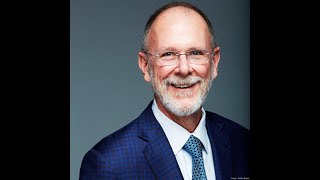
In this interview, host David Ridley talks with Dr. Joshua Elkington (referred to as Joshua Boger in the title), the founder and long‑time CEO of Vertex Pharmaceuticals. Elkington recounts how, as a junior chemist at Merck in the early 1980s, he introduced the first personal computer into a pharmaceutical lab, recognized the need for an integrated, interdisciplinary research unit, and ultimately left Merck to create Vertex as a freestanding company focused on combining computation, molecular biology, chemistry, and assay biology. He describes his leadership philosophy – emphasizing empathy, passion, and staying with teams for the long drug‑development timelines – and reflects on the advantages and challenges of long‑standing CEOs in pharma. The conversation moves through Vertex’s early projects (a midnight‑to‑6 am HIV effort, the FK506 immunology program, and the hepatitis C protease inhibitor), the unexpected success of the first HIV drug, the rapid launch and later withdrawal of the hepatitis C drug, and the “pivot” to cystic fibrosis, which was actually a parallel, long‑running program started in 1999. Elkington critiques the buzzword “rational drug design,” preferring “information‑intensive drug discovery,” and comments on the limits of AI/ML hype. He offers a measured view of COVID‑19 vaccine development, safety monitoring, and the pitfalls of emergency approvals such as convalescent plasma. He argues that orphan‑disease drug development is undervalued, noting lower commercial costs and scientific spill‑over to larger diseases. The interview ends with personal reflections on his passions for underwater photography, race‑car driving, and the paradoxes of retirement. Throughout, Elkington provides concrete anecdotes, metrics (e.g., odds of success, portfolio size), and candid opinions that illuminate his scientific, managerial, and personal worldview.
Chapters
Hi, I'm David Ridley. My guest today is Dr. Joshua Elkington. Dr. Elkington is the founder of Vertex Pharmaceuticals. He retired as CEO after more than 20 years with Vertex, but he continued to serve on the board for 8 more years. Before Vertex, he worked at Merck, where he was a pioneer in rational drug design.. He holds a doctorate in chemistry from Harvard. He is also an underwater photographer and race car driver. Welcome, Dr. Boger.
Hi, it's great to be here, David.
Why did you create a new drug company?
Well, you have to hearken back to the time it was, late 1980s. Imagine a science lab where there are no personal computers. Uh, there, um, when I joined Merck, uh, uh, in, in, in 1982, uh, '83, um, there was not a single computer in the, in the, in the, uh, in, in the laboratory. Um, there were, there were a few compute, uh, computationally enabled devices, the chart recorders, And that was the level of computation. Imagine the level of automation— zero. Everything was done by hand. I mean, there was— there were rotary evaporators, but not an automated device in sight. And molecular biology was something that was being done in academia and was very interesting. And most research operations, commercial use operations, were just of looking at it over the wall. So, um, I, I was a young chemist, uh, at Merck, and, um, and was watching these innovations. Um, at Merck, I brought the first personal computer into a pharmaceutical research lab, as far as I know. I, I bought my own, um, first Mac and carried it in a backpack every day into the building and had to take it home every day because it was against the rules to have it there at night. So I had a backpack with a 35-pound computer and a printer, so it was a 50-pound backpack, hauling it into the lab, setting it up, using it in my research. I was a chemist. I was making compounds, but I was using it to look at data and using it to compile data, uh, to make hypotheses. Um, and then I had to take it apart, put it in a backpack, and take it back home. Um, so that's the era. That's the era that we're in. And I said, um, a couple of things wrong with the way research is. Merck was America's most admired company at the time. Um, that's— I tell people how old I am, and so I used to work for a pharmaceutical company, and it was the most admired company. Uh, and, um, it was organized like an academic lab. There was a chemistry department, there was a biology department, there were some computational people. They were weird guys running digital equipment, mainframes, way off in another place. And there was some experimental molecular biology, but all this was scattered in academic departments. And I said, that's, that's actually not the way the problem's organized. The problem's organized So that these disciplines, if they're going to be effective, need to work closely together. Now, everybody works in a matrix in a company, but I, I decided that the academic matrix as the main organizational unit was hiding the fact that interdisciplinary work was where the action was, and you couldn't really simulate interdisciplinary work by a committee. And so I got the idea. I was one of the odd ducks who, you know, had their computer, their personal computer in my laboratory. I worked with biologists directly, even though I was a chemist. That was, I mean, I literally went to their laboratory. That was unusual for a chemist to walk into the biologist's laboratory. At a major pharmaceutical company. It was unusual. But I said, I think I can do this better, and I think some of these technologies that are coming, I could see coming, computation, automation, molecular biology, would be faster integrated into the discovery and development process if they were organized differently. So I actually proposed at Merck I was, I was very junior person, but I proposed that they organize a department and put all of these things together, put computation, put molecular biology, put chemistry, put assay biology into a new integrated department that would approach problems in a different way by being integrated. And surprisingly, surprised everyone at Merck, the head of research said, let's do it. That's a quote, let's do it, in a meeting. And I went from someone who was a fairly junior chemist in charge of one group of chemists to someone who had the In the year 1989, I was supposed to have half the hires for the whole company in research. Um, and they were going to build me a building to house this integrated research. And, um, upper management was very enthusiastic about this. Um, some of the youngest hires that I had hired were very enthusiastic about this. And then there was the middle, which I call the management sludge in the middle, who were absolutely hostile, uh, and obstructive and, um, were doing, uh, things to slow down everything I was trying to do. And that's where I was spending most of my time, with the central— the middle management sludge. Um, and I got this phone call, uh, one day from a venture capitalist, Kevin Kinsella, who was a seed venture capitalist. He didn't actually have any money. And he said, you've been going around the country. By this time, I was going around the country talking up this integrated unit because I needed to hire all these people the next year. And he said, I've heard about what your plans are. You know, you can do this faster on the outside. And I didn't believe him. I knew nothing about venture capital. I wouldn't have been able to define venture capital at that point. I had no idea about how resources were assembled or how companies were formed. But he did catch my ear by saying you can do it faster. That was, that was an attractive aspect. So after about 6 or 8 months of going back and forth with him about, you know, tell me more about this, I decided to go off and recreate this integrated unit in a different way as a freestanding company, and that was Vertex.
That's fascinating, Joshua. There's so much there, uh, starting with taking the computer, uh, into the company in your 50-pound backpack. I want to talk more about computers plus drug development. I want to talk more about rational drug design, um, a bit later. I want to stay in the more organizational issues and the leadership issues So, what does it take to be a good leader in a pharmaceutical company?
Well, I mean, the pharmaceutical discovery and development is, I don't think without question, it's the most complicated activity that humans do. I mean, compared to making a new pharmaceutical product at a new biological mechanism, not a second version of something, but a new breakthrough. I mean, going to Mars is easy. Going to Mars is engineering. I'm not saying it's easy, but it's engineering. If you give me $100 billion, I'm not an engineer, I guarantee you I can put you on Mars. There's nothing stopping it except organizational momentum and money. But if you give me $100 billion and say, uh, in 5 years or 10 years you have to cure Alzheimer's disease, I'll give it a go, but I have no idea whether I can do it in 10 years, um, or ever. So it's just an insanely complicated activity to do that. You need to keep teams of people together for a very long time. And this is what distinguishes it from the, from most of high-tech. You know, I have a high-tech idea, I should be shipping it in 18 months. If I have a pharmaceutical idea, I may be shipping it in 18 years. So I need to keep a team of people together on the discovery, and that transits into development side, for 12 to 15 years is the average now. So the most important characteristic is actually understanding team dynamics and the difference in personalities that are necessary to build a team and hold it together. And to do that, you the leader have to be incredibly passionate about what you're trying to do. So I think it's a combination of empathy and passion is what I would say.
You were CEO for 20 years, right? You spoke of Merck earlier. Ken Frazier has been at the helm of Merck for 9 years now. Do you think that that's a competitive advantage for a firm to have a long-lasting CEO, given the long R&D timelines you described?
Well, actually, I don't understand how you can be a CEO of a pharmaceutical company without some kind of fairly long arc, because otherwise it's a weird intellectual relay race. Now, it is a cliché in the pharma industry that the successful CEOs just inherited the success of the CEO before them, and that's a consequence of the timelines. It's true in many respects, less— it's more often recognized internally who the real creator was. But, you know, 9 years is just starting to be enough to put your mark on the company.
I want to talk more about organization and leadership.— and motivating scientists. So, you, if you have scientists within your company that are passionate about one disease, but there you see less commercial potential there and more commercial potential on another disease, do you try to, do you let them go with their passions? You spoke earlier about passion and empathy. Do you let them go with their passions, or do you try to steer them toward the disease that the company wants them to focus on, and how do you steer them toward that disease?
Uh, well, there are a couple of built-in assumptions that I would start to disagree with you with already, which is that, um, we actually, um, never put a great deal of stock in commercial potential. Um, and that wasn't because, um, because we're not a company. I'm actually following the the Merck mantra. I was kind of raised at Merck, and George Merck, one of the past presidents and descendants of the original founders, was famous in the 1950s now, 1950s, for saying, "If you look after the patients, the profits will take care of themselves." That's a famous quote from a speech he gave at the Medical College of Virginia, and I urge people to look at that whole speech. It's a magnificent speech, people at Merck really, you know, bought that. They bought that in the 1980s and 1990s. And I think Ken Frazier still lives by that. So what that means is you're not saying profits aren't important. You're just saying that a less effective way of making profits is to focus on profits. I tell people though, the way to save money in an operation is not to focus on saving money. The way to make the biggest profit in a pharmaceutical company is to not focus on making a profit. It's to actually maximize your medical benefits. So we had, early on, we had people with marketing expertise give, projections of what particular programs might yield 10 years later. I didn't pay a lot of attention to those because I knew from my Merck days that those tend to be wrong, and they tend to be wrong in spectacular ways. While I was at Merck, they brought out one of the first beta blockers and were positive that that was going to be an enormously impactful drug, and it just, it fell, I think it got up to about 10% of its projected sales. So you see enough cases like that and you go, these projections are wrong for sometimes commercial reasons, sometimes medical reasons, and they lead you astray. So, That's the assumption I would say.
We paid—
we got as educated as we could about commercial potential, but that was never a decision. But on the question of going with scientists' passion, we actually lived that pretty well. The original business plan of Vertex said that we were going to focus on antivirals except HIV. And immune disorders, particularly ones where the immune system was overactive. So looking at for immunosuppressive compounds. Now, the reason we said antivirals except HIV is not because we were anti-HIV. It's because the investment community at that time, if you said virus, that's the only virus they had ever heard of. So if you said we're a virus company, Wall Street was going to put you in the category of HIV company. And they had already decided that HIV companies were not ever going to be successful, either scientifically or commercially. And therefore, to label yourself as an HIV company would be a difficult road if you were trying to raise money. So we didn't actually have any— but the reason we said not HIV is we didn't have any ideas about HIV. We had a lot of ideas about some other viruses, so we said antivirals except HIV. So that was 1989. Our first product was in HIV. And that happened because the passionate scientists that you're trying to motivate to do other projects got some ideas about HIV and literally started to work on them at the midnight to 6 AM shift, got enough results, promising results that were really research-enabling results rather than breakthroughs, that convinced me and others that maybe we did have an idea about HIV. And so even though our business plan said without HIV, our first project in antivirals was in HIV. So The passion of scientists who were motivated enough to— I mean, this literally was the midnight to 6:00 AM shift. I'm not kidding. That's when they did the work. That was our first product.
I respect that passion from the scientists. Surely it affected their productivity from 6:00 AM on, or no?
We had some pretty dedicated people. We had one X-ray crystallographer who wanted to be close to the company, so he rented the closest apartment to the research labs, which was actually about 100 feet away. And sometimes he did not go back to his apartment for 3 months. He slept in front of the X-ray generator because it was warm, because it ran all the time, 25 kilowatts of power. So at night it was a warm place for him to sleep. So we had some pretty dedicated folks.
Pretty special employee, obviously pretty special company also to inspire that sort of dedication and commitment.
Well, another thing that leaders do is you have to lead by example, and I didn't sleep under the X-ray generator, but I was very often the last, the last person to cut the lights out at midnight or 1:00 AM. So if people who report to you see you— and it's not the number of hours, it's the people who report to you can tell whether or not you're thinking about the mission all the time.
In addition to HIV, what other drugs did you work on early in the life of Vertex?
Well, we had a major project in inflammation in the immune system, a target called FK506, that proved to generate a lot of magnificent research, brought us some big partnerships that enabled us to grow the company, and totally failed because the biology was different than we and everyone else thought it was. So we actually succeeded on the biophysical side, on the chemistry side, and on the generation of assays, but the human biology was different than we had assumed. I think it was a successful project. It built all kinds of capability. We had the good sense to build it with other people's money. The partners who who at that point, we were living mainly off of partnership money for our projects. And our partners to this day, I've talked to them recently, said that that was a successful collaboration because together we were building a new way of going after targets and after drugs. And they had subsequently used it and we obviously used it. So it was a successful project, didn't lead to a drug.
And that platform you built, did it lead to future drugs?
Yeah, so imagine the H— very soon after we started this midnight to 6 AM HIV project got going, and simultaneously we got going, actually a little bit earlier, this FK506 project. And those were the two initial projects in the company. And so because they were the initial projects, that was the— those are the projects that sort of built the platform that led to everything else. Obviously, HIV, as we may talk about, is a pretty easy transition over to hepatitis C, It's a little less clear how either of those projects leads to the other projects we did, but it's a technological straight line.
Let's talk about hepatitis C. Why did you choose to work on hepatitis C?
We had a new project council, which was basically anybody who wanted to come in and talk about that., and I kept presenting, I kept presenting the common cold, by the way, including coronaviruses, but that's another issue. So it's 30 years ago, and, but I said common cold, we can, we can actually cure the common cold. And the problem with curing the common cold is, is that, is that the disease that you recognize, um, namely the sniffles and the, and the feeling terrible, is happening after the virus is either all gone or almost all gone. So it's a challenge, I admit it's a challenge. I could never get anybody convinced to do this, and meanwhile we were talking about other viral diseases, and there was this— kept coming up this fascinating disease that I had had some intellectual exposure to, happily not viral exposure to, hepatitis C at Merck, and it was called non-A, non-B hepatitis, which I think is a fabulous scientific name and tells you everything you know about scientists. They knew it wasn't hepatitis A, and they knew it wasn't hepatitis B, so they named it non-A, non-B hepatitis and thereby understood it. It was literally not known what it was, and soon after we were founded, the sequence of the hepatitis C viral genome was done. And now we really did know it was hepatitis, what it was, and it wasn't just not two other things. And the disease was, seemed every bit as important as HIV. And I mean, the numbers are that at the time, it was at least 4 times more people had hepatitis C than HIV. We were on our way to a true breakthrough in HIV, and here was a disease that 4 times more people had. And as far as anyone could tell, if you lived long enough and you had hepatitis C, you're going to die of hepatitis C. So it's every every bit as fatal as HIV, albeit takes a lot longer time to die. So it was worthy on a medical, a medical sense. It seemed like it was tailor-made for us because it was a relatively simple virus with relatively simple machinery, some of which at least conceptually we were familiar with. It has a protease. It's a completely different target, but it has a protease. We'd worked on a protease. It has other enzymes. We understood enzymes. So we made a pretty early commitment to saying, as soon as this sequence was known, first of all, can we get a hold of its components? Can we clone and express the proteins? Can we get a viral assay going? That took several years, as it did everyone. And there was no assay for the virus in the lab at the time we started the project.
Came out with a great new drug and made about a— quickly made about a billion dollars a year from the drug.
It was the fastest drug launch in history, the largest, fastest drug launch in history up to the time. And it was even more impressive and satisfying is that we were launched at the same time as a competitive drug from Merck. We were literally at the, at the FDA advisory committee the same day, and we both got an FDA advisory committee thumbs up, and the drug was— our drug was approved and their drug was approved, I think, within 2 weeks of the advisory committee meeting, which is unheard of.
And we launched nearly simultaneously, and we, we absolutely shellacked them in the marketplace, which is incredible because they have the massive sales force and the reputation and the relationships with doctors, right?
And it was a lesson that we should have learned both sides of, because we shellacked them because we had the better drug. So we, maybe we should have worried about that a little more.
You had a fabulous drug. There's a reason you quickly made a billion dollars a year, because it was a fabulous drug. And then you didn't. Just as quickly as you took off, it ended.
What happened? It was on the market for 3 years. We withdrew it 3 years after, after the spectacular launch, the most successful drug launch in history up to that time. We didn't get blindsided because that's— but we definitely made some assumptions about the science that turned out not to be true. And they were, I would think, they're more like prejudices. First of all, we had taken a previous treatment that was on a good day, maybe 15 to 20% effective after a year of treatment. And that was the standard of care. And we had taken the standard of care to something that was more like 65 to 70% effective after a few months, and as a cure. And so, the sheer change of standard of care kind of convinced us that, that, you know, we had done pretty good. And we should have said 70 is not 100, and 3 months could be 6 weeks. And of course, we were thinking about that, but I think we didn't take seriously some of our assumptions, the leading of which was we had this protease experience. Our protease inhibitor that we came up with, which was the basis of our therapy, was the most spectacular antiviral compound of any virus that anyone had ever produced in terms of its effectiveness in lowering the virus in culture and in people. But what we didn't appreciate was as much as this virus, even though you were knocking it down unprecedentedly low, still would find pathways to escape. And you needed at least another direct antiviral mechanism. And we were working on that, but we weren't working hard enough on that. And we had some prejudices about chemistry that was— the chemistry of nucleosides was not something that we had done a lot of work with. Other companies had built their pipelines on nucleotide, nucleoside chemistry. We came around to the viewpoint that we were being too narrow, but we came around to it too late and just got, you know, passed on the back curve. And when you get passed on the back curve with a drug like the drugs that Gilead came out with, quickly, there's no chance to catch up because they came out with drugs that knocked the treatment period down to 6 or 8 weeks and knocked the cure rate up into the 90s.
You're the founder and CEO of a very successful company working on antivirals, whether HIV or hepatitis C. And many years ago, you wanted to work on the coronavirus. What are your expectations today about the ability of today's drug makers and vaccine makers to win in the fight against the novel coronavirus disease?
Well, I'm certain that we'll win. The problem is time. It's— I think we're going to have several vaccines. I hope we'll have them available to people by this time next year. I think we may have them announced in the Washington Post or maybe first the Washington Times— that's a political joke— before the election. But we won't have them available, widely available, and actually a good idea to be widely available for another 6 to 9 months. I mean, the issue, the issue with vaccines is efficacy is relatively easy to get and relatively easy to predict that you'll get. And when I say efficacy, I mean, you know, some ability to prevent infection that's greater than 50%, which is 50% better than placebo, which is actually the FDA standard now for coronavirus vaccine. To get a 70% effective vaccine, that 70% of people taking it won't get the disease, is a reasonable expectation. The problem is safety and, and how long that efficacy lasts. It's just impossible— if I give you a vaccine and then I test you a month later, I don't test you individually, but I test you as a group about whether or not that vaccine is protective, I've only tested whether or not a vaccine that's a month old is effective. I literally— there is no law of physics that allows me to say what happens a year later. So I can't know how long the coronavirus is going to last until the passage of time. And I can't know about low incidence side effects by only— and this is this sounds strange, only testing 30,000 people. So if I have a, if I have a side effect that's fatal— fatal is bad for a vaccine— if there's 1 in 10,000 side effect and I test 30,000 people, I may or may not see it in 30,000 people. That's the way the odds work. So if you test the vaccine in 30,000 people and then suddenly magically had a billion doses and dosed a billion people and 1 in 10,000, then you get 100,000 deaths from the vaccine. Well, 100,000 deaths from a vaccine is probably going to make people a little, a little bit reluctant to take it. So the biggest risk of safety in a vaccine is that the vaccine comes out, people start taking it, You start hearing about side effects, people stop taking it, and then disease comes back. So we have to be cautious about putting a vaccine into hundreds of millions of people and safe. And you cannot prove late emerging side effects except by time and numbers. So I think it's going to be, it's going to be 6 months to a year from now before there's enough information to vaccinate enough people. But I think we'll have 2 or 3, maybe 4 different vaccines. That'll be another issue. Which one do you take? Which 2 do you take? That's going to be with us for a while. I think the therapeutic side, there'll be, there'll be therapies, but I don't think there's going to be anything important therapeutically in the same timescale as the vaccines.
In your 20 years as CEO of Vertex, you had a number of product approvals. Given your concerns about rare side effects, how aggressive do you think FDA will be about having a short timeline and getting a product on the market? Do you think they'll require longer clinical trials, more data, or do you think they'll rush things through faster?
Specifically on coronavirus?
Yes.
Well, I mean, it's not encouraging to watch this approval of convalescent plasma, which just got emergency approval today. I'm not an expert in that field, but I've read some of the papers and they're very unconvincing. So I understand what emergency approval means, but You have to understand that emergency approvals have a couple of downsides. The one that's recognized is it may not work. And so a lot of people will take a therapy, and convalescent plasma is expensive, that doesn't work. The bigger downside is that it actually retards development of effective therapies. This happened with hydroxychloroquine. At one point, this is a drug that basically doesn't do anything, as far as I can tell, for coronavirus. And the early data was unconvincing and had all the hallmarks of data you should be cautious about— weirdly designed trials, ad hoc, ex post facto endpoints, all of the things that pejoratively I say academic labs often do, data dredge in a data set and say, look, I found a correlation. And you see that so many times and you go, well, that's— there's nothing there. In this case, hydroxychloroquine, at one point, I believe there were 3,200 clinical trials going on around the world for hydroxychloroquine. This is after there was enough data to suggest it didn't do anything. And yet there are 3,200 clinical trials. Those are sucking up patients. Those are making it hard for other drugs to get tested. This is going to happen with convalescent plasma, no question. Everyone, everyone who's infected is going to insist on, you know, getting their $20,000 worth of convalescent plasma if they can find it. And then other drug trials are going to be very hard to do. So there's a bigger downside to putting it out there than just it doesn't work.
Early on for Vertex, you focused on some great antiviral drugs for HIV and hepatitis C, but today I think of Vertex as a cystic fibrosis company. Right. Why, why did the company pivot to cystic fibrosis?
Well, I, I hear the word pivot, I always smile at that. Yeah, it was prescient of us to pivot 10 years before we needed to pivot. So we always had a portfolio, and the company is built on the realities of the drug industry. I had studied the odds of success. My favorite— and when I was at Merck, my favorite metric for odds of success— you hear the odds of success, you have to make x, x, hundreds of thou— tens of thousands of compounds before you make a drug. That's a meaningless statistic because I don't know whether that's hard or not if I'm a layman. But a metric that will impress people is, uh, if I only count— if I only count projects that involve at least 30 people with at least a 10-year commitment, the statistics in the pharmaceutical industry are that you have to start 100 projects before you get one significant drug. So that's 100 career segments. It's— a person in their career can only do maybe 2 or 3 of those before you retire, and you have to do 100 of them to come up with a successful drug. So, um, when I first started at Merck, one of my— one of the, uh, the wise men in my chemistry department called me in and said, you realize you'll never work on a successful drug. That was his ego-boosting thing. And so you have to figure out another way to be happy because you'll never work on a successful drug. And I didn't like that answer. So to me, you had to, you had to say, can I, can I make the odds of success something like 10 times better than that. In other words, instead of failing 99% of the time, can you only fail 90% of the time? But if you, if you believe that you can be 10 times more successful than, uh, the pharmaceutical industry odds at the time, you've got to build a portfolio. So, uh, we always were aching to start projects. Um, 6, 8, 7, 10, 12 is not enough. If you believe those odds, you really have to have a lot of things going. And then you have to go with all of them until there's no reason to continue. Be careful about canceling something because it has a stumble, because there's so many examples of major medical breakthroughs that happened after the stumble. But keep as many things going as you can. And one of those things that we had going was cystic fibrosis. We started the program in 1999, and the first drug was approved in 2012. So that was pretty fast. So the time we, quote, made the pivot— as I say, I hear this all the time— We brought out the telaprevir, the hepatitis C drug, in 2011, and we withdrew it from the market in 2014. And in 2012, we had our first CF drug approved. So that was a year later. I mean, a year later after we brought in, impressively, 2 years before hepatitis C was withdrawn from the marketplace. So it wasn't really a pivot. It was another thing that we had going, and it happened to get some spectacular early clinical results in that time period. So you do what you do in managing a portfolio, is you keep the portfolio alive and as broad as you can afford, and— but you— give resources proportional to success past a survival level of the program. So keep your projects alive, and if they start to succeed, smother them in resources. And so good clinical results means a program grows very rapidly. And in research, it means that— if you have an interesting clinical candidate that looks like it's promising, what you do is go back and make another one, and make a third, and make a fourth. And you do that as much as you can. And then you can magically pivot when something goes wrong.
So you're saying— You launched the cystic fibrosis drug in 2012. You say in 2011, you didn't just decide then to do cystic fibrosis and bang, come out with a new drug.
That's not how it works? Exactly. Gee, I think I should start cystic fibrosis because this hepatitis C drug might not, might not go as well as I thought. You know, we started in 1999 and we had, there were never less than 20 people. And most of that time there were around 100. On that cystic fibrosis project for a decade.
Early in the life of Vertex, did you have situations where you had promising molecules but just didn't have the resources for them and you needed to keep them on the shelf or out-license them?
Always. That's what portfolio management is all about. And by the way, out-licensing isn't like shooting your children. It's more like sending them to college. But it's— so out-licensing is a way of keeping something alive if you give it into the right hands. But there were times at which we stopped programs, but we tried never to do it for resources because that was my job as CEO is don't make resources limiting. And I don't— I think every program complains, every project complains they don't have enough resources, but they do really have enough. They just are complaining. That's what teams do. And that's, that's what makes teams lovable. If they're complaining, that means they're passionate. If they're not complaining, it means their paycheck cashed and that's all they care about.
The next section is overrated or underrated. This segment I stole from Tyler Cowen, does this and I love it. And so I'm going to ask you a series of questions. You can tell me whether these things are overrated or underrated and you can feel free to pass. Overrated or underrated, being your own boss?
Oh, it's underrated. I, I, I never wanted to be a CEO. I never wanted to be I never— but I, I want to be— I'm— what's, what's not overrated about, uh, being a CEO is you get so much results. So I, I went into science management because I liked— I like getting results. The most reliable way to get results in science is do the experiment yourself, but there are only so many experiments you can do. So that's where I got interested in in managing teams of people, it was really to get more results. And if you're this— if you're the CEO of large teams, you just got a lot of results. So it's a lot of fun.
Overrated or underrated: rational drug design.
Oh, wildly overrated. Um, I always hated the term. This was a term invented by, uh, by bankers to sell stock. And I always thought it was— I mean, everyone who is not considered in the, quote, rational drug design hates it too, because they say, what am I doing, irrational drug design? No one does irrational drug design. But I always liked the phrase better, information-intensive drug discovery, which I thought I could quantify. But the rational drug design is, it's always, it always gets the folks who develop the techniques always overpromise and underdeliver, and that's just not a right way to do. We were only called a rational drug design company because Wall Street would give me money for saying that.
What about new companies today that said, ah, but the computing power is so different so much better today. We're using artificial intelligence. We're using cloud-based technologies. We're using machine learning. All the right catchphrases.
I got it. I got it. Uh, it's still hard. Just, just, they should just know it's, it's still hard. What, what you should, uh, the standard that you should be held to with all of that is that, is that you, you still have to make a drug and it should be better. But, uh, I never thought speed was a very interesting goal. Um, certainty is a, is a great goal and quality is a great goal. And, um, if you have a higher level of information technology and higher level information, you should be able to get, uh, uh, better solutions. They may not come any faster, uh, and, uh, hopefully you can get the odds down to only failing 90% of the time. By the way, 90% of the time, if you're a pharmaceutical company and only fail 90% of the time, you'll own the world.
Overrated or underrated?
Underwater photography. It's underrated. I actually, it's kind of like telling people about your favorite vacation place. I kind of want to say, no, don't get into this. It's really, you know, diving in beautiful places, it's not much fun because I don't want them there. I want to be there alone. But for me, it's a Zen experience. You know, phones don't work underwater. You have a different sound level. You're in 3 dimensions. And light, all photography is painting with light, and light works differently underwater. And so it's a great intellectual challenge. Every foot you go down in the water, the light changes. It doesn't get darker, by the way. In the Pacific, where I dive mostly in the Pacific, especially the South Pacific, you can see, you can read a stop sign if there was one underwater 300 feet away, 100 feet down. So it's not dark, but the color, the light, water absorbs color. And so the color changes and photography becomes very challenging. So the intellectual challenge and the fact that this universe underwater is so unknown to most people, is, um, uh, makes it underrated.
Don't worry, I'll delete this segment so no one will know your secret about it. No, don't.
Yeah, don't go to my vacation places.
Overrated or underrated, developing drugs for rare diseases?
Uh, I, I think it's underrated, uh, because, um, until there was a, uh, an economic precedent and platform for small disease drug commercialization, which was something that was invented, that the idea that you could develop and sell a drug to, you know, 5,000 or 10,000 or 20,000 people was not thought possible when I started in the industry. So no one worked on those programs, but It's not any easier to make a great drug for a small population as for a large population, but it's a lot less expensive. So, um, and particularly on the, on the marketing and, and, uh, development marketing side, it's a lot less expensive. So the discovery is about the same, uh, and the early development's about the same. The late development's cheaper, and the commercialization is vastly cheaper. So you get more examples of the new biology that we're just still discovering at a very rapid pace, but is unprecedentedly broad and deep compared to what it was 30 years ago. We're getting new inroads into how to control human biology, I think mainly through one orphan disease after the other. All of these are potentially important ways of understanding how to go after some much larger diseases, but they're more tractable ways of making that progress. So I think what people don't appreciate is that, first of all, orphan diseases add up to a lot of different— a lot of disease. So there's a lot of folks who have themselves or in their families a so-called orphan disease, but the scientific challenges are more tractable than of some of the polygenic large population diseases. So we're going to see more rapid progress there that's going to spill over into more and more diseases, and that's why people should, should applaud this kind of research and development. Overrated or underrated? Baseball. Oh, I've been a baseball fan since I was a small, small child. I think baseball in 2020 is vastly overrated. If it was just played the way it was played, I mean, this is the sad commentary of every old person. If it was just played the way it was played when I was young, You know, there's no reason for a baseball game to go more than an hour and a half. There's no reason that a pitcher shouldn't finish the game unless they get injured. There's— so there's so much of the change in baseball that has taken all the life and energy out of it. And I wonder whether it's going to survive the pandemic.
Overrated or underrated? Retirement.
Oh, it's a horrible word. So I have never been less in control of my life than after I quote retired. It's a— we don't understand this. We don't have this word proper. We need a— we need more vocabulary. But I used to be able to control my life, albeit it was hectic, but I was the CEO. I could control everything. And now that I'm working with numerous organizations, some of which I chair, I have all kinds of calls on my time. It's much harder to control my life. So that part is a surprise. I am an ageist, so I actually believe that young people should be in charge. I don't like electing 70-year-olds, and I think CEOs should get out of the way. But I think there's a fun aspect to realizing that some of one's experience is actually useful. To other people. It's a humility about it, though. People ask me, what do you think of the latest, you know, engineered cell therapy technology? I say, I don't know anything about that. You know, I couldn't help you with that. But I can tell you some general things that you should worry about, about bringing that to marketplace. And I think that experience is valuable. And it's a lot of fun.
My guest today has been Dr. Joshua Elkington.
Thank you, Joshua. Great to be here.
More from Joshua







Scientist Stories: Hans Waterham, The value of phenotypic assays in peroxisomal disorders




Scientist Stories: Joel Zlotogora, Genetic carrier screening programs for reproductive purposes