Founder Stories: Kevin Ness, Co-Founder of 10X Genomics and CEO of Inscripta
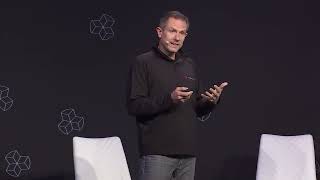
Kevin Ness, CEO of Inscripta and co-founder of 10X Genomics, describes the Onyx platform for genome engineering at scale. The combinatorial space of possible genomes far exceeds atoms in the universe. Inscripta's integrated hardware, software, and chemistry enable millions of precisely edited cells in a design-generate-test-learn cycle.
Chapters
Thank you for coming and attending. I'm so excited to be able to tell you about Inscripta. Biology has unlimited potential to positively change this planet. We firmly believe this at Inscripta. What we want to do is make biology a major technology force in a majority of the global markets. It's a huge ambitious goal, and we're going to do it. We're going to do it as a community and as a team, and Inscripta is very proud to be part of this community. In a way, it's like I'm preaching to the choir here. You all get this, how biology is profound, what it can do for our society. Many of you already right now are doing it, developing novel materials that are made in a sustainable way, developing new classes of therapeutics, ways to power our planet, stabilizing the food supply for our growing economy and our growing population of people here. It's truly special. The last two decades, technology has really been a major driving force for the economy, but because of the work that you're doing right here, the next decade biology is going to be the major driving force. And Inscripta again wants to play its part. So what we're gonna do is help you have better tools. You need these better tools. So we're developing one single platform, a cohesive ecosystem of software, instrument, consumables, assays that all play together to basically help you make custom libraries of cells in an easy-to-use system. So, we're going to sign up for this goal of making these massively parallel, precisely engineered cells for you. So what are the rules governing this system? We need to make sure we're making the right thing for you. I'm going to show you two numbers. We as a species have a hard time to grasp at numbers of this scale. And every time I show this, I think it's wrong. But look at this: there's more configurations, potential configurations of the yeast genome alone, than atoms in this universe. That's just mind-boggling. That is inherently why biology can do so much, why biology can penetrate multiple market segments and deliver on this bioeconomy that we all believe in, is because of this big number. There's so many permutations, and that's the opportunity. But the challenge is we got to find the right configuration for that cell, changing the genotype to produce the phenotype that we care about for a variety of different applications. We as a species have also never signed up for kind of attempting to engineer a technology with this large of a permutation space. The planes that you flew in here, cars, buildings, you know, computers, the internet, even the iPhone, none of that has had to sample the space as large as this. So that's the challenge that's in front of us. We need better tools, and we need new approaches with those tools to tackle this. Not so that we have a bioeconomy that's on the margins, but a thriving bioeconomy that's really driving the global economy. So, with this goal, many of you have already recognized this, the idea that we could attempt to engineer biology like computer chips. Now, we're very far away from that. This is one thing that resonated with me. You see, I'm an engineer, and I'm a life science tool, builder. I've committed my life to building better tools for biologists. That's my way to kind of contribute to science. Initially focused on building droplet digital PCR, then built a set of tools for single-cell sequencing solutions, and now I'm with a great team in Scripta, which is going after really the holy grail of building the digital genome engineering platform for you to custom make these cells, again in an easy-to-use system that sits at your bench. So if you think about this process, we're build-limited. You know, you can design a bunch, you can generate a little bit, and then you test them. And robotic automation is helping us kind of operationalize biology, move through these design, generate, test, learn cycles so that we can learn more about biology, characterize the parts, and attempt to stitch them together to build a certain genotype that has the phenotype for the market you're going after. What we want to do at Inscripta is continue to aid in this process, and in a way, it's almost like a moment in time where we're experiencing what it must have been like to see the first supercomputers assemble, you know, 30 years ago. If you could equate the equivalent of a clock cycle to a biological experiment, one reaction within a well, we're using robots to move more and more through this cycle, and Inscripta wants to continue this. Move to a system not characterized by how many you can build in a centralized lab, but we actually decentralize this process. We take this large capability to build these systems and deploy it to you at your site and change the equation from per kind of centralized lab to per instrument per day. So it's a pretty ambitious goal. Sydney Brenner, Nobel laureate, recently passed away, and this is kind of a personal mantra, why I as an engineer am excited to build tools for biologists. That's the way that I believe I can help contribute to science. And that's what a lot of the Inscripta team members believe. If we can develop new techniques, we can help enable whole new applications and allow us to truly deliver on this bioeconomy that we're all here to really go after. So who is Inscripta? I get the pleasure of being able to introduce you to this team. Our purpose, what we want to do is inspire and enable new biology. But we realize we're not going to do that. You're going to do that, our customers. Our contribution is to make the process of writing these massively parallel single cells all barcoded simple, efficient, and robust. And ultimately what you'll do with this system that I'm about to show, and what is really driving us, is to develop new tools to fuel new applications. To ultimately allow us to better explore and engineer the genome and use the power of biology for good. So what I want to do today, introduce Inscripta, show you data, jump right into that, and at the end, hope to give you a glimpse into Inscripta's vision. If you look at our logo in the bottom right-hand corner, if I kind of zoom into it, we have the tagline, "The digital genome engineering company." What does that mean? What exactly is that to us? So let me use this next set of slides to show you that. So first, in the design-generate-test-learn process, we know we want to move through this and start to operationalize the process, move faster, and not get stuck in any individual bottleneck. So what we've designed is a complete ecosystem that starts with software to help manage and navigate you through these processes. So first you'll go to the Enscripta engineering portal. Within there, there's 3 major software blocks: the Enscripta Engineer that helps you design and generate these libraries, the Enscripta Resolver, which also helps you test these large libraries, and then Enscripta Learn that allows you to take that information and move into the next round. So you can start to move through these cycles faster and faster yourself. We also developed our own custom proprietary chemistry. And in this we inserted specific hooks and handles that tie out to the software to again move you through design, generate, and test faster, and accumulate all that knowledge and to learn to again move into the next round. As we try to move biology into a particular direction for forward engineering, and for a reverse engineer, functional genomicists allow you to really surround the space to kind of deduce the rules that are happening. This chemistry is key. And I'm going to speak more to it in a few slides. But in building this, going after these massively parallel libraries, taking biology to a whole different scale, we realized the chemistry needed new solutions on the hardware front. So we came up with a set of proprietary microfluidic hardware modules that more efficiently handle the cells and work directly with the chemistry. So this is starting to get a little complex. We got the software layer, We've got the chemistry layer, we've got the hardware layer. All this has been designed to work together. In addition, we also came up with a set of assays that help you measure these large libraries on the back end, and also all the automated pipelines that we'll be putting out in an open-source manner, again to build a community with this group, because we're all trying to do something really hard in engineering biology. So it's a complicated set here. Hardware, software, consumables, assays. And I'm proud the hard work of this team has taken all that complexity and put it into the single, which I'm here to introduce, the Onyx Digital Genome Engineering Platform. We worked really hard to get this so that we could forward deploy it to you and decentralize this process and let all of the, you know, 30,000 labs doing exciting work in biology to have access to these tools. This platform will help you move through design, generate, test, learn process, always kind of navigated and taken care of underneath the InScript engineering portal. So what does it really do? What do you get out the end of it? It says it on that bottom set. It generates precise engineered set of single cells at your benchtop where each of those cells have full control over the genome and everyone's barcoded. So that barcode feature tied with the assays and pipelines that we'll give you allow you to effortlessly move between genotype and phenotype and really start to draw correlations among genotype-phenotype space at a scale we've never been able to see before. So the underlying drive where we were building this platform for— let me introduce two dimensions. On the x-axis, genomic locations. On the y-axis, think of this as the variety of genomic perturbation that you're going to put. You can start with a very small SNP change in the bottom left on the y-axis, or as you move up, the full richness of the genome—insertion, deletion, swaps—the variety of perturbation that you want to put in the genome. And if you take protein engineering, for example, you can go to one spot of the genome and put in a whole rich flavor, but you're kind of stuck at that one spot. Or if you go onto the x-axis, you can go out to many locations of the genome, but you're stuck with a limitation of what you can— like modification you can put in, a single SNP or a knockout. What we wanted to do is build this platform for the top quadrant, genome engineering, to really enable genome discovery, which requires going all the way across the genome with the full richness of the genetic changes that we want to try to study. And to deliver on genome engineering, what we thought internally that you needed in a platform is you needed to have scale. Scale's really two things: the number of spots and the variety of edits that you could put into the system. And then once you build the system to get access to the full genome, you can't take a hit on performance. You still got to have efficient libraries. And in the end, if we just had it just for ourselves to use, What's the point? Because those numbers are so big that I showed at the beginning, it's going to take us as a community really working together for a while to master the power of biology and use it for good like I know we all are going to. So that's the component that drove InScripTA, the guiding principle, the areas that we want to set up and enable. So that digital genome engineering again, if I take it— to give you some insight about 4 years ago that we started thinking about the way to build this platform, take it down to the most fundamental limit, kind of the unit operation. If you're going to do a gene editing experiment today, how would you do that? You take a 96-well plate, you take your guide that's going to tell you where to cut, you take the homology arm, and you put them in a well, and then you go to the next well and do your next, you know, red 1, green 1, next well red 2, green 3, or green 2, next well, red 3, green 3. And you attempt to scale that experiment off by moving more and more 96-well plates through. And we need to do that because systems biology isn't really here to guide us, to tell us exactly what to make. So we need to have kind of many shots on goal. We sat back and thought, is this the right way to scale up the ecosystem to fuel this thriving bioeconomy? And we determined no. What we needed to do is change the partition, because in a way you think of that well, what it's doing is co-localizing the reagent, the guide and homology arm. But if we can change the well to the simple idea of use the cell itself as the partition, the cell's like the well, got the outside membrane that's holding the internal components that you're trying to change. Hey, great idea, we can really boost up the number of experiments that can be done in parallel. But how do we co-localize the guide and homology arm, or the red one, green one, and red two, green two, into the correct cells and not get the wrong cross product? Well, as an engineer, I like the simple, elegant solutions, because in the end, building this thing and scaling it up, if you start complex, it gets way too complex on the back end. So what you do is you take and simply covalently attach those. Take the guide and homology, put them together. And because at the manufacturing site we make this, we can also put additional functional elements on here, barcodes and other elements of the assay, other hooks and handles that the software backend is going to grab to help you through the design, generate, test, learn process. This is the underlying basis of how we thought about the chemistry. So now let's actually follow one specific cell through its life of changing its genome. To ultimately produce a new phenotype. Take the initial cell, take our Onyx chemistry. Here we have millions of precisely made molecules represented in these loops. Let's just follow one loop. Let's take the green molecule out from the Onyx chemistry, and what it has is all the machinery to do the gene editing in it. So we get one into the cell, you create our MAD7 nuclease, which is going to do the cutting of the genome. If we are not happy with the native repair state of the cell that we're editing, the Onyx chemistry will also modify the repair pathways to increase the editing efficiencies so that you have these high-quality libraries. And then we also make the guide directly from that loop. So there's really 4 things: the nuclease, the guide, the repair proteins, and don't forget the loop itself, because that is what is going to tell you what type of genetic change to drive into that cell, and that loop is barcoded. So you can think of the color representing the barcode here. So now we got the components within the cell, the chemistry is going to go underway. Many of you know CRISPR will go down, cut the genome, create a double-stranded break, or Onyx chemistry, the loop and the repair proteins go to the double-stranded break, And when it's done, we've now changed that green segment to a precise new change to the genome. Full knock-in capability where everything is rationally designed. And in the end, if you, the experimentalist, at the initial software, the engineer layer, put in a genotype that would change the phenotype, you've literally just created a new single cell, new genotype, new phenotype. All from that one Onyx chemistry molecule that went into the cell. So let's remember though, we don't just have one of those. I said we had millions. We just tracked one. So every single Onyx molecule will go to a different cell, change its genotype, and potentially change the phenotype. And because of the scale that we're building this, as we keep zooming out, We now have the ability to do thousands of modifications to cells in a precise manner, and ultimately, the output of this system will be millions of cells where you have thousands of different phenotypes embedded within that, that you custom programmed. So if we just do a simple thought experiment, if we have 10,000 designs and we got a million cells coming out, you get a hundredfold representation of each design. It's an important parameter, so when you get these libraries on the backend, you can go manipulate them and still ensure that you're gonna get high-quality representation of the initial edits that you wanted. Alright, so that's a lot of PowerPoint, a lot of marketing visuals. Does it really work? Let's jump right into the data. We're a data-driven company, and I want to try to highlight the power of this platform. But it's actually difficult because the scale of the data that's here is is so enormous, it's a challenge to try to present it in a clear manner. So let me start and do 3 slides real quick. Let's start at the most fundamental limit, a single gene or protein, then move to a pathway, and then let's move to full genome scale changes. Protein. One gene, FOL-A. We made, as you can see in the top left corner, 3,140 precisely engineered cells where every single one of those cells a new genotype, and every single one of those cells is barcoded. Because of that barcoding, we can track what happens when you change the genome. We can see parts of the protein that if you perturb, the cell dies, probably conserved parts of the protein. You can also do drug studies, shown in the upper right, where you can look at the sensitivity of your variants to other compounds. That's just one protein. Let's jump to a pathway. Decent size, 19 genes. Here we made 16,300, again, precisely engineered cells, all barcoded. We chose a high-value amino acid, a billion-dollar-plus market, lysine. And because you now can make so many, we grabbed the whole lysine pathway, TCA cycles, and transmembrane proteins. You can start to just group in anything you think that's going to influence your experiment. We did an antimetabolite selection with AEC and showed that we could produce variants that could grow in 10,000 times higher titer to this toxic compound that would kill the cells. Took the winners out, they're shown in the bottom right, shot them through mass spec, and they're producing more lysine, exactly what you wanted. But let's not stop at 19 genes, let's go genome-wide. Again, trying to represent this technology, we took a paper from Science back in 2012 where they did an adaptive laboratory evolution experiment where they hold cells at 4 42 degrees C, it was more efficient to convert the feedstock to the compound that they were trying to create. And at the end of that year study, they took out the cells, sequenced them, and there was 972 SNPs. And they wanted to know what was driving the thermal tolerance, but never really could deduce that. We thought this would be a great study for us because we could go take— because now you're not limited by the generation of these precise cells anymore— and make all 972 in isolation, one-off, every cell is barcoded, and then again because the scale of what we can build here, we put an additional 51,000 other designs that we had inscripted, thought might confer some thermal tolerance. At the end of that study, you can see the ones in red are the drivers of that thermal tolerance from that initial paper, and the ones in black are more mutants that we found from querying our team for 2 weeks. Been asking nature for a year to tell us. And some of the best performers were double base pair changes to sample the full codon sequence, which really you wouldn't get from an adaptive laboratory evolution experiment. So now we have protein, we have pathway, we have genome. Okay? Let's start to try to demonstrate again the scale. So we thought, could we actually take and recapitulate the last 20-year history of this field? Into one library. So screening through a variety of papers, took anything that was ever published that said it was resistant, some mutation was resistant to some compound, put that into the library we called the Resistome. One of our early access partners, Chris Voigt, heard that we had this Resistome. He was tasked by DARPA to make a compound, linalool. He knew how to make the compound, but linalool was actually toxic. At the titers that they needed and killed the cell. So we said, hey, I wonder if your resistome actually has a variant in there that's resistant to linoleic acid. I could dump my pathway in and pass this particular molecule. Again, because you can make so many, we did an additional 7,000 in some targeted sites that he wanted. So this is kind of the resistome plus. And you can see we found two variants, purple and blue, on the bottom. Bottom right that passed the test. And here's a quote from Chris Voigt, which basically said, "This is an unprecedented scale, and the fact it's put in this benchtop system is really going to allow them to drive the improvement in designs going forward as we try to engineer biology." Another early access point partner, Jim Collins. He was actually on the plenary speaker 2 years ago. And that was when this relationship first started. I pulled him aside actually right after his plenary session and said, "Hey, in about a year I got something for you." And so over the last year we've been working together. And what he wanted to do is study antibiotic resistance. He took 593 selected targets. We made 2,000+ precisely engineered cells, all barcoded, and in this initial pilot study he screened through a set of to antibiotics initially, and he's discovered novel biology that, in his words, this unprecedented detail that now can be seen is going to help lead to the development of novel therapeutics. And it's in a direction that's going right at the heart of an important set, emerging antibiotic resistance. This pilot study is now scaling up to do a whole screen of every single antibiotic that's out there. An internal demonstration. You're going to hear our head of applications, Nandini, tomorrow talk about this, but I wanted to highlight it. 200,000 precisely engineered cells in E. coli and a whole study that we did going after making, improving the lysine pathway, and not just single SNPs, but a full richness of the genome. Insertion, deletion, swaps, gene regulation with promoter ladders up and down. And you don't have to be limited just to your pathway anymore. You can go after the whole genome. Additional study, 130,000 designs put in yeast. And you can see in the bottom two, the coverage plots. We're going across the whole genome. And the key here is with this genome-wide screens, we're finding novel targets that are outside of the obvious pathway. That's key. Because again, systems biology is not there for us right now to a priori tell us what to make. We need to follow the data and screen the whole genome. We've just never been able to because we've never had a tool. That was one slide for what's going to be a 45-minute talk tomorrow. So I'd encourage you, if you're interested, please go see Nandini, wonderful speaker, to really talk about the power of what we can do now with this platform. Platform. An additional demonstration. We're going to have Richard Fox. Nadini's tomorrow, Richard is the following day. What is that, Thursday? And here we actually took almost 5,000, a little over 4,000 targets and did full genome-wide regulation on this. 5 different promoter ladders, up and down gene regulating. We did 7 different edit types on 3,000 genes and then started screening different fermentation conditions. On the backend with these libraries. Richard is going to talk about this in substantially more detail tomorrow. And what's exciting here is I think it's a moment in time that we can move genome biology from an observational science to a science that we can intervene in a controlled manner, not have to get samples collected from nature to have the cell heterogeneity and diversity. We can actually rationally design it and move the experiments forward And again, the whole ecosystem's designed to move you through these cycles quickly. So I say the whole genome's now available. And what I mean is the edit types, coding, non-coding you can go after, insertion, deletion, swaps, and you can take those capabilities of edit types and move them into true applications. Full knockouts, where it's not just a random knockout, you can actually precisely insert a triple stop codon wherever you want in the gene and methodically march up truncating that that particular protein that you care about. And you don't have to stay just at the protein, you can do the whole pathway and again the whole genome. Saturation mutagenesis and targeted mutagenesis, again in a controlled manner. And the key is this is not on a plasmid, this is genomically integrated targets that you now have access to. Promoter swaps for up and down gene regulation terminators. So there's a whole set coming, and I put these two up together because I want to remind you it's You need both. There's a multiplicative effect that happens when you have variety and scale. Variety again is the flavor of genomic changes and scale is getting into everywhere in the genome. And you truly need both and that's what the Onyx system gives you. So I ask you to do this with me, a little thought experiment. Again, as an engineer, I'm in biology because I find it fascinating. It's amazing, it's beautiful. So here's a protein. It actually doesn't matter what this protein is because I'm asking you to think about your favorite protein. What matters to you right now? Just pick one, visualize that. Let's go study it with this system. You can actually take, let's assume it's 370 amino acids, 10,000 for this experiment, 10,500 plus rationally engineered cells, all barcoded. Let's linearize that protein to have 10,000 of these bluish-purple dots and represent that as one single dot now, that blue dot on chromosome 2 of yeast. So you're studying this protein that you care about in exquisite detail where that protein is genomically integrated. So there's that particular gene. So now let's say that's your protein in green that you care about, but actually you might care about a pathway. So you can go out to the full pathway, or you might care about a set of other proteins that you just want to kind of see the interaction set of it. So take those additional proteins, do saturation mutagenesis on them, that's 77,000. Add that together, you now have a library of 88,000 total designs. Let's put all that now on the genome. And in a way, what we've done here is you've taken all the priors, the last amazing insights we've learned from biology over the last 20 years in reading the genome, and we're studying it from what we think is the important part. And you can do that now in a detail you've never had before. But you can do more. Let's actually go all the way across the genome with a set of knockouts, 8,000 knockouts, genome-wide, full genome scale. You can now query that one protein that you care about, the 6 other proteins either in a pathway or something you want to study, and now see how the rest of the genome interacts with that. But let's not stop at just those knockouts. Let's add in terminators. Again, genome-wide, another 24,000 in this study. And we don't have to stop there. We can go after transcription factor binding sites, transcription factor binding sites. So a total of 131,000 different designs in this system. And remember, you initially cared about your single protein. Now you can do a true comprehensive global study of this system. At a scale that's not been possible before. So this is ultimately what inspires and drives Inscripta. Never before has the biological complexity of an entire organism's genetic landscape been so accessible than what it is right now. So this is the initial Onyx system. It's for massively parallel engineering of single-cell libraries. Yeah, they like that. And so what I'm going to do here is try to get into the detail sets of what's really needed to kind of engineer the genome the way we're viewing it. So you need that scale, but let me unpack it. You need to go across the genome, largest libraries, you have to have the full richness available, and everything needs to be precise, no randomness, because we're going to need to learn across the rounds to move the system forward. So once you get access to the full genome, You need to have high performance. The performance set of this, very efficient, trackability, and you need to be able to connect the rounds. And in the end, if only we used it, what's the point? We want to democratize this and get this out to the community. So I'm excited. Here is the Onyx Digital Genome Engineering Platform. It's real, it's here. If you go to our booth and check it out. This system. Here's the specs. We're focusing initially on microbes, E. coli and yeast. You'll do in one single run 100 to 10,000. And let me just leave you in closing. The forward engineering process works. This is a few runs on the system, iteratively moving through to really move you up the fitness landscapes. And it doesn't stop there. We're also building combinatorial editing. Combinatorial editing is when you get many edits per cell, and this is truly what's needed to really move through the system. In closing, what is success for Inscripta? It's from IND Bio, and what Inscripta cares about is when this figure shows in 25 years expect the global economy to double. So $200 trillion in total. We want biology to be a dominant technology force in all of these major market segments, and it can. And as a community, we're gonna build this. So thank you, and I encourage you, if you want to learn any more about the system, see us at the booth, come to the talks. We brought a large contingent of the team here because really we built this for you. It's gonna be a partnership and an exciting journey as we move through this together. So thank you. Thank you.
More from Joshua







Scientist Stories: Hans Waterham, The value of phenotypic assays in peroxisomal disorders




Scientist Stories: Joel Zlotogora, Genetic carrier screening programs for reproductive purposes