Founder Stories: Kiran Mazumdar-Shaw, Building India's largest Biotech company
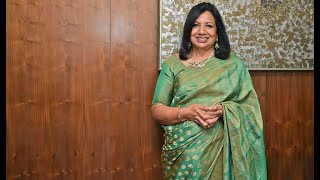
In this India Global Forum interview, Kiran Mazumdar‑Shaw, Executive Chair of Biocon, recounts her entrepreneurial journey from founding Biocon in 1978 amid India’s restrictive License Raj to becoming the country’s first billionaire woman entrepreneur. She describes the severe credibility and financing hurdles she faced as a 25‑year‑old woman with limited capital, detailing boardroom confrontations over collateral, gender bias, and the challenge of convincing lenders to fund a biotech venture. Mazumdar‑Shaw explains how she secured early investors, navigated talent acquisition, and later pivoted Biocon into the high‑risk biosimilar space, achieving landmark US FDA approvals and an interchangeable insulin label. She uses these experiences to illustrate broader themes of gender equity, criticizing the double‑standard in venture‑capital questioning of women versus men, and advocating for inclusive hiring and ESG‑driven policies. The interview also covers her belief that gender‑balanced economies are essential for achieving Sustainable Development Goals, her view of technology as a transformative tool, and her role as a mentor and inspiration to young entrepreneurs and unicorn founders. Finally, she outlines her ongoing purpose‑driven mission to expand affordable access to life‑saving biologics worldwide, positioning health equity as the core of Biocon’s future growth.
Chapters
So this is a special session now called Inspiring Journeys. We've had these in London, we've had these in Dubai, and it's a moment when we dive into an entrepreneurial journey with somebody that we really want you to meet. And today we have a special guest for you. Our guest is Executive Chair of Biocon, Kiran Mazumdar-Shaw. Why don't you come on up? Happy International Women's Day.
To you too.
Please.
Last night. So to everyone, for that matter. What's that? I said happy International Women's Day to everyone.
Exactly. So you were India's first billionaire woman entrepreneur, founding Biocon, India's first biotech company. And this you've done— you did this at a time when women's entrepreneurship, not only in India but in a lot of places in the world, was it, shall we say, a nascent stage. Can you give me a little flavor about what that was like?
Well, you know, I set up my company Biocon in 1978 in a country that was very under-resourced. It was at the height of what we used to call the license raj because you needed permits and permissions for every single thing. And of course, it was a time when Entrepreneurship was almost nonexistent in the context of what we are discussing today. There was no venture capital. It was all debt financing. And I was a 25-year-old woman trying to set up a business with ₹10,000 in my bank account and trying to create a new business based on biotechnology, which nobody understood.
Understood.
So I had huge credibility challenges and I was considered high risk because I was too young to be an entrepreneur in the minds of the people who were going to lend to me. I was considered to be a high financial risk because I had no collateral to offer. I had no business experience. I had no sugar daddy. And, and I also was trying to do something which they thought was too daunting for a young girl to take on, which was about starting a biotech business which they themselves couldn't understand. So enormous credibility challenges. And of course, I overcame them purely through sort of a sense of conviction and purpose. And I had to, you know, really make them understand what I was doing.
Tell us about that. Take us into one of those boardrooms and what was it like as you sat there faced with, I'm assuming, men asking you these questions as a young person? What were some of those conversations like?
Oh, they were very, very— some of them were very difficult conversations and some of them were very interesting conversations. So the difficult conversations were, give us 2 reasons why we should give you or loan you any money. What collateral can you provide us? Can your father provide a guarantee? And I said, my father has nothing to do with my business. Okay, so I can give you a guarantee, but they didn't want mine. Okay. I said, well, you accept personal guarantees from every other founder or entrepreneur. Why not me? Is it because I'm a woman? So I would take them on head-on, you know. I, of course, was trying to explain the business to them. I was telling them how exciting it was. They said, you know, why are you trying to develop a homegrown technology which is so risky? You don't know whether it's going to work. I said, well, that's what biotech is all about. No, why don't you license a technology? They were very used to licensing a technology and, you just basically manufacturing something out of it. And that was the engineering licensing technologies that they were very used to. I said, no, this is biotech. You've got to actually have a research capability. You've got to be able to do research. You've got to be innovative. You know, I had to make them understand what it was. So fortunately, I did get some people who believed my believed in me and invested in me. And so I think I quickly realized that it was a case of, you know, clearly articulating what you were trying to do to the people who are going to lend you money. And they were all men, of course.
Right.
And I think I wanted to make myself in their eyes somebody worth investing in. And I met a few of those people who felt I was worth investing investing in. That's what turned my destiny. If I hadn't found those few men who wanted to, who believed in investing in me, I don't think it would have been that easy. And it was all debt financing, you know, interest at 16% those days.
Wow.
So it wasn't easy. And apart from access to capital, it was also access to talent. People didn't want to work for a woman employer. Because they felt I was not able to give them job security. So even today, when I look at the situation that women entrepreneurs are facing, you know, as we speak, I think access to capital, access to talent, and access to technology are some of the most formidable challenges even today. You know, I just I just want to put right, you know, I was at one of these Women's Day discussions yesterday and I said, you know, there was a very interesting point of view put forth by one of the panelists. And she says, you know, in the venture capital world, a VC's question like, you know, the line of questioning for a woman who's seeking funding and a man who's seeking funding are extremely unfair. The woman is always asked questions about, tell us the risk of this business if you get married, tell us the risk of this business if you have kids, you know, and these kind of questions. Whereas the man is always asked about, so tell us what the— how big this business can be, tell us what, you know, the risks of this business are. So you see the two questionings that go on between men and women are very inequitable, unfair, and unbalanced. Women have to be asked questions about their business, not about, you know, their gender-related issues, right? That's where we start this whole gender inequity, is what I feel. So I always tell my colleagues, so today, of course, thanks to ESG and, you know, the DEI component I think I've encouraged HR and my, you know, my managers and everyone who's involved with improving the gender balance to make sure that they really provide equal opportunities for women who are seeking a job in our organization. It's very important.
I hope that Manoj is taking note for his investors group, the questions not to ask. The 75 women leaders?
Well, these are questions even HR asks in most companies, you know, which is where the problem starts.
I mean, I can tell you that it's not just women entrepreneurs too.
No, that's what I meant.
Right? I mean, it's— people ask them of women mountain climbers, you know, why are you mountain climbing when you have children? With a question that they never ask a male mountain climber. Climber. We'll leave that one for now. But tell me about Biocon. Has a huge presence not just in India, also in the West. And you have faced— you've really successfully created competition against some of the Western pharmaceutical companies. Not a feat for the faint-hearted. Tell us about the resilience and perseverance that that takes, but give me some specific examples of what that looks like.
So I think the best example of, you know, risk-taking that I have personally taken— and again, I go back to this, this busting myths that women don't take enough risk, they're not ambitious enough, they don't think big. And I think I busted those myths, if I may say so. When I think about the risk I took when I got into this whole field of the segment of biosimilar medicines, the biosimilar pathway had not even been scripted in the US and European regulatory systems. And I was going to be making huge investments in developing biosimilars that will finally get me the big return that I was seeking for my investments from the US and advanced markets. And I thought that was a big risk. But what I did was I said to my colleagues, they thought I was taking too much of a risk for a small company like ours. And I said, no, let's follow the science. If we follow the science, I'm sure we will align with the regulatory guidelines. And sure enough, it worked out that way. And we had many firsts to our credit. We were the first company to be approved by US FDA for two of our biosimilar drugs, and we were the first company globally again to get an interchangeable label for our insulin by US FDA. So I think we did pretty well, you know, and I, in hindsight, I felt we took a risk, but we took a calculated risk. Which worked out. And I think that's what really in hindsight makes me feel that, you know, I played a good leadership role. And even though I got absolutely, you know, trolled, bashed, whatever you might say, for taking that decision of moving into biosimilars and investing so much R&D dollars into such a risky business. So I can tell you my stock price didn't move for many years.
Right.
And I was—
How many years?
Oh, almost 3 years, 3 or 4 years. And people were constantly kind of, you know, accusing me and alleging that I don't understand what business is all about and that, you know, you're putting your shareholders' money at risk. And I would say, look, please don't invest in my company if you're so faint-hearted. So, you know, I've been through those times. But of course, once you start delivering— so it is about credibility building. You know, everything is about building credibility, whether it's about building credibility as a woman, whether it's building credibility as a woman entrepreneur, whether it is building credibility as a biotech entrepreneur. Ultimately, the moment you start showing signs of success, I think that glass barrier or any barrier disappears. And that's something I want to say to all women here, that the glass ceiling disappears when you start demonstrating credible success.
Tell me about your thoughts on inclusion. Technology, inclusive technology can really help, especially when done mindfully. And I'd love to hear about your thoughts in the healthcare sector especially?
First and foremost, let me start by saying that a gender-balanced economy is a smart economy because it is smart and sustainable. And I really believe that without the inclusion of women in the economic mainstream or the economy in general, none of the SDG goals will be accomplished. And I really mean that. I think women have a big role to play in delivering on our SDGs. And that's why I think you need to be inclusive. That's why— and you have to be inclusive across the board. You know, I think technology is a great transformer. And I think Women have to be part of that digital transformation if you want to see that change. One thing I do believe is that women are change influencers and changemakers. You can see we don't come with baggage and therefore we are daring. We are willing to experiment and we are willing to explore. You can see even in the political leadership today, of all the women who are playing very strong political roles, including our finance minister that you heard a while ago. We are willing to listen. We are willing to change if necessary. We are willing to experiment. If it doesn't work, we can do something else. But we are not afraid to take on those kind of challenges or experiments. Experimental opportunities. I don't find men being able to do that so easily because they are very rigid. They're very worried. They're, you know, I really find men are extremely insecure when it comes to bringing about change. What will happen to me? What's going to happen to the business? You know, I don't think men are as big risk takers as women, for that matter.
Who are your role models? Who do you look up to?
You know, I, I look up to people who inspire me, and there are a number of men and women who inspire me all the time, like right from my late father who inspired me and pushed me into doing what I am today, to my colleagues at work, to entrepreneurs, to unicorns, to, you know, I get so energized in the city of Bengaluru because I often sort of hang around with young unicorns and want to listen to what is it that's driving them and what is their business model all about. And it's very energizing for me. I enjoy time with young people. I enjoy time with spending time with startups. And listening to their ideas and helping them to form their ideas. So I think that I find very inspirational. Of course, you know, there are the usual, you know, people who've made it big and you can get inspired from what they've done. But I get much more inspired connecting with people and, you know, getting that inspiration from people whom I talk to, from people whom I I have brainstorming sessions with. So that's the way I get inspired.
That's how you get energy.
And those are my role models because I feel if I spot one or two of those people who are really doing something phenomenal, I think I draw a lot of inspiration from them.
You mentioned you get inspiration from these entrepreneurs, from unicorns. There aren't an enormous amount of unicorns left. Led by women, not just in India but across the world. So what are the steps we need to take? You've got money in the room to get more of those.
So I think, I don't think this is a case of women not being able to do certain things. It's a case of giving opportunities to women to do things. And, you know, I, for one, find that women are beginning to start gaining confidence to start businesses. I know a number of women who've started businesses, endured it for a long period of time, and I hope there's going to be inflection points where they can actually catapult into unicorns. I'm very happy to see that many, many new-age companies do have women co-founders. That's a very interesting development. Of course, we have a few unicorns in India who have been very bold. Nykaa, the Nykaa founder Falguni is one of them, but there are many others. And I also believe that over the next decade you will start seeing more women running successful entrepreneurial companies. I really believe it's going to happen. For many reasons. One is that I think the Government of India for sure, and governments across the world have decided to enable and empower women in a much bigger way than they used to do in the past. In the past, it was a lot of tokenism. Today, I think it is very serious because they realize that leaving women out of these very important areas is only going to hurt them. So that's why I said, you know, a gender-balanced economy is a smart and sustainable economy. And I really believe that. And I know for a fact that all of us who have been successful are, you know, influencing other women to take this bold step and to dare big, dare to dream and dream big, you know, but I still feel that I've seen a lot of women-led, you know, companies in, even in the US. I find that there is still a bias towards a young woman starting a business or a startup compared to a young man doing the same job. So we need to remove that bias. Okay. And it's about myths. And we've got to bust it. Okay.
What's next for you? What are you most excited about in terms of the impact you can make?
So, you know, I think every one of us ought to be driven by a sense of business purpose. And my sense of business purpose has always been about making huge impact on global healthcare. And I have actually spent my entire my entire entrepreneurial life in the last decade and a half to provide affordable access to life-saving and essential drugs. And in my case, I chose, you know, biologics, biosimilars, and complex generics because that's the most expensive part of healthcare costs. And I thought if I can make a difference there through innovation, and I felt that India had that capability to deliver on affordable innovation. And so that's my dream of saying, how do I make big impact now that I'm global? And I've just recently acquired, you know, my partner's economic interest and created a very large biosimilars company. I hope it's going to be the biggest one day, and I want to do it With this in mind, health equity, to me, health equity, affordable access is my business purpose.
I'm glad to hear you're achieving, helping to achieve the Sustainable Development Goals. Well, thank you so much for spending time with us here at India Global Forum.
Thank you. It's been a pleasure.
Really appreciate it.
More from Joshua







Scientist Stories: Hans Waterham, The value of phenotypic assays in peroxisomal disorders




Scientist Stories: Joel Zlotogora, Genetic carrier screening programs for reproductive purposes