Founder Stories: Kiran Mazumdar-Shaw, Founder & Chairman of Biocon
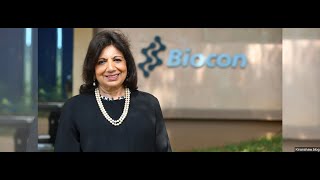
In this 15‑20 minute interview, host Pramod engages Kiran Mazumdar‑Shaw, founder and chair of Biocon, in a wide‑ranging discussion about her entrepreneurial journey, leadership philosophy, and vision for global health. Kiran explains that every business she builds is anchored in a clear purpose – first reducing chemical pollution with enzyme technologies, later providing affordable biopharmaceuticals to the developing world. She describes how an unconventional upbringing (a father who encouraged brewing science) fostered a willingness to take risks and challenge societal norms. The conversation delves into the gender‑bias and "old‑boys" network she faced, the credibility hurdles in securing early funding, and the importance of articulating a compelling value proposition. Kiran outlines her leadership style as common‑sense, problem‑solver‑focused, and inclusive, encouraging dissent and empowering teams. She stresses a zero‑tolerance culture for data integrity and IP protection, especially across Biocon and its research arm Syngene. The pandemic’s impact is examined: lessons on preparedness, rapid vaccine development, and the need to make advanced technologies affordable and accessible. Kiran contrasts the Indian biotech ecosystem’s risk‑averse funding environment with the more capital‑rich US landscape, while noting that the tech startup scene in Bangalore is converging with Silicon Valley. She addresses ESG versus profit motives, arguing that purpose‑driven profit is sustainable. The interview also touches on personal legacy, work‑life balance, handling failure, and advice to men about respecting women’s capabilities. Throughout, Kiran emphasizes that purpose, resilience, and ethical rigor are the foundations of Biocon’s growth into a global leader in affordable healthcare.
Chapters
Kiran, such a joy to have you here. Incredible.
No, no, I'm looking forward.
So you have You have doubled the size of my class just by a sheer presence. Normally, they're all walking in right now from across the university. It's that exciting.
Well, definitely, I'm looking forward.
All right.
All right, great, great, great. I'm going to sit here. And actually, you're seeing half the class, and there's another half on the other side, which— At some point, the camera will move to— so Kiran, look, we are delighted. This is a class that I've been doing. This is the 6th class on leadership. This is one of the most remarkable women in India, and she's one of the most remarkable CEOs. And I don't talk about it in terms of gender at all. She's just built a highly complex, fabulous industry I'll talk a little bit about her goals that you've all read about. But the biggest thing I want to say about her is at a time of COVID and when everything was going upside down and everything was terrible, she's the one person I used to turn to. And I would always listen to her interviews because she brought a level of clarity that nobody, very few others were able to in the midst of enormous chaos because of the way she was able to talk about it, the way she was able to explain the issues, the way she talked about how we should try and tackle the problem. And I think I met a lot of people at that time who all felt the same thing, Kiran, that you brought them clarity in a way that they hadn't heard, and they followed you, and you brought in a level of leadership at a time of huge crisis for India, which was absolutely fantastic. Thank you for that. She's not going to say much, see?
Thank you. Thank you for those kind words.
What we'll do is I'll get into a dialogue with you for about 15-20 minutes. The students have 1,000 questions and we'll really open it up for them to do it. Class is about leadership in all its aspects, Kiran, right from the beginning, from building visions, making strategic choices, taking risks, personal risk, professional risks, talking about how do you make choices, what strategies you follow. And then this last class was actually about execution and the art and science of execution and how important that is. Within that framework, I thought, let me just start with, you know, the vision which I love, which you talked about, that one of your aim is to bring a huge difference to global healthcare. In terms of cost and impact and accessibility for those who are poor and can't get there. It's a humanitarian vision, humanitarian ideal. Talk to us a little bit about that because Kiran, after the COVID years, there is nothing of higher priority in the world, is there? And you're at the forefront of it. So please talk to us about that.
So, you know, I always believe, Pramod, that Business is about purpose. And I think every one of us who runs a business have to have a sense of purpose. And you have to lead with that sense of purpose. That's what I've always believed in as a business leader. And every time I've started a business, I have made sure that I'm very clear about my purpose, and how I build my leadership based on that purpose. So when I started Biocon, you know, in 1978, I want to, you know, tell you that, of course, I call myself an accidental entrepreneur. But when I decided to start this business, which was about developing enzyme technologies, my purpose was about reducing chemical pollution. So my whole purpose was about developing green businesses.. And that gave me a sense of purpose saying, how do I go about reducing chemical pollution? How do I convince industries that are very polluting to switch over to enzyme technologies? So that became my sort of, shall I say, business purpose at the time. And then when I pivoted my business to biopharmaceuticals, it was about making, as you said, impact on global healthcare through access and affordability. And the reason I chose this theme of access and affordability to drive my business purpose was because I decided to develop biologics or biopharmaceuticals which were beyond the reach of patients in most parts of the developing world. It wasn't even about poor people, it was really about the ability of average patients in the developing world being able to afford these life-saving therapies and therapeutics. So that's what drove my business purpose at that time, and that's what drives my business purpose today, because I do believe that as a person who believes, who is operating in the pharmaceutical world, We are in a humanitarian industry. Our business is to save lives. Our business is to make a difference to global healthcare. And therefore, I think we need to innovate and develop products and technologies and therapies that actually serve the people who need it the most. So if you deny access to patients on the basis of affordability, I think that's inhuman. So that's what drives my business purpose today. And I believe we can do it because in a country like India, we have such large patient populations that economies of scale alone will drive affordability. And once you're able to drive affordability in a country like India, the world is your oyster, as they say. Now, if you look at vaccines itself, that's a great example of how we've become the vaccine capital of the world, where we developed the world's most affordable vaccines for the whole of mankind. And I think that is the greatness of our economic model. And that's the economic model I also wanted to follow when it came to insulins, when it came to antibodies, and when it comes to anything that I do in biopharmaceuticals. Today, I have in fact, you know, co-founded a a small cell therapy company which is developing CAR-T therapies for end-stage cancer patients who suffer from leukemia and lymphoma. And these patients, by the way, almost have to pay a million dollars a therapy in the Western world, which nobody can afford in India. And we are now trying to develop the same therapies at a fraction of that cost, which actually comes within that affordability level. So I hope I've answered your question about business purpose and leadership that's driven by business purpose.
Yes, Kiran, very eloquently, I think, and very inspirationally, if I may say so. I think, and all of this, Kiran, is you've taken huge risks to do this, right? This was, your father was was brewing alcohol, as you had said, and that was perhaps frowned upon by the larger family. That's— you were trained, but you took huge risks to walk down this path. And so a lot of discussions I've had in the class have also been around our ability to take risks, our ability to avoid fear of failure. So culturally, how did that happen? How do you get to a point where you're willing to, you know, fight against the odds to do this?
You know, my father was a very unconventional father, I would say, because he actually encouraged me to pursue his footsteps and pursue, you know, studies in brewing science. And when I asked him, I said, why are you asking me to do that when you know that in a country like India, it will be frowned upon? It was already frowned upon, you as a Gujarati Brahmin to even think about working in the alcohol industry. And now you're asking your daughter to do something even more outrageous. And he said to me, look, never look at any of these areas in the way you are thinking about it. He said brewing is a science, it's fermentation science, it's biotechnology. Look at the science of what I'm trying to get you interested in.. And, you know, when I looked at it that way, I found it so interesting and so exciting. And if I hadn't pursued brewing science, I can tell you I would not be as good as I am at my field today, which is so based on fermentation science and the basics of brewing science. So I think, you know, my father was the one that made me very unconventional. And the moment I became unconventional, I was able to take risks Yes. You know, I think it's important for people to challenge themselves, to break out of the status quo, to break out of very traditional thinking. That is what actually helps you to take risk, I feel.
Yes.
But it also takes personal guts and personal courage. It takes the ability to fight the odds. Because there are, you know, you talk about how people wouldn't join you people would perhaps mock the ideas, people would think about being surprised as to who you were running a multinational from a garage, as you said. So how did some of those— how did you overcome some of those?
So, you know, as I said, once I made up my mind to pursue an entrepreneurial career, having been rejected by the brewing industry in India to give me a job, I decided that I was going to make a success of it, come what may. And I think as an entrepreneur, even today, you know, startups don't have it that easy. I think you have to be a risk-taker to be an entrepreneur. And I suddenly discovered my risk-taking abilities when I started my own company. And I decided that I was going to take on all the challenges, overcome the challenges, and not be daunted by anything because of the fear of failure. So I realized it wasn't going to be easy. I realized I was going to have to face many failures before I succeeded. But I was willing to do that. I'd already failed to get a job as a brewer. So I was used to that failure. But I realized that that failure had opened up another big opportunity, which I had never thought was possible. So I said, you know, failures can actually open up opportunities that you never thought of. And you know, once you overcome a failure, it gives you that courage to move on. So I always believe that failure is, you know, a stepping stone to success. So I've never had that fear of failure.
Yes, it's ironical, Kiran. I've also said that to many people. And you know, we had Dr. Trehan also talk to the class at one time.. And he also said, look, I got here by accident. And I'll tell you for myself, I got here by accident also completely, you know, into building a company like Genpact. As a woman, Kiran, I want to touch that we have a large crowd of women. But more importantly, I want this for the men to understand what it takes. As a woman, has it been especially tough? Has it been very hard? Please talk a little bit about that. And then I'm going to open it up for question and answer.
Yeah, I think it's doubly challenging for a woman to build a successful business, to really sort of ward off all the myths that are associated with being a woman business leader. I think it's been extremely challenging, and I've often spoken about this. You know, when I was starting Biocon, I remember I wasn't taken seriously. I had huge credibility challenges for many reasons, one of them being gender. You know, I was of course 25 years old when I started Biocon. So I, you know, my age was against me. And then my gender was against me because, you know, women were not considered to be serious entrepreneurs or capable of running successful businesses. I was also trying to start a very new business called biotechnology, which nobody understood. So I had many credibility challenges, which I had to overcome, and therefore banks didn't want to lend to me because they felt I was high risk. People didn't want to work for me because I was a woman employer and they thought I couldn't offer them job security. And I guess, you know, doing business in a country like India that was so hostile to women was also very, very challenging for me. But, you know, I kind of took on these challenges and I also want to share with the women that someone somewhere actually takes you seriously. And opens the door for you. You know, it was like that accidental encounter with an Irish biotech entrepreneur that suddenly opened the doors to entrepreneurship for me. Similarly, it was a general manager at Canara Bank who basically heard my story and decided to give me a credit line. And then years later, when I was trying to scale up my homegrown technology, it took Mr. Waghul to listen to what I was trying to do, he got very excited, and he had just started a venture fund, and he said, hey, this is exactly what I need to fund, and I got that break. And every step of the way, I feel that as you build your credibility, you get taken more and more seriously. And as you develop your track record and your demonstrated track record of success, you get taken even more seriously. I mean, even today, I mean, I face that unfair kind of bias. When I announced a very mega deal recently, and the markets basically crucified me saying, you know, you have taken on too much debt. And I said, I've not taken on too much debt, I've taken on a modest debt. Are you trying to, you know, judge me through a different lens because I'm a woman entrepreneur? What is it? So I feel even today, you know, men are judged very differently to women. Men get celebrated for taking big bold bets, and women, when you take big bold bets, they're saying, are you capable of handling it? So I think there's still a lot of gender bias even today, but you have to fight it because I think over and over and over again, I have proved them wrong. There are too many naysayers. It is, I'm sorry to say, Pramod, there's a lot of an old boys network, which obviously clouds the eyes of decision makers and people who have the money to invest in women. I want to change that.
Fantastic.
Because I think I've proved them wrong. I've taken much bigger risks in my business than any of my male colleagues in the pharmaceutical industry. I took a bet on biosimilars when nobody else was willing to invest in it. I took a bet on biosimilars where even there was no guidelines in the US and European regulatory systems. And I just followed the science and I said, if I follow the science, the regulations will follow. And sure enough, that's the way it happened. And I became one of the first companies globally to be approved by US FDA and the European agencies for some of my early biosimilars. So again, I proved a lot of naysayers wrong who said, don't invest in Biocon, they're taking very big risks. There are no biosimilar guidelines and Kiran is just wasting shareholder money. But later on when it succeeded, they said, oh, you know, she's the most visionary of the business leaders in this sector. Look at the bold bets she's made. That's hypocrisy because I really think people need to what should I say, to invest in women because of what they're doing and what they're basically driving and not just be very sort of patronizing about what women business leaders are all about.
What a fantastic message, Kiran, and I agree with you. Look, I see the old boys network all the bloody time, it appalls me. But you know, I want this message to go out as much to the men in this room as to the women, because the men need to know how to change behaviors in future.
We are the ones— I always think that when you have diversity in a team, it works much better than if you have an all-woman or an all-male team.
And Kiran, in fact, I've also been saying to the class that, in fact, I think in India, we don't take enough risks. Very few people take risks of substantial proportion. Very few companies invest the kind of R&D you've invested in, which makes all the difference. And I'm including the big IT companies that I'm associated with completely in that, which is why we don't have the products and we don't have the global scale. But I'm going to turn it open to the class.
Hello, can you hear me?
Yeah.
Yeah, so you talked about the social respo— Can you hear him now?
Yeah, yeah. So you talked about the social responsibility of businesses right at the beginning of the session. My question is, how would you respond to someone like Milton Friedman, who says that the only responsibility of companies is to maximize profits for shareholders?
I'm sure you know that after Milton Friedman, today's world is about ESG, right? Environment, social, and social governance. I think today things are very different to what it was thought about in the past. Certainly, I think businesses have to basically make sure that they run profitably. I certainly believe businesses must provide its shareholder good returns. And I certainly believe that, you know, businesses can't be just about, you know, being non-not-for-profit social enterprises. Those are different kinds of companies. We are running companies that are mainstream companies that have to focus on profit, who have to focus on shareholder returns. But you can do all of that with a very, very empathetic and social responsibility. And I think that's how businesses are being judged today. You cannot generate profits at any cost. I mean, look what's happened to the oil companies who basically were crucified when they created environmental damage with oil spills and things like that. Or you look at companies even in the recent opioid crisis, look at the way companies have got absolutely crucified for trying to market their products in a very irresponsible, unethical manner. So I think ethics are very, very important. And when you practice your business with social purpose, you can be very profitable, but extremely ethical. And I think that's what it's about. I think you have to read Milton Friedman in a very different way. I think Milton Friedman is not saying go about generating profits unethically or without empathy. I think we have to read it in a very different way.
I think, in fact, if I may, Kiran, there's a very good friend of mine called Alan Murray, who was the deputy editor of Wall Street Journal.. And he's now the head of CEO Forum. He's written a book called Tomorrow's Capitalist. And the book is called, you know, My Search for the Soul of Business, where he compares what Milton Friedman and others— we've talked about that in class, you know, the business of business is business.
And now it's not. Yeah. And I also want to put one more, you know, thought in the young minds. If you're only going to start your business for money, and nothing else, believe me, you will lose that sense of purpose.
And you will lose employees, I think, at this point in time, Kiran, if you don't have that sense of purpose, right?
So I'm Akhil.
Thank you so much for your presence today. And I just wanted to ask, so you mentioned how you faced difficulties in funding Biocon because of how novel it was in the Indian context. And so I just wanted to ask you, what lessons did you learn along the way of raising funds for Biocon and more importantly, of convincing people when they're sort of pitted against you or your ideas?
First and foremost, I think it's about articulating your idea and to make sure that people understand what you're trying to do. And of course, basically getting them to dimension the value of your idea because that's what people invest in. If you can articulate the value of your idea, the opportunity, the market opportunity of your idea, and how you're basically trying to make a difference or to differentiate yourself and addressing very large unmet needs, then I think people understand what you're trying to do and will invest in you. So I think articulation of your idea and getting to do it better and better is what helps you to raise capital because I realized that initially I was a novice, I was struggling to articulate my idea, but But the moment I found that, you know, those few people I mentioned, they got my idea. So you have to get people who understand your idea, who share your idea, who share your excitement. And that's when you will be able to get people to fund you.
Thank you so much.
And perseverance and persistence. And then of course, you have to have a track record of delivering for them. Because if you keep, you know, they will invest in you the first time, but if your idea has not been delivered on, then obviously they're not going to back you a second time. I mean, maybe they might do it gingerly the second time, but if you keep failing over and over again in delivering your idea, then you may not find takers. So make sure that you're clear about how you want to deliver your idea, and if you do it, believe me, Creating a good track record always makes you an investable entrepreneur.
Hi, ma'am.
Thanks a lot for your talk. So my question is about differences in leadership in India and the West. So what differences do you perceive are there between leaders in India and the West, if there are any? And how do you see that evolving in the future?
See, it's very difficult to answer that question in a general way. So if I look at the tech sector, I think there's, you know, the differences are almost kind of disappearing. Because I live in Bangalore, and I can tell you that the startup ecosystem in Bangalore mirrors the startup ecosystem in Silicon Valley. And I think all the boundaries are disappearing, because again, the kind of innovative startups I see in Bangalore are very exciting, and they're all being invested in just the way, you know, money follows good ideas in the West. So I think that the technology-led innovation is making all the difference in at least a country like India and a city like Bangalore. But when it comes to, say, my sector, the biotech sector, there's a big difference because there, I think capital is backing very innovative, very risky ideas, whereas in India, they are not prepared to invest in risk. In my area because mine is gestational risk. Remember, in biotech, it takes almost 5 to 7 years before you can take that idea to the market. As we call it, the lab-to-market journey is almost a 5 to 7 year journey, and it is fraught with a lot of risk and uncertainty. People are not willing to back those kinds of risks in India, whereas there are lots of people taking those risks and investing in those risks if it's a new idea.. And that's the big difference I find in the US and India. Believe me, a lot of other parts of the world also have that risk aversion like India has. So the US is the most exciting place to start up a biotech venture. India is not right now the best place to do that, because we still haven't created the ecosystem when it comes to venture funding, when it comes to seed funding, when it comes to, you know, capital catalytic capital, so to speak. The US is full of it. And I think once we create that kind of ecosystem, we will be as successful as the IT digital ecosystem that has found the virtuous cycle of ideas, venture funding, and scale-up. In the biotech sector, we are still to see it, even though today, I'm happy to see that at least COVID has brought the spotlight on biotech., and a number of diagnostic and vaccine companies at least got funded that way, but it needs to continue beyond COVID.
Good afternoon, ma'am. My name is Yashraj. My question is on corporate culture. So corporate culture is a topic that's hard to measure and hard to change. Professor had shared that when he was at Genpact, he had a very strict rule of being black or white when it came to any gray areas. Especially on ethics and data privacy. So I want to ask, how did you ensure the very strict control on data integrity and intellectual property, especially between Biocon and Syngene? Because you're in a business where this is the core part of the business. You lose this, you lose your entire proposition.
So how did you make this culture? Well, you know, as an entrepreneur, I've always believed very, very strongly in ethics and integrity.. And I think that culture has pervaded throughout the organization. It has to be black and white, there are no grays when it comes to integrity, when it comes to data, when it comes to IP. I think you have to basically follow it. And if you don't do that, then you basically destroy value.
That's the way I look at it. And also, Kiran, the point I was making to them is that it's seeps into the culture. And therefore, if you allow a little bit of digression and a little bit of change, it actually sends the wrong signal.
And therefore, you have to be really, really very powerful. Yeah, so in our company, we have zero tolerance for any of these kinds of digressions. So you got to be very, very strong in many of these areas. And as we move into the digital era, I'm using more and more digital technologies to ensure that we keep building on that.
Yes, and Kiran, particularly in our environment today where there's a lot of data being lost all the time, people are, you know, people end up with your mobile phones, your emails, they're calling you, all kinds of stuff is happening.
We're not used to that discipline as yet. But no, but Pramod, I want to tell you that in our company, we have a very, very well-developed, you know, sort of digital platform on which we make sure that there is absolutely no leakage of data.
So tracing data is very, very important for us. No, totally, Kiran. As you can imagine, at Genpact, you know, when we were serving global clients, actually, there were floors I couldn't walk into because I didn't have approval from them because of data privacy. But we've invested a lot in digital technologies that help you to track data movement.
Oh, absolutely.
What I meant was, you know, when you come into the workforce, starting from that workforce, that level of priority perhaps isn't as much in people's minds because perhaps we— that environment is a little different.
We have more, please. And I just wanted to add that within, within Syngene itself, we cater to multiple customers.. So ensuring that there are absolutely strong walls between every division of Syngene catering to different multiple customers is so important.
Yes, in fact, the issue is that the office environment that we all work in, we can tightly control, but the outside world where everybody else is exposed to, where data is just not kept as securely, sort of makes life quite difficult sometimes in terms of habits of people.
But please, next question. Hi, ma'am, I'm Aman. I'm from the same city, Bangalore. So it's great to see you here. I had a question which is about the role of a business leader outside of your business in the social political context that we live in. So recently, your tweet as well went viral, which was speaking about the recent happenings in Karnataka. So I was trying to think about how do you risk raising your voice or even just saying your own opinion while your own business interests and other interests play a role as well. So where does that independent voice stand out when you have your other interests that do lie in front of you as well?
So how do you balance both of those? Yeah, but I think it's your personal conscience. You know, if you believe in your country, you want to— you know, I'm proud to be an Indian, I'm proud to be a Banglorean, I'm proud to belong to Karnataka. And when I see things going awry, I want to speak up. So it's about an honest voice. I have nothing else to do. I mean, I never say anything which is just selfish and personal. I always think about my country, my state, my city, my community. That's why I'm saying these kind of things. And if you're honest, you should be able to speak up and people will understand what you're saying. You know, I'm not making any other statement other than saying We should try and be the most progressive state. And we don't want vested interests to disrupt that progress.
That's all I'm trying to say. And you've been very brave, Kiran. I think it's been fantastic. And it's a classic example for the rest of the world, for the rest of leaders in India.
Please. Hello, this is Varna speaking. Thank you so much for being here. You're like such an inspiration to all of us. And like, I'm also from Bangalore, so that's a bonus as well. So my question is basically from your perspective, a leadership perspective, what have been some of the most important lessons that you have taken from the pandemic and how are you going to implement it in your organization and also for like India's digital health ecosystem in general?
So obviously the pandemic took the whole world by storm and I think we were all you know, not at all aware of what the impact of the pandemic was going to be and for how long. So you can see that for 2 years, we have actually had to deal with a very surreal world that none of us thought existed. And now we are slowly coming out of it, but we should not forget the lessons we have learned from the pandemic. The lessons we have learned from the pandemic is that In terms of these kind of epidemics or pandemics, it affects the whole world. So by trying to just focus on small outbreaks of any pandemic is not going to solve the problem. Even in a country like India, we could see how, you know, the word goes viral is so true now because we know how fast it spreads. And therefore, I think we need to make sure that we invest in healthcare that we invest in immunization in terms of what some of these diseases have done to us. But more than anything else, the pandemic also has taught us about being prepared. So pandemic preparedness is something the world is looking at, but what is pandemic preparedness? So I think we do need to look for early warning signs, whether it is a viral pandemic, whether it's disease in general. And to me, the digital health mission that India is on has to look at early warning signals of any disease, whether it's infectious disease or non-communicable diseases. When you pick it up at the early stage, you can deal with it much more effectively than allowing it to basically get to a stage where it's too big and too expensive to handle. So I think we did very well out of the pandemic. By the way, the world did extremely well because obviously we didn't have a vaccine for this virus, and we learned to develop a vaccine at warp speed. And I think that realization that mRNA technologies and many technologies can develop vaccines at such speed and at such scale is a good, you know, finding of this particular pandemic. And next time around, we'll be at least able to deal with any such pandemic at speed and scale. Having said that, we also know that some of these technologies were very expensive. So how do you make it cheap? That's another thing. How do you make sure that these technologies go to the remotest villages and the poorest parts of the world? That's another thing that we've also looked at. So I think a lot of innovative technologies have started being developed to address these challenges. So I think the pandemic has taught us a lot. But I think the pandemic has also made the Western world and the developed world realize that if they don't protect the developing world, then this can spiral out of control.
Good afternoon, ma'am. I'm Mihika. And again, one more from Bangalore. So I wanted to ask you, what is the mindset and the motivation that kept you going despite every obstacle you faced in your journey?
I keep telling people that it is just your sense of business purpose and the goal of making global impact and the goal of putting India on the map. Those have been my driving sense of purpose, saying I have to make global impact, I have to put India on the map in a big way, and that's what my leadership goals are all about. Hello, ma'am. Thank you so much for your time. I know you spoke about this briefly, but sadly the boys' club still exists, and I wanted to understand that as a young woman, how did you establish credibility and move past this boys' club? I think when you have self-belief, when you have conviction and a determination to basically take on the odds and overcome challenges, you find that amazing energy and that confidence to actually prove yourself.
I think that's what it takes to really endure and overcome many of these unfair gender biases. I just have a similar question to hers. I was wondering, so you've seen the role of women in business and especially in in the sciences evolve over the course of your career. So I was wondering, how has the evolution of that been and where do you see—
where do you wish to see it go? See, I have always believed that science has no gender barrier. And if you're a scientist, you cannot even afford to think of yourself as a man or a woman scientist. Science is for anyone who has the imagination, the curiosity, and the experimental appetite to, you know, do wonderful things with science. So I think I've seen a lot of brilliant women scientists who have done extremely well. But I say to every woman scientist, if you're a scientist, then dream big, you know, dare to dream.
And don't think that there is a gender bias in science, for God's sake. Hi, ma'am, can you hear me?
Yeah.
Hi, ma'am.
Thank you so much for being here.
My question is, I feel one of the most underrated pressures of starting a business is maintaining a successful family legacy. So did you ever take that pressure?
And if yes, how did you tackle it? You're talking about— I believe in a legacy. It doesn't have to be a family legacy, but I want a legacy. And I want my legacy to be about building a great company, a great global company. Build a company that has basically benefited people across the world. And of course, I'm in the fortunate position of being in a pharmaceutical business, which obviously is a very humanitarian business that can make huge global impact. And, you know, as long as the business I've built makes that impact, I would be very happy. As far as my family is concerned, obviously, I want my family to continue with using the wealth that I've created in a way that impacts and makes positive impact on society. But beyond that, I don't think I'm the kind of person who wants to make sure that only my family will run my business. I have run my business very professionally. The people who run my businesses today also are professionals. And I just think my family can play a good custodian role more than a kind of an operational role.
Uh, hello, uh, thank you so much for coming, ma'am, for making time for us. I'm Hema Simha, and, uh, today's class was about execution, and, uh, you were talking about, uh, how the— how Byju's purpose-driven company, uh, how does this purpose translate in day-to-day decision-making? Uh, how does this purpose translate into decisions like recruitment decisions like which suppliers to use, how does it look in the day-to-day activities and decision-making of your company?
So I think once you have values and certain, you know, what should I say, approaches to how you want to run your business, it becomes quite simple. Obviously, we can't keep on having rules and regulations all the time, but you know, you deal with basic principles and values of how you want to do business with companies, how you want to do business with vendors. Obviously, integrity and honesty are extremely important basic starting points and we make those judgment calls but you can't be right all the time but when you do find out that a vendor is wrong or is not doing things in an ethical way, you eliminate those vendors but by and large, I think you assume that everyone has good values and good principles and good ethics. And you trust people. You can't always have rules and regulations to start doing business with. You build your business on trust and when that trust is sort of let down, then you course correct. Whether it's people, whether it's employees, whether it's vendors, whether it's customers, I think you have to start it on the belief of trust.
And it's only when that trust is broken that you do some course correction. I have one and then there are more hands up, but I'm just going to ask one as well. Kiran, how would you describe your leadership style? How did you develop it?
What is important to you personally, as you lead your company forward? You know, Pramod, my leadership style has been about common sense. What is it that empowers people? What is it that people get excited about? What is it that makes people very motivated? I think there's a lot of common sense approach to that. My common sense approach has been, you know, get people to be problem solvers, that's very exciting. I've never wanted to be— my leadership style is not about giving instructions and getting people to execute that instruction. My leadership style has always been, hey guys, this is the problem, try and solve it. And I find that when you hurl problems to solve, people become very, very confident when they solve that problem. It empowers them, it motivates them, it motivates them to take on bigger challenges. That's been my style of leadership. My style of leadership has also been very inclusive. You know, I've always had teams of people and I've encouraged them to dissent. I always tell people, don't agree with everything I say, I may be wrong. So be free to tell me that you don't agree with me. So that's been my style of leadership.
And for me, thankfully, it's worked. And how does How does that culture permeate through the organization?
Or how do you make sure it does, Kiran? So it permeated for a long time. And I think right now, the good news is that a lot of my leadership team is decades old. So that has worked very well for me. But I often find it very difficult when I do lateral hiring at senior leadership positions where they come from a very different style of leadership development, then they kind of slightly change some of this thinking. And I have actually gone through this kind of a challenge when I had to make a leadership change because I felt it was becoming too authoritarian and it was becoming extremely hierarchical, which I don't like.
Yes, very important to break through that. Please. Um, hi, Ms. Shaw. So my name is Radhika. On the note of pandemic preparedness, Professor mentioned that a part of what makes anyone, not just you, but anyone a good leader is their ability to adapt to a certain circumstance that they haven't seen coming. And that's precisely what you did to a large extent during the pandemic itself. How would you build your ability to recognize opportunities, and how do you build your ability to adapt, so to speak? Is that something that you can exercise? Is that something you can learn to do better? Or is it something that's inbuilt and can't really be practiced?
Well, you know, the pandemic taught us one thing, and that was to pivot, to basically be very resilient and to be very agile, because, you know, time was against us, right? We had to adapt very fast. So I think that is something you had to learn intuitively. Nobody had to tell you this is the way you do companies learn to do it very intuitively. So I don't think there's a magic formula for that. Either companies are intuitive about adapting and being agile and being resilient, or companies will basically lose out to others who are more adaptive and agile than them. So I think you can see during this pandemic that the IT companies led the way through the work-from-home remote working models, and those companies who did it fast did very well, and those companies who took a long time to adapt didn't do so well. Similarly, in every sector, companies who quickly adapted to what the pandemic was imposing on them actually did well, and those who couldn't didn't do that well. So even in our case, you know, we have manufacturing, which obviously you can't do remotely, But we did make sure we quickly adapted our manufacturing systems in such a way that we introduced very, very strict protocols for those who are actually involved in manufacturing. And then of course, we also— this pandemic has also made us automate very rapidly because we realized that many automation opportunities were thrown up. By the pandemic, which allowed us to reduce the actual number of people in manufacturing shop floors.
Very good. Thank you, ma'am. My name is Vinayak. So the way I understand is that the purpose comes first and then the company. But as one grows and as the idea comes first, the idea comes first and then the purpose?
Yeah, I mean, you first get an idea, and then you shape your purpose on that idea.
If your idea is a strong idea, your purpose will be very strong. Makes sense. And then as one grows, and as the organization grows, does that sense of purpose also change according to the organization?
No, the purpose will always be— if you know what the purpose is, it keeps building, it keeps becoming better and better and stronger and stronger. And I mean, I'm saying, look, my purpose when I started the company was to solve the pollution problem caused by chemical pollutants, right? But now my purpose is about global healthcare. But at the same time, when I do process my products, I again look at chemical pollution and see how I can reduce But my main purpose now is to provide affordable access to life-saving medicines, and that purpose keeps growing all the time.
Hi, ma'am, my name is Nehreen, and my question to you is about failure. So you mentioned previously that your not being able to get a job in the brewery industry is what led you to starting Biocon. My question is, after that, did you run into any serious failure? And if so, how did you learn from it and recover from it? If not, how do you recommend that we would do the same?
Failures are very inherent to any entrepreneur. I mean, nothing works the first time. I mean, when I started developing enzyme technology, believe me, it wasn't a turnkey where I turned the key and it all worked. I had many failures in developing that technology, but we moved on. I have many failures. I mean, I even acquired a company which didn't work too well, then I had to, you know, divest it, and so on and so forth. So you learn from that, you know, what were the mistakes you made from that, so that when you acquire the next company, you don't make those mistakes, things like that.
And if I may, Kiran, failure happens every day in our lives, right? You'll fail at an enzyme, you'll fail at producing a new drug, will fail at a business model within a big business where two segments fail.
So, you know, sadly, when you succeed, you will face failure every second of the day. I mean, failure is not something that happens once in a blue moon. I mean, you have to— there'll be small failures and big failures, and I think it happens all the time.. And it's not just about the entrepreneur who faces failure, people who work in your organization every day, they are facing some challenge, whether you call it a challenge or a failure, it depends on the semantics, but basically you have to learn to overcome challenges and failures.
If I may, Kiran, one of the ironic things that I find is, which is great fun is, by the way, many startups or many people who have had one good idea, then think we'll have many good ideas, and actually that is quite rare. In fact, you know, you had one good idea and that's it. You try something else quite different and you think you're that smart, and it's a monumental failure. I've gone through it. I built a skills academy. It was a monumental failure. You know, I lost a lot of money and I shut it after 5 years, and I realized, okay, I'm not that smart, you know.
And you will fail all the time. Please. Thank you so much, ma'am, for taking your time out to talk to us. So my name is Shreya Ramchandran, and I have a question regarding women in leadership. So I wanted to know, so recently I read the book by Sheryl Sandberg about how she spoke about the myth that women can't have it all. They can't balance between family, and it's a myth that you can't balance between family, leadership, holding such a large organization. So I wanted to know your belief in this myth and whether you faced any hurdles between balancing these two different aspects?
See, I always say that this whole phrase of work-life balance is very, very flawed because I believe that everyone can have a work-life balance if you know how to prioritize your life. I know how to prioritize my life and that's why I feel my life is balanced. My work comes first but you know, there are family things that also come first many, many times. You know, when my husband had cancer, I put aside my work and, you know, just focused on treating his cancer. So I think you have to learn to prioritize in your life, and then you'll find the balance. You know, what means more to you at a certain time is how you balance your life. And it's really about prioritizing your life every single day and realizing what is most important to you today. If today my business meetings are very important, I'll work till midnight and I'll give up all my, you know, going to a movie with my friends or going and attending a party because my work is so important to me today. I will even sacrifice a holiday if my if I find that my work priority is so important that I can't afford to take that holiday. But at a different time when I feel that, oh, someone's getting married or someone's had a baby and it will mean a lot to me to go and spend time with my friends or my family, I will sacrifice attending a business conference for that matter. And it is true that women bear an unreasonable load perhaps in many senses, right? Of course, of course, of course. I think women do, especially in our country, women bear a very high, pay a very high price, you know, because they take on many more responsibilities at home than women in other parts of the world do. So Sheryl Sandberg can write a letter, I mean, a good book on that, but it doesn't apply to many women in India.
Yeah, thank you for your time. So I was wondering if you could talk about any factors that drove your appetite for risk, especially with the kind of long-term risk your industry requires.
And as you mentioned, we're a relatively risk-averse country. Well, you know, I had taken on a very risky area. I think my whole business is based on risk and uncertainty.. And I think that's what's allowed me to make pretty bold bets. So, you know, of course, I developed enzymes for a long time, but then I decided to take a big risk on developing biologic products. I took a big risk developing novel biologic products. I took a big risk developing biosimilars at a time when there was no guidelines available for biosimilars. And now, of course, I'm taking a big risk building a global company. I just bought out my partners for $3 billion. And that's a big risk now I'm taking because I have to now build a global company, which I want to make it the largest biosimilar company in the world. So that's what I'm now focusing on. But these are taking big risks and making bold bets. And I guess you have to know how to manage that risk, mitigate a lot of those risks, and make sure you understand the risk before you take those risks.
It is a fantastic story and a fantastic answer from honestly one of the greatest leaders this country has, mainly because I always feel we don't take enough risks. It doesn't matter about gender, and what you're doing is cutting edge and going forward. I have one last comment which I'd love you to make What's the message to all the guys in this room about women and how they need to think and change their mind and change their minds, not just themselves, but across their families, across people they meet? And that's the central message I'm also trying to get through to, to the men, because they are more responsible for some of these issues than the women are.
Very simple message: don't think you're smarter than women, because women are as smart. Learn to respect that.
And the moment you accept women as being as smart as you, I think the world will be a different place.
Absolutely.
Kiran, we talked about priorities, work-life balance. Here she is giving us an hour of her time. You can imagine how busy she is. Her ambition is fantastic to build the largest global company in this arena. So in the midst of that for her, and that is a human being she has, and I knew that is who she is, for her to give us an hour of her time like this. Kiran, this is totally joyful, totally wonderful to be able to talk to you like this.
Cannot begin to thank you enough. No, no, my pleasure, Pramod. And you are also doing a great, you know, yeoman service to the country by giving up your time to spend with all these bright young minds who are the future of our country.
Yeah, and they are incredibly bright, Kiran. I'll tell you, they're inspirational as to I certainly wasn't half as bright when I was in college. I wouldn't even have gotten into this college.
But thank you very much, Kiran. Really, really, really appreciate you.
More from Joshua







Scientist Stories: Hans Waterham, The value of phenotypic assays in peroxisomal disorders




Scientist Stories: Joel Zlotogora, Genetic carrier screening programs for reproductive purposes