Founder Stories: Larry Gold, Founder of SomaLogic, NeXagen, and Synergen
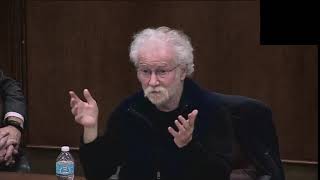
In this Entrepreneurs Unplugged interview, Dr. Larry Gold discusses his intellectual influences, personal values, and how they intersect with his businesses, especially SomaLogic’s proteomics platform. He shares recent book recommendations (including Kahneman’s Thinking, Fast and Slow, The Telltale Brain, and Bowling Alone), reflecting a shift toward non‑fiction and sociological insights. Gold explains his optimism about the commons and his view that health care should focus on quality of life rather than merely extending lifespan, acknowledging future ethical debates around privacy of blood proteome data. He admits to personal dissonance when hiring, preferring to help individuals even when it may not be optimal for the business, and recounts a failed marriage that forced self‑reflection. The conversation then moves to the importance of place, with Brad Feld and Brad Bernthal emphasizing how Boulder shaped their entrepreneurial outlook, and Gold adding his own story of staying in Boulder despite a tempting offer in New York. Throughout, Gold balances candid personal anecdotes with broader philosophical perspectives on entrepreneurship, ethics, and the future of healthcare.
Chapters
So my name is Jill Dupre, and it's my pleasure to welcome you to tonight's event. It's sponsored by the Silicon Flatirons Center for Law, Technology, and Entrepreneurship, the Atlas Institute, and also Kurtz Fargo LLP. And for those of you who haven't been to one of these events, the idea is storytelling with a point. So we bring together people from a diverse set of backgrounds to learn more about and talk about entrepreneurship. Through the stories of successful entrepreneurs. In terms of format, we'll start with Q&A led by the two Brads until about 7:30, and then from 7:30 to 7:45, we'll have open audience questions. We follow the Silicon Flatirons' rule of starting with a student question and then opening things up. And then there will be a reception following.
And will there be a reception following? Yes, next door. Of course there'll be a reception following.
Of course. So before we get started, I'd like to get a sense of who's here. How many people, is this your first Entrepreneurs Unplugged event? Oh, wonderful. Anybody from Anschutz? Great. And how about BioFrontiers? Okay, students?
Wow.
Faculty?
Great.
Entrepreneurs? Wonderful. And we have an—
Aspiring entrepreneurs.
Aspiring entrepreneurs.
There you go.
And we have an Entrepreneurs Unplugged tradition of just taking 60 to 90 seconds. Turn to somebody who's sitting near you that you don't know. And just quickly introduce yourself. It's foreshadowing for the reception.
It's good to see you. This is so weird.
How's your family?
Everything is good. My son, right?
Yeah, right.
In the black jacket, came in from New York to surprise me for skiing this weekend. And then when I told him this was happening, he said, I'm staying another day.
Awesome. Awesome. And you've been to one of these before?
The first time I came was the time that you introduced Wendy Lee and you were the questioner. And it was one of the nicest nights ever for me. And I contacted him because I wanted more of him. And we got to be friends, kind of.
Awesome.
He and Phil, they're just magical. And this thing— I'm going to turn this off— this thing of, um—
Yeah. No.
[INAUDIBLE] For questions, I've heard they do, but you don't have it for audience questions, but not—
OK. If it's on right now, audience can ask.
I'm going to yell.
Good.
Good.
And I'm going to send you a note. I know what you should do.
Yep. I totally agree.
I totally agree.
And it's easy for me to make that argument pretty strongly because I think it's much better.
And did you guys know each other before?
Great connection.
Yes, I mean, what has been doing?
My work process, I go in engineering and entrepreneurship and soon I always tell Joshua Elkington last night here.
So I'm glad that you guys were okay.
I hate to cut it off, but I'm going to.
I love working with him.
Everyone is going to be here afterwards for the reception, so please continue then. I want to call your attention to a few events that are coming up. These are all listed in the program that you have. First, there's an IP crash course with Jason Hazelmire. It's Intellectual Property for Entrepreneurs. For those of you who don't know Jason, he's a partner at Bryan Cave, a member of the Silicon Flatirons board, and really an expert on IP. So this should be a great event. It's Wednesday, February 26th. Another great crash course featuring Brad Feld on startup boards is Thursday, March 6th. And a conference, an innovative conference on sci-fi and entrepreneurship, "Is Resistance Futile?" That's Friday, March 14th, and has a great lineup of speakers including Brad, Brad Philweiser, and William Hurtling, who's the author of Avogadro Corp and AI Apocalypse, among other award-winning books. So check that out, it should be fun.
That actually came out of an Entrepreneurs Unplugged session from about 5 years ago. Someone had asked Brad during Q&A, what business books are your favorites? And I believe your response was, I don't read any of them, but I read science fiction. Which got me thinking that it'd be cool to do something about entrepreneurship and science fiction. So we're actually going to do that, March 14th.
For those of you— how many people here are into science fiction? I really encourage this event. I think it's going to be pretty special. William is— I describe a category of science fiction as near-term. So it's stuff that could happen in the next 5 to 10 years. So it feels very real, but it's a little bit out there. He's one of the best contemporary sci-fi writers in that. And then John Undercoffler, who's the founder of a company called Oblong, who was the science and tech advisor for Steven Spielberg for a number of years, including during Minority Report. So all of you that know, think of Minority Report as sort of an iconic movie, much of the creation and instantiation of the ideas were John's. So we'll get some really good things.
That's going to be fun.
Yeah.
I also gave you a handout of upcoming events in Atlas. I'm the associate director of Atlas. Tomorrow we have a speaker series event featuring Jer Thorp on making data beautifully meaningful. It's the intersection of science, art, and design. And he's going to talk a lot about data visualization. So that should be another great event. And it's tomorrow at 4:00. And then we usually ask if there are any entrepreneurship-related audience announcements quickly. Yeah, Mystery. Hi, my name is Mystery Murphy. I'm the director of the New Venture Challenge, which is CU's cross-campus entrepreneurship championships. Coming up on Monday, we're gonna have Nicole Glaros from Techstars come and give a talk on how to pitch. That's gonna be in this building, so check that out, cunvc.org. And then on April 22nd are the finals for the New Venture Challenge.
This is an excellent opportunity to come and see some of the most innovative ideas, business ideas coming out of CU.
It's in this room, April 22nd. Go to cunvc.org to get all the information for those events. Okay. With that, it is my pleasure to introduce Larry Gold, Larry Gold as our featured entrepreneur. And I won't read his full bio because you have it, but I do want to highlight a few key elements. Since 1970, Dr. Gold has been a professor at the University of Colorado at Boulder and served as the chairman of the Molecular, Cellular, and Developmental Biology Department from 1988 to 1992. He's received many citations including the CU Distinguished Lectureship Award, the National Institutes of Health Merit Award, the Career Development Award, and the Chiron Prize for Biotechnology. Dr. Gold is the founder and chairman of the board and past CEO of SomaLogic, which is a privately held protein biomarker discovery and clinical diagnostics company right here in Boulder. SomaLogic's SomaScan proteomic technology unlocks protein biomarker discovery across multiple applications. It's being used today both by SomaLogic and by its many academic and biopharma partners., to develop new diagnostic tests, discover new drugs, accelerate their translation to clinical practice, and reveal deeper understandings of basic human biology and disease. Prior to SomaLogic, Dr. Gold also founded Nexogen, which later became Nexstar Pharmaceuticals, and then merged with Gilead Sciences. He held many positions at Nexstar, including chairman of the board, Executive Vice President of R&D and Chief Science Officer, and he's a member of the Institute for Genome Biology External Advisory Board at the University of Illinois Urbana-Champaign. And I just wanted to pause to say that we've been doing Entrepreneurs Unplugged for going on 6 years now, probably 8 events a year, and we've never used the words molecular, biopharma, proteomic, or even genome. So I'm really thrilled to hear about something that's new to me and to see so many new faces in the audience. And I really hope that this is a new trend for the series to have this area incorporated. And with that, I'll turn things over to the managing partner at Foundry Group, Brad Feld, and the director of the Entrepreneurship Initiative here at Silicon Flatirons, Brad Bernthal. Join me in welcoming them.
Let's start by, in some respects, starting at where we are today, and then we're going to wind things back. But in terms of SomaLogic, we have some people here who are moving at a pretty fast level of sophistication, including people from Anschutz, BioFrontiers, but we also have some people who don't have background in bio. Help people understand the ambition and what you're on to with SomaLogic.
Softball, I love it. So, um, thank you for inviting me. I hope you can hear me in the back. I'm a little, um, a mumble. I, um, SomaLogic was started 14 years ago, and it came from the work we were doing at Nexstar from 1997 to 1999 when our company was bought by Gillian. And after that happened, I bought back what we had been working on so we could keep it going. And so we've had since 1997 until today, which is 17 years of working on this thing that you still don't know what it is. Is. So the thing is really simple. In 1997, at a meeting at Nexstar, I suggested that the highest value for us as a company would be to measure quantitatively and precisely some number of proteins, some large number of proteins that are flying around in your blood. So before you get all nervous, you know what that means because you've all done something like that. For men above a certain age, you've had your PSA measured. PSA is a protein. It just happens to have the name PSA, but it's a protein. And if it goes up, people worry about your prostate getting bigger, which it is at that age, or having prostate cancer. HCG is another protein, that's a name of another protein that is measured because when a woman is pregnant like our wonderful host, within weeks of being pregnant, her HCG level went through the roof. Before that moment, it was low. The pregnancy test measures that protein. That's two proteins, PSA and HCG. That's just the names of of the proteins. Human beings have about 20,000 proteins in their bodies, in our bodies, and about 3,400 of them are flying around in your blood, and they are the things that tell— one of the two things, nerves is the other— that tell one tissue what another tissue needs or wants. So proteins are a way for communication to happen in your body. There are only 20,000 of them, and we realized that we could measure a large number of them, and we thought therefore we would be able to tell a person if they were healthy or not, and if they were not, what it meant to be not healthy more precisely than yes/no, but something about what the diseases, cancers or heart disease or something like that. So that was our idea in 1997. That field measuring proteins is called proteomics. There's lots of omics. There's metabolomics, there's genomics, there's lipidomics, there's all these omics things. And proteomics has been in some ways the most difficult because the technology to do what we said in 1997 didn't exist, so we had to invent it. We invented it on the spot. We were wrong, that is, we were right about what we wanted to do, but the basic idea was right, but the technology was harder than we thought. So some $200 million and 12 years or 10 years later, we made it all work. So now we are a company, we, SomaLogic, that has built a platform called measuring a whole bunch of proteins whose names don't matter any more than you care about PSA or HCG. You don't care about that. It's just number 1 to 20,000. We measure a lot of them, and nobody else in the world can do that, and we do it simply, cheaply, quickly. And then once you have that, you can imagine doing something that looks like big data, and then I'll be done. Okay, big data, what's that mean? You get a bunch of people that have some disease and a bunch of people who look like them but don't have that disease, and you just measure all their proteins in some dumb way. You don't know anything. You do it in an unbiased, not a hypothesis-driven experiment. You just do it. You'd say, give me your blood. You get blood from, you know, a few hundred people, another few hundred. You measure and you look for the differences between those two groups of of people. And we've done about 40 such clinical trials and every one of them has worked, meaning that in every one of those things we did, we found protein concentrations that were predictive of the health status of the people that were sick versus the controls. This is like a— I wouldn't call it a goldmine, but at the beginning of building a real company. To do diagnostics. And the ultimate goal of SomaLogic since 1997— it has never changed in all those years— is to be able to do that inexpensively for everybody on this earth once a year, so that instead of being compared to somebody who looks like you but isn't sick, you're compared to yourself last year and the year before. Because if you do that, that's going to make the the data stronger. Things change. And we've done a fair number of longitudinal things like that. And sure enough, things change, but just like you'd expect. How could they not? That's the way the body knows what's going on, so it makes perfect sense. And so the goal is to sell one of these things for some inexpensive price. I don't know what it'll be. $100, I'm a number, to 5 billion people a year and to put all the data in the cloud and some company of Bradfields will then analyze it and tell you what's wrong with you and tell you what doctor to go to and what drug to take and blah, blah, blah. So this is personalized medicine in a way that's meaningful. It's not about the DNA genomics because that's about risk of disease usually. And so it's about extent of disease. Is this answering your question? It's perfect. Oh, thank God. Here's 5 minutes.
OK, next. Take a deep breath, Larry. When you go back to the beginning of the first company that you started— and you've done a number of companies now and been involved in others— talk about that early moment and what you were doing at the time when you first thought about the idea of getting involved in a company. And what that journey looked for you. Because clearly, you know, from a researcher, a scientist, an academic perspective, you know, you have an incredible, incredible trajectory. But what caused you to decide to put a stake in the ground around entrepreneurship?
I love that. I was underpaid. The fucking University of Colorado underpaid me. And I had I had 2 children who wanted to go to college and I couldn't figure out how to do it. And so the first one we did, Synergyn, was 100% about a non-idea. It was about money. So I'd like to admit that. And it worked. We made a lot of money. That was good. And that was called Synergyn. It was the— and so the decision was about needing it. It wasn't about— I had no idea. But luckily the company, the venture capital firm that funded us was Warburg Pincus, and they were then the biggest early-stage venture capital firm in the world. Oh, you want me to do something? I don't know what you want me to do. I can put in my notes. A lot of suggestions here. This is the entrepreneurial Is that better? Can you hear me like that? Okay, thank you. So, so the first one was about money, and I got fired. And I was one of the founders. I got fired in 1987 by a guy who might be in the audience today, still, still lives in Boulder. I hated him for firing me. I didn't speak to him for 10 years, and after 10 years I realized that he was right and I was wrong. And so I found him and I apologized for me being the asshole, not him. And now we don't see each other very often. We don't exactly go for breakfast, but he was right and I was wrong because I was this academic guy that wanted to— When was the company started? 1981. I got fired in 1987 and I went back to the university more or less full-time. I never really left and I became the chair of MCDB. And then, and I thought I was done with biotech, except I'd learned all this stuff from more Rupinkis. And the guy, Brad Moorhead, who was my friend actually. And so while I was being the chairman, Charlie Butcher, who many of you know who that is, who died, he was my best friend and he was an older guy. And when I became the chairman, I realized that tech transfer sucked here, still does. And so I asked Charlie to come help me as the chairman, help me figure out a way to make money for MCDB. And it turned out that the idea that he had, or that we had together, was to figure out how to do tech transfer right. And that was when Gordon Gee was the president, and so we ran around to all the campuses and we met with lots of people and we had this idea. And in the end, the champion Gordon Gee had a— this is all being recorded, this is great, I hope he sees it. Gordon Gee invited me to come down to the Regents meeting in Colorado Springs. I had to cancel a day of vacation that my wife and my son Nick and my daughter Emily and I were going to go take. We were going to Santa Fe and he made me put that off for a day and we went down to Colorado Springs and we met the Regents and that was amazing. And then Gordon Gee came out and shook my hand and said, we're gonna get this done, this tech transfer thing done. And then we drove to Santa Fe, and the next morning in the paper, it was announced the next morning that Gordon Gee had accepted the presidency of Ohio State. So he shook my hand, he shook my hand and said we're gonna get this done, knowing he was gonna be gone the next morning. This is called sport lying, okay? This is stupid, okay? All he had to do was say, Good luck to you. I'll see you in whenever, later in the life cycle. So this idea didn't happen because the champion went to Ohio State. And then this accident happened, which is what you asked about. This graduate student— I knew that. I was just checking. This graduate student, Craig Turk, had done this amazing experiment. And I heard about the experiment for the first time after having talked to Craig about it. This wonderful man, graduate student guy. And he, the Wednesday before Thanksgiving in 1989, showed me the result of this experiment. And it was like unbelievable. And so it was clear we had to go start another company. And I didn't think we were ever going to do that, but this thing was amazing. And what happened is that Craig, who was tall, and I was still not so tall. That's not funny, but it is to you. But, but, so Craig wrote a line across the whiteboard and he stood behind me and he wrote all his ideas on the top part and I wrote all my ideas on the bottom part because he just reached over me and wrote everything. And then that weekend I went back home for Thanksgiving and wrote this patent that became the basis of the second company. And this was different. This— I knew from the first time that not leaving the university was not serious. You can't build a company and run a lab at the same time. That's just crazy. But we tried to do all of it, all 4 of us really, except one guy. And so I quit. I quit the chairmanship. I gave up tenure and decided that we were going to do this thing called Nexogen that became Nexogen. And for those of you who care about money, that is not exactly me, it was an amazing financial success because we in the end got bought for a third of the stock of Gilead, a company some of you know of. And that's today the biggest biotech company in history, bigger than Genentech and bigger than Amgen. Its market cap is $120 billion. So the Nexstar shareholders got, if they were still in it, got $40 billion in only 10 years. It went from $1.8 billion the day of the merger, $1.65 billion to $2.4 that afternoon, and now it's $120 in those 14 years or something like that. And so I bought back. I knew I was gonna get fired. Now I didn't have a job anymore I'd given up tenure so I couldn't go back. I even thought about it, but nobody seemed to think that was a good idea, meaning my old department didn't think it was a good idea. And so I had to do something. So I sold all my stock instead of waiting till today when it would have been worth $3 billion. Oh, damn. So Nick knows that my wife sometimes reminds me of that, say, in the mornings, but, but never more than once a day. Um, um, and so I sold it all so we could start Somalogic because we'd started this idea in 1997, this idea of measuring a bunch of stuff in blood. And, um, and now I was driven. So Nexstar was serious because it was about a technology that we didn't know where it was going to go. Synergen was about money. Nexstar was serious, but, but SomaLogic is actually about doing something. And so I wish I had not done the first two with the same mindset. But so my mindset kept changing.
So the arc of those three companies is very powerful. Sort of to play it back, the first one was about money. The second was serious, but it wasn't a mission. SomaLogic is a mission. You're on a mission, you've been on a mission for 14 years. 17.
17 years.
17 years is a long time. When you think back on those 17 years, are there phases to the mission? Has it been a nice, steady, consistent, upward-sloping curve for 17 years? That's a leading question, right? So talk about the ups and the downs. And especially some of the downs on this 17-year mission. I think people that have heard me talk before about startup communities and things like that hear about long-term view, 20-year view, having to be in it. It's nice when it happens quickly, but that's atypical.
I love that. So in 1997 at Nexstar, In this meeting of the 100 or 200 people that were in the room, I said what is now Somalogic out loud. And at that moment, I knew exactly how to do all of it. I was almost right. That is, of the 20 or 30 things that we had to do, most of them happened just the way we thought. So we thought this was— people always love saying this in, in this world of startups— we thought this was an execution play, that the need to invent was zero. How many times have you heard that?
Over and over again. It's almost always bullshit.
It's always bullshit, and especially if it comes from my mouth. But because I was convincing to myself, I believed it at the time. I told the first people who invested after Hope and I invested that it was 2 years to profitability, the rolling 2 years to profitability. It turns out we are still at least 2 years from profitability. I no longer care about profitability. Who cares? To growth. I'm interested in growth, not profitability. Anyway, we have a new CEO and he's interested in growth. It's great. So, so we got a lot of it right, right away. And then we started to fit— we ran up against the things where we needed to invent things. And when you need to invent things, you can't do the timing of inventing because you don't know what you're going to do. And so this was research. So, you know, people— we had a discussion over across the street about research versus, say, basic research versus applied research. It's still research. There's no difference between academic, in my mind. Academic science and company science. It's still science. You gotta make it work. You can't break any of the laws of thermodynamics. There are only a few, but you know, you'd like to break as many as you have to to get it to work. It didn't work, and so I'd say for the first 6 or 7 years during which we plowed through more than $100 million, none of it worked. None of it. And we kept saying to people, It's gonna work. And because we believed it, some people believed us, and we got strategic partners— Quest Diagnostics and others— to, to play with us because they believed that we wouldn't ultimately fail. We weren't breaking any of the laws of thermodynamics. We were simply struggling to figure out how to do it. And so today, you know, so we started this in 1997. And I can tell you, I'm not selling stock, so I can tell you anything I want. Nobody else can do what we do. No one else can do it. And that won't last forever, but I, I do a lot of reading trying to figure out who will come along and do it. I don't even see another way to do it, so I'm completely nuts about this. So the, the trajectory in the 14 years since we started SomaLogic has been a long, early success and then a long kind of bad thing where it didn't work. It is bad. But because we knew it eventually would work, because it was such a good idea for medicine and personalized medicine and healthcare and all that stuff, we didn't quit. And so the 100 people that are still there, of the maybe the 150 that have been there at one time or another, actually believe in the technology and they're kind of on the same mission I am. Does that answer you?
Yep. When you think about each of the 3 different companies, what was the— let's go through them one at a time. What was the darkest day? And what was the best day? Yeah, let's start with money. The company done for money. What was the darkest day and what was the best day?
Well, it wasn't such a good day the day I got fired by the CEO. I mean, let's just say that, you know, when you think you're helping and somebody tells you you're a jerk, that's not so good. I mean, I don't So I don't know, I've been fired a fair amount, and I think being fired is good for you, but at the time I didn't think it was good. Felt dark, and you know, and you feel a little desperate because you're getting paid and all of a sudden you're not. You know, that's not good. So that was pretty dark. The science that happened at Synergen was about a drug. In the end, it was about a drug for for sepsis. How many of you know how bad sepsis is in the world? So you all know about cancer. The number of hands that went up was 14 or something like that. Oh, sorry, 15. Sorry, okay. So 700,000 or 800,000 people in the United States get sepsis every year in the United States, and half of them die in 3 weeks. What? That's almost as many people as get cancer. And except for the really bad ones like pancreatic and lung cancer, most of those people live for years. So this is a terrible disease. And there are no drugs. There are no drugs. And it's the easiest clinical trial imaginable. You just count who survives 3 weeks. That's an easy trial if you had a drug. And there have been 20 clinical trials or 30 at this point. And there's one drug that has been approved, and it shouldn't have been, and it's never used. So there's no drugs. Holy moly, right? So we had at Synergen a drug, and the drug was— went through two enormous clinical trials and failed both of them. That is, they didn't meet their endpoints. And, and those are bad days. I was gone by then, but you You couldn't feel good about that because there are people dying. So that was not good. So there were some upsides. But I'd like to say that I learned about some hard stuff that entrepreneurs all have to think about. It turned out that I was the best person at Synergyn at talking to the people who weren't doing so well and helping them leave. So the first 13 or 14 people who got asked to leave Synergyn. I did, and then I was the next. I was, damn, I thought I deserved something for all the hard work I did or something. So that was bad. Nexstar was just wonderful, and because the science worked, we had a wonderful CEO that Warburg made us hire. Who was in this community, Pat Mahaffey, and he was great, and I learned a huge amount from him. And in the end, the Warburg Pincus guys got bored because they'd owned it a long time, and they made— they made, because they owned a lot of the company— they made a decision that we should sell it. And that was hard. That wasn't fun. But we'd already spent, I don't know, $500 million or something like that, and we didn't have much to show for it. We couldn't say we're halfway there, you know, give me another $500 million. So, um, so that was bad. But in the end, Warburg, like so many times in their lives, did the right thing for its funds and the investors. And I, and I didn't like it. But it turned out to be good for everybody, including Gilead, that used that acquisition to become the company they are today. So that was— and at SomaLogic, there's been nothing bad because we always thought the next experiment was going to work.
So there's a story that I think helps provide some context about your ability to beat your own path. Talk about going to Yale, and the unconventional path you took when you were there.
So you, you guys, you're gonna suffer today, because these two guys know, I've known these guys a while. And they know some of the most bizarre stories about my life. And I suspect that what's going to happen is they're going to keep asking these things, so be patient, right? So this is a true story. Brad, Brad, so I grew up in Schenectady, New York, which none of you have ever been to, I suspect.
One guy. Help.
Two, three. Holy moly. Four.
Wow.
We could go have beers in my car. Anyway, so I was a successful high school kid, and for some reason I got admitted to Yale. I applied to 6 places, and 3 didn't let me in, and 3 did, and one of them was Yale. So I went. I didn't know anything about Yale when I went. I just I just knew that they had a glee club and I was going to sing in some singing group or something. And I made the Dean's List my freshman year. I will try to make this short. I could tell this story for 7 hours. And in fact, I'm so glad, Nick, that you're here because there's this confirmation that you're going to hear about in a minute. I can't believe you're here, Nick, to see this. So my freshman year I made the Dean's List both semesters. And I went home and worked for the summer, and then I came back and I realized that even though I had made the Dean's List both semesters, that all these kids at Yale were Christian— don't be offended— tall, handsome boys. They were all boys then, and they all had read books. They'd actually read books. They knew authors and books. And I had never read a book for pleasure in my entire life, not one. I had never read anything that had not been assigned to me, including my freshman year at Yale. So I got back, and this is, I guess, entrepreneurial. I understand, Brad, why you did this, I guess. And I came to my roommates in sophomore year and I said, I'm not going to classes this year. I actually said this semester. And, uh, and I didn't. I— then in those days you didn't have computers like now, and so you signed up for your 5 classes for both semesters in the summer by letters and whatever, you know, paper. And, um, so I had 5 classes that I was signed up for, and I simply didn't go. I did not go to a single class. I didn't take a single exam. I didn't do a single, uh, whatever you call them, homework, whatever it was called. And all I did was go to the Yale bookstore and buy books and read them. And I stayed in my room and read books all day. And I'd read 3 books a day or 2 or 3 or sometimes 4 if they were short. I liked short books. And I caught up, I thought. And at the end of that semester, I had— I got grades for never going to class, not doing a single thing. I got 2 Fs, 1 D, and 2 Cs. There's a sequel that you'll hear that Nick saw about George Bush that I'll get to. Because Nick, you're great. So I'm in love with my son. So, you know, 2 Fs, a D, and 2 Cs, that's not so bad. So I told my roommates I'm going to do it again. And I did. And at the end of the second semester, with 5 different classes, that I could still find my report cards from, I again got 2 Fs, a D, and 2 more Cs. So now I had 4 Fs, 2 Ds, and 4 Cs for the 2 semesters, and I'd read about 300 books like a crazy person, and I've never stopped. I mean, I still read like a crazy person. I'm one of the few people that still uses an original Kindle. All over the world. I just cannot read enough. And so I was ready to go home to my summer job, actually at GE in the summer, just because that's this thing, you know, never mind. And, um, I got a phone call from a dean, and he said, Mr. Gold. So, you know, you don't want that call. Mr. Gold. He didn't say, Larry, how you doing? He didn't say How's your jump shot? He didn't say any of that. He said, you know, Mr. Gold. Oh God. So he said, would you come up to see me? So I go up to his office. I'd never been to a dean's office. And sitting in front of him was two folders. Is this taking too long yet? Keep going. OK. And one of them was last year, the dean's list. And one of them was this year with my 4 Fs, my 2 Ds, and 4 Cs. And he said, "What happened?" And I told him what I just told you, more or less word for word, because as Nick knows, this is a story I tell anybody who will listen, including you poor guys. And he looked at me and he said, "What did you read?" So I told him. So we started talking about Nathaniel West. He only wrote 4 books. You could finish him before he died. That was good. I read all of them. You know, F. Scott Fitzgerald. I read all the Hemingway. I read a lot. I read hundreds of books. And we talked about books, this Dean guy and me. And then he wrote something in my folder, closed the folder, and he said, "Sounds like you had a terrific sophomore year. See you in September." What? So I came back in September and took classes and got whatever grades I got, and I don't think I ever made the Dean's List again. But I— and then at the end of my senior year, I took classes again my senior year, and I graduated. So I told Richard Levin, Rick Levin, who is the former president of Yale, this story in his office about about 4 years ago, and because he's become a friend, and for those of you who want to come to the Gold Lab Symposium in May, he's going to be one of the speakers, Rick Levin, an economist. And he said, well, how did you graduate? I said, what? What do you mean, how did you graduate? It never occurred to me to not graduate. It's time to graduate, I graduate. He said, well, you didn't have enough credit. And I said, what? He said, yeah, you can't graduate from Yale with 4 Fs and 2 Ds in your sophomore year. You don't have enough credit. And I said, huh? This was 5 years ago. So let's agree it was a little late. The statutes of limitation had passed, and I was okay. They're not going to take it away. But he said, Well, I'll look it up. I said, look it up? He said, yeah, he said, we don't throw anything away. So we found the folder that the dean had written in, and on the bottom, he reported to me in an email, it said, leave this boy alone, he's doing fine. So think about that. I think about— think of all your kids and yourselves in college. That ain't gonna happen anymore. I mean, this is This is a strange thing. The sequel to this, the amazing sequel— so I told my kids this story, you know, a million times. You know, follow your muse, I guess that's the message. Why don't you follow your muse? Follow your muse, but get all A's and don't give me a heart attack, right? To your kids. So, so we figured out who the dean was, who was still alive, and last summer This dean was honored at my 50th reunion. And we went, and Rick Levin sent the dean, who's now in his early 80s, so he was only 10 years older than I at the time, so he was a kid, sent, connected us. And I told this dean that I was going to hug him when I saw him because he saved my life. And he said, well, I'll hug you back. And so Nick came to this thing at Yale, and we sat at this luncheon, and there he was, my dean, my savior. If I was going to start a new church, he would be my God. And so I went up, and we hugged and thanked him, and we had a long conversation that took 5 minutes, and he was still great. And then Nick, he was impatient, my little boy Nick, said, look, I've been listening to this story forever and I just want a one-word answer. Is it true or false? He said, and the dean looked at you and said, it's true. And then he told Nick and I, Nick and me, that he had done this a fair amount as a dean and he'd only made one mistake. Made one mistake in his entire life, and it was George Bush.
That punchline was worth waiting for, right? Especially in Boulder, Colorado. Larry, let's shift into a little philosophy here, because I think that that leads well into it. And Brad and I teach a course, and Phil Weiser teaches a course called Philosophy of Entrepreneurship. We're doing it for the second year. And the course is really an exploration that we're doing to try to think about how to talk about entrepreneurship with students and with people that are aspiring to be entrepreneurs in a different kind of way. You can read all the crap that you read in TechCrunch and now in popular— The Economist has long sections about it. Entrepreneurship Now. But it doesn't really ever capture the essence of creation, creation of a company, the formulation of a new idea, and then the effort that goes into building on that new idea. And even the story, in your second year at Yale, it would have been much easier to follow a path. You chose a totally different path that had risk. That had uncertainty that required discipline. You can't sit in your room and read 3 books a day if you're not disciplined about it. It would be a lot easier to sleep all day and screw around because you had— this is going to lead to the joke about sleep. No, you can tell that joke separately if you'd like. Somebody ask him about that joke that he didn't want to talk about. But when you think about— the essence of it, you think about what's driven you over, you know, a long arc to keep inventing, to keep creating, to keep starting anew, even something that takes 17 years, to stay after that thing with the discipline that required. What's the advice you would give to the younger you, that you that was a sophomore or a junior or just graduated from at Yale about what you've learned over the last 50 years that that younger you could have known around entrepreneurship, around creation, invention, innovation.
So I think the guy that didn't go to classes and the guy today is actually the same guy. Because I didn't think about the risk of not going to classes at all. Never occurred to me. I knew I was going to read because I needed to learn to read, because otherwise I couldn't learn the things I needed to learn to have a life. So I was driven to read more than I was driven to not go to classes. It was just my method was to make time to read. And I've always made time for things that my whole life that I thought mattered. And so the— I don't see that— I don't see much difference, to be honest with you, about me then. I was more sophisticated, I guess, in some ways. But to me, it's all about trying to do the best you can with every little ounce of energy you have about anything. And I don't much care what it is. I just care that you do it. You know, you get one shot, as they say. You might as well do it. And so I don't— I knew that when I was young. I knew it without knowing it. I couldn't have said it. If you'd asked me, what are you doing? I would have said, I'm reading. And if somebody said, Well, like my roommates did, well, what about the grades you're gonna get? I'm sure I said, oh well, we'll figure it out, or something like that. I wasn't driven by fail— the thought of failure never occurred to me. And in fact, those of you who are mathy guys know that if you had to— let's say you were gonna start a company and you had 10 things to do. And you thought that each of them was 90% likely. So you can do the math of what the likelihood that you'll get through 10 things that are each 90% likely. It's 0.9 to the 10th, which is whatever it is, 0.07 or whatever the number is. Small number. It's a smaller number than 90% because you gotta you know, raise 0.9 to the 10th. Entrepreneurs believe deep down in their hearts that 0.9 to the 10th equals 1.
Can I blog about that tomorrow morning?
You can blog about anything except—
That story you're not going to tell.
I'd like to follow up on that as well.
Knowing that—
it's a fascinating statement that you had that failure just did not enter your mind, whether it was taking the sophomore year to read books, or in 1997, deciding this is where SomaLogic is going to go. Where has that led you well as an entrepreneur? And where has that been something that you have to surround yourself with someone who's waving their arms saying, we've got real issues here and can potentially spot where failure needs to be dealt with.
Yeah, I mean, I, I don't think it's wise if you're an entrepreneur to delude yourself. I mean, I don't think that. So you want to surround yourself. You also want to be the person who realizes when things are hard. And I mean, I'm a scientist more than I am an entrepreneur, I think, I hope. And so, you know, it's really about, you know, trying not to break the laws of nature. You can't do that. I mean, no matter how much money you have or how smart you are or whatever. So you got— but you do need teams. I mean, the nice part about and the thing that distinguishes entrepreneurial activities from from working in a lab with your own hands by yourself is you can get— you can do a lot of discovery by yourself because there's so much that isn't known. But if you go after one of these companies, you will always— you can get Brad Feld to tell us this— you will always underestimate the amount of money you need and you'll underestimate how long it's going to take you because you're an optimist. I mean, the definition of being an entrepreneur in part is that you're optimistic that you can make something happen. And so you know that you're thinking best case about everything. And so you do need good people, but if you're any good at this, you're not delusional, I think. I'm not delusional. I don't think I'm delusional about some things, but not that.
Larry, a number of years ago you started Gold Symposium. I went last year. My dad, who's a retired endocrinologist, has gone the last couple of years, is absolutely in love with what you're doing with that. Talk about the story of how that came to be, why you did that, and what it is.
It's actually the almost most fun I've had in years. I mean, I just love this thing. So, so because of the way Tech Transfer gives money to the inventors, I had a bunch of money in a university account. I think I had $12 million in a university account. That's a lot in a university account. And I didn't have a lab anymore, so I didn't have any place to spend it. And so Patsy Hoffman saw that. And she persuaded me to give half of it to Tom Cech for the BioFrontiers thing, which I'm glad I did because I didn't need it. And then I tried to figure out what to do with the rest of the money. And it took me a few weeks to realize I couldn't steal it.
You tried though.
You thought about it. I thought about it very hard because I would have loved it, to be honest with you. And then I realized that I could do this Gold Lab Symposium. So this will be, this May will be the 5th, and there's a website you can go look at. And it's really, I think, wonderfully fun to do. It's called, the website is www.goldlabcolorado.com. Or if you just type in Gold Lab Symposium, you'll get there. And the website has in it, and I'll tell you what it's really meant to be about, has the talks that all these people have given. And so we, we, it's all free. Any of you can sign up for this. The room holds 420 people, and so we let about 475 to sign up. First come, first serve. There's 185 as of this morning, because I get these things set up for this May. And on Friday and Saturday of May, whatever it is, 8 people each day will talk about whatever it is that that year I thought was worth hearing. So it's psychiatrically Nice, you get to choose. And, and, and I get a lot of suggestions, and each year it's been mostly good. There have been a couple of talks that I, that I didn't like as much as most of them. And it's— and we— and it's about healthcare. Sorry. So it's about healthcare. It's about how do you fix healthcare for all of us. And I start every year with this little half hour or something about what we're going to do that year. We invite all those speakers from the previous years to come back at our expense to have some continuity. That's why your dad can come for the rest of my life and bring your mom. It's okay, they get to do that. And the talks have gotten— there's always hard science. Hard, but always done in a way that everyone in this room would understand. Because if somebody says something that I think any of you didn't understand, I will yell and ask for help. And people do that. And, and I mean, one of the talks last year was by this world-famous guy Chris Walsh, who talked about the crunch and not having antibiotics for all these infectious diseases. And he gave a profoundly scientifically strong talk that everyone in the room understood, which takes some talent. So people work at it. We had some stand-up comedians. This guy Danny Klein gave a talk about— his talk was called, I think it was called Death: The Prequel or something like that. I mean, he's this nutty guy who wrote about about how one summer he was told— he's old, he's even older than I am— and he was told by his dentist that he needed to have a lot of work done on his teeth. And he wrote about this in this book called Travels with Epicurus that I read and loved. And he looked in the mirror, he thought his teeth looked like shit, and then he realized that instead of spending all that money to have his teeth fixed, he could go to a Greek island and live for the summer, and that's what he did. And his teeth still look terrible, but he doesn't care because he had this summer, and he wrote about this extraordinary summer. He's a wonderful man, and he told an incredible set of jokes for 45 minutes, but they were all relevant. So it's a mixed set of things. And we've been promising— I have— that we could get, you know, we're kind of building a community community, I guess, of sorts. There are, you know, 400 or 500 people that show up and have lunches for free, and it's all free. It's fun. And the idea was to see if we could do something actionable about healthcare. And this year, this coming May, two of the people who have spoken previously— one is a guy who's an advertising guy named Scott Danielson, and the other is a music teacher from Austin named Robert Duke, who had, I think, the best of all of the talks in the 4 previous years, a talk of a young kid playing the cello. And you saw this kid playing the cello, and you just cried during his talk. I mean, it was so beautiful. So he's a teacher, and the 2 of them are concocting a teaching moment for the audience. Where we all learn what we can do to make healthcare better, whatever that means. And they are thinking about it. I just got an email from them asking if I would mind if they did something crazy and disruptive and that I wouldn't know what they were doing. And I said, go for it. So we're gonna— it's gonna be science and, you know, stuff. And this one is called, I think, Oh yeah, embracing the reptile within. Because remember, your brains, even though you think you're a smart cookie, you have a reptilian brain that just— when you put your finger on a hot plate, you go like that. You think that you don't behave that way absent the hot plate in a way that's just stupid and hardwired? You're wrong, okay? You are a are a hardwired set of creatures in this audience, and it'd be good to know that when you're trying to make decisions. This is the book Thinking Fast and Slow by Daniel Kahneman. I mean, if you don't think that you're hardwired, you should read that book because that book is all about how hardwired we all are.
So Larry, about that $6 million, you know, I'm an attorney and offshore accounts might be a solution that we could talk about a little bit. I want to go back to that SOMA was about doing something. When you're talking about the Gold Symposium, that's about doing something. First of all, I want to surface your theory of the bus in terms of thinking about what's worth doing. But then talk about, as you look out in terms of what's next for you, what do you feel like is worth doing? What's the next something from your end?
But the bus first.
Yeah.
So those of you who want to do something entrepreneurial have to figure out how to do something that matters. In fact, every morning, You have to figure that out, right? That's the kind of complicated thing here. Just going to work and doing whatever, that's not good enough. So scientists are always asking me, what should I work on? You know, graduates— we just had exactly this conversation across the street. And what I always say is the same thing, which is why he refers to it as the bus story. It's not a story. In the morning, when you're brushing your teeth, you're supposed to look in the mirror. And you're supposed to ask yourself something simple. If I got hit by a bus on the way to work today, would the world I think I care about be one bit different? Good question to ask. If the answer to that question is no, you should not go to work. You should go back to bed. You should go read a book. You should take your dog for a walk. You should play basketball, whatever you want. It doesn't matter because if your death, as you're hit by a bus, doesn't change the arc of what's happening, it doesn't have to be big. It can be anything. It can be your family. I'm not a judgmental person, but it has to mean something. And when you're thinking of being an entrepreneur, which many of you in this room are, If the work you want to do doesn't mean anything except that you'll be richer at the end of the day, well, shame on you is what I'd like to say. Shame on you. Shame on me for starting Synergen. I mean, come on, I was younger than— oh, that's right, you're younger now. Oops, wait a minute, that doesn't work. So sorry. Um, but you know, you have to— the choice of what you do in your life should be serious.
And that's what I think. Two more questions and then we'll do Q&A. I have one I want to end on, but before we get there, I turned 48 a couple months ago. And I've been personally on my own journey in a different place in my own arc. And it comes back to a combination of a series of things, including what I spend my time on, what I want to spend my time on, how I spend my time, and what I think matters, not just to the world, but also to me. And you and I have had some conversations about this, pretty deep ones. Some would say. Some would say we would say that's right. I, and I know, I know that sort of underneath the arc of accomplishment is a very deep sense of your own internal meaning. I'd love to hear you bring that out a little bit to people. In other words, you know, the mission of the company is one thing, the mission of having or the internal goal of having some impact is another, but what is really the underlying engine?
So you can't do this. I mean, you did it, but it's such an invitation to just bullshit all over the place, and I know, and I don't want to do that.
I have faith you won't.
Yeah, so when I went— I believe that when I went to Yale at the end of my sophomore year, I now was a reader. So that's a thing that lets you kind of figure out what you're doing. And those of you who don't remember, so I finished my sophomore year at the end of 1961. That was the year of the books. It turns out that William Smith Sloan Coffin was the chaplain of Yale College, an Episcopalian by training, and he was the guy who led college students in the Northeast to go south to do civil rights stuff. And so he was a hero to everyone at Yale that had a brain about what mattered, okay, and my friends who were all kind of weird and not these guys from prep schools, we fell in love with William Sloane Coffin, and so we spent our junior, our sophomore, junior, and senior year going south to, you know, picket and do all that stuff, and we'd go to the law school which was then the Yale Law School, was the most astonishing place for lectures about all kinds of civil disobedience and, and finding yourself, which is what you're asking about. And so Yale wasn't about money for me in the end. It was about values. And I didn't get that in high school. I didn't have that growing up. I was just hanging around. Playing golf. I was going to be a golf pro. Did you know that? Yeah, I still can hit it far. Weird. I don't know what to say, but it's so weird. I mean, me? Anyway, so Yale was a place of values.
I'm going to start calling you Tiger Goldenthal.
I would like that a lot, actually. Not that reason, but for the other reason. Anyway, so you're asking about where do you find the underlying values that make yourself okay. And William Sloane Coffin handed it to those of us who did that if we were ready to listen to him. And my friends were all like me.
That's great. Last question, then let's open it up for Q&A. Looking back, any, any big regrets other than selling the stock the day after the deal?
That's not a big— yeah, I mean, I didn't understand the balance of my personal life and my family. You know, everybody always says that. I mean, I worked very hard, as I know you did, I do and Brad does. And I've had a hard time with balance in my life. Nick, again, the famous Nick, I once had a long conversation with him about why I was so successful. I was bragging to my son and I said to Nick, you know, every morning I get up at 3 in the morning and I work 4 extra hours from 3 in the morning or 4, 3 in the morning till 7 in the morning. 4 hours extra a day for 40 years. I've had 20 extra years of working. That's why I'm so smart and so successful. And he, this young man over there, said, you should subtract all the time you spend sitting on the toilet. It's true. I don't tell any stories that aren't true.
So, so I think you made him red.
Anyway, I wish that I had figured that balance thing out better. I mean, I've admired what you do, and I know you do also a fair amount of that. It's hard to be balanced when you're out of your mind about getting something done. Balance is tough. So I don't think I did a particularly good job of that.
Nick, I have a gift for you. Something, something I started doing, I don't know, 6 or 7 years ago that I wish I'd started doing 20 years ago, 30 years ago. I'm doing it this weekend. Every weekend my dad and I, just the two of us, go somewhere wherever he wants to go. We leave on Friday, we come back on Sunday. We always meet each other. And we just spend really 2 full days just fucking around. My dad loves chocolate ice cream. I love chocolate. My dad loves chocolate ice cream. My mother suppresses that love. She, when I was growing up, does anybody know what ice milk is? Anybody here grow up in Texas? Ice milk is like the worst, right? Isn't it awful? It's like, you know when you have bad ice cream where it's crystallized on top of it. That's better than ice milk. So my dad and I, we go somewhere for breakfast. We have breakfast and we have chocolate ice cream for dessert. And then we go for lunch and we have chocolate ice cream for dessert. Sometimes we have chocolate ice cream in the afternoon as a snack. And then for dinner, we go have dinner and we have chocolate ice cream. And one time we were in South Beach one year, Miami Miami Beach. And we usually stay in the same room together, which sometimes in certain places— Miami Beach was one of those places where it got some funny looks. But I said to him at the end of the day, I said, "That was a great day. I had such a wonderful time with you. What do you want to do tomorrow?" We'd been to a deli and we had chocolate ice cream 3 or 4 times. We saw a movie. He said, "I want to do exactly the same thing tomorrow, except a different movie. But that's my gift to you." Don't wait.
Let's do some questions. Jess is in the back. She's got a microphone. The first question goes to a student, please. Coming up front.
Thanks.
I was just wondering if you could talk about what it took to go from being successful in academia and as a researcher to being a successful business person? I think a lot of us are business students, a lot of us are engineers, so what's that transition like?
Yeah, I mean, Brad asked kind of the same question a while ago, kind of. I don't think they're different. I mean, I'm sorry, I don't. I mean, running a lab is like running a small business. Running a department is a small business. And, and in the end, you're trying to figure out where you're headed in any of them and how to get buy-in from people to push in that direction. And, and I don't think they're different. We tend to think they're different in ways that are confusing. I mean, you know, people get confused if you're motivated by making money as opposed to finding things out for the good of knowledge or something like that. But I think the actual work you do every day is very much more similar than different. So I don't think the transition— it didn't feel like a transition to me. The reason that I left when I did, left the university when I did, was I realized that the scale— this was to do NexGen, NexStar— the scale of the work was different than what you could do in a university. It was not that I wanted to run a company or that I didn't want to be in the university. I was the chairman of a nice department with friends. So it didn't feel different except the work demanded it, and it didn't feel like a big transition. It just didn't, and it still doesn't. And in fact, we just had that again, that across the street. For those of you who are choosing what to do, the first thing you have to do is figure out who you are and where you wanna do it, not do I wanna run a company or do I wanna be an academic scientist? That's the wrong question. The right question is what do I wanna do and what's the environment in which I can do it? I think, it's a different way to come at it, I think. So I don't think it's that different. It didn't feel different to me, which may be the reason that we now have a grown-up CEO because I'm really not very good at it. That part of it, of being a grown-up.
Let's open up for questions.
Others, straight back. I had the opportunity to start a mission-based corporation, and I really felt good about it and good about waking up and doing what I was doing. But getting investors and people to buy into a mission-driven business wasn't easy. In fact, I'm thinking about writing a book on saying that it's impossible. So if you could comment to— I mean, I think all of us that start entrepreneurial endeavors, or many of us, see something that needs to be changed in the world and build a company to to make that change. But how do you get people, and even in the very nature of corporate finance, in the position to buy into that, to make the investment that's required to grow to scale? And the second question I have is on the B Corp, which is coming to Colorado in the next, I don't know, month or so, if that could really change the philosophy or outlook on, from an investment standpoint, and maybe Brad could this also. I think, you know, so those are related questions, I guess. And I'm not gonna like this exactly. I think that getting lucky in high school and getting investor money is the same. That is, you ask a lot of people.
I'll weigh in on the B Corp answer. I think that says it all. I think there's another blog post there. I blogged today about one of my favorite Wire episodes. For those of you that watch The Wire, you can probably guess which one it is. I'll give you a hint. It's in season 1. The B Corp thing, which by the way, in Colorado there's a number of companies that are B Corps. And so the definition of B Corp versus beneficial corp and the dynamics between them are a little bit nuanced. But Rally Software, which went public last year, is a B Corp, but not a beneficial corp. Investors broadly will be sort of changed views, change philosophy, change dynamics around this. I think what you're seeing is you're seeing a lot more discussion, especially at the early stages of investing, seed and angel type investing, around impact investing. And I would put the B Corp and beneficial corp dynamic in that discussion, which is there's a set of people as investors who are looking for specific types of companies. You know, when I was— before I became a venture capitalist, it was double bottom line. After I became a venture capitalist, it was triple bottom line. So this arc of trying to do good in your business in addition to just being profitable or financially successful is not a new construct. I do think the impact of it being more front and center is again people who have had some success and had some wealth and want to put their money back into for-profit ventures versus just nonprofit or their own companies. That gives them an avenue to focus in a different way than just pure investing in people or investing in things they know. The last thing I'd say there is Colorado, and Colorado broadly, Boulder in particular, but Colorado broadly has always had a pretty wide range of types of companies. And if you look at the natural foods industry, you look at many of the sort of energy-type things that have been built in and around this region in the last 15 or 20 years, you go into the life sciences universe, there's an awful lot of entrepreneurs who are very, I would say almost obsessed about the problem they're solving and the impact of that problem on the world. And in some ways, whether that's a B Corp or that's the entrepreneur's tenor, as an investor, I would encourage people to pay attention to the entrepreneur's tenor because sometimes the broader impact isn't as obvious until after the thing is successful. And I'll use Twitter as a random example of that. People can make fun of Twitter all they want, but there has been regime change largely as a result of Twitter. And, you know, there's a whole bunch of other things that happened, but the stimulus of that came from this thing that was pretty widely derided when it was started and was certainly something that was hard for people to view as, you know, the CEO, Dick Costolo, now refers to as, you know, the world's town hall, right? So, it's easy in hindsight, it's very hard in the moment and I think I just encourage everybody to keep keep their minds stretched. Hi, my question is very short. I'm not sure if it's very easy.
What is your favorite book?
He's got 300 to recommend.
I'd like that list. So I, I tend to like the books I'm reading now more than the ones I read a long time ago because, you know, you start reading and you have to decide to finish it. So I just read as a pair the Kahneman book about Thinking Fast and Slow, which was really important to me. And I read a book called The Telltale Brain, which was about not thinking of your brain as a black box, but actually thinking about the wiring. And the two books go together. And then I also just almost finished today, more or less. Whatever the thing, Bowling Alone, which is a sociology book about how much more awful we are now than we used to be at the sense of the commons. And I think that's scary to me. So I tend to not read much fiction anymore. So I'm kind of trapped in that thing. I also read both books of Penn Jillette's and loved them both.
I'll add in the book recommendation. We do a thing at some of the events that we do, the introduction, introduce yourself, what you do, and, you know, a book usually in context of the audience. Like if it's an entrepreneurial thing, an entrepreneur book. If it's It's a science fiction thing, a science fiction book. And this is in the context of entrepreneurship, given that this is Entrepreneurs Unplugged. And I think it also fits a little bit within the spirit of the conversation. I think the most impactful book I read as a young entrepreneur was Zen and the Art of Motorcycle Maintenance. How many people here have read it? All right, good. Half. There's half of you that haven't. And it links into this notion of searching for yourself and trying to understand what is meaning for the work you're then going to do. And it also shows you how challenging that is and how that can make you crazy. And I think most entrepreneurs that I think are extraordinary that I've worked with go through that. In their own search for meaning. It's one thing to believe I can get it done, but that's not every day. You have long stretches and sometimes these brief moments of incredible intensity of self-doubt, or long stretches of it didn't work, it didn't work, it didn't work. And you have to understand why you're doing it just as much as what you're doing it. So Larry, I wanted to ask, thank you for linking this genuine discussion about values with real business. It's something that I don't see too often and I appreciate it. I'm just curious if you've ever been in a situation where you feel like your business and your values aren't pointing in the same direction and how you handle that. Never.
That's not a real answer, of course. I mean, it comes— I think the places that I feel the dissonance the most is when you know what kinds of people you hope will work with you, and you find yourself on occasion with someone who's just not quite there. And so your human design anyway is to help and to coach and to get professional, this and that. Because deep down, I'm an optimist, not only about work, but, you know, who people are. And, and most of my experience at that has been a failure. I suspect most people fail at that most of the time, because it's— you're asking a lot if we're really all hardwired and you get some reptilian reptilian jackass that has to behave in a bad way, toxic or whatever, and you think you're going to change that hardwiring, you're not. So, you know, you can sort of rationalize how you should make those decisions more quickly, but I never have been able to. So the conflict in those situations, I almost always have chosen to try to help somebody rather than to do what I know would be better for the business. But I've never had an ethical problem, a values problem about the— certainly SomaLogic. I mean, SomaLogic, the, the— in the end, if we succeed, which is early, people will have enormous ethical discussions about is it okay for everybody to know your blood proteome, and what are we going to do about privacy And what are we going to do about employers and health insurance and all that stuff? Those are real conversations, but my belief in the commons is so strong that I'm not so worried about it. You know, people don't want to do what I think would make them live longer lives and healthier lives. And, you know, I always show slides about what we offer. We don't offer anything. Nothing's for sale. But, you know, if this is the Y-axis going this way is the X-axis. So here's the Y-axis, it's life quality. And this is the time you have. And the curve is you're kind of okay until you're about 19 and then it just keeps coming kind of dribbling down. Or maybe it's 40 and dribbling down. So there's a long descent. My belief about life quality is it ought to be boom, high, and then boom, gone. That's my belief, that we could help make that happen. And you'd have to be an idiot to want to suffer for 52 years or 22 years. Why can't you just have all that area in between, between high-quality life and boom? And we've talked as a kind of stupid marketing to try to understand how sharply people want that boom to be. And it turns out it's fascinating. You never get somebody to say, you know, I'd like to hang around for 42 years, you know, kind of descending into the grave. And so the arguments turn out to be, do you want a day or a week? For suffering. Nobody is sitting around arguing before they're really sick that they want that descent. And I think that's gonna happen, that healthcare isn't gonna be in the end about, I hope, about extending life to be, you know, 120 years old or something. It'll be about higher quality and Not Soylent Green, right? That's not what I have in mind, although it sounds like it, but some kind of moment at which your body gives out and you go away, you know, something like that. So I don't have many moments where I'm worried about values in business, conflicted values in business.
Let's take one more question.
I'm going to lob in the last one. Larry, of all the ideas or beliefs that you have had that have changed, uh, what was the hardest to accept? The hardest was that, that, uh, that I realized that my first marriage was going to dissolve and that I was an asshole. That was not— that, that was hard. Is that what you're asking? Yeah, I, I mean, I mean, what's so incredible about this— I'm sitting here feeling like like some sort of boring kind of person because most of the things I thought from, you know, 20 years old till today haven't really changed very much. I don't know, that's a sign of a failure of imagination, I would say.
Or of living true to what you want to live.
Yeah, can I say that from now on?
I'll blog that.
It's better, yes, I like it.
Final question I want to put out to to each of you. And it picks up on what you said in terms of environment, or the context in which you want to do your thing. And, Brad, you've written a lot about the importance of place, sort of communities. To both of you, how has place affected you? That is, you both brought strong personalities to Boulder, you both are going to leave a mark on Boulder,. But how has Boulder and the place in which you've chosen to do your activities changed you?
I'm happy to go first. I moved here almost 18 years ago— 17 and a half years ago. No, 18 and a half years ago. I moved here in 1995. And I was looking for the place to live. I grew up in Dallas, Texas. I'm actually going— my I'm going on a trip with my dad this weekend. We're going to Memphis. I was born in Blytheville, Arkansas. So we're going to go to Memphis because you can only spend about 45 minutes in Blytheville apparently. So we're going to drive and then drive back. But I grew up in Dallas and then I spent 12 years in Boston, which was never home. And my wife Amy and I came out here hoping that this would be home. And we've never looked back. Unambiguously, this is home for us. The thing that has become so powerful to me, and I put it in the category of deeply held belief now, is I believe you should pick the place you want to live and build your life around it. If you go back into the organizational man in the 1940s and the 19— sort of post-World War II, 1950s, 1960s, even 1970s of business, humans and labor, especially professionals, were very mobile because the corporation moved you around. You went to where the company told you to go. IBM, I've been moved, that whole cliché. But that was across professional life. And this notion of building a life where you wanted to build it was one that existed prior to that. If you think about people in the 1800s, I mean, those crazy entrepreneurs that got in like covered wagons and didn't die and then ended up eventually just saying, "That's where we're gonna be," and they picked that place and then they built a life around it. I really think that that's the essence of the next wave of the way humans should behave and— or should is the wrong word. How I like to behave. And entrepreneurially, it's very powerful because if you think about the vibrancy and the freshness in any place, much of it comes from new stuff. It comes from new students, it comes from new companies, it comes from new ideas, it comes from people trying new things. And so a vibrant startup community, a vibrant entrepreneurial ecosystem is very healthy in the context of where people want to be and where they want to live. So that really has become very intertwined with my own belief system, this notion of choose where you want to live and then build a life. And, you know, at 48, I'm not searching for where I want to live anymore. For those of you that are, you know, in your 20s and haven't chosen the place, I encourage you to think hard about it. Don't be driven by, oh, I have an opportunity here, therefore I must go to this place. But think about what kind of life do you want to have? How do you want to spend the rest of it, whether it's a day, a week, or 50 or 75 years? The other comment I'd make on it, I traveled continually in the same way that Larry gets up at 3 o'clock in the morning. I traveled Monday through Friday for the last 25 years about 75% of the time. Been very public about this, I broke last year and decided to stop traveling. And so, I haven't traveled for business since June. And I may be done. I love being here so much. I love waking up in the same house as my wife and my dog, being very busy and active and involved in things, but not feeling like I have to drag my sorry, declining self all over the place unless I want to go to the Greek island or go to my house in Alaska or go to Boston for a week to run a marathon or whatever. And weaving that into your life, it feels pretty magical. Like it changes your view on how you spend your days. And I encourage everybody to stretch that.
I want to do a coda to that, not my own story. So I agree with everything you said 100%. And in the 44 years I've been here, I only looked for a job outside of Boulder once, in 1987 when you were 4, right? And my younger daughter was 1. And I got offered a job a dream job, and I fell for it. And I went to Manhattan, and I looked at a job in Columbia, and I left Hope and Nick and Em home, and I said, I'll go look, I'll scout it out, and I'll get back to you, darling. This is— you know, this isn't going to end well. And so— well, I'm still here. And so they offer me gave me my dream job. I was so— I couldn't believe. And then, and then, the head of medicine at Columbia Medical School, when I told him I didn't want them dumping on me because I had a PhD instead of an MD, he said, by the power vested in me in the state of New York, I will give you an MD the day you arrive. I said, I'll be able to call my mother who was still alive. MD in one day. That's right. That's right. I'm a doctor. Oh my God. So they then took me across the street and showed me— I'm not making any of this up— a 5,000-square-foot apartment looking down on Morningside Park or something with the Hudson River. And it was 5,000 square foot and it had 5 fireplaces. And they said, Larry, if you take this chairmanship we're going to offer you, We are going to let you and your wife and your kids have this apartment for $700 a month till the day you and your wife are dead. Ah, dying and going to heaven. $700 a month for 5,000 square foot in New York City. Hello, that was unbelievable. And so I called Hope and I said What I just told you, darling. You always say darling when you're asking for the impossible. Darling, they just offered us a 5,000-square-foot apartment with 5 fireplaces and windows looking at the river. $700 a month until the day we're both dead. What do you think? And she said, quote, you're not going to need such a large apartment.
I'm going to stay right here. Thank you, Larry. That was awesome.
Thank you, everybody.
Reception next door.
More from Joshua







Scientist Stories: Hans Waterham, The value of phenotypic assays in peroxisomal disorders




Scientist Stories: Joel Zlotogora, Genetic carrier screening programs for reproductive purposes