Founder Stories: Mark Levin, Third Rock Ventures, Millennium, and a Pioneer in Biotechnology
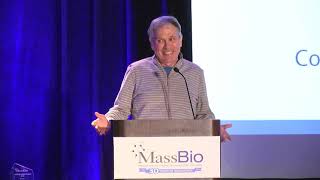
Mark Levin, co-founder of Third Rock Ventures and former Millennium CEO, traces 30 years in biotech from Genentech to today. Biotech now supplies 50-70% of FDA-approved drugs, but the industry faces rising R&D costs and pressure to deliver affordable therapies. Levin sees the next 30 years shaped by routine multi-omics profiling and integrated drug-device-diagnostic solutions.
Chapters
And at this time, I'm going to turn the mic over to MassBio Chairman Glenn Batchelder for the introduction of our next award, which is the Henry A. Tamir Innovative Leadership Award. I will reserve my comments on the winner until after he makes his remarks. So Glenn.
So I have this privilege to introduce Mark, and I said that to Kevin Starr earlier, and he goes, "Oh great, lots of photos, you're going to be funny." Let me just say to that, oops. So this will have a more serious tone to it. Of course, as Mark would say. So MassBio's Henry Tremere Innovative Leadership Award, now in its 7th year, was created to honor individuals who have significantly contributed to the growth and success of life sciences in Massachusetts. And Mark Levin, co-founder and partner of Third Rock Ventures, is an industry leader, 30 years of experience Actually, over 30 years experience. Yeah. No, 30— well, sorry. In building and launching biotech companies. So, you know, for most of you in the room, he doesn't need an introduction, but I will proceed to give you some additional fun facts anyway. So, you know, his biotech career began in California working for Genentech, you know, kind of one of the great success stories of all time. Mark went on to co-found Mayfield's life science effort and Mayfield's sort of pioneering venture fund. He served dual roles. He was both an investor as well as a founding CEO of a series of hugely successful companies, a model that he came back to later in life. And one of those companies was Millennium Pharmaceuticals. So Mark co-founded and led as CEO Millennium for 12 years. And really to our good fortune, that drew him from sunny California to snowy, and I emphasize snowy, Boston where he has put down his roots, which has been a great benefit to all of us. That's where I had a privilege to get to know him and work for him for a number of years. You know, Marc, while building Millennium, this is kind of where the impact on innovation really, for at least the Boston area, really began from my perspective. First, he was an evangelist of—
about—
around personalized medicine way before it was mainstream. In fact, arguably way before it was in any way cool. It was just sort of— it was something where he was out there really helping people understand what this is about. And as you heard from Kathy Agustí earlier, you know, that translated in one example into Velcade and her statements about the partnership that she felt with Millennium and Mark in particular and how that all came through where Velcade was the drug brought forward that sort of first drug in 30 years approved for treatment of multiple myeloma. Also, an important part of, as we look back on the time Mark established a new paradigm for pharma-biotech relationships, with biotechs as equal partners and essential elements in the value chain of innovation. And for those of us who remember back before then, it was not always the case. That is something that we sometimes take for granted. And importantly, he brought the seeds of West Coast tech culture to East Coast biotech. And personally mentored, you know, many of the current leaders in the Boston life science community. So, you know, I think to understand Marc's impact, it's worth reflecting on his history or on the history of tech and biotech. So if you reel back 30 years ago, biotech, as Bob was illustrating, was really kind of nascent in the public in terms of technology, but high-tech, you know, there were really two epicenters. There was Silicon Valley and 128. And, you know, for those of you who weren't born yet, 128 referred to Route 128. And really, pretty much anywhere you went in the world, if you said 128, it would conjure up immediately in people's minds, you know, a series of revolutionary technology companies, Data General, Digital, Wang, Lotus. And then same thing with Silicon Valley, except the companies were Apple, Hewlett-Packard, Intel, Oracle. And, you know, if you think about those lists, that really tells the tale. So, you know, how did Silicon Valley thrive and 128 became just kind of a crowded freeway? I mean, it was always crowded, but that's all it is at this point. So retrospectively, as people have looked back on this, what they have concluded about what was the difference, it was really culture and the culture of innovation. So you look at East Coast at that time, conservative, hierarchical, suits, ties. Notice I didn't wear a tie today because I had to say that. Loyalty to company first, and there were at that time even pacts of the notion that you had lifetime employment in this company. They were these sort of behemoths that were insular and really struggled to innovate. And then you go to Silicon Valley, you got entrepreneurs, cowboys, sneakers, jeans. There was a high value placed on external personal relationships beyond the walls of your company. And talent migrated to company to company following, you know, trying to chase the next really big idea and get involved in it. And what you ended up with was these agile innovative companies and a vibrant ecosystem. So today you look at Boston's biotech, and I think most of us would agree, we fit the Silicon Valley model and not so much the 128 model of the past. And that I think has a lot to do with Mark's passion for building that innovation culture, and in some ways it was the subsequent diaspora from Millennium that significantly contributed to that spreading through our ecosystem. First there was his hallmark Hawaiian shirts— he'd correct you, they're actually California shirts— but the Hawaiian shirts and his remarkable set of shoes. Some of you may have seen them. And in fact, there was a saying that, you know, people used to say, "Joining Millennium, it's not just a job, it's a wardrobe." So we— I say this in all seriousness. I'm working on it. You had that as a career goal way back. I'm sort of getting there. Yeah, I'm getting there. So I'd like to actually share a very personal example of his commitment to the innovation culture. It came at a challenging period in Millennium. Marc had always been extremely generous to me in terms of being supportive, generous with his time, trusting me with critical responsibilities, but particularly at this moment in time. So one morning, 6:15 AM, it was Marc's normal time to grab his morning tea. He had Bob Seger blasting on the stereo with everything shaking around us. And I asked if I could have a chat with him. He invited me in, I sat down, and I handed him my resignation. And he goes, you know, he looks at me sideways, a bit annoyed, understandably, and he says, "What the heck are you doing?" And I said, "Well, I have this opportunity to go be the CEO of Acceleron. Great founders, great investors." And he immediately said, "Wow." You have to do it. How can I help? And he has helped me every step of the way since. And that's just really important in terms of how to think about growing a great culture and a great ecosystem. And my story's not unique, so I just made a quick list and I'm sure I'm, but Nick Gallicato, Steve Holtzman, Kazumi Shisakawa, Alan Crane, John Berginori, Lawrence Reed, David Shenkaim, Abby Sillner, just sort of dot, dot, dot, list goes on.
Hey everybody, how are ya? It is springtime. So, you know, I had forgot Glenn was introducing me, and actually Glenn has never been so funny in his whole life, so I'm really struck by that. So I had to think of a funny story really quickly. Kevin will remember this. So Kevin and I worked very closely with Glenn. We hired him because of his extraordinary engineering skills, his focus, his ability to see things clearly. So anyway, one of the things— we were at 1 Broadway for a little while at Millennium, and I don't remember, we were on the 11th or 12th floor or something like that, and the floor was chopped into tiny little offices and you couldn't see anything. And Glenn said, let's put up these kind of plastic or glass walls around the thing. So when you look out, it looks like it's a big office. It wasn't a big office. So Glenn, very proud of all this, he has all these glass walls put in place and he's bragging about it for weeks. Look what I'm doing. Comes in at 6:15 in the morning and tells me, look what I'm doing. But anyway, so after it's all in, I was wandering around one afternoon and I walk over to Glenn and his whole face is covered with bandages. And I said, "Glenn, what happened?" He said, "I was walking around and I ran into one of those glass walls. I didn't know it was there." So anyway, that's your chairman. Thank you, Glenn, for a wonderful introduction. You remember that, don't you? Yeah, okay. All right. Anyway, I want to thank MassBio, And Bob, of course, and Glenn and Abby and the entire team at MassBio, the board, and the whole Massachusetts community for this wonderful award. I really do appreciate it. It's a wonderful thing, and it was really exciting when Bob called me a few weeks ago. I do want to congratulate MassBio on 30 years. This is extraordinary, what's happened in 30 years here in Massachusetts, and I'll come back to that. But under Bob's leadership and all the other chairmen and CEOs. What an extraordinary accomplishment that's happened. Jim and I were just talking about it before the meeting started. We have a lot to be proud of here. Massachusetts is certainly number one in the world, and everywhere that I travel, people ask me, "What in the world is going on in Massachusetts?" Kevin and I and a lot of my partners and colleagues spend a lot of time in San Francisco, and people are out there with their heads down going, "What is going on out there? You guys are kicking our ass." So what a great job for us, right? I want to thank Henry, of course, our constant leader as we think about the future. You know, Henry has always been somebody that we've always admired. We have a chance to work with him at Third Rock now, and in every meeting, no matter what it is— oh, wait a minute, the patient, the patient, the patient. Don't forget about the patient. One of the biggest issues we have with Henry is everywhere we go, Henry has met the entrepreneurs before we have. Everybody says, "Henry told us to do this. Henry told us to do this." Henry, cut back on it a little bit, will you? We can't stand all the heat. I want to thank Henry for this. Also, of course, it's a great honor to be in proud company with the past winners of this award. It's really great to be part of their team. I know Josh and Deborah and George and Fenray Doon and Yosef and Mike. It's wonderful to be part of your team, and it's really a great honor. One of the things I wanted to start with, just a few thank-yous, actually more than a few. I think a lot of people that know me, I'm not actually a big award person. It's not something that I feel very comfortable with, and so I'm very excited about this award, but I'm not excited about the award for me. I'm excited about the award, and Glenn hit on this, about the people, the extraordinary people in Massachusetts and around the world, but in Massachusetts that I've got a chance to work with. And actually, once I get through with the list, you'll see that I did very little of the work. It's— but it's just an extraordinary team of people around this state. So let me just mention a few of them. Raju Kuchalapati and Eric Lander, who were founders of Millennium. Bill Hellman, Grant Heidrich, Josh Boger, Jeff Leiden, who were on the board of Millennium. And a lot of you who know Josh Boger and Jeff Leiden, if you were worried that they were on the board at the same time, They weren't, or we would have never gotten a word in, as you can imagine. But they were great board members. At Millennium, Kevin Starr, Bob Tepper, Steve Holtzman, John Maragonori, Linda Pine. I just want to put in a word for Linda. Linda is very ill, and for those of you who know Linda, if you could shoot her an email, it would really mean the world to her. Anna Protopapas, Abby Selnecker, Julian Adams, Glenn Batchelder, Nancy Simonian, David Shenkine, Nick Gallicatos, Frank Lee, Jeff Duick, Marcia Fenucci, Joe Boland, Barry Green, Chris Marabelli, Kazumi Shiazaki, Jay Lulai, Steve Gilman, Sandra Glucksmann, Vaughn Kaley, and Charles Holmsey, J.C. Gutierrez Ramos, Lori Keating, Keith Dionne, Frank Gentile, Phil Riley, Steve Kopka, Jeff Ross, Nick Lashley, Alan Crane, Lawrence Reed, Linda Heath, and Deborah Dunsire, who of course did an extraordinary job when she came in and took my place in 2005. This was an extraordinary team, and I left off thousands of people who left at Millennium, so excuse me, I couldn't get to everybody. But this team was such a great honor to work with, and they are doing such a great job in Massachusetts. So what a privilege it's been for me to work with them. And then at Third Rock, as Glenn said, Kevin and Bob, extraordinary people, extraordinary leaders and visionary. Bob couldn't make it today. Just what great partners they've been in really starting up the firm and building great companies. I should mention Bill Hellman again helped us out. And my super partners, Craig Muir, Craig Greaves, Kevin Gillis, Neil Exeter, Carrie Pfeffer, Alexis Borisy, Mark Goldsmith and the whole Third Rock team. As Glenn said, and I'll come back to this, the most important thing in the world is put together great people. And if you put together great people, you can do anything. And so the award that I've gotten today, which I really do appreciate, it really was earned by everybody that I work with over the last 20 years. So I thank you for all of those people. The most important person actually in my life, and she's sitting right there, and she's shocked that I'm going to say anything, But she is Becky Levin, who I've known for 41 years. I met her when I was 5. She was 18. She babysitted for me when I was a little kid. But we've been married for 38 years, and they've been all blissful. Everything's been perfect, of course. But she's been an incredibly incredible partner in life. She's an extraordinary recruiter, which many of you may know, a great advisor. She's played a major effort in diversity in our community, in patient care, in teenage involvement, and very importantly for me, many nights when I was home very late, a very strong supporter. So thank you, Becky, very much for all that you've done. So anyway, again, I just wanted to thank all the people over the last 20-plus years in Massachusetts that I've got a chance to work with. It's an incredible community. And I'm going to come back to this in a few minutes. We need to make sure it stays like that, because there's no guarantees in this business or any other business. So thank you very much for this wonderful honor. Thank you. So I wanted to give you a perspective on a couple topics. One of them Bob suggested. He actually suggested it very strongly, so I thought I would talk about it, is kind of— and I know we talked about it a little bit this morning— what is— what was it like for me and others in 1985? And I was around in 1985 in biotech. What is it like today, and what's it going to look like in 30 years? So I'm going to talk a little bit about that, and then I want to talk a little bit about some of the things that— and we all worry about stuff, and there's kind of some— lots of things to worry about in this industry, as we know. But I'm going to talk mostly about the soft things and a little bit maybe about more of a kind of a harder factual thing. I want to talk a little bit about that. Obviously, it's a personal perspective, but I did want to talk a little bit about that. So let me start with kind of the past and present and future. And, you know, I started at Eli Lilly 41 years ago, so that was long before biotech. That was 1974. I started at Genentech in 1981, and I remember— and Becky will remember this— I called my dad in 1980, and I'd worked for 3 Fortune 500 companies before that, and I said, "You know, Becky and I, we're going to go to San Francisco." And he goes, "Uh-huh." So, you know, he grew up in the Midwest. That already was a negative. "And I'm going to work for this company called Genentech in biotechnology." And he said, "What in the world is biotechnology?" So this is 1980. And the sad part of it was I couldn't answer the question. I didn't know what to tell him. I said, "But Dad, it's in San Francisco and we're going." And so anyway, an old friend of mine, Bill Young, was a senior person there, and I really didn't know what biotechnology was. It was something that was undefined clearly in 1980, at least for most of us. We really didn't know. Many people maybe in this room were very up to date on it. Anyway, so I went to Genentech, and so in 1985, which were what we're honoring here today, 30 years ago. I was at Genentech. I was a project team leader. And it was really quite an extraordinary time in the industry in general. We had Genentech and Chiron and Amgen and others on the West Coast. Of course, we had Biogen and GI and Genzyme here, Immunex up in Seattle, and dozens of other great companies, of course. It was very early. And for me— and it's an interesting— biotech was biotech then. Abby will know what I'm— what I mean by this is you took a protein that we thought was important in humans, you stuck it in coli or stuck it in CHO cells and you made proteins. That was biotech. Today I'm not exactly sure what biotech is anymore, but biotech was making proteins in coli and CHO cells. And it was really a fascinating time. I actually looked up some numbers. The total R&D budget in 1985 for our industry was $3.4 billion total. And a drug was $300 or $400 million to get on the market. So at Genentech in 1985, insulin had been on the market for 3 years. We developed it at Genentech and Lilly licensed it. And then I remember very well in 1985, there was a tragedy, a tragedy really that occurred in human growth hormone. The kids at that time were getting human growth hormone from human pituitaries And a lot of the kids started to develop Jakob's— Kruitzfeldt-Jakob disorder, which is a prion disorder, and of course they died from that. The FDA pulled that off the market and put Genentech's product on the market right away. So in 1985, we were pretty full of ourselves. We had two products on the market already in just a few years, insulin and human growth hormone, and we thought the world was our oyster. This is easy. You know, what's everybody worried about in this industry?. But I think one of the things to think about is, let's remember, those two proteins were clearly missing. They were deficiencies. You needed to deliver them at a low level, constitutive level, and you could make a huge difference. But the future was going to be a little bit different. So I had the honor of actually, at that time I was the head of the gamma interferon team, the AIDS vaccine team, the TGF-beta team, and the relaxin team, which Abby and I were on together. And Abby's laughing. And so those programs, you may not remember those as big drugs today. That's because actually none of them worked out. But what was interesting in those times, and we learned a lot, that I was so excited about the mouse data in interferons in 1985. We were curing all the mice. In TGF-beta, we were curing mice in fibrosis and all kinds of disorders. In relaxin, We had cervical ripening in all kinds of animals. We were going to make a big difference in reproductive biology. And we had GP120, the surface protein, on the AIDS vaccine. We thought we had it all solved. So things turned out to be a little more complicated than that. And actually, we had lots of other things going on at Genentech. We had bovine shipping fever. We were making silk, ascorbic acid, industrial enzymes with Genentech, lab equipment with HP. Diagnostics with Abbott. So most of these ideas just didn't work out. But, you know, it was a new revolution. We have all these ideas in front of us. And, of course, over a 20-year period, Genentech did focus on oncology. So I'll never forget— and actually, I'll come back to this in a minute about humility. It was 1985 again. And we had this big meeting with Merck on the AIDS vaccine project. Ed Skolnick brought his team. And I don't think I've ever told Ed this story.— and we had a break and we were meeting with all the Merck scientists. And Genentech was worth about $8 billion in value then and Merck was about $8 billion. And we were kidding around that we thought we might acquire Merck or at least merge. And so, you know, it was a little kidding but it was a little lack of humility, a little ego at the time because we were doing so well. A year later, TPA failed. The Genentech value went from $8 billion to $2 billion. Over the next few years, Merck went to $100 billion. And I think we all thought a little more about those kinds of things, how hard it is to really build great companies in this space. Of course, Genentech, with great scientists, great business leadership, an extraordinary CEO, lots of resilience, 15 years later they were back on top again. But these things happen. And again, I'll come back to that because these things are going to happen to all of us in these companies at one time or another. And again, just to round out the 1985 story or so, plus or minus, '83 was PCR. '84, HIV was sequenced. '86, the Hep B vaccine. '86, the first antibody, OKT3. How long did it take for antibodies to really develop? '86 was alpha interferon. '87, finally, was TPA. '89 was Amgen on EPO. 1990 was seridase. And 1990 was the first successful gene therapy trial, although we know things hit the fan shortly after that and gene therapy is just back again. Again after 15 years. So '85 was an incredible time. And I was out in the West Coast then, and we were filling our oats too when we thought about Boston, to be honest with you. We would come back to Boston every once in a while and we would go, "Boy, that's a sleepy town. The VCs are very conservative. The academic institutions are not really terribly knowledgeable about in-licensing." And it just seemed like a very sleepy town, to be honest with you. This is a West Coast perspective, so please don't shoot me. But that's what it felt like. And of course at the same time this whole team or many of the people here were founding MassBio in 1985 and maybe that was part of it. Maybe feeling that need to really step things up a little bit in 1985. So anyway, 1985 was really an incredible time and I think founding again MassBio in that time period with all that was going on must just have been an incredible incredible event. We finally moved out here, Becky and I did, 5 or 6 years later, but we weren't here then and I guess I wish we were. So jumping ahead actually 30 years, 2015, which is today, it's been an interesting slog. Lots of things have happened. I can't actually believe it's been 30 years. It's a little scary when you think about it. 30 years later and we look back, we do this at Third Rock all the time, over the last 30 years there's probably been 5 or 6 or 7 IPO windows. Stocks go crazy for 18 months, 24 months, then they go down. But when they're up, everybody says they're never going down. This is a new world. It's a new era. Things will always stay this way. I don't know how many H&Q meetings we've been at during that time period. You walk in and everybody's celebrating. The next year you walk in and everybody's got their heads down and walking around. And so these things happen, and that happened over these last 30 years. Lots of failures in cancer and sepsis and AIDS and immunology and gene therapy and cell therapy. Antisense and RNA failed for most of those years. Antibodies failed for most of those years. But now today, when we look at 2015, $50 billion in R&D expenditures, $2 billion per product. Unfortunately, a little on the high side. But we've gotten through that turmoil. And when we look today, the data tells us that biotech is supplying over 50% of the drugs that the FDA is approving today. Some of the statistics are even 60 to 70%. So imagine in those 30 years since insulin and HGH were approved, from zero to 50, 60, to 70% of the drugs this room and other people in this country— it's an incredible accomplishment. And we— and now in this period we've got the genomics revolution and next-gen sequencing and personalized medicine and cancer immunotherapy and antisense and RNA actually does work. Right, Kev? Yeah. And gene therapy works and antibodies work finally and it's extraordinary what's going on in the antibody space. Space today. And we're making major contributions in cancer and rare genetic disorders and MS and obesity and antiviral disorders and RA and CV. And many of our companies exceed the values of the pharmaceutical companies. And so not only are we creating tremendous value for patients, but we're actually more valuable than many of the major companies in the '80s that we were all very familiar with. And Boston is the leader in the world. 30 years later, I believe we're the clear leader. The attitude in this room and around the community when you walk around Cambridge and other areas, it's off the charts. It's just fantastic. The MassBio's done that, the state of Massachusetts, the academic institutions, biotech, pharma, VC. I think everybody agrees we have this great infrastructure in town with facilities and lawyers and accountants, just an incredible group of people that you can rely on. This extraordinary team of people, which is the most important thing, which we really have to continue to build. And Bob, we've got to figure out how to keep everybody here for sure. And I think actually in some ways— and Glenn mentioned it— the loss of technology, which is not good, but actually it's focused us. If you go out to Silicon Valley now and talk to our VC colleagues, many of the standard VCs out there are not investing in biotech because the VC returns are 10x what you can get or 20x or 50x in biotech. And they've lost their focus to some extent when it comes to, you know, doing great things. So we are the leaders and there's just no question about it. We're it. And what's great about biotech today, it's not just a protein in coli or CHO cells, it's a whole new industry in many ways. It's a way of thinking about things. It's really our knowledge. And if you go back to the '60s and '70s with Sir James Black And you think we were so excited then about receptors. Oh, now we know everything about cells. But today, what do we know? I mean, the systems biology, the steep sequencing on all diseases, the Million Genome Project, what's going on with Decode and Regeneron, what we're going to know, the knowledge that we know, is really what this field is about. And we need to take that knowledge and use it in devices and diagnostics in drugs, and certainly across the whole industry to really make a difference. That's what biotech is all about going forward. So as we go into the next 30 years, I think all we need to do is really retain all these extraordinary people and take that knowledge and learnings about how to build great companies and really just continue to build on what we've done in academics. So what do the next 30 years look like? Well, One of the things I know, Bobby Coughlin Jr. is going to be the CEO of our wonderful organization here. Right, Bob? He will be. Bob Coughlin Sr. will be the chair. He's going to be up in an assisted living facility up in Vermont with his Erlenmeyer flasks. And tubes doing some Breaking Bad kind of stuff probably. Henry's gonna be walking around building companies with entrepreneurs and reminding us it's the patient, the patient, the patient. So that's certainly gonna be there, but it's gonna be a clear revolution for sure. I mean, just look what's happened over the last 30 years. So we're gonna see diagnostics, devices, drugs, healthcare information and knowledge. We can't exactly say what it's gonna look like, but it's going to be remarkable. And one of the things that we've been saying for 30 years is I am hopeful that we can finally reduce these costs on what it costs to bring a drug forward. You know, we raved about it at Millennium and others have for 20, 30 years. We have to get these timelines down, we have to get these costs down, and this knowledge should really make that happen. So if you're fortunate enough to be born in 2000 and, uh, 2045, and that's I think a lot of people's kids, grandkids, for some people, Kevin, it might be your great grandkids even, which is certainly a possibility. But what— so what if you're born in 2045, what does it look like? Well, one of the things that's probably going to happen is you're going to be sequenced. You're going to have your DNA sequenced, you're going to have a transcriptome, a metabolome, an epigenome, You're going to have all of that data in electronic health records. It's something we've been talking about at Third Rock. We're starting to spend more time on it. And, you know, it's not something that is easy necessarily. And when I talk about diversity, I don't talk about diversity for diversity's sake. I talk about diversity because it makes you better. At Millennium, our management team was a very diverse team. I remember when I left, I think Tepper was on the management team with 7 or 8 extraordinary women. And Bob said it was the best team he'd ever been on in his whole life, which is not surprising. So for me, diversity is how do we get the best people on teams? And it's women and men, it's young people, it's old people— speaking for myself right now— it's all races, it's all colors. And why is that important? Because group genius is important. I don't know how many teams I've sat on, and when you have people in the room that have different opinions, different ways of looking at the world, that are willing to listen, that are willing to integrate ideas, then you can make a big difference. So diversity is important to the future of our success. And Bob, I know you know this in MassBio, and I know in other organizations are going to make a difference here, but the most important thing to do is make a difference in your own organization. Think about your boards, think about your management teams. How do you bring that into the company? That is a very important point and very important for all of us. So I just wanted to wrap up with— I think it's a very important point that I know MassBio talks about. We're talking about it all the time at Third Rock. And that is value for the patient. So what do I mean by that? Well, we all know that healthcare today is a $3 trillion business every year, plus or minus. The budget is growing close to 20% a year. And, you know, we sit back and a lot of people, well, it can't go on like this, it can't go on like this. We said that, I don't know, 10 or 20 years ago when it was 10% of the budget. You know, I think actually there is a point where we can't go on like this. And I think one of the things that's going to actually drive that is what's happening in science and in medicine is the incredible breakthroughs. So, you know, certainly I think we all know in cancer the breakthroughs seem one after another. Some of them are quite extraordinary. Some of them are maybe 3 months, 4 months, 5 months extensions in life. Typically the drugs are $100,000, and we can all argue over whether that makes sense or not. But when we have dozens of those drugs, or what happens if we have combinations of those drugs? I think in the future we'll know that you're potentially— understanding the genome and the transcriptome and everything, we need 3 or 4 of those drugs to make a difference. So then are we talking about $500,000 a year or $1 million a year? Of course, we can't put a number on a person's life, But these are getting to be real numbers. What about the million dollars that are— we're thinking about charging for gene therapies? Those are interesting numbers. But one of the things that actually I'm excited about and concerns me the most is personalized medicine. So we started with personalized medicine in cancer, and we're going to be treating dozens of disorders there. But in cardiovascular disease now, 30 years from now, there'll be 30 cardiovascular rare generic rare genetic defects that we'll be treating. In obesity, there'll be combinations of modifiers, et cetera, that we'll be treating. So we'll have hundreds or thousands of diseases that we can treat, and we can't charge everybody $100,000 or $500,000 a treatment. So we have to figure this out. It's really a big issue, and it will restrict the technology in a big way. Another big thing, and I think we all know, is very important, are diagnostics. And prognostics. And we worked on this incredible company called Foundation, which has been very successful, and one would think that we would have reimbursement on a several-thousand-dollar test after all these years, but the CMS and the payers and the ability to develop a diagnostic, as important a company as it is, is really quite extraordinary. Off-the-charts negatively extraordinary, I should say. And so unfortunately now when we look at diagnostic companies at Third Rock, maybe some real breakthroughs that could make a big difference, we can't invest because of what's necessary on the clinical trial side. So we've got some major challenges here that we really need to think about. And the most important thing actually is not just how inexpensive it is— Michael Porter has written really quite extraordinarily on this. You should read his books or what he's written a lot and some key reviews. It's how do we maximize the value for patient per dollar spent. You know, we can spend trillions of dollars, but we have to maximize the patient effect. And that's something that we need to bring into the equation. So that's very important. And another final challenge, which I think a lot about and we've talked a lot about it at Third Rock, is if each one of our biotech companies maximizes their individual value or our industry maximizes their value and the hospitals maximize their value and the insurance companies maximize their value and everybody in this— $3 trillion train or chain maximizes their independent value. Does that maximize the value for the patient per dollar spent? Absolutely not. So we need to think in the future, which is— I think we all know that— is how do we take drugs and devices and diagnostics and healthcare information and hospitals and insurance companies and how do we build integrated products that can actually reduce the cost and dramatically improve efficacy? That's really where a big part of the future is. And it's something we need to think about. So our future is bright. I'm confident based on all the extraordinary people we have here in Massachusetts and around the world that we're going to make a big difference in patients. But I think we just do, do need to remember, especially in times of great excitement in the stock markets and things like that, that things do change. Look what happened to the computer industry in Massachusetts. Look what's happened to pharma over the last 20 years. Look what's happened to Microsoft and IBM over the last 20 years. Look what's happened over the taxi business in the last couple years. Look what's happened to the retail business with Amazon in the last few years. Look what's happened to the grocery business in the last few years. So the world is changing dramatically and our business is going to change dramatically. So let's always remember, let's stay focused on the patient and value for the patient. Maximizing those outcomes are really critical. Let's think big. Let's remember scenarios. It's not going to go exactly as we plan. The soft stuff is critical. We need to think about that if you want to build a great company. The best people focus on culture. Resilience will be key. And let's all work together. Group genius. All of us working together, not just in Massachusetts, but around the world will be very important. Thank you very much, everybody. Yeah, thanks very much. There you go.
Thank you. Thank you so much, Mark. And as always, what we present to the Innovative Leader of the Year, it's a gift certificate for Art in Giving, which is so appropriate because it was Becky and you who introduced us to Ilian at Art in Giving, and MassBio has partnered with her, and as you know, this Art in Giving certificate will allow you, it's the amount of $1,000, to pick up a portrait that you can place anywhere of your liking, and a percentage of all of the proceeds to Art in Giving go to pediatric brain research. So we love it. So thank you very much, we hope you like that.
Oh, we love it. Thanks, Bob. Okay, we're going to do a picture.
Let me get in the middle.
Perfect. That was awesome. Thank you.
Thank you so much.
Thank you.
All right, big round of applause for Mark.
More from Joshua







Scientist Stories: Hans Waterham, The value of phenotypic assays in peroxisomal disorders




Scientist Stories: Joel Zlotogora, Genetic carrier screening programs for reproductive purposes