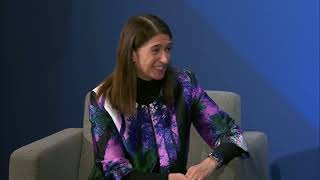
In this Flagship Studios interview, Laura speaks with Michelle Werner, CEO of Alterna (formerly Alltrna), about the biology and therapeutic promise of transfer RNA (tRNA). Werner explains that tRNA is the universal molecule that reads mRNA codons and delivers the corresponding amino acids, acting as the essential bridge between mRNA and protein synthesis. She highlights how a single engineered tRNA can potentially treat hundreds of rare diseases by targeting mutations in a disease‑agnostic manner, a capability not possible with other modalities. Alterna’s platform differentiates itself through (1) precise engineering of tRNA molecules with specific chemical modifications to enhance therapeutic properties and delivery, (2) a high‑throughput machine‑learning‑driven screening pipeline that evaluates thousands of candidate tRNAs to select the most promising, and (3) exploration of broader tRNA biology such as tRNA pools and fragments. Since its public launch in November 2021, Alterna has built a distinguished scientific advisory board, expanded its team, and generated extensive data demonstrating tRNA synthesis, quantification, delivery, and functional protein rescue. Looking ahead to 2023, the company is advancing lead candidates toward clinical trials. Werner envisions a future where a single engineered tRNA medicine can be approved for multiple indications simultaneously, shifting drug development from disease‑centric to mutation‑centric approaches.
Chapters
Welcome to Flagship Studios. I'm here today with Michelle Werner, CEO of Alterna. Michelle, let's dive right in. We've heard a lot about mRNA, but tell us a bit about tRNA and what makes it unique.
Yes, so something that's quite different about tRNAs is that the tRNA actually is the molecule in the protein translation process that is completely universal. It doesn't matter what the mRNA is, it doesn't matter what the protein is, it's the same molecule and it does the same function no matter what. What the tRNA does is it actually reads the codons on the mRNA to really get the instructions for the amino acids that are part of the growing polypeptide chain and then delivers that corresponding amino acid to the protein. The growing protein. So when you think about it, the tRNA is the physical link between the mRNA and the protein, and therefore without a tRNA, there just would never be any proteins.
And building on that, how could tRNA change the development of drugs, especially for rare diseases?
Yeah, one of the things that's truly exciting and truly unique about tRNAs is the fact that one single tRNA, one single molecule, has the opportunity to be used to treat hundreds of different diseases. So when we think about development, we can not just do a single clinical program for any individual disease, but we can unify diseases together, a number of diseases, group them together, and to do a clinical program across those numbers of different diseases. So that allows us this opportunity to bring in patients who have, who have diagnoses that are completely underserved today, that are not being addressed at all, because we have the opportunity to group them across those number of diseases and to be able to explore the potential of our tRNAs in that way. And that's not something you can do with other modalities.
Right. And, and looking specifically at Alterna, what is Alterna doing differently in the tRNA space?
Yeah. So there's a number of things that I think truly sets Alterna apart and makes us very special. Number one is we're very focused on the way in which we deliver our tRNAs and in specifically how we design our engineered tRNAs with certain modifications. And these modifications are really important in order to be able to design or enhance therapeutic properties. This is a space that we are really leading in, that we really own, and really critical for this to turn into a new modality. That's number one. The other area is the way in which we're incorporating machine learning into our platform. So we're screening thousands and thousands of these tRNAs. And because of the machine learning engine that we've put into our platform, we have the ability to really test, learn, select the best engineered tRNAs in order to move forward into translation and ultimately into the clinic. And that's something that's quite special for us as well. And the last thing that I would say is, you know, engineered tRNAs are just the beginning for us, right? We're looking at exploring engineered tRNAs across a variety of different mutations, but also the role of tRNA pools and tRNA RNA fragments in order to make the most of the exciting biology that this represents. And that's something that we're doing that is really quite unique too.
Absolutely. Well, you launched publicly Alterna in November of 2021. What have you accomplished since that time?
Yeah, so a couple of things. It's been a really exciting year for us at Alterna. First and foremost, we assembled a scientific advisory board that has the best and the brightest minds when it comes to the RNA space. We've done that this year. We've also brought in additional members of our team, real expertise that are really going to help Alterna to be successful and really great to see the company grow in that way. But then also I would say is there's many reasons to believe why we have the ability to turn tRNAs into a new modality for patients. Part of it is, you know, really demonstrating that we have the ability to synthesize these tRNAs, that we can quantify and measure these tRNAs, that we can deliver them to our targets, and that we can also rescue protein. And we've been able to generate tons of data that allow us to demonstrate all of that. So it's been a busy year, but it's a really exciting year.
Very exciting year and lots of vast potential for impact. So what excites you most about 2023 and the year ahead?
Yeah, I mean, I think that we're really on the cusp of something special and this is going to be a very pivotal year for us. So we are making tremendous tremendous progress advancing our platform and continuing to invest in the different areas that are going to help Alterna be successful. But also, I'd say very importantly, our platform is starting to identify candidates for us to be moving towards the clinic. And so we're making great progress to advancing some of those molecules that hopefully have the potential to become medicines. And this is something that we're looking to be able to, to do this year.
Fabulous. And Flagship here at JPM is talking about bigger leaps, the bigger leaps Flagship takes and its companies. And I'm interested in hearing what bigger leaps Alterna will take in the next 3 to 5 years.
Yeah. So what I will say is one of the great things about tRNAs is the opportunity to have a single medicine potentially treat hundreds, if not thousands of different diseases. And the big leap that I think that we will make is really designing a clinical program that allows us to demonstrate exactly that, where we can have one single molecule go into a number of different diseases simultaneously and ultimately be able to have many, many indications, hopefully, that can be approved at the, at the same time. I've been in this drug development business for a long time, over 20-plus years. I've never come across something like that before in my career. And this is something that I think will be truly groundbreaking, completely change the way in which we look at patients, not by disease, but by their mutations and how our engineered tRNAs have the opportunity to really address those mutations specifically and in a very disease agnostic way.
Well, it's an exciting future for Alterna. Thank you so much for joining us today, Michelle.
It's been a real pleasure. Thank you very much, Laura.