Founder Stories: Neil Kumar - founder and CEO of BridgeBio
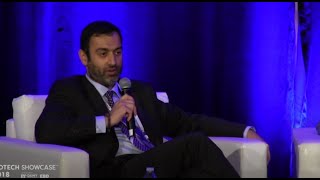
In this JPMorgan‑hosted panel, moderator Daniel brings together leaders from four rare‑disease biotech organizations—BioMarin, Ionis, the CHDI Foundation, and BridgeBio—to discuss how they structure their businesses, choose targets, fund development, and accelerate delivery of therapies. BioMarin (Brinda) describes a fully integrated, FIPCO model with a 20‑year history, six marketed products (mostly enzyme‑replacement therapies), a pipeline of five late‑stage candidates, and a capital base of $4.3 B. The company files a new IND roughly every 12‑18 months, emphasizes best‑in‑class, first‑in‑class rare‑disease focus, and leverages its in‑house manufacturing, regulatory, and commercial functions to compress development timelines (e.g., Brineura approved in 4 years). Ionis (Sarah Boyce) explains an antisense platform‑centric model that outsources most of the discovery work but retains a small, efficient team. The firm has raised >$10 B, runs ~42 programs with 8‑9 new candidates per year, and partners with large pharma (Biogen, J&J, Roche) for development and commercialization. Selection criteria are unmet medical need, unique applicability of antisense technology, and availability of natural‑history data; the company also spins out subsidiaries (e.g., Axia) to raise capital independently. CHDI Foundation (Chief Scientific Officer) operates as a not‑for‑profit “virtual” organization funded by donors (~$120 M/yr). It contracts out all R&D, collaborates broadly, and focuses on Huntington’s disease because the monogenic cause provides a clear mechanistic target. CHDI emphasizes rapid generation of shared data (genome‑wide association studies, patient registries) and strict stopping rules to de‑risk projects. BridgeBio (Neil Kumar) positions itself as a “buy‑and‑hold” company rather than an accelerator. It acquires genetically validated Mendelian disease assets, builds a central R&D platform, then houses each program in a separate subsidiary to attract disease‑specific talent and equity incentives. The firm evaluates assets by the ability to trace a clear genotype‑phenotype‑natural‑history‑target‑tool chain, even for ultra‑rare indications (~500 patients). BridgeBio funds all programs from a pooled capital pool, has not yet spun out separate IPOs, and uses a “rate‑limiting‑step analysis” to eliminate operational bottlenecks. Across the discussion, common themes emerge: the importance of genetic validation, natural‑history data, patient registries, partnership chemistry, speed versus quality trade‑offs, and financing strategies (capital efficiency, spin‑outs, donor funding, public markets). The panel also touches on challenges such as lack of biomarkers, regulatory uncertainty, and the difficulty of developing therapies for diseases with very few patients.
Chapters
But we're going to talk about business models for rare disease drug development, and we've got a great mix of business models on the stage. Neil Kumar of BridgeBio is presenting at JPMorgan. They got a late-breaking spot, so they'll— Neil will be joining us as soon as he can get here. So without Neil, we'll work him in But let me start with Brinda from BioMarin. As a matter of full disclosure, I have done work for BioMarin. I co-authored A Rare Breed, which is a newly released history of the company. And that's not to plug this, but to just as a matter of disclosure. But it is available on Amazon in Kindle and hardcover. But Brinda, you know, For people not familiar with BioMarin, give me a sense of how old is it? How big is it?
What's—
Yeah.
Can you hear me? OK. Well, Daniel, thank you for inviting me and BioMarin to the panel to participate. Many folks here may know BioMarin is a publicly traded biotechnology company that commercializes, develops, manufactures therapies to treat rare diseases. We are, last year in 2017, we celebrated our 20th anniversary. And year-end March, I think, I mean month-end March, it'll be 21. So we've been in operation for quite a while. We have 6 marketed products focused on several diseases, many lysosomal storage diseases, treatments for PKU, and most recently we launched a treatment for a very rare disease, Bruneura, for the treatment of Batten's disease, CLN2. We've got a rich pipeline, 5 products in development, which includes very exciting leading product for the treatment of hemophilia A gene therapy. And we don't, we don't disclose what's in our preclinical pipeline, but there's a lot going on across the spectrum of—
So without disclosing the preclinical pipeline, What is the rate at which you enter new drugs into your clinical pipeline?
Historically, we've been filing new INDs somewhere in the 12 to 18— every 12 to 18 months timeframe.
And in terms of capital raised to get you to this point, what's— give a sense of how much money.
Yeah. So actually, I think we tallied up the numbers have been about $4.3 billion has been raised. Although a good chunk of that, I guess, happened In recent years? In the recent years, that's right.
Okay, but so 6 products, you have pending products right now at FDA?
Yep, 1, PEG-valase for the treatment of PKU in registration.
So 6, 1, 5 in development.
5 including PEG-valase, yep.
And a magic question mark in the preclinical, but— and I would consider BioMarin a fully integrated Pharmaceutical, a FIPCO, a classic FIPCO. Fair?
I think that's fair.
Okay. Yeah. So Sarah, would you tell people who you are, where you're from, your title?
Absolutely. So I'm Sarah Boyce, Chief Business Officer at Ionis. And Ionis is, you know, we have a unique business model and we're building an ecosystem and an ecosystem of different companies and different strategies. Through to commercialization. So it's really interesting because Ionis has been around for some time too. Um, so Ionis was founded 27 years ago. You'll see a very similar theme in the amount of money that was probably raised over that period of time. We're probably over $10 billion. Um, now Ionis is a little different, and Ionis was founded with the intent of developing a new platform for drug discovery. So an entirely new way and a new type of technology to develop drugs. So the small molecules, there's monoclonal antibodies, and what, what Ionis have, you know, developed and built over those years is antisense technology. Today we have 42 drugs in development with only 450 people. We're able to do that because of the tremendous partners that we have. The likes of Biogen, J&J, AstraZeneca, Roche, who we work with, who then commercialize our drugs. And then also recently we set up a strategy of founding our own companies, one such as Axia, which we IPO'd last year and maintain an almost 70% ownership position. And Axia is going to commercialize a set of cardiometabolic lipid drugs one of which, Vilana Sorsen, is currently filed with the FDA. Past 12 months, we have, with our partner Biogen and ourselves, filed 3 new drug applications to the FDA. Spinraza, actually it's probably a little over 12 months, probably 18. Spinraza was approved on the 23rd of December, 2016, which is the most incredible gift to the SMA patient community. And today we have Vilana Sorsen, Anna Natassen, under review with the FDA in Europe.
And if you go on your website, you have a huge pipeline.
Yes, clinical.
And what, what quantify that?
So typically our goal is to put 5, 4 to 5 drugs into development a year. Last year we put 8. I think the year before we put 9. Our pipeline is in a whole range of different therapeutic areas, but it's how we work with our partners that allow us to really rapidly be able to expand the technology. So that allows us to do so much with actually so few people.
And Robert, how about you? You're at a very different kind of a model here.
That's exactly—
a nonprofit drug development company.
The Monty Python line. Now for something completely different. So I'm the chief scientific officer for CHDI Foundation, which is a privately held, not-for-profit foundation that is exclusively dedicated to accelerating therapies for Huntington's disease, a rare neurological disorder. And unlike many other entities that are represented, especially here and next door, we're motivated by time, not by money. And our focus on Huntington's is not something— we have a fiduciary responsibility to our donors. It's the only thing that they're interested in finding treatments for. We have been around, depending on when you start the clock, roughly 15 years and steadily growing. One of the things that we typically refer to ourselves as virtual. I kind of don't like that word because I feel like we're very real. There are now over 100 people that work within the four walls of the foundation across our three sites: New York, New Jersey, and Los Angeles where I'm based. You will never see at CHDI a benchtop or a bedside. Everything is done on an outsourced basis. The idea being that we can get into or out of an area as is needed, very, very fungible. And so at any given moment, it's a fairly sizable enterprise. There are about 700 people that are working on our behalf across all stages of the pipeline, from early blue-sky basic discovery work on through clinical development. Yeah, so a big part of what we're supposed to do is collaboratively enable others, and we do that in a variety of ways. There's providing money through contracts. We like the word contracts, not grants, to academics. We partner with technology-based biotech companies, Ionis being a great example of a company that had a technology that is perfectly suited for a monogenic disease like Huntington's, and in other cases, look to either partner respectively or prospectively with pharmaceutical companies that might have assets that modulate targets that might be of interest and build the body of evidence that it might be worth taking forward.
So just to quantify, how much investment to get to here and how big a pipeline?
Yeah. So our donors have been ramping up their spend. I believe last year was on the order of $120 million, and that's kind of— what we see over the next period of time being required for the type of work. As we all know, drug discovery gets a little bit more expensive as things mature down the pipeline. And we're very fortunate to have that situation now in HD. It's difficult to put a number. We don't have a traditional pipeline in the sense that much of what we do is to touch other companies to lower their barrier of entry, to provide data, to provide support, for example, in designing the clinical trials, finding patients. But there are, in the area of gene silencing, there are about 20 programs that CHDI has touched in some way, shape, or form, from a very intimate partnership like we have with Ionis where we funded the original work, on through just advisory relationships where we're providing domain knowledge in HD and outcome measures and that sort of stuff. There are examples where we've partnered with large pharmaceutical companies, and that's matriculated all the way into Phase 2. We provided the evidence to Pfizer to take their PD-10 inhibitor forward. And in some cases, as much as we love to find other people as a time-motivated organization that already have a running start, there are examples where we have to prosecute targets de novo, in which case— and I know this sounds counterintuitive for a not-for-profit— We own the intellectual property so that it's ours to give away. And so we've developed our own proprietary molecules, some of which are now at IND stage and looking to figure out who we can give them to, to take to the next stages of clinical development.
Neil, thank you. You made it. A biotech guy wearing a suit and tie, you must have been out raising money.
I had to give my JP Morgan speech, so I apologize for that.
If you would, just tell people who you are, what you do, and give some sense of the history of BridgeBio.
Sure. So my name is Neal. I'm the CEO of BridgeBio Pharma, which is a clinical-stage biotechnology company that we started a couple years ago to focus extensively on Mendelian diseases and germline cancers, basically any disease where the target is genetically validated. We work primarily on early-stage programs, or to start at least. We look to academics and not-for-profit organizations and others as start points, and we have a fairly extensive R&D infrastructure that tries to take those ideas and then turn the great science into great products, hopefully, that can help patients. So we have 18 assets. All the way from hit-to-lead to Phase 3 across a variety of therapeutic areas. And we're based in Palo Alto, and that's kind of the history of the company.
And what's the business model? You don't call yourself an accelerator or an incubator, but in many ways you act like one. Can you explain the business model?
Yeah, I mean, we don't call ourselves that because Typically, those types of entities are interested in taking assets so far and then partnering them or selling them. And in some cases, we're interested in taking assets all the way to the marketplace and commercializing them. In other cases, we may not be the best owners of an asset, and we're happy to partner it. But we're a buy-and-hold type organization, not a buy-and-sell fund or incubator or accelerator. So that's sort of how we think about things.
So one of the things I want to start with is talking about focus. I mean, you're all rare disease focused. What, why rare disease for your business model? What, what makes sense in terms of targeting those drugs and, and how do you determine which drugs and diseases to target?
Yeah, so for us it's, it's, it's, it's quite specific. It actually has nothing to do with rare. It just has everything to do with genetic. And what we were very interested in was following the science that emerged with the rare variant hypothesis sort of around 2005, 2006, where we were seeing a whole class of diseases where clinical genetics were well-defined, molecular pathophysiology was well understood, and we could target those diseases at their source. And we thought those were the lowest-hanging fruit in terms of drug discovery and development, and that those would teach us hopefully about some of the larger diseases that we didn't really have an understanding of. They're not really diseases, they're syndromes. And so we would love to work on diseases that are genetic that are huge. They don't need to be rare. It's just that many genetic diseases, because they're inherited, affect reproductive fitness and tend to be quite small. So it has nothing to do with rare, it has everything to do with genetic, and genetic just to me means it's a better scientific hypothesis. And that's why we go after them.
And you'll take a drug to the point of getting it into the clinic and then if it warrants it, you'll spin it out into its freestanding company. What does that strategy do in terms of helping you bring focus to what you're doing or accelerating what you're doing?
Yeah, so, so our, the structure of our company is that we have a central organization that has generalized R&D capabilities like med chem or DMPK and things of that nature. And then every time we find a program, let's say it's in the HD space or something of that nature, we house it in a separate subsidiary. And the reason for that is, especially in the genetic disease space, we think R&D is a game of inches and requires experts that really understand that specific disease space. So the right set of experts for HD are not the right set of experts for an inherited dermatologic disease or a germline cancer. And so, and housing those assets in separate subsidiaries, it enables us to recruit different sets of individuals that are incented with equity that just pertains to that specific project or that specific company. And so we do it immediately, actually, when we bring a program in, and then over the course of time you sort of emerge from a program-like entity to a product or a company-like entity that has more to do with the number of people and kind of the publicity it gets.
But— So, Sarah, you mentioned that you focus on antisense, you're an antisense platform. Could you briefly say what Antisense is?
Yeah, so Antisense, it's one of the things where we work at the RNA level. So one of the things that we do is look to impact protein production by either upregulating— we can also downregulate, which is unique to our technology— as well as looking at alternate splicing models, which we did in the case of spinraza. So, and one of the things when we look at different programs and how to address certain diseases. We don't necessarily look at rare. We probably do have one of the largest rare disease pipelines sort of for a company around about our size. But what we look at is medical need. And the first thing we look at is, is there a current therapy available? Or if there is, how well served is the patient population? And then the second thing we ask ourselves, Because antisense technology is unique, we work at the level of RNA. So there are targets that are available to us that aren't available to small molecule or monoclonal antibodies. And that for us is like the magic combination because we don't necessarily— we don't have to compete in a space where there's small molecules and monoclonal antibodies. We have a technology that's not limited by target organ nor limited by type of disease or whether we're looking to downregulate or upregulate. Or actually completely change. So our driver is more sort of looking at medical need. And that naturally, that naturally pulls you towards rare diseases, of course, because there tends to be a more profound need in the rare disease space. But that doesn't necessarily exclude very large diseases such as the antithrombotic space, where we're partnered with Bayer, where we're looking to provide a drug that changes the dynamic completely and separating the, the risk of when you give an antithrombotic, you then increase the risk of bleeding. And we're looking to change that through targeting the factor 11 pathway, which is something unique to our technology.
So, Brenda, you know, I, I think of a turning point for BioMarin was when it really embraced being a rare disease company. What does that focus bring to the company and what you're able to do? And what happens when you get something like a new disease area like Huntington's disease, or in your case, gene therapy? How do you bring that focus where you may not have people internally who are expert in that technology or disease?
Yeah. So, uh, to speak of focus, I think that, you know, in our 20-year journey as an organization, Before our current CEO came on board, we had definitely made forays outside of rare disease and rare diseases into common diseases, and I think that those were moments that were very difficult moments for the organization. And so when JJ Benhamé, our current CEO, came on board in 2005, he really embraced the rare disease model, and, and, and really it has elements that Sarah and Neil have spoken about for us, which is it's critically important to be first in class, best in class when we think about going into an area. We want to understand the underlying unmet medical need for the patient, making sure that we're addressing diseases that are severe. The biology is critically important to our approach.
Approach.
So one thing that I think maybe isn't fully appreciated is BioMarin is fairly technology agnostic, and I think that's a tremendous strength for the organization. We kind of view our ability to take kind of the right tool depending on what is the appropriate mechanism that you want to address for the disease. And so We've advanced gene therapy with small molecules, complex biologics, and I think we're facile across the organization in doing that. And the case for us is that those elements of focusing on rare have enabled us from a development standpoint to move pretty quickly. For instance, when you understand the natural history of a disease like we did very well with CLN2 Batten disease, we were able to bring Brainura to market very, very quickly, and that I think is an implication of the focus in rare disease. And then commercially, I think we're able to, one is able to address the patient population and bring those therapies to market with a very focused commercial organization.
Robert, let me flip question for you because I think I know how you got your focus, but you're working with so many partners that may be doing many different things and may embrace you as an opportunity to fund research that they're interested in, but how do you bring focus to them?
Yeah, so I just want, want to touch on a couple things that were said already in terms of— you're absolutely right, in a way the decisions made for us at CHDI, our donors have said like this is This is the disease we want you to work on. But I think looking at incidence or prevalence is a bit of a red herring in terms of deciding what you're going to work on. In the same way that over the course of my career, I don't know how many times the bean counters have told us, when I was at more traditional places, to think about the 5th year peak sales being above $1 billion. I think the reality of it is, is if you're going to try and fix something, you have to understand how it's broken. So understanding to a very high degree of granularity the underlying pathogenic mechanism of a disease is really what's critical for the success. Of course it has to be an unmet medical need. Of course you have to have a technology that can address it. But if you don't know what's broken, how are you going to fix it? So a big part of what we try to leverage, especially in the space of neurodegeneration, is unlike many of the other neurodegenerative diseases— Parkinson's, ALS, Alzheimer's— which have prevalence and incidences that are much higher than Huntington's is we're a monogenic disease, so we know exactly what the underlying cause is. Everybody that gets Huntington's, it's because they have an expanded mutant Huntington, and everybody that has an expanded mutant Huntington gets the disease. And so our great hope is that we'll serve as a heuristic. And that when we understand some of the correlations between genes and cells and cells and animals and animals and people and people and biomarkers, that those same lessons will be applicable to the other bigger-ticket type— types of diseases. So, you know, there are a bunch of ways that we engage people. I think providing the money, for sure, providing the domain knowledge and providing a really high-quality set of tools, whether it's antibodies, sequenced back and forward cDNAs, animal models. We have a whole field guide that describes in painstaking detail all of the different phenotypes in the various Huntington non-clinical models. And then one of the things that's really amazing about rare disease communities is that they really do stick together from patients to caregivers to the various drug hunting entities that are involved. And so when it comes time to think about finding, for example, exactly the right set of patients that need to be enrolled in your trial, in HD we now have a prospective registry trial called Enroll-HD, and the goal is literally to sign up everybody on the planet that either has the gene or is at risk. And you can imagine mining that database is a huge resource, whereas if you were going to try and go it alone, you might say, ah, Huntington's too difficult, too long-term, I'll never find the patients, I don't want to do it. And so I think that that provides a lot of leverage and lowers the barrier of entry for a lot of folks.
So Neil, how do you decide on an asset, a drug, a disease to focus on? And I mean, he's handing you a de-risked package of goodies to go do a drug. You know, is that stuff you look for? Do you look for diseases with natural histories where there are well-defined patient populations? What's the thought process in terms of choosing your targets?
Yeah, I mean, I think all of that. If someone were to hand us a package like that, we'd probably go with it. It's, uh, it's a little bit like what, uh, Robert was talking about in terms of connecting the dots. I mean, can we go all the way from genetic mutation, genotype, phenotype, and understanding of natural history, to your point, within the context of a patient registry, to molecular pathophysiology, to, you know, what could we do with a tool, a small molecule, a gene therapy. I mean, we also cut across a variety of different technologies. But when you can connect all of those dots, that's when the probability of technical success goes up, and that's when we can get involved. We do diseases as small as 500 patients when the science is strong enough and the sort of logic is strong enough for us to go after it.
It's—
those are the main criteria. It's actually just the ability to logically go from the point mutation to the disease and know that an intervention of one sort or another has a reasonable probability of doing something for these patients.
How about Ionis? How do you choose a— you look for a drug or a disease to target?
It's unmet need is our number one. Is our technology uniquely applicable? And then one of the things that we do is also then look at if there is any natural history available. If there isn't, that doesn't preclude us looking at a disease. The believed size of the prevalence or the epidemiology doesn't stop us either. I think history has all told us in many rare disease— in the rare disease space where there's often far more patients than you actually believe. Where there isn't natural history, when we initiate a program, we'll then also look to very quickly see if we can partner with the patient advocacy community to help develop that. So that's something that doesn't stop us. We tend to have a lot of choices. We put a lot of drugs into our pipeline. We've probably got one of the most efficient drug discovery engines. I don't think there's many companies that put 8 drugs into their development pipeline last year across the industry, let alone for a company our size. But our grounding, grounding principle is that sick people depend on us, and we have a technology that others don't have. So there's a responsibility with that technology to use it and enable it in the right way. And then from there, for different therapeutic spaces We look to build partnerships. So with Biogen, we have an incredible partnership with the Biogen team. They accelerated on our neurology program exponentially. In the space of 6 years, we went from no neuro program to having a drug approved, and then actually having across all of drug discovery were over 25 different programs in the neuro space. We were able to do that because of our partners and bringing on the real experts in that space. And then there's some areas where we decide to do ourselves, and that's more in the rare space.
So a lot of BioMarin's product revenue is derived from enzyme replacement therapies. 4 of your 6 products are enzyme replacement therapies. It's a natural thing to look down the road and say, we're going to be replaced by gene therapy. And BioMarin had a long interest in getting into gene therapy because of that. But your foray into gene therapy is not enzyme replacement, it's hemophilia. What, what is the thinking in terms of the diseases you target and the drugs you target? And, you know, I don't know if that serves as an example of how BioMarin thinks in terms of selecting potential drugs.
Yeah, well, I think that the migration rate from enzyme replacement therapy as a therapeutic rationale to gene therapy as a rationale is really logical, and it all kind of comes down to, again, that tight-knit relationship between the underlying mechanism of the disease and the therapeutic approach.
Approach.
So BioMarin is making that evolution, and we have—
we've—
we're obviously having a lot of success with our hemophilia A gene therapy program. We haven't disclosed what's next, but there's a lot of work and thinking going on, not only in gene therapy but kind of across—
are there characteristics you look for in a disease or a drug before deciding to develop it?
Absolutely. Absolutely. The process of picking kind of what candidates are going into our pipeline is multifactorial. It starts with want to make sure to be best in class, first in class. What's the unmet need? What is the therapeutic approach? And kind of picking amongst, as I said, we've got small molecules that are marketed, complex biologics and peptides, and now gene therapy, who have some experience with other technologies as well, kind of picking the right opportunity. It's nice, as Sarah had mentioned, it's nice if there is a natural history that exists for the patients that often enables us to collapse our development timelines, but it's not necessarily a must-have. And you're kind of putting that whole picture together with some important business factors. What does the market and reimbursement landscape look like? How are we thinking about sort of the business as a whole? But those are kind of the guiding principles of how we choose what we decide to develop and put into the clinic.
One of the things, if I could just jump in, that I haven't heard mentioned, which I'm kind of surprised because it's definitely one of the things we think about a lot is thinking about if and when you are going to get to the clinic, how quickly you can measure a signal in humans. You know, in some diseases you're fortunate enough, with diabetes for example, to be able to have actually a clinically meaningful outcome that is measurable within, you know, hours, days, weeks. In neurodegenerative diseases, is you can think about, you know, a trial that could last you too long by most standards. And so, you know, I think we've convinced ourselves that even with a monogenic disease, it's impossible to recapitulate, you know, what happens in a big wrinkly human brain over 40 years in a mouse in 5 minutes. So no matter how solid our hypothesis is around a particular intervention, and not only the target selection, but the target product profile, even with Huntington lowering, where should you lower, how much should you lower, do you need to be allele-specific, when do you need to start treatment, being able to get a signal in really the only beast that gets Huntington disease, and that's us, as quickly as possible so that you know that you're taking a real shot on goal and that you know that you're still going to have to wait to convince the regulators, but that you're going to learn something from it and you've validated the proof of mechanism in humans, I think for me would be a huge selection criteria.
Yeah. And I think that's where natural history comes so important. When there is that in place, exactly as you said, Brindha, it allows you to be able to accelerate a program when perhaps you wouldn't otherwise.
Or even thinking about de-risking development, right? What are the biomarkers that one can use that correlate to clinically meaningful endpoints. And, you know, I think that's a challenge as well in the industry if folks are going into rare diseases, because often that's not known, and that is the work and the secret sauce that companies that may be focused in a particular area need to really generate that body of evidence.
It's funny, I sort of have a a different view on surrogate clinical endpoints and biomarkers. I think sometimes we put too much weight on that. We, for instance, have a program in the transthyretin amyloidosis space where there are multiple patient registries and everyone's out there looking for what's the better clinical surrogate endpoint so you can run a non-outcomes trial. And the fact of the matter is human genetics have told us what's important in terms of therapeutic dosage. So, you know, we have a stabilizer in that context. We know that stabilization above a certain threshold should lead to clinical outcome. But to prove it to the regulators and the clinical community, we have to run an outcomes trial. And every investor out there is going to tell me, you shouldn't do it. Is there another way to do it? And we just keep pushing back and saying, no, this is the appropriate trial to run. It's going to be a $120 million outcomes trial. And, you know, for some reason 70% of investors will say, no, we don't want to back that. Fine, we'll back that because that's the right trial to do.
And—
but I think it's about kind of de-risking. So you may have to do that study, and that may be the right study to prove the point. But I think the question is, as you're moving along in development, are there ways that you can get signals along the way that your therapeutic approach is hitting the right mechanism and that de-risks the bigger potential studies.
Exactly.
And that's so much of what genotype phenotype and that molecular signal can do for you. So it's not necessarily that your standard clinical surrogate endpoint, but rather it's a molecular endpoint that gives you the confidence since you've going after such a well-defined space. And I think that's really important. And we have to continue to have that discussion with regulators, with the investment community, with everyone to say, look, this is really important data. And then Beyond that, we're going to have to run this big trial, and that's the right thing to do.
So one of the rate-limiting steps you all face is money. How does your business model help you accelerate your drug development and get multiple products in simultaneous development?
I don't know if these guys actually are limited by money, but we are sometimes. So our business model is such that we take, you know, sort of many shots on goal at any given time. And so we can appeal to a set of investors that may not understand the specific biology that we're going after, but by and large they understand that a certain number of those programs will hit, and so that they're likely not to lose their money and hopefully make some money because they trust the team. And now we've had a little bit—
Are you raising money through the spin-out companies separately from the— No, we haven't done that yet. Everything's funded through Everything's funded through that.
Yeah. Until, I mean, we're taking one company public now, and so that will be the first sort of external financing. But other than that, we have had enough capital to push things forward, and we're not so worried about it. But we're able to do that because we have this big diversified pool, so we can attract general pools of capital that otherwise wouldn't invest in biotech.
So Mr. Privately Held thinks you don't have to worry about money. You're at a point where you're expecting to be profitable on a non-GAAP basis for the first time in your history. 20 years, you finally getting here. How much pressure is there from Wall Street to be profitable now? And how does that affect your spending decisions and what you can advance? If you had multiple preclinical candidates ready to advance, are you going to have to pick and choose?
Yeah, so I think that BioMarin has grown up from, you know, the last 20 years and, and had spent a lot of time being the small company. I think as a result, uh, in the early days we were capital efficient because we had to be. And I think as we've grown up, we've continued to be, uh, really efficient in our operations because that's kind of a matter of the culture and habit in the organization. You're right, we're going to be non-GAAP profitable here, uh, or that's what we said in 2017. Um, and so I think that, uh, you know, all of the principles that we've laid out around how we think about, uh, nominating candidates and moving them in our development, uh, ultimately to commercialization, I think are pillars that have been critical to having high probability of technical success as an organization. Being fast has been something that's been, I think, a real hallmark for BioMarin. We've on average, if you look at our marketed products, from IND or first patient into approval, it's been 5 years on average. That's incredibly capital efficient as compared to perhaps the, I think the industry average is something around 8 or 10 years. I think Brinura is a really good example of how we do things and how that efficiency has flown through. So Brinura is an intracerebroventricularly administered enzyme replacement therapy for devastating— put it straight into your brain, put it straight into your brain, an enzyme, and for devastating disease, CLN2, Batten's disease. Uh, from the first patient into approval, it was 4 years. And that speed, I think, was enabled by many things. Certainly the patient community, understand the well-understood natural history of the disease, close collaboration with the regulatory authorities, and of course the interdisciplinary nature of the teamwork within our organization that's commercial manufacturing, preclinical, clinical. So I think that that's an example of this speed of our development, our efficiency, and I think those are critical pillars, obviously, for continuing to maintain our growth as we move forward.
Do you have all the capital you need whenever you need it? Do you have to make decisions because of Wall Street or because of spending restrictions or the ability to access capital? What's—
so, I mean, the thing that grounds us is sick people depend on us. Um, we've actually been profitable on the operating line for the past 2 successive years now, which is, you know, really tremendous to see. And now that's allowed us, you know, from a— from a how we use our capital to change our business model in different ways and look to be able to commercialize ourselves. So I think the aspect from our strategy of having this very efficient technology that's allowed us to build a very broad pipeline that's also allowed us to pick and choose our partners. One of the things for me now when we're perhaps having a discussion with a partner is— and we're negotiating an agreement— is a big part, of course, the dollars are important, and that's part of my fiduciary responsibility, but a big part of it is the strategy. And does this make strategic sense, and does this allow us to accelerate things faster than we otherwise would be able to ourselves, or also sometimes a bit of humility in terms of, you know, Bayer can probably do this better than we can because they're already in the space, and for example, in the antithrombotic. So that they're more the things that drive us from a decision-making perspective, and that's enabled by the beauty of our model in that we have so many different diverse sources of income. So that gives us a lot more optionality and flexibility.
You've spun out technology into a freestanding company.
Yes, we have.
Do you use that as a way to raise capital separate from Ionis? Has that been a way to access money to do your development?
Absolutely. I mean, so Axia, which was a wholly owned subsidiary that we set up, they conducted their IPO very successfully last year, and they were able to raise capital, you know, in their own right, and they have a separate board of directors and a separate source of financing. So very much so. And that's certainly one of the mechanisms whereby it allowed Axia to raise money and for them to be able to prepare for the job that they need to do, which is the launch of the land source this year.
So Robert, you seem to have the dream financing structure, which is you don't have to worry about making money. Worry about finding a cure, and you've got someone who's well-heeled enough to— is there an annual budget? Do you bring anything to say this is worth investing in, and you get a check?
So I mean, I want to start off by saying I feel incredibly blessed to be in the position that we're in with the incredibly generous support of the donors that we have. That said, money doesn't fix everything, right? So one of the things that we, we have to do is really discipline ourselves in spending that money. There are some unbelievably unsexy things that nobody else is going to do, and it's the foundation's responsibility to say, okay, well, we think that that's going to be really critical to enable others, and so we just got to go do it and spend money on it. And in some cases, they're incredibly large efforts. So we just recently completed a series of genome-wide association studies that allowed us to identify genes that modify the motoric age of onset for Huntington's. 5,000 patients. Just, you know, an incredibly large effort that we're very confident, you know, nobody else would have done. Nobody would have had the staying power. Nobody would have committed that kind of money. The other thing is that we have to have, like, be really disciplined about our stopping rules. In fact, our stopping rules have to be so robust that we have to be able to stop successful programs. It's just that they're not successful for HD. So in some cases you found a potent selective modulator of a target, and sadly it's not giving the signal that you thought in HD, and so that's really tough because those of us that come from more traditional places You know, you have your Viagra moment, right? Well, it's not good for cardiovascular disease, but there's something else here. It's not good for HD, we're not doing it. And it turns out that functionally speaking, I'd say like where we're limited is in the bandwidth of our science directors. So the ability to actually credibly oversee the spending of the money, you know, we're not shoveling 20s on a campfire, we're commissioning a set of studies that we have to then interpret the results, integrate with others, think about what the next steps are. And so that turns out to be— and, you know, we've grown internally, as I said. I mean, I had a spreadsheet when I first started at CHDI, and in my wildest dreams I thought we'd be 25, and now we're 100. And it's really driven as a consequence of being able to credibly stay on top of all of the logistics, all the information, that comes in, all the material transfers and all the thinking that needs to, you know, be done, uh, to oversee the, the spend.
So in, in the rare disease space, the numbers work against the patients. There it takes an average of 7 years to get diagnosed. These are genetic diseases, so most of them manifest themselves early in life. And in many cases, you're dealing with diseases where a child's going to be dead by 10 or 12, which is longer than it takes to develop a lot of drugs. So how do you deal with urgency and the need for speed in your different business models? And how do you— do you feel that urgency? And do you do anything to translate that into your process? And Neil, maybe you can start.
Yeah, so speed is something we think about. Quite a bit, but you— there were sort of two ideas in what you just said. First is the rapidity with which we can diagnose patients, and although we're not a diagnostic company, we have been working with several partners because I think it's sort of borderline criminal, the newborn screening process in the U.S. today. I mean, we could be screening for many more diseases. We could be avoiding a lot of diagnostic odysseys. And there's a lot of drugs out there that are coming that potentially could be useful, or clinical trials that are ongoing today that could be useful for kids that they're not being picked up. So I think that there's definitely stuff to do there, and I'm hopeful that folks like Invitae and others will really push forward there. So that's number 1. Number 2, just in terms of the speed of drug development, we, for all of our programs, do something called what is the rate-limiting step analysis, and we're always looking to see Why is it that a drug program takes so damn long to push from lead optimization to IND enabling studies? Sometimes it's a physical limitation. Is it taking me a long time to ship sample from China to my labs? Okay, we'll try to get in front of that. We'll try to move our biology labs closer to our chemistry labs. We're always looking to see what that— you know, now you can't affect the doubling time of cells or things of that nature. That's going to be the hard stuff. Stop, but we try to get down to the hard stop. It shouldn't be because we're moving slowly as an organization, because no one wants to come into the lab on the weekend, or because there's a spatial limitation. So we try as best as we can to have that urgency built into everything that we do, and I guess that's one way that we think about it.
So Robert, I think of science being very serial, that you do an experiment, you learn from it, You do another experiment, learn from that, and incorporate that. CHDI does a lot of stuff in parallel, which speeds things up, but how do you, given that you've got this kind of distributed model where you have all these scientists working at different institutions, how do you get them in kind of real time to learn from each other and know what the other is doing?
Yeah, so I think, you know, for sure one of the biggest If you ask like my guys what's their biggest frustration, it's definitely the cycle time from idea to result. I can remember back in the day when I ran the screening group at Amgen, chemists would walk down the hall, say screen this compound for me, give me the IC50 tomorrow, we do it. We could do that because we were physically co-located and because we both work for the same enterprise. Everything that we do at CHDI has to go through a material transfer, has to sometimes across continents, and so it can be pretty challenging. So we definitely do things in parallel so that at any given moment if something has a logistic bottleneck, we've got some other marbles to push forward. We are adamant that data is shared under the HD tent, if you will. So we try and be as sensitive as possible to the drivers that are unique to each each sector. You're not going to tell an academic that they're not going to publish their results because you'll never get a high-quality academic to help you out. We recognize the proprietary nature of many of the things that we do with our industrial partners, but we view that, you know, tools and reagents and know-how are all pre-competitive and insist that everybody shares those with each other. And especially large datasets, all the types of omics stuff. Even a lot of the clinical trials after they're finished, we insist that people share those with each other and have done a whole lot of investing in the types of data portals and web-based tools that allow people to share those with each other. You know, at the end of the day, like, the biggest tool we have is we vote with our wallets. So, you know, a lot of times we know that something's been done and it's not going to work, and so we'll tell people like, yeah, we're not going to fund that. Like, we we just, you know, we know that that's not a fruitful line of investigation, we're unwilling to support it.
So how about Ionis? Are there things you do to— I mean, you've got a lot of partners who are working in clinical development. Are you learning from their experience with your technology in the clinic in specific applications that you can then bring back to preclinical development and do things faster?
Absolutely. So there's two, probably two core things. One of the things, because we're a platform technology and we're science-based and innovation-driven, so the core of Ionis is focused on that, advancing the technology. But all our drugs are essentially using many of the same building blocks. So what that allows us to be is to have enormous efficiency. We can go from target identification, so saying we're going to address a certain specific target, to having a drug ready for IND-enabling talks in 12 to 18 months. 12 to 18 months. That's incredibly quick. We can do that because we're focused on one specific technology and one specific approach. One of the other things we do with all of our partners, and one of the things that's key to drug development and is paramount, is also patient safety. And across all of our partners, we have a sharing agreement that everything's reported back through into our integrated global safety database, which we can track every single study that's been conducted with our antisense technology and our drugs from a safety perspective. And what that allows, say a partner may see something in a trial, they can then query back into our global safety database and we can look across everything else and and look at what's been seen before and what hasn't. So it allows us to build this really rich resource where actually everybody benefits from, from an aspect of advancing the technology. And we've seen it repeatedly be more and more important. Of course, our partners' data and the data specific to them is confidential to them, but we can look across the whole technology at what we've learned.
So you were talking, Brenda, you were talking about Brenner earlier and the speed with which you brought that to the FDA, but it strikes me that this is one of the places where being fully integrated can really pay off for you. How do your different groups, the regulatory folks, the patient people, the preclinical, the clinical, you know, the medical officers, how do they work together and do you bring in that kind of expertise earlier than you might otherwise in an organization that was, you know, more virtual or more partnered.
Yeah, absolutely. So I can kind of speak with two hats. One is from my former life as an entrepreneur and comparing, contrasting that to Bomber. And I think that one of the huge strengths is the fact we have in-house not only research and development, but manufacturing and commercialization. So our process is that really from the early days, project teams are formed and you've got that cross-functional dialogue happening from the very beginning of, you know, this is a program, all through to commercialization. I think it enables us to identify what's rate limiting and get ahead of that. We're not going to be waiting for vector because we're in line with a CMO who's making the vector. We've manufactured, built our own vector manufacturing capability, for instance. So I think those are really critical elements. Or another element that we didn't think about in the same way perhaps as when I was an entrepreneur was kind of thinking about the market access element and the commercial elements early in clinical development and starting to build the full picture, not just what it takes to get approval of a drug, but what it gets— takes to get approval and pricing reimbursement and market access. And so I think that our business model enables us to look kind of at the full development cycle really from the very beginning, and that enables us to be fairly efficient and fast.
So just before we leave the time thing, I mean, as, you know, an entity that has accelerate in our tagline, nobody's more sensitive to wanting to go as quickly as possible. I guess I'd say the only thing kind of in the spirit of ready, fire, aim that trumps speed is quality. You know, there's too many things that are built on a house of cards, and we find that many of the observations don't repeat. Many of the things, you know, are not sufficiently robust to be able to carry things from preclinical to clinical. And, you know, as far as our donors are concerned, they're not interested in Phase 1 starts. They're not even interested in Phase 2s. They're interested in Phase 3 completions. And so if you really have your eye on the endgame and want to make sure you can make it through all those things along the way, really putting an emphasis on quality and robustness is something that I think, in my opinion at least, in the neurodegenerative space has been sorely lacking.
So we are running out of time, and I don't know if there are questions from the audience we can tee up, but as you go to the question, let me ask you very quickly, partnering is so essential to so much of these models. How do you choose a partner, and what have you learned from past partnering to choose the right partners today?
So I'd say there's two aspects. One in terms of looking at it from a strategic perspective and the aspect of having 1 1 equaling more than 2. There's the other aspect of the human element. One of the things is that people work with people and having a really good shared chemistry with a partner is fundamental. And that stems from having a common goal of what, you know, what we're trying to achieve and pulling that back as a grounding principle. For us, with many of our partners, that has been patient-focused. Yeah. And yeah, I use Spinraza as an example of that in working with Biogen, who are an incredibly patient-focused, driven company. Who really embraced the SMA patients in the same way we had from early research. And that's, for me, one of the things that really makes the partnership successful when there's that common objectives and people.
Robert, have you learned anything about choosing partners?
Absolutely.
I think, you know, to state the obvious, it's really hard to pay people to do something they don't know how to do or don't want to do. So finding a good a good fit is really critical. And then I couldn't agree more with the sort of, I'd say it a little differently, is the passion. We start, we hold a therapeutics conference every year on HD drug discovery, and we always start off with an HD family. And they motivate us to be as cohesive, collaborative, have that sense of urgency, and understand that You know, while we toil every day in the lab, it's really about delivering something for the patients. So that's a big driver for our chemistry for sure.
So we had a question up front from the audience. Hello. Hi.
Thank you for being here. I have a question for all of y'all, but Sarah, you mentioned something about ecosystem of companies. How does biomimicry work into y'all's organizational processes and your scientific processes?
How does— Biomimicry. So in terms of— for us, our ecosystem is more on the basis of different models and different partnership models for commercialization. That's what kind of grounds the ecosystem of the different companies that we have.
So while we're getting the next question, What's the downside of your particular business models? What can't you do better that you wish you could do because of your business model?
We could be here for a long time, yeah. I mean, I think one thing is this issue that Brenda just touched on, which is we're not a fully integrated R&D shop. There are a lot of things that we sort of outsource, and we have to because if we had a huge fixed-cost infrastructure, we couldn't go after some of the super small diseases we do. So I think there's time loss because of that. And sometimes there's capabilities that we don't have that we would like to have, for instance, in manufacturing and some of the new modalities that prevent us from going after.
Brenda?
Well, I guess I can answer that in two ways. One is around, I think, challenges that may be common to a rare disease model where you're trying to understand the disease. You may not have natural history, so you're spending a lot of time trying to understand what is the natural history of the disease and how we think about bending that curve for the patients. Finding patients, we've talked a little bit about newborn screening. You know, some of the diseases that we may be looking at may be things that you gotta find them early enough to even have a hope of, of, of helping these patients, finding them early enough both for clinical studies but as well to treat them after the fact. So I think that's a rare, perhaps a rare model challenge.
I think, you know, one of the aspects is, you know, historically sometimes the street hasn't liked our model, you know, that that's been, you know, sort of one of the you know, the challenges. And, you know, sometimes as a company we've been accused of perhaps giving up value, but, you know, by partnering. But one of the things now is the pipeline's developed, and where we are now with the model, I think now people can start to see the efficiency of the model and the reproducibility of it.
So, I mean, I think it's kind of interesting, like, the, the thing that we're building, um, for us, success means we put ourselves out of business.
Business, right?
So, I mean, it's a high-class problem, and I hope we get there, but I think, you know, many of us are pretty proud of the infrastructure and the process that we put together, so hopefully there's a way of delivering for HD and then carrying forward the sort of CHDI infrastructure in a different way.
I think we had a question over here.
Yeah.
My name's Jeff Jones. I'm president of Cure CMT4J. We are actually on the pathway— we fundraised $1 million. We're very similar in what the Greys have done for Batten, what the Sames family has done for GAN, and we are in the process right now of looking at a viral vector. But our disease, as we know it now, affects 22 people. I wonder if any of you can help me understand how the economics of a disease with 22 identified patients means anything. Dan, I think you were trying to get down that pathway with one of your questions, but I don't know that anybody addressed it.
So, I mean, certainly we've embarked and have several programs ongoing where there are very small numbers of patients, um, I identified on a global basis today. One of the key for us, again, we don't ground on the number of patients, we ground on the need and whether or not our technology will work. One of the things that I really would encourage you to do and I think you heard this from some of us, was about looking to get a registry, looking to build that natural history. I'm sure CHDI has a lot of lessons that they could help you with on setting that up so that you can put yourselves in a position where when you're talking to companies or other funders about engaging in a program, where you've got as much of an information packet as as possible, and, you know, my sort of counsel would be to really look to build the registry and the natural history, and then look to learn from others, because even though your association, it may be, you know, there's very few patients, but there's many other similar people who are doing exactly the same thing, who are, you know, very motivated around what is a rare disease, and they're looking at where to start, and you're not alone in doing that. There's many others. Nicole from Global Genes, I mean, my gosh, it's probably one of the best resources you can get from an aspect of connecting you to other organizations. So I'd really encourage you to kind of, you know, seek out Nicole, and I know she'll be happy to help.
So we actually have to wrap right now, but if there are other questions, I invite you to try to corner our panelists. I want to thank you all. I don't think there's any one right answer to the question, which is the best business model. There are many paths to get there. I'm not sure this is even rare disease exclusive, but I think rare disease enhances a lot of what's being done here. But please join me in thanking this remarkable group of people. Thank you so much.
More from Joshua







Scientist Stories: Hans Waterham, The value of phenotypic assays in peroxisomal disorders




Scientist Stories: Joel Zlotogora, Genetic carrier screening programs for reproductive purposes