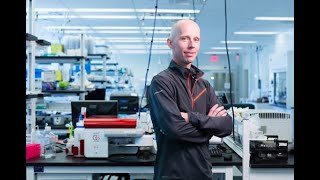
In this interview, Nick Leschly, CEO of Bluebird Bio, explains the company’s core mission to harness gene therapy for curing genetic diseases, focusing on their ex‑vivo approach for sickle cell disease that uses modified hematopoietic stem cells delivered via a crippled HIV viral vector. He outlines the broader potential of gene therapy to restore or engineer functions for cancer, autoimmune disorders, and other conditions, while warning against premature hype that has historically stalled the field. Leschly then delves into Bluebird’s distinctive culture, describing symbolic actions such as appointing a young patient as “Chief Scientific Officer” for a day, the “True Blue” and “Blue Mojo” ethos, egalitarian policies like mandatory coach‑class travel, and the emphasis on humility and paranoia to stay patient‑focused. He shares a personal leadership decision—taking a six‑week family sabbatical—to model work‑life balance and signal commitment to the team. Throughout, he balances technical optimism with caution, illustrating how scientific ambition, cultural values, and leadership practices intertwine at Bluebird Bio.
Chapters
It's my privilege and honor to welcome Nick Lashley. Nick is CEO of Bluebird Bio. So Nick, what I thought we'd do to start is just talk a little bit about the beginnings of Bluebird. What was the path and especially when you get to the beginning of Bluebird, what was the vision and how have you tried to make it a reality?
So this is gene therapy, and I don't know how many of you have sort of thought a lot about gene therapy. I suspect not many of you. But the fundamental principle behind Bluebird is to try to do something that's important, to try to do something that we think can actually make hope a reality. And it really grounds itself in this notion that disease, and a lot of disease, is driven by genetics.— or a way to attack disease is to leverage our understanding of genetics. And so that's really gene therapy, is we manipulate your DNA, but we have to first understand what and why we're doing it. And so that is the principle behind Bluebird. It gets very technical, but it's fairly straightforward what we're trying to accomplish. It's just doggone hard to actually do it. So the last 30, 40, 50 years has been more or less a disaster of overpromising and underdelivering in gene therapy. And we had the benefit of timing was on our side. To make it a little more specific, one of the diseases we work on, as many of you know about, is sickle cell disease. Sickle cell disease is a single mutation, a valine-6 amino acid, and that causes a terrible, terrible disease and a terrible quality of life, primarily affecting African Americans and early death. So you can say, gene therapy, how do you do that? How do you get to those cells which are all over the body? It's every single blood cell you have. Has a propensity to sickle and cause all these problems. So how do you get at that issue? Well, here's what we do is we take out the blood stem cells from your bone marrow, take them outside your body, then we actually use a virus. We use a crippled HIV virus of all things to basically— what it's good at is inserting a piece of DNA into a cell. So we do various tricks and jump through various hoops to basically modify these cells and to restore a function that those cells were not able to do. They're not able to make functional hemoglobin.. And so as effectively as we can, we infect these cells, we modify them, we get rid of the virus, and then we take advantage of your body's ability to effectively use the stem cell apparatus. We ablate everything that's in your marrow, so all the competition, all the bad cells, and then we put these cells back in, and now your body takes over. It naturally homes to your bone marrow. Now we've just placed in those seeds in your bone marrow an ability to produce the protein effectively you can't produce yourself. For the rest of your life. So the idea is that this is a one-time, potentially curative treatment of a terrible, terrible disease that affects hundreds of thousands of people. And so we've had some early luck, and we've had some bumps in that, but the first patient we ever treated went from basically going to die very, very early and a very, very painful sort of quality of life to now within 6 months not even needing Advil. And so that's been— that's now a couple years out. And so a lot of— and this stands on the science of giants, right? This is 30 years in the making. And, you know, I came along and quite honestly, just we got a little bit lucky with timing. But that's what we do. That's the power. That's the promise. And it's just at the beginning for a whole bunch of reasons that I'm sure we'll talk a little bit about.
Give us a sense as to how broadly applicable gene therapy can be.
This is a little bit of the danger we talk about is there's a lot of excitement and no offense, but the world likes to get really excited a little too fast because it turns out disease is complicated and sickle cell is a pretty specific example. But it can go pretty broad in two big categories. One I just described to you where we were restoring a function. Where it gets really big is when you can actually engineer a function. So we're also attacking cancer. Take the cells out, but now you actually engineer a function for it to identify a cancer, go to the cancer, expand, and basically explode the cancer. It's the same apparatus and the same technology. So you can really start to dream, well, what if you can harness the immune system to attack something Can you also couple the immune system to bring it down? That's autoimmune disease. So you can really think broadly. But we talk a lot about the example of kids in a candy store. Be careful. You eat too much, you get diabetes, right? So how do we slow it down and make sure it's really thoughtful? There have been a number of examples where people got too— moved too fast. They made mistakes and it shut down gene therapy in the United States for 5 to 10 years. So we're trying to be very, very thoughtful and not start working The other example is on male pattern baldness. I'm not going to be rubbing virus on my head anytime soon, because we need to understand this. We need to be really thoughtful about it.
So let's talk about culture. I remember the first day I happened to be meeting with you at your office, you hosted a boy who was sick or dying with cancer, 10, 11 years old, I think.. And the entire company rallied around this young kid. And you brought him in and you made him Chief Scientific Officer of the company, of Bluebird, for the day. Had a white lab coat for him. And this was pretty special. So I just happened to be there for the meeting. And they brought Darren in. And he came down the hallway with all the employees cheering, balloons and everything. It was like Michael Jordan coming out of the tunnel at a Bulls game back in the day. And that doesn't happen by accident. You've sculpted the culture of this company to allow for not only the compassion but also the energy to the mission.
You know I'm a crier, so this is— Yeah, any mention of Darren, not just because I have 5 daughters, I think I'm learning that it's okay to show emotion in a different way. But Darren is an example, and I'd love to talk more about Darren. I carry around his business card with me that he signed. But unfortunately I spoke at his funeral. So, but what it does is it says, look, what are you about? Why are we doing what we're doing? Why is Bluebird trying to do what we do? How do you teach that? How do you get it into the fabric? Because everything else is so, you can flap in the wind. If you don't have a strong core, it's just, your stock goes up, your stock goes down, you have fancy offices, you have this, you get caught up in all these things. As my mom would say also, sort of unimpressed by those types of things. So how do you build an organization? And part of it is not me. I have to certainly do my part, but it has to be built into the fabric. It has to be where everybody believes that when you hire and you bring in and you fire if they don't, where there's a fundamental belief in why we're here. We call it True Blue and Blue Mojo. True Blue is sort of not an advertisement for JetBlue. It's a concept. Bluebird by name is sort of this concept of a Bluebird day. It's the ideal condition. It's happiness. It's this, that, and the other thing. It's a transition. So that's what we're trying to achieve for a patient. At the same time, bluebird's a badass little bird, right, in the sense that it mates for life, it's, it's very competitive, and it gets the job done. You want those two things. So that's true blue, and it's blue mojo. That, those kinds of mindset, because you can't have one without the other, right? If you're just all about the patient but you're lazy and you're this, that, and the other thing, you got another problem on your hands, right? So it's those two forces, but it's the a fundamental belief in that. And people do say when they come in, there's something different. Maybe it's because we have no offices. Maybe it's because our travel policy is one word: coach. I don't care where you go. I don't care how far you go. And it applies to me. It applies to anybody. There's all kinds of policies saying, listen, don't start believing your own BS because it's actually not in the interest of the patient. It's not, right? If you get complacent or you get comfortable. So no wonder our favorite book is Only the Paranoid Survive. I know it's an old one. But there's someone who's lived a life exactly that way, saying it's about the next hill and just keep running because otherwise you're failing the patient.
So my last question for you. You did something also very unusual this past summer. You took a sabbatical with your family. That took a lot of courage and it also sent a very strong signal to your employee, your executive, to your entire employee base.
Tell me the thinking behind that and tell me your experience and how well it worked. You know, it was an experiment, but it was almost a little selfish in the beginning in the sense that I do believe in order to be a good employee, you gotta find your balance. And you got whatever that is. So our core principle, one of our core values, one of the three is be yourself. And be colorful. Wear stupid shoes if you wanna wear stupid shoes. Wear whatever you wanna wear. So there's that kind of a principle. So you gotta live by that. It doesn't make sense if we put a sabbatical program in Even though I don't think my board or anyone was expecting me to take it. Next thing you know, I said, all right, here we go. I'm gone 6 weeks. And by the way, I sent out an email inside and outside saying, thanks for the email. I'm never going to read it. If you want to talk to me in 6 weeks or it's an emergency, you know, here's X. And the best feeling in my life was spending 6 weeks there with my daughters who are just awesome and a wife that I met and married since high school who's just awesome. And none of us did any work. And on the flight home, select all, delete 4,000 emails was the best feeling I think I've ever had. And honestly, I've had zero consequences from that, right? Because guess what? There is a team there that— you have a team that's great. There are moments in our evolution where, yeah, I couldn't have done that. We are a little bit more stable now, right? If you're right in the middle of a deal with L'Oréal, I don't think you're taking a 6-week holiday. But in that same sense, now all of a sudden it created this vibe inside that quite honestly was unanticipated, but it's, you gotta live it a little bit. And in this case, it was a nice one to be able to live out, living in southern Spain for 6 weeks, just focusing on something that was just different. Thank you.