Founder Stories: Noah Lang, Co-Founder and CEO of Stride Health
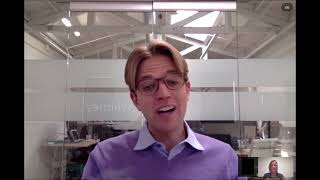
Noah Lang, CEO of Stride Health, discusses how the company helps part-time and independent workers navigate health insurance and manage income volatility. Stride offers coverage matching, expense tracking, and tax assistance designed for people whose income and work hours fluctuate unpredictably.
Chapters
I'm joined by Noah Lang, CEO and founder of Stride Health, which delivers intelligent healthcare coverage and compliance to self-employed and independent working Americans. Noah was part of a private roundtable session for a small group of fintech leaders held by the Aspen Financial Security Program's EPIC Initiative on income volatility. The group discussed solutions for workplace volatility and shared opportunities for fintech to lead with solutions. Noah, thank you for taking the time to share your insights from that meeting and talk a little bit about how Stride Health is helping to solve for income volatility.
Thank you for having me.
Great. Why don't you start off by telling us a little more about Stride Health and what you offer?
I would be happy to. Stride Health is a complete and portable benefits platform for part-time and contingent workforces. So we serve the people in this country who don't get benefits from their employers. We're probably best known for the work we've done in the on-demand economy. So we work with companies like Uber, Etsy, Postmates, Instacart, TaskRabbit, even Care.com in the caretaking space to cover their 1099 workers who would otherwise be on their own seeking out that coverage. We also actually serve hundreds of thousands of traditional workers outside of the on-demand and contingent economy. Our suite tackles everything from healthcare and coverage to helping you with taxes and expenses and other types of coverages that solve core and critical challenges for people who are working independently, which is a rapidly growing section of our workforce.
Great. Can you tell a little bit about what came out of that private meeting? Were there any standout solutions that came about from fintech leaders?
I think the core thing that came out was the problem, right? That income volatility is the new normal. You've got a third of American households that say year— or year— sorry, month over month their income is changing. Even more than that say that month over month their expenses are changing. So we're dealing with a new kind of normal. And in the roundtable and here at Stride, actually every day we talk a lot about predictability as one of the core challenges. When you look at our core coverage experience, one of the things that we do is we help make the unpredictable more predictable. That's, that's the core to insurance products. And as you look at the policies, whether they're by employers or their policies in the public sector, those policy solutions tied to product solutions that will solve these problems most are those that are going to steady the fluctuations for this workforce. And as we look at products here at Stride and we look at products, we had a number of companies, private companies that joined the roundtable and the event that we hosted at Stride the day before. Those products that provided guidance on how to navigate and predict life's natural fluctuations are those that are really going to solve the critical problem.
Are there any, you think, policies that come from this that will really help?
Yeah, so I founded Stride in the wake of another policy, the Affordable Care Act, and a handful of trends that were driving more risk and responsibility downstream on consumers. Some came from public policy. Some just came from the private sector. I think the most notable trend there was high deductible health plans putting more risk and responsibility down on us as individuals. It's happening in employer markets as well as individual markets. And the net result was that you hold more risk every single time you transact. And I think the policy encouraged that, but also protected against that by layering in protections from tax credits in the form of subsidies, cost savings reductions in the form of cost savings reductions throughout plans for people who qualify for them. And so I think as we look at public policies, we should look at the trends that are going to drive better decision-making and more efficient financial management for people who have income or expense volatility in their lives, and trying to dampen the impact of that while not dampening the impact of potentially great trends in healthcare. The trend that high deductible health plans were trying to drive was more responsibility over how we consume care. So as a nation, we can lower the overall cost to access care. So that's, that's my perspective on policies generally in the space that can drive down, at least protect against the volatility these populations are experiencing.
It seems like the fintech industry healthcare in particular is sort of primed to help solve for this issue of income volatility. Do you agree? Do you think fintech sort of can stand out from other industries to solve this?
I think so. You know, we're a healthcare company, but we're not. We solve this core problem today of how do I find the right health coverage for me and make sure it's actually financially the correct decision. Yes, our users care about their coverage, they care about the prescription drugs, they care about access to the right doctors, but at the end of the day, it's a financial security question. It's about protecting their income, which may or may not be volatile. And so when you look at fintech, we've got to work in conjunction with public policy. And I think there's a lot of streamlining that can be done, particularly with tax law for these populations to reduce the impact or open up opportunities along the right frequencies and time horizons. But I think fintech products that help people to better manage their lives on a daily, weekly, or monthly basis, giving that guidance, give that navigation, and to remove the inefficiencies of decision-making for every individual or family that's experiencing income volatility, is going to get us there the fastest.
And is there— can you talk a little bit about Stride Health in particular and what are sort of the benefits or some of the features that you offer that really help to solve for that? This?
Absolutely. So as I've shared already, health coverage is at the core of what we do, helping people to effectively access the right coverage for themselves, figure out how to invest in it, and then figure out how to use it. Because just getting someone into a coverage product is not the end of the job. Uh, beyond health coverage, it's opening up the ability to use the healthcare system to consume affordably. Uh, beyond that, we're actually helping individuals track their expenses, manage their taxes and save for the short to medium term so that when they have those volatile moments— tax season is actually one of them for a number of individuals, especially independent contractors— we can dampen the impact on their lives. We can set them up, make sure they're ready for those moments, and make sure they can actually power right through them. Beyond that, we've actually built some bespoke insurance products for individuals in this population who haven't had access to the right experiences. If you work for a traditional employer, they set you up with everything, right? They give you your paycheck and they put some of it in your taxes, some in your health insurance, some in disability and long-term care and retirement. No one's done that for the independent and contingent worker. And that's what we're doing is setting you up for success and stability by picking and sometimes having to create the right product experiences to drive stability and predictability if your income and your expenses are volatile.
And can you share just what's, what's up next for Stride Health? What do you have coming down the pipeline?
I'll share a little bit. I'll give you a little bit of a sneak peek. You know, at a very high level, we've learned that we can apply a lot of what we've done in healthcare to the rest of the financial lives of the populations that we serve. Right. As we expanded to cover independent contractors nationwide, so we launched in California, quickly expanded to 6 states, and in under 20 months, we went from 1 to all 50 states. I met personally with over 1,000 workers, and what I heard from them was they were missing some basic financial understanding of their lives. There was a disconnect between how much they were earning and how much they were spending to earn that money. And they were leaving a lot of opportunity on the table. So as we look ahead for what Spryde's job is and where we're going to be investing and what we're going to be building, it really comes down to building products like we have done in healthcare, but in the financial sphere to help protect income, to help you keep more of what you earn, and to keep you healthy physically and financially because your income, your health, and your taxes are forever intertwined. And so we aren't going to try to separate them anymore. We're keeping them together for you as an independent, part-time, or contingent worker.
Great. Well, that's it. I want to thank you for being part of our roundtable, for being part of the EPIC process, and for sitting down and talking with me today.
Thank you so much. It's been fantastic to see it launch, and I'm pleased to be a part of it.
More from Joshua







Scientist Stories: Hans Waterham, The value of phenotypic assays in peroxisomal disorders




Scientist Stories: Joel Zlotogora, Genetic carrier screening programs for reproductive purposes