Founder Stories: Othman Laraki - Co-Founder and CEO of Color Genomics
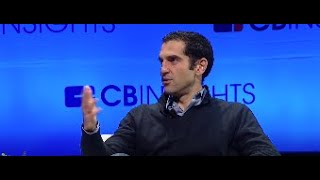
In this CNBC interview, Othman Laraki, co‑founder and CEO of Color Genomics, explains how personal family history of cancer and the prohibitive cost of early genetic testing sparked his interest in genomics. He describes the dramatic decline in sequencing costs—from a $3 billion human genome to under $1,000 today—and how that shift turned genetics from a chemistry problem into a data problem, creating an opportunity for a software‑focused company. Color’s core offering is a $250 hereditary cancer test, delivered through employer health plans and physician‑mediated lab‑developed tests (LDTs), which makes population‑scale screening financially viable and clinically responsible. Laraki contrasts Color’s physician‑involved, insurance‑backed model with direct‑to‑consumer approaches like 23andMe, emphasizing the importance of medical supervision for high‑impact health decisions. He highlights how automation—particularly software that streamlines genetic counseling—reduces counselor time from seven hours to 37 minutes per patient, illustrating the broader trend from pure automation to tech‑enabled services in health‑tech. The conversation also covers regulatory interactions with the FDA, the company’s compliance under the LDT framework, and the supportive stance of regulators when rigorous validation is demonstrated. Laraki reflects on the moral hazards in health‑tech entrepreneurship, noting the pressure to over‑promise and the need for integrity. Finally, he shares quick, candid opinions on a range of emerging technologies—Bitcoin, blockchain, AI, geo‑location, CRISPR, autonomous cars, and major tech firms—providing a window into his broader tech outlook.
Chapters
I'm Chrissy Farr from CNBC. I cover health and technology, so Othman's company Color Genomics is right in my wheelhouse. And I just wanted to start out by asking you, you've got a— you have a genetics company. It's one of the biggest out there now. Have you ever gotten a genetic test?
I have, actually. So my relationship with genetics started quite a while ago where— so my background is all in software and tech before my work on Color, but I had a lot of family history of cancer, actually. And so my grandmother had passed away from breast cancer, and my mother survived two of them. And about a little bit over 10 years ago, she discovered that she has a mutation in one of these genes called the BRCA2 gene, which dramatically increases women's risk of breast cancer. And because of that, you know, as her son, I had a 50% chance of being a carrier. So I went and got tested at Stanford, actually.
And what was the price of the test at that time?
So at the time, you know, actually, I don't even remember. It was probably at least $6,000.
And that test today?
And today it's still $4,000. So it's still very expensive. But it went through insurance and, you know, but it was at the time where You'd need to go— I had to go and do, like, 4 or 5 different doctor visits in order to get my test. So, it was a huge process, a huge endeavor.
So, you had a personal experience with this that got you interested in the space? Because previously, you know, you've got a background in tech, and a lot of your team hails from Google and Twitter. So, why did you decide that you wanted to do a healthcare company?
Yeah, it was connected to— partially due to my background. Drove a lot of interest in personally just kind of being interested in that connection between health and genetics. But then about 5 or 6 years ago, I think one of the things that started becoming really striking is that everyone's seen this graph of how the cost of sequencing has been going down faster than Moore's law. So it's been this incredible drop. So just put in context for people, the first human genome was sequenced in the year 2000, '99, 2000. That cost about $3 billion, and since then it was getting divided by somewhere around 8, an 8x every year almost. And so, you know, now you can do a whole human genome for under $1,000.
Wasn't— didn't Steve Jobs get his genome done?
Yeah, so he was one of the earliest people to get his whole genome done, and at the time it had already kind of gone down a little bit down that curve, but it was still hundreds of thousands of dollars, exactly. But now, you know, you can do it for, you know, whole genome for $1,000 or less. But the interesting part and why, you know, I got interested in the space was that it went from being very much a— where the hard problem was in the lab, in the chemistry, to being a data problem. And so all of a sudden it was possible to generate, you know, mountains of data that you— where the hard thing was to actually extract the signal from them and do things for people with them, so that's where I felt that there was an opportunity to do something as someone with a software and data background. And the basic goal there was to take, so for people who don't know much about Color, just to give a little background, so we took these tests that normally cost like $4,000 and dropped the cost by another factor of 10x, so we launched about 2 years ago a test for breast and ovarian cancer risk initially, at $250, and since then expanded to the most common hereditary cancers, but still at a $250 price point, which completely changes the economics of how you can think about genetics. And so when you drop the price that much, it literally becomes ROI positive to sequence every single member of a population. So for example, we work with large self-insured employers, so companies like, you know, Visa, SAP, Levi's, et cetera, where they pay for the healthcare of their employees. And so what they do with Color is that they offer Color to everyone in their employee base for free, and they end up, A, helping save a lot of lives from within their employee base, but then in addition, saving a lot of money doing it because every late-stage cancer that you prevent enables you to sequence 1,000 people on the other side. It's literally like, Moving cancer diagnosis by one stage doubles survival and takes out about 30% of the cost of cancer, which is literally more than any single cancer therapy that we've ever invented.
So you guys had a very different strategy in reaching consumers than, say, 23andMe. You said you now do insurance, you take insurance, you go through a doctor, so you have to get approval from your physician. That's right. And you've gone to employers. And on the other hand, you have 23andMe saying, we're all about going direct to consumer and empowerment of health information, and that seems to be kind of their mantra. So why did you decide to take that different approach?
Yeah, so there are two big differences. One is in the actual genetic technology. So what 23andMe and other kind of like ancestry-type companies use is what's called SNP testing or genotyping, where they're sampling a very small part of the genome which is useful to do things like ancestry, but you can actually do real health, deep health with it, like for cancer risk or cardiovascular risk, et cetera. And so our approach was to initially use a technology that used to be more expensive that we've made now affordable, but to really go after impacting people's health directly as opposed to infotainment that can later be used to discover drugs, etc. Just a very different strategy where for us it's not about generating data to discover drugs, but rather to use genomics to help people detect or prevent cancers, detect or prevent heart attacks, etc.
So you guys don't have any plans to do drug discovery down the line?
No, our focus is really on delivering public health or population health. So really going after very large populations. Moving the healthcare distribution or cost and impact right now.
So this market has massively opened up since the test that you did many years ago from Myriad Genetics, which was thousands of dollars. And now there are lots of companies doing this, Counsyl and Color and many others. What stands out about Color specifically that you think it's a good long-term bet?
Yeah, I think we're kind of, we stand out from the pack, I think, in two major ways. One is from a cost structure standpoint, we've taken the cost, even like companies like Council, et cetera, they're still selling tests at thousands of dollars, and we've been able to take another zero off the cost, which turns out is actually not due to the sequencing, it's everything else because it's actually, Now, a lot of the cost in doing genetics is in interpreting the information, is in delivering genetic counseling, which we do, et cetera. And so we've gone through and automated all of that in a big way. So we really use software to automate a lot of these things that are now expensive in comparison. And then the other kind of, I think, big difference is that we're very vertically integrated, where, for example, we include genetic counseling with the tests around building a prevention service. So it's not about, like, my thinking about the industry is, like, I don't think normal people want to be buying genetic tests. I don't think actually, like, there's novelty around, you know, seeing your ancestry and things like that, but I think an average person doesn't really care about, you know, do they have mutation BRCA1. What they care about is for them not to die of cancer and for their family members not to die of cancer.
And that's why you decided to go through the physician?
Exactly. And that's why we have the integration with physicians, etc., that really is around It's around building a service that is powered by genetics. In some ways it's similar, like, you know, Google runs the biggest data centers in the world, but you don't think of it as a data center company. And I think for us genetics is similar, where it's like, you know, genetics is a core building block, but it's not the product. I think the product definition can be and should be much broader.
I'm just wondering who in the room has ever gotten a genetic test? Put your hands up if you have. And who hasn't gotten one but wants to? Wow, looks like that's almost the entire room. Yeah. That's a big change from even 5 years ago. So speaking of kind of this shift, I think the sort of elephant in the room for you guys is the FDA. And everybody knows this famous story around 23andMe kind of getting slapped with this citation back in 2013 when they were trying to do a lot of the same health testing that you guys do now. And I think 23andMe has expressed that they kind of want to return to that, but go through an FDA, a longer FDA process. So how has the FDA relationship been for you? And, you know, you guys are in a little bit of a regulatory gray zone right now as a category called an LDT. What happens if the FDA starts to regulate that too?
Yeah, so I mean, so LDT, you know, stands for lab-developed test, and that covers basically— it's under the purview of CMS, and it covers, you know, Quest, LabCorp. Anytime you go and get something taken out of your body and interpreted by a doctor and processed in a lab, that generally goes through the LDT pathway.
And that was Theranos too, right?
And Theranos, yeah, like, you know, and there are good ones and bad ones, etc. It's like a full spectrum of companies that, you know, provide services that process samples. And one of the, and LDTs have been the way in which doctors, but one of the requirements for LDTs is that it involves a physician, it's part of the medical process. The other pathway that you can take is direct-to-consumer. That's what 23andMe is doing without any physician purview. That's okay and easy to do if you're doing things where there's no real medical implication, right? So if you tell someone, you know, you're maybe lactose intolerant, you know, even if they get that wrong, you're not gonna die of, you know, drinking milk even, or not, et cetera. Whereas the LDT is kind of much more where you need medical supervision. And so what we've done is we've essentially taken the combination of, you know, existing lab models, but also combined it with telemedicine effectively. To take the parts where, for example, when I got tested, I literally needed to go to the doctor 5 times. And because I first had to go to see a genetic counselor, then I had to come back to see if I qualified by insurance, then I had to come back to get my blood drawn, and then I had to come back for my results. So it was kind of this insane amount of overhead. And what we've done is we've taken all that and made it digital, but there's still a doctor involved, there's still genetic counseling, etc. And so, really, I don't think we're actually in a gray zone at all. By now, we're one of the largest labs in the US, and we follow all of the guidelines, except we use digital tools, which has been a huge enabler because I think when people think about access, we think always about cost, right? It's kind of the financial cost. If it costs $4,000, A minimum wage person is never gonna be able to afford out of pocket. But the other part of the cost is also the inconvenience cost, which is also very prohibitive for low income and minority populations, et cetera. So for example, we work with, one of the companies we work with is GE Appliances, where you have, it's like big factories in places like rural Kentucky, fully unionized workforce, hourly labor, and these are people that would never be able to take 5, like, 3-hour blocks to drive to the hospital and back, etc., right? And so being able to take these things and put them online is a huge enabler in terms of access and really opening up, democratizing really precision care and precision prevention for large populations. And so, and as far as, you know, like from everything we've seen, I mean, the FDA has been actually quite supportive of this model, you know, as long as companies are, you know, really, you know, doing the full validations, being transparent with their data, you know, collaborating with the kind of top key opinion leaders, etc. And so it's, I think there's a quality component, and then there's a kind of ensuring that there is the right medical supervision, which we've, you know, been very, you know, focus on doing a good job at. For us in the company, I mean, even based on my experience, it's a very personal thing too. It's like we're giving this information to families like ours, and we take that responsibility very seriously, and so we want to make sure we're doing as good of a job as anyone else.
So it sounds like, from what you said, that one of the reasons you've been able to bring costs down is the technology that's allowed a little bit more efficiency and automation, but you still have a strong services component to what you do, because there is a doctor in the process always, and you're delivering sensitive information to people, which kind of makes me think about the sort of trend that I've seen in venture in health tech of, you know, it was all about automation, like we're going to bring big data and algorithms to healthcare, and now it's all about tech-enabled services. So what happened? Is it that, like, the investor community kind of saw and realized that you still need humans in healthcare, and that's just kind of a fundamental truth?
Yeah, I think the kind of notion that you're gonna go and sprinkle a bit of AI and machine learning, I mean, being someone with that background, that'd be very exciting, it'd make my life much easier, right? But I think that notion tends to really backfire because you also forego the opportunity to benefit from all the learnings that have happened over, like, hundreds and thousands of years of medical practice. And the— but what we found to be actually very effective is to really look at almost like human— like really heavily machine-assisting humans and helping humans to be much more efficient. So for example, our genetic counselors— so literally, and this is a real industry stat, we have a paper published about this where In clinic, a genetic counselor would on average spend about 7 hours per person that they're treating between all the insurance stuff, between pre-counseling, post-counseling, all that stuff. With us, it takes about 37 minutes per person that is using genetic counseling. And that's all through building tools that make genetic counselors way more efficient. So, you know, I think that 37 minutes is incredibly valuable. It's almost like the, Apple with the Genius Bars, there's a part of the Apple world that's very high-touch, but it's, A, it doesn't need to be, it's not something that's required for every single person who uses the product, but in addition, you can make it much more efficient if you try to be thoughtful about building software around it.
[Speaker] So I wanna ask you quickly about the health tech space before we move on to our underrated, overrated, but we've had some, definitely some high-profile companies kind of emerge as doing all kinds of unlawful practices, not caring about compliance. There have been Theranos and Outcome and Zenefits, seems like one after the other. Is there something about health tech that seems to attract this sort of behavior?
I think, so this is my fourth startup and I've been around Silicon Valley for, I guess, over 20 years now. I think it's actually more of an entrepreneurship moral hazard that I think at every cycle you see it happen with some of the hot sectors.
So I think it's just a hot sector.
Yeah, I think, you know, because as an entrepreneur, you know, fundamentally you have to sell your company, you have to sell, you know, your business and convince people to join you, investors to invest, customers to come, etc. And I think it's really hard to toe the line between, you know, like One day you go to sleep selling, and the next morning you wake up lying. And as an entrepreneur, I feel like you have to be the one who calls BS on yourself. If you don't, it takes a while for other people to, and by then you're so deep in the hole that you get in trouble. And so I think that's more that effect. I think it's like, you know, when— I think in a lot of these companies, they've been like super hyped companies where it's like, you know, fake it till you make it. I think once you're too far down that hole, it's really hard to dig out of it. And so I think it's much more, I think, the environment and the kind of— and I think we as a community to ensure that we keep ourselves honest and that we reward integrity, et cetera. I think it's much more of a kind of a startup pressure thing as opposed to industry-specific.
A pressure to grow.
Yeah, exactly, exactly.
So, all right, so I'm going to read you off a list of companies and themes, and I'd love you to tell me in a word whether they're underrated or overrated. So we got Bitcoin.
Do I have to disclose if I'm friends with them?
Sure, why not? Bitcoin.
You know, I change my opinion every couple of hours. I think it's underrated because I own a bunch of Bitcoin, and I think it's underrated when I try to think logically about it. I think it's a long conversation, but I think it's much more likely to be— for there to be— I think it's overrated. That'd be my kind of—
You just changed your mind in, like, a minute.
I'm very optimistic about— like, I love the kind of concept, and I think that the technology is going to be really impactful. But I'm worried about— like, I think right now there's a lot of, you know, when, you know, a random person that doesn't do anything in tech, etc., tells me that they're investing in Bitcoin, that reminds me of people investing in Pets.com or whatever. So, I don't know, from a pattern recognition standpoint, that worries me a lot.
I get it. All right, blockchain.
Blockchain, I think, is underrated.
Okay, I really want to have a whole other talk about that, but another time. AI?
I think it's kind of both in the sense that, like, I think it's gonna have— it's almost like, I'll give you an analogy where I feel like, you know, a few years ago there's a big hype around geo. So my prior company, my prior startup, we built geo infrastructure that was actually used in most of the check-in apps. I almost, like, we had thousands of developers on it, so I was like super hyped at the time. And at the time, geo was overhyped, I think. But it turned out that geo was also underhyped because 2 years later, 3 years later, you had Uber, which fundamentally is a geo-based application, right? Like when you think about like Uber, Lyft, etc., these are like the maturation of geo technology in some sense. And so I think the early geo startups, I think we were all overhyped. But I think the geo space was underhyped in terms of the true impact of the technology over time.
Okay, so maybe when it's used not just by startups trying to raise money.
Yes.
Facebook, overhyped, underhyped?
My wife works at Facebook.
Conflict of interest.
I think Facebook is going to be a fundamental company for, like, similar to— I think it's in the Google, Amazon, like—
So I think it's overhyped. Under, okay, so my next one's Google.
Google's still underhyped, I think. I think Google is still an amazing company. The fact that they're still producing amazing stuff—
You're biased.
You work there. I'm very biased, yes. But it's the fact that even, for example, I'm focused on genomics now, and that they're launching amazing genomics technology. So I think Google is still underhyped.
Autonomous cars?
I'm realizing I'm completely an optimist. I think autonomous cars are also underhyped. Uber? Uber, I think, is overhyped. Overhyped in the sense of just like, I think the— I don't know.
You just sick of reading about it?
What was that?
You're sick of reading about it?
Yeah, I mean, I was just thinking about how much I spend with Uber, so I'm like, maybe they're not overhyped.
CRISPR?
I think CRISPR is like Geo. I think it's overhyped in the sense that people are getting excited about the very specifics now, but I think 10 years from now, there'll be some applications that none of us are thinking about now that might be amazing. We're actually already using CRISPR at Color, for example, around generating test mutations so that we can see if some random person has a mutation that would be hard to detect. For example, we can simulate it and generate a test sample that we can't find normally, but we can theoretically assume can exist in humanity. So there are applications like that that I think are really cool, but I think there might be way more interesting ones that I have no idea about right now.
All right, last one, 23andMe.
That's not fair.
I think the CEO's mom is actually—
Yeah, exactly. I, I, I, I, I'll skip.
All right, well, thank you so much.
Thank you for having me.
More from Joshua







Scientist Stories: Hans Waterham, The value of phenotypic assays in peroxisomal disorders




Scientist Stories: Joel Zlotogora, Genetic carrier screening programs for reproductive purposes