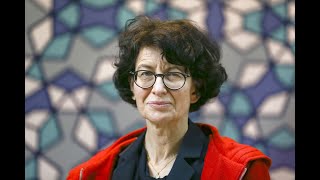
BioNTech co-founder Özlem Türeci explains how the rapid COVID vaccine succeeded: tight public-private cooperation and deep scientific understanding. She's now applying mRNA to TB, HIV, and malaria, with milestones expected in 12 to 18 months. TB treatment has improved dramatically, cutting therapy from two years to six months and raising cure rates from 30% to 90%.
Chapters
Hello from Central Park here in Manhattan. I'm joined by two of my heroes in the fight against disease and the fight for a healthy planet. All of us have watched with increasing confidence and optimism the ability of our leading researchers globally to create a solution for the COVID-19 pandemic. And today we have a wonderful opportunity to learn a little bit more about that successful fight and draw some lessons in the fight against other medical challenges. Dr. Özlem Türeci, you are truly a hero of mine. Thank you so much for joining us virtually. We have all watched as you and your team at BioNTech have developed one of the leading vaccines in the fight against COVID in record time, the Pfizer-BioNTech vaccine. What lessons, what secrets do you have for us that you can apply from that experience to other diseases and other challenges that we face?
Thank you, first of all, Anthony, for your very kind words and for this opportunity to be here today. There are, in fact, a couple of lessons we have learned from the COVID-19 exercise. We originally, many years ago, have chosen mRNA as our vaccine technology because we believed deeply in its potential to democratize healthcare. And the COVID-19 pandemic has been a baptism of fire which forced us with this technology to accelerate some of those steps towards this vision. And there were two major learnings, in fact. One learning was that public-private cooperation is very important, in particular if you come with a new technology which potentially might be transformative. It's very important that public-private cooperation on all levels, meaning between academics and companies, meaning between regulators and developers and policymakers is very tight and starts from the beginning. This was something which was achieved in this pandemic when we were developing our vaccine and has been a key success factor. And another learning is that it's very important not only to have technology, but also invest into the science of understanding the disease you want to treat, in this case the biology of this new virus, and into understanding of the immune system. And the way in which the scientific community has cooperated and shared data was also a key success factor.
Thank you, Doctor. Dr. Mel Spiegelman, you know the painful truth as Chief Executive Officer of the Global Alliance in the Fight Against TB. A disease like TB today kills 1.5 million people, and there are other diseases as well that maintain this incredible threat to humanity. What have we learned from Dr. Tureci and others in the fight against COVID that can be applied to these other struggles in managing a disease like tuberculosis or even eventually preventing it and eradicating it?
Yeah, thank you very much. And obviously, thank you to the sponsors of this event, which is unbelievably important. I totally second everything that we just heard. These are so crucial points that we have known for many years, frankly. We are a public-private partnership, and that's the only way that we can work. I think the point that really the COVID-19 pandemic has proven is that the fight against diseases requires significant investment. Yeah, that in addition to the partnerships, in addition to the health system strengthening, in addition to all of the these other factors, there has to be— miraculously transformative. And we've seen when successful, it's unbelievable what scientific advances can do. But it requires significant investment. And unfortunately, while that investment, to be very frank, is frequently there when the disease is primarily or significantly affect high-income countries, that investment is simply not there. When the diseases are primarily diseases of poverty like TB, or primarily affect the poor of the people around the world, even when, like you say, if the disease kills 1.5 million people every year, you know, ironically, TB was the largest infectious disease killer in the world until COVID came along. And my prediction would be COVID will get better in that sense, but TB has already been set back 5 to 10 years in terms of progress against TB because of all of the even decreases in resources.
Dr. Tureci, let me put you on the spot. Your success has raised our aspirations of what we can expect in the fight against disease. Are there other diseases in your research agenda or other diseases that you're tracking that you think we can expect to see foundational progress in the fight against within, say, the next 12 months to 18 months.
We are also very interested in using what we have learned, not only technologically, but in terms of drug development processes, to other infectious diseases. And we started with this actually prior to COVID. This includes tuberculosis and HIV TB and also malaria most recently. What we have learned about our platform has now the potential to accelerate all those programs. And for example, our malaria program is one where we expect to see first milestones within the next 12 to 18 months, and I also expect this for our tuberculosis program.
Thank you. Dr. Spiegelman, why are you optimistic that we're on the verge of making this kind of progress against TB?
Well, I'm both optimistic and pessimistic, to be very honest. I'm optimistic because with relatively scant resources, we have already made huge progress. Just to give you one example, We just recently introduced a new treatment for extensively the most resistant cases of TB that brought treatment from 2 years down to 6 months, raised cure rates from 30% to 90%, decreased the cost, etc. And so we— the science is fantastic and even with modest resources that we have, we have been able been able to make significant resources in conjunction with a variety of partnerships. However, I'm also pessimistic because the progress we've made pales in comparison to the problem. And therefore, unless there really are significant more resources, frankly, brought to bear on the problem, then I venture to say that it will take decades perhaps centuries to actually see ultimately actually the eradication of TB, which is the goal.
Not so long ago here on Wall Street, pharmaceutical companies were punished by analysts for maintaining active vaccine development programs because they weren't viewed as lucrative business segments. That has changed, and that has changed fast. And so that gives me confidence as I listen to both of you that the basic human values of trust, commitment, belief, and partnership combined with the science of messenger RNA and other techniques with this renewed enthusiasm and attention for solving humanity's basic problems in a program like vaccine development and then rewarding the companies that allocate their resources to do it, that's today's Wall Street, that change has happened so fast that I think all of us here watching your great work have greater optimism and greater confidence that progress will be accelerated. And I want to thank both of you. It is truly your lessons and your leadership that is driving this forward and making this progress possible. So thank you.