Founder Stories: Pat Brown, Impossible Foods & Increasing the Use of Sustainable Food Sources
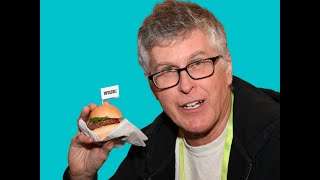
Pat Brown fought to open up scientific publishing, then founded Impossible Foods to replace animal meat with plant-based alternatives. He discovered that heme, a molecule in animal tissue, creates meat's flavor, and engineered yeast to produce it at scale. The Impossible Burger now uses a fraction of the land, water, and carbon of conventional beef.
Chapters
As I talk, you're probably going to wonder, what does any of this have to do with microbiology? That's the point of what I'm going to talk about. For most of my adult life, I've worked with wonderful colleagues and collaborators like David as a scientist at Stanford. My job responsibilities were to follow my curiosity wherever it might lead, discover and invent things and be a mentor to brilliant students and postdocs. It was a complete dream job. It was the job I would invent for myself if I were able to do that. But I'll talk today about a couple of projects that were not part of my nominal job as a Stanford professor and one of them that caused me to leave my dream job. But these, these other activities, although they weren't part of my nominal job, were absolutely my job as a human being and a scientist because I made them my job. So open access. I backed into open access. And the whole open access movement, I guess, and the huge problems that existed with our scientific publication system and unfortunately still exist to a considerable extent, because I wasn't giving them any thought at all. I seemed to be working fine. The system seemed to be working fine to me as far as I could tell. But 20-some years ago, my lab was collecting and beginning to analyze the first systematic data on global gene expression patterns in yeast and in human cells and tissues under diverse conditions. And these datasets consisted of many millions of individual quantitative systematic measurements of expression of individual genes and defined circumstances, it basically gave us a map of— that revealed the relationships between specific genes and specific properties of cells or tissues, and also showed us relationship between genes and molecular similarities between human tissues and organs and so forth. Okay, it was a professional that was its potential. It was a potential goldmine of insight. And to make these connections that were kind of embodied in this map here, what I was doing, what I started doing was madly reading every paper I could get my hands on that had anything to do with any of the cells we were studying, the processes we were looking at, or any of the genes that were represented here. And it turned out that this was just not going to scale. I mean, I'm not that fast a reader and it's a lot of information to process and synthesize. And it naturally occurred to me that it would be a lot better if we could just put every relevant article into a database, and then write software to mine the articles and systematically integrate it with this kind of data and discover the sort of emergent properties of this map. And that's when I discovered, what? I can't do it. Not because it's not possible, it's trivially possible, but because the scientific publishers won't allow me to use data that was published by other scientists entirely for the purpose of enabling scientific progress of the kind I was trying to make. It's ridiculous. It's unacceptable. What right do these publishers have to stand in the way of new research? This is what I was thinking. And more importantly, that epiphany opened myself— my eyes to an even bigger issue, which was that the overwhelming majority of the people for whom the research is being done, who in many cases are paying for the research with their tax dollars, can't access or learn from the results. So if you happen to be a high school or college student who reads about some exciting new scientific result in the news and you want to read the original article, and believe me, there are a lot of kids like this. I know many of them. But your school or university doesn't happen to be a major research institute like every high school. Or say a loved one develops some terrible disease and they or their doctor obviously desperately want to learn as much as they possibly can about the state of the art of treating or managing that disease so you can have the best chance of a good outcome, well, you're out of luck. So this is not at all what scientific publication is supposed to be. It's not what it was historically intended to be. It's not what the scientists who did the research or the taxpayer who funded it or the other groups that funded it wanted to happen with the research. Actually, the Internet historically was invented specifically to facilitate free and unfettered exchange of information between scientists. Somehow, the publishers had actually found a way to get in the way of this communication and hold it for ransom. And I had had no idea. So this is kind of like what was going through my head when I bumped into this phenomenon. And it's still going through my head every time I think about it. It's one of the reasons why I have to have notes here is because if I start riffing on this, I'll just go on forever. Anyway, until I wanted to do something creative with published literature and found myself blocked, everything had seemed fine. Of course, if I hadn't been at Stanford, I would have discovered it much earlier that I essentially have no realistic access to any of the published scientific literature. I would have known far earlier that the publishers had betrayed their responsibility to science and the public. So who should own and control access to the discoveries and information and ideas that come from our research? It's amazing that anyone would even have to ask that question because the answer is so self-evident. Nobody should own or control it. They belong in the public domain. This is like the kind of thing that when you hear about some some government controlling people's access to the news or to political discourse or something like that, you're outraged. This is worse. Anyway, knowledge is a public good. That's what scientists want. That's what the sponsors of research want. And that's what the people who do the research, who the research is intended to serve, want. So how do we fix this? It wasn't my job to do this, but, but it was my job to do it because it had to be done and I didn't see it being done. So I had the good fortune that at the time the director of the NIH, Harold Varmus, who's a great scientist, legendary scientist, had been my postdoc advisor and, and subsequently was a friend and still is a friend and collaborator. So in November— what the hell year was that? 1998, when Harold was passing through San Francisco, I met him for breakfast. And I suggested— this was very, like, a couple of weeks after my epiphany about, like, how screwed up things were— and suggested that the NIH should create its own open access repository. It was a much more radical version of the preprint server that Paul Ginsparg, very, just like a really key innovative idea, had created several years earlier for his community of physicists and mathematicians. In a sense, that community of physicists and mathematicians were the ones that were using the original Internet before the publishers got in the way anyway. Harold immediately embraced the idea. And worked with me and David Lipman, who was then the director of the NCBI, to put together a proposal for a system that we called eBioMed. And I apologize for the name, but it was 1999, so give me a break. Okay. So to our surprise, and it really was a surprise, although probably it shouldn't have been, this proposal was vigorously— vigorously is putting it mildly— vehemently, angrily, violently opposed and lobbied against by essentially every scientific publisher in society. And of course, the NIH depends for its funding on Congress, and Congress is quite susceptible to lobbying. And all that pressure and lobbying from the publishers, from the AAP, or whatever it's called, actually succeeded in bullying eBioMed into a much less radical, sort of tamer version of the original project, which would still have been great. I'm— it's going to happen one day. But it became known as PubMed Central, and it was less radical in that instead of mandating that all NIH-funded research needs to be deposited in this site, which is what we originally wanted and should have happened right away, it would instead rely on scientific journals to voluntarily contribute articles to the repository. So it wasn't what we wanted, but it was a start. Except, as you might have guessed, with the exception of 3 enlightened journals—PNAS, Molecular Biology of the Cell, and a brand new publisher that, that was actually founded specifically to support PubMed Central called BioMed Central—they all stonewalled it. So what next? So the publishers only exist because scientists voluntarily send them their manuscripts describing all the great work that they're doing. They voluntarily review other people's manuscripts for free, and then they pay or their institutions pay to subscribe to the journals. Without that support, they're out of business. And wouldn't that be great? By the way, one of the things I'm going to go off on one tangent, then I'm going to start paying attention to my notes again. But one of the things that at this time I got invited inexplicably to a big conference where all the major publishers are represented. It was like that famous scene in the '60s when Nikita Khrushchev was banging his shoe on the table and saying, we will bury you. But basically what I was saying to the publishers is, you know, if I had a button I could push and it would make not the people, but it made that institution completely go away, the next second science would be better off and scientific communication would be better off. Okay. It's in the way. It's not helping. Anyway. Okay. Now back to— what I was supposed to say. So I wrote this open letter, and the signers of which basically stated their conviction— I won't read the whole thing— that the published work, the work that they publish, belongs in the public domain. And they pledged that starting in a year, September 2001, to exclusively support publishers who agreed to make their contents freely available online within 6 months after publication, submitting their work only to, reviewing only for, and subscribing only to journals who adopted this open access policy. And the letter, we called it the Public Library of Science Initiative. It was initially circulated by hand. This is a version that I circulated to some of my Stanford colleagues. Did Dave Roman sign this? He must have. It might be off the bottom of the page. Anyway, and also members and leaders of scientific societies and so forth. Pretty much everybody that I handed it to was welcome signing it. And then my colleague and lifetime co-conspirator Mike Eisen set up a website so we could collect signatures globally. And then over the next year, that open letter eventually received more than 36,000 signatures from scientists from more than 150 countries. So, you can't ignore that, right? I guess you can. So, by the fall of 2001, it was clear that only a tiny handful of publishers would be willing to share the articles with which they'd been entrusted by their authors, share it with the global scientific community and the public. So awkward. So the waiting period for this pledge that 36,000 scientists and many of my best scientific friends had signed was over in the summer of 2001. And all these scientists who had made this commitment suddenly found themselves with virtually no options for adhering to the pledge, for publishing their work and and doing their business. Of course, they did have options. They could have just posted them, but anyway, so crap. Now what are we going to do? So, well, screw them. We're just going to have to beat them at their own game. So we turned Public Library of Science into, from a web domain into a nonprofit corporation. Now we needed to launch a new business from scratch and to compete with an industry that had annual revenues in the billions of dollars. It's like $10 billion this year. Ridiculous. So we needed startup capital. And I did a back-of-the-envelope calculation and estimated that we would need around $600,000 to launch an open access online publisher. Of course, I had never seen, let alone written a business plan. And as is often the case when you're writing grants, when we formalized the actual business plan and started adding the numbers up, it helped us— first of all, it helped us crystallize the strategy because, you know, what kind of journals should we launch and in what sequence and how should they operate and what should their publication criteria be? And who would we need to hire and how much would we need to pay them to keep it going and all of that. And it added up to a lot more than we guessed. But a wonderful foundation, the Gordon and Betty Moore Foundation, and then later Herb and Marion Sandler, a great philanthropic couple, stepped up to make it happen. The first journals that we're going to launch— wow. We're going to indelibly define the PLOS brand. We figured it was going to be basically, we got to get it right the first time. The key customers were going to be the authors of important articles that would in turn attract attention to readers. That would produce more articles. This was how this thing was going to get off the ground because of course, we started with nothing. There was nothing to submit to and no history, no track record, and so forth. We realized that this is meeting your target audience where they are. We realized that Scientists have, have, have this process where they want to publish in a journal that is the most selective journal that's not going to reject their paper. And so the, so, so the more papers you reject, the more people want to publish their their papers in a journal. Okay, it is perverse, but that means that the best way for a journal to establish itself as not to be ignored, an attractive journal to publish in, is to promise to reject most of them. Okay, and that was absolutely diametrically opposed to what we had proposed in eubioMed and really what we aspired to.. But we also had to be realistic about where people were operating at that time. And we knew we had to start a journal that rejected most of the papers that were submitted. We had to painfully reject them, even though their work deserved to be published, even though the very reason we founded PLOS was to make all scientific research discoveries and data freely available to the public. With minimal imposition of our own prejudices and judgments on what should be published. Okay. So we hired editors. We hired the editor from Cell. We hired a bunch of editors from these highly selective journals who were eager to get out of that world and become open access editors, I guarantee you. And they had a well-established reputation. This is part of the reason we hired them, because they were great, but also because they had a great reputation for rejecting almost every paper that they read. And then we projected confidence. This was part of the game, is that you gotta act like you're on top of the world even before you exist. So that great people would feel like, oh, this is, I got it published in PLOS Biology. And anyway, so then we launched this journal. And the day that PLOS Biology launched, this was like an epic moment for me. Two of the stock rating agencies downgraded Elsevier stock specifically because they pointed to the competitive risk of open access publishing to that publisher. And boy, they were ahead of their times. But Elsevier lost $1 billion in market value overnight. And I just felt like, yes, it's— that's even better than making $1 billion. Okay. Unfortunately, they still exist. But so thanks to the smart and idealistic and dedicated people who joined PLOS, and obviously the inherent advantages of open access. And despite some hard times and bumps in the road and the few years it took for it to become self-sustaining and so forth, PLOS blasted ahead. Became a success, um, paved the way for the success of other open access journals that saw that it was doable and followed. And I think pretty credibly established that open access publication was desirable to authors, a great thing for readers, a great thing for the public who now had access to all this literature. Reporters love it. That's one of the, one of the secret sauces of open access publication is that if you're a reporter for the New Yorker, you don't have access to these journals either, but you got access to PLOS ONE. So practically every week there's an article in the New York Times about something that was published in PLOS ONE because they can actually read it. Okay. Anyway, where was I? Sorry, that was a distraction. Okay. So today it's 20 years later and about half of all scientific articles are open access. But the other half are still not available in any useful way to the world. The fact that any of the scientific literature is still out of reach to most of the world, to me, is an egregious failure for which every institution that claims to stand for science and education should be completely embarrassed and ashamed, including Stanford University. I wrote a letter to— I've actually written a couple letters to the president basically just saying exactly that. You should be completely ashamed of yourself. Not listening, I guess. But really, I think there's no excuse. There's just absolutely no excuse for this. There might have been an excuse 20 years ago when people were saying, oh well, you know, we're not sure that there's a sustainable business model for open access. That's ancient history. No excuse. I think every university, scientific society, and scientist who continues to— I'm sure I'm going to offend everybody here, but that's part of my job— who continues to give aid and comfort to a system that deliberately limits access to important scientific information is absolutely betraying their responsibility to science and society. What could be more fundamental to your responsibility to science and society? If I were a university president, which will never happen because I've alienated every single one of them, besides which it's the last job I'd ever want, but— because then you have to deal with assholes like me. But my first priority would be to organize other universities together and jointly give an ultimatum. Starting in one year, we're never again going to pay for access to any scientific journal, period. And I'll tell any faculty members who complain and whine about it to just shut up and think about their responsibility to science and education and society. I mean, I hear this sometimes, like literally I've had these conversations. Oh no, no, the faculty will get so pissed off if we do that. Screw them. They should be— they should think about their responsibilities. I was one of them. You know, you got to do your job anyway. And don't even get me started about pre-publication peer review. I was actually going to talk about that. Then I realized that even if I try to constrain myself with written notes, I'm just going to go on a rant and it'll take forever. But pre-publication peer review is a medieval anachronism that does nothing to make literature better. It has virtually no discriminatory power and it rejects a lot of great papers and delays publication of everything. And then it defrauds the public by trying to convince the public that being published in a peer-reviewed journal is some assurance of the credibility of the results, which no scientist believes. Anyway, I think the whole notion of a journal in general became obsolete decades ago with the internet, and we just haven't caught up with that. Okay. Seriously, don't get me started. I have no time to dive down this rabbit hole. Ask me about this picture later. Okay, so, okay, on to part 2. So about 9 years ago, I was happily engaged in my dream job at Stanford, and I had a sabbatical, and I decided to use the time to ask what is the most important and urgent problem in the world that I might be able to contribute to solving, with no, no, no boundaries on on what it might be. And it didn't take me long, actually, to find it. And then I was just like, how could I not have realized how bad this was when I found it? Using animals to make food is by a huge margin the world's most destructive technology. Steve Chu, who used to be the head of the Department of Energy and has been worked at, ran the Berkeley Sustainable Energy or whatever department for a long time, a couple of months ago said, yep, I thought it was the energy system, but I was wrong. It's the use of animals to produce food that's the biggest threat to the environment. So kudos to you, Steve, a great scientist. Anyway, it's quite possibly the most urgent threat that humanity has ever faced. Nothing else even comes close. So today, just to give you a little bit of background, and I'm not going to belabor it, I hope, animal agriculture globally is responsible for more greenhouse gas emissions than the entire transportation sector—every car, truck, bus, train, ship, airplane, and rocket ship combined. Just to give you an idea, consuming A global average pound of beef is the greenhouse gas equivalent to driving 74 miles in the EPA average American car. Okay, that's the greenhouse gas picture. Then animal farming contributes more, uses more water than any other industry, pollutes far more water than any other industry, and even more problematic is the land footprint. So less than 1% of the land area of Earth would hold every city that has a population of more than 200,000, okay? Less than 1%. Animal farming occupies more than 45% of the entire land surface of Earth that's not covered by ice or, or, or And that's more than the combined area, the combined total area of North America, South America, Australia, and Europe. This is land that used to provide, support biodiversity, diverse ecosystems, provide habitat for wildlife. It's now basically nothing but, it's dominated by grazing animals and feed crops with virtually no biodiversity, plant or animal. So for all practical purposes, the footprint of humanity on Earth is animal agriculture. And the demand for animal-derived foods is skyrocketing. It's driving global deforestation, overwhelmingly the driver of global deforestation. And ecosystem degradation with catastrophic effects on global biodiversity. So 10,000 years ago, the vast majority of all animal biomass on Earth was made up of diverse wild species. Humans had a very small footprint. There were no cows. 40 years ago, the human population had grown to outweigh the world's wildlife, and the animals we farmed for food outweighed them both. By a lot, but then it got worse. Today, domestic cattle alone outweigh every remaining wild vertebrate on land by more than a factor of 10. Pigs outweigh every wild land vertebrate by more than a factor of 2. Chickens outweigh every wild bird left on Earth by more than a factor of 2. The habitat loss and degradation caused by this massive livestock population and the massive resources they consume and the lands they occupy that can no longer support healthy ecosystems is— it's caused a catastrophic meltdown of wildlife populations. So according to a publication by the World Wildlife Fund, a couple of years ago and then again last year, the average population of wild animal species around the world, birds, mammals, fish, reptiles, amphibians, even invertebrates, is less than half what it was 40 years ago. In 40 years, we've wiped out half the wild animals pretty much across the entire tree of life due to the destructive impact of livestock production on wildlife habitat. And at current meat consumption levels, just to give you another perspective on how insane this is, at the current consumption levels of meat in the world, if we were to decide, okay, actually get rid of livestock, we're just gonna hunt wild animals for food, there wouldn't be a single wild animal left on Earth. In 2 months. There wouldn't be a shrew or chickadee left living on Earth if we decided to satisfy our appetite for meat by hunting wild animals. Okay, okay, so what can we do? In principle, we could feed the world with a tiny fraction of the land, water, and greenhouse gas emissions just by switching everyone to a plant-based diet. That would be easy, and you could do the math, and it's just like I'll get to it— vastly, vastly reduced environmental impact. We could reduce the entire land footprint of humanity by more than a factor of 4. The entire land surface that we occupy or disturb would be less than, uh, 25% of what it is today. But for billions of people around the world, the meat and dairy products and fish that they consume is not only an important source of nutrition in their diets, but it's an essential part of the pleasure of living. Eating. And that demand is not going to go away, and it would actually be unrealistic and even unfair to try to address the environmental problems in the world by compelling or even asking people to reduce or eliminate the foods that they love and are important in their diet. And besides, it wouldn't work because China has already tried this a couple of years ago. China China, which is much more effective than, say, the U.S. government at getting its citizens to do what they ask, asked its citizens a couple of years ago to cut their meat and dairy consumption by half. And what happened? Nothing. It didn't go down. It just kept going up at the same rate that it had been going up. So that experiment has been done. You don't solve the problem by asking people to change their diets are trying to compel them. So we need to reframe the problem. Oh yeah. And Homer Simpson, people don't give him enough credit actually. He's a genius. He had the right idea. The problem isn't that people love meat, it's how we produce the meat. And in today's food system, animals are just an insanely inefficient unsustainable, archaic technology that we've been using since prehistoric times to transform plants into meat. It's a technology that's barely improved in 1,000 years, and worse than that, it's essentially unimprovable due to fundamental limits imposed by animal physiology. It's more or less asymptoted. So what other technology on Earth can you say that about? A prehistoric technology that's fundamentally unimprovable. Why do we keep it around? Anyway, it's unimprovable, but it's replaceable, and in fact, it's a sitting duck for replacement. So 200 years ago, the horse was the state of the art for power transportation. And if I asked you then what the future of transportation would look like, you'd probably have said, oh, the horses will be faster. But that's not how it turned out. In 1830, sorry, the first commercial mechanized vehicle ran a race against a horse. This is a locomotive. And it lost, barely. But the real headline was that it was never gonna lose again because the horses didn't get any faster. And by stepping away from the inherent limitations of animals, the new technology very soon outperformed the horse in every way that mattered and has been improving ever since. And it didn't happen because the government decided to outlaw the horses or because consumers were looking to get rid of horses. It's because a new technology came along that did a much better job of delivering what consumers valued from the horse, and the market made it happen. So that replacement of ancient traditional technology by animal-based technology by better technology is about to happen again to meat. Most of the world thinks that meat can only come from animals, and they're wrong. 8 years ago, because nobody else was seriously trying to replace the world's most destructive technology, I quit my dream job at Stanford to found Impossible Foods to make it happen. It wasn't my job to make it happen, but I made it my job. I started with a mission to replace the world's most destructive technology by, by 2035, and then that turned into a company when I realized that the solution had to be market-based. The surest way to eliminate the world's most destructive technology was to develop a better technology, create products that outperform the incumbents in every way that matters, put them on the market, and let consumers choose. Nutrition and affordability were trivial to beat animal dry foods, but deliciousness is really hard. And nobody knew, we didn't know, nobody knew how how to make uncompromisingly delicious meat directly from plants. And nobody had seriously tried. So I recruited and, and we're continuing to recruit a team of the smartest, most creative, most collaborative scientists around, literally some of the best scientists in the world. And they set about to answer the most important and urgent scientific question of our time. Absolutely true. What makes meat delicious? That was the most important scientific question, and still is. If we could find the answer, we would be able to replace the world's most destructive technology and begin to reverse its catastrophic impact on climate and biodiversity. So, we set to work, and we've been answering that question. And probably the most important discovery that we made early on was that one magic ingredient is responsible for the delicious and craveable flavor flavors that make meat categorically unlike any other, any plant-based food on Earth. And that's heme. So heme, as everybody here knows, is a molecule that's essential to almost every cell on Earth, but it's most familiar as the iron-containing molecule that makes your blood red and carries oxygen in your blood. Heme is found in every plant and animal cell, but it's orders of magnitude more important, more abundant in animal tissues. And, and that abundance of heme is the reason that animal tissues as a class taste and smell and cook unlike any plant-derived foods. They categorically behave differently. Its catalytic activity is responsible for the bloody flavors of raw meat and catalyze the explosion of flavor and aroma that happens when meat is cooked. There's a lot more than this that goes into making meat, but heme is where most of the magic comes from, at least from a flavor standpoint. In muscle tissue, heme is found bound to this molecule myoglobin, which is a close relative of hemoglobin. So here's how that works, and I'll just go through quickly. If you take a solution of just basically the simple nutrients that are found in any cell, plant, animal, bacteria, whatever, and you add and just cook it, you'll get a mild savory flavor that'll be like vegetable broth or something like that. But if you just add heme, it catalyzes the explosion of chemical reactions that take place when meat is cooked, and they transform those simple nutrients into hundreds of volatile compounds that make up the unique aromas and flavors of meat. Anyway, that discovery of the catalytic effect of heme meant that we didn't need to put fake flavors into a product to make it taste like meat. We just had to put simple nutrients into it, throw in heme, and let the same biochemistry that happens in meat take care of the rest. We couldn't actually use myoglobin because we— or we didn't actually use myoglobin because we found a plant-derived heme protein that actually performs better in meat than the myoglobin in animal tissues. After all, animals didn't evolve to be delicious and myoglobin didn't evolve to be a flavor catalyst, but we could actually make that choice. Okay. So when I started this project, I was pretty sure I knew where we get our heme protein. Soy plants fix nitrogen using a structure called a root nodule. And to control the oxygen concentration, which affects the biochemistry, root nodules have an extremely high concentration of a protein called leg hemoglobin, which is almost identical to myoglobin. And I thought I had the genius idea that we're gonna get leg hemoglobin virtually for free by harvesting the root nodules from the US soy crop, and there's enough leg hemoglobin there to replace all the heme in all the meat in the world. Eaten in the US. Anyway, no, it actually wasn't a genius idea because we spent a large fraction of our startup funds and a year and a half, most of our time, trying desperately to figure out a way to harvest root nodules sustainably and economically. And eventually we came to our senses and realized that there was a better approach. We still needed an abundant source of heme, so we transferred the gene encoding leg hemoglobin, which parenthetically, we searched like 36 different heme proteins, everything from Paramecium to Hell's Gate thermophile, and leg hemoglobin was the best for food. And we transferred it into yeast, and then we revved up the the yeast cell's own heme biosynthetic pathway, resulting in bright red yeast that produce the protein in high yield and economically at scale with a minuscule fraction of the environmental footprint of cows. Okay, there's much more delicious meat besides heme, which I won't be able to talk about. The specific constellation of nutrient molecules that underlie the flavor profiles of all all meet and the textures and the juiciness, they all need to come together. It's a very complicated multidimensional problem. That's why we have this amazing team of now, I think it's like almost 120 scientists, like half of them have advanced degrees, working hard every day to make progress. And we're still working to build a complete technology platform to enable us to create the best meat, fish, and dairy foods of all kinds from simple sustainable plant ingredients. Okay, but 2.5 years ago, we felt like we had learned enough that we're gonna make our first product. And we decided that that product was gonna be raw ground beef because it's the biggest category of meat in the US. The beef industry is by far the most destructive sector of animal agriculture. And more than half of all US beef is sold as ground beef or consumed as ground beef. And it's iconic, so that was our target. So we made it, we started prototyping. Our first prototype was characterized by some of the scientists who tasted it as resembling rancid polenta. So, an auspicious start. But the thing is, our decisive advantage over the cow is that we can get better at making meat every day, and the cow stopped working on it a million years ago. So we now do more than 100 rounds of prototyping every month. Prototyping, optimization, tasting, evaluating, repeat, repeat, repeat, so we can get better fast. And 3 years ago, after prototyping for a couple of years, we were ready to launch what we call the Impossible Burger. Today it's in restaurants in every state in the US and Hong Kong and Singapore, ranging from Michelin-starred restaurants restaurants with some of the best chefs in the world to mass market burger chains like White Castle and most recently Burger King, which launched the Impossible Whopper in April. Okay. So is it achieving our goal? Well, the land and water footprint are vastly— and greenhouse gas vastly lower than the same product from from a cow, we use less than 1/25th the land, less than 1/8th the water, and emit less than 1/9th the greenhouse gas emissions that are emitted in producing the same thing from a cow based on an independently audited life cycle analysis. And it's got all the protein, vitamins, and iron that meat lovers value, but no cholesterol or calories, lower fat. Anyway, as I said, sustainability and nutrition are the easy parts, but will it satisfy the meat cravings of uncompromising carnivores? Okay, so about a month ago, one of my colleagues told me, you haven't— you've got to watch this Glenn Beck video.
You know, can you tell the difference? I want to go on record, I think B, just by the look of it. Is the fake burger? A definitely tastes like meat. All right, so now I'm going to try B. B is the fake burger. Mhm, I agree. If you just gave this to me fresh, yeah, and it was hot and fresh, I bet I wouldn't know. I wouldn't know the difference. And that's B?
Yeah, that's B.
Um, the— probably the reason you wouldn't know the difference is that is the real burger. You're kidding me! Are you serious? B is the real burger. A is the Impossible Burger. That is insane! That's amazing. I'm shocked that both of you went with the wrong one. That is amazing. That's wrong. That's wrong to do that to me. It's not really.
Go vegan. Crazy. I could go vegan.
I am expecting my cows, because I have a ranch, cows, and that's what we raise them to be. I am expecting my cows to be taking their little hooves and pushing plates of this towards me. Have you tried this? The Impossible Whopper is right around the corner. 7,300 Burger Kings are about to have it as well. And they are going into grocery stores later this year. If Glen and I can't tell the difference, I think that is— that's incredible. Wild inductions. I am blown away by that. That's unreal. We are anti-fake food. We are anti-vegan stuff. We both hate vegetables. Yes. And for that to— and I'm a rancher. Yeah. I'm a rancher. I breed my cattle for a certain texture and taste.
Needless to say, we didn't set this up. Glenn Beck is not a paid spokesman for Impossible Foods, but It was just a trick that their producer played on them, and someone told me about it, and I had to force myself to watch it. Okay. So, okay. So are there any lessons from the experience that I've talked about? Because I just felt like it's just a ramble about things I've done the past few years and so forth. Are there any useful themes? Maybe it's debatable, but what I think our potential lessons are, one, our core function as scientists is to challenge the status quo and the conventional wisdom. That is the core function of a scientist. The reason that science matters to ourselves and to society has always been that our current model of the universe that we're carrying around in our heads or in textbooks or whatever, our cells, our genomes, our microbiome, how to treat a disease and so forth, is either incomplete or wrong. Otherwise, our work would be done and we could all go home. Our mission as scientists is to discover what's missing or wrong with the conventional wisdom and the status quo and update the model. And then the next generation will work to figure out what we got wrong and so on ad infinitum. Second thing is don't stay in your lane. First of all, there are no lanes. Did you notice that? Where are the lanes? There are no lanes. Science has no natural boundaries. A lot of people, I think, seriously let these artificial labels like, oh, I'm a geneticist, so I do genetics or whatever, to somehow constrain their scope. And actually, it's not just the scientists. I had the best grant I ever wrote actually was rejected because it was like my first grant about all the stuff I want to do in genomics. It was rejected. Probably the biggest reason was the reviewer said, oh, he's not a geneticist. The hell does that mean? Anyway, whatever. But, but there are no boundaries. The labels are bullshit. Jumping into a field where you're not an expert actually can be Jumping into a field where you're not an expert is obviously— can be intimidating. It can also be a hell of a lot of fun. But outsiders and beginners and amateurs have one big advantage over the established experts, and that is they have not become comfortable with all the prevailing assumptions and conventional wisdom of the field, which, as we know, looking back on the prevailing assumptions, conventional wisdom of 25 years ago, are likely in many cases to be wrong, and they haven't bought into them. So they can look at it with fresh eyes and possibly make some discoveries that no one else would think about. And finally, it is your job. The biggest obstacle I think that holds people back from solving important problems is that they make the assumption, especially if it's like a big, like global problem that a lot of people should care about, they make the assumption that it's not their job to solve it, that it's someone else's job. Maybe someone in the government should be working on this. The UN, what is the UN doing? The experts, the publishers should solve this problem. The food industry, they should be doing it, but they're not doing it. And they don't even recognize maybe that there's a problem to solve. And if you're talking yourself out of doing it because you think, oh, who am I? I'm the least qualified person in the world to be a CEO of anything, much less a food company. But I didn't let that hold me back because someone had to do it, and I didn't see anyone else stepping up. So I guess the message I would say is, if you see an important problem that you think has to be solved and you want it to be solved, it's your problem to solve it if you step up and make it your job. It's your job. And you might not succeed, but if you don't do it, you know, if nobody steps up, it's definitely not gonna be solved. Okay, and that's all I have to say. I wish I had time to thank all the wonderful people who made the stuff I talked about possible. Everything I've done in my entire career has involved collaborating with brilliant, dedicated, inspiring colleagues and mentors like David Relman. And in my forays into open access and fixing a catastrophically broken food system, I've just been a minuscule part of the group that's been carrying on these projects. I wish I had time to acknowledge them all, but that would take an hour. Anyway, thank you all for listening.
More from Joshua







Scientist Stories: Hans Waterham, The value of phenotypic assays in peroxisomal disorders




Scientist Stories: Joel Zlotogora, Genetic carrier screening programs for reproductive purposes