Founder Stories: Patrick Brown, Founder of Impossible Foods
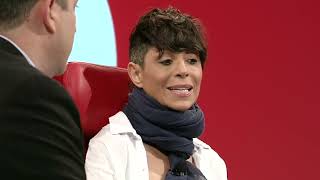
In this Recode Founder Stories interview, Impossible Foods founder and CEO Pat Brown and two‑star chef Dominique Crenn discuss the company’s mission to replace animal agriculture with plant‑based meat, fish, and dairy. Brown explains the environmental rationale (about one‑tenth the greenhouse‑gas emissions, water use and land footprint of conventional meat), the molecular‑level R&D that produced a burger that looks, cooks, and tastes like beef, and the company’s commitment to transparency about ingredients (wheat, potato, soy, yeast protein; coconut fat; plant‑derived fibers and micronutrients). He describes the scaling challenge of moving from a small‑scale, lab‑driven process to a capital‑efficient, mass‑market operation, aiming to reach supermarket‑price parity within a few years. Crenn shares a chef’s perspective on food quality, the emotional experience of eating, and the climate urgency that drives her to consider plant‑based alternatives, even though she is not vegan. She talks about her restaurants, the platform she has as a celebrated chef, and her desire to make sustainable food accessible, including a vision for a low‑cost plant‑based fast‑food concept. The conversation also touches on consumer skepticism about “fake meat,” the importance of ingredient transparency, the decision to stay independent rather than be acquired by a tech giant, and broader social topics such as gendered titles in the culinary world. The interview ends with audience questions about remaining scientific and operational hurdles, pricing, and the healthfulness of plant‑based diets.
Chapters
How are you, Eric? I'm Dominique.
I'll just sit you here. So this is like a Hitchcock thing. We're not going to talk about what's in the bag yet. We will in a second. So Dominique and Pat, we'll have you guys introduce yourself, because you can do a better job of telling people what you do than I can. Dominique, you do what for a living?
Ballet dancer. No, I'm kidding. I'm a chef. I live in San Francisco. I have 2 restaurants in San Francisco. I just cook delicious food.
You are a world-famous chef. You are a 2-Michelin-star chef. You are recently named the best female chef in America, which I think is a compliment, right?
In America? In the world.
In the world. Excuse me. You gave us a video that describes briefly what you do. Why don't we show people that just to give people a sense of what you're doing? You guys want to roll that for a second?
So that's—
can I call that an amuse-bouche? Is that right?
Yes.
It's a taste. If you want more of that, you're on Netflix starting this week.
Last week.
Last week. Full hour of you. So you guys should watch that when you're done talking about this.
You guys should watch that, yes.
Hi, Pat. You're Pat Brown. You do something entirely different. Why don't you tell people what that is, but related?
Well, right now— I'm the founder and CEO of a company called Impossible Foods. The mission of the company is to replace the most destructive technology in the world, which is the use of animals as a system for turning plants into meat and fish and dairy products, by making the best meats and fish and dairy foods in the world directly from plants.
You are making fake meat.
Today? Well, we're making meat for meat lovers, uncompromising meat lovers, that we believe will deliver without any compromise on everything that meat lovers crave, but with a fraction of the environmental impact—about 1/10 of the greenhouse gas impact, about 1/10 of the water usage, and about less than 5% of the land footprint of making the same products from animals, but without compromising on taste. And we're going to be serving it at dinner tonight, so I hope everyone will challenge me on this by trying our first product, which is a delicious burger, and letting me know what you think.
So you guys can do a taste test tonight at dinner. In the meantime, do you want to show people what this stuff looks like? Because it's quite startling.
Oops, okay. So this is frozen, but this is the raw burger. And I'll just say that to achieve our goal, we knew that food is so important to people. They are really not willing to compromise on any of the pleasures that it gives them, or very few people are. And so we had to deliver— we had to produce a product that met exacting specifications in every interaction with the consumer, including how it looks and handles in the raw form, how it sizzles and generates aromas when it's cooking, the texture, the juiciness, and most importantly, the flavor. And that's why, if you look at it, it looks like raw ground beef and cooks like it and actually tastes like it if you want to eat some.
And the idea is you're going to start off by serving this ideally, hopefully, in high-end restaurants. Dominique, would you sell this in your restaurant?
Oh, yeah, definitely. I was talking to Pat yesterday, and I tested his product before.
So he says this tastes just like meat. Do you agree?
Well, I mean, yeah. I mean, it's kind of interesting. I mean, I'm in a business. I cook food every day and the way that I cook food is, first of all, I think before cooking for sure. But I'm also, I'm looking for texture, I'm looking for taste, I'm looking for also the emotion that the food give me and the way that he cook. And what he's doing is pretty outstanding. I'm not vegan, I'm not vegetarian, but I'm conscious that If we want to go a different way, the world is crumbling. The world is— I mean, climate change is real. I was telling you the other day that I think 40% and 50% of the food production in the world contribute to climate change. The way that we're going to have to move forward is to really think about the way we eat and the way that we produce food.. And this is an incredible way to do it. You don't have to be vegan or vegetarian, but you have to be conscious and thoughtful about where you want to go.
Is there food that you won't serve in your restaurant because you don't like the environmental impact? I do.
I opened the second restaurant called Petit Crenn because I was very thoughtful and conscious. And I was very angry with the meat industry. There's no meat product in the restaurant that I opened because I was like, I can't do this. This is crazy. I was reading yesterday that they kill— I think there is 20,000 cows a day that have been slaughtered every day in the United States. I mean, just do the math.
This is not normal.
Because some chefs that do what you do in very high-end restaurants will say, well, we still want to serve meat, but we're going to make sure that the meat, or whatever it is that we serve, is sourced a very specific way. And the animal is grass-fed, and I'm not being flip here, but we know its name or whatever it is. And so it's raised humanely, and we're being very thoughtful about it, but we're still going to serve meat. And you're saying we just don't want to do it, period.
I'm not saying this. I think we have to go— we can't change the world tomorrow. And I think that perhaps that might be the solution. But also what I'm asking is people to be conscious and maybe eat less meat. But they need to know what they're doing. You know, when you go to a restaurant or you go to buy something at the market, the dollar that you're going to spend, you've got to be thoughtful about where that money goes. You've got to know where things come from. If you don't know, then that dollar is going to impact the right way or the wrong way.
To be clear, when I go to your restaurant, I go there because I'm going to be served amazing food. You're not saying amazing, sustainable, we're going to help the earth. You're saying come eat amazing food with me. And by the way, it's not bad for the earth.
I will never advertise that my restaurant— I mean, it's organic, sustainable. I'm very thoughtful. But this is not what I'm going to cook. I want to cook great food. It's underlining. It has a better impact for me. And I don't know. I just want to challenge everyone and invite everyone in this audience, when they go eat somewhere or they cook food at home, they need to think. We need to rethink. This is Recode. We need to rethink about the way that we are doing and eating food in the world. And I think is, I mean, obviously animals are incredible. And maybe this is the way to go. So I'm a chef that said that we have the responsibility to do this. And food is the core of the society. And if the food is not the way it should be, then the society is going to scramble, which is doing in a lot of places right now.
And Pat, why did you do this? Because you want to help the Earth, or do you do this because you want to make money and this is one way to do it, or somewhere in between?
No, it was— I got into this not thinking that it was going to wind up being a commercial endeavor. I was on my sabbatical at Stanford. I'd been a professor in the medical school for 25 years. I wasn't looking for another gig because I had the best job in the world. And I was never interested, to be honest, in going into business. But I wanted to pick the most important problem in the world to work on. I decided that without question, the biggest threat to the global environment right now is the use of animals for food. And I thought it was a solvable problem. But the solution involved starting a business. Because the only way you're gonna do this is by basically a market-based approach. And that entails creating a food that outperforms what's on the market, and that's how you change the system. So that was the genesis of this thing. It was—
'Cause there's another approach to this, right? Or there's another approach to creating new kinds of food that's popular, at least discussed in Silicon Valley. It's the Soylent approach, right? Which is food is— thinking about food is a waste of time. Doing anything other than just putting the necessary calories into your body is a waste of time. So have this goo, eat it, and move on. We were talking before, that appeals to you, right?
Like, well, I mean, you know, in my life, for most of my life, convenience and speed and just getting the nutrition in was most of what food was about.
You're a Soylent guy. You could be a Soylent guy.
I could have, I could have been. I'm not a coder, which is the core demographic of Soylent, but I could otherwise have been. But anyway, for the vast majority of people, food is a huge part of the pleasure of life. And it's so important to their quality of life. It's not just nutrition. It's pleasure. And so some people will— like soybean as a sole food source, but it's a tiny fraction of the world. I mean, bless their hearts, but that's just the reality. So you have to deliver on the pleasure of eating or people aren't going to be interested.
Dominique, have you ever tried soybean? No, it doesn't sound like it. No. You've probably tried though. I assume other folks like Pat have come to you and said, I have a new mystery meat. A new wonder product. It's going to be like meat but better, or like fish but better. Have you tried other stuff like this?
I did try yeast stuff. And it's pretty amazing. Yeah, there is some people that— I mean, it's quite interesting. I'm always interested when people come up with ideas and product, and maybe to change the way that we eat. But also, sometimes I'm worried about the way they produce those foods. I think when I think about the vegan and the vegetarian market, I think it's like, I don't know how much— Tiny. I mean, ton, right?
I mean, I think it's effectively single digits, low single digit percent of the population.
So there's a lot of companies now that create those products. But I'm worried sometimes because the way they create those products, you look at the ingredients and it's not even healthy for you. So if someone want to go that way, we need to really put a mind together and really from A to Z. And everything needs to be thought out, not just like, I'm going to do vegan. And it's just like you have this and this and you don't know where that thing's from.
You want to know what's in the fake meat.
Yes, you have to. It's very important. You know, I go to, you know, you go to the market and you go, you get a strawberry, organic strawberry. What is the package? The package is plastic. What is the implication of this? So when you think about a product, you need to think about the whole product in itself and the packaging because that implication is going to make a difference. It's not about eating just a strawberry. It's about thinking about where you're going to What are you going to do with that plastic package?
Pat, what's in the meat? What's in the mystery meat?
Well, first of all, there's no artificial ingredients. And I'll say that we're a company that is primarily about our mission. Obviously, our mission is perfectly aligned with business success. But one of our core values is that we're never going to create a product that we don't believe is better for the consumer than what it replaces. And we're also going to be completely transparent about what's in our product. So there are no animal ingredients. The major plant sources of proteins are wheat, potato, soy, and yeast. The major fat source is coconut. We have a few— we have a couple of plant-derived soluble fibers, and then micronutrients.
But you're not shoving this stuff into a vat and grounding it up and turning it into fake patties, right? You're breaking it down and taking out different molecules.
Oh, yeah, yeah, yeah. This is not like a garden burger. So when we started, when I started the company, I realized this is an incredibly hard thing to do. We really do not know how to do it. I knew it was doable. I didn't know how we were going to do it.. And we built an R&D team that was 80 people by the time anyone, 3 years into our life, anyone had heard of us. 80 of the best scientists in the world. And I'm not kidding. These are people who could have had jobs in universities or the best biotech companies and so forth, but they believed in our mission and joined us. And we did that because Again, you're not going to make anything that appeals to a hardcore meat lover by mushing together a bunch of vegetables. And so we had to do a very deep, systematic, molecular-level characterization of what it is about the foods that we want to make— meat, say— that accounts for the desirable properties the texture, the juiciness, how it cooks, the aromas it generates, all that kind of stuff. And then very deliberately find sustainable, scalable, affordable plant sources for the necessary ingredients.
But you're building this in a lab. And so what I wanted to get to was the notion that—
We used a lab to discover how to do this, to understand what we need, the problems we needed to solve in order to make this product. We're not producing in a lab. And actually, I would say, unlike the competition, the meat industry, we can be very transparent about how our burger is created. It's in a, you know, GMP food-safe facility.
Food production facility. You don't think you're going to get pushback from people who might go to Dominique's restaurant, who might get food from a CSA or go to the farmer's market, and the idea that they think they're getting something locally sourced and your thing is produced by a company that they've never heard of before and they're buying a box of it? I don't think you'll get pushback from me. No, you're in. You're in. But I'm just wondering if— there are people who are concerned about anything that involves science and food.
They get freaked out by that notion. Well, I mean, as you know, and I think this audience knows, that the entire history of food has been sort of nature combined with human ingenuity. And it's hard to find a food in the food system that isn't a product of that. I mean, bread isn't just something that falls off a plant. And— Food is science. It's— yeah. And so— but I realize that there is kind of a segment of the population that has sort of a deep science phobia. And it's particularly prominent in food. We have really not encountered that as a problem. We've served our product to thousands of people. There are people who have that concern. I think it's— the fact that we're transparent about what we're doing, The fact that we're not trying to create this product as a way to kind of rip off our consumer by shoving a bunch of junk in there and taking out the nutrition, but we're so deliberate about making it healthy and nutritious and sustainable, I think should alleviate a lot of those concerns.
Dominick, let me ask about the business of being a famous chef. The idea of a famous chef was a foreign idea a couple years ago. Now it's pretty common. Usually someone with your stature has one or two sort of high-end restaurants, and then at some point you find out some way to franchise it or create Vegas outposts, and then maybe a low-price thing. Does that appeal to you? No.
Not at all? Well, the thing is, I think in our industry we're very lucky because now we have a voice. And being a celebrity, it's what you do with it. It's a platform. Is you can go two ways. You can, you know, hey, I'm a chef and I'm a rock star, I'm a celebrity and I don't care about anything, just myself. Or, well, I have a platform and people start to pay attention of what I'm saying. So what do you do with it? So for me, it's a platform and—
What do you want to do with that platform? What message do you want to get out to the folks in this audience?
Well, I mean, I just, I want people to think. I want people to think together. I mean, our industry, I mean, I talk, I mean, this is the number one industry in the world. The tech company is not number one in the world. The food industry is the number one industry in the world. And we need people like you and other people to be able to evolve and to continue to better this planet. We're destroying everything and ecosystem and because I'm serving food every day, I got to think that everything that I do has an impact. So my platform is to invite people to be conscious, to inspire and be inspired, and also to continue to find ways of better the planet and make the planet a better place to live. That it's not about me per se today, But what about the next generation? What about our kids? We're not going to be here, but we have to do things to make sure they have a great life and they have a great place to be.
Let me ask you both about money. Your restaurants are not cheap. Your meat is not going to be cheap when it comes out. You said it's going to be roughly the price of organic beef when it comes out. So everyone here can afford that stuff. A lot of people can't. How important is it for you to take whatever you're selling and make it more accessible to many people with less money?
Well, I mean, with the restaurant, I have 2 restaurants. One is Atelier Crenn and the other one is Petit Crenn. I mean, you can go to Atelier Crenn, you get 20 courses for $200-something. It's okay. Well, it's an experience, you know.
I'd like to go. But you're not serving $4 hamburgers.
No, but you can go to Petit Crenn and you can eat for less than $25. Right.
But you get that— I mean, I'm not asking you to make fast food or to make food that's widely available. But do you think about, how can I do what I'm doing and reach many more people who have a lot less money?
Definitely. I'm working right now on an idea where I do want to do plant-based. I had an idea 5 years ago. It would be an In-N-Out plant-based place. I know In-N-Out is, but I like the way they think. I like the way the color and how people can have the idea of what a burger place is, a fast food. But I want to do this, but in more like plant-based, but like maybe $4, $5 per person, $5, and reach— I want this to be open all over the world. So I know it's ambitious, but I'm ambitious, and I will do it.
Oh, I'll ask Pat the question, and I'll ask you one more question. Pat, when is this stuff going to be cheap as supermarket beef?
Yeah, so when we're launching, obviously, we're at a small scale. We don't have the economies of scale. We expect, just based on our projections, and we're certainly on that trajectory, that in a couple of years, We should be able to sell our product profitably at a price that's on par with supermarket ground beef. And obviously, both for our mission of replacing animals as a food technology, we're not going to succeed unless our product is not only delicious but affordable. But also part of our mission just more broadly is improving the food system. There are still almost a billion people in the world who have protein malnutrition, mostly in Africa and South Asia, almost 2 billion who have clinically significant iron deficiency. And addressing their nutritional needs by expanding animal farming—
You want this to be mass, mass, mass market.
I want this to be extremely affordable. At a level where people in the developing world as well as in the developed world can use it as a platform.
Google was reportedly interested in buying you guys. I believe that report. Google's got enormous resources. If you want to change the world, why not sell your company to Google and have them bankroll this?
Well, in a nutshell, bless their hearts, I don't have anything bad to say about Google. But we're a mission-driven company. And Google has a lot of interests. We don't want our— we want to have control of our fate. We don't want our success to be dependent on the continuing willingness of a company that's trying to do a million different things to support it as it needs. And so, yeah, so it made no sense for us to be acquired by anyone at this stage because we need to be able to control our fate.
I have a question for Dominique. Well, let's see if we have questions from the audience first.
Looks like we've got someone here. Hi, Jonathan Kaplan. Made grilled cheese for everybody here. And hi, Dominique. Hi, Pat. How you doing? So my question really is around what obstacles still exist in the process of bringing your product to market. Can you talk just a little bit about whether it's just operational now at this point, or is there still science that you're trying to solve? Because obviously, with the mission of trying to bring healthy food to our country, and that's what The Melt is trying to do, and food that kids love, we would love to have a meat-based substitute to make our cheeseburgers out of. That'd be awesome, especially one that's more nutritious and 100% natural. So just curious about what obstacles are left.
Well, in terms of our larger mission, I'd say we're just barely getting started. This is our first product. We have other products in the pipeline, other kinds of meat, fish, dairy foods, and stuff like that, that we're not going to launch commercially until we've successfully launched our first product, obviously. But we're working hard on them. And the second thing, I think this is something that's really fundamental about what we're doing, understanding what we're doing. And that is that— think of— here's the analogy. 200 years ago, if I asked you what the future of transportation looks like, you'd say the horses would be faster. And they're not. But it doesn't matter. Because 180 years ago, the first commercial mechanized transportation was running even with a horse. But it kept getting better because it was improvable on every axis. Right now, you know, the cow is not gonna get any better at making meat. And literally, we get better at it every day. We learn more about how to do it, and we improve and improve and improve. And even for the first product that we launch, and you can decide how good it is now, it's gonna be better next month and still better the month after, far into the future. So that's one of the fundamental things about switching from an unimprovable technology to a technology that's improvable on every axis— flavor, cost, scalability, sustainability, and so forth. So we have a lot of other products that— our technology platform wasn't built for the burger. It was built to give us the capability of making anything in this category. And we chose the burger as our first product for strategic reasons, which I think are probably obvious to you. And yeah, so it's going to be an ongoing process. Obstacles, I'd say my biggest concern is scaling. Just the ground beef market in the US alone is 10 billion pounds a year. Americans consume 10 billion pounds of ground beef a year. That's a lot of stuff. And with software, scaling is a total non-issue. With physical stuff, it's more of a challenge. But we're spending a lot of time thinking about strategies that are optimized for being able to scale quickly and in a capital-efficient way as possible because we want to have a very fast impact. The thing we're trying to address, really, we could talk offline about it. It's urgent. I feel like we're at a point where we're seriously getting close to a situation where we're not going to know how to fix things. And so for me, it's really important that we can scale fast.
And that's always a challenge. Speed, urgency. We have a quick question here.
Can humans survive without eating animal protein? Oh, yeah.
That's it.
Everybody says yes. Thank you for that question. Absolutely. Of course, there are many hundreds of millions of people who have survived without eating animal protein. And there's been a lot of scientific research on this.
So Pat, we're going to leave it there because they're telling us to leave. But I want to ask Dominique one last question. I asked you in the beginning, you're the best female chef in the US. And you said, no, the world. Is being called the best female chef in the world a compliment? Derogatory?
Well, I think in our world is a beginning and a start of a conversation. It's a platform. Now they want to call me female chef, so now it's for me to speak up, say, yeah, OK.
So you're going to accept that award?
Well, yeah, but in a way that is I want also people to know that should not be happening. And I hope in a couple of years it's just be a chef. It's putting female, they don't put male chef or—
Right, there's no best female director.
Or the best male CEO. It's always, oh, she's a female CEO. I mean, it's just people need to think about this. It's like, hey, I mean, yes, we are physically different, but we have a mind and we are on the same level than you are. So I hope that the society can just kind of to do a switch on that. And it's for me also to speak about it. But I want to say, yes, half of India, for example, they're all vegetarian. And they've been vegetarian forever. So you can live without meat.
I'm sorry? There was a review published in the American Journal of Nutrition about I think 4 or 5 years ago, that systematically looked at all the evidence on this. And basically, it was published that their policy of this organization, the American Nutritional Society or something like that, and they basically— their policy statement was, at every stage of life, including pregnancy, childhood, in athletes, and so forth, an entirely plant-based diet is healthy, as healthy, possibly healthier than the alternative. And I can give you the reference on that paper.
Let's do it outside in the hall. Dominique says yes. Pat says yes. You can eat the food and test it out in the tent tonight. Thank you both for coming. Thanks for serving. Thank you.
More from Joshua







Scientist Stories: Hans Waterham, The value of phenotypic assays in peroxisomal disorders




Scientist Stories: Joel Zlotogora, Genetic carrier screening programs for reproductive purposes