Founder Stories: Paul Dabrowski - Co-Founder and CEO of Synthego, automating gene editing
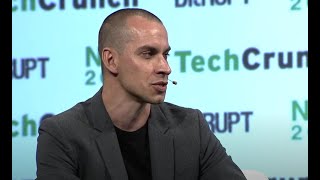
In this interview, Paul Dabrowski, co‑founder and CEO of Synthego, explains how the company is turning CRISPR from a coarse‑grained, hard‑to‑use technology into a precise, user‑friendly platform. He likens early CRISPR design to a GPS that only gives zip‑codes, and describes Synthego’s automated, hardware‑driven lab as an "AWS for biology" that produces high‑quality synthetic guide RNAs. Dabrowski details the launch of a free, web‑based CRISPR design tool that supports 100,000 genomes and enables easy sharing of designs, while emphasizing built‑in safety checks that restrict orders to knockout applications. He discusses the company’s business model—offering free design software that funnels users into paid synthetic RNA products—and highlights key investors such as Jennifer Doudna and Founders Fund. The conversation also touches on Dabrowski’s non‑scientific background (SpaceX, software engineering), the challenges of building an automated biotech lab, ethical concerns around open access to genome editing, and speculative future applications ranging from space‑related bio‑engineering to 3‑D‑printed organs. He ends with a visionary, almost sci‑fi, idea of programming cells to build structures, underscoring his belief that biology will become a programmable engineering discipline.
Chapters
Hey, Paul, thanks for coming.
Hey, Sarah, thanks for having me.
We talked about CRISPR earlier today with Rachel Horwitz from Caribou Bioscience, but for those of you who were not here in that session and may be confused about what CRISPR is and what exactly it does, can you kind of just give us an overall—
Sure, yeah. CRISPR is really a next-generation leap in how we're able to modify biology, so how we're able to write information into cells and modify what they're doing. There's a whole different level of precision. So as an analogy that might be relevant to the tech community, uh, imagine if you had GPS location that only told you a zip code and you couldn't necessarily, uh, even figure out a street address. So you wouldn't be able to build platforms like Uber or Lyft. Um, and so CRISPR takes it and gets you kind of to the couple block level. And then in terms of the products that we're working on at Synthego, we're looking to get the precision down to a specific address.
Okay, so you're trying to make it a little more granular as to exactly where the person you're trying to pick up is.
Exactly. And so we're a tool-building company. Long-term, we're looking to put together essentially services that look like Amazon Web Services except for biology, but we're focused right now in the CRISPR space with CRISPR products.
Something really interesting about you is that you're, you're in a biotech company company, but you don't have a background as a scientist, right? You started at SpaceX. How did you get into biotech?
So we're, we're really at the intersection between software, hardware, and biology. Uh, we're starting to use this term agile biotech. Um, coming in from SpaceX, we really saw computer engineering skills can be applied to building spacecraft. The mentality and the philosophy there applies. And when my brother and I— my brother is a co-founder at Synthego— we, we were at SpaceX, we saw how you build a company in that way. And after that experience, we started understanding the potential in biotech and saw how there is a gap between how biotech is done right now and what the potentiality is if you bring in these new mindsets.
And, and it's really interesting to me because even though you are a biotech company, essentially you've, you've built an automated lab. You've, you've really gotten into robotics, correct?
That's correct. Yeah. So we're, we're really, we built a new platform that's fully automated, again, inspired by computer engineering architectures. And that platform is what we're running right now internally to create CRISPR products for customers. And so as you see, that's a, it's a platform that can make one product right now, but in the future we could do other things with that.
Right. And everything that I read in the media right now is that you basically, your first product is synthetic RNA. My initial thought in that space is that there's a lot of different startups that are working on automating the lab, and it seems like it could be pretty easy to replicate synthetic RNA.
Ah, yeah, so there's also a lot of companies that make synthetic biopolymers, RNA, DNA, these sorts of things. But for CRISPR, the quality really, really matters. And so we spent 4 years developing new hardware that allows us to make this much more precisely. And so now, going back to that GPS analogy, the quality of the guide RNA that complexes with the Cas9 protein to do the molecular surgery on the genome That, that's really important. The quality really matters, and we're able to make that at unprecedented quality levels.
Now, how are you going to be the Amazon Web Services of biotech? What's, what's the plan here? I understand that you're releasing something new that sort of plays into that plan.
Well, yeah. So I guess for the long term, we're going to be extending the offerings that we have from this point product to full genome engineering solutions, to being able to do full lab work, experimental workflows. And today I'm happy to describe that we've just released a design tool that really makes CRISPR much easier to do. And I can tell you a little bit more about that.
Sure, yeah, tell me a little bit more about what you're working on.
So to get back to that GPS analogy to set the stage here, GPS, imagine if you still got a coordinate readout rather than a map. You wouldn't be able to really use it. This is what scientists have to deal with when they're designing CRISPR targets right now. They get like a coordinate readout and they don't really have awesome tools to make it easy. And so it ends up being very inaccessible to all the new users who want to get into CRISPR. 80% of new users who are getting into CRISPR have never done gene engineering before, but but they want to be able to do it easily. And so we've really simplified the workflow. It's a beautiful interface. I'm pretty sure that even my grandmother could make a CRISPR target at this point because there's a whole bunch of advanced heuristics that allow you to basically take a step back from all the science and spot-check what we've done. There's a lot of heavy lifting in the background.
So anyone in this audience that's interested in creating some sort of a startup around CRISPR could just maybe get your tool, which I understand is free.
Yes.
Is it free the first time or always?
It's always free, and there's a whole bunch of awesome features around it. So it's, it's at design.synthego.com, and we're releasing it today actually. One of the awesome features is if you, again in the GPS analogy, if you couldn't share your location, it'd be difficult to do anything. And in a similar way, it's very difficult to share CRISPR experiment design And our tool, you can just copy and paste the link. And then the other thing we have is 100,000 genomes in this tool. The next tool has about 40, 50, 60 genomes. What this means is you can now design CRISPR targets for pretty much any organism out there.
Okay, so it sounds really great, but if anyone can just hop into CRISPR and there's all these ethical questions around CRISPR, that's a little bit Does that scare you? That, that seems like you're opening it up to a lot of people who could do something wrong.
This is a really important conversation to have. For us, as a CRISPR product company, we vet and screen every single order that's coming out, so we make sure we're not shipping to any illegitimate uses. The other thing that we're focused on with this design tool is what's called a knockout. So you're only able to remove the function of a gene and not insert new genes, which is typically how you might create create something, uh, biological.
Yeah. Okay. Okay. So you've got a failsafe at least. Um, so you started the company with your brother, but you actually said that you wouldn't recommend starting a company with a family member, but here you are.
Well, there's, there's a qualifier there. I wouldn't recommend starting a venture-backed company as a first company with a family member. And so Mike and I have made a few companies before, um, He's not able to be here, traveling unfortunately. But, um, yeah, so I would start a small company before I try to do something that's venture-backed and there's a lot on the line. 'Cause no matter how close you are, there's always differences to be worked out. And after 3 companies, I think we've got those, we've got those worked out. And we really understand how, how we complement each other.
Yeah. And you might have jokingly said this, but it also might be real, so I gotta ask you. Are you really switching off CEO roles every other year?
Um, every other company.
Every other company.
This company, I'm, I'm the CEO for now. But, you know, I mean, I'm willing to change. That's— I— it's not in my ego to do that.
You'd be the CEO this time.
I think it was just because he was last time.
He was last time. Okay. Who decided to leave SpaceX first and who came up with the idea to start a biotech company?
So we decided to leave SpaceX at pretty much the same exact time. We both put in our letters.
How did that go? The Dabrowski brothers leave SpaceX?
Yeah, well, Elon wasn't necessarily the happiest, but he's always very, very positive and willing to support, so we've kept in touch with him. And then, sorry, what was the second part?
So who came up with the idea to start a biotech company?
The biotech company was interesting because we started, we started a few of our own companies that were successful enough to start doing angel-scale investing, and we started seeing how people are trying to do biotech because that was just an interest since, since we've basically graduated college, and we saw the difficulties that various biotech companies were having, and it just clicked. There's an opportunity to apply this computer engineering, agile software development mindset to biotech, and that's, that's kind of the kernel that started it.
But there's a lot of companies like Ginkgo Bioworks and Emerald Therapeutics, which Founders Fund, one of your VC firms that invested in you, also invested in. It seemed like they could do very similar work.
In terms of the long-term vision, there's a lot of similarity, but the field is so huge in terms of the potential applications that there's room for a lot of big winners. And if you focus in on what we're doing right now, we look very different, right? We're a genome engineering company that offers products to customers.
Yeah, I want to talk about that because it seems like, you know, you're offering this free service and then the idea is that they come back and need to buy a product from you? Is that how you're becoming—
Oh sure, in terms of the design tool, yeah. So there's, you're able to order straight from the design tool, so that actually removes a lot of error burden, and people have really been asking about that, and that's one of the reasons that we created this design tool the past 6 months.
Yeah, and Jennifer Doudna, who is one of the big CRISPR pioneers, actually invested in you as well.
Yeah, we were fortunate enough to close a Series B. If you asked me during Series A if our Series B would feature, be featured in the New York Times, I would have said no way. If you have Jennifer Doudna investing, No way, but that all happened.
So I heard that she's actually one of your biggest customers as well, so it kind of made sense.
Yeah, I mean, she's very positive about the technology. We're working with a whole bunch of collaborators at this point. In terms of the product, we're also shipping to pretty much all the top biopharma companies. We're shipping to, I think, 35 different countries, and we just launched late last year, so it's been a quick— yeah.
And you're not just doing synthetic RNA, right? You're doing— you're— the plan is to do more than that.
Yeah. So we're starting to build out all the informatics behind the scenes and in some sense will be a very machine learning-enabled technology company. More and more over time will become more of a software company. But there's still a lot of hardware to be built before we can get to that.
Okay. I want to switch and talk a little bit about CRISPR and space travel. So I know that you used to be at SpaceX, and I know that Elon has this great plan to send us beyond our universe into the stars and colonize other planets. Has there been any discussion about CRISPRing humans for space travel?
There's been a lot of interesting discussions. I wouldn't say all of them are good ideas. In terms of space travel, maybe I'd be more of a proponent of modifying the, the planet. So terraforming Mars perhaps, rather than modifying humans. But there's all sorts of really interesting things that we can start talking about with CRISPR and the precision of CRISPR. Things like upgradable immune systems. What does that mean? Brain-computer interfaces. There's a lot of talk about that between Elon working on Neuralink and Bryan Johnson on Kernel.
What do you think of all that? Where does CRISPR play in with that? What do you, what do you think of that?
So I don't think that it's immediately going to be impacting it yet. I think there's practical applications in ag bio and therapeutics and biofuels, all these things. But I think over the course of the decade, you're gonna see a huge influence in terms of people learning biology in an unprecedented level of understanding. And it's gonna open up to a lot of people who are in tech through platforms like ours in order to be able to create these sorts of really awesome, you know, I mean, it's science fiction.
Yeah, right now it's science fiction, it sounds like. But how would that work? You implant a brain chip and then like CRISPR the brain? Like, what, how does that work? That sounds weird.
Okay, so there's this whole concept of ex vivo therapies right now for therapeutics. So being able to take some cells out of a patient, modify them, put them back in, and they hunt down cancer, for example. So you could imagine that a brain-computer interface might actually look like you take some skin cells, you turn them into stem cells, then you differentiate them back into neurons after you modify them, and then it's like a really simple injection, you know. So there's, there's, yeah, it's, it's kind of crazy. It's kind of out there. But, but I think if you're talking about brain-computer interfaces, you want it to be non-invasive. You don't want to drill holes in people's heads.
I don't want anyone drilling holes in people's heads.
Yeah, no, let's not do that. And I don't think we should be implanting chips. I think it should be very biocompatible. That's why I'd argue we should start with biology.
So no Matrix hookup to your neck and—
No, it should be a lot gentler than that, I think.
I think humanity would agree.
There's two other key points I'd actually love to say on, on the stage like this is it needs to be upgradable, which means you need to be able to take a pill and upgrade it or remove it completely, and it needs to be completely safe. Like, these are— I think if we're going to talk about brain-computer interfaces, that just needs to get put out there in the conversation. Okay, so that's not what we're doing.
So, right, so the pill would have the brain-computer interface, or the pill would be the antidote?
Essentially the antidote or the training mechanism for it.
So there's a whole conversation in this, but we can get into that a little bit later maybe. Is there— you can tell me truthfully— is there a secret plan to genetically engineer all the SpaceX employees to be more like Elon Musk?
More like Elon Musk.
Is that— is that— tell me, be honest.
No, I don't think we're going to be doing any human stuff anytime soon. We're leaving that up to kind of a national level discourse and our customers.
Okay. All right. CRISPR, I want to go back to the ethics, right? CRISPR has the potential to mess up humanity for generations. But it also has the potential to wipe out cancer forever, wipe out HIV, to cut out any kind of disease that you might pass on to your progeny. How do you see that? Because Caribou Biosciences absolutely does not want to get into embryo, working with embryos, but where do you see CRISPR coming in and helping with that? Do you think that there is an argument to be made?
Well, I defer to kind of the, the national level conversation. Again, National Academy of Sciences recently suggested that maybe for serious, certain types of serious inherited diseases, you might be able to modify embryos. But I don't think that's a thing we should be doing for a while until all the safety issues are figured out. If we do ever do it though, then it's critical to make this accessible to everyone. What this should look like— people, it's not gonna be— yeah, that's, that's the important thing. And it should be more like a vaccine rather than like some million-dollar procedure you have to do. And so that's, that's the only statement I'd say from a technology perspective, not necessarily from a— I mean, it impacts morality and ethics.
Yeah, I hear people say, I've heard some people say, well, we all die anyway, where are we messing with that? And my counter to that is, well, then why do you go to the hospital? Why do you take drugs? Like, why do you, you know, try and prevent yourself from having a heart attack? Right, the same thing.
So yeah, ultimately you might describe it as the ultimate preventative medicine.
Yeah, but we'd, we'd have to get very far in humanity before we got to a point where it didn't cost to have everybody do it. It wasn't something that only the rich could afford.
Yeah, exactly. And so I think the technology needs to go down that curve in terms of cost and accessibility before we even think about that, let alone the public discourse around the issues.
Yeah. You've also said that your RNA is a lot more precise. At CRISPRing— is that the right word? CRISPRing? Yeah, it's something like 90% accurate versus 40 or 60% accurate. How does that work?
Yeah, so the quality of the material when you're making synthetic RNAs, there's a whole bunch of impurities and byproducts that then influence the editing.
Because people think they hear this amazing technology that can just snip out cancer, and they think that this is the miracle that we've all been waiting for, and it's like it's magic and it's going to work, but it's not.
We're still getting from the— in the GPS analogy, the kind of the street view level to the address view level. And you need more precision on the informatics, you need more precision on the quality of the guide RNAs, and then the overall process. And that's really what we're focusing on.
Yeah, it's like we were talking backstage actually about— it's like your Uber driver knows what block you're on, but you have to call them and say, no, I'm—
corner— where exactly?
Yeah, it's like, it's kind of like that right now. And you're trying to get them to write to the corner that you're at.
Exactly where, yeah.
Okay, okay, all right, that's fair. Silicon Valley is often accused of not focusing on real issues, you know, reducing things that maybe you could squeeze out of a bag. What do you say to that? What do you say to that when they— when Silicon Valley is accused of not focusing on real issues?
I mean, you can argue that a lot of the world isn't focused on real issues too. I mean, there You know, we do have our everyday lives. There are a lot of people who are looking for get-rich-quick, but there's also a lot of very genuine inspired people.
Yes, it seems like you're trying to work on a real issue.
Yeah, we'd like to think that there's, there's quite a few. I personally know a lot of people who are working on deep tech or real issues that have an impact on humanity or impact on manufacturing, jobs, economy. And I think there's a resurgence of that in Silicon Valley, but it is, it's it ends up being very difficult. It's a really tough grind to do software, hardware, and biology, for example. Like, 5 years before we got our first product. Like, so yeah, it's—
I mean, biotechnology is very hard, and you spend a lot of money up front, and it doesn't always work out.
Yeah, so one of the— doesn't always work out is kind of a current view on biotech, because there's oftentimes what's called a binary outcome, when a therapeutic either works or doesn't work. It either gets through the FDA or doesn't. We'd like to make that less of a, of a binary outcome or a therapeutic sort of mentality and make it so that people can continuously improve things. So there's a gradient. And I think the types of technologies and tools that we're building contribute to that.
Okay. All right. What else would you work on if you weren't building Synthego? What else do you have in your, in your mind, in your engineering mind?
I'm adding to the list, I think, every day. There's— I think 3D printing has still not been fully, fully vetted. I think being able to do multiple materials simultaneously and pick and place into a 3D printed object, that's not bioprinting.
Like, why about 3D printed biology? I don't know if you saw the story I wrote this morning about the 3D printed mouse ovaries that made mouse babies.
Oh wow, I haven't heard that. Yeah, but I do think 3D printing in biology, especially if you have control over the cell programming that could be a very big way to, to do, in particular, organs. I mean, the organ situation is, it's, it's very difficult.
There's hundreds of thousands of people waiting for transplants, right, and suffering pain and dying, or growing cells on a, on a leaf, or there's all those really crazy out there.
That's the big, that's the beginnings of this. But in the next decade, I think it'll actually come to fruition and we'll have very real products from that.
One last question for you. What technology do you hope comes to fruition in your lifetime?
Time? Which technology?
I know there's a lot out there, but if you could pick just one, what do you hope to see working really well in your lifetime?
Um, I'll, I'll throw out one of those crazy biology ideas. Uh, imagine being able to go into a, a, a CAD system to design your house, and that, that CAD model gets programmed into the genes of a cell, and those cells They come in a little test tube, you put them on the ground, and out of the ground they get the minerals and resources needed and build you a house. Okay.
All right. Okay. All right. Well, thank you so much for speaking with us. We'll end on that. Thank you.
Thank you.
That was really good. Thank you.
More from Joshua







Scientist Stories: Hans Waterham, The value of phenotypic assays in peroxisomal disorders




Scientist Stories: Joel Zlotogora, Genetic carrier screening programs for reproductive purposes