Founder Stories: Ray Deshaies, Co-Founder of Proteolix and SVP at Amgen
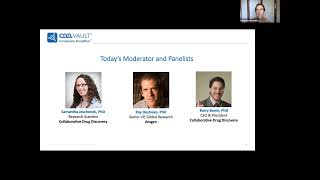
The webinar, moderated by Samantha Duschanek and featuring Dr. Ray Deshaies (SVP Global Research, Amgen) and Dr. Barry Bunin (CEO, Collaborative Drug Discovery), recounts the founding of Proteolix, the discovery and naming of the proteasome inhibitor carfilzomib (Kyprolis), and the evolution of the PROTAC (proteolysis‑targeting chimera) concept. Deshaies describes how early academic work on ubiquitin ligases, a yeast two‑hybrid screen, and a serendipitous proteasome inhibitor (epoxymycin) converged into a startup that, after venture funding, produced YU‑101 and later carfilzomib. He explains the tribute‑based naming (CARPHILZOMIB) honoring Phil Whitcomb and his late wife Carla. The discussion then shifts to the contrast between academic blue‑sky research and industry‑driven drug development, highlighting the high cost and scale required for medicinal chemistry, using the proteasome inhibitor story as an example. Deshaies outlines the PROTAC strategy, induced‑proximity platforms, challenges of drug‑likeness (molecular weight, Lipinski rules), and the pursuit of molecular glues like lenalidomide. He expands the induced‑proximity concept to bispecific CD3 engagers, protein trafficking, and broader therapeutic modalities. The session concludes with a live demo of Collaborative Drug Discovery’s new BioHarmony platform, showcasing its automated, continuously updated, holistic drug data reports (targets, clinical trials, patents, financials, trends, safety) for Kyprolis, and a Q&A covering future PROTAC challenges, key screening assays (target degradation), and upcoming BioHarmony features (patent view).
Questions this video answers
Ray Deshaies notes that new modalities like PROTACs require long development timelines (a decade or more), face complexity and high molecular weight issues, and may encounter unforeseen hurdles beyond the known challenges of drug‑likeness.
Deshaies states that the most relevant assay is direct measurement of target degradation, as binding alone does not guarantee ubiquitination or degradation.
Samantha Duschanek confirms that patent‑viewing functionality is being added and will be available soon in the beta version.
Chapters
Welcome to Collaborative Drug Discovery Scientific Webinar: From Kyprolis to Protacx: Insights with Amgen's Ray Deshaies. In 2003, then-Caltech professor Raymond Deshaies co-founded Proteolix to develop a proteasome-inhibiting compound that would later lead to the billion-dollar cancer drug carfilzomib, or Kyprolis. The company was subsequently acquired by Onyx and then Amgen. In today's webinar, our panelists, Dr. Ray Deshaies, Senior Vice President of Global Research at Amgen, and Dr. Barry Bunin, CEO of our own Collaborative Drug Discovery, will discuss the story behind the discovery of Caprulis, as well as the latest developments in areas related to protacs and COVID biology. I am Samantha Duschanek, your moderator for today's webinar. If at any time during the webinar you would like to ask the panelists a question, please use Zoom's Q&A panel at the bottom of your screen. We'll be sure to leave some time at the end for audience questions. And with that, I hand the microphone to Dr. Deschees and Dr. Bunin.
Thank you, Samantha. So, Ray, I wanted to start with the backstory to the discovery of Cruprolis, the proteasome inhibitor.
If you want to— What exactly would you like me to tell you about the backstory?
Well, just something that was exciting as it moved from academia into industry, sort of the the birth of the project, if you will.
Yeah, well, it all started actually with Protex, ironically enough. You know, Craig and I both had a fellowship from the Burroughs Welcome— it was called the Burroughs Welcome Young Investigator Award in the Basic Pharmacological Sciences, a bit of a mouthful. And we were both recipients. We were both young faculty members. This would have been probably 1997 when we received the award, late '97. And then they had a retreat for recipients of the award. And, you know, the retreat in question was in Blaine, Washington on the Puget Sound at a place called the Sami Amu Resort. And so we were supposed to present posters at that retreat and So Craig had a poster on work that was going on in his lab using a yeast two-hybrid system to look for small molecules that would link together two protein domains and trigger a two-hybrid signal. And, you know, I was working on— my lab was in the— I think we had already discovered and published on the Cullin Ring, the first Cullin Ring ubiquitin ligase, the SCF CD4 complex from yeast. And, you know, so I was thinking a lot about ubiquitin ligases. And when I saw Craig's poster, it triggered a discussion about, gee, could you use an approach like this to come up with small molecules where the two protein domains you're linking together are a substrate and a ubiquitin ligase, the sort of target neo-substrates to ubiquitin ligases to enable their degradation. And this hatched the whole ProTAC idea. And Craig and I started collaborating immediately on that program. I had a graduate student at the time, Kathy Sakamoto, who's now on the faculty at Stanford, and she took the project on. And while we were collaborating on this, we started interacting a lot more. I became aware that Craig's lab had a proteasome inhibitor. They had discovered a compound— they hadn't discovered the compound. It was a compound that was in the literature as being cytotoxic, epoxymycin, but whose mechanism of action was not known. And Craig's lab showed that they synthesized epoxymycin with biotin attached to it, I believe, and then they used that as a pulldown handle, and they discovered that the target was the proteasome. And meanwhile, my lab had discovered a new activity inside the proteasome that was essential for its function, a protease activity in a subunit known as RPN11 that cuts ubiquitin chains off of substrates as they're being threaded into the proteasome. So, you know, on As we started talking, the idea came up, and Craig was actually the first one to propose this. He said, look, why don't we, you know, start a company? We've got a proteasome inhibitor that works by the same mechanism as bortezomib, or a similar mechanism. You have this new target in the proteasome, and we have this PROTAC thing. So, you know, one thing led to another, and we started actually heading down that path, wrote business plans, and started talking to venture capitalists. I think we would have started this around 2001. And, you know, over the course of the next year and a half, you know, we made a lot of presentations and eventually got funded. At the time, the investors— this is after the 2001 NASDAQ collapse. So investors were very skittish at that time. So they felt the whole Protex thing was a little bit too blue sky. And so they said, look, we'll fund you, but we'll fund you to take this molecule, you know, Craig had meanwhile made a number of epoxymycin derivatives by peptide synthesis, maybe about 20 of them, and had come up with one that seemed to be more potent and more specific for the chymotryptic site. And they said, why don't you, you know, pursue that and see if there's a drug in that molecule. And meanwhile, you set up a program to try to, you know, develop a drug against RPN11, and that'll be the company. So we said, okay. And so we launched, as you know, because you were a consultant in the early days, in the summer of 2003. You know, we launched at the end of 2003 and immediately began working on YU-101, which was this optimized epoxymycin compound that Craig's lab had developed, to see if that could be a drug candidate itself. It turns out there were a number of problems with YU-101. Meanwhile, the company, you know, started making derivatives based on YU-101. And one of those derivatives that was produced in, I believe, synthesized for the first time in June of 2004, 4 turned out to be carfilzomib, you know, the drug that's currently being marketed by Amgen as Kyprolis. So, you know, that's sort of a sort of short history of the background story behind the creation of Proteolix.
Yeah, I mean, that's where I became familiar with it through Susan Molinau and Phil. So There's an interesting backstory to the name of our CAR, filzomib, and you mentioned a holiday party. So I was advising Susan a little bit when they raised the first money to go from the Yale compounds to the eventual Caprolis. Maybe you can talk about that transition and sort of the start of the company to the naming of the drug, that next chapter, if you will, after they got funding.
Yeah, so the company, you know, as I said, I think it was in June of 2004, carfilzomib was made for the first time by a technician in the company, Megan Sun. And, you know, they started characterizing it and, you know, realized that it just, you know, had a number of characteristics that recommended it over YU-101. And the company formally committed to pursuing that scaffold, I think it was in probably in August of 2004. And so, you know, then we're working away on— the company is working away on that, you know, doing all the typical tests that one does when one develops a small molecule drug. And at some point, you know, you have to go through this whole naming process. Meanwhile, In the launch of the company, we were helped by this individual, Philip Whitcomb, who Craig and I met— I'm trying to remember, it would have probably been in the fall, like maybe fall of 2002, or the late summer of 2002. So a little over a year before we eventually launched. Phil was really a remarkable individual. He had been one of the earliest employees behind Amgen, actually. He had introduced George Rathmann to Winston Salzer, who was a UCLA professor and was the original driving force behind the creation of Amgen. Winston managed to— and the investors managed to convince George to leave Abbott Laboratories and become the CEO of the company. And George was the CEO for the first 10 years, I believe. And Phil had gotten his PhD at UCLA in Winston Salzer's lab, interestingly enough, in molecular biology. But after his PhD, decided he didn't want to do bench science. He went to Wharton, got an MBA coming out of Wharton, he went to Abbott, and at Abbott, he ended up working under George Rathmann. And so that's how we made the introduction of George to Winston. Winston is trying to start a company. He said, "Hey, Phil, you're in the business world. Do you know anybody who could help out?" Phil went to George, and George was interested. So that's how George became the CEO of Amgen. And then George recruited Phil Phil came to Amgen after they had been— maybe a year after it had been founded. Stayed at Amgen, went on and left Amgen maybe 10 years later, became CEO and launched a company called Neurogen, took that company public, and then essentially retired. By the time we met Phil, he was probably in his mid-50s. Along the way, he had gotten married to George Rathmann's executive assistant, Carla. And Carla, unfortunately, was a victim of lupus, and she passed away before I met Phil. So she probably would have been in her early 50s. Just really tragic, died quite young from lupus. And so, you know, then as the company is, you know, Phil helped us launch the company, use, you know, he had a lot of contacts, a lot of knowledge, a lot of experience to help us launch the company. And then he was the interim CEO, part-time, couple days. I think he would come like 2 or 3 days every 2 weeks. Susan Molina was the chief scientist, and she was effectively like the chief operating officer. And so we're going along like that for a while. And then Phil came, you know, he, it turns out, had prostate cancer, and it ended up taking his life, unfortunately. And, you know, so when the company was naming the compound, you know, they were casting about, and this would have been, let's see, Phil died, I think, at the end of 2005. So 2 years after the launch of the company, the company had entered the clinic in, you know, the summer of 2005. So the casting about for a name, this would have been early 2006, you know, the official scientific name. Role that Phil had played in the early stages of the company, because without Phil, there would have been no company. I think that's fair to say. And so they ended up convincing the people who have to approve the naming because they said, hey, look, you know, this is what we're trying to do. We're trying to, you know, memorialize this person that played this key role who, who tragically passed away. And so the name is CARPHILZOMIB. Zomib you have to have because of bortezomib, you know, that's the suffix that all proteasome inhibitors have. And CARPHIL was for Carla and Phil. So CARPHILZOMIB.
Beautiful story. Thanks for sharing it with our peers in the scientific community. Now that you know, you moved from academia to the Senior VP Global Research at Amgen here. I'm going to move to some science slides, but maybe just talk about your perspective on industry and academia now that you've been on both sides of the hill in terms of how they work together, what each brings to the party for collaborations. And you can talk about this for, you know, proteasome inhibition or in general for any any area of science?
Yeah. So I think, you know what, and I think this slide illustrates it very nicely in a way. What academia is very good at is sort of unfettered blue sky research, unfettered by any practical considerations, um, where, you know, you can just ideate. And if you can find a granting agency to give you some money, you're free to pursue things. And, you know, the amount of money spent by comparison to what we're used to in industry is minuscule sometimes. So I think Protax is a good example. The, you know, Craig and I are at a poster, we hatch this idea, gee, wouldn't it be great if— and I get back to Caltech and I write an internal grant. Caltech had a little program called the Gapes Gates Grubstake Fund that had been funded by some donor Gates. I think I probably asked for like $100,000 to do some initial proof of concept work on this. We helped finance some work in Craig's lab where they had a molecule fumagillin at that time that bound methionine aminopeptidase 2. And there was a peptide that was known from work on one of the early Cullin ring ligases. The peptide was derived from IκB, and it bound ubiquitin ligase known as SCFβ-TRCP. So we took that peptide, or Craig's lab took that peptide, and they attached it to fumagillin. That was the first PROTAC. And because the peptide was phosphorylated, we couldn't even use it in cells, right? There was no way it would get in cells as a doubly phosphorylated peptide. So we actually set up the first reactions in Xenopus egg extracts. My colleague Bill Dunphy was making these extracts, and so, you know, we trundled over to his lab, made frog extracts, and Kathy threw some methionine aminopeptidase II in those extracts as well, some of the ProTAC, and could observe that it would get ubiquitylated and degraded. And that was, you know, the subject of the first PNAS paper. That would not, you know, not a particularly promising beginning for a drug development program where you have to do the experiment in a frog extract. But, you know, it showed the idea was sound. But, you know, there were clearly many things that would need to be done to really put it in practice, including finding a much better ligand for a ubiquitin ligase. You know, so we did a few more studies like that, and then Craig continued working on this in his own laboratory, and he came up with this ligand shown in orange that binds VHL. And this originated from work Craig and I had started this back around 2003 or '04 based on work that came out of Bill Kalin's lab and Peter Ratcliffe's lab. That had shown, you know, that this— there was a hydroxyproline in the hypoxia-inducible factor that is targeted by VHL to regulate HIF, which controls oxygen sensing. And so we started— Craig and I started using the peptide from HIF, but then Craig, you know, set about to essentially convert that peptide into something more like a conventional small molecule drug. And again, that's the thing that's in orange there on this slide. And then meanwhile, Jay Bradner's work had characterized this molecule, JQ1, that binds BRD4 and, you know, one of the chromatin regulator proteins. And, you know, these were linked together as shown on this slide to make a PROTAC. Now, you know, this is what academia is good at, sort of, you know, making tool compounds, doing proof of concept, you know, testing, you know, pie-in-the-sky ideas. But then to take this kind of molecule as shown here and really reduce this to practice, really turn this into something that really could conceivably be a drug, that could require the synthesis of of hundreds, if not thousands of molecules. And that model just doesn't work well in academia for a variety of reasons. Number one, you know, it just is too expensive, you know, to make that number of molecules, you'd need multiple chemists. Like in industry, it's not uncommon, you know, one program, you might have like 20 full-time chemists on it. Now that would be a fairly big academic lab, 20 full-time chemists. But meanwhile, you know, the outcome of that is going to be, you know, like one paper, right? I mean, you, when you get the molecule that you want, maybe a couple of papers, another characterizing the biology, you know, and it just doesn't fit the academic model where everybody, you know, to get their degree has to have their own project and be able to have their own publication and so forth. And so, you know, the early proof of concept stuff academia is great at, but the intensive amount of effort that you have to invest and the enormous cost that you have to invest to get from that proof of concept to a molecule you put in the clinic is just not suited for academia. And just by example, Purdialyx. So Craig's lab generated YU101. They probably had one NIH grant doing that. And then Perdialyx took that molecule and they invented to come up with carfilzomib, and then they put carfilzomib in the clinic. And just those two steps of, you know, inventing carfilzomib and then getting it to the clinic, that cost the company about $10 million to do that in 2003. Which, you know, that's like 10 R01 grants. R01 grant typically around $1 million. And so I think that, and they did that in 18 months, right? And it's just, there's no academic that spends 10 R01 grants, or very few, let me put it that way, in 18 months.
Yeah.
It's capital, too capital, too capitally intensive.
Yeah, you mentioned earlier when we were talking about, I believe it was a compound from Ken Goldberg's lab that was a proteasome inhibitor that sparked a lot of basic research around the proteasome. And then of course Velcade and Kyprolis came along as drugs. So maybe just talk about, you know, some of that interplay between the basic science and how that leads to downstream drug discovery. I'm going to move to the next slide. If you want to discuss either your own work or others going from the PROTEX concept or around the proteasome inhibition itself.
Yeah, so just to pick on the example you described, Fred Goldberg's lab developed MG-132 as the first tool compound for proteasome inhibition, and MG-132 ended up giving rise to bortezomib in a startup that Fred's had co-founded. But MG132 was like a huge bonus for, for the academic research on the ubiquitin proteasome pathway, because it presented the first tool that you could use to confirm whether your protein of interest was a proteasome substrate. And when Fred's lab discovered MG132, there were literally just a handful of known proteasome substrates. This would have been the early 1990s. And in yeast, you could always use genetic methods to test whether something might be a proteasome substrate. But in animal cells, you know, that genetic methods were not available. So you really, the only way to do it was with a chemical compound. And MG132 enabled people to positively link hundreds, if not thousands, of proteins as being proteasome substrates. So enormously useful. It has thousands upon thousands of citations, even though MG132 itself would be a lousy drug. I mean, it needed extensive medicinal chemistry to turn it into bortezomib, but enormously useful as an academic tool. This slide just shows, I think, some— the PROTAC idea was, from the outset, this was really trying to come up with a new way to drug targets, right? So this was sort of practically minded from the outset. This wasn't really about unfettered academic discovery. But the ProTec idea was rooted in unfettered academic discovery. And, you know, one of the key inspirations is shown here in the left, where Peter Howley's lab at Harvard Medical School was studying human papillomavirus and trying to understand— so when a virus infects a cell, it wants to do two things. Number one, it sort of wants to take over it wants to take over the cell and defeat any mechanisms that the cell may have evolved to combat viruses. And of course, you know, viruses and cells have both been around for, you know, billions of years, and so cells have intrinsic mechanisms to try to resist viral infection. So viruses have evolved mechanisms to try to overcome those cellular defense mechanisms. And so, you know, the first job of a virus is when it gets in a cell is to try to defeat those mechanisms. And then the second job is to replicate itself. And so one of the mechanisms in animal cells involves this protein p53, you know, the famous tumor suppressor protein, which has also been referred to as the guardian of the genome. And so it can detect various types of stresses and activate various types of stress responses to those stresses. And so including ultimately, you know, which would be bad news for the virus, triggering of apoptosis. So, you know, p53 is there. It's one of the mechanisms HPV needs to overcome. And so HPV makes this tiny little protein called E6 And what E6 does is it binds a cellular ubiquitin ligase that became known as E6AP for E6-associated protein because it was identified as a cellular protein that binds E6. But at the same time as it binds E6AP, it also binds p53. So just as I've drawn there in the slide, it's a molecular bridge linking E6AP to p53. And that triggers the ubiquitylation of p53 and its rapid destruction. So even though p53 is intrinsically somewhat unstable, when HPV E6 is there, it becomes so unstable that it's undetectable. It just simply can't accumulate at all. And so in that manner, E6 enables HPV to overcome some of the cellular defenses to the HPV infection. I was in the ubiquitin field, I was aware of this work. Then there were subsequent other papers that came out and I've listed some of the work on the right there, including a paper right around the time we came up with the PROTAC idea that had shown there was an HIV protein. I'm trying to remember which one it was, whether this one was VPU, that links CD4, the HIV, you know, one of the receptors it uses to get inside of cells, to ubiquitin ligase SCF beta TRCP. Came from the lab of Richard Benneraus, had shown that. And, you know, was yet another example of a virus essentially co-opting cellular ubiquitin ligases to get rid of cellular proteins. Using a tiny protein from the virus to serve as a molecular bridge. And now there's a bunch of examples. HIV has no fewer than 4 of these small, tiny proteins that link cellular factors to ubiquitin ligases. So, you know, that sort of informed my own thinking. And I thought this is a very important observation, because if you think about it, viruses they have these tiny, tiny compact genomes, and they are the masters of genomic economy. So if a virus deems fit to devote some of its precious genetic resources to making these kinds of proteins, that suggested to me that this is a very potent mechanism, a very effective mechanism. And if we could replicate this with, with small molecules, It could be a way to enable us to, you know, essentially take over the physiology or redirect the properties of cells in the direction that we want them to go. And, you know, that's sort of underlying the whole PROTAC idea. You know, can we take a cancer cell and make it non-cancerous or, you know, make it inviable by degrading, you know, one of the key proteins that's helping to sustain the cancer.
I think it's an interesting example here after the billions of years of evolution. And it also kind of reminds me of how, as humans, we, for CRISPR-Cas9 system, also learned from the viruses and usurped it for our own uses. And obviously, very timely. I think I'd like to move Charlie to the first poll if we could, and I know you take over the Zoom meeting for a sec, but I pulled up on a slide.
Yeah, thanks, Barry. All right, let me launch the poll here. So if we could, we would like the attendees to weigh in here on the challenges here of Protax. What is the most challenging part of a Protax approach? So choose your answer and we'll give you a few moments to weigh in for the attendees here, and now we'll present the results in just a moment and see if Barry or Ray have any comments on the results. All right, everyone. I think the voting has slowed to a trickle now. I will end the polling in 3, 2, 1. We have a pretty big majority here. Maybe not pretty big, but 61% of the attendees feel that getting drug-like properties is going to be the most challenging part of the Protex approach. With the others being fairly, fairly equal. Any thoughts or comments on that?
We have an audience familiar with drug discovery. My thoughts.
That's cool.
I mean, it's basically give people a chance to engage and interact a little bit. I don't have much more than that.
Thanks, everyone. You know, that is a— do you want me to comment on that?
Yeah, sure.
Go for it. Yeah, so, you know, I agree that's a real issue, especially if you look at the slide that we had a couple of slides slides ago up with that BRD4 PROTAC, and that you could immediately see, I mean, it's, it's a complicated molecule and potentially a very floppy molecule as well. Multiple opportunities for metabolism of that molecule, for example, and high molecular weight. You know, it's really kind of a disaster with respect to Lipinski's Rule of Five, right? So, you know, how are you going to turn that into something that, you know, which would have good oral bioavailability, good PK, you know, relatively long half-life, get into cells efficiently, maybe, you know, access the brain, you know, if you want to go after brain metastases, for example, in cancer. Those are all challenges. If you look at, you know, there are some drugs that act by similar mechanism that were not developed prospectively, was sort of figured out after the fact. And the most famous of these is lenalidomide, which nucleates an interaction between a ubiquitin ligase known as CRL4-CRBN. It's one of the Cullin ring ligases. And target IKZF1 and IKZF3, which are a pair of closely related B-cell transcription factors, and mediates the degradation of those transcription factors, which play an important role in sustaining viability of multiple myeloma cells, a blood cancer. And that molecule, lenalidomide, looks radically different from the Protac that was in the slide a couple of slides back. It's molecular weight below 500. I think it's like 400-something, a much more compact, much more drug-like molecule, and, you know, readily orally available. And so, you know, the challenge is, can you get Protacs, if you will, and some people call these molecular glues, these smaller molecules, can you get molecular glues that, you know, perform the PROTAC function, but that are just way more drug-like? And, you know, we've shown you can get there by starting with a PROTAC, and then putting it on a diet, you know, by that I mean, you know, having a team of medicinal chemists, you know, taking away groups that are not essential for the function of the molecule and generally slimming it down. A couple thousand molecules later, we ended up with something that was more in the molecular weight range of 500 Daltons, 520 or so, so much more compact molecule. But it took an enormous amount of medicinal chemistry. One question I'm really interested in and would like to pursue, taking advantage of our acquisition of New Evolution, now Amgen Research Copenhagen. They were one of the early players in the DNA encoded library technology. And what I would like to do, you know, we're working very closely now with people at Amgen Research Copenhagen, ARC, that's our internal acronym for them, is working with the folks at ARC to say, can we develop a DEL screens, DNA encoded library screens, where we directly look in a prospective way for a molecule that has the properties of lenalidomide, right, where it sort of nucleates a complex between a target of interest and a ubiquitin ligase, where the interaction is cooperative. So lenalidomide has actually pretty— it has no affinity for IKZF proteins on its own, and it has relatively weak affinity for CRBN, CRL4-CRBN, but when all three are together, you actually form a pretty tight complex. So the ternary complex formation is cooperative. So can we exploit that observation to develop screening paradigms that give us molecules that behave more like lenalidomide rather than standard protec discovery, as you isolate molecules that bind with pretty good affinity to your target and pretty good affinity to your ligase, and then you link them together.
On this next slide, I just want to talk a little bit about protein trafficking, destruction, even compartmentalization, and, you know, what's sort of changing in our basic understanding of biology as we start to think more about the life cycle of proteins and their different functions, sort of, if you maybe think of it decade to decade rather than one particular one, protac. And so here's some specific examples of the mechanisms, but I think it's interesting, some of these microcompartments for proteins and just you know, at first we were just thinking about the creation of proteins, obviously, where they're located, how they traffic, how they're destroyed. What's it teaching us about biology? And where do you see the field going since you've been working in it for a decade or longer? A bunch of questions there, you can pick which one you want.
You know, where I see it going, I think, You know, I've been thinking very broadly about induced proximity, which is the sort of phrase I like to use when I'm thinking about this. And we're building at Amgen what we're calling the induced proximity platform or IPP. So, you know, we've, in drug discovery and development, we've relied on the same core idea now for nearly 50 years. And that's the idea of rational drug discovery or reverse pharmacology, where you start with a target that you want to inhibit, and that's based on knowledge of, you know, biochemistry. And you look for molecules that directly modulate the function of that target, usually if it's small molecules in a high-throughput screen. But, you know, the same logic applies to antibody drugs because, you know, you start with a molecule like a cytokine, you know, let's say IL-23, and you make an antibody to it, and you look for antibodies that, you know, prevent the binding of IL-23 to its receptor, as an example. So it's the same idea. You start with the target in mind, and you develop a molecule that effectively on its own blocks the function of the target, whether it's a small molecule or whether it's a biologic. And, you know, that has been enormously successful. Rational drug discovery has given us the vast majority of drugs that have come forth in the past, you know, 4 to 5 decades have come from that general principle. But induced proximity brings a whole new idea to the process where you no longer are relying on the drug to actually directly modulate the target. You're now saying, you know, you're essentially admitting and taking advantage of the fact that nature has evolved very powerful mechanisms to regulate cell and protein function. And what you're trying to do is piggyback onto those mechanisms. And a lot of the way things work in cells, in and out of cells, is through proximity. It's just, you know, bringing things close together. That was sort of the lesson of the whole two-hybrid screen, right, which was this really important discovery tool for, you know, a period of about 15 years or so. That all you need to do is bring things in proximity and biology happens. In that case, you know, transcriptional activation domain and the DNA binding domain, if they interact without worrying too much about the geometry, you know, you would get transcriptional induction. So, you know, in that case, the drug is actually not doing the work per se. It's just a matchmaker that's bringing a natural biological effector into proximity proximity of a target, and then the effector acts upon the target. And this relieves you of some very important constraints. So the major constraint of rational drug discovery is that the binding of the drug to the target has to directly modulate target function in some way. It either has to inhibit the target or activate the target. And a lot of targets just don't have pockets or surfaces that lend themselves to that, you know, where you can bind something and directly modulate the target. And, you know, we, we currently refer to those targets as undruggable. Yet, for induced proximity, all you need to do is bind. It doesn't matter if the binding event modulates the target or not. All you need to do is bind and induce the proximity to an effector that can then act upon the target. So you relieve a lot of the constraints of undruggability. Now, what I like about this idea, and the first manifestation of this that's really being pursued extensively now, is degradation via the ubiquitin pathway. But, you know, it— that's just one example. We already know from approved drugs that if you induce proximity between a prolysomerase and either calcineurin or mTOR, that you can negatively regulate those targets and achieve a therapeutic effect. There's drugs on the market that work that way. They weren't designed to do that, but it was figured out after the fact that that's how they work. Meanwhile, there's scientists in academia and companies that have, you know, now been inducing all sorts of proximity events, including protein phosphatases with phosphorylated signaling, proteins in green there, or even RNAs, you know, RNA molecules with RNases, the work of Matt Disney at Scripps Florida. So, you know, I think the sky's the limit here, right? If you can come up with molecules that induce proximity, you could, you could think about modulating targets in all sorts of different ways, either causing their destruction, their activation, their inhibition, relocalizing them to different parts of the cell, and so forth. And, and you're really relying now on powerful evolved mechanisms to do the heavy lifting. And what's really cool about it too is it's all the examples I've sort of been implying here are inducing proximity of molecules. But, you know, you can induce proximity of cells, right? You're not limited to molecules. You could think about inducing proximity of aggregates to trigger their autophagy, for example, like the aggregates you see in neurodegenerative disease. Diseases. You know, you could think about inducing all sorts of proximity to achieve different biological effects. So I think that's really a wave for the future. I mean, I think we're really, you know, PROTACs and, you know, targeted protein degradation is really just the first application in a prospective way of this type of idea.
Yeah, I like that. It's an example of all the ways you can traffic proteins to different fates. I think that this will be the last slide from my computer before I hand it back to Dr. Samantha Jaskolnik for the last part in terms of this induced proximity model. I guess this is talking about within the area of cancer. So it's a nice slide here, and anything to add here for—
Yeah, it's like what I was saying, you know, similar ideas, and, you know, we spent most of the time talking about induced proximity involving molecules, but the first example I had there was a cartoon that shows in a very general way how bispecific CD3 engagers work. These are a class of molecules that engage the CD3 receptor on T cells. CD3 is part of the T cell receptor complex, and that activates the T cell, but it also serves as a handle to grab onto the T cell. And then the other part of the molecule binds an antigen on a cancer cell that's uniquely expressed on the surface of a can— cancer cell. And in so doing, you not only induce proximity of a tumor cell to a T cell, but you activate the T cell, which can then kill the tumor cell. So, you know, many companies are work— including Amgen— are working on these bispecific CD3 engager molecules against a number of different targets and a number of different cancers. And so I think, you know, to me, that just shows the diversity. That's what I was attempting to show.
That's the basic idea of Pro-Tax Applied to Immuno-Oncology. I'm going to stop sharing from my computer and let Samantha go from here for the rest of the slides, if you do or don't want to do the last poll and some modern things around cuprolis.
Perfect. Thanks for the slide switch. Can everybody see my screen?
Looks great. Yep.
Awesome. Well, we're very excited today from CDD to be presenting for the first time, a sneak preview of BioHarmony. And BioHarmony is CDD's modern semantic drug data offering that provides real-time data streams on thousands of drugs, including Kyprolis. And we've really developed BioHarmony with a couple of the previously developed technologies out of collaborative drug discovery, or in this slide, two little robots, if you will. Our first robot is a semantic web crawling engine that continuously extracts new public data and then feeds it to our annotator robot. And this robot is really responsible for organizing, annotating, and pivoting the information in both new and interesting ways. This is all an automated process, which means that you always have the latest up-to-date information, whether you are somebody using it at the bench at the bedside or inside your business. The data itself is accessible in both an easy-to-use web interface or in downloadable machine-operable formats like CSV or JSON. And today we're going to start accepting beta users for the BioHarmony Drug Data Store, so please reach out to us after the webinar if you are interested. But for right now, I'd actually like to switch to a live demo to see what BioHarmony really looks like. So if you'll give me one more second just to switch screens. Yep. Wonderful. And let's pull this up now. Whoops. Okay, and you should be able to see my screen in just a moment. Perfect.
I think it's—
I believe it's showing. Yep, so perfect. So this is your first introduction to your BioHarmony drug data report, and this one's for Kyprolis. And there's a few really distinguishing features about CDD's BioHarmony drug data reports that I'd like to discuss. The first is that our drug reports are really holistic. So as you can see on the left-hand side with all these icons, They cover the full life cycle of the drug discovery process, whether you're interested in preclinical information, things like targets or drug data, whether you're somebody at the bedside interested in clinical studies, so focusing on clinical variants, clinical trials, or if you're in the post-approval process looking at things like patent information and financial details. The second main distinguishing feature of BioHarmony is that, like I said, it's, it's automated and it's continuously updated. So subscription to a BioHarmony drug report actually, uh, for a year is 365 different reports. And the final distinguishing factor is that this is a ready-to-use report, out of the box, no configuration necessary. So just starting to go through the reports, what you can see in the first section are details about the drug, things like chemical or protein structure. As well as common identifiers. If we move down to the target section, we get details about agency-approved targets, in this case from the FDA or the EMA, and if applicable, we'll also provide details on alternative targets that are not approved by these agencies but are well supported in the literature. As we move down to the clinical section, we have details for all the indications regardless of their clinical trial phase. And with each of these indications, we give a number of identifiers, so the MeSH terms, ontology terms, and even ICD-10 reimbursement codes. So really keeping the— with the idea of FAIR principles interoperability here. And because BioHarmony again is, is automated and continuously updated, you could feasibly imagine seeing an indication move from phase 1 to phase 2. In BioHarmony, we also allow you to dig deeper into certain sections, and those are indicated by these blue pivot icons. So if I click on the pivot icon for clinical trials, it brings me to the section with all the relevant Kyprolis clinical trials, including information on the trial timeline, the study design, and the inclusion/exclusion criteria. Going back to the BioHarmony report, we can get information on clinical variants if available, and down to the commercial section, details on both patents, generics, and a number of those reimbursement codes associated with each, with each drug. Finally, really looking at the whole holistic view of the drug, we have the financial data. So here you can see the financial data for Kyprolis, and we actually presented as both annual sales and quarterly sales. And of course, that is all convertible to your favorite currency. Now, one of the most exciting and my personal favorite feature of BioHarmony is this trend section. And the trend section here is actually built out of another set of technology developed called Collaborative Drug Discovery. And what it does is it scans the public literature, which is completely unstructured, to pull out key terms or key metadata. And those terms or metadata can be presented in, in terms of the most popular words, the trending terms, or the, the latest terms, all broken down into a certain number of categories. So we have categories around disease or syndrome, pharmacological substance, biological properties or entities from amino acids, proteins to cells, and even laboratory procedures. And for all of these, we give both a prevalence of that term and the prevalence over time. So you can see as time continues and more research happens, how popular is a certain term. Now, With our new term section, if I switch over to laboratory procedures here, we also include those links to publications that show the first occurrence of a new term with your drug of interest. And so overall, this metadata, this trend section, really provides a unique and insightful overview of the research landscape that also allows you to stay on top of those trends. And our final section of the BioHarmony report is our safety. And we really look at the focus on the adverse events here. So for each drug, we can have thousands of adverse events or reactions. And we also provide those in comparison to, say, your baseline or average drug. So you can get a sense of how, um, uh, how much, uh, prevalence or weight that certain adverse reaction has for your drug of interest. Now, today we went really quickly over the Kyprolis report, but our BioHarmony drug data store actually contains a number of different drug data reports, and we feature them as well into different categories or groups of reports ranging from the latest FDA approvals to top-generating, revenue-generating drugs, to those drugs previously indicated in COVID-19 treatment. Each of these drugs can be purchased on a yearly subscription basis for an individual drug, for a group of drugs, or for our entire database. And we do encourage you to reach out to us if you are interested in becoming a beta user. With that, I'd like to pass it back to Barry and Ray if they have any comments. Yeah, thank you.
Nice job with the world premiere there, Samantha. Thank you. Yeah, I guess if there are questions or comments, I think it's nice we were able to show this example that we're discussing the sets of the most recently approved drugs last year, and the best-selling drugs is where we wanted to start. But if you have a drug that you want that we don't have, it's a nice automated technology and you can type in your drug name and we can go hunt it down. We are in beta now, so we don't want to like oversell it, but we are looking for people to intellectually engage with us on this. Yeah, Ray, do you have any thoughts on this or related to the rest of the webinar before we hand it to the audience for questions?
Well, I guess, you know, when I was trying to start biotech companies, this would have been a really useful tool to have. I was trying to gather that information the old-fashioned way, which took a fair amount of time.
That's the greatest compliment we can get. Thank you. Maybe this will help launch some future companies. Yeah, I was also thinking about the groups of drugs like the statin inhibitors or something like that, or TNF-targeted drugs could be interesting too for looking at the range of drugs on the market. So I don't have any other questions or comments. I think we could have talked for 5 hours. You have so many excellent stories and rich academic and industry background. Are there any other pieces of your students' work or after they left from your lab that you want to add before we go to questions. I see there's 13 questions in the panel.
Um, no, it's probably better to go to questions.
All right, Charlie, I'll let you, uh, take us home with a couple questions if we have 4 minutes, 5 minutes left.
Yeah, absolutely. Thanks so much. So, um, first, uh, a, a question for Ray from an attendee, and, and also, uh, the attendee thanks you for such an insightful discussion. Um, but the attendee was wondering what challenges lie ahead for Amgen before you reach the clinic with a PROTAC or a related induced proximity small molecule?
Lots of challenges. You know, I was just having a discussion with this the other day, you know, with our people in investor relations, and, you know, just pointing out that, you know, I was looking at a story from Uğur Şahin, who was the founder of BioNTech, BioNTech started in 2008. At the time, he had told investors, he said, look, it's going to be at least a decade, probably longer before we have our first product. Their first product, of course, just received an emergency use authorization. It's the mRNA vaccine for COVID-19 in 2020, 12 years after the company started. You know, I think that's the reality, right? If you're trying to develop a new modality, you know, it's just, it takes a long time to really work through all the complexities of a new modality. We saw the same thing with Alnylam, right? I think Alnylam started around 2001 or so, and their first product was approved in, I think it might've been 2018. So, you know, for an siRNA-based drug, So again, you know, we're talking about a new modality here with PROTACs, and there's going to be lots of challenges. We've discussed some of them, including, you know, the complexity and molecular weight of the compounds. And can, can you get around that by prospectively coming up with screens for molecules that are more like lenalidomide? So, you know, there's challenges we can anticipate, uh, like the complexity issue. And there's other challenges that, you know, we can't even anticipate until we encounter them.
Perfect, thank you very much. In your opinion, what is the single most relevant screening assay to test for PROTACs?
Degradation of the target. You know, we already know that you can have molecules that that bind your ligase and that bind your target and you could join them together. And sometimes the resulting molecules won't link the target to the ligase, or in other cases, you link the target to the ligase, but you don't get any degradation. And you could even imagine in cases you could link the target to the ligase and get ubiquitylation, but not any degradation, because there's definitely examples proteins that get ubiquitylated but are not degraded. So, you know, in the end, it's, you know, I think you just need to go straight to the degradation assay and verify that you have a molecule that can actually induce degradation of the target.
Perfect. All right, thank you so much. There's maybe time for one more question before the time limit is up here. I think I will pull one of the BioHarmony questions for Samantha. An attendee here has asked, does the BioHarmony program allow users to read the patent data directly within its interface?
We are actually working on adding that feature in today. So like I said, we're in beta. We are always adding more features, and you can expect to see that soon.
Perfect. Thank you very much. And I think with that, we are right at time. I appreciate all of the questions. I appreciate all of the feedback. Guys, if you can read the Q&A panel, there's lots of well done, this is brilliant, thank you so much, excellent analyses. So lots of great comments on today's webinar. So I want to thank you for that and thank the attendees for posting such positive feedback. And I'll hand it back over to you guys for a wrap-up.
I just want to thank Ray. I know there's 20 questions and a lot of interest. It's fascinating to hear the backstories and I really appreciate all that you do for outreach for the scientific community. I've been watching your YouTube videos on the basics of immunology, and you explain the most complex concepts really clearly. So we're really just super happy that we were able to get an hour of your time here out of your busy schedule. Thanks so much, Ray.
Well, thanks so much for having me. It's really been a pleasure to to be here today and to, and to talk to you and, and field some questions from the audience. It's, it's always a pleasure to, um, to engage with people and, and discuss science.
So yeah, well, thanks so much. And if folks have questions on the BioHarmony side, the exciting new technology that Samantha showed, you can just email our usual support@collaborativedrug.com and they'll funnel it over to Samantha and the rest of the BioHarmony Germany team with Whitney and Peter and others. So we're in beta in the next quarter or two, and let us know what you think. And you can also contact us about CDD Vault, of course, our flagship platform. So either way, support@collaborativedrug.com, and we'll see you at the end of Q1. We're going to have two professors from UCSF talk about the human targets for COVID. So we look forward to talking with you in March. Thanks everyone. Bye.
Bye.
Thank you, everyone.
More from Joshua







Scientist Stories: Hans Waterham, The value of phenotypic assays in peroxisomal disorders




Scientist Stories: Joel Zlotogora, Genetic carrier screening programs for reproductive purposes