Founder Stories: Richard Klausner, Founder of Juno Therapeutics, GRAIL, Lyell, and Altos Labs
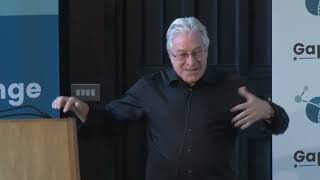
This content was created by Joshua Elkington. This content was uploaded by Joshua Elkington. This is a YouTube talk titled "Founder Stories: Richard Klausner, Founder of Juno Therapeutics, GRAIL, Lyell, and Altos Labs" (recorded Aug 30, 2022) in which Dr. Richard Klausner gives a presentation on the scientific and clinical history of CAR T cell therapy. The talk mixes personal anecdotes (e.g., Hans Stetten and Linus Pauling), lab discoveries (the T‑cell zeta chain and early chimeric receptors), the translation of that work into Juno Therapeutics and later sale to Celgene, and clinical outcomes showing dramatic responses in hematologic malignancies. Klausner discusses key scientific issues (which T cell subsets mediate anti‑tumor effects, dose‑response mysteries, persistence and memory), manufacturing and regulatory challenges, the immunotherapy hospital model, and prospects for solid tumors, autologous vs. allogeneic approaches, and cost. The excerpt includes audience Q&A with named questioners (e.g., Sam, David, Speaker C).
Chapters
I was just asked to do this, so I have no slides. I want to give a few people that came in time to leave. If this was false advertising, Paul, you'll stay. Trying to imagine something without slides is a great exercise. Lesson for young people in science. And I do have to tell you one story to start. When I was a young scientist at— I was at the NIH. And there was a, at the time, elderly man. He was probably 85, who was the chief scientist emeritus of the NIH. His name was Hans Stetten. I don't know if anyone remembers him. He was really a legend. And once a month, he invited a young researcher at the NIH to present to him. And it was a really big deal. And I had been working on receptors, and we'd had a wonderful run where I had worked out the pathways of endocytosis in ways that hadn't been known before, discovered the acidic endosome, figured out something called the transference cycle. It all happened in like a 9-month period and things were going really well. And I got this message from the NIH director that you're going to be presenting to Dr. Stetten. So I worked on my slides so he can see exactly what this all looked like. It was very visual and everything like this. And I walk in and I put on my first slide and Dr. Stetten says, "Dr. Klausner, has anyone told you that I'm totally blind?" He said, "No." He goes, "Let me tell you a story." He said, "When I was a young scientist in, I think it was 1928," he won the annual student award from the American Chemical Society, which entailed a free trip at the time to Albany, New York for the annual meeting of the American Chemical Society. And he got a front row seat at the lecture that everyone was waiting for by a young scientist named Linus Pauling who was going to present molecular orbital theory. It was a big deal. This is a very famous moment. And Pauling gets up— Stetson's telling me all this— and he asks for the first slide, and there's an enormous explosion. And the lantern slide machine blew up. He had no slides. And he says Pauling didn't miss a beat and spent the entire time saying, "As you can see over here." And at first people weren't sure. Was he nervous? Did he know there were no slides? He's pointing to things. And he said within 5 minutes, Everyone saw these molecular orbitals. So Stanton said, so you can do it. So, OK, so I'm going to try to actually— that took up most of my time.
Is that OK?
Feel free to repeat that story, change the names, make it about yourself. So Felix asked me if I would talk about the story of Juno, in this case the— and it's not just Juno. It is about— the last few years when a whole number of researchers and companies developed what I really think is an extraordinary medical breakthrough. And that is the first really successful application of cells as drugs, of cell-based therapy, in this case, with curative intent for cancer. I can't tell you how dramatic that is. I've been in cancer for a while. And curative intent seemed way beyond us at all points. We were looking for a 30% increase in survival in clinical trials, which probably meant almost nothing in the real world, except for big costs and lots of problems. I'm being a little facetious with that, but I really think our standards for the development of therapeutics in cancer, because of how difficult it was, was really woeful. And but over the last few years with the development, in particular I'm going to be talking about, of something called CAR T cells, chimeric antigen receptor T cells, there is— the data really does suggest that with a single dose of this self-proliferating, self-evolving drug, a set of T cells, it looks like we're able to cure a quite significant percentage of individuals with hematologic malignancies— leukemias, lymphomas, probably myeloma. It looks like— I mean, you don't know you cure people until you wait for them to die after a long time of something else. But to date, in the experience of the company I was involved with, Juno— I'm no longer involved because it was sold to Celgene a couple of months ago. So I have no connection whatsoever except fondness. If you were in complete remission following this treatment for 6 months, so far there's only been one patient we've seen that actually subsequently relapsed. So it really feels like there's a likeliness of cure. So what I want to talk about is where this all came from and give sort of my own personal story since I made the first chimeric antigen receptor in 1983. '83 or '84. I can't remember exactly which it was. And one of the questions, why did it take so long? One reason is that, first of all, even though I, in some sense, a lot of aspects of this field started in my lab, I never had any idea— I wasn't thinking about it— that this would be therapeutically useful. So there was no vision there, at least on my part. In 1982, as I told you, I was working— I had been working on receptors that mediated the internalization of ligands. And but people all around me were working on receptors that signaled. And it really felt that signaling was just so much sexier than just moving things around. I was jealous. And so I wanted to work on a signaling receptor. And at the time, from work at the Dana-Farber and other places, the T cell engine receptor was first identified. Hadn't yet been cloned, but antibodies identified it. But we knew at the time really nothing about signaling. There was confusion at the time that we thought we knew about signaling, because you can mimic activation with things called phorbolesters and calcium ionophores. But actually, there was no evidence that that's how the receptor signals. So I thought this was an opportunity. A postdoc in a laboratory down the hall from me had developed an antibody, Larry Samuelson, against one T cell receptor. And we decided we were going to jump in to figure out how this receptor worked, how the immune system, the critical cells of the immune system, the T cells, how were they turned on. Seemed like an important thing. And very quickly, we were able to work out that there was a previously unknown chain of this receptor complex, which we cleverly called the zeta chain. The reason we called it the zeta chain is that there was already an alpha, beta, gamma, delta, epsilon. And here we had this new chain. And I, for one, had no idea what the next what the last letter was of the Greek alphabet. But down the hall from me was a very eminent scientist, a Nobel laureate, Chris Anfinsen. And I went down and I said, do you know what comes after epsilon? And so that's why it's called zeta. So it's important to surround yourself by more knowledgeable people than you. So the zeta chain turned out, we were able to show, contained all of the information in its cytoplasmic tail that the entire T cell receptor had to turn on T cells. And that was actually pretty exciting. At the time, again, going back to the early 1980s— some people here remember that, looking at Bill— it was really surprising to a lot of us that there were things that we were all beginning to call motifs. That actually contained the activity of proteins. We didn't know how to think about where protein activity came from. We knew proteins folded. In fact, Chris Anfinsen won the Nobel Prize for figuring out protein folding. And the idea that one might find that these proteins had very small motifs sequences that contained the information that enabled cellular changes was at the time still remarkable. We weren't the first to see it, but it was just happening at that time. And so in order to prove what we thought was going on, that this cytoplasmic tail of the zeta chain actually contained in 3 repeat motifs which we call tyrosine-based activation motifs, had all that information. We made a chimeric receptor. Someone else in my lab at the time, who was an independent researcher, Warren Leonard, had cloned the alpha chain of the IL-2 receptor, which doesn't do any signaling, but it binds IL-2. And so we made a chimera between the extracellular domain of that receptor and this little piece of the zeta chain. And with that showed we fully transferred everything that we knew the T cell receptor did, which turns out was activating a tyrosine kinase pathway. And I won't go through that, but that was all new. Well, I had a postdoc in the lab from Israel, Michal Baniyash. And she had come from a wonderful laboratory —she would have been a graduate student with Zelig Eshar. And unbeknownst to me, Michal was telling Zelig, who was in this field, everything we were doing. It was fine. But I didn't realize until Zelig called me up and said, I have an idea for something that he was calling a T-body, which was to put a single-chain antibody on top of this zeta chain. To make an anti-cancer cell. And I thought that was really cool. I couldn't imagine it would work. So we sent him the clone. And that was really the first CAR-T. It wasn't named that. And that was in the mid-'80s. And not that much happened therapeutically. And the reason was it turned out the T cell receptor is built to turn on and turn off. Or to turn on and kill the cell. And so this turns out that there was no way to successfully make a therapeutic entity à la what Zellig had imagined. But over the next 15 years, people discovered that there were other receptors. That were involved in, quote, the coactivation of T cells. And these receptors also had— by then it was obvious that everything works by little motifs that you can transfer from one to another. And that if you coactivate— if you activated a T cell through the T cell receptor, whose function is to recognize antigen peptides in the context of MHC molecules, and at the same time engaged a coactivator, now the cell activated and stayed active. And so Michel Sadelain and others picked this up and made now a complex chimeric antigen receptor with the zeta chain, an extracellular single chain antibody, and now the coactivation domain of one of several coactivating molecules. And this showed that these cells were now capable of proliferating, of persisting in animals. And then eventually, people took it into humans, people like Carl June, who was a postdoc, not of mine. He was independent in the Navy, but he wanted to learn how to to study T cells. So he came to my lab. And he was in my lab during the time that we had discovered the zeta chain. And Carl, as well as Mike Jensen and a whole bunch of other people, took this whole CAR T cell forward in wonderful ways, eventually bringing it into clinical trials and demonstrating quite remarkable, dramatic responses in the setting of certain types of— first leukemias, now expanded to lymphoma, and most recently myeloma— all hematologic malignancies. And why? Why hematologic malignancies? Well, the most common CAR T cell— and there's others that will be emerging— the ones that have been approved— one has been approved from Novartis, one has been approved from Kite, now owned by Gilead. Is targeting a molecule called CD19. And CD19 is found on cells of the B-cell lineage. And there's a whole history. And that is there's a remarkable drug called Rituxan— that was the first one— which was an antibody targeted against— these sorts of CD19, CD20. This happened to be— that happened to be CD20. They all function the same. And what was important is that this was very effective in lymphoma. It's actually also effective in other immunologic diseases. But the remarkable thing about this is that this antibody wiped out B cells. And turned out that was pretty much fine. Turned out— and maybe people weren't surprised, but I didn't know anyone that wasn't surprised. It turned out it was fine to not have any B cells. Not entirely fine, but pretty close to fine. And so the majority of hematologic malignancies are from the B cell lineage. And we already knew that at least in the adult, you can— and also in kids— you can wipe out the B cell lineage and you're fine. You're essentially fine. Was the setting for making an anti-B cell chimeric antigen receptor CAR T cell, which would produce killer T cells that would kill the tumor and would also kill the normal B cells. But we already knew that was clinically OK. And that's really been the basis for much of what's happened in the field. I got involved in it late. I jumped in after being at a meeting 5 years ago last month, which was a wonderful cancer meeting that Inder Verma and David Baltimore hosted for many years. And this meeting was the best cancer meeting I'd ever been to. We went every year. And it was about 20 or 25 people that came every year. The official word for those people— they were sort of the old farts or whatever in cancer. And then we'd pick a topic and invite all the— or the best 20 people, mostly young people that were doing the work. And that year, we did it on immunotherapy. And it was an extraordinary time. It was just when the data was emerging clinically on CAR T cells and on checkpoint inhibitors. It was incredibly exciting. But without naming any names, I was deeply disappointed with the lack of science underlying the observations about CAR T cells. And it wasn't clear from the people that were presenting what cells were involved. The prep was made of just peripheral PBMCs, peripheral blood mononuclear cells. There was lots of toxicity. But it just— there was so many, to me, fascinating scientific questions. And it was obvious that these people had done amazing things opening up potentially this whole new field of medicine, cell-based medicine, the third leg of our approach to therapeutics— small molecules, biologic molecules, and now cells. And I think this is going to be— an incredible part of the future. And I think this is just the beginning. So I decided I wanted to form a company that was committed to trying to work out the deep scientific rules of how these T cells actually worked as a living drug. And there's lots of mysteries still. So I'm going to tell you a little bit about what we learned, but also point out how much, for all this excitement and approved drugs, how much there is to do in this new field. And the first thing I did was I went around just the US to all sorts of people, every lab I knew of that was working related to this, and asked, could I spend a day with you and show me your data? And I was looking for who really most impressed me of trying to figure out— the first question I had, which is, Which cells, what types of cells have the anti-tumor effect? This wasn't clear. In fact, the bet most people made, including me— and I lost some very good wine over this— was that it was the killer T cells, the effector cells that were going to go in and kill the tumor. Turned out that was wrong. The person that I found that was asking deeply these questions is a wonderful scientist, clinician scientist, one of my favorite translational people in the world, Stan Riddell at the Fred Hutch Cancer Research Center. And he was doing this gorgeous work on CAR T cells very carefully, trying to optimize every component, asking questions about, all the details of how you design these. But to me, most excitedly, figuring out in very careful experiments which cells mediated the anti-tumor effect. And it turned out it wasn't the effector cells at all. In fact, they caused a lot of toxicity, but really virtually no anti-tumor effect. It was entirely the mature immune stem cell, the central memory T cell. And in fact, it was a subset of the central memory T cell or naive T cells, which are also memory cells. And that it required just the right proportion of the right subtype of CD4 cells and CD8 cells that expressed this. And I was really impressed at how clean this looked. And what proved to be important about it There was sort of a race to who can get first to, you know, through the FDA. And Juno did not win that race. It was OK. And what we saw— and I think this is important— is that by paying attention to the scientific questions of what are the cells, we were able to come up with really precise doses. It is interesting that there's— is basically an inability to do a real dose-response curve for CAR T cells that are made just from PBMCs, the type that have been approved. It's very difficult. You increase the number of cells, you get a lot of toxicity. You decrease the number of cells given, you get less efficacy. And this whole dose-response is incredibly mysterious to me. I don't understand the dose response of CAR T cells. But for example, if you look at the labels of these drugs that are made from PBMCs, the dose is between 50 and 200 million cells or something like that. It's a really wide range. When you have really well-defined cells— and I'm not convinced that Juno finished with the detailed definition of what precisely is the optimum path. But when we give a dose, it's 10 million cells plus or minus 1 million cells. And we found clinically we can do dose response. So you pick a certain dose and say in diffuse large B-cell lymphoma, end stage, really bad disease, and you can get about a 40% persistent complete response rate. But if you double the dose, we get up to a 55% to 60%. And I hope Celgene— I have a board member here— will double it again with no increase of toxicity. There was a lot of toxicity at the beginning. As of the time we sold Juno, 70% of patients getting this are being treated as outpatients. So within a 2-year period, went from learning how to take this new therapy. And it seemed very toxic. We had problems, particularly in ALL. But it just shows how quickly we learn to use new technologies. So where are we now? By we, I mean the field. Well, the big question is— the biggest question is clinically, Can one get CAR T cells to work against solid tumors? All I can tell you is my belief, and take it for what it's worth. I see no reason why we can't. Now, the challenge is, how do you find the right antigen? There really aren't any totally tumor-specific antigens that I know of. Really. But there's an extraordinary number of cell surface molecules that are presented at very low levels in any normal cell and at extremely high levels in many tumors. And not surprisingly, CAR T cells are exquisitely sensitive in terms of whether they act on a target cell or not of of the density, just like any other immune system. And I think that's where we're going to be able to figure out how to get engines against solid tumors. I will be extremely surprised if over the next couple of years this does not expand into successful therapy of solid tumors. But I've been surprised before. There are lots of interesting questions. When I was associated with Juno, I kept— at every research meeting, I would sort of say, I want to know why you have to give more than one cell. These are stem cells. Why do you have to give more than one cell? And we don't have an answer to that. It's really interesting that you have to give some minimum number of cells or this doesn't work. So what happens, these cells proliferate. 10 to the 6-fold over the first week in a patient. It's extraordinary. You go from undetectable cells when you give the, you know, the single infusion, and at the peak, up to 90 to 95% of the circulating lymphocytes are these CAR T cells. And as the tumor goes away, they go down. We've been able to show that the CAR T cells persist that's probably critical for what looks like cure. It's an interesting question, which we don't know. Have we really— when it looks like we've cured people, have we rid them of tumors? Or is it now this chronic, low-level infestation with tumor, but you have these memory cells, these long-lived memory cells that whenever a tumor comes up, the T cells get rid of it? In the mice, by the way, it looks like that. We can't really do that in humans. Go in and basically destroy all the remaining CAR T cells to see if something comes back up. So it's about putting in this new exogenous anti-B cell or anti-tumor or anti— the myeloma antigen that are being used, particularly BCMA, so anti-BCMA. You put in this new engineered immune system. Which is an immune system. And it's an immune system that generates memory. And it's an immune system that generates effector cells. So these cells proliferate a million to 100 million fold. So why is there a dose response? Why is there a minimum number of cells? I think this is an extraordinary mystery for people to work on in this new field. I have models, but Steve already told you all models are wrong. And I'm sure that would be— this one will be as well. But I think it's an extremely exciting— of course, it's incredibly exciting for patients and their families. I mean, it is extraordinary the number of people that I've gotten to talk to. When we first started treating people, This is so dramatic. These were people with kilograms of tumor. And I would ask people afterwards— and you only give this once. And basically, the tumors, if they're going to go away, go away within a few weeks. And I would ask people, describe it. Describe how it felt. And people would look for metaphors. What it felt like. The most common was it felt like ice cubes melting. And I would say, was it cold? He said, no, no, I just was picturing ice cubes melting as people's lymph nodes went from that to nothing. And the first person who told me that is now 3 years out. He reopened his dental practice. And it's just really extraordinary. But what I think what is as extraordinary as this benefit to these patients is the fact that we, the broad we, are at the beginning of an entirely new approach. And it's not just for oncology, of the ability for cells with all their intelligence to be these living drugs and mediate the cure of disease that we've been otherwise unable to cure. So I think I'm out of time. I just was told to fill it up. I could have sung or danced, but then you really would have walked out. And so thank you very much. I'm gonna be around tonight and we can talk more. Oh, we have 10 minutes for questions.
Hi there, Dr. Blazer.
Thanks very much. Super, I was immensely excited. I was getting all nerdy. So I'm Sam, I'm an Irish med student.
Could have fooled me.
I was fortunate to do a bit of work with Novartis in the past, and so I encountered their CAR-T therapeutics and leukemia. And so from the perspective of somebody who hopefully down the line will be working with these therapeutics and then some me was doing some frantic Wikipedia while trying to sound like I knew my stuff on them. I find it absolutely exciting. So congratulations on playing such a massive role single-handedly creating this industry.
Well, I didn't single-handedly. Please, I hope it didn't come across that way. I just did the ZetaChain.
My question is about your experience of the clinical trial process. Right now, in China— and this probably relates back to a question that was asked earlier today— in China, there's an enormous amount of these CAR-T or CTs that are currently in progress. And there's less so over here. And so my question is really, how did you find the navigation, not just of different corporations like Juno versus Novartis, but also of different jurisdictions? And how does that work for you running a company?
Well, I mean, all of the trials that we did at Juno were in the US. Incredibly easy. I mean, opening these trials, what would happen immediately is there'd be a waiting list. And so we would just— in fact, at every point, we were limited by one thing, the challenge of manufacturing. I didn't talk about that. That remains a big challenge for everyone. I think it's going to be a challenge that's going to be solved in a whole variety of ways. But manufacturing is right now slow, difficult, expensive. And it's what you expect at the very birth of a field. If you look back at antibodies, it was really tough. And I think this has gone much quicker. So it was really just manufacturing that limited things. Of course, one of the things we did at Juno is that we actually built, quote, an immunotherapy hospital. At the Hutch. So this is a gorgeous set of wards. It's now named after the Bezos family. They gave some money for it. But we set this up to create something I felt very strongly about that we've lost, which is clinical research by and large now means trials, whether they're phase 1, phase 2, phase 3 trials. And the beautiful thing about trials is that you get answers because you minimize variables. The awful thing about trials is you minimize variables. And if you're trying to learn, you have to maximize variables. I mean, we've been talking about that all day about data. So we set up this literally hospital in Seattle that was built to do single-cell whole genome sequencing and multiple biopsies and just everything we can think about so that we actually went back to what we used to have, which were these general clinical research centers where we did human experimentation, I think, in a completely ethical way, but out of the context of this singular paradigm of the registration trial. And so that was incredibly useful to us. That's where we learned— we were able to do lots of variables very quickly. But once again, the regulatory authorities and the IRBs were fantastic with it. And the reason was— I mean, when you would walk around at the time the two institutions where we were doing this, Memorial Sloan Kettering and the Hutch, and you went to the oncology wards, You could see, I'm telling you, the oncologist who had been treating patients with CAR T cells, there was like this spring in their step. I mean, they had not seen anything like this. So the results were there, and that helped stimulate it. So it was not hard.
Hi, my name is David from GSK R&D. Thank you very much for this journey of CAR T cells. My question is, where do CAR T cells circulate and leave? Traditional cancer treatments, such as chemotherapy, radiotherapy? CAR T cells are going to wipe them off? Or are they still going to be relevant to clinical practice?
I mean, we don't know because it's early. My own view is that I personally don't see any reason, at least in these diseases that we're getting these responses, that CAR T cells will not move up as quickly as possible to first-line therapy. The area where I most want to see that is in childhood ALL. Now childhood ALL, for many years, was the great victory of the world's cancer program, where we learned to take a uniformly fatal disease in the early 1950s and through an extraordinary iterative cycle of clinical trials with almost no scientific breakthroughs, we gradually learned— we, the community, gradually learned to cure the majority of these kids. And it's extraordinary. But what we've now learned is that these cured kids have tremendous long-term problems from the chemotherapy. It's an incredible issue. And you talk to advocates for childhood cancer, and they say, Okay, it's great. You saved my child, but is there a better way? Now, we don't know whether there's long-term consequences in kids with CAR T cells, but I'll go out on a limb and say I doubt it. So one of my dreams— anyone that's working in CAR T cells listening— is if we can actually take this new therapy and replace actually curative but problematic therapy in children and never expose these kids to high-dose chemotherapy. I think that would be an incredible victory for medicine. So I'd like to see these all move to earlier lines. And if it's going to move to earlier— the earlier the line is, the more it will replace chemotherapy or molecularly targeted therapy. We'll have to see how that plays out.
So thank you very much for the talk. I've got two questions. So one's about technology, the second one is about the funding. So I think it relates to what the previous person has said about the manufacture and how you cannot automatize it. So where do you see the future? Is it autologous or is it allogeneic CAR-T cells? That's the question. The second one is If the therapy is going to be developed and it's just going to be more and more therapies, especially I think in the US and in this country where the public health is funded, who's going to pay for this therapy since it's one of the most expensive therapies right now for dementia?
Well, my own view is, of course, is that the therapy will put them two together. The major reason right now it's so expensive is because of the manufacturing. I think that's— it's the same as anything. That's going to go down. I have no question that the cost, the quality of manufacturing will just continue to improve. And it's very interesting. It takes about now, about 3 weeks now 3 to 4 weeks to go vein to vein. But there's, again, no theoretical reason. Much of that time is in vitro expansion. These are stem cells. Why are we spending all this time expanding? I actually think the reason we have to do expansion, and there's data supporting it from others, it's because of not purifying, not fully purifying the cells.— there's a lot of data now that there's almost like a quorum effect with T cells as they proliferate and they control each other. So again, it's just early days. My view is there's no reason not to have a goal for a turnaround time for CAR T cells, autologous CAR T cells, of less than 5 days. And the cost will come dramatically down. Now, the issue of cost is really interesting because this is one-time curative therapy. Therapy. So in fact, a few years ago, NICE here did an analysis of CAR T cells and proposed an acceptable cost that actually was 2.5 times what we were thinking at Juno we would charge. And that's because of the value equation. So, and then there's the question of will we get off off-the-shelf allogeneic T cells. Lots of people working on it. It's tough. I'm not sure. It may well be doable. I think it's going to be a race between, is it worth getting allogeneic T cells with all the potential problems? Because remember, I think you want these cells to persist a long time. And that means you really want them to be immunologically silent for a long time. So I think that's going to be a challenge. If you got manufacturing down to a 3, 4-day turnaround time, I'm then not sure that there's a huge advantage to allogeneic. But I think what's important is that researchers are trying both. And I hope that answers both of those questions.
Thanks so much for a great talk, and we have a short coffee break now in the foyer before our last panel of the day.
More from Joshua







Scientist Stories: Hans Waterham, The value of phenotypic assays in peroxisomal disorders




Scientist Stories: Joel Zlotogora, Genetic carrier screening programs for reproductive purposes