Founder Stories: Richard Scheller, Developing Medicines that Save Lives
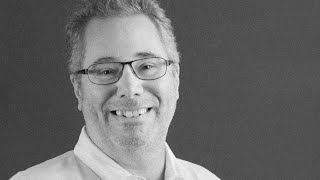
Richard Scheller left Stanford after 19 years to lead R&D at Genentech, overseeing 1,300 researchers. He walks through how drugs get made: 10 to 15 years, roughly $1.5 billion, with a 10 to 25 percent success rate. He explains why personalized medicine like Herceptin matters and how academic and corporate science differ.
Chapters
It is my very special privilege to welcome our guest today. Richard Scheller is the Head of R&D at Genentech. But I have known him for a very long time, although he doesn't actually remember it. He started at Stanford as a faculty member in 1982 and in the Neuroscience Department and in Biology and that was the year that I was a first-year PhD student over there. So I took classes from him and it's absolutely amazing to see the trajectory of his career. He spent 19 years at Stanford and then went to Genentech, he's been there 10 years. And he's got some incredible insights about the difference between research in academia and in industry and we're going to dive right in. So, welcome. Thank you very much for joining us.
Thank you.
And maybe you could tell us a little bit about your story and about moving from academia, you know, what would motivate you and tell us a little bit about how that happened.
Okay, I'm going to stand up if that's okay. Thanks for having me. I was a professor here for 19 years. I was successful, a member of the National Academy. I was a Hughes Investigator, so I had plenty of money. Things were going well. But the research that I was doing had gone through a phase where the knowledge had just exploded over the last decade. And the rate of learning started to sort of plateau a little bit. So I just took stock in where I was headed with the rest of my career and thought that I had to do one of a couple of things. Find some new technology to increase that rate of learning again or switch my field to a little bit something different where I felt I was sort of primed for that tremendous gain of knowledge again or —maybe just do something different. So my wife, who's on the faculty here, and I thought, should we move to Boston? Go to Boston and have a bunch of nice colleagues there and then have labs there. But it really wouldn't be very different than here, given that we didn't have any problems here. We loved it here. So I thought if I was going to do something different and move somewhere, since being a professor here is terrific, that I should really move somewhere where it would be quite different. So I thought then, well, what would that be? It seemed to me then that we had done— and when I say we in this case, I mean the life science endeavor, not my lab. So everything funded by NIH for years and years. It's sort of done what we promised the society that we would do, which is learn enough about the way cells work and the way tissues work, enough about molecular biology so that we could actually think about disease in very, very mechanistic terms, which is the way I like to think. And, you know, wouldn't it be interesting to try and apply my biological insights to disease? So I was fortunate enough then to have somebody— David Botstein, who was in the genetics department at the time, had worked at Genentech. He kind of heard I was looking around at different things. He introduced me to the CEO of Genentech at the time, Art Levinson. And Art was a scientist, started off in the lab at Genentech, became the CEO. And I thought, wow, you know, if I'm going to— actually have a boss, which was kind of a novel concept if you're a faculty member. If I'm going to have a boss, it should be someone who's a scientist who can actually understand logic and things like that. Someone that I could talk to. So it seemed like a terrific challenge, a terrific opportunity. And that it would be really, really different from what I was doing day to day at Stanford. So I remember over the Christmas holiday 10 years ago thinking, should I do this? Should I do this? Walking into the lab and thinking it's so nice here. My God, I have tenure. Should I do this? What if they fire me? I could get fired if I go there. These were all kind of novel notions. Think about, but it just seemed like a terrific opportunity and I took the plunge. And I have to say, for me personally, it was the right thing to do. My learning curve picked up again immediately, learning about all kinds of new science about cancer biology. I didn't really know that. I knew about cell biology, but I didn't know specifically about cancer or immunology. I knew absolutely nothing about business. I was on the executive committee of the company. I had to find out what EPS stood for. So really, the executive committee meetings were just learning all about business, all about drug development. How do you develop a drug? I never thought of that before. So this was— it was just absolutely fascinating. I have to say I give the company a lot of credit because it Basically, I think it's paid off for them, but it took me 2 years before I had any idea what I was even doing in business. I mean, I knew about science, but it really was a steep learning curve, but not something that happens overnight. So for me personally, I would say I took the leap because I wanted to do something different and I felt it was the right time to become basically a human experimental biologist. Which is what we do, all in the context of disease, of course.
So I want to build on something you just said, because you said you were curious about what it felt like to have a boss. Yeah. But you also now have 2,000 people working for you. How did you learn how to be a boss of that many people? I mean, that's got to be a huge challenge to manage a team that size.
Well, that was part of the 2 years of learning, and that was probably the biggest part. One of the huge differences is I found that in business you actually get feedback on like how you're doing, unlike— I'm sorry— unlike here, at least when I was a professor. You might see your chairman in the hall every year or so, but you basically did your own thing and I mean nobody really provided you with much feedback. One of the things that I did there was someone said to me, you know, you should meet the head of HR. And I said, what does that stand for? Honestly, I had no idea what that stood for. They said human resources. I said, oh, human resources. So that kind of sounded to me like they must hire the people. So then someone explained to me what HR is and they do all sorts of things and so on. So I learned. But one of the things that the executive committee of Genentech at the time decided to do was to collect 360 feedback from our peers and folks that work for us and sort of tell us how we're doing. So this was really a novel experience for me. So I was— my 360, my first 360 feedback, let me see if I can remember. They said I was aloof, arrogant, and dismissive. And I said, Of course I am. You know, how do you think I survived as a scientist? You know, it was a competitive arena. But they said, "Well, you know, yes, but it's probably not going to work here. So what we'd like you to do is then to go discuss your 360 feedback with your reports and one level down, your directors." So I said, "Well, Oh, wow. Okay, we'll go do that. So I went into the room with these people and I knew that it's mostly these people that said that I was those things, which I didn't know anyone specifically who said it. Of course, it was anonymous. But I said, well, gee, you know, you say— people say I'm aloof, dismissive, and arrogant. And I can't understand this. I mean, my parents said that. My wife says that. My colleagues at Stanford say that. You know, you say that, I cannot figure out how you are all wrong in the same way. So basically found that you need to be a much better listener. You need to really, really respect folks and their opinions. But it is very— it is different in industry compared to being here. I think part of the reason that people found me quite brash was the fact that here when I said something, nobody actually did what I said. Or hopefully they at least marginally considered it, but then they would go, "Not really." I mean, postdocs, students, I mean, they'd go do really what they wanted to do, which was fine. I took that attitude to Genentech and actually found very quickly that while I didn't really want the atmosphere of the company to be that way, that it is just different and it is somewhat more hierarchical and that people actually do what you say. So you have to be really careful with what you say because folks take it incredibly Seriously. So it's just a million little things like that that you learn over time about how it's different in industry versus academia that was the reason I say that it took me 2 years before I felt as though I was coming to a place where I really knew what I was doing and could be sort of optimally productive. So there is no real one thing that I can say that I learned, but I hope I gave you kind of a couple of examples there of what I would say would be a list of 1,000 things if I wrote them all down.
So maybe you could tell us a little bit about what your responsibilities are. I mean, head of R&D of a large biotech company, it sounds very impressive, but maybe there— you can give us some insight in what your real responsibilities are. Yeah.
So I'm in charge of discovering medicines that will make a real difference in people's lives. So as you may know, Genentech is now— it's an incorporated company in the United States but 100% owned by a large Swiss drug company called Roche. But our group is completely independent. And our job is to discover medicines that make a difference. We don't make any generic drugs. We don't make any copies of other drugs. Innovation is our— we're going to live or die based on innovation. We also believe very strongly in the view of personalized medicine, that is making medicines that are tailored to individuals. The Roche Group owns two businesses. A pharmaceutical business and a diagnostic business. It's a very large, I don't know, maybe fourth, fifth largest pharmaceutical company in the world and the largest diagnostic company in the world. So the idea is to make medicines that really, really deliver benefit, tangible terrific benefit for people. So if we make a medicine for somebody with cancer, We have to show that they actually live longer when they take the medicine, for example. So I oversee research. So our research group is about 1,300 folks. We have about 150 of the people are postdocs. And why would we have a postdoc program? People come through, they come from all over the world. They stay for 4 or 5 years. They bring in new techniques and ideas. Not cynical yet. They work at night and on the weekends and it's just energizes the place. Then we have scientists at various levels and the job of the scientists is to— are twofold, to make— to do basic science. We like to give each of our scientists somewhere some what we call discretionary time. Maybe it's somewhere between 10% and 30% of their time, sort of depends on the individuals. Some people, frankly, it's 100%, but that's a different topic. And with their discretionary time, they're supposed to just do interesting things, do whatever you want, make a discovery, publish a paper. We published 20 papers in Science, Nature, and Cell last year, hundreds of papers overall from the company. But the other real tangible deliverable of the scientists is to come up with a medicine and move that medicine into what we call early development. And in early development, the compound goes through various further stages of testing to make sure that it's safe. We do all of the work to file an IND, that's a new drug application, with the FDA. Then we file the IND and then we do the clinical studies, Phase I and Phase 2. In Phase 1, you usually just treat patients and make sure that the drug is safe. You know, you start at a very, very low dose. I mean, imagine putting something into a human that's never been in a human before. You slowly escalate the dose. It depends on the disease. Sometimes it'll be in patients with the disease, sometimes not. But then usually in Phase 2, you do You do a relatively small number of patients, but enough patients so that you have statistical power to see that you're making a difference in the disease. And what we then do would be to, if the Phase II trial works, to hand the medicine to then the global development group to do the final clinical testing. And the final clinical testing would then be done in 80 countries around the world. It's a logistical absolute nightmare. It's done in many, many more patients so that the statistical power increases dramatically. And then work with the regulatory authorities to get permission, if you will, to the FDA in the case of the United States, permission to market the drug. So we're So my job is to deliver molecules that we say have gone through proof of concept. We believe that they work. We have the chemical entity. We know that it can be manufactured and to hand this to the global group where there's a lot of science involved, but there's a huge amount of logistics and regulatory involvement and that's when the commercial people get involved and so on. And frankly, I'm less interested in that. I then go back and try and discover a new medicine and show that it works.
So, can I chime in here because I think it would be fascinating to everyone to know how many of these you generate, how long it takes, and how many are actually successful. I mean, this is a very complex process and how many sort of pop out at the other end as successful? Yeah.
Well, this is a— It's a tough business. So I would say from the concept of maybe this molecule would work in this disease to actually marketing the drug is— well, it depends. If it went incredibly fast, it could be 10 years. It's more like 15 years and the average cost is about $1.5 billion to get it to the market. Now the— well, and the $1.5 billion includes the failures, so that's taken into account. So how many make it? Well, that varies from company to company. I would say probably on the average, 10% make it. For us, it's probably more like 25%. But I think the industry is going to do much, much better in the next decade. And the reason is that there's been an explosion in knowledge about biology. What I think was happening in the industry in the '80s and the '90s, there were a bunch of successes. Drug companies, Merck, Pfizer, Roche, they were making tons of money. And then they're saying, but we got to stay a growth company, we need to grow. So they gave a lot of money to heads of R&D. But frankly, there weren't very good targets. But what is a head of R&D supposed to do, say, I don't know what to do, there aren't very good targets here, take the money back? No, of course not. They spent the money on lousy targets. But, During that time, there was a tremendous revolution in the understanding of biology that was taking place, which as I said is partially why I moved to industry. And I think that now there are incredible targets that we work on. Think about cancer. You take the cancer, you take the tumor, you sequence the DNA of the tumor and you sequence the DNA of the normal tissue and you find out what genes are mutated, what genes are actually causing the cell to be a cancer cell, and then you target those. Is that going to work? Yes, it's going to work. They are working. We know they work. But that is just terrific sort of preclinical validation. Those are the kinds of things that you want to work on versus not knowing what to work on. It's an expensive and difficult process. It's also the industry is facing a lot of headwinds from various countries including our country on being willing to pay for prescription drugs. Some of our drugs are extremely expensive. If we make a drug for a certain cancer and there 10,000 patients per year, it's not unusual to charge $50,000, $60,000 a year for the drug, which we have to in order to basically recoup the investment. But look, if you're going to live longer, we think it's delivering value. So there's a lot of pressure on payers and a lot of pressure in Europe as well. I voted for Obama, but he's charging Genentech $550 million this year to pay for Obamacare. Where do we get $550 million? We fired $550 million worth of people. I mean, where else are we going to get the money? So now they don't have jobs or healthcare. But these are the kinds of things that all companies are going through. There have been thousands and thousands of people laid off from the pharmaceutical industry because of the pressure on pricing and the the rebates that people are asking for. And, you know, I think this is what happens during tough economic times, but there's a price that's paid for that in our ability to develop new drugs.
So let me drill down on this question of small markets, because I know there's a big interest in personalized medicine, which is like the smallest market you can get, right? I mean, it's just for the one person. It's very personalized. How interested is Genentech in this? And I mean, what are the consequences both for the market, for the cost, for the consumer? Yeah.
Well, as I said, we've staked the whole company on the idea of personalized medicine, but that doesn't mean it's for one individual. That, of course, wouldn't work. So, for instance, we market a drug called Herceptin, which is for about 20% of patients, women with breast cancer. And this drug is extremely effective in these 20% of women. And there's a test to know whether the gene that is the target of this drug is amplified. So in most of your cells, you have 2 copies of this gene. In 20% of women with breast cancer, you have about 1,000 copies of this gene. And the drug is extremely effective. So 20% of breast cancer, I forget what the worldwide sales of Herceptin was last year. You can look it up, but it's something like $3 billion. So that's not so bad. But you're right. As we get down to smaller and smaller populations, the market becomes smaller and smaller. But two things happen. First of all, our failure rate will go down. We understand more about the disease. More about the molecule, more about the target. So the drug— we believe that the drug will more— our clinical trials will be more successful, number one. Number two, if the drug really works and you know what patients to treat, you drive penetration. So almost every woman in the United States that's HER2 positive breast cancer gets Herceptin. It would be sheer malpractice not to prescribe Herceptin. So you— we have a sales force, but— boy, I'm going to get in real trouble with this talk. We have a sales force, but doctors would use it anyway because they know that it works really well and this is the standard of care. So we expect that there will be a higher success rate, deeper penetration into the markets with the personalized healthcare approach. We will also market the test as part of the Roche Group, which will help with earnings, although the diagnostic business is very different than the pharmaceutical business in terms of margins and so on.
So you talked about failure a second ago. Yeah. And let's talk about that a little bit because we all know that if you're going to take some risks and some big risks, you're going to have a higher chance of failure. But these risks, if they work out, you're going to have some really big hits. So how do you encourage that type of innovation and risk-taking in the organization if people know that, boy, if I fail, this is going to be an incredibly, incredibly expensive failure? So there must be a lot of tension between that, or how do you walk that line? Trying to encourage risk-taking and innovation and not wanting to have some big failures? Yeah.
Well, we just have to accept that you're going to have big failures. I mean, we have a— so we have a portfolio, balanced portfolio approach. So for instance, in the Phase 3 portfolio now has 13 new molecular entities. So with that, that's a new compound. I say 13 because they're probably 50 clinical studies going on. Sometimes the molecules are tested in more than one type of cancer, for example, and those are separate studies. So 13 new molecular entities. Each one has— by that stage, each one has a commercial value associated with it. And those are— that's also getting better, but those are usually wrong. I mean, you know, the drug that we sell, Alytic, for But dissolving blood clots was supposed to be a several billion dollar drug and it sells $200 million a year. And a drug for non-Hodgkin's lymphoma was supposed to be a couple hundred million a year and last year was the largest selling drug in the Roche Group and sold $6 billion. So it's just the opposite of what the commercial predictions were. But that's getting— that's better now than it was 10 years ago. So we have a commercial value associated with each molecule. And then we have associated with that a probability of technical success, a probability that the molecule will work in Phase 3. And we take that all the way back even to the portfolio that I manage in Phase 1, where we have a probability of technical success of the molecule getting to the market. So what's the probability it'll make it through Phase 1, probability through Phase 2, Phase 3, Phase 4. Through regulatory. And obviously, as a molecule moves through the pipeline, the probability goes up as it passes one hurdle and the next hurdle and the next hurdle. So we have a portfolio with known value for each molecule and a probability of the molecules working. And then we balance the portfolio with more risky projects and projects that we feel are close to a slam dunk if they're ever is such a thing in our business and manage the portfolio that way.
So I know that there are a lot of drug companies that outsource their R&D. You know, they have lots of little small drug companies that are trying lots of risky things and when they get down the pipeline, they license it or buy it or, you know, buy the company. Do you guys do that or do you ever outsource R&D?
Well, I wouldn't say— well, so the short answer is, Sort of. So we're very good at R&D at Genentech. We're very proud of that. And I think that a lot of companies have lost their way in terms of their research and development and frankly don't have the quality of scientists that we have. I guess I can say that if I don't mention any particular companies. But so they have to look outside for their molecules. Now, if you're going to start a biotech company, you know, you can get some scientists together, you can, you know, do some experiments, you can maybe raise enough money to get a molecule into the clinic. But remember, as you start doing the later-stage experiments, these experiments cost hundreds of millions of dollars and it's unlikely that any small company I would say it's not unlikely. It is impossible nowadays that any small biotech company would be able to raise enough money to do its own large Phase III clinical trial. So the companies have to partner with larger pharmaceutical companies which have the resources to do that. So, well, we have 1,300 scientists at Genentech. That doesn't include the the clinical groups and so on. However many scientists we have, we will always be a small part of the overall life science industry. And we have a— I have a business development group that reports to me. It's 25 people. Many have PhDs and MBAs. Some have MDs, PhDs, and MBAs. I'm undereducated compared to some of these people.. And they have the world divided up into territories and we're constantly looking to in-license innovation that comes from outside of Genentech. So we're very, very conscious that we don't have all the good ideas and we don't invent all the good things. Hopefully, we're somewhat less dependent on it than some of the other pharmaceutical companies whose R&D may not be quite as good where they, as you said, almost solely depend now on in-licensing. And actually, they don't even— some of the companies have so much money and are getting so desperate because of the drugs coming off of patents. When a drug comes off of a patent and becomes generic, if it's a simple chemical, not a protein antibody, if it's a simple chemical, generic companies move in and basically the innovator price falls by usually about tenfold in 6 months. And there's huge, huge patent expiries coming in the industry, so people are quite desperate right now. So I would say a lot of it, but they've made a ton of money off of these molecules over the last decade. So they'll now go into a small company and say, look, we don't We don't want to license it. Just how much do you want? We'll buy you. And that can be a very lucrative model for startup biotechs if you can bring a molecule into the clinic and interest a large pharmaceutical company in the molecule and start with, let's say, $20 or $50 million of capital and then sell the company $5 or 7 years later for half a billion dollars. So it's not bad. You have to be successful to do that. Yeah.
Very interesting. Well, let's go back to academics for a little bit and the comparison between academic and commercial drug development. You know, when you're in academics, your lifeblood is grants. And you're getting grants mostly from the government, but probably also from some drug companies as well. Such a small percentage of people get them. Let's talk about the efficiency of that versus being in a company where you have a very different model. Do people inside Genentech have to actually compete for money and resources? Is there any parallel inside a company to what people might be familiar with in an academic setting?
Yeah, so just think of me as the NIH. No, that's— yeah, yeah. So we— so there's never enough money to do all of the ideas that you'd like to do. So even though we have a very nice budget, we do have things that we can't do. There's never enough postdocs for folks. So we— but we fund each of the— so a typical scientist, entering scientist at Genentech will have a postdoc and say 2 technicians. And we ask our scientists to— they don't teach, they don't have to raise money by writing grants. We ask our scientists to actually still work in the lab. Whereas an assistant professor here, at least my experience, experience was some years ago, will very quickly, at least in the life science, have teaching and grant writing and going around and giving talks and doing— so it will be very hard to actually stay in the lab very long. So we ask our scientists to really work in the lab. We fund everyone about the same. It's really FTE-driven. And as you might become a senior scientist or a or go on to be what we call a staff scientist. The laboratories can grow to, you know, 5 or 10 people. But again, people are treated fairly similarly, although certainly somewhat dependent on the project that you're working on. If it's particularly hot or important and there's something that we could help by money to shorten the timelines, we would review that and understand that. Each of— even at the research stage, each of the translational projects have timelines, we have goals, we have certain expectations that we try and meet on a monthly or yearly basis. So there's somewhat more— it's quite a bit more organized than at least my laboratory was, which functioned a lot more on sort sort of churn. I mean, I meet with people and I'd say, "Let's try and get that done in a couple of weeks or something." But the scientists wouldn't come and make a presentation and have at the end a timeline for when we might expect that something would move into clinical development. But we have to have that again in order to manage a portfolio and manage a flow of molecules through a pipeline. So, It's— let me see. I think that we don't waste money, but it's not a— money doesn't hold back our best ideas at all. And we don't spend a lot of time— well, I spend time with the CEO haggling about my budget, but none of the 2,000 people who work for me spend very much time worrying about money really. That's terrific.
So I'm going to ask one more question and then I'm going to open it up to the audience so you can spend the time thinking about your provocative questions you want to ask Richard Scheller. So let's go back to when you were in school. I love the fact that you started talking about the fact that you ended up in this position and it took 2 years to really get up to speed. And a lot of the students here are lucky enough even when they're getting a technical education to get exposure to courses on business-related topics like strategy and marketing and finance and leadership. What sort of things do you wish you had learned? Learned when you were at school, what would have been the most valuable things that would have helped you really hit the ground running when you were walking into a really important leadership position?
People ask that and I think any time that I would have spent getting an MBA, for example, wouldn't have been worth it. I really think that the reason I was hired is because I was a really, really good scientist and taking— you notice the 'was.' Taking any time away from that would have been— would have frankly been a mistake, I think. And the only reason our company will be successful in the future is if the right technical decisions are made. And people don't get that. I mean, you can't— It all depends on the science. If we pick the wrong target, if we make the wrong molecule, if we choose the wrong disease and we try and develop it and it doesn't work over and over and over again, the company is finished. It's all driven by the scientific decisions that are made at the early stages and through development. You can have all— I mean, we need the commercial folks. They're terrific. I love going to the sales meeting and the manufacturing people and the finance folks and that's all absolutely critical. But if the science is wrong, there's no foundation, there's no basis for the company. So I think just becoming the absolute best scientist that I could be and being just so focused on that was actually the best use of my time. To be the best head of R&D. So nothing.
Nothing different.
So you backed—
no, but what you're saying is— I mean, seriously. No, what you're saying though is it was the best use of your time to basically learn it on the job as needed. Yeah. As needed when you basically threw yourself in and you got just-in-time knowledge from the people who—
Because if those scientific decisions out of the executive committee room, if the scientific decisions weren't right, no basis for the company, you know, I mean that had to be there. Great. So—
Very terrific point of view. Okay, so any questions?
Great, right here.
So can you talk a little bit about sort of the balance of how much innovation is done from academia versus the commercial sectors in terms of like when a drug is released, sort of what's how much of the effort was from the actual drug manufacturer versus, say, fundamental discoveries from academia?
Sure. Richard, will you repeat the question so that everyone can hear?
Sure. So to talk a little bit about how much of the balance between academia and the industry input into a drug. So when a drug is released, who did the work basically? So it varies drug to drug. I mean, some drugs we discover the target, we make the molecule, we do all the development, and the contribution from academia is pretty much what I would call zero. The— in cancer, for example, now a lot of targets are found. Somebody sequences 8 years ago PI3 kinase and finds that it's mutated in 30% of breast cancer. We read that in Nature and we say, oh, that's probably a good target. But then we do all the work on making the drug and testing it and so on. So that's sort of an, I would say, intermediate. So the major discovery was made in academia but the company does all the work to develop the drug. And then there are other situations where someone in academia may make a monoclonal antibody and they may show in a in a model of some— mouse model of some disease that this monoclonal antibody seems to help with the disease. They may then license it to Genentech and we would— excuse me, take a drink— we would then take it from there, so usually into the clinic. So I think it's very rarely the case that —well, not impossible, but rarely the case that an academic would take a molecule on their own into clinical testing. For instance, to get a—to take a monoclonal antibody into humans, just to do the process development of getting the molecule, you know, it has to be GMP made and approved by the FDA and put in bottles and so on before it can go into— $25 million, so that's a hard thing for most academics to do without some kind of industry sponsor. So that's an idea.
Great. Yep.
Once you get the molecule working, how do you disseminate that knowledge among 2,000 scientists? What are your knowledge management mechanisms? So the question is once we get a molecule working or really basically once we do Once we do anything, how do we disseminate information? So we have a variety of ways. We have a web, of course, for what we call Genentech research and early development. So we post clinical findings there once they're made public. We post publications that are made. Clinical scientists and basic scientists give seminars. We also give a lot of seminars outside of the research and early development group. We have a program we call G-RED, so that's Genentech Research and Early Development Revealed, where we go and we give talks around the whole company to the finance group, to the sales folks about the kinds of things that we're doing. So, yeah, I think pretty standard things, web-based applications and seminars and so on. A lot of the data— a lot of the data actually eventually comes out in press releases and people see the— we post the— everybody gets an email every day with the press releases that have come out. We have to announce material things to the investment community in a very regulated way so that everybody finds out at the same time. So that certain people don't find out ahead of time and manipulate the stock and so on. So people get an email every day with the press releases. Sometimes things are kept somewhat confidential until then, just because once you tell your few thousand best friends, somebody is going to be at a cocktail party with a broker and have 3 martinis and then you can actually get in trouble for that kind of thing if you're not careful. Good. Question back there. Yes, thank you for coming.
My question, you mentioned your kind of introverted nature when you were in research and academia, which I would think is generalizable. And now you manage a whole fleet of people who focus on research. So my question is, I would love to hear about how do you motivate such a workforce that might not be as extrinsically motivated and how do you incentivize them?
Yeah. So— The question.
Oh, the question is how— I'm sort of inward looking and, you know, coming from academia and so on, worked in a lab sort of by— with my students and so on, but now I have thousands of people that work for me. How do we— How do we motivate— how does someone like me motivate folks? So at Genentech, we actually have a— we work a lot on our culture. We spend a lot of time thinking about our culture. I have a leadership team and we motivate people by the fact that we are doing work that we believe will really, really help patients and sick people. And if you think about— if I think about the kinds of molecules that we have in clinical development for things like Alzheimer's disease, asthma, cancer, infectious disease, psychiatric disorders, if our portfolio plays out reasonably successfully over the next decade, It could actually be the case that we will rather directly affect every family in the developed world. I mean, who doesn't know someone in their family that's had one of those diseases? So, you know, we really, really help patients and that is extremely motivating to me. You know, to unblind a clinical trial, especially an oncology clinical trial where where you give half the patients the drug and half the patients a placebo. And the endpoint is how fast they die. I mean, to unblind a clinical trial like that and to see that you've made a difference is really, really— I mean, the room usually starts crying. I mean, it's just— it's really, really— so the first thing is meaningful work. We believe we do meaningful work and we talk about it. So I had a town hall last week, so all 2,000 people. We had a patient come and talk. The patient was taking a hedgehog inhibitor for a number of diseases but largely basal cell carcinoma. This guy had a disease called Gorlin's disease. It's fairly rare, but it's a basal cell disease again where you get large growths. And if they're not surgically removed, they can be— mostly they start on your face and then your trunk. He's had it his whole life. It can be fist-sized. And he's a salesman. And he said, "My whole life I went out doing sales and I had big scars all over." A chunk of his ear is gone. And this is a targeted drug, it's a mutation in the pathway that gives rise to this disease. He takes our drug, all the lesions are gone. He hasn't had one since he started taking the drug. He was so thankful. So I think that's a big, big motivator for our industry and it's maybe a little different than other industries. I mean, I'm sure, I love iPhones, but they don't save my— probably does save my life actually, I shouldn't say that. But it's a little different. So I think that's really the number one thing and then we motivate people through— there is always compensation. So we have three components to our compensation: salary, stock, and bonus. We target salaries at the 50th percentile of the market and we have a target bonus that's at the 50th percentile, but there is tremendous upside depending on the performance of the company and the performance of the individual. Did you move a molecule into the clinic? Did you publish a bunch of great papers? Were you the lead clinical scientist on a Phase II study where the design was terrific and it worked? Et cetera, et cetera. So bonus and of course stock which tracks with the overall performance of the company. So I think it's— I think those would be— I could talk about that for a long time but I think those would be the two major things.
Great. You mentioned basically two big differences between industry and academia as being firsts specificity that as a professor you tell your students and postdocs what to do and they come back some indeterminate time later and they may or may not have done it. Um, and also feedback, uh, which in academia either going up or down is often either vague or lacking. Do you have any thoughts on how industry practices and cultures might potentially benefit academia in some ways?
Yeah, I think that it would have been— I think it would have been better for me to have brought in some of the HR, if you will, practices from industry into academia and provided more direct feedback, to have provided better career counseling. I don't think that— I don't think, though, that the way projects are managed would work as an industry would work in academia. I don't think it would have helped to have timelines and things, you know, just sort of more rigor behind the organization of the projects. I think I— I think the kind of spontaneous creativity that comes in industry with our people's discretionary time and in academia with the way projects are done, I think it's best to be a little less organized and to have some churn to it. And I wish that I could even get sort of more churn into Genentech and a little less this sort of reverent kind of behavior, I think that would help with our ability to innovate. Career counseling, I think, is done more now at Stanford than it was 10 years ago when I left. I spoke, what, 3 weeks ago over in the medical school. I think career counseling is an important thing that's done— it's done— much better now in academia, this kind of forum, than it was 10 years ago. We also talk about how we inspire people. We have a goal this year that of our 2,000 people, 90% or more of the people have what we call a development plan. The manager sits down with a person, what do you want to do with your life? Where would you like to be in 10 years? Okay. Let's think about how we can get you there. Maybe it would help if you sat on this team or maybe it would help if you took this course or whatever. So everybody has a development plan, not that they'll all get to where they want to be, but so that they very clearly defined with their manager a plan to advance. Or people just say, I love what I'm doing, I just don't want to be bothered, just leave me alone, I don't want a development plan. That counts in the 90%. We tried. So I think that kind of thing brought back a little more formally into academia would be good. Great. Right here.
Being in the pharmaceutical industry, I guess you're faced with a lot of ethical issues. Say a drug can help a lot of people over perhaps not profitable. How do you as a manager and as a leader manage those issues?
Yes, so the— there are ethical issues every day. There are ethical issues, a lot of ethical issues around the clinical trials. And for example, if you have a drug that you're pretty sure is going to work and we're required in a number of cases by the FDA to have a placebo group. And nobody wants to be in the placebo when we're doing a survival trial. Nobody wants to be in the placebo group. And one could question whether it's ethical to even have a placebo group or whether you should just put everyone on the drug and compare it to historical standards. Which of course is not as good an experiment, that's for sure. But these are real folks that you're treating. So a lot of our issues around our clinical trials are basically determined by the FDA where they tell us, look, no placebo control, no approval, no drug for anybody. So we're required in a lot of cases to— and we often— often— we sometimes disagree with the FDA on whether we should— it's ethical to have a placebo group. But in the end, they're the regulators. And they would rather be really, really sure that you have a drug that makes a difference that you can then market to hundreds or thousands or a million people. Than to, and maybe for some folks, not to get the drug early on and to be sure in the end that it's a good drug. So a lot of our ethical issues around our clinical trials are determined by the regulatory agencies, and we basically just have to follow what they say. Now, in terms of drugs and their use in the third world, we wouldn't, Frankly, we wouldn't try and make a drug for a third world country disease because it's not profitable. Fortunately, there are groups like the Gates Foundation now that are putting the kind of money into those kinds of clinical development work that are starting to think more about that. But we just don't— We can't justify to the people that buy our stock every day that we're going to spend $1.5 billion and then give it away. Now that's for better or for worse, that's not the way the Western world functions nowadays. If it's free enterprise that's going to determine what drugs are made and it's a growth hopefully driven business, I have to justify at the end that there is some return on the investment that I make. We do in the United States, for example, though, it was really a bit of a fallacy that our healthcare system was so terrible. I mean, in terms of prescription drugs, If you have insurance, insurance pays. If you have insurance and you have to make a co-payment and sometimes on an expensive drug, the co-payment can be more money than someone would have. So if you couldn't afford the co-payment, we paid it. And if you didn't have any insurance and you needed the drug, we just gave people the drug. So somebody wanted to do— 60 Minutes wanted to do a story once on one of our expensive cancer drugs and to find somebody that was dying because they couldn't get the drug and make us look bad. But you know what, they couldn't actually find anyone who wasn't getting the drug. So, you know, and that drug we have given away, I don't remember what the number is, billion dollars worth of free drug. We spend a lot of money every year on copayment— copayments for folks. So we believe that at least in the Western world where we operate, that everybody has access to our drugs, even if we just give it to them for free. Great.
I'm going to take one more question. Okay, great.
Speak up really loud.
You said that you're hiring people because you're a very good scientist. How much science are you using in your job versus management or leadership skills? And do you miss anything about really actually doing hardcore science? And do you think you would ever go back there? Well, that's a good question.
Well, so what did I do today? So at 9:30, I had a phone call with two scientists at the Cold Spring Harbor Lab in New York who have an idea about that they think would be useful in breast cancer from 10 o'clock for 4 hours. I went and heard a bunch of research presentations on our strategy in angiogenesis and so on. So, you know, most of— a lot of what I do, as I said, is, you know, hearing about the science and the clinical trials. And, you know, I don't— I'm not— I have a model where there's a single decision, accountable decision maker. This is quite important for every decision that is made. So that in this research review committee meeting today, there were alternating chairs depending on the topic, and the chair is the decision maker. The chair reports to me, but I don't decide unless I think that— unless the decision is really, really kooky and very, very expensive. I could overrule someone, but that rarely happens. So in terms of the decisions that are made throughout the group, I generally don't make them, but I need to feel as though I understand them and agree with them. So I'm in many of these scientific meetings hearing about the programs that were going on and sort of course correcting this big ship maybe by a degree or two here and there when I need to. I think that most of the leadership problems that I run into, it's more— you can get a really— you can go really far in life with a little common sense. And the kinds of leadership issues that come up, I just sort of resort I look back to my roots and my beliefs and why I'm at Genentech. If you keep patients in mind and if you're always doing the best thing for patients in your decisions, it's usually just pretty clear what to do. So it's sort of hard for me to say much more than that. Would I ever come— and by the way, I have a small lab. So I have every Tuesday at noon a lab meeting. And most of the higher-level management people at Genentech have a lab. I think that's really, really important. Otherwise, it just gets too easy. Go sit in some big room, someone makes a presentation, you say, do this, spend some money here, do that, do that. You forget. How hard it is to actually make an experiment work unless you're sitting with your lab group. You know, and you see, oh geez, it didn't work again. What are we going to do? It keeps you grounded in reality. So I think that's extremely important and I'm extremely proud of the fact that the high-level scientists at Genentech still have labs and write papers and so on. Would I want to come back? Well, I don't know. Probably not. And the reason is, I think the university works unbelievably well given that it's just completely unclear who's in charge. And I don't think I could stand that anymore. I need to know.
Well, you know what?
I think we'll call that a wrap. I need to know who's in charge and who's deciding. I'm going to be in charge.
I'm going to be in charge right now. And I'm going to ask everyone to join me in a huge round of applause.
More from Joshua







Scientist Stories: Hans Waterham, The value of phenotypic assays in peroxisomal disorders




Scientist Stories: Joel Zlotogora, Genetic carrier screening programs for reproductive purposes