Founder Stories: Robert Plenge, Causal Biology
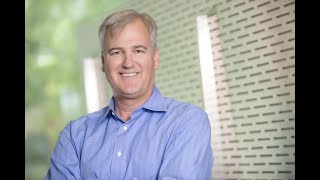
Robert Plenge, BMS's chief research officer, explains how the company picks drug targets using genetics and patient data, then matches them to the right drug type. He discusses the Karuna acquisition for schizophrenia, CAR-T manufacturing challenges, and next-generation antibody-drug conjugates designed to improve safety and efficacy.
Chapters
This is the BioCentury Show. Brought to you by the 24th BioEquity Europe, scheduled for May 2024 in San Sebastian, Spain. Join BioCentury, EBD Group, and regional host committee chair Isios Capital for biotech's premier CEO and investor conference. In one of the culinary capitals of the world.
Hello and welcome to the BioCentury Show. I am Simone Fishburne, editor-in-chief at BioCentury. I am joined today by Robert Plenge, executive vice president, chief research officer, and head of research at Bristol Myers Squibb. Those of you who know Dr. Plenge know him as a thought leader in the industry, In particular, in discovery research, which he's written a lot about in his blog, Plunge Gen. He joined BMS as part of the acquisition of Celgene in November 2018, and prior to that was VP and head of translational medicine at Merck. So now BMS finds itself, like many of its pharma peers, facing a patent cliff and needing to bring assets in as well as grow them in-house. So we're going to get into some of those deals and the science behind them in this conversation because that's really where, Robert, you sit. You've been the chief research officer in that role, as far as I can see, for almost a year now. And the way it seems in our conversations is that in that role, you are really merging the strategic need to deploy, develop a discovery engine with your deep interest in the science. I think that's just— there's no hiding that, right? Now, I want to start with this. You have talked about a framework for increasing probability of success in translation. So I want to start with that and then dig into some of the specific ways that this framework plays out in recent decisions by BMS and in the way you think about it going forward. Talk about your framework. Great.
Well, first of all, thank you very much for having me. It's a real honor. So as you say, we've tried to put together a research framework for how to think about really delivering transformational medicines to patients. And I always like to say it always starts with the patient. As someone who used to practice clinical medicine, that's a really important part of how we approach R&D at BMS. And so the framework really focuses on this inflection point of probability of success in clinical development. And I think that's a key feature of having a productive R&D engine. And while there are a lot of different ways in which you could think about probability of success and how to improve upon it, I think there are 3 key elements that we spend a lot of time on. The first is this concept of picking the right targets based upon human insights. And we refer to this as causal human biology. The second is once Once these targets have been identified, to find the right therapeutic modality that's matched to a molecular mechanism of action. And so we shorten that to be matching modality to mechanism because the other is quite a mouthful. And then finally, how to bridge research and development. And so there's a very clear path to testing these therapeutic hypotheses in development so that you know if your medicine is working the way it's intended to work. So those are the three elements. Causal biology, matching modality mechanism, path to clinical proof of concept.
Well, let's start with spending a little bit of time on the first one, which is picking the right target. And I want to talk about this idea of causal biology. So if you were to explain causal biology, everybody would say, well, of course I want to do that. I mean, who wouldn't want to have the cause behind their, their medic— you know, their therapy or their approach? So maybe you can dig a little deeper And to shed some light on what are the approaches that distinguish that strategy and that really yield the best advances that differentiate one company or one program from another.
So I think a lot of people say human biology, and then they'll say, well, gene expression data, that's human biology, or an observation of a target that's expressed in different ways at the protein level or an RNA level. And that certainly is human biology., but it doesn't distinguish between a cause and a consequence. And so I think the causal piece is incredibly important, um, because that's ultimately what you want to do to intervene on a disease process. And so the simplest way I like to think about this is causal human biology is having an understanding that perturbing a target will have a desired effect on human physiology that's relevant for drug research and development. And so I think a really good example of this is human genetics, and we can certainly talk more about that. But human genetics isn't the only way to establish causal human biology. There are other examples in the case of autoimmune diseases, for example, autoantibodies, or I think, you know, really elegant ways to follow patients over time. So longitudinal profiling over time can also establish causal human biology. And then finally, I think pharmacology is one of the simplest ways of establishing causal human biology.. But the challenge with pharmacology alone is often you don't have necessarily novel insights into novel targets. But that's a simple definition of causal human biology.
So you went to pharmacology. That's my background, so I'm going to lean into that one. And I want you to help us map that idea onto the Karuna acquisition. So just for background, Bristol spent $14 billion on acquiring Karuna with a very interesting therapy CAR-T for schizophrenia. That therapeutic area has been, let's call it difficult to say the least. And I don't think actually many people had BMS on their bingo card for that deal because you didn't have that much in the clinic in neuroscience in that area. So can you map that molecule and mechanism onto the causal biology paradigm for us?
Yeah, so that's actually a great example. So in the 1990s, There was a study of a medication, xanomeline, in Alzheimer's disease. And the intention at the time was to improve cognition in patients with Alzheimer's disease. But many patients with Alzheimer's also have neuropsychiatric symptoms, agitation, and psychosis. And what was observed in these early studies was an improvement in the neuropsychiatric symptoms. Unfortunately, that came with side effects because these muscarinic M1 and M4 agonists acted not only inside of the brain in the central nervous system, but also in the periphery. So while there was an improvement in neuropsychiatric symptoms, it came with adverse effects in the periphery. So you fast forward, you know, 20 years, and the causal human biology in this case was from the clinical trial was anomeline. But the modifications then that Karuna made to the molecule was to have a peripherally acting antagonist to prevent the side effects while allowing the brain— the medicine to get into the brain to have the central acting effects, which could improve psychiatric features. And the lead indication is in schizophrenia. And then a follow-on indication will be in Alzheimer's disease psychosis and agitation. And a PDUFA date for this medicine is later on this year.
Well, I'll come back to the Alzheimer's later. And I just want to emphasize that it's two molecules in there. Right? It's a combination of two when you sort of say you've got the agonism here and then the peripheral antagonism. And I think that for me, okay, apart from the fact that, you know, I told you this before, I'm a dopamine receptor person. So muscarinic receptors, they're close to my heart and there's a certain elegance in this. But I do think it's important because I think it's important to emphasize that causal biology isn't exclusively about the genetic approach that you talked about. This is not really a genetic medicine. In fact, this is classical pharmacology and just, of classical molecular pharmacology, if you like, and sort of a rigorous sort of approach to breaking down the biology in there. Let's just say for one minute in that arena, because I think that people, especially those who might be wanting to approach Bristol Myers Squibb for a partnership or for something like that, will be very interested to know what your view is right now and your interest in neuroscience and if that's an area that you're gonna be going early earlier into an expanding. Just tell us a little bit about that.
Yeah, so it was probably 7 or 8 years ago now at Celgene at the time, we really came up with a pretty unique model to think about neurodegeneration and doing it not necessarily in-house, but having really good expertise in-house, but then partnering with small biotech companies and several of them to build a pipeline. Fast forward to where we are today, and we now have 4 molecules skills that are in clinical development that have emerged from those programs and those partnerships. But they're primarily focused on neurodegeneration—Alzheimer's, ALS, Parkinson's—and those programs. And one of, I think, the most interesting ones is our anti-Tau program for Alzheimer's disease. But those are just now in Phase 1 and Phase 2 clinical development. And so while we're really excited about those programs, we wanted to think about a way to really accelerate our reentry into neuroscience. And I say reentry because Bristol-Myers Squibb has a history of being in neuropsychiatry with Abilify as an example. And so through CAR XT and the Crohn acquisition, we now are able to accelerate our reentry into neuroscience via schizophrenia if the medicine is approved later on this year, but then to follow on to that with Alzheimer's disease psychosis and agitation as another example for a patient population that could benefit from this medicine.
So that's an area you expect to grow in and to add assets in? Yeah, exactly.
And so if you think about a broader model of neurodegeneration, and again, I'll focus on Alzheimer's just to pick one example, but you can think about abnormal protein aggregation, whether it's amyloid or tau, that then leads to an inflammatory response. And certainly human genetics points to both protein aggregation and inflammation as being important in pathogenesis. But then with those proteins that aggregate with inflammation, you now have neuronal dysregulation and also neuronal death, and that leads to the symptoms of cognitive decline and then also the neuropsychiatric features. So the medicines that I introduced at the beginning, anti-Tau, for example, that should be a disease-modifying agent that actually prevents neuronal death. We have programs that are anti-inflammatories as well, but CAR-Xt actually fits into this model because it's really some of the downstream effects of neuropsychiatric pediatric features like Alzheimer's disease, agitation, and psychosis that could also benefit patients. And I think up to about half of patients with Alzheimer's will suffer from those consequences.
And we'll go to another topic in a minute, but just to call out, we actually wrote a piece. My colleague Selena Coates wrote a piece about a move that we don't really have to separate so much symptomatic relief in Alzheimer's from causality or from the long-term disease modifying. And so it's going to be very interesting to see how that shakes out. But I want to stay just— we're going to break in a minute, but I do want to stay one more question in the sort of picking the right target category. And we talk— we in biotech, I mean, talk a lot about first in class and best in class. Obviously, if you ask me, if you don't have one or the other, then it's really hard to articulate a benefit. But I can't tell you how many companies tell us they have a first-in-class asset. We're like, well, do you really? You know, so maybe, you know, maybe you can tell us how you look and define first-in-class and how you weigh it up. It's quite hard to know early in research if you're going to be first-in-class all the way along. So what are you really looking for in terms of comparing with the competitive landscape?
Yeah, so I, we always try to start, and I know I said this at the beginning, but really try to start with the unmet medical need and focusing on the patients. And I think that goes, I think, without saying. But if we go back to that research framework of causal human biology, matching modality to mechanism, and path to clinical proof of concept, I think you can think about best in class and first in class based upon those first two. So is the target completely novel? And is the modality novel against that target? That's clearly a first in class medication. But I would also say that if you have a target, even if there's another way to modulate or perturb that target, but you have an entirely new modality against that target, I would say that that's also a first-in-class medication, as long as it's really a different way of perturbing a target. So you can think about an enzymatic inhibitor versus something that degrades the target of interest. I would say that that would be a first-in-class as a protein degrader, as an example. So I think that causative biology matching modality to mechanism framework can help you distinguish between first-in-class versus best-in-class. And, and one other thing, I mean, for us to think about a best-in-class molecule, it has to be a really, really differentiated feature to make it a best-in-class. I think sometimes people will say, well, a little bit better selectivity or a little bit better potency, that's going to lead to a best-in-class molecule. And while, you know, I think that that is factually correct. Like, we really try to think of best-in-class as something that's truly differentiating, that's really going to make a difference in the lives of patients.
All right, well, that was, that was very helpful. So we're going to take a short break, and when we come back, we'll talk about modalities and the path to clinic.
Great. For more than 20 years, BioEquity Europe has been where CEOs and investors gather to network, partner, and debate critical issues facing the biotech industry. In 2024, BioEquity heads to San San Sebastian, Spain, in Basque Country, May 12th to 14th. Join BioCentury, EBD Group, and regional host committee chair ESEO Capital in one of the world's culinary capitals for a destination event designed for CEOs, investors, and decision makers across the global biopharma ecosystem. In 2023, 300 VCs and 330 biotech CEOs joined BioEquity in Dublin, Ireland. In San Sebastian, the program will feature more than 100 emerging biotechs that will present their story to investors and potential partners. Don't wait, last year's Bioequity Conference sold out. Visit bioequityeurope.com for more information.
We are back at the BioCentury Show with Robert Plenge of BMS. Robert, let's talk about matching modality, right? The second part of your framework. Now, As I pointed out in the introduction, you came from Celgene. You've obviously been at the heart of CAR-T therapies, and now you're actually also involved in solving some of the issues that have arisen in that first generation. And I want to talk first about manufacturing strategies and rapid manufacturing and tell me how this is relevant and why it's so important for this modality.
Well, let me just start by giving an example with CAR-T to kind of just provide context. So we We have two approved products in lymphoma and multiple myeloma. And when a patient comes in, you draw cells from a patient, you then take them into the laboratory, you engineer them to have the features to recognize the cancer cells and kill the cancer cells, and then you actually give them back. And so there's a period of time from when the patient is aphaerese, the cells are taken from the patients, to when they're engineered and then given back to the patient. The longer that duration, the more chance there is for a patient not to benefit from the treatment. So the first thing that we want to do with manufacturing is to really shorten the turnaround time. The second thing that's really important about manufacturing is to make sure that the medicine that's actually given back to the patient is within specification. And sometimes if something begins to deviate while it's actually being cultured in the lab, you can get what's called these out of specs. And so another important part manufacturing is to make sure that the medicine that's given back remains within spec. And then finally, I need to think about just the general safety and efficacy profile of the cells that are given back to the patient. And so those three parts of manufacturing, I think, are really important. The turnaround time, minimizing out-of-spec rates, and ensuring that the living cells that are given back to the patient are going to have the right efficacy and safety profile to benefit the patient. And again, those are examples in lymphoma. Lymphoma and myeloma, but the same thing is true for other indications like autoimmune diseases.
We'll come to autoimmune in a moment. But my understanding is that even though the premise, as you've written, is let's call it a safety one, I mean, you obviously want as short a time as possible that the patient is between the apheresis and receiving them. You want to have as healthy cells as possible. But on top of that, what you actually end up with is an efficacy advantage so that you are Tell us a little bit about— you're actually turbocharging in a way the efficacy by going in with healthier cells to start with that then expand in vivo. Is that correct?
That's absolutely correct. And so there's a ratio of different types of cells, CD4, CD8, the maturity of those cells, whether they're naive cells, they're more mature cells, and different kind of ratios will actually have a difference on the ability of these engineered cells to go back into the body, find and kill tumor cells. And I think we're really fortunate at BMS to have a lot of translational data that we can actually learn from so that when we go back to make the next generation of cell therapies, we can learn from the current generation to make sure we have the optimal ratios of the features that I just described.
So let's talk a little bit about CAR-Ts and autoimmunity, which I know is very close to your heart. And I have to tell you, Robert, I think about this from two different ways. On the one hand, I think that, you know, and you've obviously been in that field for a very long time where they, you know, the premise was in oncology. And so on the one hand, I think that it's so obvious that how did it take this long? But I sometimes also look at it and go, my gosh, this is so risky because, you know, autoimmune is so different than oncology and the stakes are so different. So tell us about the path to that and how you see this whether you see this as a game changer or sort of an experiment.
Yeah. So I'll start with I definitely think it's a game changer. Let me, let me tell you why. And again, I'll start from the perspective of the patient. So I used to practice clinical rheumatology and I would see patients with severe refractory autoimmune diseases, including lupus. And the patient journey would inevitably go something like this where a patient would come in and they say, I don't know what's going on. We'd establish a diagnosis. There'd be a sense of relief. Then the patient would ask, well, are there therapies involved that can help me treat my symptoms? And I would say yes, that there are. There was also a sense of relief, but inevitably the conversation would lead to, well, now that I'm— my symptoms are under control, like, when do I stop this medicine? When do I come off this therapy? And the answer was never. These are medicines that treat symptoms but don't lead to functional cures of the disease. And because many of these patients are Young, often female, childbearing age. I mean, imagine going on an immunosuppressive medicine for the rest of your life. I mean, it changes how you think about your entire life. So when we think about CAR-T in the setting of autoimmune diseases, this has the potential to totally change that paradigm, to lead to functional cures for patients so that, going back to that patient, there may be a similar journey where You establish the diagnosis, you say that there are treatments, and then you have this third option where you say, and we believe we can achieve a functional cure. So I think just from that perspective, it really does have the potential to be game-changing. But as you say, there are complexities with the therapy as well, which we can talk about.
So tell us a little bit then about that. We have a few more minutes, but tell us a little bit about those complexities. Because I think one thing to point out is that very often by the time a patient is getting a CAR T therapy, it is a matter of life or death. It's not, and the risk paradigm is different. What you've just outlined for the autoimmune scenario or setting often isn't quite so dire, but maybe you'll expand on that. And so I wonder whether it's sort of a maturation of the field that you have to be more confident— in the safety primarily of CAR-Ts. Talk us through that.
Well, I think the patients that are being treated today have failed just about every other, every possible therapy. In autoimmunity. In autoimmunity and specifically in lupus. And they often have end organ damage, whether it's the heart, the kidneys and the lungs, et cetera. So I think that these are very severe refractory patients. But I think that the challenge is that currently patients have to actually have chemotherapy lymphodepletion, followed by the infusion of a living cell, which sometimes can lead to an inflammatory reaction at the time of the infusion. And then there's a period of time where they have to be followed and weaned off of the other immunosuppressives, including steroids. So it's a very involved process today, but I think the way I like to think about it is it tells us that functional cures are possible. And now what we can do is, assuming that we continue to replicate the results that have been observed in some of the academic studies, if we can really have functional cures, now you begin to take away the lymphodepletion. You may lower the number of cells that are actually given back. Maybe there are other ways through not just autologous cell therapy, but allogeneic cell therapy, or there are other ways in which you could actually perturb the same axis. And so if we show that it's possible and then work to easier to administer or safer medications while still achieving the same desired result of a functional cure, that I think is the path over the next several years.
Well, that's going to be very interesting to watch. One more question while we stay in this modality area, because I don't think that in today's environment in biotech we can have a conversation without discussing ADCs, antibody drug conjugates. So this area is exploding. These are expanding to merge modalities, adding targeted protein degraders as the payload, using immune modulators and more. Tell us how you're looking at this field and whether you actually think this modality sort of can become mainstream, a dominant way of thinking about the disease, even first line. How are you looking at this sort of what people are calling Cambrian explosion?
Yeah, well, let me kind of provide a framework for how I think about cancer. So I think there are tumor intrinsic mechanisms, oncogenic drivers, cancer vulnerabilities, lineage-specific markers that will mark tumor cells. And then there are tumor extrinsic mechanisms, immune cells, tumor microenvironment. And then I think importantly, it's the relationship between the two that ultimately I think drives cancer, but also gives a foundation for how to treat those cancers. So in the case of ADCs, what we're really going after are those lineage-specific markers that basically says, that says this is a cancer cell. And very often those are lineage-specific markers that are on the outside of a cancer cell, but they can also be lineage-specific markers inside of a cancer cell. So once those are identified, then, and that's, by the way, that's the causal human biology. Right, of course. Marker for a cancer cell. Then you say, okay, how do we actually attack that particular marker to kill that cancer cell? And there are a number of different ways in which you can actually do it. And the way that you're referring to with antibody drug conjugates or ADCs is to say, all right, let's find a molecule that can bind to that lineage-specific marker and somehow deliver a cytotoxic payload to kill the cell. Topoisomerase I is one of the active cytotoxic payloads that's being given today. But as you say, there are other ways to deliver cytotoxic payloads. And I think in an area that we're particularly excited about is to deliver molecules that can lead to targeted protein degradation that can kill cells in a different different and potentially a safer way compared to some of the other cytotoxic payloads that are available today. But then, as you say, you can imagine expanding beyond just the ability to deliver cytotoxic payloads to potentially delivering other types of payloads that will stimulate the immune response or potentially even induce neoantigens inside of a cell. So the ADC is simply a framework to deliver cargo to tumor cells to allow this tumor intrinsic and extrinsic mechanism to play play out to hopefully benefit patients.
But it does seem to me that with the sort of next generation of ADCs, which itself is a next generation of antibodies, what's happening is that you're able to both tune greater efficacy and tune greater safety. So you sort of have a force multiplier to improve that therapeutic window.
Is that a fair way to look at this? Well, I think it is. I mean, I think you can you get a level of specificity from the antibody that binds to the antigen that's specific to the tumor, that is the lineage-specific tumor marker, but you can add a level, I think, of specificity with whatever that payload is.
So cytokine— For example, with the targeted protein degradation, you're adding another level of specificity, right?
Yeah, exactly. So I think there are a couple of different ways in which you can actually engineer these antibody-drug conjugates to get better efficacy and potentially better safety. And then, as I also said, there are other kind of clever ways to actually engineer these ADCs to not just kill cells, but allow the immune system to work more effectively, introduce neoantigens, or there are a few other sort of tricks that we're thinking about also.
Well, we're going to continue to watch this space. We have some interesting things coming out about that soon. I do want to end by talking about this clear line of sight to clinical proof of concept. Now, maybe you'll talk about what this means at a practical level? Because I have to come back to you with what you've talked about earlier, which is, for example, Alzheimer's disease. You've got studies in schizophrenia. To me, these seem like not very clear lines of sight to very simple POC. They're very complex. So talk us through that and how it's going to unfold.
Yeah, so I think it's a great example. So if you really believe in the biology of the target and say, in the case of muscarinic receptors, M1, M4 organism, and you say— that's the Karuna molecule, just to remind everyone. Yeah. And so if you say, all right, this is the causal human biology, now we have a molecule that we know in our preclinical models agonizes those targets, then what you want to do in terms of a path to clinical proof of concept is really showing— and this could be in the periphery in addition to kind of central acting mechanisms— the ability to bind to and engage the target and have a pharmacodynamic effect at the level that you think is sufficient to recapitulate the causal human biology, and then showing that the molecule works in that way. Now you can begin to layer on not just the biomarker pharmacodynamic effects, but what are the clinical benefits as well. And now you can say, all right, in a short-term study, for example, seeing benefits on psychosis or agitation, then now you have basically an inflection point You have a molecule that works exactly as you want it to work based upon your preclinical models. You're showing that it's behaving in humans in a way that you think is beneficial. And in this case, having a short-term clinical outcome study, now you're in a place where you can expand it to have a longer duration study. And that's when the studies get, of course, very expensive for registrational phase 3 studies.
Well, this has been a fascinating conversation, Robert. I know that we could talk more. I know that we will talk more.
So thank you very much indeed. Okay, well, thank you very much for having me. It's a pleasure to be here, and I look forward to chatting again soon.
Thanks. Brought to you by the 24th BioEquity Europe, scheduled for May 2024 in San Sebastian, Spain. Join BioCentury, EBD Group, and regional host committee chair ECO Capital for biotech's premier CEO and Investor Conference in one of the culinary capitals of the world.
More from Joshua







Scientist Stories: Hans Waterham, The value of phenotypic assays in peroxisomal disorders




Scientist Stories: Joel Zlotogora, Genetic carrier screening programs for reproductive purposes