Founder Stories: Roger Perlmutter, CEO of Eikon Therapeutics & former president of Merck Research
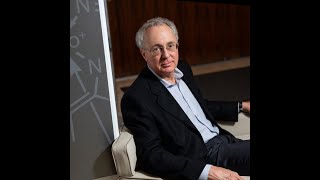
In this keynote, Roger Perlmutter reflects on the evolution of cancer treatment, beginning with the historical concept of immune surveillance and moving through the breakthrough of checkpoint inhibitors, especially PD‑1 blockade with pembrolizumab, highlighting its dramatic clinical responses across many tumor types and its limitations in non‑responding patients. He then shifts to chemical biology, describing how Merck’s enzyme‑engineering platform was leveraged to create diverse STING agonists via multi‑enzyme biocatalytic cascades, culminating in the potent clinical candidate MK‑1454 and its synergistic effect with PD‑1 blockade in pre‑clinical models. Perlmutter expands the discussion to broader biocatalytic innovations—macrocycle libraries, anti‑HIV nucleotides, and the rapid synthesis of complex molecules—illustrating how enzyme‑driven synthesis accelerates drug discovery. Finally, he offers a forward‑looking vision: single‑cell atlases revealing new cell types, high‑resolution neuronal connectivity maps, the potential infectious‑inflammatory basis of neuropsychiatric disease, and wearable diagnostics that could transform treatment. Throughout, he weaves personal anecdotes, historical milestones, and quantitative clinical data to argue that integrated biology, chemistry, and technology will reshape therapeutics.
Chapters
Thank you, Nitin, and thank you, Lee, for organizing this fantastic program and giving me the privilege to speak. Recognizing that I'm batting cleanup for the first hour of my presentation, I intend to explore— no, I won't do that to you. What I'm going to do actually is I'm going to speak about 3 things. I'm going to begin by ruminating about the cancer problem, which we've referred to many times today, various speakers. I'm going to tell you about recent progress in one particular area of immunotherapy directed against cancer. And I'm going to tell you about how that leads us to the question which Irv posed as to what's wrong with those people who don't respond and why that's important. And that will take me very quickly into work that was introduced most recently by Mike, but also introduced by Jim, which is how we can use chemical methods to begin to explore biology in a much more fundamental way. And that, of course, leads to a variety of predictions about the future. I should say that I actually first encountered Lee through his writing. And it goes back to actually searching libraries, but that was in the days when there really were libraries. Some of you remember that. And in the early 1970s, Lee was thinking a lot about multigene families and evolution. And somehow an unpublished draft of a review article that later appeared in Annual Reviews had ended up in our library stacks at Reed College. And I encountered it, and I read that article, and I thought, This guy is really smart. I mean, that is really smart. And because he was stitching together some important ideas about how it was possible to actually evolve multicellular organisms and to see the range of functions which we could already appreciate, even though, of course, we had no idea about genome organization at the time. And I kept that in mind later when I was in graduate school and had the opportunity to meet Lee at then what were called antibody workshops. And what I learned from Lee thereafter and after working with him and all the years that we've known each other, Lee often talks about having devoted his career on the one hand to instrumentation, but always in service of biology and this virtuous circle of hypotheses driving the need to develop new technologies, which in turn drive biology. And I often use those slides because they are brilliant. But there's another piece to it, and that is that Lee recognized that with respect to data, quantity has a quality all its own, that the scale factor enabled you to derive enormous insights into biological processes. We've heard some of that today, and you'll hear a great deal more about it in just a second. So if we think about immune surveillance, my starting point for this actually goes back to a similar time. This is a photo of the COVID of Time magazine from 1972— 1973, actually— when I was a college student. And Bob Good was then the head of Sloan-Kettering Cancer Center. Some of you had an opportunity to meet him, interact with him. I certainly did. And he was quoted in this article. It was derived from— his prior experience interacting with Macfarlane Burnett at Walter and Eliza Hall, and actually Lewis Thomas, of all people, the great raconteur, storyteller, and author in biology, who thought together, ruminated, that there is something important about what Medawar had discovered in transplantation immunity. The fact that if you actually looked on it, gee, how is it that skin grafts are rejected? And what is the genetics of this process? The fact that there were genes that were— and really one major locus, as it turned out— that were involved in controlling transplantation suggested, because transplantation was not something that you would ordinarily encounter in the wild. Organisms didn't have to defend themselves against an artificial appendage being transplanted or sharing skin. That that had to do something. And the primacy of that, that transplantation immunity defined something extraordinary that had to play a, quote, a major role in the body economy. That was the phrase that was quoted by Bob Good in a paper in PNAS in 1972. Good, then the head of Sloan Kettering in '73, said, I've never seen a cancer patient who didn't have some immunological defect. And as a student, I said, that is the silliest thing I've ever heard. Cancer, after all, is a common disease. And they can't all have immunological defects. And by the way, the people who do have bona fide immunological defects, meaning those individuals who had, for example, DiGeorge syndrome, which Bob Good had been instrumental in characterizing, they don't develop lung cancer. They don't develop solid tumors. They do develop immunologic malignancies, about which more later. So I kind of dismissed this whole area. Of immune surveillance? Eh. Turns out there's something important there. So at any rate, what we know now after many years of investigation is that there exists a set of activating and inhibitory receptors other than the antigen receptor on T lymphocytes, and they're pretty important. And Jim Allison championed the idea that CTLA-4 in particular was a negative regulator of lymphocyte activation, which could be demonstrated, for example, in a mixed lymphocyte reaction. And if you made an antibody against CTLA-4, you could improve activation of cells directed against a tumor. As it turned out, while CTLA-4 was effective, PD-1 turned out to be much more effective. One can argue about which laboratory originally defined PD-1 and its ligand. But as you know, Allison and Tasuko Honjo received the Nobel Prize this year for the discovery that these checkpoint inhibitors could have a major effect on cancer biology. The first thing I want to tell you is how big an effect that is. So if you look at an antibody directed against PD-1— and in this case, I'm going to show you data from pembrolizumab, which is a Merck antibody, but I could show you data also from nivolumab, which is a similar antibody from Bristol-Myers. If you look at that, this is from the initial studies that were done with pembrolizumab. Osimab when I first arrived at Merck on my second tour of duty there in 1973. And this is actually paired images from Tony Rebus at UCLA, a patient who he saw. And he was using our antibody. And this is an axial CT scan, which you can see with contrast. For those of you who are not clinically trained or haven't looked at CTs in a long time, on the left-hand side, this is a an axial cut which is somewhat below the level of the aortic arch. You can see the ascending and descending aorta, and there's a pretty large mass there that is in the left lung and in the mediastinum. And there's also a lot of extra density at the base, which probably represents malignant pleural effusion. And in this individual who's 72 years old, who had disease that had progressed despite therapy—chemotherapy, high-dose IL-2, and ipilimumab, the CTLA-4-directed antibody—administration of pembrolizumab caused that tumor essentially to go away. And that individual is still alive. The image you should have in your mind, of course, is former President Jimmy Carter, who, at a little bit older than Lee's age, developed a metastatic melanoma, widely metastatic—lung, liver, central nervous system—was given only a few months, as would be typical in such settings, received pembrolizumab, and is still active today and free of disease as near as one can tell. That is a remarkable thing. And time and again, the characteristics that we see in treating patients with pembrolizumab are that, first of all, very large tumor masses disappear very quickly. Tumor masses representing, you know, hundreds of grams, kilograms disappear very quickly and, and with surprisingly little consequence compared to other kinds of tumor lysis syndromes that people are perhaps familiar with. So that's sort of interesting in terms of thinking about how the death process proceeds. There are very— there are meaningful adverse experiences associated with pembrolizumab use. This is not by any means a risk-free therapy. What pembrolizumab does is it reveals the pre-existing immunity directed against the tumor. We're not priming new immunity, it's already there. And that means if you have pre-existing immunity, as many people do, to their thyroid glands then you're going to see that toxicity. And hypothyroidism occurs typically in about 8% of patients. You'll also see colitis in a lower percent of patients, much lower, rare cases of pneumonitis, particularly in individuals who've received radiation therapy. In some cases, those can be fatal. So you only want to administer a therapy like this in a desperate situation or a situation in which you feel like you're going to get sufficient benefit to make it worthwhile. So it's a meaningful therapy. It causes rapid tumor regression. And it does so in a very durable way. And the other thing to point out is that it works in such a broad range of tumors. So we're nearly done with the monotherapy part of the clinical studies that we've been doing. And just to give you a feel for it, right now if you look at clinicaltrials.gov, there are about 900 studies on clinicaltrials.gov with pembrolizumab, certainly the largest clinical trial experience that's ever been undertaken by any organization. At this point, the majority of those are combinations, as we'll talk about in just a minute. We're just about done with the monotherapy. And I'm showing you 24 different tumor types here. These are what are called waterfall plots. So that what you're looking at is each— there are a set of lines, and each representing individual patients. Where the tumor grows, the green line goes up. Where the tumor shrinks, it goes down. In some examples, for example, if you look over in the top far right, what you'll see is that for classic Hodgkin's lymphoma resistant to treatment, that's the second one over from the right, or a rare tumor, primary mediastinal B-cell lymphoma, gosh, you know, most of them have green going down. And in many cases, they, you know, they just seem to go away completely. Response rates are extraordinary. In classic Hodgkin lymphoma resistant to other therapy, 90% response rates, quite amazing. In other cases, response rates are really quite low. And one very, very rarely sees responses in, for example, pancreatic cancer or colorectal cancer, unfortunately, except in the rare circumstance where there are DNA repair defects that result in microsatellite instability. And in that case, responses are really quite high. People have leapt to the conclusion that what this means is that there are a lot of targets for immune recognition because of the instability of the genome leading to neoantigen expression. At this point, that is speculation. But it is an interesting observation. The important point to recognize is that this kind of therapy can be used in the salvage setting for people with very advanced disease. I talked about— classic Hodgkin lymphoma resistant to all therapies. But it can also be used in first-line therapy and, in fact, even in adjuvant therapy, as we and Bristol-Myers have demonstrated in the case of melanoma. So we move— we're moving up into the therapeutic environment. These therapies can be given earlier. And when they're given earlier, typically the responses are even more robust. So a lot of good news in all of that. Nevertheless, to take Irv's challenge, The reality is that there are an awful lot of tumors in which, while you get responses, the vast majority don't respond. So typical response rates for monotherapy in non-small cell lung cancer, the most common and most fatal tumor in most developed countries, in all developed countries and much of the rest of the world. Non-small cell lung cancer, you know, we can treat effectively, but the response rates for monotherapy are in the range of around 20-25%. On the other hand, the idea is that if we could combine pembrolizumab with other therapies, you know, things might go better. And indeed, that's the whole logic of what we and others have been pursuing. That is, we would like to bend the survival curve for patients with cancer. So you start out in this cartoon drawing as a representation of percent survival. We imagine that treating with chemotherapy provides some increment in time, but not much, and everyone never the less dies. If you can give immune manipulation, for example pembrolizumab, you actually can get a plateau. Because as I mentioned to you, these responses tend to be durable. Think Jimmy Carter. What we have recognized at this point is, you know, we had at the American Society for Clinical Oncology, we had the opportunity to review our 4- and 5-year data now for patients with widely disseminated malignant melanoma. Overall survival is over 40% in both of those cases. That's really quite extraordinary for what would previously have been typically a 6 to 8 month survival in patients with those kinds of diseases. But we don't think it's good enough. We'd like to see more people get to that plateau. And the hope is that combinations can do that. And we are pursuing many, many, many of these combinations. And I like to think there's some logic to what we're doing. On my good days, I believe that. But we're pursuing many of these combinations. And one of the things that we've recognized is that agents that tend to be pro-inflammatory— I'll use that in its broadest context— tend to improve responses to pembrolizumab. And that includes things like chemotherapy, which people think about, oh my gosh, you know, you're going to arrest T-cell proliferation. But the reality is chemotherapy is actually quite pro-inflammatory. If only because of the massive amount of cell death that takes place, both for the tumor and for other cells in the population. So here, for example, is the data for a combination of traditional chemotherapy, platinum-based chemotherapy, along with pemetrexed. So chemo— typical chemotherapy regimen, what was previously the standard of care for patients with non-small cell lung cancer. And what we've done is we've added pembrolizumab to that therapy. And what you're looking at is overall survival in a Kaplan-Meier kind of plot with the green on top showing what happens when you combine pembrolizumab with traditional therapy over a period of now looking at 21 months, although there's quite a lot of censoring between the 9 and 12 months, as you see. And it's quite dramatic. The hazard ratio here is below 0.5. That means you're twice as likely to survive if you get pembrolizumab. This was the basis of registration for the combination in the United States and also in Europe for, for this regimen. And that's really doing a lot to improve the treatment of non-small cell lung cancer. Colleagues of mine who are pulmonary oncologists have actually started opening clinics for patients with non-small cell lung cancer, which they never did in the past because nobody would ever live long enough to come back to a clinic. But now they have long-term survivors from patients who have stage 4 non-small cell lung cancer. So quite impressive. All right. So if we can use combinations like that, maybe we can do much better. And one way to do much better is to use antibodies directed against other inhibitory receptors or activating receptors. And you can be confident that we and many other companies are doing all of those studies. And clinical trials are underway. And there are other things that we could do that are inflammatory in nature. We can use cytokines. We can alter the cytokines. But I wanted to lead you now into a set of experiments done looking at a particular pathway, the STING pathway. And the reason to look at STING is it's a recently defined pathway that impinges upon inflammation, inflammatory regulation, and is based on the recognition of cytoplasmic DNA. As would occur, for example, when you have a viral infection. And so the Sting pathway turns out to be a useful one to explore. And it gives us together, you and me, an opportunity to think about chemical biology, which Mike was kind enough to introduce. So the basic logic here is Sting agonists at higher magnification. So Sting is an endoplasmic reticulum protein. It is stimulated by an unusual cyclic dinucleotide. And the cyclic dinucleotide is synthesized from ATP and GTP by an enzyme called cGAS. And cGAS binds to double-stranded DNA. And then it makes the cyclic dinucleotide which binds to Sting, the cytoplasmic piece of it sticking out of the endoplasmic reticulum. And on Sting binding, then there's a regulatory cascade that activates NF-kappaB. It activates the IRF3, interferon regulatory factor, which has been introduced in many different contexts during our discussion today, including by Ellen in the work from Tom Maniatis and Steve Harrison. So there's this inflammatory pathway. Actually, a lot of things happen as a result of Sting activation.. And it's interesting to look to see whether Sting activation can improve immune responsiveness. One of the reasons to think it might is because it appears to improve what's called cross-priming, a phenomenon that was originally defined by Mike Bevan and his colleagues, in which you can see that antigens that are engulfed are nevertheless presented on a Class I pathway, which is atypical. OK. So that's the reason to want to get them, and that makes us take a look at at Sting itself and how it binds to the cyclic dinucleotide. So it's a homodimer protein. It's located in the endoplasmic reticulum, and it exists in two conformations. And you're seeing here the binding process. It's interesting to look at because of the extraordinary movement of the two arms, 20 angstroms movement of the two arms of the Sting homodimer as it binds to the the cyclic dinucleotide. There are actually 3 human isoforms, but they bind very similarly to the cyclic dinucleotide. And the cyclic dinucleotide itself has a really very interesting characteristic, which I want to tell you about in just a minute. But we needed to get access to that cyclic dinucleotide. And to do that, we had to make use of some of the tools that Mike introduced us to. So about 20 years ago, Paul Reider, who is a brilliant synthetic organic chemist who was working with me at Merck— Paul Reider and I decided we wanted to use biotransformation, the engineering of enzymes, in order to begin to gain access to different chemical structures. And we started a group to do this, and it was an overnight success. Well, no, actually it wasn't. It took many, many years. But eventually, it actually turned out to be sort of useful in a process chemistry point of view. You know, process chemists are in the business of— they're engineers. And they're in the business of 10% cycle time improvement over and over and over again in order to drive down the cost of making drugs, for example. And I always say that fine chemistry reaches its apotheosis at Merck. But it really does in the process research organization. Because the phenomenon of clean sheet synthesis, where you take a sheet of paper and say, OK, well, here's the structure we're trying to get to. Now, trying to remember all of Bielstein, how do we actually get there? That phenomenon is something that's done within process chemistry in a spectacular way. And the question is, how to use enzymes to do it better? The initial success came in the manufacturing space with this engineered transaminase. Problem is how do you take a ketone and turn it into an amine and do so in this structure in a way that doesn't interfere with any other part of the, of the molecule. And this was done, this was published in 2010. It is the manufacturing process that is now used to make sitagliptin or Januvia, which is a DPP-4 inhibitor used to treat diabetes. It's the most commonly used one as about 70% of those patients who receive a DPP-4 inhibitor get this one. And we manufacture it just this way. And the reason we do this is because we no longer have to use toxic metal catalysts. We get a very high yield from this. And as a result, it won a Green Chemistry Award. And we do a lot of this kind of work of trying to re-engineer syntheses. And the basic idea is, OK, well, we'll start with an enzyme. That has some level of activity against a particular reaction, and then we will just introduce a bunch of mutations into that, sometimes with an idea in mind of what we want to do and very often without much idea in mind at all. But selection is merciless, and we can select for enzymes that do this even better. And as you all know, Frances Arnold at Caltech got the Nobel Prize this year in chemistry for this kind of approach. But we've been doing this for some time. So is she. And she works with us. And we do a lot. It's a pretty good story. And so we decided to take this kind of approach to look at the question of making this unusual cyclic dinucleotide, which you can see here. So the cyclic dinucleotide is synthesized by the C-Gas enzyme in a single step. And we were able to engineer the C-Gas enzyme to make this. The reality is that trying to gain access to this cyclic dinucleotide— remember, the reason we're doing this is because we're trying to make a better Sting agonist, something that would have pharmaceutical properties. The existing Sting agonist does not have pharmaceutical properties, but we wanted something that could be used orally, bioavailable, could be injected directly, for example, intratumorally, would persist for the right period of time, and was extremely potent. So how do we get such a compound? And you might think, well, okay, traditional medicinal chemistry, you go and start manipulating all these different structures. But it's not easy. As was commented on in the organic chemistry literature back in 2016, that libraries of differently modified analogs of a 2'-3' cyclic GAMP, which is what the STING agonist is, you know, are just about inaccessible with currently established chemical methods. And we thought that sounded like quite a lot of fun. And so we decided we would engineer that process. And basically what we've done is we've looked at every single part of the cyclic dinucleotide, and we've been able to identify more than 600 STING agonists. And we did it in a way that is quite unusual. If you look— and, you know, my chemists love to give me plots like this. This is a plot of all of the available cyclic dinucleotides made by everybody. And by us. And the red line is all the others and the green line is us. So you can see we made a lot of them. And it turns out a lot of them are really, really potent and very interesting as potential targets. And I'll only show you one piece of animal data in this case. So this is an animal model in which we are using a mouse syngeneic tumor model in mouse. And in the syngeneic tumor model, if we use PD-1 blockade, we can actually cause the tumor to be controlled, at least to some extent. The tumor is permitted to grow to some size, and then we use DX400, which is a pembrolizumab analog specifically for the mouse. If you use MK-1454, which is one of our better STING agonists and one that is currently in the clinic, you can get reduction in that, but the reduction is especially profound and occurs at lower doses if you use MK-54 in combination with pembrolizumab. Now, I should just tell you, everyone in drug discovery knows that animal models are very poorly predictive of efficacy in humans. That's true from mouse to human. It's even true from primate to human. It's certainly true from yeast to human. So you've got to be very careful about this. But It seems like a hypothesis worth testing, and we have tested this hypothesis, and the results are quite intriguing, and will be presented next week at the European Society for Medical Oncology. I'm not going to preempt that presentation, just to say that MK-1454 is an extremely interesting molecule that results from this elaboration of chemical biology. But I told you this not because I wanted to really talk about that, but rather because I wanted to say that this general approach to synthesize sting agonists is something that we have now elaborated to the broad set of reactions that we perform in our laboratories all the time. And we have miniaturized it in totality. For the sting agonists, classical synthesis takes 12 steps and occurs over weeks in order to generate new cyclic agonists. In this particular case, in a 3-step, 5-enzyme catalytic cascade, we can do the whole thing in a day. And we made all of those analogs in a matter of a few short weeks. So it's quite extraordinary how much diversity we can examine using these kinds of biocatalytic approaches. In some cases, we've been able to generate molecules using cascades. Here's an example where we generated a novel anti-HIV agent, which is also a a nucleotide. We generated this using engineered catalysts that built 3 different bonds and 3 stereogenic centers using readily available starting materials. So all starting from very small chemical structures to generate an extremely complex structure which otherwise is just about inaccessible. And as was pointed out by Mike, the reality is we now have access to hundreds of thousands of different enzyme sequences, and it's— these provide very good starting materials for us, not using them in cells as Mike was doing, but actually using them in cell-free systems where we can screen millions of different molecules where we've introduced changes. And that turns out to be an enormously productive approach. We've gone on from that working with colleagues at Peptidream and RAW to make cyclic, macrocyclic molecules that have really very unusual properties. And some of those, the general approach I've listed here. I've always been very interested in polyketides. There are a lot of polyketides that are made in yeast systems, for example, that are used, that have antifungal properties or antibacterial properties. And it always seemed to me that that would be a good thing for us to approach. For a variety of reasons, the set of them is quite limited. We now are able to make macrocycles of essentially unlimited different types. We have libraries that are in the billions. In the billions. And in many cases, these macrocycles, which we can now approach because it's extremely— by traditional chemical methods, it's very difficult to approach these kinds of structures because there are too many. Different pieces. But in this case, we can actually do quite a lot of modification of these structures. And it looks very, very exciting for novel targets. So in 50 years of progress, I think we can conclusively demonstrate that great drugs change the world. They just do. That includes, of course, childhood vaccines. It is unfortunate that there's a strong anti-vaccine movement that is preventing children from being vaccinated. But it is remarkable what vaccines have done. And we at Merck are responsible for a substantial fraction of those. Maurice Hilleman invented 40 vaccines all by himself and saved more lives as a single individual than any person who ever lived. Antibiotics, of course, which we talked about. Antihypertensives, which together with cholesterol-reducing agents have dramatically reduced the impact of cardiovascular disease. At a time when I began my training, the most common discharge diagnosis was rule out myocardial infarction. And we had big coronary care units. Guess what? You don't have that stuff anymore. Guess why? That's why. It's remarkable. And now with antineoplastic agents of greater power and with much better therapeutic indices, we have the ability to approach these diseases as well. And what I've told you, I think, gives you a sense of the future. Because I really did start 50 years ago and imagined what cancer therapy might be like based on the hypothesis that came from the ruminations that Bob Good had made. But in the future, I think we'll see even more dramatic advances. I think single-cell inventories will reveal very novel aspects of human physiology, and we're seeing that right now as we speak. It's an easy prediction to make. Just as an example, the identification of a novel cell in the gastrointestinal tract that feeds directly into the vagus. So when you say you had a gut reaction to something, you really did, right? Direct neuronal connectivity from the GI tract is quite extraordinary. Similarly, a new cell type, less than 1% of cells in the pulmonary tree, which is critical in regulating pulmonary function. How could you have found those if you didn't have the kinds of molecular tools that we have now? I think that we will see those kinds of things amplified dramatically. That a high-resolution map of human neuronal connectivity will be achieved in the next 50 years. That's quite a statement when you think about the trillion— well, more than a trillion connections that you need to look at. But right now, Jeff Lichtman at Harvard is in the process of looking at a cubic millimeter and inventorying every single connection, and it's going to go from there, and I think that's going to be a very dramatic thing because in terms of burden of disease, neuropsychiatric disease is the most profound. And while we think of neuropsychiatric disease as largely having a neuro— a developmental component, I think certainly Irv paid a lot of attention, as was recently reported in the popular press, to an individual who had developed frank psychosis and underwent bone marrow transplantation for an unrelated disease and had their psychotic disease disappear. Those kinds of anecdotal reports, and there are lots of them in other settings, suggest that ultimately many of these diseases will have an infectious inflammatory pathogenesis. And clearly wearable monitors endowed with much expanded capabilities are going to have a big impact, to the point that they behave more or less like scanners and can measure in a non-invasive way even metabolites through the nail bed, those kinds of things. The end result of those things will provide totally new therapies for neuropsychiatric disease. I'm convinced of it, and I'd love to play a part, although I suspect I probably won't live long enough. The assessment and intervention to prevent dementing illness is going to be profound and profoundly important. And we will come to understand it eventually. And these kinds of things will both enhance and complement— and complicate, rather— the fundamental economics of human civilizations, about which we can talk more in a few minutes. Thanks so much for your attention.
More from Joshua







Scientist Stories: Hans Waterham, The value of phenotypic assays in peroxisomal disorders




Scientist Stories: Joel Zlotogora, Genetic carrier screening programs for reproductive purposes