Founder Stories: Roy Vagelos, Biotech legend & former CEO of Merck
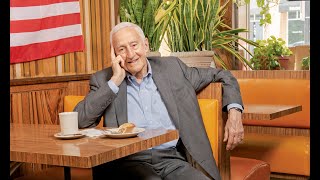
In this interview for the Journal of Clinical Investigation’s "Conversations with Giants in Medicine," host Ushma Neel talks with Roy Vagelos, a biochemist, physician, and former CEO of Merck. Vagelos recounts his early life as the son of Greek immigrants in New Jersey, his accidental path from chemistry to medical school, and his early clinical training that led to a NIH appointment during the doctor draft. He describes a pivotal encounter with neurologist criticism that sparked his interest in Munchausen syndrome, his sabbatical with Jacques Monod in Paris, and his move to Washington University where he launched a leading MD‑PhD program. Vagelos explains why he left academia for Merck in 1975, detailing how he reshaped drug discovery by focusing on molecular targets, leading to the development of the first statin, lovastatin (Mevacor), despite setbacks from rumors of tumorigenicity. He also narrates Merck’s groundbreaking donation program for ivermectin (Mectizan) to treat river blindness, the challenges of securing funding, and the eventual global impact. The conversation concludes with reflections on leadership, mentorship, and Vagelos’s belief that science would have been his inevitable vocation.
Chapters
Welcome to the Journal of Clinical Investigation series, Conversations with Giants in Medicine. I'm Ushma Neel. Today I have the distinct pleasure to speak with Roy Vagelos. Vagelos is a known authority on the biochemistry of lipids, physiology, and pharmacology, but he's best known for leading Merck Pharmaceutical Company for 20 years, first as president of research and then later as CEO and chairman of the board. In his over 20 years at Merck, he revolutionized the way that they approached drug targeting, introduced the first statins to market, and then led the way in pharmaceutical philanthropy by organizing the donation of ivermectin, the curative agent for river blindness, to any and all who need it for as long as it is needed. Thank you for joining me today, and I look forward to hearing a little bit about your path through science. Could you start by telling me a little bit about your upbringing and what you were like as a kid?
My upbringing was kind of unusual. I was born into an immigrant, a Greek immigrant family living in New Jersey, so my first language was Greek. As I grew up, I was not at all interested in education because I was more interested in fooling around. And only as I approached high school did I start hearing the drumbeat from my parents, and especially my dad, who felt that higher education was important if I was not going to be in the family business, which he did not want me to be, which was a small restaurant, luncheonette. And so he was very anxious that I be educated so I would get into some other profession. His dad was a physician, trained at the University of Athens in Greece, but then living on a small island in Asia Minor, which is where my dad and mother were both born and then raised. They immigrated. My dad immigrated first. My mother followed later, because he went back to an arranged marriage. They came back together, and then they had a family of 3. I grew up in New Jersey, North Jersey. Went to high school in Rahway, New Jersey. Of course, Rahway was at that time the headquarters of Merck, and most importantly, the location of their major research laboratory. We had a small restaurant in Rahway, and our major customers were Merck people. So, as a soda jerk, dishwasher, whatever, in a small luncheonette, I heard all the time about Merck. And specifically what was going on in research from scientists and engineers. And they were terrific people. They had great ideas. They loved what they were doing. They were passionate about their work. And I was infected by that. So when it came time for college, I spoke with a number of them. And they suggested I go into chemistry. By that time, doing well at school, actually. I did very well in high school and went to the University of Pennsylvania where I majored in chemistry. And so that was really the start of my career and the basis of my entire career because everything I did after that was anchored in chemistry and all the research I did, whether it be basic research, which I did at NIH, and at Washington University School of Medicine later was biochemistry. So that's how it all started.
So then from an interest in chemistry and biochemistry, what led you to medical school?
That was almost happenstance. And that is, I was finishing my second year at the university. And met with an advisor for the first time, actually. And he pointed out that because I had taken so many courses in science and a lot of labs, I had many credits and could actually graduate in the next year if I took a couple of courses in the summer. And because I was a scholarship student, and was rather concerned about expenditures at the time. I took them up on that and agreed to take a couple of courses in the summer. But then suddenly, I needed to decide whether I was going to do chemistry, which had been my idea in going to college. I thought about it. And then I— it became apparent that my background— my granddad was a physician. He must have been interested in what was going on in science, whatever science was known in the late 1880s. And at the last minute, decided I would go to medical school. Having done that, I realized I didn't have any a background for it. I had taken no biology courses. And so, I took my third year at Penn and took a couple of biology courses, just sneaked through, and went to medical school on that basis. I went to medical school with the idea that chemistry would be useful in understanding what was happening in medicine, both in understanding human biology and whatever was known about drugs.
But once you were there, you got a little bit more intrigued by the patient care aspect.
Yes. Yeah. It was amazing. Now, I take you back to 1950, and I shifted from the University of Pennsylvania where I was an undergrad to Columbia, mostly to change cities. There was no major reason for that. And I was initially concerned and had some difficulty because I have essentially no memory. I knew that for years because I could never memorize lines of poetry or anything else. So I function largely by feeling my way through things. Understanding, but no memory. And the first course you're exposed to is human anatomy in medical school. And I almost dropped out because I just could not do it. And went home at Christmas and considered not returning. But I returned and finished. But had a tough time with the memory courses. And then as we got into biochemistry and the other things, I finally got with it and was able to especially get turned on when I met with patients. And the patient care part of me was very much turned on at Columbia University. And I loved working with patients. And I thought that that would definitely be my career. Even though I did not use chemistry at that point, because there was very little chemistry that was used to understand even the drugs and how they worked. And so, I shifted and became a convert to patient care, which was magnified when I went to the Mass General Hospital as an intern in internal medicine. And that was a great experience because, again, shifting from New York to Boston and Columbia to Harvard gave me a new view of the way things are done. And I must say, I recommend that to students now. I found the practice of medicine, which of course we were practicing the same medicine, was, I would say, done in a much more individualistic way. There was no rote way of treating a patient with diabetes, diabetic acidosis. Different people followed different ways. They thought their way through, which fit my style anyway. And I loved being at the Mass General Hospital. That turned out to be, again, a turn-on in patient care. So, by the end of my 2 years, which I had to stop because of my having been deferred for the doctor's draft. And— but by the end of 2 years, I was absolutely sure that what I wanted to do was internal medicine and cardiology. I had become interested in cardiology. And so that was, again, a focus on patient care.
So you mentioned the doctor draft. So from the— well, you moved then from MGH to the NIH as part of the doctor draft?
Absolutely. I actually signed up for the Army. I was following what I was told to do. Then I was called by a friend who had gone to the NIH from the Mass General Hospital. And he called and said, why don't you come and visit? And first of all, I'd never been in a plane. And I had very little money. But by then, I was married. And my wife was making, I think, $3,000 a year, which was enough to support us. It's hard to believe, but that is the case. And so I flew to Washington, spent 2 days, I think, and visited largely the National Heart Institute. The name was different at that time, of course. It was only one organ. And I met Earl Stadtman, who was one of the probably 2 best-known biochemists at NIH at that time, and I had been steered to him by Paul Zanesnik, who was a biochemist MD at the Mass General Hospital. And when I met Earl— oh, the deal was that I would, at the National Heart Institute, to make up my 2 years of time for the government, I would spend half time taking care of patients and the other half time I would be able to do research, any kind of research, clinical research, basic research, whatever.
And this is where the association with Statman drew you down a more biochemical path.
Exactly. So meeting Earl was quite an experience. He was very soft-spoken. He was a PhD, had done his PhD at Berkeley with a very famous biochemist. And he talked about his research. Now, I had last taken biochemistry in my freshman year at Columbia. So it was quite a while. It was 5 years, 6 years prior to that. And so biochemistry was mushrooming at that point. And Earl was very, very soft-spoken, but as he spoke, he became very excited about his work. And his excitement caused me to get excited, even though I didn't really follow what he was saying. He was clearly working in areas that I'd heard about, knew a little about the beginning, But I didn't follow exactly where he was going. So I asked him a lot of questions. And by the end of that time, I said, look, I'd like to work in your lab. And he looked at me and said, you know, I've never worked with an MD. I said, well, I have never worked with a PhD. So why don't we give it a trial? He said, fine.
Usually in these interviews, I ask the MD subjects that I have if there was ever a patient that impressed them or that helped learn something, but from reading your book, Medicine, Science, and Merck, there was an anecdote in here that I'd actually like you to tell the audience about where, since you were there during the doctor draft and you were part of the Public Health Service, you were actually considered to be brought up to be court-martialed for insubordination, and this was over patient care. Can you tell me the story a little bit?
Yes, that was an interesting experience which I I've tried to forget. The incident was my coming in after a weekend in the National Heart Institute where my job was to take over the patients who had been admitted to the National Heart Institute over the weekend. This was Monday morning, and I walked in. And you have to remember that I'm a proud graduate of the Mass General Hospital, thinking I'm, you know, pretty well trained at that point. And I was handed a patient where I was told that the patient came in, a man, who was having a major problem with seizures. Seizures, pain in the chest. He was admitted with the idea that probable— some problem with his heart. Or potentially his nervous system, his brain, because he was having these major seizures and chest pain. And so I examined the patient and could not figure out what he had, but because I didn't find anything wrong with his heart and I didn't see anything in his lab work that would suggest what the diagnosis was, and so I wrote a note immediately after seeing the patient that as far as I could tell, the heart was okay. And everything I saw in his study of his head was also normal. But I was insecure, and so I asked for a consultation by one of the top neurologists in the National Institute of whatever it was. Yes, right, neurological diseases and blindness. And so sure enough, the top clinical guy in the institute came to visit with an entourage of people and examined the patient, looked at the X-ray of his skull, and pointed out that there was a problem there. And I looked, and I did not see what he was pointing to. And so, he then looked at the chart and looked at my note and said, you know, whoever wrote this note is not very good. Made some derogatory remarks, which really floored me, because I hadn't been used to that kind of treatment at the Mass General Hospital. So, when he left, you know, he felt that this man had a neurological problem as seen in this chart. Skull films. When he left, I wrote a note. I typed a note to him saying that I thought he was inappropriate in the way he had reacted to my examination of the patient and my opinion. And I said some other things I should not have said. Which were very unfortunate. But I was pretty much angered by this interaction, and so I determined to figure out what this patient had. And I was sure he didn't have heart disease because I was pretty good at that. I couldn't be sure about the other, but the significant thing, he was having grand mal seizures, what looked like grand mal seizures. He would bite his tongue in the evening and pee in the bed and ask and say he had pain. And the nurses would come to him and he said he needed morphine because that's what he was used to. They would deliver the morphine. So I set up to watch this. I set up in the doctor's quarters, but right opposite, I was sitting actually in the nurse's area in a place where I could watch through a crack. The door was left open just a little bit so I could watch him during the night. I noted that he would, well into the evening, start having his so-called seizures, writhing in the bed and peeing in the bed and biting his tongue and ask for morphine. I saw that for a couple of days, a couple of evenings, and then I made some calls to the city hospitals to see if anybody else had seen this guy. And sure enough, he was a known figure in the city hospital system. And they said, "Oh, you've got Charlie up there." And I said, "Charlie?" "Yeah." And they said, "Oh yeah, he's, you know, he does this kind of thing." And so, I confronted him and said, "Look, I know you're faking this stuff. I offered him some money to take a cab, and he got out of bed and he took a cab and went away. This neurologist had gone to the head of the National Heart Institute asking that I be court-martialed, and instead I had a— presentation to the clinical staff of Munchausen syndrome, which is these patients who pretend that they have some kind of medical— in order to get something out of it. It's usually drugs. At that era, it was drugs. And so, he disappeared, and I learned definitely not to write notes. Of that sort. But it was an experience that I was happy to get by. I was not court-martialed. In fact, I stayed at the National Institutes of Health. Instead of 2 years, I stayed for a long time.
But as part of your training, you did take a sabbatical to work with the famous Jacobin Monod. So what did you learn from that experience of living in Paris, both personally and professionally?
It was a very interesting experience because Mano was a person who had dreams in science. He was very broad and would take laboratory observations, research observations, and expand them into whole scenes. I wasn't used to that. So we worked together, and I learned, again, almost as an apprentice from Jacques, microbial genetics. And all the time I was in the lab, I was interacting with people who were developing essentially molecular biology. And he was then expounding, talking about the potential of understanding how genes are translated into proteins, and that was great. It was very exciting, and we had a wonderful time. But although I learned the microbial genetics, I was very anxious to get back to what I was doing because we were on the verge of understanding fatty acid biosynthesis. The work in my own lab to me was equally exciting and actually more exciting because things were about to break open. And so I was anxious to get back, and we returned to do a series of experiments then using microbial genetics, by the way, to some degree to figure out the entire pathway of fatty acid biosynthesis and how fats are regulated and all that stuff. That led to my work ultimately into complex lipids and some work in cholesterol. My career was helped enormously and broadened enormously by interacting with Jacques Monod.
In your book, you talk about how your family had the 5-year Vagelos plan. You had your medical school training, your clinical training, your time at NIH— because when you did return from France, you spent some time back at NIH. But then what motivated you to take the job at Washington University that you mentioned before as chair of their department of biochemistry?
Oh, yeah. Well, I had made the decision at NIH to become more and more involved in biochemistry because I pretty much pulled in by my own research and the excitement that was ongoing. And so my patient care had dropped enormously over the years from half time to very little time by the end of 10 years. And I was concerned that I had given up my relationship to real medicine.. And I thought going back to a medical school at that point would be useful from the point of view of returning to medicine. And Washington University was very attractive because the job I was moving into was that which had been held by Carl Cori, who obviously was a terrific biochemist and someone who really trained most of the senior biochemists in the United States. And so it was very flattering. It was a great medical school. And one of my— I would say one of my best postdocs was from St. Louis and who talked it up enormously, Phil Majerus, whom you might know. And he was going to go back there, and he urged me to accept this this job. And we did. And it was a wonderful move to go to a place like both Washington University and St. Louis because that was 1966 and things were just booming.
So what are you most proud of accomplishing during that time there?
Well, as a researcher and as a teacher, I had really a blossoming of my research. So much of the work that we did in lipids was carried out there, 9 years' worth. And on the teaching end, I was very, very anxious that people learn biochemistry. So I took a position that was largely focused on medical students and expanded it to more teaching of graduate students, and then even undergrads. And I really like interacting with undergraduates, which surprised me initially. But the perhaps two most lasting things that I did at Washington U is that I started the MD-PhD program, which turned out to be, I would say, one of the strongest ones in the US. Not because I started it, but because it was at Washington U and the kind of faculty that they have there.
Now I hear this interest and this passion for working with students, doing your research. So what motivated you then to even consider the job of going to Merck, which you did in 1975?
Yeah, that was, that was a dramatic change. There are a couple of things that were involved. One was that I knew Merck very well, and not only from my interaction with the scientists in our restaurant, but also I was an intern at Merck one summer between my first and second year at Columbia Medical School. The person whose laboratory I worked in had kept up with me over the years by just meeting me at scientific meetings. And that was, of course, 1951. So by the mid-'70s, I had seen him a number of times, and I was clearly a good biochemist. I was pretty well known at that time for my work. I was called and asked whether I would consider returning as head of research. And I said no. I had no interest in going into— I had never thought of going into industry. But at the same time, I was called by two major medical schools, Penn and the University of Chicago, and told that I was a top choice of their committee to become dean. That was very depressing for me because the idea of a deanship— I had known, I had of course observed the dean at Washington University, and that was not my cup of tea. The idea of not being in science at age 45 was abhorrent. And so I was deeply depressed by that idea. Then when approached by Merck, and they asked to visit. I visited the research labs, and what I found was exciting people who were interested in drug discovery, something I had never thought about. But what they were doing for drug discovery was using— they had live animals of various diseases, high blood pressure, infections, inflammation, which they would do some— set up a model of a human disease. And then the chemists would make chemicals which would be fed or injected into the animals. The chemists had no idea what the targets of what they were trying to treat. And I thought that was not optimal. And as a biochemist, I said, gee, as I thought about drugs and I looked back at the literature, I said, you know, there's no question that one could be more effective in drug discovery if one selected individual molecules, targets, molecular targets.
So you mentioned Al Alberts, and he was the main brains behind Mevacor, which you spend a lot of your book talking about, the first statin that was actually brought to market. Can you tell us a little bit about his role and your role in the sets, and then ultimately the triumph?
Sure. Well, Al, of course, is a terrific person. And as I said, he worked with me in biochemistry and all these places I'd been before. We'd published numerous papers together. And so in speaking with him, I didn't have to finish a line. He knew what we were talking about. We were very close personally as well. And so I suggested that one area that at that time was ripe was the area of cholesterol biosynthesis. Block, Conrad Block at Harvard and Theodore Leinen had just figured out the total synthesis of cholesterol, and its regulation was just being probed by Brown and Goldstein. And so it was a project that was ripe for a biochemical approach. So Al and I agreed that that would be one of our first things that we would work on, and he would run the project. The target was the HMG-CoA reductase enzyme, and it was known at that time— it was shown by a person in Lehnen's laboratory that that was the limiting reaction in cholesterol biosynthesis, a sequence of about 20 reactions where one reaction was rate-limiting and therefore possibly could be blocked and block the whole synthesis, reduce the amount of cholesterol that was formed in the body. Now, that was the time the cholesterol hypothesis That is, people had all kinds of evidence that high blood cholesterol could be related to heart attacks and coronary heart disease. It was a hypothesis. The knowledge of the pathway, the epidemiology which demonstrated such things as people in Japan had very low incidence of death from heart attacks. Attacks and very extremely low average blood cholesterol levels, whereas people in Finland had an incidence of death from heart attack that was 14 times higher than those in Japan, and their blood cholesterol levels were sky high. And so, and this relationship between blood cholesterol and and death from heart attack was a straight-line relationship across the globe. And so all that information was available, and so Al and the group started working in this area targeting HMG-CoA reductase, looking for an inhibitor. Just as we were starting up, of course, we heard of Endo's work in Japan and the discovery of compactin. Which was a natural product. And so Merck had lots of experience in natural product studies, and so that was going to be the approach, a natural product and a chemical, looking to find something that would block HMG-CoA reductase. And here, right at the beginning, we hear that we're already behind. But that wasn't so bad. I mean, that's research. You're always potentially behind a competitor, but you work to catch them. And so Al pushed on, and what we learned was that compactin did exactly what was predicted—blocked an enzyme reversibly. It was a competitive inhibitor of that enzyme. And in animals and then in humans, it reduced blood cholesterol. Of course, we didn't know at the time that it was having an indirect effect on the LDL receptors. We were just focused on what we were able to measure. And within a short time, Al came up with lovastatin, and lovastatin was able to do what Compactin did. It was a reversible inhibitor of HMG-CoA reductase. It was safe in animals, and we raced into the clinic. And we were very excited to see that not only Compactin but lovastatin looked like it was able to reduce cholesterol levels in humans. And it was very exciting, and it was a race.
But then unfortunately, a rumor derailed you for for a little while.
A rumor that was devastating. Here we were very excited about what we were doing, and suddenly we heard from Japan that the clinical studies of compactin had stopped. And they had been stopped with no reason given but a rumor that the compound caused tumors in animals. And that was a tremendous worry. I got on the phone, called the people at the company where Endo was working, which was Sankyo Company. And I talked— I told them that we were— we had an inhibitor that was also from natural products that was aimed at the same enzyme. And it is possible, I said, that all inhibitors of this enzyme could do whatever you saw. I said, what— can you tell us exactly what you're seeing? And they said no, it's an industry secret. And so we could get no information, but the possibility that compactin was in fact causing tumors and that our inhibitor could do a similar thing caused us to stop all clinical studies that day because we were not going to have put any humans to any risk of potentially getting cancer.
But then it was the NIH who begged you to be able to restart their clinical trials in very high-risk patients that put you back on the track, yes?
Yes, it was. Well, it was the NIH and the FDA who were concerned that there was a potential drug to lower blood cholesterol, they were still believers of the hypothesis. There were people dying because they thought they had high blood cholesterol, and here was a drug that could possibly change that. So they asked us to go back, but we lost 2 years on that basis. We went back to the clinic, and, and, but because of the concern, we went into high-risk patients. Patients who had high blood cholesterol but already had coronary heart disease. And all the studies with Mevacor, which was lovastatin, were done in such patients. But at the end of the studies, it was found that the drug reduced blood cholesterol, specifically LDL cholesterol, and was safe. And so 1987, the first statin in the world was introduced, and it was very exciting, of course.
Let me draw your attention to, or ask you to talk about, yet another one that you didn't even list on there, and that's ivermectin, which was originally developed by Merck as an antiparasitic for the agricultural and livestock realm. And one of your scientists discovered that it could potentially treat river blindness. And you pioneered the organization of the donation of ivermectin to anyone who might need it for as long as it was needed for free at Merck's cost. This was the first true pharmaceutical philanthropy that had been done. I can imagine that made you enormously popular with everyone other than those controlling the books at Merck.
Well, that's— That's a very interesting story. Of course, I didn't mention it because ivermectin is not used in the general population. So the impact worldwide is much greater in other drugs and vaccines that I was involved in. But it was a wonderful story because it was a discovery at Merck, again, which many of these compounds were. And Bill Campbell was involved in demonstrating how important it was in parasites. It was more potent when it was discovered. It was a product from a natural product again, ivermectin. And he demonstrated that it was— it could kill parasites with a potency about 100 times greater than any known drug at the time. And so we were anxious to get it into humans, but human parasites tapeworm and hookworms are not susceptible, very susceptible. And so it was put on the shelf while we developed this as a drug to kill parasites in animals. And so roundworms largely for— started with horses and cattle, sheep, pigs, and ultimately also the dog heartworm, very susceptible. And so it was developed for all these uses. And if you have a dog and treat your dog once a month to prevent heartworm, that is ivermectin. And so, it was a very interesting and important drug. It worked through a glutamate-driven chloride channel. And so, it was a very interesting mechanism of action. But in about 1981, Mohammed Aziz, who was a— one of our clinical doctors who had been in the World Health Organization in sub-Saharan Africa, came to tell me about river blindness and noted that there are 18 million people who were infected and going blind on the basis of a parasite called Onchocerca volvulus. And that there was not a good drug for the treatment of this disease. Perhaps ivermectin could do that. And so he asked whether he could take some of ivermectin. We, sure, we packaged it. We put it into a tablet form, called it Mectizan so it would look different. And be referred to differently. And he went off to West Africa, Dakar in Senegal, where he undertook to treat some of these patients who had this parasitic disease. Now, the disease is caused by a worm, this Onchocerca volvulus, which exists as an adult worm and microfilaria, the babies. And these microfilariae live in the skin. And the people who have the disease, the way it works is that a black fly, which is the vector, bites someone who has the microfilariae in the skin, picks up microfilariae, and within this— within the fly, the microfilariae develops so that when that fly bites another person, it injects a form that can become an adult. The adults, the males, get to be about 4 to 6 inches. The females about 16, 18 inches. They live together in lumps about the size of a small half of a ping pong ball in the skin. So you can see these people with these lumps. And within this lump, these males and females make microfilariae, which crawl all through the skin and cause enormous itching. And this itching really drives them crazy. They're scratching constantly. But the worms, these microfilariae, also migrate into the eyes. And there they cause inflammation and ultimate hardness of the eye, and they become blind. And so Mohammed went there and took little samples skin snip over the hip of some of these patients who obviously had river blindness and counted the number of worms, microfilaria, and an average would be 15 in a little snip of skin. And then he gave 1 tablet of ivermectin to each patient. Then he came back in a month and he took a snip of skin again, and there were none. So after one tablet, they were all gone. And so he came back, he was very excited, and I was excited when I saw the results. We talked with the World Health Organization specialists who said the results were probably wrong because there's no way that a drug could eliminate all the microfilaria without causing serious side effects. The protein for getting into the body at that level would cause side effects. So they didn't believe the results and they walked out. Well, we of course knew the results were correct and we carried out a large development program knowing that the people who would take the drug were among the poorest in the world.
But unfortunately you couldn't get any world governments to help you defray the cost of delivering this.
That was a problem. Our marketing people thought that we would certainly come up with some way to find a price that was appropriate, including selling it to governments. But the governments had different priorities. And neither in Africa nor the U.S. government, where I visited both with the Deputy Secretary of State, John Whitehead and the president's chief assistant, who at that time was Donald Reagan, was Reagan's chief of staff. And both of them said these were fabulous, fabulous results and they would be very exciting. John Whitehead said, "We're going to have the American flag all over Africa." I said, "Yeah, yeah, yeah." But then I'd walk out. And the assistant would tell me, "Look, this is very exciting, but we have no money in the budget." I said, "We're talking about $2 million to start a program." And they said, "But we just don't have it in the budget." So, we were left, our executive group was— by then I was CEO of the company, of course, and I was meeting with the executive group trying to figure out how we're going to give this get this drug to the patients. We had filed the results with the French regulatory authorities because the FDA didn't know about river blindness. There is no river blindness in the US, but in Paris there are French people living with river blindness because of French Africa. And so we had filed it with the French authority. Expecting that it would take very long to be reviewed because that was the usual rate of work at the agency, when we were suddenly called and told next Monday we're going to approve the drug. At that point, we did not know how we were going to get the drug out, and so we met quickly, the executive group, and we said, you know, we've got this almost magical— oh, I didn't tell you. It was picked up by the New York Times, and there was a cover story on Sunday. The COVID of the magazine section had river blindness on the COVID Two older people who were completely blind being led by a young person on a stick, which was typically what was going on going on in these villages. That is, some villages have 25%, 30% of the adults were blind. And so they had a story on river blindness, and that Merck had a drug that was almost miraculous, magical drug. What was Merck going to do with it? So the pressure was really on. And so we met on the Monday morning. We had a press conference in Washington. And announce what you said, that the company would make that drug available to anyone in the world for as long as it was required.
It's remarkable. It's remarkable.
I was invited back to Merck at the 25th anniversary of the program, which was 2012. Excuse me. And I learned at that time that that year Merck treated free 200 million people because it was not only river blindness but also elephantiasis, lymphatic filariasis parasite sensitive to the drug. So the company has continued. And some countries are able to stop dosing the drug because the disease is eradicated. Once you've treated enough people, the flies no longer have a source of the parasite.
You tell a tale in the book about when some of the Merck workers were on strike and you rolled up your sleeves in the cafeteria and made sandwiches for those who were still working. You also talked about how you were a soda jerk. So my last question to you is If you were not a scientist, an MD, or a pharmaceutical leader, what other vocation do you think you would have chosen if you had to do it all over again? Would you be a soda jerk? Would you be a small business owner in the restaurant world?
That's really inconceivable. I grew up in that world from early days. I saw my parents, how hard they worked, and how hard they worked in order to get that I receive a good education and do something beyond that. That never crossed my mind, really. I was going to do something else. Could it have been? It could not have been anything other than science, because I always went in that direction. Everything I did When I was CEO, I was still essentially running the research labs with a head of research, but I was very close to him because that's what I know. And the business aspects— and I make a point of this in talking with my students that I'm engaged with. By the way, it's a large group of students because the idea is to take 25 freshmen in each of these 3 programs every year. So 4 years' worth, it's a lot of students that I see. And they're all vagrant scholars at Penn, which is very exciting for me. Anyway, so the directions are always what is interesting at that time. And fortunately, I'm still interested in things that are based in science. And that's what's so exciting. You can make dramatic changes in the way people live. And you can help people through science. And that's what I've learned. And I don't know what I would have done had it not been medical science. I can't believe it could be anything else. I can't understand why anybody would work in any other field.
All right, well, thank you so much for joining me today. I really appreciate having heard a little bit more about your life.
Thanks so much.
More from Joshua







Scientist Stories: Hans Waterham, The value of phenotypic assays in peroxisomal disorders




Scientist Stories: Joel Zlotogora, Genetic carrier screening programs for reproductive purposes