Founder Stories: Roy Vagelos - former CEO of Merck, one of the greatest drug companies ever
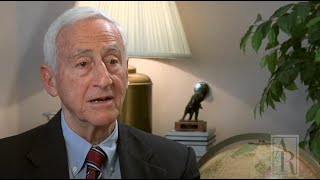
Roy Vagelos, former Merck CEO, grew up in a Greek-Turkish immigrant family in New Jersey and became a biochemist who discovered the acyl-carrier protein. At Merck, he developed the first statin, lovastatin, which reduced heart-disease deaths by 30%, and committed the company to give ivermectin free worldwide to treat river blindness.
Chapters
Good morning. My name is Andy Marks. I'm chairman of the Department of Physiology and Cellular Biophysics at Columbia University. College of Physicians and Surgeons, and I'm delighted to be here this morning for a conversation with Dr. Roy Vagelos, retired chairman and CEO of Merck and Company, Inc. Good morning, Roy.
Hi, Andy. How are you?
I'm going to ask you some questions, and this is very informal, and we'll go from there. Unfortunately, the first question has 3 parts, so please feel free to ask me to repeat any of the parts as we go through it. "Like so many in your generation, Roy, of highly accomplished scientists, you grew up in a poor immigrant family with no role models as scientists. How did this affect your drive to succeed, and what drew you into an academic career, which was so foreign to the culture of your nuclear family? Ultimately, how do you think your family of origin influenced the scientific questions that you chose to pursue?" That's a complicated question, but I'll take it one at a time.
First, my family were immigrants. Both my mom and dad were born as Greeks, but were born in Turkey. My grandfather on my father's side was a physician, and it's quite amazing that he was born on the island of Lesbos, and Lesbos is very close to Turkey, and so his children were born in Turkey. My grandfather was trained at the University of Athens as a physician and practiced medicine during his early life, but he died very young. When he died, he left a rather large family, 5 children, 4 boys and a girl. And they slowly, the boys, one after another, immigrated to the U.S. None had been educated at the time that he died to a higher degree. And so when they arrived in the U.S., starting with the oldest of the brothers, he did what all good Greek immigrant families did. He started a small restaurant and little luncheonette in Westfield, New Jersey. Then all the other brothers subsequently followed and came and set up with him initially, and then different little small luncheonettes around Westfield, Woodbridge, Rahway eventually. Started these small businesses, then went back, each of them, for an arranged marriage. My dad went back and married my mother. Therefore, our family was all brought up in the U.S. My sisters, my two sisters and I, were born in the U.S. We were born in a family that had known a father who was highly educated, but who were not themselves educated. They had the notion that education was very important, and the last thing they wanted was for me to end up running the restaurant. But that's not to say that I was shielded from it because it was a family restaurant. So my sisters and I always worked with my parents in our restaurant. And my dad, among the brothers, was the person who made things. He, he made ice cream and candies and supplied the other brothers in their other stores. And so He was a doer, but someone with very high spirit and someone who felt that education was primary and that you would succeed if you got into college. I heard that from early days. Of course, I worked pretty hard. I started as a very poor student. When I was young, I was not at all serious. I somehow got the notion through repeated discussions at home that going to college was important and getting a scholarship was important. Once I got to high school, which was in Rahway, New Jersey, I really turned it on and worked hard, which was different from my earlier years, and was quite successful. In our luncheonette, our major customers were people who worked at Merck. So I was early in contact with people who were chemists, microbiologists, and engineers. And that's what I heard as I was doing the usual waiting on tables and cleaning up and sweeping the floors. So I was in contact with these people almost continuously.. And so my early ideas as I went through high school was to be like them because not only were they tremendously interested in their work, but they were very happy people. And I liked their lifestyle and I wanted to be like that. And so as I finished high school, my choices were few. I didn't know much about universities and there was much less known about other universities in a small high school. And so I applied to 3 places: the University of Pennsylvania, Johns Hopkins by chance, and Rutgers. And I was not accepted at Johns Hopkins, which was interesting because I was not accepted during an interview in which they asked me whether my parents had attended Johns Hopkins? I said, "No." They said, "Well, where did they go to college?" I said, "Well, they didn't go to college." They said, "Do you have any questions?" That was the end of my interview. But I was accepted at Penn and at Rutgers. I went to Penn on scholarship and immediately got involved in chemistry because I wanted to be like the Merck chemists. That really caught on with me. I loved it. I took all the chemistry courses that were available. In fact, I took a course that was taught for the first time, an advanced course in mechanisms of organic reactions taught by a man by the name of Alan Day. I loved that. I was heading into a career of chemistry, or possibly to be like my granddad, a physician. At the last minute, actually, at the— I was to graduate in 3 years, as it turned out, because I took so many courses so quickly. And so at the end of my second year, I was faced with a decision of graduate school or medicine. And a lot of the bright kids at Penn at that time were going into medicine. That influenced me. And my grandfather, of course, the story of his life influenced me as well. I applied to medical school and went to Columbia College of Physicians and Surgeons, where I initially had a very tough time because I have a terrible memory. And anatomy almost wiped me out because that was all memory. And fortunately, there was also biochemistry in the first year and a few other things that I could do. And so I survived the first year and then had the notion that I could use my knowledge of chemistry to apply to medicine. From early on, my ideas were, you know, how do you understand a disease, or how do you understand the mechanism of action of a drug. And so I went through at that rate. At the end of Columbia Medical School, I went to the Mass General Hospital, where of course I was very turned on. I went in, I was in internal medicine. I loved it. I wanted to be a practicing doctor. That's what I wanted to be at the end of 2 years. But it was at the time of the doctor draft was still ongoing. This was 1954. I owed Uncle Sam 2 years of service time. I actually signed up for the Army. But the head nurse on one of my services had a boyfriend at NIH, and she said, "You ought to go and visit NIH." The person who was already there was Dan Federman, and his wife was the head nurse— his future wife was the head nurse. And so I agreed to go to NIH. I flew from Boston. That was the first time I'd been in a plane. It cost $25, and I took insurance. I was so worried about it because I'd already been married. And I should mention that I did get married between my internship and assistant residency, so after 1 year. And I married a woman who was just graduating from Barnard College. Whom I had met while I was a medical student. So we had already been seeing each other for 3 years, 4 years before we got married. Anyway, I visited the NIH, met Earl Stadtman, and that was a changing point in my life because Earl was a young guy. He was 10 years older than I. I was at that time 26 or 27, so he was about '37, and he was one of the top biochemists at NIH. He was in the National Heart Institute. Well, that— meeting him was a real experience because he was so excited about what he was doing, but he spoke very softly. And so he told me about what he was— he was involved in in microbial fermentations and understanding how fatty acids were broken down. And he talked about esters of coenzyme A. And coenzyme A, of course, had barely been discovered when I was in medical school. And so the fact that he was working with acetyl-CoA at that time was to me startling. And he told me about the reactions. That the coenzyme A esters were involved in. And he was so excited that by the time I left, I was also excited, although I didn't follow much of what he said. All was transmitted to me was this intense— this intensity of interest and excitement based on his own research. And so I asked to work in his lab, and he agreed. It was an interesting relationship because he was a PhD, had never worked with an MD, and was very suspicious that— why would an MD be interested in this kind of work? And so every few weeks he would ask me whether I thought I'd made a mistake. And I wondered whether he was trying to give me a message. But we worked together, and by the time time, by the end of our— and by the way, the clinical work that I was assigned was something that I had already been thinking about, and that was cardiology. I was in the National Heart Institute. All my patients were heart patients. So the deal was that I would spend half my time taking care of patients and the other half doing research. And by the end of 2 years, I had been called by Walter Bauer at the Mass General and offered a position, very junior, to return on the junior faculty. And so I went to Earl and said, Earl, you know, I think it's time for me to go back. And he said, why would you do that? I said, well, because I'm very good at clinical work and I've been offered a position back at the Mass General, which is where I started. And he said, but you know, you can be a good, even better biochemist. And he had never said that to me. This was a sort of revelation. And he said, if you'll stay, I'll give you new space and you can build your— start your independent career. I didn't quite know what that meant other than the fact that we were just finishing some papers together. And what it meant was from then on, instead of discussing everything, which we did otherwise, we didn't discuss anything. He sort of walked away and left me on my own, but also had given me a technician and a position where I could recruit someone who wanted to come to the lab. Soon thereafter, Al Alberts, who had been a graduate student at the University of Maryland and hadn't finished his degree but needed a job, came to work with Earl Statman. Earl said, "I'll give you a job, but you'll work with Roy." Al Alberts and I started working together. That was about 1958 or '59. And so that started our collaboration, and we started working on fatty acid metabolism, and ultimately we got into the biosynthesis of fatty acids, which became then my major work for the next 10 years. And I worked very closely with Al. Al was my assistant initially, but quickly became a colleague. Because he was very smart and very capable in the lab. And so we worked together and worked on the synthesis of fatty acids. Soon thereafter, we were joined by Phil Mengeres, and Phil got into it also, and we came up with the discovery of acyl carrier protein, which was sort of the central carrier of all the metabolites during fatty acid biosynthesis. And we discovered that and almost simultaneously Sally Walkill's laboratory at Duke. So we were competing with those. It was interesting, the competitors at that time were, in addition to Sally Walkill, were Fedor Lehnen in Munich and Konrad Bloch at Harvard.
Pretty heavy hitters.
Heavy hitters. A group that we had fun competing with because it was friendly competition. So instead of staying at NIH for 2 years, which was the original plan, I stayed for 10 and started a family, of course. We had a very productive time, at the end of which I was called and offered a position at Washington University in St. Louis, which I had never visited. And so it was, it was a, it was an interesting change.
Was Phil Majerus already there at that time?
No, we moved together. He was a postdoc with me. And the idea was that he had originated, Phil had started at Washington University Medical School and was of course the top student in his class. And then he worked with me as a postdoc for several years. Then when he and I moved simultaneously, he moved to the Department of Medicine with a joint appointment in biochemistry and I moved as head of biochemistry succeeding Carl Cori. And so Picked up the family. We moved to St. Louis. And then I was now back at a medical school teaching medical students, graduate students, and continuing my research. So the research was going great. We continued research in fatty acid metabolism, then branched out into complex lipids and ultimately cholesterol. And so all of that knit together to build a career that was all science. It was getting back towards medicine when we came back to medical school, which was something I didn't think a lot about when I was at NIH. But when I was at the medical school, I started relating more of our work towards what was happening in medicine.
So did you continue seeing patients? In Washington?
No, the patient work really covered only about 5 years at the National Heart Institute because after my 2 years, then I could see them as often as I wanted. And so I slowly geared down my clinical work over about a 5-year period. So at the end of that period, I was doing pure basic research. That was sort of giving me a message, and that is, you tend to do things that you're most interested in and that come most easily to you. Research just sucked me in. I had terrific feedback from the work that was going on at the time. As far as I was concerned, at the time I moved to Washington University, I was a biochemist. And teaching medical students was as close as I was going to be to medicine, but it was closer than I had been at the end of my time at NIH. I was a researcher and a teacher at that time.
We'll get to some more of the science and then the rest of your career in a moment, but I did have another question that's sort of philosophical in nature. So you have identified music, violin and singing, as something that you love, and it's been a part of your life from very early on, even before the science. And we've heard how you got sucked into the science and the influence of your grandfather in your decision to go into medicine. But can you talk about the role of music in your life and what parallels, if any, you see between music and science?
Yeah. Well, I think the music to me has always been something I have loved. I started playing a violin, I think, when I was in the first grade. And so, and I played it right through high school. Then when I went to the university, I rode on the— I forgot to mention that. I rode on the lightweight crew. Which sort of, which really was hard on the hands. You cannot do that with calloused hands and fingers and play a violin. So I did not play that much while I was at the university. By the way, the only thing that I did seriously other than chemistry was row on the crew, on the lightweight crew, which was kind of fun because that also modified my life. But the—
Can you tell— what do you mean by modified your life?
Well, I mean it sort of got me into the idea that part of each day should be dedicated to doing something that's athletic. And that's something I picked up then and have never quit. And so that allows me to not get obese or anything like that because I eat a lot. And so today it's tennis that— So yeah, tennis, and I work out. I have an elliptical runner and a Concept2 rower, which I do almost every day. And so that's the way I control my weight and keep sort of limbered up. But the music side has always been sort something that I've gone back to. So I went back to music after— when I was on the house staff at the Mass General Hospital, we had a quartet. And later on, whenever I have had time, you know, some period of time, I've gone back because I love music. Now it's mostly passive. I love all the performing music things that go on around the city where we live. And so we love the Metropolitan Opera, we love the symphony orchestras, we have been involved in the New Jersey Performing Arts Center. So music is something that requires dedication, practice, and focus. And those are the things that really relate to science as well.
Yeah, it seems so many scientists are either musicians themselves or music lovers. And there must be some connection in the brain, I would imagine.
I think there is. I think, yeah. Anyway, it's certainly something we all love.
Getting back to your clinical period of your career earlier on, in— you write about a Munchausen patient that you saw early in your career, and it seemed to make a lasting impression. And is that true, or did I get that wrong? And if so, what lessons were learned? And maybe you can describe describe what the patient had, just because many of the listeners may not know what Munchausen's—
Munchausen's syndrome is a condition that people take who fake a clinical syndrome, clinical disease. And while I was a young clinician at the National Heart Institute, a patient was, was admitted who was said to have a heart problem that was causing him to have seizures. And so he was admitted over a weekend, and I came in after the weekend on Monday and suddenly I was the doctor for this person who was having seizures. And so I examined him, could find nothing wrong with his heart. And so I had some skull films done and the usual cursory neurological examination where I found nothing. But I was not sure, and so I invited the head of the neurology clinical group to come in to examine him as a consultant. The person came and he said, well, he had— clearly I had missed. I had missed a lesion in the brain because I did not interpret the skull films properly. Well, I could not believe that because I couldn't— when he pointed out what he was talking about, I couldn't see what he was talking about. And so nevertheless, he walked away and told me I had flubbed it. But I could not believe what this man was saying because I could not see any kind of a defect in the skull X-ray. When he left, I watched the patient, continued to watch him, and I realized that by observation that he was calling for pain and having a seizure and then would call for medication, and the medication was always morphine. And so after watching a pattern of this, I realized that this guy was faking, and so I called the city hospital and described the patient, and they said, oh, so-and-so is up at your place now. And so he was a Munchausen. He was faking the whole thing. And the— what impact that had on me was the fact that the senior neurologist of the of the Neurology Institute at that time was so dogmatic and was not willing to take the opinion of a junior person and just put that person down. That was me. And so I never got over that, and I have always been very careful to listen to anyone at any level because people have good ideas. And have opinions that are very valuable. And so I've been pretty darn sensitive to that.
Important lesson. I was laughing because I had a very similar experience during my training with a Münchhausen patient. You mentioned Earl Statman and how he influenced you. What would you say was the most important thing that you learned from him?
Earl had— first of all, he was incredibly smart., and was wonderful in dealing with young people. In fact, you may know that Mike Brown was trained in his laboratory, went on to get a Nobel Prize. Stanley Prusiner was trained by Earl Stadtman. So Earl had a whole number of people who went through the lab, of course long after I did because I'm much older than they are. But the beauty of Earl was that he would start you on a project and then allow you to become independent as soon as he thought you were capable. There was never any feeling that you were being controlled or slowed because of Earl's involvement. First 2 years that I worked with him, all the work that I did from then on, which clearly derived from some of his early ideas, he never put his name on any of those publications. That's unusual. And he was loyal to me throughout my career. And I would say, if you were to talk with Mike Brown or Stanley Prusiner or all these people, they will tell you about how supportive how loyal and how quickly he would release people from any kind of commitment to him. And so he was, he was a wonderful developer of young people, and people loved this guy. I mean, he was, he was the best.
So just from looking at you, it's obvious you're in great shape for a person of any age, and yet you talk about being obsessed with fat, and you studied fatty acid metabolism. And very early on in your research, you were already thinking about making new drugs, and in this case targeting fatty acid metabolism. Where did that interest come from, and how do you explain that obsession with fat?
Well, the ideas about fat, of course, came from our research in fatty acid biosynthesis, and and the idea of working on drugs really was very peripheral and never serious while I was doing the basic research either at NIH or at Washington University. And in fact, after I had been at Washington University for 9 years, one thing happened that was very important in my career. And that is I was called by the University of Chicago and then later by the University of Pennsylvania and in each instance told that I was a top choice of the committee to become dean. And that was to me a very troublesome call because I never pictured myself as a dean. I thought I was a researcher and someone who was going to do research my entire career. I did not think deans did research. In fact, the deans that I saw did anything but research. And, and so that was a rather depressing thought that people who were observing me would think of me as a dean. Not long after that, I was called by a friend at Merck. A friend because I had worked one summer in a Merck research laboratory between my first and second year of medical school. So I knew a few people there. I was called by this person who had by that time become a vice president in research. And I was asked whether I would consider becoming head of the Merck Research Laboratories. And I said no, I had no interest. I hadn't thought about drug discovery. He said, why don't you come and visit? So I agreed to visit the Merck Research Labs, got to visit my parents who lived in Raleigh at the time, and what I saw was that pharmaceutical research for drug discovery was based on pharmacology, live animal research where animals were given syndromes or conditions that were akin to human disease— high blood pressure, heart failure, infections, et cetera. And very little biochemistry was being used as the basis for drug discovery. I went away from that original visit thinking that that was odd that they weren't doing it. And could it— would it be possible to really get into serious drug discovery by understanding mechanism of actions of drugs and targeting on single molecules? And the more I thought about it and contrasting with the idea of becoming a dean I thought going to a place where I would be responsible for basic research, drug discovery, would take advantage of my background and something that I wanted to do. And that is, it also would put me in a position of doing something closer to clinical medicine because I would be impacting— potentially impacting health of people. And so I then really thought about it. The transition and decided it was worth a risk on my part. It was a huge risk on the part of the people at— Henry Gadsden, who was CEO of Merck at that time, offered me the job. And I said, you know, Henry, if I were to take this job, I would completely change the approach to drug discovery, and would that be okay with you? And he said, if we did not want a major change, we wouldn't be talking with you. I then said, what would happen if the business really got weak and sales were not going well? I didn't know what I was talking about, of course. Sales. He said if things went poorly, he said we would cut back on all parts of the company. We would cut back on marketing and selling. We would cut back on the corporate groups. But he said the last thing we would ever do is cut back on research because that's the future of this company. And on that basis, I thought another month and then accepted the job. With, with another major transition of family. So we left St. Louis and moved to New Jersey.
You've talked about the time that you were in medical school and obviously through the early part of your career seeing patients. You are a physician and then you became a scientist and then went to eventually head up Merck. Can you talk a little bit about that transition from from earlier in your career where you clearly saw yourself as one kind of a person and then became something quite different, and any words of advice for other people coming along that pathway?
Yeah. Well, the transition from— and I, first of all, I see it as a sort of a continuum. I left the Mass General Hospital, as you know, the people leaving there think they're the best practitioners of clinical medicine possible, and I loved it. By the time I left the National Heart Institute, I realized that I had strengths in biochemistry and I wanted to do that. But the deeper I got into biochemistry, it was pure basic research. The further I got from clinical work, And then the transition to Washington University was a transition back towards medicine because I was going to teach medical students. And so that was getting back to my original goal of being a doctor. When I then transitioned to Merck, this was an opportunity to really close the circle. If we were able to discover drugs that were important for human health, we could impact lives of millions of patients.
But do you think without an MD you would have been able to make those connections between your basic research and the needs of patients?
That's an interesting question, and that is, without the basis in medicine, would that transition have been as— and I would say The transition to Merck and medicine was far easier for me because of my background in medicine. There's no question about that. And I worry about people who take on jobs heading organizations with no background at all because just understanding disease as far as it was understood and understanding the impact of other medicines, you could immediately start thinking, making connections of what you know in science and how they could do to impact a disease or improve a drug class where you could see where you could make improvements.
Turn the clock back to a very exciting time in your career before Merck, and what was the central problem that you were trying to solve? Vis-à-vis acetyl-CoA and the enzymes controlling fatty acid synthesis. Try to put us back in that time and what the challenges were scientifically and how you approached them.
Yeah, well, the knowledge, of course, of fatty acid metabolism, which started with actually H.A. Barker at Berkeley, who was the teacher of Earl Stadtman, and then Earl Stadtman was carrying on looking at fatty acid metabolism and how it was broken down. Beta oxidation had been discovered along the way. Coenzyme A had been discovered by Lippmann, Fritz Lippmann. The structure of acetyl-CoA was discovered by— that is an activated acetate— was discovered by Theodor Linden in Munich at the Max Planck Institute. So when I got into it, that was hot stuff. That was as hot as you can get in an era, and so I fell right into the middle of it because of my association with Earl Stadtman. What was then being discussed was that beta oxidation was the way lipids, fatty acids, were broken down, and fatty acid biosynthesis was just the reverse of that, and that was the general understanding of everyone. And so our entry into the field was the discovery of— oh, by the way, my ability to get into that field was very much based on my ability in chemistry because all the intermediates of fatty acid metabolism were thioesters. And they're very hard to make. And with a chemistry background, I was making things that other people could not make. And so I could move much more rapidly. But the whole thing boiled down to what happens to acetyl-CoA between a 2-carbon and a 16- or 18-carbon chain. And was it just a reversal of beta oxidation? And we discovered malonyl coenzyme A as a metabolite early on unrelated to fatty acid biosynthesis. But we found this 3-carbon activated group, and when we put that together with acetyl-CoA in a microbial enzyme system that we made, we were whipping out fatty acids. So we suddenly had a new intermediate in what appeared to be the pathway between acetyl-CoA and the long-chain fatty acid. And so So that was exciting. Then we discovered that there was— for this series of enzymes to do anything, we needed a heat-stable factor, which turned out to be protein, which ultimately was characterized as the acyl carrier protein, which was an amazing thing at the time. Was the key to understanding fatty acid biosynthesis. And so that was, as I mentioned earlier, we discovered it and Sally Wakil at Duke came up with it independently. But we were ahead. And so we sort of won the race. And it was just a very exciting thing to be able to understand how you could build this 16 or 18 carbon chain and do it rapidly and efficiently at room temperature and to characterize all those enzymes. So that was heaven from the point of view of an enzymologist. And of course, understanding these enzymes and all these reactions was what drug discovery for me ultimately was all about.
Can you describe the importance of Jacques Monod and François Jacob in your science?
Yeah, so as was sort of habit at the National Institutes of Health, 7th year on the job meant that if you wished, you could have a sabbatical. And I heard the scientists Monod and Jacob talk in New York City. Specifically, Jacques Monod gave a lecture which was electrifying. He was talking at that time about allosteri and also messenger RNA. That was just the beginning. That was about 1962. So I asked to work in his lab, and I went to work with Jacques and was exposed to an entirely different kind of guy other than Earl Statman. Jacques Monod was someone who had a tremendous imagination, and it was so imaginative that many people thought he moved too fast and that he moved without enough facts. But in fact, most of the stuff that he really explained turned out to be fact in the end. So the messenger RNA work worked out, turned out to be true and accurate. And Allos' theory became accepted by everybody. And so he was just terrific. So I worked a year in the laboratory and largely picked up microbial mutants as tools of the work that I was going to do back in the U.S. So while I worked on— I looked for suppressor mutation. I never found one, but that was part of the work I did. Then I did some allostery enzymology, which helped him in his work. And so we became fast friends, and he tried to convince us to stay in Paris, but I was drawn back to the work I was doing in the U.S.
Can you talk about your move to head research at Merck from the perspective of its impact on your science?
That's interesting. When we moved to Merck, I initially moved with a very small group from Washington University. Al Alberts, who had been with me from NIH, then came to Washington U.
Did he eventually get his doctorate?
He never did. So Al never finished his doctorate, which was which was something I pushed very hard. In fact, at one time I told him he had to take off for summer and could not come back to work until he finished his degree, which he did not finish. But I needed him and he wanted to come back, so we worked together. And when I was to move to Merck, Al had by then had gone up the faculty ladder and was an associate professor with tenure at Washington University based on his accomplishments. And the faculty were the ones who wanted to have him promoted. And so I obviously didn't hold him back. But when I was to move to Merck, I told Al that I was going to leave. And that was a risky thing. And that he should remain where he had tenure and where he had done so well. Excuse me. But he said no, we'd been working together so many years by that time that he would like to come. And so he came with a small number of postdocs. My initial idea was that we would slowly learn about drug discovery and then get into discovery ourselves, but I would retain a research group myself. And for the first year I did retain this, but during that year I recognized that the research group that I was now in charge of was large, so much bigger than I was used to, that it was taking all my efforts to understand what they were doing and try to reorganize the research. To bring in the biochemical approach that I had planned to do. So that by the end of the year, I had arranged for all my postdocs to take jobs, and they all got excellent jobs. And— but Al, of course, stayed. And so we quickly adopted what was going on at Merck as our entire work. Two things happened. One was that I felt it was my responsibility that everybody succeed. I spent time with every research group, and where I thought their research was not very productive, I waited until I had an idea of something that they could do that involved their expertise. But swung towards biochemistry to get them onto a new project. The other thing I realized was that I could not continue being a primary researcher. I could not do that as well as oversee the large number of projects that I had to be involved in. And so I decided early that I was going to be an advisor, someone who would give ideas. But I set the pattern very early, and then I never put my name on the paper. And so no paper that was ever published from Merck— and of course there were thousands over the 19 and a half years I was there— had my name on it. And I made that decision so that people would feel free to talk with me and not feel that they would lose leadership of a project. I wanted them to feel ownership, but I would stew and worry and think and call them at night if I had an idea on their project. So I felt very much part of every project that went on at Merck. Every research area. And so it was a tremendously steep learning curve for me as I learned about all different areas of research, including vaccines. And we had experts in different kinds of research all over the place. And I wanted to be able to help them and to succeed. And we did.
Can you tell us about the development of the HMG-CoA reductase inhibitor at Merck, your role in this project, and in particular comment on the highs and lows of this project?
Yeah, well, of course the HMG-CoA reductase project was one that was very dear to me because early on when Al and I moved to Merck, we looked around to see what really might be a project for drug discovery. We knew about the cholesterol hypothesis, and that was of course based on several things. The fact that people who died of coronary heart disease, heart attacks, their arteries were filled with cholesterol. The animal models of hypercholesterolemia and causing coronary heart disease. The epidemiology around the world where people, Japanese with very low blood cholesterol almost never died of heart attacks, people in Finland who had an incidence of death from heart attack that was 14 times higher than the Japanese. Had extremely high, sky-high blood cholesterol. So all that information was available and the biosynthetic sequence, 24 sequential enzymes for biosynthesis of cholesterol, just had been unraveled by largely Lehnen and Block, Lehnen in Munich and Block at Harvard, for which they got the Nobel Prize. Lenin's laboratory also indicated the rate-limiting enzyme is HMG-CoA reductase. And so that information was stuff that I knew, that I thought we could apply, but so did everybody else. It came at a time when it was an obvious target for drug discovery, and the— That was really brought to a head by the Mike Brown and Joe Goldstein experiments, which also indicated that HMG-CoA reductase was a choke point in the biosynthesis and a regulatory enzyme, and the initial discovery of the first statin by Endo in Japan. Now that was a startling discovery, and that is he found a metabolite from microbial fermentation which was called compactin. Another name was mesostatin, which was the first inhibitor of the HMG-CoA reductase. Now, as I say, many organizations had focused on that enzyme. Including Merck, but the discovery was the first statin was made in Japan. So that, of course, focused us even more that we had to get going. We needed to find to see if there was something that we could find. And Al's group quickly came up with lovastatin, which was again a fermentation product, a natural product which was isolated. It was structurally related but different from, from mevastatin, which came from Japan. It was very clear that we were behind in the race, but we were number 2. And so we were racing along, did all the animal studies to support the clinical studies, and then lovastatin went into the clinic. It was well behind. The Japanese group, which was probably months ahead of us, when we heard that all the clinical studies in Japan had been stopped. And it was a shock because it was an open competition. I immediately got on the phone and talked with people at Sankyo Company, Japanese company, where it was being developed, and asked them to tell us, to explain to me exactly what was found. My concern was that it was an enigma really. Was it possible that all inhibitors of HMG-CoA reductase would be a problem? And the problem they would not give any information on, but the rumor was that Compactin or mevastatin was causing tumors in animals. So the enigma was, do all inhibitors of HMG-CoA reductase cause tumors in animals if that's what is being seen? Or is it possible that our lovastatin, although it's related to their compound, would not cause a problem? We couldn't tell that. They would get— they said it was an industrial secret. Would give us no information. And so we stopped immediately that day. We stopped all clinical studies with the notion that if there was a problem, we could not put at risk any patients. And so lovastatin was stopped in the clinic for 2 years while we did long-term— finished all our long-term animal cancer studies, carcinogenicity studies. And also during that period, the chemists, of course, were hard at work trying to modify, come up with another structure that would be chemically different enough to possibly not have the problem of lovastatin, if lovastatin had the problem, and also maybe be superior in some other aspect. They came up with simvastatin. And, and, and so that was exciting because it was more potent, longer duration of action, and it was different in structure. Well, at the end of 2 years, physicians largely in both the East Coast and West Coast came to Merck and said, look, we've got patients with hypercholesterolemia who are going to die. Unless there's some way to reduce that cholesterol. And so the FDA agreed that we should go back with lovastatin, but go back in high-risk patients. So we went back into the clinic after having been out for 2 years and started experiments in patients who already had coronary heart disease and high blood cholesterol. And what we found, of course, was a very safe Oh, I should say that all the studies were clean at Merck. So it was time to go back. And we went back with lovastatin. We found that we reduced total cholesterol, low-density lipoprotein cholesterol, and safely. And so the drug was approved. The first statin in the world was approved in 1987. And the project started in '75, 1987, 12 years, which is about average. And so that was the first statin. Some physicians thought it was a good idea and were going to use it to lower blood cholesterol. Others said, well, you're lowering blood cholesterol, so what? And so that was an issue. We were going to, we needed to have an outcome study. Now, this was new in those days. This is the late 1980s, and so we started what was called the Simvastatin, we instead of using Lovastatin, we went to what we thought was a slightly better drug, Simvastatin. We did the Simvastatin Scandinavian Survival Study, the 4S study, which gathered some fame because it, it was based on the study of 4,400 patients who had coronary heart disease, high blood cholesterol, LDL cholesterol, and half of them were put on simvastatin and the other half were put on a placebo for 5.5 years. This was double-blind. At the end of that time, they broke the blind and it was an amazing, just an amazing result. And that is a reduction in death from any cause of 30%, reduction in death from— this is comparing the drug versus the placebo— reduction in death, incidence of death from heart attack, 43%. Reduction in strokes of 30%. And so that essentially one experiment changed hypothesis to fact and essentially revolutionized the treatment of cardiovascular disease.
You said you don't have a good memory, but you remember those numbers, obviously. So you transformed Merck from a traditional pharma approach to drug discovery to one based on mechanism of action and inhibition of specific enzymes. Can you comment on why and how you achieved this transformation, and has this model caught on at other major pharma?
Well, the, of course, focus on enzymes or ion channels or receptors were pretty— would come naturally to any biochemist because we're used to dealing with single molecules. Rather than live animals. And so it was a matter— getting that idea across to all the Merck people was something of a challenge initially because they were expert in other things, mostly pharmacology and chemistry. We— I thought we had the world's best chemists, but they were really held back by the biology. And therefore focusing on the HMG-CoA reductase was a test for me and a test for the whole laboratory and a demonstration that that approach was good. And that went on from that to the 5-alpha reductase for control of prostate size to new drugs for antibiotics, new drugs for hypertension. Vasotec came out of that approach. The angiotensin receptor antagonist came out of that approach. So the Prilosec came from that for hydrochloric acid control. So it was one drug after another. So once, you know, of course people love to win. And once it was clear that you could win using this approach, it was just magical at Merck. And Merck Research at that time was a magical place because we had such great people who loved what they were doing that we could almost get anything done. And I remember I was approached. Close to the end of my time at Merck and asked whether I thought HIV was going to be treatable. And I said, absolutely. I said, well, you know, you'll figure out the enzymes that are involved in that virus, and we'll do what we've done in bacteria. And what we've done in disease. Of course it's controllable. And that was overly optimistic because it took longer than I anticipated. But the first protease inhibitors, all that stuff came, followed. So yes, it became obvious that that was a good approach, not only to Merck, but other companies got into it. And by the way, I did not discover this approach. Because other people— Jimmy Black focused on a specific protein, the H2 receptor blockers, the beta blockers. These were all conceptually the same thing. What I did was institutionalize it for drug discovery at Merck, and that's what caused it to spread in the industry.
Under your watch at Merck, under your watch, Merck developed and provided a treatment for river blindness and stands as an example of corporate morality in its highest form. Was this a difficult sell to the Merck board and your colleagues?
Interesting. The discovery of ivermectin, which was shortly after I went to Merck, actually did not follow my idea of how drugs would be discovered. It was using an animal model where a rodent was a model of a parasitic disease. They put 3 gastrointestinal parasites into the gut of a mouse, and then they fed fermentation broths to mice. And this was classical approach, but to not amazement because it had worked in the past, but to my surprise, a broth was discovered, fermentation broth, that had in it a substance called avermectin, which was isolated by these great isolation chemists that we had at Merck, led by George Alberschönberg. And this So this drug, avermectin, in toxicology studies could be improved by reduction of a single double bond which converted avermectin to ivermectin, which at that point was the most potent drug for killing parasites by maybe by 2 orders of magnitude over earlier chemicals. That would control parasites. And so this was a fabulous drug. It was tested in gastrointestinal parasites for cattle, horses, pigs, sheep, ultimately heartworm in dogs. It became a great product for animals. But it was not active against hookworms or tapeworms. And so it was not going to be pursued for human use until one of our clinical physicians, Muhammad Aziz, came and told me about the disease of river blindness, which is caused by a parasite called Onchocerca volvulus. That parasite exists as an adult and a microfilarial form, and the microfilariae live in the skin. The disease is transmitted by the bite of a black fly. Flies bite a person who has these little microscopic worms in the skin. Within the fly, the parasite is becomes an adult essentially, metamorphoses, and so that when, when the fly bites another human, it injects a form of the parasite that can become an adult. And at the site of the bite, the, the worms become adults, males about 8 inches long, females about 14 inches long. They live in lumps in the skin, in the skin, And they make millions of microfilaria that crawl through the skin causing terrible itching. So these people are constantly itching. And they get into the eyes causing scarring and blindness, the microfilaria. That's the disease. It's called river blindness because the parasites, Onchocerca volvulus, and the flies The flies, the transmitters, live along the rivers. And so that's why it's called river blindness. People want to be near the rivers in order to have more fertile farmland. When they live there, they get bitten by the flies, they get onchocerciasis, or river blindness. So Mohammed Aziz said, should we try this drug in the disease? I said, why not? So he went to Dakar in Senegal, western tip of Africa, saw these people who were, had the lumps, were going blind. By the way, there are some, at that point there are 18 million people who were going blind, had the eye infection, over 100 million at risk among the poorest people in the world. And so he went to this place. He gave— he took a pinch of skin over the hip of these patients and he counted the number of microfilariae and there were a dozen or two dozen per pinch. So these were people who were just totally infested. He gave one tablet of ivermectin to these patients and then came back in a month, did another pinch, parasites were all gone. And so we got very excited about that. Called the people from the World Health Organization to come and see these results, and they came and they said, "You know, something's wrong. It's impossible that these were the results." So they told us we had screwed up in the experiments, and they left, and we turned on a huge development program because we knew we couldn't have been wrong. And so they went back and they carried out a program where they gave patients who had the infection in their skin, in their eyes, gave them one tablet, then came back at 1, 3, 6, 9, 12 months, and there were no parasites after a single tablet. At the end of 12 months, they started to reappear, and so it was clear that we had a drug that would eliminate this disease when given as one tablet once a year.
Not going to be a blockbuster then.
It was not. Well, our salespeople said of course they could sell it, and I said, to whom? You know, these people were the poorest people in the world. I visited people in Chad, which is the middle of Africa, and these people lived in mud huts and wore grass skirts. I mean, these were really poor. They'd never been outside their village. And so we were left with exciting developments. The clinical research was being finished. This was heading towards 1987, and we needed to have it approved by a sophisticated regulatory agency, and we chose France. The FDA would not take it because they have no river blindness. The French took it because of French Africa and French people living in Paris with river blindness. And so they took it, and to my surprise, far faster than ever with a commercially important drug, they called and they said, we're going to approve it in 2 days. At that point, we had been meeting monthly with an executive group to determine how we were going to get the drug to these people. We had no plan. We had no decision. But there was— there had been a cover story in the New York Times, the Sunday Times, with a picture of patients with river blindness with a story that Merck had this drug. And so I could visualize, you know, not knowing what to do with it. And so we had to make a very rapid decision. And so we decided in a 2-day period, and we had a press conference in Washington where we announced that Merck would provide the drug free to anyone anywhere in the world for as long as it was required. That was exciting. It was done in a tremendous rush, so much so that I did not talk with the board. And so I made this— I committed the company. And of course, this brought in a flood of high morale within the company and among our stockholders. So at the next board meeting, I, of course, explained what had happened. And someone said, don't you think, Roy, that you should have come to the board? I said, well, you know, I really didn't think of it. It was coming so fast and we had to make the decision. Is there anyone here who would make another decision? And looked around the table, there was no other decision. So we started in 1987 and the last I heard, which was about 2009, Merck was treating at that time something over 90 million patients a a year free. And there are small countries in Latin America, because it's sub-Saharan Africa, Latin America, and Asia. There are countries where the cycle had been broken, all the large enough regions had been covered with the drug so that flies no longer had access to the parasite and the disease was eradicated. So they can stop taking the drug. So that was the, that's the ivermectin story.
What did you leave on the table when you retired from Merck?
Well, first of all, retiring from Merck to me was like dropping off a cliff. I hated it. And I—
you were a young man at that time.
I was 65. When you become 65, and you know this when you take the job, you must retire, right? There's no choice. And there, no one has— there have been no exceptions. And there wasn't one then at that time. And so I had no plans. I had a successor and head of research, Ed Skolnick, who had been with me then since '81, something like that. And so he was very smart and I thought would be fully capable of carrying the research. I had some that— who was also going to succeed me as head of the company for 5 years. But at the last moment, for reasons that are personal, he left the company. So the company was left without a CEO. And they went outside and hired Gil Martin, who succeeded me. And I had no say in that hiring. So I left on the table a research organization which was absolutely first-rate and leadership that I thought was first-rate. But unfortunately, the person that I had groomed had left the company.
And unfinished projects that you wish you could have—
Oh, unfinished projects all over the place.
And anyone in particular?
Well, most of them were really well on their way, and I would say No, everything was happening. The Fosamax was on its, you know, was done for osteoporosis. All our major projects were coming along. We have lots of starting projects that were still underway and which were taken over.
Right. So no regrets then, except that you would have stayed longer.
I would have stayed, yeah. I would definitely have stayed longer.
I got one more question.
Yes.
How do you think your scientific career would have been different had you remained in academia instead of moving to the pharma industry?
That's interesting. My scientific career had I remained in academia, I assume that I would have continued to be productive and do interesting things. And of course lipids have had an explosion in lipid modification of various things and intermediates and activators. And so there was a great biology that grew from that field and continues to grow. And signaling molecules. So there was lots of excitement that I would have been in the middle of, I believe, since I'd been in the middle of it for so long because I divide my career almost in halves. 10 and 9 years— 19 years academic between NIH and Washington U, and then 19 years at Merck between head of research for 10 years and then 9 years as head of the company. But as head of the company, I never felt that I was dissociated from research. I was extremely close to all the projects. And felt that I could talk with the scientists, just less frequent.
That's all.
Thank you. Thank you, Andy.
It's been a pleasure.
More from Joshua







Scientist Stories: Hans Waterham, The value of phenotypic assays in peroxisomal disorders




Scientist Stories: Joel Zlotogora, Genetic carrier screening programs for reproductive purposes