Founder Stories: Ryan Watts, Co-Founder & CEO of Denali Therapeutics pioneering neuro medicines
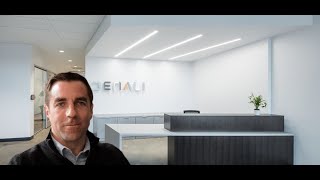
Ryan Watts built Denali Therapeutics to cross the blood-brain barrier and treat neurodegenerative diseases like Alzheimer's and Parkinson's. His mother's dementia drove the mission. The company has seven programs in clinical trials and uses natural transport mechanisms, like iron pathways, to deliver drugs where they've never reached before.
Chapters
I imagine a future where our healthspan is increased. We are able to die with dignity. We're able to comfortably live in our own homes until our last days.
It's rare to have that academic and scientific track record, but combine it with that drive, that execution ability to turn that into a company and to grow that business.
A large number of big pharmaceutical companies completely exited neuroscience. And, you know, we founded Denali basically already swimming upstream.
I almost hesitated about inviting you on the podcast because the problems that you're trying to address are so important for the world that I'd hate using your time for anything else.
Hello and welcome to Invest in Progress, a podcast brought to you by the Scottish Mortgage team. I'm Claire Shaw, a Director and Investment Specialist. This podcast is designed to give you a behind-the-scenes look at the conversations that take place between our managers and the visionary founders, entrepreneurs, and business leaders of the world's most exceptional growth companies. As we are a UK investment trust, we can only market Scottish Mortgage to certain audiences and in certain jurisdictions. Check out the podcast description to ensure this content is suitable for you. Also, please bear in mind that as with any investment, your capital is at at risk. Today we're looking at Denali, a company tackling one of the greatest medical challenges of our time: neurodegenerative diseases like dementia. 1 in 3 people born today will develop dementia, and it's a condition far too familiar for families all over the country who have to witness its heartbreaking effects. For Alzheimer's disease, the most common form of dementia, there is currently no cure or ability to slow the disease. So finding a treatment is paramount. Denali is aiming to do just this and tackle other diseases of the brain, such as Parkinson's and motor neuron disease. To discuss this potentially game-changing company, I am joined today by Scottish Mortgage Manager Tom Slater. Welcome, Tom.
Thank you.
This is something that's extraordinarily hard to do. You know, Big Pharma has spent billions and failed in this area. Why has it been so difficult?
Well, it's been difficult for a combination of reasons. Firstly, our understanding of the genetic and molecular basis of the disease has been lacking. Second of all, it's been very difficult when you've developed a drug to actually get it into the human brain because there is a mechanism called the blood-brain barrier which prevents unwanted substances from getting into the brain. And then the third piece is that it's been very hard to test if a drug was working, because you can't biopsy the brain in the way you might biopsy a tumour.
It must take a pretty exceptional individual to lead a company who's trying to address this massive problem, which brings me to our guest today, who's the co-founder and CEO, Ryan Watts. Tom, tell us a little bit about Ryan. When did you meet him? What were your first impressions of him?
We first met Ryan in 2015, 2016. And I think what we'll come across is he's a really driven individual. But the other thing that was immediately clear from his scientific credentials is just how important the work he had done as a scientist was in this area. And not just him, but some of his co-founders as well. It's the combination of the drive and the scientific understanding.
Well, I'm sure we'll see his passion and motivation come through in your discussion with him. But as usual, we'll catch up after. But until then, I will leave it to you Ryan.
Thank you very much for doing this.
It's fantastic to be here, Tom. Thank you for the invitation.
Now, we start by asking all of our guests the same question: what is the problem that Denali is, is trying to solve?
Yeah, the problem we're trying to solve is neurodegenerative diseases— Alzheimer's disease, Parkinson's, ALS and rare neurodegenerative disorders. My guess is that most listeners here, at least 1 in 3, have someone they know and love, uh, that has dementia. If they have dementia, there's an 80% chance that that dementia is Alzheimer's dementia. So incredibly prevalent disease. When we founded the company, we decided to think even bigger and not just focus on Alzheimer's, which is an enormous unmet need, but also on Parkinson's, and ALS and other diseases in which the nervous system degenerates, in which the communicating cells in your brain start to die. And that spans a large number of diseases and a massive unmet need.
I almost hesitated about inviting you on the podcast because the problems that you're trying to address are so important for the world that I hate using your time for anything else.
Well, I appreciate that. I should mention that I was hoping we would've done it on December 25th. That day I know I have off for sure, but—
So Scottish Mortgage first invested back in 2016, but take us back before that time. What is it that motivated you to start a company to address this huge problem?
Well, there are a lot of motivators, and frankly, there are a lot of founders of a company like Denali. There are founding investors, there's founding scientists, I happen to be, you know, one of the obviously founders of the company and both, you know, a scientist, investor, and, and employee and all of the above. And for me, it was deeply personal. I had started my academic career working on the nervous system. I was very interested in the brain, how it works, how it functions. But what happened is a couple personal experiences. I think the first, probably most compelling experience is that my wife's family has a family history of Alzheimer's disease. And I remember her grandfather developing Alzheimer's disease. And it kind of took me back and I thought, you know, maybe there's an area I should start focusing on. And I was really lucky because at the time I was working at Genentech and had focused initially on cancer that sort of transitioned into neurodegenerative diseases, which I worked on for a number of years. But the driving force for me personally, you know, basically seeing my own mother start to develop dementia. And I knew exactly what was happening. I know my genetic risk. I know her genetic risk. It's imputed from mine. And I was like, oh, I know what path that we're on. And so that was— I think that that personal motivation allowed me to leave a place like Genentech that I think most people should never leave. You know, it's such an incredible place. And actually found Denali in 2015. But you guys have been with us almost from the beginning. I mean, 2016 is just a year later. We were still in the early days.
I think even at that stage, it was just clear how big the problem was that you're going after, and also what an opportunity that was for a company that was able to make progress with this. But I think it's fair to say you've taken quite a different approach as compared to a traditional biotech startup company. Could you outline how you've sort of thought differently about it? And I guess, feeding on from that, how do you think that impacts the chances of success?
Right. I think, you know, one of the things that one of the other co-founders, Alex Schuth, you know, one of the things that he and I did is for over 10 years, we looked at every neuro company that had been formed during that 10-year period, looking for partnerships for Genentech. And we started to assess patterns and patterns of success. By the way, very hard to look at patterns of success in neuro companies because it's such an incredibly difficult space.. But one of the things we noticed is that especially at the time, the founding of Denali, you can't be focused on a single idea or a single hypothesis. You can't found a company based on one molecule. The chances of that succeeding are extremely low. And so we knew at the beginning there are two things we needed. We needed a pipeline, which is basically multiple medicines, and we needed a platform that if successful would open up all of the nervous system, not just for neurodegenerative diseases. And that allowed us to go after, for example, some rare, even childhood diseases that have a neurological or a neurodegenerative component where you know exactly what's causing the disease. And that has a much higher, higher probability of success to prove your platform. And then you can go in parallel after Parkinson's and Alzheimer's and ALS. And so the pipeline and platform concept, it was unique among the neuro companies that we had seen. In fact, nothing at the scale of what Denali was trying to achieve. I mean, obviously we want to defeat degeneration, we want to solve Alzheimer's and Parkinson's, but if you look at success stories in biotech, it's a winding road and you have to follow the biology. And having a platform really is the, I think, way to success.
And I think it sort of explains how we got to know each other so early in Denali's journey, because actually, part of being able to take forward multiple drugs or potential medicines at the same time and have that flexibility to follow the science means you have to have a big balance sheet. You have to have a big pile of cash in the bank right from the start.
That's exactly right. And I think what that allows you to do it allows you to fail, to iterate, and to accelerate. It's a really interesting principle. You need the capital in order to get data really quickly and understand the direction. And, you know, we've, we have had at least a dozen programs that we stopped developing. Any one of those programs would be a single biotech company. But because we had that capital allowed us to really invest in the underlying science and the platform. And I, I think in addition to that, like personal motivation, which not, you know, it's not just me at Denali. We have, we actually recently interestingly asked everyone at Denali how many of them have a personal connection to neurodegenerative disease. And I don't want to be exact, but it was like 63%. It was an enormous number that had someone they love with Alzheimer's or Parkinson's. I mean, majority of them were Alzheimer's dementia really. But the other piece to this, you know, having that balance sheet, having that firepower, as we could build this platform. And I'll tell you, the one area that I'm obsessed with is solving the blood-brain barrier. And so, you know, the brain has been such a hard place to develop medicines for because medicines don't get into the brain very well. And that was the thing is if we could solve the blood-brain barrier and we could be passionate about neurodegenerative diseases, it would create, you know, a unique purpose which is organized as a company to really solve these, these big questions.
Can you just explain exactly what the blood-brain barrier is?
Absolutely. So the blood-brain barrier, it comes down to what the blood vessels are like in your brain. The human brain has 400 miles of blood vessels. I probably should do this in kilometers, but I'll just tell you, it's about, look, let me give you a perspective. It's basically San Francisco to Los Angeles. Again, I should pick European cities, but we're based in San Francisco. The blood vessels are everywhere. Inside the brain, but they're unique. They evolved to basically exclude molecules from entering the brain. So anything that you need in the brain is actually physically actively transported across these blood vessels. A good example is even sugar. In order to get into the brain, it actually has to be actively transported.
Iron.
We get iron from our diet and the iron is actively transported. In fact, we utilize some of these natural transport mechanisms like iron to cross the blood-brain barrier with our transport vehicle technology. And so this blood-brain barrier is established to protect the brain, but it also unfortunately limits the uptake of medicines across the blood-brain barrier, and hence the reason we needed to invent a platform or technology to cross the blood-brain barrier.
Yes, the blood-brain barrier is just that linking factor in all of these different conditions, right? The limiting factor for so much of what has been done previously.
That's exactly right. And I think no one in science is trained to necessarily study the blood-brain barrier. It's not neuroscience and it's not vascular biology. It's actually the mix of the two. And I think that's where a lot of questions still lie in science is when you're at the interface of two areas of biology or two areas of technology. And that's where the blood-brain barrier is.
So talk about then how the company has evolved, because there's a number of candidates that have fallen by the wayside as you've continued to follow the science and prioritize based on what you think is the most promising route. Talk through how you've got from that starting point to where you are today.
Yeah, when you joined us in 2016, we had our first medicine enter clinical trials. We now have 7 medicines in clinical development, and notably, we have 3 that are in late-stage development, which is basically the last stages before medicine will get approved. It's the big experiment. It's, it's testing, will the drug actually work?. And what we decided to do, and I think Tom, this is probably a reflection of, of Denali, we've actually done everything in parallel in part because we're just super impatient. We have a Parkinson's disease program that's now in a phase 3 clinical trial. It's actually in 2 large studies. We also have an ALS program that's in a large study. We'll have a second ALS program starting a large study in, in, you know, this coming year. And then we have our most advanced program, which is in Hunter syndrome, which is, you know, essentially a phase 2-3 trial in, in that disease. So, this broad portfolio approaching in parallel. But the way we've managed the risk is actually quite interesting. It's hard to go into a global clinical study across the world in something like Parkinson's disease. We actually selected larger partners for some of those bigger disease areas. That was part of the strategy is to have these broader partnerships to increase our probability of success. But certainly the most advanced program is the Hunter program, in which we're using our blood-brain barrier technology to get an enzyme across the blood-brain barrier.
I agree. It's just astonishing the progress since 2016. It's so exciting to see some of what we talked about back then being in the clinic today and on its way to helping patients. Could we just take a step back now from what Denali is doing and just talk about the context in which you're doing this and the pharma industry's inability to develop drugs for effective drugs for Alzheimer's, for other forms of neurodegeneration. That just wasn't through want of trying. Just talk us through the background and the industry's staggering failure rate in this area.
Yeah, it's good to have some perspective on drug development and how challenging it is broadly. I mean, I think people don't appreciate that the failure rate for developing cancer medicines is about 93 or 94%. It's a very high failure rate. The challenge though, in Alzheimer's disease, it's like 99.7%. It's an enormous rate. And as you said, it's not for a lack of trying. There was a huge effort, you know, placed in this area. And I think we just didn't know enough about the disease and we certainly didn't spend time looking at biomarkers or, or ways of showing that the medicine is actually getting into the brain. There are so many studies and, and I'll tell you, this is actually kind of interesting perspective. Tom. So in founding Denali, it was a year in 2015, either a year before or a year after a large number of big pharmaceutical companies completely exited neuroscience. You know, we were going against the trend. Everyone was leaving neuroscience. Everyone was going to cancer and to rare disease. That was the main focus. And, you know, and some immunology indications, but broadly, like cancer was the way to go. And, you know, we founded Denali basically already swimming upstream as everyone's exiting. That's where we're going to, because guess what? The unmet need is only getting larger. You know, we're, we're living longer. We have better cardiovascular medicines, we have better cancer medicines. What do we have?
Neurodegeneration.
We have age-related diseases. And so, you know, the question we get all the time is, what makes you think you can succeed? And that's a fair question. And I think the way that we have to approach that is we need, again, tractable questions, solve technological challenges, and then in parallel, take the bigger biology risk. And I think that's what the portfolio allows us to do at Denali. It allows us to go after diseases that there are already approved medicines. They just need to get into the brain. So it's a very simple equation. And then as we've proven that, we then take the bigger risk in diseases like Alzheimer's and Parkinson's. But But Tom, it's great to have this podcast right now because even the Alzheimer's space has massively evolved in the last year. You know, I think we will have our first approved potentially disease-modifying medicine coming from Eisai, which is an antibody targeting an Alzheimer's protein known as A-beta. It's now shown pretty definitively in a clinical trial that it's slowing disease. There's a lot of room for improvement, and I think Not a lot of that drug gets across the blood-brain barrier into the brain. That may be one area that we can improve upon, but this is exactly what the field needs, Tom. And what you're going to see is that suddenly what was an outflow of interest in neurodegeneration is going to be a massive inflow. And, you know, maybe we were 5, 6, 7 years ahead, but it's such an exciting time. I mean, we see so much, and even like, you know, the FDA in the US is viewing like, we need medicines for ALS, we need medicines for Alzheimer's disease. And so, It's much more collaborative to try to solve this, which is frankly a pandemic of the last 3 or 4 decades now that the average lifespan is 80, 90 years old.
This point about actually seeing a disease-modifying drug get through the approval process is such a watershed moment given that stunning failure rate you've seen historically. So just pulling apart why that's happening now. Is it about deeper understanding of the biology of what's happening, or is it what you've referred to about biomarkers and actually being able to more accurately test whether a medicine is having an impact?
What's changing? So it was really in 1991 that amyloid precursor protein, known as APP, was discovered as the major contributor to Alzheimer's disease. And the idea of targeting amyloid beta with antibodies have been around for a long time. But there have been a number of limitations. And I think that probably the, the area that was most important is patient selection based on biomarkers. How do you run the right clinical trial in the right patients? Those technologies have evolved rapidly in the last 10 years. And then a lot of discipline around clinical endpoints. As I said, there's a lot of room to improve on what appears to be a clinical benefit. And I actually think probably the most important factor for success is when we intervene. And this is the vision I think we'll, we'll have some way of detecting disease before you have cognitive deficits and then you remove amyloid. Now that's probably going to give them the biggest benefit. But I do think the biomarkers, the improvement on the antibody properties, but we have a long way to go to have even better medicines and better diagnostics.
To overcome these huge challenges and actually get a drug into the right patients, cross the blood-brain barrier, see if it works, I think you just need a pretty unique way of working, differentiated teams with creative ways of approaching these challenges. So let's talk a little bit about that. What do you think is different about the culture at Denali? And maybe if, I guess, having worked at some other really successful organizations, what is it that's unique to the way that you're going after the challenges?
Challenge at Denali? I love that question because, you know, as a scientist, you realize very, very quickly the environment with which you work in is such a driver for invention and collaboration. And I'm fortunate again, because I had worked at Genentech for a number of years and has a long history of doing incredible science, but there are many things that are uniquely Denali. And I think the first one is that We don't talk about culture because culture is actually the product of an equation. I'll just share this equation with you. My, my theory about culture, which is there are additives, there's subtractors, and there's multipliers. For us, probably the multipliers are where we focus most of our effort. And the number one multiplier is purpose. And if you have an organization that's driven by purpose, and in fact, If purpose is more important than the organization, it's a driving force for everything. You can deal with setbacks. You can deal with working enormously long hours. In fact, people don't even count how long they work. You can deal with challenges along the way. And certainly the successes are so much more meaningful. They just have this incredible meaning because you see, I, you know, I'll give you an example. Okay. So we had invented this medicine to cross the blood-brain barrier to treat Hunter syndrome. We have gotten to know several of the families that have children that have Hunter syndrome and the devastation. You know, these are boys. It's an X-linked disease and some will develop very normally. And by ages 3, 4, or 5, they'll learn to walk and talk and then they'll start to lose their ability to talk. And lose their ability to walk. I mean, it's, it's just unbelievably devastating. Fast forward, we get our medicine into the clinic, we get our very first data. And I remember this day forever because I got it. I had just spent 3 hours actually collecting a little video history with my mother, who, you know, had Alzheimer's disease. And I didn't realize it was basically a year before she would pass away. And we— I asked her questions about her childhood and everything. Anyway, I walk out of their— my childhood home and I get a text message from our chief medical officer that says, we need to chat. She called me and she says, Ryan, 4 out of the 5 patients have completely normal levels of the substrate in the brain. And it was like, unbelievable, Tom, you know, as you're driven by— like, that is a multiplier. You know, I don't, I don't like, I will work endlessly to try to solve these diseases. You get to know the families. So I think that that is probably the number one driver for culture. The second one, which is totally related to that, is having an impact. You know, I often get the question, you know, why did you leave a place like Genentech? I was one of 80,000 employees. You come to a small company like Denali, which has now grown. You're going to have an impact. It's going to be positive or it's going to be negative, but you, like, whatever you do is going to be impactful. And I think that's also a big part of culture is knowing your purpose and that what you do is going to be impactful.
It's just such an inspiring story, just seeing the success that you're having in Hunter syndrome where these families have had no hope, basically. I guess it speaks a little bit to the strategy that you've pursued of going after these big, really difficult, you know, multi-decade problems to solve, but also making sure you have wins along the way in some of these other areas that really bring the point home about just how important it is what you're doing.
I love that. I'm gonna use your terminology going forward. It's wins along the way. You know, if you set out and the only thing you are going to do is solve Alzheimer's, it's a 15, year development program and very low probability of success. And you want to build an organization that can weather failures.
Could you just talk a little bit about some of the challenges you faced? I'm really interested in this because one of the things I've noted about Denali is that you've sort of embraced failures. You've sort of said this is inevitable, as you mentioned the programs that you haven't taken forward and the stress you've put on learning from those moments. So have the difficult points on Denali's journey been about individual programs getting pulled, or is it something else that you would pull out as the difficult?
I mean, I could recite for you Every time we decided to stop a pro— I remember all of them and felt them very deeply. But rather than that, I'd like to share a different challenge, which is kind of interesting in, in retrospect. And it was essentially right at the beginning of the pandemic. We had just presented the first data ever in Parkinson's patients treated with a LRRK2 inhibitor. And we were very excited about that. And we were planning to start our Hunter program.. And then the pandemic hit. And, you know, being CEO of a company at the beginning of a pandemic, just an enormous amount of uncertainty. Yep. Extremely challenging. And I just, I just remember feeling overwhelmed, like, what, what are we going to do? We have obligation to patients. We run clinical trials at medical institutes. And it was like, this 2 months of planning. And I have a very simple equation. It's like uncertainty without a plan equals anxiety. Yep. And uncertainty with a plan equals opportunity. And I think we learn very quickly to always seek out the opportunity with the uncertainty. And I have never been more impressed with a group of people than the people I worked with during those first 3 months of the pandemic and the planning. You know, we ended up in June dosing our first Hunter patient in 2020. I mean, I don't— don't ask me how it happened, right? And that is now stuck with us. That— what— I don't want to call it a failure. It's definitely a challenge. The challenge created a new way of working, a new way of prioritizing, a new way of planning. And I never wondered, like, if people were working, it was nights, weekends, and no matter where they were, there was this singular singular focus on hitting our revised goals for that year. And it was an amazing year. It was an amazing year for Denali.
And I appreciate this is asking you to simplify or speculate, so go as far as or hold back as you wish. But how far away are we? How long away are we for finding an effective treatment for the diseases of the brain?
Generalizing is very difficult because each one of these diseases has its own set of genes, its own set of development timelines. And so, but let, let's start first with the rare degenerative diseases. I think we're there, you know, we're on that. We're basically, it's now just designing the right clinical trial and showing definitively that you're improving patients' lives. And then frankly, getting the medicine as early as possible. Yep. I think with Alzheimer's disease, I'll go to the other end of the spectrum. I think with the recent successes, the way I would do this, I'm going to wildly speculate, so I hope that's okay. But I think what we have to be doing is we have to be imaging to ask, does someone have plaque in the brain in their 60s? And if they do, remove the plaque. And I think if we were to do that, we would see a substantial delay in the onset of Alzheimer's disease. The genetics is super compelling. The most recent clinical data is compelling. I think it's— we have to move towards a prevention setting. So we actually have all of those tools and we actually will soon have the medicine to allow us to do that. And then we need to improve upon that. So those are the two ends of the spectrum. So actually, Tom, it's a fantastic time with the hope that I wouldn't have told you that 3 years ago or 4 years ago. And I think where we're positioned, where Tinali's position is, in some cases at the forefront, bringing the very first medicine, and in some cases bringing a better medicine that has better exposure in brain. And that in both cases, it's still a very important advance.
A final question. I think what you've talked about there hints at it, and I think you made a comment earlier, but what does the world look like if Donali succeeds?
I think about that often. Frankly, I think mostly about the singular benefit to the patient and their family. And I can tell you from personal experience that the thing that I— that was the hardest for me in losing my mother is that the last 2 years of her life were terrible. You know, and as someone— I'm, you know, I'm the youngest of 7 children. I'm very close to my mother. I, in fact, would call her every day on the way to work when I was at Genentech before she started to develop dementia. I loved hearing about her life. And what I really regret is that we all die. We know that that's the inevitable, but how we die and with what dignity and what experiences, because she lived an amazing life. I feel like, you know, she raised 7 children and she was incredibly generous and loving, especially during the holiday season. It was like her favorite time of year. And yet those last years, were not the way to end, right? And so I imagine a future where our healthspan is increased. We are able to die with dignity. We're able to comfortably live in our own homes until our last days. And yet the way we get there is we need to predict a little bit what the future is going to be like for each of us from a medical perspective. We need to be able to predict early cancer, early Alzheimer's, early Parkinson's. Even before we have any symptoms, and then take medicines that were invented that we show slow disease actually completely halt disease or cure disease if they're taken 10 years before you actually get the medicine. And that, that is totally doable, Tom. I think with the biomarkers, when Denali is successful, you know, our medicines that are engineered to cross the blood-brain barrier will be the ideal medicines to be able to take to prevent these diseases. They'll act fast, they'll be able to cross the blood-brain barrier, we'll be able to have biomarkers to show they're working. That's the vision. And then from a company perspective, I'd love to see Denali 40 or 50 years from now iterating on the next medicines in each of these areas. And, you know, as we solve one disease, you know, let's face it, like 100 years ago, Alzheimer's and Parkinson's, these diseases didn't matter. We lived to 50. Yep. They were, they're new diseases. But I, I, I think it's about, having incredible life up to the point when it's time to move on.
It's just been really inspiring to hear you talk about both what you've done at Denali, but also just how personal a mission it is for you.
And thank you so much for sharing that. Tom, fantastic being with you.
Thank you. So, Tom, it's hard not to be blown away by the conversation that you've just had there with Ryan. You know, this is a company with a deep sense of mission.
It is. I think that having a purpose beyond just making money is really important in terms of increasing the chances of success. And this is a company with a mission which affects the vast majority of us, given the prevalence of the diseases that they're trying to address.
And you can tell that when he was talking about the people that also work at Denali. I read somewhere the turnover rate was between 8 and 9%, which is quite remarkable in the biotech Bay Area. But then when you hear that, what was it, over 60% of the people that work at Denali have a personal connection to the disease, it really shows you that that sense of mission is not just Ryan and his own experiences, it penetrates the whole organisation.
I think that it's about— our interest in companies and technologies is about the problems that they solve. And you've seen these sort of fundamental technologies, whether it's our understanding of genomics, it's our computational capacity, it's deeper understanding of the molecular basis of disease. All of these things are contributing to progress in solving some of the really big problems out there. And it's companies that are able to harness that that get us really excited.
And I think as a founder, we got a real sense of him as well. He talked about going against the tide. I think he used the phrase swimming upstream. When all of his competitors were moving away from neuroscience, he was being attracted to that space. It really gives you a sense of what drives him. It says a lot about him as a person.
Yes. And what you didn't say is, and one of the things that initially attracted us to the company is the amazing academic track record of himself and some of the other founders. These were the leading scientists in the field who have just done an enormous amount to push it forward. And it's rare to have that incredible academic and scientific track record, but combine it with that drive, that execution ability to turn that into a company and to grow that business and actually take that science and make it impactful.
And he alluded to this during the podcast, Tom. We've been on quite a long journey with Denali. We first met them in 2015, I think it was, not long after it was founded. We invested for Scottish Mortgage about 6 months later. And it's really been fascinating to follow the evolution of the company. So for you, I'm really curious to know what moments have stood out for you on Scottish Mortgage's journey with Denali?
Well, if you go back to that starting point, first of all, it's can we use our scale and capital resources to actually increase the chances of success here? And when you think about impact investing, forget the box-ticking exercises, but actually by investing in something, can you increase the chances of a good outcome? And so that combined with the scale of the opportunity, We talk about the fact that this set of diseases impacts most of us. The other way of talking about that is there is a huge end market for anybody that can develop effective medicines. What I would also note is it's not traditional biotech investing where you have a company with a molecule that may or may not succeed. It's a binary outcome. From the start, this is about can you build a platform for treating this set of diseases? So that's partly we have various medicines under development. And we don't tie the fortunes of the company to any one of them. And we just fail and fail over to the second molecule that we're working on in this area, to the third molecule. So it's having that redundancy in the pipeline. And that's happened. If you go back to the notes I have from those early years, some of the drug candidates that they were most excited at that point have fallen by the wayside, but the company's progress has not been impacted. So it's both that pursuit of that big opportunity, the long-term goal, And then approaching it in a way that is resilient. And then the milestones along the way, Ryan talked about the Hunter syndrome, is just these increasing data points that, right, this is actually going to work.
And I think if I could add in one more, I think that it's also the patience. You know, patience is key in this field. I think Ryan alluded to it. You know, you can't solve these problems overnight. So for us, having the patience to support Denali while they are trying to defeat what is a huge problem?
Well, I think that it takes a long time for the science to mature. It takes a long time to go, for good reasons, to go through the clinical trials of these drugs to check that they're safe, to check their effectiveness. So you have to approach this with a long time horizon. And what you see is that the market sometimes gets excited about this, sometimes it gets really pessimistic. But generally, particularly in this area, that's not on the basis of data. And you have to wait years to accumulate that data.
I guess, Tom, if I could play devil's advocate for a minute, you say by your own admission, we're not healthcare experts in the same way we're not experts in lots of other fields. So how do you think you can effectively assess the company and its prospects?
I think that specialism can be dangerous in many areas because if you're dealing with companies that are at the cutting edge of what they do, then even specialism in a very adjacent area may not be enough. And I think it's very hard to have an edge in investing by thinking you understand the detail better than others. So our approach is much more about trying to understand the problem, trying to understand why a given company may have an edge in going after that problem, maybe because of the structure, maybe because of the people, maybe because of the culture of the organisation. And none of those things are specific to a given industry. And then it's partly about establishing long-term relationships with people who are experts in the area, whose views you trust, and helping to benefit from their insights. So Ryan talked about having Jay Flatley, the former CEO of Illumina, on the board. He is somebody that we got to know through our very long-term ownership of Illumina shares. And his views, the fact that he is on the board of this company, I think adds more credibility to their ability to execute.
And I guess from here, Tom, when you're listening to Ryan, what do you think is the biggest challenge for Denali to achieve that outlier status that you look for? We talk a lot about, in Scottish Mortgage, we're trying to find those companies that can be those outliers? First of all, how could Denali become one of those outliers?
But what are the challenges for it to go on and be one of them? I think the answer to how could it become one of the outliers, the answer is really simple. If its medicines work in these huge diseases with huge unmet clinical need, and it's as simple as that. But to get there, I don't think you can rate the probabilities of success. So you have to look at the inputs, not at those outputs. Firstly, it's the core scientific development and their progress in bringing new medicines into the trial process and seeing those go through the different hurdles and having that process ongoing. It's also the commercial strategy. What do you do yourself? What do you partner with others on? Ryan talked about some of the big disease categories where actually crossing the blood-brain barrier is really important, but they aren't the core focus of Denali. So you're looking for endorsement that comes from big medical companies paying to partner with Denali to bring these medicines to market. And so it's all of these different factors that are the ingredients, but what would ultimately drive the value is the drugs coming out the other side.
Yeah, well, it's certainly a remarkable company led by a pretty incredible founder. And I think, like many others listening, have a real personal passion for what Denali is trying to do. They're trying to address one of the largest medical challenges challenges of our time, and I think we're deeply committed, obviously, to helping Denali in their mission, I guess, to defeating these diseases of the brain. So with that, Tom, thank you very much for your time. I've really loved listening to that discussion, and I'm sure many of our shareholders and listeners will as well.
Thanks, Claire.
So many thanks to our guest in this episode, Ryan Watts from Denali, and also to our investment manager, Tom Slater. In the next episode, we will be talking to Tim Steiner, the CEO of the online grocery and technology business Ocado, a company recently described by one of their partners as probably one of the most innovative companies in the world. You can subscribe to our podcast to be kept informed of what's coming up, and you can learn more about Scottish Mortgage by visiting our website at scottishmortgage.com. You've been listening to Investing In progress. Thank you for joining us.
More from Joshua







Scientist Stories: Hans Waterham, The value of phenotypic assays in peroxisomal disorders




Scientist Stories: Joel Zlotogora, Genetic carrier screening programs for reproductive purposes