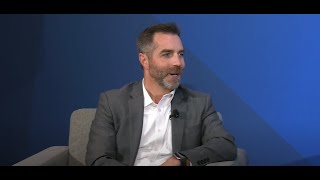
Ryan Watts, CEO of Denali Therapeutics, explains how the company targets neurodegenerative diseases by identifying genetic drivers and using biomarkers to track disease progression. Denali has seven clinical-stage programs for Parkinson's, ALS, and lysosomal storage disorders, using engineered molecules and biologics to cross the blood-brain barrier.
Chapters
Welcome to Flagship Studio. We're here for this interview with Ryan Watts from Denali. Ryan, neuroscience, and in particular neurodegeneration, has been viewed as one of the toughest areas to crack in terms of therapeutic breakthroughs. What is changing about that, and specifically what's changing in terms of Denali's leadership in this area? Right.
I mean, there's no question that neuroscience is difficult, but it's also one of the largest unmet needs. I think, you know, 1 out of 3 individuals age 80 is suffering from dementia, most likely Alzheimer's dementia. And just because the challenge is so large doesn't mean we shouldn't go all out to try to solve it. Probably the biggest factor in changing our probability of success is understanding the genetic drivers, what actually is causing disease. Genetically, what risk factors do we have in terms of our lifestyle? And that's where we started. We started with what we call the degenogenes, genes that mutated that cause neurodegeneration. I think the second factor that's really challenging in neuroscience is being able to look inside the brain. Unlike cancer, where you can see tumors growing, it's hard to see the brain degenerating. It's a slow process. And so biomarkers have been a major step forward in understanding how to basically follow disease. And so for us, the genetics and biomarkers start as the foundation to be able to solve these problems in neuroscience and specifically in neurodegeneration.
Can you tell us a bit about Denali's pipeline for the next 3 to 5 years in this area?
Right. I mean, it's such an incredible time to be in neuroscience and to be developing medicines for neurodegeneration. We have a broad pipeline. I imagine our pipeline really in two parts. We have small molecules that we've engineered to cross the blood-brain barrier, which is basically a vascular barrier that limits drugs accessing the brain. And then we have a large molecule platform to do the same thing, to cross the blood-brain barrier. And so our portfolio has really matured and advanced. We have 7 clinical stage programs and 3 in late stage now, and soon a 4th one starting late stage clinical trials, including in Parkinson's, ALS and rare neurodegenerative disorders or lysosomal storage diseases.
And when you think about the 3 to 5 years ahead and the discovery phase, what most excites you?
I think it's, for us, the most exciting thing is that we will be reading out clinical data that will tell us if our medicines are working. And hopefully those medicines will be working. We can then be prepared to deliver those medicines to patients.
I want to think about biomarkers specifically as a last question. The FDA has been looking at biomarkers in a new way, particularly around some neurodegenerative diseases like Alzheimer's. How does that affect how you think about the regulatory path for the— what you're developing at Denali?
Right. So when we founded Denali, we focused on 3 principles. The first, what we call the degenogene pathways. Again, genes—
What's a degenogene?
Okay. So the first is degenogene pathways. So degenogenes are genes when mutated that cause neurodegeneration. The second is engineering brain delivery, so how to get medicines across the blood-brain barrier. And the third, and relevant to your question, is biomarker-driven development. So we knew, you know, 8 years ago when we founded Denali that biomarkers were going to be the future for neurodegeneration. It was the only way for us to get a glimpse into the brain to see that our medicines were doing what we hoped. And the first type of biomarker you look at is a target engagement biomarker. Then you would look at pathway modulating biomarkers and ultimately disease modulating biomarkers. And you asked specifically about how regulators are viewing biomarkers. We see that, and regulators as well, as really the first sign that your drug is doing what it's designed to do. And then ultimately that will lead to clinical benefit.
So biomarkers, blood-brain pathway passages, and more coming to us from Denali. Bigger leaps. Thanks for joining us here in the flagship studio. We really look forward to seeing what's ahead for Denali.