Founder Stories: Ryan Watts, Co-Founder and CEO of Denali Therapeutics
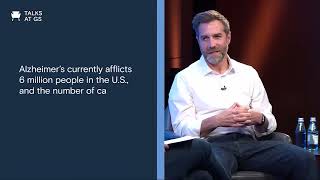
Ryan Watts, CEO of Denali Therapeutics, started the company after his mother developed Alzheimer's. Denali has 15 programs targeting neurodegenerative diseases, five in clinical trials, using engineered platforms to cross the blood-brain barrier and genetic insights like APOE4 to guide treatment.
Chapters
There's really no separation between what personally motivates me and what professionally motivates me. And I think in a field that's really difficult, you have to be founded on purpose. You have to really care about what you're doing.
Hello everyone, welcome to Talks at GS. I'm Amit Sinha, Head of Life Sciences Investing. It's my pleasure to welcome an innovative leader in the field of neuroscience, Dr. Ryan Watts. Ryan, thanks for being here with us today. As the co-founder and CEO of Denali Therapeutics, Ryan's been leading the charge to defeat neurodegenerative diseases like Alzheimer's and Parkinson's. And today we're going to talk to him about the progress he's made and the promise that cutting-edge therapies have to transform medicine and healthcare. Ryan, welcome.
Great to be here. Thanks, Amit.
Let's start by giving the audience some more of the background on your company. For those who aren't as familiar with the fantastic work and the innovation that you're doing, can you elaborate on Denali's mission?
I would love to. Great to be here, great to be back in New York and to be with you, Amit. Um, we founded Denali actually almost exactly 7 years ago. It was in May of 2015. It was really based on some really incredible genetic insight in Alzheimer's, Parkinson's, ALS, really new genes that have been discovered linked to these diseases with hopes of developing medicines that basically can effectively treat the diseases. And we'll get into more detail later. But I think what's really important is that we invented ways to get medicines into the brain to treat these diseases and then ways to measure if those medicines are working. Now we picked, I think, one of the hardest therapeutic areas. There's been incredible advances in cancer and infectious disease and in immunology. But the neurosciences, and in particular neurodegenerative diseases, represents a huge unmet need. And we felt like it was time for a focused effort in this space.
Well, let's talk about the personal side. You shared with me Alzheimer's has tragically struck your family twice. You watched it rob the memories of your wife's grandfather. And more recently your own mother. So this isn't just professional for you, it's deeply personal. How did you first notice that something didn't seem right with her?
I developed a close relationship, really a habit of calling her basically every day. I know this might be embarrassing for some people to admit, but for me it was a daily phone call to my mother every single day, you know, in the morning. And it was just incredible to live through her life, hearing about her friends and what's going on, and she is a very caring and giving, service-oriented person. And as I finished graduate school and started my own lab and effort at Genentech, those traditions continued. And in fact, those of you that know the Bay Area, there's two main freeways, 280 and 101, and I would drive on 280 every day, call my mother. I can still vividly remember those conversations. And what I noticed over that 11-year period is that she would start about, I would say, maybe 8 or 9 years into my time at Genentech, she started repeating herself. She would tell me a story, and then 3 minutes later, she would tell me the same story. It just happened to be that I had started working on initially neurodevelopmental disorders and then on neurodegeneration. And I knew immediately where we were going with this. I think for me, I just wanted to soak up every experience I could knowing that it would slowly— her memory would slowly decline.
Now, you'd already begun working on treatments for Alzheimer's before your mother was diagnosed. Tell us a little bit about— it's an interesting dynamic. You're trained as a neuroscientist, you're working on the disease, you're looking at the biology, the pathology, it's very scientific. But you have this incredibly human dynamic with your own mother progressing, not being able to do, unfortunately, much of anything about it. Just how did you— just take us through that chapter of your life.
Yeah, I mean, it's interesting. And for those of you that have parents or grandparents that have developed dementia, it's actually very difficult to get them properly diagnosed. And frankly, it doesn't really matter if you diagnose them because in the end, right now, there are no medicines that will transform their lives. A number of conversations with my mother about, hey, maybe it's time to see a doctor. And often someone who has dementia doesn't recognize that they have limitations. But I think the one memory that really comes to mind is we had just launched Denali. It was 2015. It was the first, I think, really big effort in Alzheimer's and Parkinson's. We had raised significant capital. You know, so excited to go after this and had founded the company with, you know, several close friends and colleagues. And probably worth noting that my mother actually never visited Denali because actually it came to the point where she wasn't— was unable to travel. And even though we've been in existence for 7 years, she had just kind of gotten to that point. So I had to bring Denali to her. And I remember it was, you know, about 6 months after we had launched the company. We sat down at our family kitchen table where we had so many experiences over our lives, and I opened up my laptop, shared with her the website, and on our website, the first thing it says is Defeat Degeneration. And she said to me, she said, I think I have that. And I said, well, I said, what do you mean? It was the first time she had actually admitted to some I think, you know, cognitive challenges. And I said, what do you mean? And then she said this, which I'll never forget. She said, never mind. I don't want you to love me any less. And I could not— I mean, I'm a trained neuroscientist. I could not find— I could not actually convince her to go see a neurologist.
Right.
And I also knew that there wasn't a good reason to do so. There weren't existing medicines that would actually help her. And there are very few. Dementias that are different than Alzheimer's that also have effective medicines, right? So I think that path to sort of diagnosis is really challenging for people. And I'm hoping that as we have transformative medicines, the desire to diagnose sooner and actually get on these transformative medicines will be greater. But until that point, I think a lot of people see like maybe normal aging and dementias as part of life, right?
One of the things about Alzheimer's, and we'll get to this a little bit later in the conversation, is that there's a genetic basis for some of it. You and your wife have been tested, and we've talked about this as well. You've discovered that you have a gene that puts you at higher risk. How does that shape your outlook on what you're doing on life more generally?
It's a fantastic question. It's also how do I think about my children who could develop a risk. And I think because my wife had a long family history of dementia, I was pretty convinced that they shared probably some of the common genetic risks of dementia. And at the time when actually we were tested, my mother hadn't developed dementia yet. So I didn't know of any family members that actually had memory loss as a part of aging. And so of course, for a fun date night, we decided to get genotyped. It's a long story I can share another time, but When you have a lab, you can do these things yourself and then you can confirm it, you know, through genetic testing like 23andMe. And so we essentially did this one night and it was kind of shocking. You know, we read out the— we ran the gels to look at the sequences and I found out that I carry one of the most common genetic risk factors for Alzheimer's. It's actually a certain gene. It's known as APOE and it comes in 3 flavors, 2, 3, and 4. And notably, APOE4, 25% of us carry a copy, and 60% of the Alzheimer's population carries a copy of this gene. So it's a major genetic risk factor, about 3-fold increased risk. If you have 2 copies of it, one copy from your mother and your father, you have a 14-fold increased risk of developing Alzheimer's. And I had to rerun it. We had to get it separately validated just because I knew my wife's family history. I thought it doesn't make sense that I would have this. But it's interesting that then, I mean, literally 3 years later, my mother started to develop dementia. And then I got a much better grasp on that. And really, you're asking what we can do in this generation is we can do something about this. We actually have the scientific tools to understand what is this gene doing? Why is it causing— why is there a risk around Alzheimer's disease? And Denali is not a founding story about solving my own Alzheimer's disease, but there's no doubt that when you know you have a risk and you see your family history, that your level of motivation is— it's more personal, right? And I think there are so many people that are actually at Denali who have the same experiences, same family history. Because it's such a common genetic risk, many of them carry these And then you have this collective desire to understand, you know, what is this? How do we develop a medicine to decrease the risk and ultimately like halt or just, you know, cure Alzheimer's in the sense that you can prevent it to never have it happen?
So between the journey that you went on with your mom who recently passed at the end of last year and your family, You know, there must be a sense of urgency to you coming to work every day, doing what you do. And I know from spending time with your team that is driven throughout the organization, that sense of urgency. Just elaborate a little bit more on that and how you think about drug development in the context of that sense of urgency.
Yeah, it's, you know, being a very impatient person, drug development is not the best career choice. It takes a very long time to invent a medicine and to show that it's working. But that being said, there are important steps all along the way that benefit from a sense of urgency. And I think that urgency, it's really twofold. It's going fast and going deep. And I think the going deep piece is probably inherited from my experience at Genentech and at Stanford, where really deep, insightful science is critical. But can you do that faster? And I think a lot of the tools that have been invented in the biomedical field right now allow us allows us to go much faster. I mean, I look at what we were able to do at Denali in 7 years with, you know, 6 clinical stage programs. I was able to, you know, work on 2 clinical stage programs over 11 years. I mean, things just move so much faster, yet it has that same depth, which increases the probability of success. And so, you know, for me, there, there's always this deep sense of urgency. What you have to do is break it into pieces and say, let's get to this milestone in the next 6 months. And that's success. Let's get to this point in the next year and a half, and that's success. And you have to look back, and it may take a decade from an initial genetic insight to a medicine. And in the neurodegenerative diseases, it could take 15 to 20 years to do that.
Makes total sense. I've always known you as someone who likes to run uphill and is not afraid of a challenge. You've chosen to take on the most complicated organ in the human body, and you've chosen to run at a field that the majority of the industry has moved away from. It's a graveyard. Too many failures. Too hard. Why do you believe that you and your team and Denali can actually achieve success in a field where most have failed?
Yeah, well, I'll start by agreeing with you that it's extremely challenging. When we founded Denali in 2015, I think within one year before and after at least four major biopharma companies announced that they were exiting neuroscience and neurodegeneration. For me, it's simple. It's a huge unmet need. And a lot has happened in that decade leading up to it. And I think that probably the number one thing that happened that prepares us for success in this space is back to that genetic understanding, having the genetic underpinnings of these diseases. I call it the genetic architecture. Many have heard of the oncogenes in cancer. In neurodegeneration, there's essentially the degenogenes, or genes when mutated that cause neurodegeneration. Between basically 2008 and 2015, the time leading up to the founding of Denali, there was an explosion in genetic insight in Alzheimer's, Parkinson's, and ALS. I think what we can do is we can take that genetic insight. We've built teams of biologists to understand what those genes are doing, giving us a higher probability of making medicines to manipulate those particular genetic lesions. The second area where there are major advances is inventing ways to get medicines into the brain or crossing the blood-brain barrier. And so we will just call it brain delivery. So genetics is one. The second is brain delivery. And that also started to heat up around 2010, leading to the founding of Denali in 2015. And I think the third area where we're seeing major advances are really in biomarkers, biomarkers that allow us to track disease, to diagnose both genetic biomarkers, fluid-based biomarkers, imaging. And I think we're going to get to an era where all of us will go in, we'll, we'll have our genotype, we'll get, you know, fluid samples, we'll get a scan, and we'll know what the risks are around these diseases. And we'll be able to take preventative medicine. So what positions Denali for success is that that genetic insight happened right before the founding. We've built a team around engineering brain delivery that is, I think, unique within the biopharma space. And then we've invested heavily in biomarkers that allow us to track disease and to see if our medicines are actually working. And I think you look at those with the blood-brain barrier being a unique piece,. It was actually exactly what led to really effective medicines in cancer 20 years previous. So that exact equation, all of those factors, the genetic understanding and biomarkers, were really key to making progress in, in the oncology space.
Let's spend a little bit more time on the blood-brain barrier technology because you are a leader in that. And it's something that, as I first started learning about it 6, 7 years ago, was It seemed amazingly promising as a breakthrough in the field. For the audience's benefit, we all have a blood-brain barrier. The reason that exists is to keep things out and away from the brain. So it's protective in the context of treating neurodegenerative diseases. It's a real challenge because it also keeps most drugs out of the brain. And so one of the things that Ryan and his team have had to take on is how do you effectively cross that barrier without compromising it?
Yeah, I think— Consistent with the theme of our conversation, I'll give you my personal story around how the blood-brain barrier became important to me as a scientist, and then more broadly, how it's important to Denali and then beyond. I was trained as a developmental neurobiologist. How does the nervous system actually develop? And then one of my mentors left Stanford and joined Genentech and became ultimately the chief scientific officer at Genentech. And through a number of conversations, I ended up leaving and joining him. I finished my PhD and started a lab at Genentech. And the very first area that I worked on was really blood vessels and tumors. And after about 3 years of working on blood vessels and tumors, we sort of realized that one of the greatest barriers for medicines, especially large medicines like therapeutic proteins like human insulin or, you know, anti-TNFs, you know, drugs for inflammation, was the fact that these drugs cannot get into the brain. And Amit, as you've already laid out, the blood-brain barrier, it's actually unique among all blood vessels in the body. And the way I like to think about it, and apologies that I'm a West Coaster, but I'll use a West Coast analogy. In a single human brain, there are 400 miles worth of blood vessels, like in my brain and your brain. In other words, that spans from San Francisco to Los Angeles. That's in a single brain. And so we have this incredible vasculature in our brain, but each one of those blood vessels is uniquely developed to limit, you know, anything getting into the brain. The challenge with that is that the medicines that have become so transformative in this era, especially biotherapeutics, just can't access the brain. They can't get across these blood vessels. And so we and others had the idea that maybe you could just hitch a ride with, you know, some of the transporters that are used to get iron into the brain or glucose. And, and so, you know, we started working on this and realized that in fact, it's, it's really unique approach. You in fact could hitch a ride and as a result, you can open up the nervous system for all neurological disorders. Now we're focused on a range of neurological disorders from Alzheimer's, which we've talked mainly about Alzheimer's, but even disorders like lysosomal storage diseases that affect young children where they're deficient in enzymes. We can now transport enzymes across this blood-brain barrier using these natural transporters, right? And so I think the way that we view it is that we want to go after diseases that we can actually tackle and show that it's working. And that's why you work in some of these rare diseases rare childhood diseases, incredibly transformative for the parents of those children where there's already enzymes that help like the physical manifestations, but they don't help the brain. Right. And that's how we built is basically from that point. And then going to the next stage would be ALS, Parkinson's, Alzheimer's using these technologies.
And it sounds like you could use this technology for things even away from neurodegeneration. Could you use it for, say, brain cancer?
Absolutely. So we have a— we actually have a few programs working on cancer, particularly breast cancer that metastasizes to the brain, a big unmet need. It's really the unmet need in breast cancer. And in addition to that, you know, other types of neurological and psychiatric disorders where you could inject a protein that would have a long-lasting effect on some of, let's say, the channels in the brain looking at depression and psychosis. So, you know, the way we look at it is they're really, you know, we're focused on areas that we think we can tackle and we have deep expertise, but there's certainly interest beyond that.
Let's talk about how some of those technology and genetics are translating into programs that you're developing. You've built an impressive pipeline, 15 programs, 5 of them clinical stage. How far away are we from having some of these things actually get to to a stage where they can help patients.
Yeah, that's it. I think it's fitting that we're having this conversation 7 years almost exactly to the date of the founding of Denali, and also the same month that we're now kicking off multiple late-stage studies, meaning the studies that are pivotal that will determine if these medicines will get approved. We're beginning in Parkinson's disease.
So we have—
we're basically on the cusp of beginning dosing in late-stage studies in Parkinson's disease. For, again, a genetic variant in Parkinson's. In Hunter syndrome, I had mentioned enzymes that are limited to getting across the blood-brain barrier. We're starting that late-stage study for hopefully approval of that medicine. And we just last week announced the initiation of an ALS study, a phase 2 study that's focused on efficacy. So it's a broad pipeline across these degenerative diseases, but all using the same themes of, the genetics around the disease, making sure the medicine gets into the brain, and then using biomarkers. And so when we're at these late-stage studies, we've already seen biomarkers that tell us the drug is working. It's doing what we've designed it to do. Now we need to ask, does it provide a robust patient benefit?
Let's just talk about where we go in the future. Can you paint a picture of how you see life sciences transforming medicine over the next 10, 20 years, where do you think we'll be on things like cancer and neurodegeneration?
Yeah, I mean, for my experience in the last 20-plus years in science and drug discovery is that the rate of acceleration is extraordinary. I mean, it's unbelievable. And I'll give an example. I'd mentioned before that I was working at Genentech for 11 years and we were able to get 2 medicines into clinical testing. Uh, in no less than 7 years, we've actually taken 10 medicines, 3 of which we've discontinued. That's, that's the part of the, part of the process.
Sure.
Uh, and part of that was because founding a company 5 years ago, or 7 years ago in our case, all the tools were so much more advanced than 15 years ago. The ability to make medicines, to process data, to analyze data. I mean, we, we and others now use, of course, computational power to accelerate, but also molecular tools like CRISPR that allows you to engineer genes and make important cell lines to test. This is— we're at a point, we're really at the cusp of incredible breakthroughs. Now, there's still going to be a lot of failure, and people have to be okay with that. I mean, in Alzheimer's disease, I think the success— well, we'll use the failure rate— it's 99.7% for medicines. But, you know, a lot of people say, well, must be better for cancer, it's like 93%. For cancer. When I use that percentage, it's like the probability that a medicine invented preclinically will actually be approved as a medicine, right? But notably, in areas like lysosomal storage disease and enzyme replacement therapy, the success rate was 90%. The failure rate was only 10%, right? So you can actually build momentum in disease areas that you have, again, less biology risk And it's really technology risk. So what I'm seeing now is it's all about translation. It's using these tools over the next 10 years so that there are transformative medicines and that newborn genetic screening will tell us, are there gonna be childhood diseases that we need to treat? We still will have the genetics. We can say, is there gonna be a risk of developing Parkinson's and Alzheimer's? And I would love a world where I would go in and have a brain scan and say, you know what, you're accumulating amyloid, it's time to remove that amyloid, decrease your risk. So I imagine in— may not be 10 years, maybe it's 15 years— that you'll actually have these preventative approaches for degenerative diseases where you can remove the toxic proteins that are building up over time and really prevent ever the onset of dementia. And I think that's where we're going. Certainly it's where Denali is going, but I think the field is going in that direction as well.
Well, even this concept that you just touched on, that these diseases aren't things that come online in your 70s or 80s. They actually start maybe in your 40s or 50s or 60s, and they slowly build. And therefore, the right way to treat them might actually be to start the process of cleaning out the system earlier in life. That's relatively new thinking, isn't it?
It is. And think of it from a regulator's perspective, from the FDA's perspective. How do you approve a medicine that you're basically developing for prevention. But I have an interesting genetic story. So we, we are going back to the APOE gene that I had mentioned before. That's a very common risk in, in, in Alzheimer's disease. 25% of the population carries this gene. 60% of Alzheimer's patients carry the gene. So it's a major risk. We actually did a study where we looked at individuals that had that gene but were 80 or 90 years old and didn't have Alzheimer's. And we asked, what was the, what, is there a gene that actually is decreasing the risk in the context of this increased risk? And we discovered a mutation in a gene that's well known in the Alzheimer's space. It's APP. It produces the amyloid plaque, the plaque that accumulates in brain. And this mutation reduces the production of that amyloid plaque by about 40%. And in doing so, basically is a massive preventative factor for Alzheimer's disease. So very strong genetic evidence. However, most of the amyloid-targeting medicines have failed. And the reason is that you're removing amyloid after 20 years of accumulation, right? And what you really need to be doing is removing amyloid a decade or two before you have any dementia, right? And the question is, How do we do that? Like, what, you know, how do we develop that as a medical community and as a society? How do we develop these preventative medicines where when you're testing them, it's already pretty late in the disease? You've already had a lot of cells in your brain die and you're starting to have, you know, dementia. I think we have to figure out how to do that. And, you know, some companies have done that. While we're at Genentech, we were, we were part of an Alzheimer's prevention initiative treating a set of patients that were predisposed to developing Alzheimer's at age 40. So very rare mutation. But beginning to treat them at age 30 and delaying the onset. So I think these type of unique genetic populations, we may be able to prove that there are preventative ways to, to, to go after these diseases.
When you think about the business side of it and, you know, it takes a village, especially to do something this hard. What is the best strategy that you've found to keep investors, the public, you need engagement, right? You need people who are going to back and support and fund what you're trying to do with the expectation that there's going to be failures and it's going to take time. How have you managed that?
Yeah, so we've spent 80% of our time today talking about Alzheimer's, and that's the ultimate goal. You know, we founded Denali to ultimately solve Alzheimer's, but the way we've actually built the company is to build on important successes in other therapeutic areas where the probability is substantially higher. So I give an example is lysosomal storage disease. And because, you know, this is an interview with me, I'm focusing on, on Alzheimer's. But in reality, you know, the equally compelling— I would argue maybe more compelling— are the stories of suffering in childhood diseases like lysosomal storage disease. Rapidly progressing children. And we've had many parents and parents who now have children that are on our clinical trials for our enzyme that can get across the blood-brain barrier. They come to Denali and they tell us what their life was like. Normal 2-year-old son, completely normal. And then within like months, you started to see this developmental delay. And with a year of substantial delay. And the idea was to basically take those children who are then, you know, diagnosed, they're on a medicine, but it doesn't treat the brain and that steadily declines. And so the reason I bring that up is that those are near-term solvable problems. We know the genetic cause, we know how we can solve them. And so when you build a company like Denali that has this big ultimate goal that may take 20 or 30 years, you need basically milestones that are achievable in the shorter period of time. And part of that is it motivates your team, it motivates investors. They see that there'll be a quicker, you know, return on their investment. You create value rapidly. But it's also this clear unmet need where you've invented a technology that can absolutely solve that. And so that's the way we look at— we look at is that diversity in the portfolio really gives an opportunity to create value in the near term.
In this field, particularly neurodegeneration, there's, you know, in some ways the expectation is failure, right? Most things are not going to work. So let's talk about leadership and leading an organization with that context and that backdrop. So huge unmet need, but also incredibly challenging to execute on. How do you think about just navigating those dynamics, galvanizing a team, taking the right risks at the right times to pursue new opportunities.
Yeah, I mean, it's interesting if you look back at the stories of success in biotechnology, behind almost every one of those stories are a large number of failures that led to the ultimate success. And so you have to build an organization that has the staying power. And we joke that when we, when we founded the company, we put a 20-second segment of this image of the actually Alaska Range, Denali, on the website, and it felt cold and harsh. You go to the website and it's like, wow, it's like cold and harsh. And it's— that's where it said Defeat Degeneration. And in some ways we're like, we need to select for people that are okay with that, you know, that realize that failure is likely and that they're motivated by the challenge. And that when they fail, they double down, not on the same thing, but they learn from those insights and go after it. And I mentioned before that we've taken 10 molecules to the clinic, but now we currently have 6. That's part of that process. It's the iterative learning of taking medicines forward, learning from them, and then improving upon that. And so I think from a leadership perspective, it's like, you know, you're signing up for something that may not be doable. But when it's done, it'll change everything, right? You know, and I think that that's what you hope for. You hope that people want to do that. They want purpose in their work, uh, and they're okay with failing because they knew that they were adding to the overall, you know, ultimate probability of success, right?
Well, just given what you've built and what you've learned over your career, what advice would you give to aspiring entrepreneurs in biotech?
Yeah, it's a, it's a good question. Uh, I don't know, I— everyone approaches it differently, but for me, as you've noticed by this conversation, there's really no separation between what personally motivates me and what professionally motivates me. And I think in a field that's really difficult, you have to be founded on purpose. You have to really care about what you're doing, uh, so that when it is difficult and when you hit when you, when you, when you meet challenges that you're still really committed to understanding and you're committed to, to, to success. So I, I personally think do something that you find has purpose, and there's many different ways. I mean, Amit, you joined us and helped us, you know, along the way as part of Denali's fundraising. You're part of that purpose, right? And you get to do that across many companies, and Goldman's fantastic at that. That's still a critical piece to it. So just look a little bit deeper at your work and ask, you know, what is the purpose behind what I'm doing?
That's great advice. You know, you've dedicated your life to solving the mysteries of the brain, and in the context of neurodegeneration and perhaps other things over time, where do you think we'll get to in our lifetimes? Do you think we'll get a very good understanding? Do you think some of these mysteries will be solved, or do you feel like that's going to take more time. And really, this generation's job is just to advance the field and continue to set up future generations.
I absolutely believe we're going to solve a number of these challenges. And I think part of that is the pattern of discovery and translation that you see across other therapeutic areas. You have that same foundation in neurodegenerative diseases. You just have the unique challenge that it's the brain. And it's the unknown. And you have the blood-brain barrier. You have these challenges that are unique to this organ. But there are examples already of approved medicines for neurological and neuromuscular diseases where the genetics lent the insight and were able to correct some of these underlying deficiencies. So we will get there. And I think there will be a subset of Alzheimer's disease that we understand genetically and we can really treat that subset, and then a subset that we don't understand and we still need to keep digging deeper. And they'll be basically, that's a real possibility, and that we can develop effective medicines for groups of these diseases and they no longer will be bucketed like breast cancer used to be bucketed, you know, as a single disease. It's now really the molecular architecture of the tumor, and maybe it will be the molecular architecture of, you know, the brain or your genome that will lead insight into what medicine will be tailored for you. I think the biggest challenge is that these diseases are slowly developing. And, you know, you think of the brain and how it, it degenerates and then compensates and it compensates more. And then think about when you're developing medicine, how do you measure that? How do you measure that over time? And so it's a little bit more challenging than taking an image of a tumor and saying, is it growing? Is it not growing? Right. And I think we'll— that's— I think the measurements piece is one of the missing pieces of developing effective medicines in this space.
We spent a lot of time talking about your personal journey, your relationship with your mom, the influence she had on you. It feels like that was— that is a core part that permeates who you are, what you do, how you live your life. I also read that every time that you had a breakthrough at Denali, you would call your mom and tell her about it. Over the past 7, 8 years as she was declining, did she understand what you were doing, what you were working on, what you were working toward?
I don't think she understood at all. I think, but like as any mother or any parent, it's easy to be proud of your child. And so I don't think she understood, but you know, probably the, most notable experience I had was we do this thing at Denali, and just an extraordinary team of people who all have— I mean, almost all of them have their own personal stories around neurological disease or neurodegenerative diseases. And we, during COVID we launched what we called Denali Connections, which was basically video of people's personal stories. And I think we've done like 40 now, and we're not a huge company, maybe 300-plus individuals. And And I actually spent time on a video with my parents and talking about my mom being a rodeo queen. And I'm so glad we have that video now. But I remember, you know, vividly in that experience, right after we were done videoing for about 3 hours, I walked out and I received a text message from our chief medical officer said, hey, we need to talk. And she alerted me to the fact that we had just gotten clinical data that was extraordinary in Hunter syndrome, that the blood-brain barrier technology that we had invented was working in humans. And it was really interesting to see that insight and the ability to celebrate that success, I think, was really critical.
Yeah, that's great. We talked a little bit about, um, one of the things that you told me that was surprising, but then as I understood it made sense, was I asked you how you felt when your mom passed, and, and the first word outta your mouth was relief. And it seemed like an odd reaction. Uh, but then you talked to me about just what she was going through, the toll on the family, watching her in that state. And there's a lot of people in the world who are dealing with a similar dynamic with a loved one, and what advice, uh, would you give them in terms of how to approach that?
The last week of my mother's life was really interesting to me. The last 2 years, uh, uh, you know, just literally sitting in the same spot on the couch, the same spot where we videoed, you know, the stories, uh, time and, and, and for 2 years straight, um, it's not a life to live. Yeah, right. When you have 7 children and you've given so much to the world, I mean, just incredible heart and service, that's not a life to, to, to live. And those last moments, which were very unique for me, there wasn't— there was a real feeling of, of relief. But part of that is also what I believe in terms of what happens next. Today we're not talking about life after death, we're talking about making medicines that will slow death. But, and I feel like in many ways the time had come. In fact, where it became obvious to me was October 16th, 2018. I think I was actually at an Alzheimer's meeting in Arizona and my parents live in Salt Lake City and I was on my way back to San Francisco where Denali's based. And so I stopped by in the middle of the week, which I never do. And I went to my parents' home and walked into my mother's closet. She was there and she looked at me and she had no idea who I was. Yeah. You know, and I was like, wow, you know. And think of that, that's 2018 and then we're looking at 2021. Right. You know, 3 years of that. And I think what happens is, you all know, and as you— you— the people you love, as they start to lose their memory, you start to forget what they used to be like, right? Right. You start to forget, and, and you want to have those memories. You want people to live to the end where they can have those conversations with you and say, you know, Ryan, never give up, or whatever last words. But instead, it's like I don't know who I'm around. So I think the sense of relief is just knowing that that suffering has ended.
Your father said that even at the height of your mother's memory loss, not a day went by where she wouldn't ask, where's Ryan? So if she were alive today, understanding that she wasn't fully aware of what you were doing and what you were working towards, what do you think she would say about where you are in your battle against neurodegenerative diseases?
Yeah, I mean, it was, I guess, being the youngest of 7 and having that unique relationship with my mother. Apparently, as time went on and her dementia continued, she would ask multiple times a day, where was I? And I'm sad to say she didn't ask where my other brothers were. They're probably not happy about that. I think, and I would come home and my dad's like, well, she asked for you 8 times today. I think, I mean, we think about, you know, many of us are parents or we have, obviously we all have parents. The belief that they instill in us that we can do hard things. And it's not just my mother, it's my father and my brothers and sister. And that I guess I don't fear failure because of that, right? And I think, I know that what we're trying to do, what the team that we've built is doing, which is extraordinary team, that they don't fear failure. And I think my mother would be, you know, and I've had particular challenging times over the last 7 years where I definitely feel her guidance and presence, especially, you know, since November, since she, since she passed.
Well, Ryan, I want to thank you once again for coming out and spending time with us over the past hour or so chatting about this. This session has been exceptionally informative, inspiring, but perhaps most importantly for those of us who have loved ones that are going through some form of neurodegeneration, it really gives us hope. Thank you once again.
Thank you, Amit.
More from Joshua







Scientist Stories: Hans Waterham, The value of phenotypic assays in peroxisomal disorders




Scientist Stories: Joel Zlotogora, Genetic carrier screening programs for reproductive purposes