Founder Stories: Sami Inkinen, Co-Founder and CEO of Virta Health
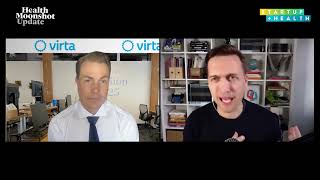
In this interview, Logan Plaster talks with Sami Inkinen, Finnish‑born serial entrepreneur who co‑founded Trulia and now leads Virta Health, a company aiming to reverse type‑2 diabetes for millions. Inkinen recounts his rural upbringing, early exposure to computers, education in physics, and the pivotal moment of his own diabetes diagnosis that sparked the Virta mission. He reflects on lessons learned from building and exiting Trulia—deep purpose, focusing on big‑rock priorities, and the difficulty of starting another venture. Inkinen explains the science behind nutritional reversal of diabetes, the need for a scalable tele‑medicine delivery model, and how early skepticism gave way to clinical evidence and acceptance, including an ADA consensus paper. He discusses long‑term outcomes, patient retention, and the importance of sustained remission. The conversation covers Virta’s fundraising of over $300 million, how capital fuels clinical trials, product development, and commercial scaling across employers, health plans, and government partners. Inkinen shares his record‑setting Pacific rowing adventure, the Finnish concept of “sisu,” and how extreme challenges build resilience. He advises founders to maintain hobbies, seek trusted mentors, and join peer‑coaching circles. Finally, he outlines Virta’s scaling roadmap, dream partnerships with single‑payer systems, the influence of his European perspective on U.S. health‑care, and his health‑moonshot vision of flattening global diabetes prevalence and making reversal the standard of care.
Chapters
Welcome to StarPell TV. I'm Logan Plaster. The number of people with type 2 diabetes is staggering. The WHO puts the number north of 460 million globally. Now, a lot of healthcare talk is around managing type 2 diabetes using nutrition and exercise and some medications, but what if we could reverse it completely? That's the goal and health moonshot of my guest today, Sami Inkinen, the co-founder of Virta, which StartUp Health backed in 2020. Specifically, Inkinen and his team would like to reverse diabetes in 100 million people by 2025. Now, that is a big goal, but Inkinen is not just any health tech founder. Before starting Virta, he disrupted the real estate market by co-founding Trulia, which he then sold to Zillow for $2.5 billion. Now with Virta, Inkinen has raised north of $350 million, giving them the capital needed to take their diabetes reversal platform and scale it in unprecedented ways. In our interview, we'll get into exactly what they've built, the science behind it, where they go from here, but also hear how Inkinen's childhood in Finland shaped him as an entrepreneur. Stick around. Well, Sami, thank you so much for joining me, uh, for Startup Health TV. I'm really excited to dig into your story and what you're building there at Virta.
Well, thank you so much, Logan. Let's go.
So with Virta and Trulia, which you ran before, You've helmed multi-billion-dollar companies, and yet my understanding is that you grew up in a relatively rural part of Finland, far from Silicon Valley. And so I wonder if you could just start by giving us a little snapshot of your upbringing and how it shaped where you are now.
Yeah. Well, first of all, the entire Finland is rural. It's 14 people per square kilometer. A kilometer. So wherever you grow, it's kind of raw. But it is true, I grew up on a farm. My parents didn't even go to high school, so it was kind of pretty much a lower middle class farm existence where I grew up. But yeah, so a good question is, how did I end up in America and, you know, building tech companies and into tech? I think there were a couple of things that is not from a farm upbringing that come to mind. One lucky break. I actually somehow got into computers very early, even before I turned 10, and ran one of the first BBSs, pre-internet bulletin board system, from our house, from the farm in 1980. So that was one. So I kind of got into computers and tech somewhat accidentally. I don't know how.
You don't remember how? How did you just get the device in hand?
Yeah, yeah, specifics. You know, I was reading these magazines about computers and my first computer was Commodore 64 and it was like a classified ad. I was into computers and I was looking at them and my dad's like, well, I think we can afford that. So it was a used Commodore 64 and then of course the BBS I was running on a Commodore Amiga at the time. But yeah, I think that was one of my lucky breaks in that I got into computers as like as a teenager already. That one. And I think the second thing is I was good at math and sort of sciences at school, so it came natural. And I, thanks to free education in Finland, free public education I should say, I went all the way and did master's in physics. So I was exposed to science and, you know, people who are doing cool, cool things with science. And that certainly has helped me throughout my career quite a bit. So that kind of pulled me out of the farm. So when you combine science and computers, seeing all possible, I think has really helped me to get where I am today.
Nice. Well, I want to zoom forward a little bit. You went to Stanford, you co-founded Trulia, which I understand you sold for $2.5 billion to Zillow in 2015. That's obviously what you'd consider a win, and yet we learn a lot from every situation like this. And so I wonder, coming out of Trulia and thinking about what was next, What was something that you wanted to do differently in your next venture, just having learned all those lessons from Trulia?
Well, I would say one lesson I learned was not to do another venture.
What does that mean?
Because operating and building a company is very, very, very hard. And it's easy to get excited about new ideas and new things. It's like a first date with someone, but it's a very different thing to get married and live together and be married for 4 years. So actually, that was one of the things in my mind, but I guess the related thing to directly answer your question, what I learned was, one, you better have a very, very deep, unexplainable reason for starting a company and trying to solve a problem, something that goes way beyond oh, this seems cool, or when I put the numbers into a spreadsheet, there's clearly an opportunity. So I think that's the one thing that, which maybe in your early 20s when you just want to start something, people may be thinking about it. But once you build a company over 10 years, you realize that, wow, it's freaking tough. It's tough. So you better love what you're trying to do. So I think that's one thing. And then of course I could write an entire book about starting and building and scaling a company. But I would say one thing that, the other thing that I took from the Trulia experience to Virta was that it's very important to realize what are the big rocks that you have to get right and then all the little stuff, the thousand to-dos that you have every day, separating the big stuff from the little stuff so you really sweat the things that matter is important. Because otherwise you just feel overwhelmed all the time and you feel like you don't get anything done and you just don't have enough time. Well, you don't have enough time. Enough time, but somehow you have to do the big stuff. So that was very helpful experience and learning from Trulia.
Well, that lesson is a great segue to talking about Virta, which is obviously why we're having this call today. This idea of having something you want to do that you are so deeply obsessed with that you have to solve. And I understand a big reason why we started Virta was your own diagnosis with diabetes. So I wonder if we could start in talking about Virta, back it up, and I want to hear about the moment really when you discovered that you had diabetes.
Yeah, well, let me start even half a step before that, which is I think my mindset was the same as most people have who look at type 2 diabetes, obesity as an epidemic, which is, well, we know what's going on. People just don't do what they should be doing. They eat too much. They don't exercise enough. End of story. Like, solve that. Good luck. Impossible. Impossible. And so that was always my mindset. And that completely changed through this personal experience, which was, you know, for years, actually decade plus, I was a relatively high-performing endurance athlete and won the world championships in triathlon in my age group. So I was fit. I was exercising too much and probably eating too little, like That was me. And then in the middle of that, I discovered that I was on my way to becoming type 2 diabetic and I was pre-diabetic. So suddenly in my own head, I was like, wait a second, do we actually know what's happening here or do we not know? And if we don't know, maybe there's a different way to address this disease. And, you know, I wasn't the scientist behind the Virta science, but the scientist that I met then ended up becoming my co-founders. And sure enough, the way we look at type 2 diabetes is, is not— or we look at it as a disease of obesity and people eat too much, but it's actually more about what you eat. And if you manipulate those things in the right way and in an individualized way, you can actually take a late-stage type 2 diabetes and reverse it. So, you know, the answer to your question is I realizing that I had been so wrong and then realizing that in that wrongness was the key to basically solving our type 2 diabetes epidemic, I just felt like, oh my God, I'm sitting on a secret. I've got to go and make this happen. And partially it's almost like an apology to all the people living with type 2 diabetes from me. It's like, oh my God, I was wrong. It's not about you being lazy or not doing what you know you should be doing. So, and there's a lot of details from there to Virta, but that's kind of what happened to me. And no spreadsheets were needed to justify starting the Virta for me. It felt very personal.
Yeah. Yeah. I mean, you had this moment, uh, of reckoning for yourself personally, I'm sure emotionally coming on the heels of, you know, these big wins, not just Trulia, but also you said, you know, these big athletic wins. And I wonder, just kind of speaking more personally, how that revelation of your health and maybe just, you know, realization of our own mortality, how it kind of puts some of those other things in perspective for you, like what really constitutes a win when your health is in the equation all of a sudden?
Well, actually, I would even go beyond health or before health. By traditional standards, how you define company success, Trulia went public 2012, and as you mentioned, and merged or was acquired by Zillow with a big number, economic number attached to it. So having gone through a bunch of ups and downs and success, I already learned throughout that journey that You know, I think the traditional definition of success is, at least in American context, it's very money-driven and I think misguided. So I came to realize that, you know, ultimately it's all about the journey and the question is how do you allocate your lifetime? And to me, and this relates directly, it's using creativity and creating something that improves other people's lives. Some people do that in a very small-scale setting, whether it's family or friends, but I feel like one of my gifts is some sort of cross-wiring in my head craziness to go and start a company and take that risk. But if I can do that by applying my creativity to help other people improve their lives, improve their health, like, that's the definition of success. And working on for a long, long time, to me, is the definition of success. Now, obviously you take investor money, you promise that you deliver a return and hopefully deliver. But that to me is a very, very narrow definition of like, if you just put numbers on a scoreboard. To me, it's more about the journey and do I allocate my time and my skills towards something that's meaningful?
Okay. So let's come to the present. Let's talk about Virta more specifically. Give us a story of how the idea idea for Virta came about. You just alluded a minute ago to meeting the scientist that kind of opened your eyes to really what's going on with type 2 diabetes. So kind of break that, break it down for us.
Yeah, well, again, I, I will take the half step backwards and just set the context that not everybody may be familiar with diabetes, but it's not a tiny little thing. It's globally half a billion people have type 2 Half a billion people have type 2 diabetes, more than 30 million in America. It's costing us $400 billion a year in America. And big numbers and money, but worst of all, it's just getting worse. So the current approach to type 2 diabetes is prescribing more medications to slow down the progression of this chronic disease. So the question is, is that the best we can do? Reduce this burden or reverse it. And, and so the answer to your question is my eyes totally opened when, you know, I got to know these scientists and they said, hey, we don't even need to perform surgery or create new drugs. There's a way to nutritionally take this, what's considered a chronic disease, and actually reverse it. And I was like, wait a second, you should be on a path to win a Nobel Prize, because if you can reverse this disease systematically, like, this is huge for, you know, both individuals and then also for the payers and taxpayers. And so I got very excited, and of course I was asking, like, why haven't you done it? But the challenge was that to individualize and provide the support and do it safely at scale, you would need to figure out a new way to deliver You just can't have one doctor per patient. Like, good luck with that 24/7, you know, one doctor per patient. It doesn't work and it's not economical. And, you know, my— I guess my innovation to the table was, well, if, if we were able to put real estate agents into people's pockets through smartphones, why not do that with doctors? And so that, that was the genesis of Virta. There was science that, you know, published evidence that we can manipulate nutrition to reverse the disease, and then marrying that with a new way of delivering care with real medical, super biomedical doctors. If you marry those two things, new way of delivering care enabled by tech and then the science, you could actually systematically reverse type 2 diabetes, which is this sadly larger-than-life problem. And that was how we got started, and we said this I guess ambitious mission, reverse diabetes in 100 million people.
Not many companies like yours talk about systematically reversing type 2. It's mostly about management, right? Um, how has the market responded to that kind of language, that more aggressive, um, more audacious language?
Yeah, I'll, I'll, I'll give you the— in the beginning, once upon a time, like 6 years ago when we started, then maybe the couple of years following, it was a lot of eye rolls. And questioning whether we are crazy or like, is there like, literally, are we telling not the truth? Like, is this even possible? So there was definitely a lot of eye rolling by, you know, even scientists and clinical leaders and chief medical officers of potential health plan employer customers. And that was one of the reasons we made this, I guess, a bold move as a tech-driven company that we started a prospective clinical trial as step one as of our evolution, 2015. So that, that was the beginning. And now where we are today, I think the most exciting thing to show that the world has changed and enough evidence is enough is that just a couple of months ago, August of this year, 2021, the American Diabetes Association and a group of diabetes scientists issued a consensus paper on type 2 diabetes remission and reversal, explaining how it's possible, what it means, and that it's possible, and, and the approach. So we've come a long way. And then of course we work with more than 200 large enterprise customers, health plans, even the U.S. Veterans Administration, bunch of employers from big brand names like Home Depot to Comcast to so forth. So, but it's pretty much seen anything. If you have substance that's worth even like electric vehicles, think about a decade ago, people were sort of laughing like, you're driving a Prius? What's wrong with you? Like, that's crazy. And now not having an electric vehicle is kind of like, when are you going to switch? Right? So it's very common when you take something new to the market.
How do you think, how do you think about the idea of a bounce back? I know this is an issue in, in type 2 diabetes, getting on a program, getting healthy, and then just kind of yo-yoing back to previous behavior. Is Virta a really long-term program or kind of how does that work?
Yeah, well, it's a very, very, very good question because reversing diabetes for a week or 3 months or even 6 or you could even say maybe for a year, it's not useful. You want to be delivering sustained long-term results. So absolutely, it's sort of a key, has been a key focus area for us ever since we started. And this is one of the reasons we are now 5 years into our prospective clinical trial and we've showed 10-week results So rapid outcomes for 10 weeks, like who cares? 6 months sustainability, then we showed 1 year sustainability, then we showed 2 year sustainability, and then we also showed 3.5 years, and then 5 years. So our focus has always been to deliver long-term results. And just to throw some numbers, at 1 year, our patient retention was 83%. Again, this is published, 83%, and 74% at 2 years. So it's very high. And even at that, what happened to the small percentage of people who left? Some of them is, based on the data that we've analyzed with some of our customers, is what we call graduates. So some of our patients who leave are successful. They're successful and they say like, thank you for the year and a half, I think I have what I need. I don't have diabetes anymore. I got rid of insulin, my medications, and I kind of know what I want to do. And so we gladly say, if you are at that point, congratulations, like, off you go. But we are here to provide support if you need. So very much focused on long-term success and sustainability. And I would say that's probably the most significant outcome that we have delivered because in, instead of lifestyle medicine or weight loss or metabolic health improvements through nutrition, do something for a month or 3 months, like literally anyone.
Yeah.
Anyone.
Yeah. You're not taking a bootcamp approach. You're taking a lifestyle approach.
I call the bootcamp the wedding photo approach, which is after the wedding photo, everything comes back.
You've been very successful fundraising. I don't know the total figure, but last news piece I saw was around $130 million. You've raised funds, and so obviously people see the value, investors see the value. And I'm just curious, at a very high level, what do you see these big fundraisers as enabling you to do as a company?
Yeah, well, yeah, we've raised more than $300 million in equity financing in total, and good news is most of it is still in the bank. And first, I should say to myself and to other entrepreneurs or aspiring entrepreneurs that fundraising is not a measure of business success. Now, rare that you can raise capital for a business that doesn't have fundamentals, but that is not the ultimate goal. That's not the focus. I call it to my team, I tell it's like a mortgage. Imagine you have a $300 million mortgage you have to pay back with a very, very high interest. So I always think of, you know, you raise capital to be able to achieve the goals that you need, but that is not a measure of the success. So you have to be very, very clear about that. And for better or worse, in Silicon Valley, there's a lot of celebration of like, hey, we had this private round and we raised this much money. It's like, guess what? If you could build a business with no capital from outside, wouldn't that be even better? And so I'm very conscious of that. And, but to your question, actually to build a Verta-like company, it is reasonably expensive. You know, again, we spend a lot of time running a clinical trial before we even started selling to anyone. So, so that, I'd say for the last 2 and a half years we've been commercializing, but we had like 4 years of just no revenue, things, just clinical trials. So, so that takes capital. And then now looking forward, um, it also takes capital to commercialize. Building the commercial engine is, is actually quite expensive. So that's the one area where we are investing quite a bit of capital. And then the second one is, um, just product development, uh, both new indications and building this platform that allows us to deliver what we call continuous remote care. Um, it's expensive to hire the software and data scientists and, and keep building, building that platform. So it takes capital.
It's capital intensive. Um, I want to shift gears a little bit. Uh, in reading about you, you came I can't not find news stories about your epic rowing excursion from California to Hawaii shortly after you were diagnosed with diabetes. You did this big row, you know, I think maybe made a world record for the speed at which you rowed in your vehicle from California to Hawaii with your wife, I understand, in order to raise awareness for diabetes. Is that right?
Well, first of all, absolutely, you are correct. I rode across the Pacific Ocean with my wife, or I should say my wife did most of the work and I took most of the credit, from California to Hawaii. But yeah, a big part of the, what I still consider crazy adventure and feels like an out-of-body experience. Did we really do that a few years ago? But a big raising awareness about the dangers of sugar specifically. And that was a key element of the adventure that we could do that, go very fast, work very hard with no sports products and drinks and gels and bars and that kind of stuff.
I guess my question is around, I don't know what that, the spirit of that adventure kind of says about the kind of CEO or leader that you are, and maybe if there were some— any lessons that you took from that. Not every CEO of a healthcare company is sort of jumping into that situation, and I'm just sort of wondering what that says about your ethos as a leader and a CEO, if anything.
Well, it's probably even better answered by others to say what are the dots they can connect. But, you know, I think rowing 45 days through storms, and again, it's unsupported, it's not like we had a helicopter following anything. It certainly takes a little bit craziness, willingness to take appropriate risks. It takes a lot of grit and perseverance and ability to just keep going through adversity and not fall apart physically or mentally. It's also mentally very tough. So hopefully I can apply those into my professional life. But I would say there were kind of a couple of philosophical or mental or number of lessons. One was this mantra that we kept repeating, this too shall pass, this too shall pass. So whether it was a storm or expectation of moving fast one day and then it all headwind and we got almost nowhere. It's very easy to just basically become demoralized, if not depressed, like, oh my God, this is horrible. But when you go through those cycles, like dozens of them, you realize that everything's very impermanent, that this too shall pass. So that's the one thing that I've certainly taken. Building a growth company, it's like running from one crisis to another and being able to have that perspective. Perspective, like, ah, this too shall pass, and enjoy the obstacle. That was one. And then I would say the second thing which really cemented my willingness to go and start Virta was the realization that pushing towards discomfort, being uncomfortable, those periods in my life, while sort of physically a permanent— sorry, temporarily uncomfortable have been most rewarding and gratifying. The role was just one of them. Like honestly, 1 million art strokes, guess how many of them were painful? 1 million. And so, but it was very rewarding experience in many ways. And so that sort of willingness to get uncomfortable rather than run towards I don't know, hot chocolate than fireplace, is something that I took from that role.
Is that a Finnish way of thinking? Sisu, is that what they call that?
Yeah, so your listeners should Google Sisu, S-I-S-U, something around perseverance and grit. Yeah, I think it took a lot of Sisu to do that role as well.
If you're mentoring a young CEO, Are there ways in which you would encourage them? I mean, in our portfolio, we've got hundreds of early-stage healthcare founders. Are there ways that you would encourage them to, I don't know, take risks outside of their business to sort of build up some of these muscles, this ability to face adversity so that when you hit it as a CEO, it's not the first time?
Interesting. I, I'd actually encourage or recommend a few other things for CEOs or founders, first time or second time. I would say one, definitely have a hobby or some deep interest where your identity is not tied into your company at all. Whether that's sports or arts or family, whatever that is, because it's very, very important. It makes it easier to take risks and not attach the outcome of the day-to-day whatever, that this is all there is. Well, that's not true. And but it's easier to get out of that mindset if you have like, you're just nobody or no one in another context. So that's one thing I would encourage everyone to do that actually helps risk-taking. And then the second one is, have trusted people that you can learn from. And so I'll just give you an example I have. I actually have not just one, but two executive coaches that I've worked with for years. So I'm still trying to learn and become better. I've also been a member of the YPO, Young Presidents Organization, and the forum that meets for 4 hours per month. For 13 years. So it's a group of 8 to 10 other CEOs that you meet with for 4 hours each month, and it's highly confidential. You talk about your personal life, your relationships, your professional life. So finding those groups— and this is not just a cocktail party with a bunch of techies, like, that is not authentic. I'm sorry, it's not. So that I would encourage, because it's a lonely job to be a founder or founder and CEO. And yeah, it's good to have that trusted support network who's there for you in the ups and the downs.
Yeah, it's interesting. We've actually adapted that YPO model to StartUp Health, something we called Circles, a peer-to-peer coaching circles, about 8 to 10 founders every month. Really a similar model that was adopted straight from YPO.
Yeah, I'm so, so glad that you, you're doing it. I think it's been amazing for me for 13 years.
Yeah, 13 years. Wow. Um, a lot of the same, uh, members as the— as in the beginning?
I still have some of the same forum mates. Some have turned around, but it's, you know, largely the same people for years and years with the same people. It's— I, I just cannot quantify the value and the benefit that I've had in my life, not just professional life, everything that happens in life, the ups and downs and having a family and having kids and, you know, parents' deaths and all kinds of things. It's been super helpful.
I've had the same experience, I can agree. So what are you most excited about with what's next for Virta?
Well, I— we are in this fun spot products being built and tested in clinical trials, got the first customer, so scaling phase. And so I would say, maybe this sounds boring, but like truly scaling the impact, reversing type 2 diabetes in more and more people and delivering that experience for the individuals and then delivering value to our customers. It's almost like we are now at this point where we'll be working so hard for 5 or 6 years and now it's starting to truly pay dividends and you go from side winds tailwinds. So that is what I'm most excited about right now. And it's kind of like seeing the results of the last 6 years of hard work. That, that is what I'm most excited about. And given the end product of our work is actually to improving, or you could say saving a life, yeah, I don't need anything else. That's Plenty of rewards for me.
What are some of the building blocks of that scaling process? I mean, hiring, building new offices, new markets, what are some of the specifics that excite you?
Yeah, well, obviously we deliver telemedicine, so there's less offices to be built. So we don't even physically touch our patients, but it's a couple of things. One, on the commercial side, you know, we started from employers, Then we went to health plans. Now we have some government state organizers. We work with like the state of Alabama and a couple of other states. So one is opening up new avenues there, including Medicare, Medicare Advantage. So one is opening up new channels with our commercial B2B partners. So that's a big part of it. And then honestly, the largest part of our organization is product development and scaling the platform because it's There's unlimited amount of opportunities to improve patient delight and outcomes and efficiency. And it's, I don't know, take a car analogy, going from Tesla Roadster to Model S to Model 3 and then just making it more affordable and more scalable. That's nonstop work that we have. And then behind the scenes, There are a couple of other indications we're working on through clinical trials and otherwise that I'm not in a position yet to, to talk about, but we haven't stopped, I guess, foundational research either, and we'll be publishing some hopefully exciting outcomes that either directly or indirectly relate to type 2 diabetes reversal.
Do you have like a dream partner that you know that if you worked with them you could just 10x your impact? Um, yes, but it's a secret because you're going to do it because it's not, because it's not a dream. You're actually going to do it. I love it.
Yeah. Well, I absolutely, I would say, um, so we formally only operate in the US today. I think one of my dream partners would be to have a nation state, maybe a single-payer system that says, Wait a second. This is ridiculous. Why are we battling this chronic disease? Because it's reversible. Let's do this nationwide and start to eliminate type 2 diabetes. I think that would be amazing.
Are you in talks with, are you in talks with Finland yet?
I'm in talks with Finland all the time, but sadly not verifying diabetes reversal yet. But I think that would be— and it will happen one day, but that's, uh, you know, a little ways away.
You know, when you got started in California, you were bringing a fresh perspective from, uh, Europe, from Finland. Uh, you've been at the game a long time, and, you know, I wonder if you feel like your approach to business and healthcare and how you think about, uh, access to care is, is still sort of European mindset or unique from what you see in the States? And if so, in what ways?
Yeah, well, in Rome you have to do like the Romans do. So I certainly tried to be very humble and naive. Knowing that I'm naive gives me a fresh pair of eyes, but be very humble about what I know and what I don't know. And The reason I mentioned the— in Rome, you do what the Romans do— is that, you know, we are not in a position to truly change policy or how the U.S. healthcare system works. So you kind of have to make sure that we have the product, we have the treatment to reverse type 2 diabetes, but then it has to plug into the U.S. system in terms of payments and incentives and distribution and so forth. So I would have a lot of ideas how you could potentially improve the US healthcare system from a policy perspective, personal experience living in and growing up in Finland. But the reality is when you're a startup, you have to assume that the landscape and the system is the same, and then you innovate with your own product. If you try to innovate with the system and the policy, Yeah, you're going to be waiting for a long, long time. So that's, that's kind of been my, my approach.
Final question. What's your health moonshot vision for where diabetes will be if things really go and scale the way that, that you're dreaming they will in, say, 5, 10 years? What's your vision for, for that market and for those, you know, hundreds of millions of patients who really are suffering along with their families?
Yeah, well, I think what would be very, very— well, there's two things that would be very impressive. I think the first one is kind of in the process of happening. One is the absolute sort of system-wide and global acceptance that the primary goal of type 2 diabetes care is reversal or remission of the disease. It's not just, oh, you have it, here's some drugs keep popping those. So that one would be that the primary goal is reversal or remission. I think we are a day closer today than we were today, and the consensus paper that came out in August is a very powerful signal towards that direction. So that's one. And then the second one is just putting the score— force on the scoreboard. And specifically, I think a point that would be worthy of massive celebration is that the growth curve of number of people with type 2 diabetes not just flattens, that becomes flat. Like, that would be actually massive because it's growing so fast. So once we see that, I would say it would be cause for massive celebration because once you see it flat, then there's no reason you can't be putting the absolute numbers down. Hopefully that happens in the US first. Yeah.
Question: is the current growth rate accelerating?
That's a good question. I know— so is the percentage of annualized growth actually accelerating? I actually don't remember on top of my head. It's just so big. So we have about half a billion. It's expected to be 700, 750 million globally in just in about a decade or so. I think check the numbers, but it's just sort of, you extrapolate a little bit and there's soon a billion, billion globally with type 2 diabetes. So whether it's accelerating or not, it's mind-blowingly large. And so yeah, something needs to happen and we are working on that something.
Well, that's a great note to end on. It is, it is a hard contrast to, to hold in your head that on one hand, this problem is so massive. On the other hand, you have had great success and you've raised these funds and you have these partners and you're making headway, and yet the iceberg is so big. So both things, both things are true. I mean, there is hope, and yet there's also this massive, massive challenge that we have to keep our eyes on.
But then it's also motivating to me and exciting. And again, sorry, I take this car analogies, although I'm a bicycle person, not a car person, but you could think of the same thing in electric vehicles versus— it's the same thing that there's so many gasoline-using cars sold every year. And like EVs are probably 5 years ahead of diabetes reversal, but it's kind of the same thing. It's motivating. It's exciting because to me it's inevitable. Like I always say to people, if type 2 diabetes can be reversed, it will be, it will be reversed because it just makes sense. It makes clinical sense, it makes economic sense, it makes ethical sense. It will happen. And so then it's just a question of how quickly can we scale. And, uh, yeah, that's why we are running.
Do you feel like that's a defining feature of a successful CEO, the ability to, um, identify and embrace what they see as inevitable, to see the inevitable before everybody else and embrace it?
You have to be able to dream and envision what does not exist. You definitely have to be able to do it. In fact, you cannot start a company unless you have that. And maybe that's another place where my wires are crossed in my head, that even as a kid, I was always dreaming about what could be, should be, rather than what I had. And so I was always thinking what could be built, what should be built, what can be built in 5 years. And so my head's always thinking that way. So I do think that's necessary because if you're just staring at your toes, it's kind of like in a running competition, you will stumble. Like you certainly have to look into the future and see a little bit around the corner. That others may, may not be able to see. Love it.
Well, Sami, thank you so much for taking the time with me. I love that you took your personal experience, the challenge of your diabetes diagnosis, and you leveraged that to create something that can help millions and millions of people. So we'll really be watching and excited to see what Virta does next.
Well, thank you so much, Logan.
All right. Be well. Take care.
Yeah, thank you.
A quick word about this show in case you're new around here. At StartUp Health, we believe in broadcasting the stories of health moonshot progress, the stories of the most forward-thinking entrepreneurs in health. If you want more of this good news about healthcare's problem solvers, make sure that you subscribe to our channel, hit that notification button, and follow us on social media @StartUpHealth.
More from Joshua







Scientist Stories: Hans Waterham, The value of phenotypic assays in peroxisomal disorders




Scientist Stories: Joel Zlotogora, Genetic carrier screening programs for reproductive purposes