Founder Stories: Serge Saxonov, Co-Founder and CEO of 10X Genomics
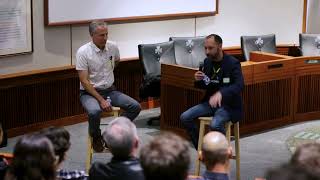
In this Next Tech speaker series interview, Serge Saxonov, co‑founder and CEO of 10x Genomics, shares the evolution of his career and the company. He recounts his early work in bioinformatics at 23andMe, his move to QuantaLife (later acquired by Bio‑Rad) where he helped develop digital PCR, and the founding of 10x Genomics in 2012 with Ben Hyssen and Kevin Ness. Saxonov describes the company’s product roadmap—from the first platform to the 2015 commercial launch, then single‑cell genomics and the recent Immunology line—highlighting how each addresses fundamental gaps in genome‑scale biology without building a sequencer. He outlines the fundraising journey (seed, Series A‑C, >$160 M) and rapid scaling of the team (from 3 founders to ~80 employees, now roughly 40 % R&D, 30 % commercial, the rest manufacturing/G&A). The conversation delves into the tension of managing multiple product lines, resource allocation, and the importance of having Plan A/B/C backup strategies. Saxonov emphasizes hiring multidisciplinary talent, maintaining a startup urgency as the company grows, and avoiding the complacency that can accompany abundant capital. He also discusses why 10x chose the East Bay (Pleasanton) over the Peninsula—lower real‑estate costs, broader talent catch‑area, and affordable housing for employees—while noting challenges in attracting software‑focused talent away from big‑tech firms. Finally, he reflects on the cultural differences between large corporations (risk‑averse, steady growth) and startups (fast impact), offering advice that success inevitably brings acquisition interest and internal disputes, which must be managed with additional capital and focus.
Chapters
Alright, well, welcome everybody. Our next installment of the Next Tech speaker series. My name is Brandon Cardwell. I run an organization called iGate. It's a nonprofit organization that's focused on building a thriving startup community in the Tri-Valley. We run an incubator in downtown Livermore, just opened a new space. If any of you would like to come by and check it out, we'd love to have you. This particular speaker series, which we call Next Tech, is really focused on identifying the companies, the individual innovators, the entrepreneurs who are building innovation communities outside of the Silicon Valley. So we're really excited to have Serge here tonight. And I'll turn it over to Yolanda, my co-organizer for this event, for some introductions. Actually, real quick, is Don here? Don's here. Okay, Vice Mayor of Dublin, Don Bill's gonna come up and do a quick welcome for us before we get in there.
Come on, Don.
Come on.
Can't have the Vice Mayor in the house and not have a welcome.
Yeah. I just appreciate you being here, and we're glad we can host something like this. We've had other successful events, so they're very rewarding, and I'm glad that I can be here and listen again. All right, thank you.
The, uh, the City of Dublin is one of the sponsors of Ideate. We're a nonprofit organization, so we definitely appreciate and count on the contributions of the City of Dublin to be able to put on these types of events for you all.
Thank you, Brandon, and thank you, Vice Mayor, for having us here. It's great to have a space like this. I have to say, one of the things we struggle with is finding space, so we really appreciate it. Um, so welcome everyone. If you are an East Bay BioNetwork, uh, returning networkie, welcome back. If you are new to the East Bay BioNetwork or have never heard of the East Bay BioNetwork, welcome. Really glad to see you. What the East Bay BioNetwork does is something that myself and my co-organizers Tim Meehan and Niraj put together because simply we live in the East Bay, we work— at least two of us work in the East Bay, and we got really, really tired of having to drive to South San Francisco and Sunnyvale for every bio networking event. So we figured that there was enough of us that we just started having some events in the East Bay. And so thankfully we've been able to partner with iGate, with the City of Pleasanton, with the City of Dublin to highlight some of the innovators in the Tri-Valley in particular. And so with that, I'd like to welcome all of you and then introduce a little bit about our format and our speakers. So the way we do this is basically It's a little bit like an interview and a little bit like audience participation. So Don Arnold is a local entrepreneur. He's right here to my immediate left. And Don is a Livermore resident. He is a— he used to work at Sandia National Labs. I know quite a few of you are from there. He's also from Sandia, and he went on to found a company called Xigent Technologies. That, from Exigent, they had a successful exit and were acquired by Syas Gamacher. He most recently has started a new venture called Verasod LLC, and again working in the area of biotech, working closely with startups and small biotech businesses who are trying to grow. And then what he's going to be doing is highlighting some of what Sir Saxonoff, send it to me, has accomplished. He is currently serving as CEO at the company he co-founded, 10x Genomics, here in Pleasanton. Prior to that, he was VP of QuantaLife, VP of application development at QuantaLife, which was also here in Pleasanton. QuantaLife has since been acquired by Bio-Rad and is still here in Pleasanton. So, and then prior to that, Serge was part of the founding team for 23andMe. And through their conversation— which is not based in Pleasanton.
Which is not based in Pleasanton.
So, you know, it takes a whole day to go over. But the The objective here is really through kind of a conversation, a somewhat structured conversation, to reveal a little bit about how to both grow a company and advance science at the same time. So, to you guys.
Okay, cool. All right, well, thanks, Dawn, for the introduction. Thanks everybody for being here. As she said, we're going to do Pretty much, I'll try to get things kicked off with a few questions and just get the conversation going with Serge. But that's just a— if you're familiar with 10x, it's just a fabulous story, and Serge's story is even more exciting, I think, in some ways. So hopefully we can bring that out tonight. We'll talk for a little bit, and then I'm going to start opening it up for questions. And just like the other NextX that I've attended, there's no shortage of questions, so then I just point fingers. So hopefully that'll be the case tonight. I think you'll see that the topic is exciting enough. So I think first thing probably to do is, instead of me talking, is let's search, kind of introduce himself and a bit of 10x Genomics for the folks who aren't familiar.
Great. Hey, so my background, just a little, I guess I'll try to keep it short. I only have so much time. My background is in bioinformatics. I came out of grad school, and right out of grad school started 23andMe. And 23andMe as a company, as this was conceptualized and it still is, is very much a data analysis informatics software company. We stayed away from all physical kinds of things. And that experience was a lot of fun. I can go into a lot of detail around all the different aspects that made it fun. It was good. It was really rewarding. We were building something that had not been build before. But part of what I sort of kind of felt there is running up against the limits of the existing technology because, again, we were very much a software company that was relying on kind of vendors of genomic— makers of genomic equipment to get us data. And it's always— there's sort of this perverse kind of thing that I kept running into. The things that we most wanted to know about the genome were the things that we could not actually access using that technology back then. It was my theories. From Illumina, and nowadays it's sort of the short-read sequencing from Illumina still. And it's— so that was sort of the setup for me to kind of move a bit upstream where the— again, 23andMe was also about data analysis, and you kind of bump up against the limits. You want to go into— actually start producing data, like go to the place where you can make data, make change, actually advance the part of the world. And I was recruited by a really close friend of mine who was a co-founder at Quantalife, this company, fairly early on, right around the time when the technology kind of started coming together. And they needed someone to, to build applications on top of the technology. It was a really cool kind of idea there. It was really to build— the goal there was to build the world's most precise DNA counter using these droplets. It's called digital PCR. So if you came in I came in, we, you know, built out, uh, so the team, and, uh, in many ways it was a very kind of invigorating experience. Again, you go from a company that was very much focused on one thing, one kind of area. Quantum was much more, um, was a different side of the world, right? It was focused on atoms, regions like physical things as opposed to software bits and such. And it was an awesome experience. We built a product and started selling it, and a larger company came in and purchased process. And we stayed there, you know, all the execs of Quantalight stayed there for, I think, up to 9 months, but one by one sort of left. And then, you know, there were various reasons for that, but fundamentally it was kind of different imperatives, right? The large company environment, it wasn't so much about innovation and pushing things forward. They had really great strength in terms of manufacturing and scale, which was a really nice complement of Quantalight, but it wasn't the kind of thing that we were like really excited doing. And so, uh, so with that, and then after some time, a couple of us got together to kind of work on a new project. And mainly the impetus initially was we liked working together. Like, that was, that was it. Like, it was just really fun. And, uh, my co-founder, uh, Ben Hyssen, is a chemist. And so we have very different, uh, different backgrounds. But there was one thing that we kind of felt this way with Quantum Life is that it was like incredibly productive to be working together. And if you can just communicate well enough, you can actually do things like that speed. Uh, that's just awesome, right? And so we wanted to kind of replicate that experience, and that was the impetus. And then the, uh, you know, shortly thereafter, Kevin Ness, who was the sort of my, uh, the person who recruited me into Quantel, joined us as the third founder of 10x. And he formed kind of the third leg of the stool. His background is microfluidics, mechanical engineering. Um, and, uh, sort of the problems that we started thinking about were really motivated by my experience before at my 3M, which is sort of addressing these big fundamental gaps that we saw existed in existing technology. Like, you could not— some, like, you know, people talk about sequencing genomes, but really we're doing— we're getting a very fragmentary picture of what's there. And we kind of saw that, you know, there had to be— there's like these fundamental gaps in the sequencing technology, and we wanted to address them but without building sequencers. So we got a set of rules, one of those not building a sequencer.
There's—
and, you know, for context, for those who don't know, there's probably at any given time there's probably 100 startups out there trying to build a new sequence, which is great. So we saw— and then kind of the— as we kind of started out 10x initially, again, it was sort of a project. We had the giggle and go. But as we attracted sort of people into the mix, and really great people, and thought more about the technology and what kinds of things we needed to build to actually get this product to work, realized there was something that was more fundamental, like pretty fundamental, pretty general. And the ambition set of the company grew. We started imagining that there's something— and I always wanted to build something really tremendous and something really impactful. And I started realizing this could be it. And so I think that has been one of the themes throughout 10X, is the increasing ambition as we scaled through all the different phases. The platform, the first— and then we went through the standard startup things. You raise some seed money, growing up friends, friends and previous investors, raised a Series A about a year later, and Series B, Series C. So, you know, at this point we've raised over $160 million. So one of the things about this industry in general, when you're building hardware, especially like a very multidisciplinary kind of thing, is that it takes a lot of capital, oftentimes a lot of capital early. But, you know, we were fortunate to, to do that and to, and to kind of go through all these phases. We built We went commercial in 2015. Up until that point, the company was very much R&D-focused, like 95-99%. We started selling our first product about 2 weeks after we hired our first salesperson. So it gives you a little bit of a kind of sense of priorities. And I think it was about last year when we really started hitting our sort of commercial stride, where things started going really, really well. And this year has been sort of bonkers from the commercial side, and our team has really grown tremendously since that point. I think, you know, to kind of fast forward, and, you know, there's been a lot of, you know, it's all kind of— sometimes it looks like a straight line from, from afar. It hasn't been, right? There's a lot of bumps along the way, a lot of problems you have to overcome, a lot of things here. But, uh, it's been a lot of fun. And, uh, you know, kind of the, you know, this point, the conception, right, the conception of the company with We've built this tremendous team and technology elements. And really, our motivation is to go after the big fundamental problems of biology. And so we went after this idea of getting the full genome. And the product is out there now. It's been in multiple iterations. The second product line that we launched was last year. It was around single-cell genomics. And that's kind of essentially a long— I would say, probably has existed for about 50 years since we started measuring gene expression. We've been measuring it by taking a sample and mixing the contents of all the cells together. And really, the right way to do it to do it every cell individually. And so that product has been tremendous in sort of just enabling all kinds of things that people could not do before. And then recently this year, we kind of launched a new product line with several products called Immunology, really being able to see the immune repertoire in its entire sort of precision for every sample, T cells and B cells and such. And so that's sort of our guiding star, right? Like, kind of identify what are the big fundamental problems that we need addressing in biology and we build products to address them. Let's see, so that's kind of a short version of it. Maybe you can kind of—
Yeah, yeah. So I think you can kind of see it's a great success story that was kept pretty well under the covers in the early days until the products started coming out. And you can see this from Serge's perspective coming around from being a mathematician picking up biology and Then jumping into 23andMe where we put those algorithms in place. Got some hardware chops with Quantlight and then moved over to tie everything back together with chemstrain algorithms again, but in a different role, right? So things have really evolved over time as far as your role as well, right? So you can kind of see a good summary of the story there. Now with where is 10X now? It sounds like there's a lot of— you've got a platform technology built around a great team that's brought together a lot of disciplines. But it sounds like you're going after some very different spaces in terms of the science and the customer base.
How does—
I mean, what does that do in terms of putting together challenges for the company at this stage of the growth? We'll go back a little bit farther now, but it's good Good time to kind of follow up on that right there, I think.
Yeah, so I think that is kind of one of those, I would say, central tensions in the company, especially for us, because usually, typically a company, by the time it gets to sort of multiple product lines, it's larger than we are because we're still relatively new, right? And yeah, it's a continuous sort of balance, right? Because you want to be, you know, We've got sort of multiple children now, right? And we want to be paying attention to all of them, but we don't necessarily have the bandwidth to be doing that. And so it is a lot of, you know, sort of trade-offs, and you want to make sure you're putting your resources, especially, let's say, especially on the marketing side. The product is out there, you need to be supporting customers, you need to be kind of promoting it. On the R&D side, it also, you know, we've oftentimes had to face like very hard questions, you know, limited resources, where you put the resources. And I think that's one of the things that we've done particularly well is saying, kind of focusing on the most important things as they come. And then one of the things that I also sort of— one of the other keys to actually building a successful company, you always want to have sort of Plan A and Plan B and Plan C in place for whatever you're working on. And so like one of the mantras of startups, right, is like you've got to focus, like it's really, really important. But then sort of the countervailing argument, you also need to have backup plans along the way. I think that's one of the things that made us particularly successful, is having that. And occasionally it requires some defocusing. So I do think it is, it is very much a strain on the company. It's one of the things that, that has been difficult, is getting less difficult just by virtue of our growth. And that's what— that's sort of the number one focus for me and for us is growth. Growth on the R&D side and on the commercial side. If we could double the company tomorrow in size, I would do that. But it's all about hiring great people.
So you said you had the first sales guy 2 years ago, right? So that was 95%. How big was the company at that point? Just to clarify, you started in 2012, as I recall, right?
2012, yeah. So kind of the scale— let's see if I can remember. So 2012, 3 people, right? We hired the end of the year. Some people, um, roughly 20 the year after. Um, by the time the launch were about, I would say, I want to say 80 people or so. Okay. So yeah, I was like, yeah, a couple, a couple marketing guys. Okay. Uh, maybe, maybe 80 is a bit of an overestimate, but somewhere thereabouts. Uh, we're much more balanced now.
What's the, what's the, how big and what's the breakdown within, or how's it changed over the past few years?
Yeah, so the commercial team has grown a lot, right? So we're about, I guess, about a third is the commercial team, and that includes sales, marketing, and customer success. The, you know, I would say the R&D team is a bit more, maybe about 40%, and then the rest is split between manufacturing and G&A and those kinds of functions.
You know, it also sounds like with going into those different spaces, you're designing a big role of product and applications. I mean, that's challenging to try to build teams with whole different sets of expertise, right? So how has that been to find people to bring in to take on these different roles? And it's time to move so quickly.
Well, yeah, so that was sort of, I would say, if you would kind of ask me like, what is the core or what the core source of our success at 10x is really, It's the people. And the core sort of the founding is like having a multidisciplinary mindset of solving problems. That was, uh, that's very important to the founding, to the philosophy of the team. And so from the beginning, that was our number one focus, right? It's hiring very less people in multiple disciplines. Initially very much technical disciplines, but as we expanded, we also kind of tried to expand that mindset to other functions like business, like, uh,, you know, with Bill Klein and so on, uh, commercial. Um, it has been, you know, so my experience, I came from very much an R&D side of things, um, and started out, uh, you know, not having done this, you know, before, and it was a kind of an interesting experience. Uh, wasn't too much of an issue early on because again, the company was very much an R&D organization. But as we scale, yeah, for sure, I personally have to kind of expand my scope a great deal and figure out how do you actually build out commercial and how do you run it. And for a time there, I actually had to run sales, right? And that was interesting. And all those kinds of— and I guess that's sort of the CEO job, right? Like, whenever there's holes, you have to kind of dig down and actually do all those things. And having not done that before, you have a continuous learning curve and cycle of sort of this hyper-learning. But it's also a lot of fun. I mean, it's a lot of stress, but it's a lot of fun. And I think the main thing, again, sort of coming back to the same lesson, like hiring great people, that's the way to get through all those problems. And, you know, some of it is figuring out who's a great person in an area that you've never done before. Um, yeah, and there you go. Yeah, with executives, you start getting kind of a sense of that. And also, you really want to hire, like, you know, smarts, drive, passion for what you do, and you want to get yourself people who feel that So that's a really different, uh, the 10x was a really different experience than from what you've done at prior companies, right?
So one, probably for you, it was over on the peninsula. You kind of went directly, you said you went directly out of a postdoc into what would by any stretch be characterized as a well-funded startup, right? So they had tons of cash and then you went through back into kind of the normal Or will start up a boat afterwards, right? So I mean, maybe you share a little bit about the jumping from BlueSocket to 23andMe and what that was like.
Yeah, that was actually— that was fun. So it was actually while I was in grad school, and it was BlueSocket, it wasn't directly, but it was— yeah, it was interesting, right? Because 23andMe is sort of the founding, for those who don't know, is, you know, we have very close connections to Google, and Tom Wojcicki, who's one of the founders, was At the time she was dating Sergey Brin, but later she got married to Sergey Brin. But also we had just her sister is part of the early Google circle. And there's sort of kind of the idea. And part of the reason we did— so my lab and I joined 23andMe together. We were going to start a company that was going to do essentially the same exact thing. We kind of ran into it. And, and, uh, a couple of other people that was sort of, uh, we could see that there was a scale that we could build there that was really exciting. And, uh, sort of the resources that were available were pretty mind-bending. And yeah, so some of those early experiences was pretty funny. It was like, you know, a couple of months after we started, we might have had a meeting with Jim Endicott, uh, with Art Levinson, the CEO, and his executive staff, talking about, hey, we have this thing, hey, look at our, um, you know prototype software package. And I thought that was just normal. I'm not impressed, but I guess that's what the world is like. You go into the development room and you chat with his executive staff and ask their opinion on things. And they take you seriously, right? And then those kinds of experiences we had. So I was telling John that at some point I mentioned to him— this was around the time when Word was about to come out, the movie, Sasha Baron Cohen. And somehow he came up with it. So I thought it was really funny. And then a few weeks later, she just turns to me and is like, hey, would you be interested in going to see Bored? I'm like, yeah, sure. Well, we can go to the premiere in LA. And so actually, yeah, in the chat, we flew down. And Jan walked into the mirror behind Ben Stiller and a bunch of us. And it was just like— and that was sort of like how things were, right? Yeah, I'm actually kind of like— actually, no, that's not what the world was like. And, uh, but, you know, uh, it was fun. It was definitely actually like lots of access to resources. And, uh, uh, but ultimately it still kind of requires, um, I mean, if you think— I don't want to say there wasn't— you know, ultimately the reason I'm pointing things where it is now, still, like, I give a lot of credit to Anne and for the perseverance and just kind of driving through and making things happen, having that vision from the beginning and never kind of wavering from it. Uh, you know, it sure helped to have essentially arbitrary access to resources, but that— I don't think that's sort of the core of the success of a company. I give her a lot of credit. The one thing that also kind of maybe counterintuitively actually, I think, gave some trouble to the company is access to that capital, because it makes people complacent and defocused. And when you are a startup and you're facing sort of death quarter by quarter, it tends to focus you And so, you know, so that's one of the things that definitely is true. Like, one of the things that I obsess about and scares me is getting complacent, right? Because I see that in large companies. I see that. I often think the difference, you know, between startups and large companies is not that, like, you become large and just by definition you become bad. It's like people tend to become complacent, right? And that's something that I'm trying to kind of keep at 10x as we scale, to kind of not lose that sense of urgency and keep moving fast and keep trying to make this happen. Because I fundamentally believe that the world needs deep technology, that the world needs the kinds of things that we're building. Yeah, lovely.
So that's a nice lead-in to think about, you know, transition you guys made out of QuantLife, in a sense, right? Because, because in a sense, the acquisition of QuantLife into Bio-Rad, people saw the vision, they saw the technology. You guys have built some great, some great devices, and applications were there for digital PCR. But the environment clearly wasn't something that the team was used to working with, and trying to find that, that energy that comes along with startup. I agree, you know, you get into— that's, that's the best place to be, right? For my personal— you know, it's just we talked about it. I was learning enough. I stuck with the company to learn different branches of how to run companies, and that was good. Once that was done, it's like, well, okay, it's good, right? So, you know, but in your case, it was a bit of a tricky transition, transition back in. You guys actually ended up moving back into the space that QuantLife had occupied previously. So I know there's a lot of— there are a lot of entrepreneurs entrepreneurs in the audience that are here that, you know, advice on leading and, you know, sticky issues you may have come into around that or, you know, motivations behind it, something like that. Maybe, uh, yeah, big company, small company.
Yeah, I mean, so big company, small company, yeah, they, um, I mean, so the thing specifically about Bio-Rad, it was clear, me looking at it very clearly, what the problem at the product and the digital PCR product. And there's lots of things you could do. But in terms of my personal decision there, tree there, I was like, well, the marginal value of what I could add there is— I could certainly add things. But relative to other people who could do the job arguably as well, so I didn't feel necessarily there was that much. The company is organized— and you can optimize companies for different things. Bio-Rad is to minimize risk and minimize variance and keep growing steadily year by year. Having like a huge number of products, uh, that sort of incrementally, you know, kind of, uh, increase, I guess, in share and such, uh, you know, whereas what motivates us and most startup people is fast growth, impact, right? Like making big changes happen. Um, so there's sort of the— I think just philosophically there's that incompatibility. And it's not bad, it's just like there's different ways to optimize the company, right? Um, and, uh, yeah, I think so that was, uh, that was part of, uh, part of the departure. When you do, they do interesting things. So there's a learning— I don't know if this is what you're getting into. A learning here is once you become successful, you should expect that there's going to be people who will feel greedy about the success. And so those who follow the story, we are indisputably saying we'll buy it. And so I guess there's not a whole lot of advice I can give on that except be like anticipated, it's going to happen. So it doesn't matter, almost doesn't matter what, what you do. If you are successful, the art space is such that you will end up most likely in a bunch of disputes, and this is kind of the price you pay for it. And to some extent, that's the, you know, that's part of, part of it is that you just need to raise more capital in order to fight those battles. Yeah, yeah, that's the, uh, it's kind of the trick there.
The other So I think, see, a couple more questions and we'll turn it over. We'll start gearing things up there. One of the nice things about your transition over to QuantLife and 10X from 23andMe is that you also have experience both being on the peninsula and being here in the East Bay. And one of the key things around this NextX series is really to look at the evolution of technology beyond the Silicon Valley region, right? And so it's kind of, you know, any commentary around what you see are the differences between, you know, Peninsula versus the Pleasanton, you know, Tri-Valley area here with Dublin, Pleasanton, Livermore. And then I'll tie in with the second question so I don't have to come back to it, is that I know you're also manufacturing as well. Maybe comments a little bit on how that being here is affecting your decision around that part of the company.
Yeah, so the key difference, right, between the peninsula and East Bay is like difference in real estate prices. Uh, so that's pretty dramatic, right? Uh, and then, you know, we're kind of looking at our, uh, when we're first starting up the company and looking, we actually gave it a pretty good sort of shot looking all around the Bay Area considering giving— considering all the possibilities, we even considered moving to the city of San Francisco Peninsula and ultimately kind of ended up settling back to Pleasanton, which is where Quantalight was, as Don mentioned. You know, through some amount of happenstance, we actually ended up getting back into the old Quantalight building, which I can go into detail if anyone cares. But the, uh, yeah, I mean, so the, the interesting thing here is like the rent, especially early on when starting up the company hugely important. And when you have something like our company where you have a lot of, a lot of different needs, a lot of lab space and such, rent becomes important. And so it being affordable here is important. The other aspect which people underappreciate is that this is a reverse commute for all the people who live in the peninsula— San Francisco, San Jose. So we actually get people from just about everywhere, right? We have people from San Jose, Menlo Park, Palo Alto, San Francisco, Oakland, Berkeley, out of the Oakland, Santa Cruz, Stockton, Tracy, I think Davis maybe, trying to remember. So in that sense, it actually kind of, it works out pretty well. We also, the other thing that's been interesting is like when people move from out of state into here, they can actually afford to buy a house. In around here in Pleasanton as opposed to if we were in Palo Alto or something. So that worked out well. I mean, there was definitely some challenges, like especially with software. So we, you know, a big huge part of our product is software and computational biology. You know, many ways that's sort of the core and the— yeah, and so getting people from San Francisco who have a lot of other options, for whom sort of the natural place to work is like a Google or, you know, a Facebook, that's where we face the biggest challenges. I think ultimately, you know, they'll be addressable, but on balance, I think we've done the right thing.
Okay.
All right. So, let's see. Let's open it up now. We got time for plenty of questions here.
My name is Ravi.
That's okay.
I think we can hear it.
More from Joshua







Scientist Stories: Hans Waterham, The value of phenotypic assays in peroxisomal disorders




Scientist Stories: Joel Zlotogora, Genetic carrier screening programs for reproductive purposes