Founder Stories: Shreeram Aradhye, Chief Medical Officer at Novartis
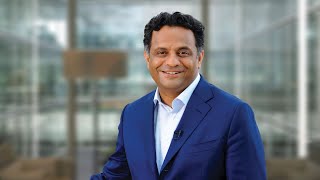
In this BioCentury Show interview, Simone Fishburne talks with Shreeram Aradhye, President of Global Drug Development and CMO of Novartis, about the company’s strategic shift toward becoming a "pay‑or‑play" medicines organization focused on the U.S. market. Aradhye explains how Novartis is narrowing its portfolio to five therapeutic areas, prioritizing programs with clear target product profiles, and aligning trial designs with U.S. practice. He discusses the company’s platform assets – the autologous CAR‑T T‑Charge platform, radioligand therapy (Pluvicto), gene‑therapy initiatives (Zolgensma, Gyroscope) – and the rationale for staying with autologous CAR‑T while exploring solid‑tumor indications. The conversation moves to the FDA’s Project Optimus dose‑optimization push, its impact on trial design, and how it may accelerate early‑stage partnerships between biotech and big pharma. Aradhye highlights the importance of diversity in trial enrollment, the use of real‑world evidence, and the integration of digital and AI tools to make clinical trials more efficient. He reflects on lessons learned from his three‑year biotech stint, emphasizing prioritization, operational discipline, and focus, and applies these to Novartis. Finally, he shares his perspective on neuroscience, including multiple sclerosis, neurodegeneration, and early neuro‑psych programs, and outlines the company’s approach to partnering and deal‑making in gene‑therapy and other areas.
Chapters
This is the BioCentury Show. Brought to you by BioEquity Europe. BioEquity is Europe's premier international showcase for financial dealmakers and biopharma executives to meet rising biotechs.
Hello and welcome to the BioCentury Show. I am Simone Fishburne, editor-in-chief, and I'm joined today by Sriram Ahrajje, President of Global Drug Development and CMO of Novartis. Sriram took the role of CMO in May 2022, rejoining the company after spending a few years leading development in the RNA company, Dicerna Pharmaceuticals, which Novo Nordisk acquired in 2021 for about $3.3 billion. Before that, Sriram had been in Novartis for about a decade in various leadership roles, including heading the neuroscience and multiple sclerosis activities, as well as immunology and transplantation, which of course is where your original medical expertise lies. So Sriram, I want to start at a high level. Your CEO, Vas Narasimhan, has been very frank about the need to change the trajectory of sales. He has set a goal to get the company as one of the top 5 for US sales. Obviously, that involves pruning some programs and maybe pouring more resources into others. So can you just start out— I'm sure this is sort of a huge interest to our audience— give me some— give us some insight into your decision-making process. What does it mean for risk appetite inside the company? And I want to tag on a question. It is hard to cut programs. You're managing a lot of change. How's that going?
Well, first, Simone, it's good to be on the BioCentury show. So thank you for having me. I'm delighted to be here. So I came back to Novartis about 9 months ago as Novartis transformed itself into a pay-or-play medicines company. With the ambition to do as well in the US as we do elsewhere in the world. And in that context, like you said, a key theme for us has been focus, focusing our portfolio in 5 key therapeutic areas, focusing our attention not so much on the numbers of things we successfully get approved, but on making sure that we get the right value products approved. In that context, success in the US is important and Certainly from my role as the head of development and chief medical officer, what that has meant is ensuring that the programs that we are progressing are ones that have the right target product profiles that define the evidence that the US requires, making sure that our programs have trials that are designed with US practice in mind, investigators that are part of those trials that will consider those products as being developed in partnership with them as opposed to by a company alone. So there are a lot of changes ongoing, but all in the theme of how are we going to work as a focused company for the first time in the history of Novartis instead of a conglomerate, a pure-play medicines company, to bring these products to patients in a successful way. The decision-making involves looking at the facts, getting clarity by bringing the right people around the table, me working together with my leadership team as well as my executive committee colleagues on aligning upon what are the programs that are of key interest to us. For example, Iptacopan, which is a key asset that we have now just released great data on in paroxysmal nocturnal hemoglobinuria. We're looking at data coming up in renal diseases later this year. Lots of excitement around Plovecto, but really sitting around the table and having a good common fact-based discussion and making the decisions to ensure that our resources are focused through prioritization, focusing on the fundamentals and operational discipline to move those products forward. And at 9 months, I'm very excited that I'm already seeing the fruits of some of that bearing fruit in the form of things moving to plan as I would have liked.
So we'll go through in the course of this discussion some of those decisions. And also, I want to touch a little bit on what you talked about as meeting the requirements of FDA, which in some places are sort of undergoing some change. Let's start with CAR-Ts. Now, Novartis is stuck with autologous CAR-Ts. I mean, we've asked this over the years and, you know, your CEO Vassa sort of said, no, no, no, we think rather than switching to allogeneic, it's better to actually solve the issues with autologous ones. And, you know, we recently wrote a story about improvements in that space, your T-charge platform appears to be addressing some of those manufacturing hurdles. And at the same time, your marketed first-generation product, Kymriah, it is lagging in sales some way behind Gilead's Yescarta. So can you talk about the plans for your CAR-T program and where it plays into Novartis' growth ambitions?
Yeah, so indeed we are focused on T-Charge, our platform that essentially aims to address some of the challenges of the manufacturing process with the premise that shortening the time from vein to vein and delivering T cells in a smaller number with increased stemness has the great potential to improve the profile of those CAR-T therapies. And we're seeing early evidence of that already. So indeed we have a lot of focus and we have focused on the autologous T-charge platform. But as you know, our cell therapy platform is one of our multiple plays in the fields of bringing novel platforms in the interest of patients. So we are also excited about our radioligand therapeutics like Pluvicto, the idea that we have the ability to connect a radioactive substance with a particular ligand targeting tumors in a manner that gives us the ability to both image and then treat. What we see, as we saw with PSMA in prostate cancer. A lot of effort going on in that area as a key area where we can make a big difference. We are proud of having delivered Zolgensma as the first gene therapy and then have a number of additional programs in that space behind Zolgensma. We acquired Gyroscope as a gene therapy platform with PPy addressing geographic atrophy. And of course, all the work in our small molecules and biologics areas continues as well. So all in all, we are committed to being the company that brings innovative medicines utilizing these new platforms to patients. And the idea that we are focusing and prioritizing allows us to make sure that we are making the right investments and taking the right steps to ensure that we are successful in that space.
And we'll talk about some of those other products in a minute. But I want to stay with CAR-Ts and understand whether you believe that you can be a leader, whether you believe the new technology can leapfrog your competitors. And I also want to ask whether you believe that there are— what you believe the prospects are for CAR-Ts in solid tumors. And the reason I'm asking that is, do you think that solid tumors is necessary for them, for this technology to become more than niche products?? Or are you gonna be relying on the other tools, you know, your radioligand therapies and so on, you know, for solid tumors? So maybe you can talk a little bit about that from a technical perspective.
So, you know, so we, I mean, we have chosen breast cancer and prostate cancer in the solid tumor space and lung cancer as the key tumors that we are focused on. As you know, we have a number of programs using other modalities in those tumor, for those tumors. With CAR-Ts, we believe that the therapy has applications in areas beyond oncology. But at this point in time, a lot of work going on along those solid tumors using the other modalities that we have at our disposal, like Kluvicto, like Kiskali, you know, our small molecule, looking at JDQ in lung cancer. Yeah, so super excited about those.
So let's talk about Gyroscope now, your ambitions. Suggest, you know, we've looked at your goals, we've looked at your pipeline, and you know, one conclusion might be that deal-making might also be a priority for Novartis. And obviously a lot of the pharmas are looking at that now. So many viewers and listeners might wanna know how to get on your dance card. Of course, a major acquisition was the gene therapy play Gyroscope, which I think that deal closed at the end of 2021, if I'm not wrong. And you've actually also had some gene therapy partnering deals since then. So tell us why the Gyroscope deal was important to Novartis and sort of what you're looking for going forward.
Well, I think as we have stated, you know, we, we are looking at both innovation that's coming from within NIBR, where we have brought a great deal of prioritization and focus. That's our research organization and are equally open to all the innovation that is happening on the outside. But this time with the lens of being focused in the therapeutic areas that now we have declared as are areas of interest. So cardiovascular, neuroscience, immunology, solid tumors, and hematology. So I think we also have our gene therapies unit, which, which you, uh, you know, under which still rests. Our plan now is using that focus in terms of those therapeutic areas and then looking for opportunities that can be built to further strengthen our position in those therapeutic areas. Because we firmly believe that if you bring in a product that is already able to leverage all of the internal expertise that have been built across the continuum in terms of both development capabilities and the commercial infrastructure, we have a much higher likelihood of success. And to that end, looking for deals that fit into our focus areas is now a key way that we're going to progress.
So one more pipeline question before we go to a break. And you mentioned your radioligand therapy. Now you are one of the leaders, but you're also one of the few players in this space. Maybe you can just talk about how these drugs work and what is behind your enthusiasm and your strategy here.
You know, so, so a radioligand therapeutic, like it sounds, is the connecting of a radioactive material with a particular ligand. That targets a protein that is expressed on tumor cells and thereby in a precise manner, sort of a precision radiotherapy way, delivering that radiation to those tumor cells anywhere in the body. We believe that this has now opened up the door of what I think of as a fairly simple and elegant model, which is you're able to image the tumor expressing that particular antigen, and then whatever you see, you can treat, followed by, you know, when you provide the therapeutic. And as you have known, that has manifested nicely in the results we had with Pluvicto, first in the metastatic prostate cancer setting after Taxanes, more recently with the trials we read out in the earlier stage. And we think that rare ligand therapeutics are going to offer a unique opportunity to start addressing tumors in a way that was not previously possible. In order to do so, of course, requires the commitment of a large organization that can overcome many of the elements of being able to produce these drugs, develop them and market them. And we are making great strides in ensuring that we're doing that. And we believe that that will give us the ability to be the ones that lead this space in the future.
Right. So we're going to take a break because that's a great thing that we'll come back to, which what you're talking about here is the very fact that you're a large company allows you to be a player in a space that because of the complexity of the molecules. So I want to come back because, you know, after the break, you've obviously been in a small company now and a large company and talk about some of the differences across those. So we'll take a break and pick up the conversation after this break.
Sure. The 23rd BioEquity Europe Conference heads to Dublin, Ireland in May 2023 with a program focused on how to create a new playbook for biotech success in Europe. In 2022, over 800 industry leaders from 30 countries joined BioEquity in Milan, Italy for 2+ days of strategic panels, one-to-one partnering meetings, and C-level networking. More than 150 biotechs selected by BioCentury presented their story to investors and potential partners. Don't wait! Two of the last three in-person BioEquity conferences sold out. Register today and join BioCentury, EBD, and our Dublin regional host committee at the industry's premier C-suite and investor conference. Visit bioequityeurope.com for more information.
Thank you. We are back at the BioCentury Show with Shriram Aradje from Novartis. I want to ask your thoughts about a recent push by FDA for dose optimization studies in cancer, part of Project Optimus, I think. And the idea is that, you know, this would replace the standard paradigm of maximum tolerated dose. We've written about this recently. You know, you talked at the beginning about creating data that will be acceptable to FDA. Obviously, part of that means a diverse patient set, but it also means, you know, thinking differently about some trials. So if you think about dose optimization studies, I mean, these are much more intensive. Do you think, you know, labor-intensive, time-intensive, cost-intensive? Do you think they're going to slow down drug development? And how is that going to affect how you think about constructing trials?
Yeah, you know, first I want to say, Simone, that we look— the fact that we are now talking about dose optimization in oncology is a reflection of where we have come in our journey of being with our ability to treat cancer. The reason we had the maximal tolerated dose paradigm at a time when all that mattered was survival and you tolerated a whole lot of side effects in the pursuit of that survival benefit. We're in a different place now. There are many cancers that we have drugs for. People are now focused on not only how long you live, but what your quality of life is and how well you live. And in that context, the fact that there is now an expectation that meaningful evidence should involve the ability to define what is an optimal dose makes sense. To that end, This is, of course, now an emerging paradigm shift in development in oncology. In fact, me and my leadership team spent an hour actually just last week discussing how this is going to impact the programs that we are running and how does that inform our plans for the early translational studies and how they're to be run. And when it comes to, given the fact that this now creates a somewhat greater complexity, both in terms of cost, time, and, and how you can get things done. When I think back to my biotech time for 3 years and then coming back, I just feel like there is now an opportunity for, on the one hand, continuing to foster all the early innovation that's happening in biotech, but then marrying that with early collaborations with big pharma so that we are able to bring the resources and the capabilities to combine with the innovation that biotech brings in order to design the programs that stay focused on ensuring that there is a meaningful and optimized path for a particular drug to patients. So, so what I see is now with these requirements, perhaps a greater opportunity for further partnering between smaller biotechs and bigger pharma on designing the optimal programs for these therapies with great potential.
So let's stay there for a minute. You've obviously now had experience both sides of the table being in a small biotech. And as we talked about this, really, you know, creates a much heavier burden. Does that mean now small biotechs, I mean, the impact on them, does it make a dependency on them to partner with you? Does it mean partnering is going to happen earlier so they can no longer, let's say, wait until a Phase 2 or later until they've got the best dose? Quite often they might want to do that. They're going to need to partner with you earlier in order to generate that data. Is that what you see happening?
You know, when I think of a typical biotech plan, where many times it may have had a slightly shorter goal of delivering enough information to be able to then secure the necessary capital at the right valuation for the next round, I expect that there's going to be a spectrum of companies where depending on the funding, they're going to have to deliver the plans that do define the optimal dose. But I do believe that fundamentally The optimal path for that drug, even beyond the dose being optimized and then being studied further, is probably going to happen in many cases, perhaps more often, with a small company partnering with a larger pharma company bringing the right resources, provided that the actual agent holds the promise based on the mechanism of action or whatever the hypothesis is for it to be tested. But I do see this changing the way those early programs are designed. And the ability to execute them will probably see a greater, in my mind at least, a greater opportunity for partnering at earlier stages with the right pharma partners.
And staying there for, you know, one moment more where I referred earlier on with the requirement from FDA, and I think broadly across the industry, we all know that this is important, which is to have patient cohorts that represent demographically and in terms of diversity, the burden of disease obviously that is harder and takes longer, meaning its recruitment times will— recruiting will take longer, sorry. And we actually are given to understand that there's already quite a burden on recruitment. It's already quite hard. So what does that mean for small companies as well?
Well, I think, I think, you know, the theme that we are discussing now is how the standard of what is required evidence evolving. And I think that to me, that represents us having arrived at a place where we've achieved certain milestones, you know, overall as an ecosystem. And in that context, now getting sure that we are paying attention to the type of evidence we generate. So when it comes to diversity, the idea that the generated evidence is representative and relevant, as the relevant patients represented for whom the drug is eventually going to be marketed and made available, is a principle that we have had for a long time. The requirement for making sure that people have plans on defining how you will address those requirements is now becoming almost a requirement from the regulators, and you wrote about it. In our case, again, this was another topic that we have discussed actively about for a large company, how will we actively make the plans to ensure that the investigators we work with, the sites we work with, making sure that we have the right plans for engaging with patients that represent the entire diversity of the population that we who you hope to serve. All of that becomes part of comprehensive and appropriate planning. And to that end, while it may take a little bit longer, my view is that with good planning and with the right intent, it should be possible to get done. Naturally, it will take some resources, and once again, this may again involve the opportunity for people to partner at an earlier stage than they might have otherwise done in order to ensure that the right evidence is provided. But I see both of these developments as being an encouragement for greater partnering, which eventually is in the interest of everyone because eventually it's all about the right patients.
So you've presented a fairly positive picture on how far we've come. I could present to you the flip side, like over the last 20 to 30 years, you know, I think innovation has marched ahead at a pace that maybe we couldn't have even anticipated. The generation of new technologies and the discovery of new biology But it really hasn't been matched in efficiencies in turning those concepts and ideas and discoveries into medicines. So, you know, if we think about clinical trial efficiencies, we've actually talked about two things that might make the outcome better, but certainly won't make them more efficient. How are we going to bend this curve? Well, what do you see as the upcoming innovations or changes in thinking about clinical trial strategies that can really improve our ability actually to create drugs in a shorter timeframe?
You know, I mean, you know, reducing cycle times has been top of mind for us for a very long time. And when it comes to the specifics of what might make the conduct of clinical trials more efficient, I think we learned a lot of things during the pandemic. I believe that our ability to design and execute on trials leveraging technology is going to make a difference. We've already seen evidence of that starting to happen. It is not as easy as people might have imagined, but we are very optimistic. So at Novartis, you know, we have made for many years now the commitment to saying that we will invest the necessary, in the necessary ways in order to ensure that we leverage both data and digital technologies. So identifying patients from secondary sources of data for figuring out where the patients are when we are planning our trials, ensuring that the collection of data, the the processing of it being handled in a very specific way and advanced techniques. We are piloting approaches like the use of artificial intelligence for informing protocol design in ways that enhances the feasibility and the success of being able to execute them, being able to— So there are a number of actions where we are now integrating tech, if you will, in the ways of working. But I do believe that the ultimate solution to what you're describing is going to come from tech enablement of the operationalization of these trials.
Are you telling me ChatGPT is going to be drafting our clinical trial protocols?
Definitely not. But, but, but just like in medicine, a tech-assisted or computer-assisted human is probably the one who does the protocol. Yeah.
Let's just go back to, you know, your, your time in biotech. You know, you'd obviously been in pharma for a while. You went to biotech, you've come back. In that time, did you discover operational efficiencies that you can leverage now in Novartis, or do you think that the sizes and structures of these organizations are just too different to really be able to learn one from another?
Yeah, well, no, definitely. Look, I, you know, I have ever since I've come back and I mean, I've even written about it now that my time in the 3 years in biotech, I've considered as an extremely important experience now, and I've brought back really these three principles that we talk— that I have implemented within, which is the ability to prioritize on what matters, making sure that you've got the fundamentals right and ensuring that you have operational discipline to deliver on ambitious plans with a sense of accountability, which in a biotech setting where you have very limited resources becomes a matter of survival. While a large complex company cannot ever be like a little biotech, living that mindset at the program team level and the ways you work is still possible. And I'm seeing evidence of that already happening in the mind months that I've been back. But I do believe that there is, there is a lot that can be learned from large corporations. And we live in the land of where we have the ability to deploy resources and bring to bear capabilities that a small company may not always have. But the mindset of what it means to be focused and to deliver with operational discipline on the fundamentals that matter is certainly a mindset that we can embrace. And That's certainly what we're doing now at Novartis ever since I've been back and I'm working hard at it.
So for my last couple of questions, I want to go to some of your own history, which, you know, you have a history of neurodegeneration. Novartis has several programs in MS and a few other indications. Alzheimer's disease, of course, is one of the most discussed neurodegeneration indications at the moment. And Novartis has its own history there. Seems that there's also momentum in ALS. At the same time, it's not really clear whether a lot of this is noise or progress. So I'm sort of asking you your own personal opinion now, given your experience in this field, how you're thinking about it. Do you think we're at a tipping point where progress might be delivered to patients, or do you think we've still got a lot of sort of mud to walk through?
I think, you know, look, when it comes to neuroscience and look, I trained as a nephrologist, I worked in transplantation, I was involved in the development of Gilenya and I ended up neuroscience at Novartis before I left for biotech. I want to say that the frontier of the unmet needs in neuroscience is real. I also want to say I used to always discuss with my oncology colleagues that the fact that we can remove a tumor and we know what it's doing is not the same as what we can do in neuroscience. It is a frontier that has been challenging, but I am very optimistic that we are seeing progress being made. If you think of all the investments that have gone into, even in the 3 years that I was out in biotech, in neuroscience, I believe that better understanding of science enabled by improvements in technology are going to make progress. And we have maintained neuroscience as a key area of focus. We're excited about the products we market, like Kesimpta, We are excited about our partnership in Parkinson's. So we believe, I do believe that this, you know, I'm not gonna say it's easy, but I also think that this is the next frontier of major unmet need where once again, those with the kinds of resource that we have have to be committed to be responsibly working in the space to make a difference for patients who need it.
Well, I have to counter that a little bit in this way, and my own background is in neuroscience. In dopamine receptors. And I have for decades been saying it's just about to take off, and I still think it's just about to take off. But when you talk about progress, I don't think that there's a lot of progress in neuropsychiatry. So there's a lot of money going into neurodegeneration, but not into neuropsych. And as of the least at the end of last year, according to your public announcements, you still had a program in depression, but not a ton of activity. And you out-license the compound for substance use disorders at the same time. And Novartis is not alone in this. You know, I'm not picking on Novartis. Novartis is not alone on this. But at the same time, you know, we know that there's a massive mental health burden on populations in the US and globally, and even more so coming out of the pandemic. So please, you know, what is the future of drug development in this area and what's it going to take to see, you know, some of the big companies throwing resources, embracing the risk and getting back in there?
Well, look, we, you know, like we are now proud to have had our focus in 5 therapeutic areas. Neuroscience is one of them. Within that, we have MS and we have neurodegeneration. We have early programs in the neuropsych space that, of course, are very early. We will, you know, we will be evaluating what they deliver. But all in all, Simone, what I'll say to you is that, yes, it's been difficult. And yes, there have been ups and downs along this way. But I think when you said that we haven't yet made progress and taken off, I realized that until you actually have taken off, we'll only know we've taken off when we do. And until then, we just have to keep trying. But at the same time, we also believe that making sure that you first prioritize the areas where you've built expertise and knowledge and have the infrastructure is what we are committed to now. I think we should all stay tuned.
So I'm going to end one last question on something that is also quite forward-looking, I hope. I want to just ask you about real-world evidence and where that fits into your strategy, your drug development paradigm, and whether you really think that that can be a difference maker for some of the things that we've been talking about.
Look, I think that the ability to access real-world data, some of which constitutes evidence, has been a big advance in the ways we think about it. And, you know, when I was previously head of medical affairs, uh, and chief medical officer for the pharma business at Novartis, uh, one of my goals was to make sure that we had actually developed the infrastructure to be able to gain access to and analyze the real-world datasets in all of the disease areas of interest. And there are many ways in which that helps us inform What is the unmet need? What is current clinical practice? How best are, how are people being treated? Where are the patients? Is a protocol going to be feasible? So I'm a big fan of ensuring that real-world data sets are being able to be utilized and evidence generated in the real world is used to inform both decision-making as well as guiding the next steps in terms of assessing unmet need. For me, what's important is that rather than it being just a buzzword for doing something with real-world data, I feel like making sure that we have a focused question and then we know that the purpose for which we're going to use the information, the right datasets are available, is the thing that we try to do with rigor now. And I— and it's really an integral part of the way we work.
Well, thank you very much. That's been a great conversation and we look forward to Following what happens at Novartis. Great.
Thank you, Simone. The BioCentury Show is brought to you by BioEquity Europe. BioEquity is Europe's premier international showcase for financial dealmakers and biopharma executives to meet rising biotechs.
More from Joshua







Scientist Stories: Hans Waterham, The value of phenotypic assays in peroxisomal disorders




Scientist Stories: Joel Zlotogora, Genetic carrier screening programs for reproductive purposes