Founder Stories: Simon Moroney, Co-Founder and CEO of MorphoSys
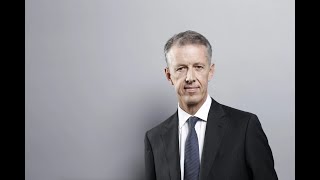
Simon Moroney built MorphoSys from an antibody platform into a biotech with 30 clinical compounds. The company's flagship drug guselkumab, developed with Janssen for psoriasis, is heading to market approval. Moroney discusses long partnerships, a failed trial that was revived, and the shift toward commercializing MorphoSys's own drugs.
Chapters
So we'll start with the second interview with Simon Mohony, who is our local star, local speaker. Please, Simon. So yeah, you can give a round of applause to Stefan and to Simon as well. So Simon He founded Morphosis one year after I was born, so 1992. So here, and he grew it to be one of the largest, or the largest biotech in Germany. Over 300 people work, I think, just somewhere, just there. Market cap of 1.5 million. So really, really nice success. So yeah, thank you again. Sit down. So for those who don't know you, I mean, you specialized in antibody development. I think you've developed over 100 antibodies, brought them to the clinics with partners. That's really impressive, actually. How many made it to the market?
Currently zero, but we're hopeful that at the end of this year the first one could get approved.
And how does it look like, the rest of the pipeline?
Yeah, at the moment we have 30 compounds in clinical trials, and of those, 27 are based on our proprietary platform. So I think it's been a fantastically productive platform. And as I said, the first product should come to the market end of this year, and we expect that to be the beginning of a flow of products which will reach the market over the coming years.
And so it's, um, it's a compound which is partnered with Janssen. And what's the story of that compound?
Yeah, this is an amazing compound. It's an antibody based on our platform against IL-23. It's highly specific for IL-23. And Janssen has developed it in psoriasis, moderate to severe psoriasis. And we saw the first Phase 3 data at the end of last year, October 2015, 2016, sorry. And just amazing, amazing data. Efficacy as good as anything we've seen in psoriasis. Safety looked very clean. And above all, the administration is subcutaneous once every 2 to 3 months. So imagine that. We're seeing patients with, a vast majority of patients with a complete clearance of skin based on a single subcutaneous injection every 2 to 3 months. So we're really excited about it. We think it's going to be a great drug.
And how, how big was the deal with Janssen?
This was a deal that we did back at the beginning of 2000. It was a multiple target deal with them. It's not the biggest deal we've done. It's been with Novartis. But there are a number of programs from that collaboration still going on. And we're hopeful that there'll be other programs coming to market alongside guselkumab, which is the name of this antibody.
Yeah, that's great. And so it's already over 15 years, the collaboration with them. It's amazing. And I guess, yeah, talking about ups and downs as well, like Stefan mentioned, Novartis, you had a bit more down. On their collaboration, how is it going now with them?
[Speaker] I mean, the only down was a year ago, which was a compound, bimagramab, in a phase 3 trial failed or missed its primary endpoint. And we got hit, as you'd expect, stock price. But the interesting thing is that that compound is still very much alive. It's actually in 3 phase 2 trials right now ongoing. Novartis is very committed to that program. So I guess the message there is just because the lead indication may fail, it doesn't mean that the program is dead.
And be persistent to bring it through.
Be persistent. Same as what Stefan said. You have to be persistent in this business.
Yeah, that's great. And what Stefan just said about transforming Neon into a commercial entity, is it also your goal, like longer term, for Morphosis to bring your own antibodies to the market?
Yeah, it is, absolutely. And it's, you know, it's a logical transition from, you know, in our case we started out as a technology provider. We then added development, so we develop our own compounds now. You know, the next logical step, growth step, is to commercialize those compounds. And specifically, we have a compound that'll enter a pivotal trial this year, an anti-CD19 antibody for B-cell malignancies that we're planning to commercialize ourselves when it comes to market, which will be around 2020, 2021, something like that.
Okay, good. And then, and about the history, like, why did you start it as a pure platform technology, I mean, platform company? And why didn't you try, like, to move faster to the market on your own?
Yeah, you won't remember this because you were probably 1 or 2 at the time, but in the early '90s there wasn't a lot of faith in drug development, and particularly for antibodies. And the mode, if you like, at the time was very much about develop a platform and then partner that platform. And, you know, we saw then subsequently the genomics and proteomics and all this kind of stuff. And we were part of that generation, if you like. And so therefore our strategy in those early days was based on establishing a platform for therapeutic antibody generation, and partnering that platform with pharma companies. That's going to serve us now extremely well. That's not our focus now, but it's going to serve us extremely well when those products come to market and generate what we think will be a very attractive royalty stream.
That's great. I mean, it's already so amazing to bring a platform company to that size. I mean, it's not that many in Europe.
Yeah, and I think the reason is that the platform's been incredibly productive. Honestly, I can't think of another platform, a single platform that's produced so many clinical candidates. As I say, 27 programs in the clinic at the moment are based on that platform that we dreamt up in the early '90s. And I think there's a message in that, which is don't rely on a platform business model, because it's actually very, very few platforms that are that productive that it can really be the basis of a successful company.
Yeah, that's great. And will you stick forever to antibodies, or do you have plans to take, I don't know, next generation, let's say, cell therapy platform, or to, I don't know, any other platform?
We have a constrained peptide platform. So cyclic peptides, our subsidiary LanthioPharma, has developed a class of peptides called Lantipeptides, which we see as being very complementary to the antibodies we do. But we feel there's still a lot of mileage in, and not just Not just naked antibodies, but of course bispecifics and other modified forms of antibody as well. We think there's a lot still to be done there.
Yeah. All right. I guess I had a question about checkpoint inhibitors, immunooncology. Like, what's your— I mean, how active are you in this space, and what's your view on the space?
Yeah, I think it's opened up a whole new approach to treating cancer. And the CTLA-4, PD-1, PD-L1 initial products, if you like, kind of opened people's eyes to what's possible. And now what's going on, and I think what's going to dominate the space for the next several years, is are there other checkpoint targets which are going to be as good or better? Will combinations of those existing checkpoint inhibitors with small molecules or other biologics provide us with better outcomes than the checkpoint inhibitors we're seeing at the moment? And you know, there's a huge amount of work going on, of course. There are hundreds and hundreds and hundreds of clinical trials of combinations, PD-1, small molecule PD-1, other antibody, PD-L1, CTLA-4, and so on. And there's a lot of exploratory research going on into the next generation of checkpoint inhibitors. So it's gonna be a bonanza for the next long time.
For the next 20 years.
Certainly the next 10 years, yeah.
And you have your own programs as well, checkpoint inhibitors?
We do, yeah. We have a very interesting collaboration with Merck, German Merck, which is focused on some unexplored checkpoint inhibitors. We're very excited about what we're seeing there. And we have some proprietary programs ongoing as well with novel approaches. I mean, our view here is, you know, the bar has been established quite high with the PD-1s, PD-L1s, so we really have to do something that's noticeably better in terms of efficacy, duration of survival, safety, for example. There has to be some improvement on these current therapies if you're going to be able to compete here.
Yeah. And why didn't you try to bring the PD-1, PD-L1 first? Or why did you— wasn't you who brought the first one?
Yeah, I mean, we didn't think of it early enough. Maybe that's the honest answer. You know, when that science was going on all those years ago, you know, we weren't thinking about that, I guess. But of course, if you could have, and if we could have, we would have been in great shape.
Yeah, that would be nice. That's great. And now getting a bit more to the financial, I mean, as Stefan mentioned, there was no IPO in Germany in the past, I mean, at least 10 years, beside Brain. Like, but you are listed in Frankfurt. Did it affect your stock as well, or like, did you see any difference based on this?
We listed in '99. We then got hit very hard when the Neumarkt collapsed in 2002 or so. But in the meantime, we have a lot of American investors, a lot of American institutions. So, you know, for us, you know, we have the benefit of those deep-pocketed, very supportive US investors as well as a handful of good investors spread across Europe. So the listing, you know, the stock market listing doesn't make a huge difference for us now at our stage.
At your stage, yeah, okay. And so now your market cap is 1.5?
1.5 or so, yeah.
And yeah, how do you— I mean, it's— I compared this to like, let's say, EvoTech, and your market cap compared to employees, like, I mean, you're— is way higher, like, employee. Yeah, like way, way higher actually. Um, like, what, what's, what's your view on the, on the, on the market cap, on the stock price?
Yeah, I mean, honestly, I don't worry about that metric, market cap per employee, but You know, the model that we're trying to follow is actually a well-known model in the US. You know, there are many, many, many examples of innovative biotechnology companies in the US that have pursued a technology that's enabled them to make a proprietary drug and then take that drug all the way to market and commercialize it. If we think of oncology and you think of pharmacyclics, Medivation, Seattle Genetics, The list goes on and on and on. And remarkably, this is something— and the lack of finance in Europe is partly to blame here— remarkably, there's very, very few examples of those type of companies in Europe. And that's something we'd like to try and reproduce here.
Almost none of them, I mean.
Almost none, yeah, there you go. But it should be possible. It should be possible because the science is every bit as good here as it is there. The people are every bit as good here as they are there. It must be possible.
Yeah, I mean, that was one of my questions. Like, I mean, the only company I know is like Actelion who brought re:product to market, super successful, now got acquired, $30 billion by J&J. Is it also your ambition, like, in, I don't know, next 5 to 10 years to be the size of Actelion?
You know, we don't say, look, we want to have a market cap of X in time, whatever. But, you know, we want to grow definitely beyond where we are at the moment. And there are plenty of, as I said, plenty of examples in the US to show I think that that's possible. I'm convinced it's possible. So, what we're concentrating on is doing the things that should make that happen, which is focusing on the pipeline basically, and focusing in our case on a handful of very promising drugs and making sure we do a good job in developing those.
Yeah. That's good. And another question more on like, on the company culture. I mean, you are one of the few biotech founders who are still heading the company instead of shares in the company. I talked with a few Morpho employees and they told me a few anecdotes on like that on the first day you came to the lab and you canceled the meeting just to say hi and these kind of anecdotes. And to me it's really, really amazing. Like, are you still doing it like 22 years after? Like, really, what's your focus on the company culture?
You know, I stopped touring the labs when people started to get nervous when I showed up there. Kind of along the lines of, what's he doing in here? So, I mean, we have, we try and maintain a great culture there because I think it helps productivity. That's the reason we do it. You know, on day one we said we're all gonna duzen each other. You know, for young employees who started Morphosis, it's probably a little bit tough for them to duzen me, maybe.
They do it.
But they do it anyway, because it's the rule, which is great. And, you know, I'm a great believer that if you have an environment where people want to come, and want to work, then the company will be successful. So we work very hard at that.
And I guess as you are founder, you can still like really maintain this and put the focus on this, rather than other companies where founders left and then like—
Yeah, maybe. I mean, for example, HR reports into me, and that's been a deliberate thing that, you know, I'm a strong believer in culture, and I share that with our head of HR, Sylvia Diermietzel, and you know, I think that's to the benefit of the climate within the company and ultimately our productivity, we hope.
That's great. I had one last question. I talked with one of your first investors last week because I was trying to get some tricky questions. I don't know if it was this one. Trying to get some background and I asked him like, yeah, do you have a tricky question for Simon? He was like, yeah, no, everything is good, but I have one. You can ask him when he'll pass the CEO job. If you have any plan to pass the CEO position.
Okay, I don't have any plans to do that, but if I do and when I do, you'll be the first to know about it.
We have embargo. That's great. Do you have any question in the audience? Don't be shy. You can do it, Simon.
It was said previously that if a company wants to raise more capital, for example, to launch a new drug, then it would be required to go again to the stock market. Always some equity and not to go into debt. What is your view on this point?
So, I just have to repeat for the mic, but for all of them. So, it's a few previous speakers said about going back to the market or double listing to raise more capital. And what's your view on this? Correct? Yeah.
Yeah. And equity versus debt was the point, right?
Yeah.
I mean, I would agree with Stefan that, you know, the type of business we all are, which is you need to spend lots of money, I'm not sure that debt is such a great idea because the horizon at which point you can start paying that debt back is presumably so far away that you shouldn't be relying on it, frankly. So, you know, again, if we look to the US, 99% of the companies over there are equity financed. And that's, I think, unavoidable in this industry. I wouldn't recommend getting into debt.
I'm asking why you said that you don't feel any benefits from being listed on the stock market.
Oh, sorry. Maybe I didn't make it clear. I said for us it doesn't make a difference really now whether we're listed on the NASDAQ or elsewhere or whether we're listed in Frankfurt because we can access all of the investors we need whether they be European or the US. From this German listing. So it's certainly important that we're public and that we have a stock market listing, but it's maybe a bit less important where that listing is.
And Simon, I think you have already reached, so to say, a mid-sized market capitalization, which is absolutely important, you know, for public investors. Because like Stefan says, If you are too small, you know, a lot of investors get stuck. There is no liquidity and investors need liquidity. They need to go into stocks and out of the stocks. Is this your experience also?
Yeah.
So the question was, I mean, the comment was about if you are listed and you already have a certain size, then you have, you can attract public investors and get liquidity. And if that was your case as well?
Yeah, it is certainly true. No question. The bigger you are, The more liquid your stock, the easier it is for investors to get in and get out. Maybe you should give a flavor on your capital raise last year. The overnight raise. Yeah, you know, we were sort of thinking about raising some new money last year. And then we thought, why don't we try and do it right after the election, the US election. And we didn't really know what was going to happen. We didn't know who was going to win, obviously. And we didn't know how the markets were going to react, whoever did win. And then, so Trump won, of course, as we know. And the markets reacted positively. And we pulled the trigger. And within 3 or 4 hours, we'd raised €115 million. And that's, you know, that's one of the beauties of being a public company, that you can do that. And I have to say that the banks who managed this process said to me, you need to be prepared to do some work here. You know, make a few calls to investors and so on in advance. I said, "Fine, just tell me." I made one call to one investor and that was it. So, in terms of my work, the ratio of my work to the amount of money we raised, that was the most efficient call ever.
That's good. That's amazing. Any other question? From behind, yeah, go on.
When you started off with your platform, the antibody development platform, at one point did you have the idea or the strategy to, you know, have your own antibodies and commercialize them?
Yeah, so when you, with the antibody platform, if you want to commercialize your own antibody, I think you answered partially to this, yeah.
Yeah, we always had the ambition to do that, and actually we started in 2002 or so to invest seriously in proprietary product development. And then the Neuer Markt collapsed. We couldn't raise any money at all. And so we didn't have the funds to be able to do that. So at that time we put those plans on ice and kind of went back to the original business model, which was to commercialize the platform. And it wasn't until, you know, 2007, 2008, so 6, 7 years later, that we went back to those original plans and started in earnest.
Any other question? From all in the back? I was curious about exits. If you often receive offers, like, I don't know, or did you receive offers? What's your view on exits? Is there any intention to exit soon?
You know, whenever—
It's a good question for a public company.
Yeah, it is a great one. You know, whenever we talk to pharmaceutical companies about collaborations or whatever, those discussions are sometimes wide-ranging. But obviously nothing has eventuated yet, right? Which is why we're still here. And our feeling, and this is not just the management but it's also the board, is that this company could be worth a lot more. That we have the potential to be worth many times what we're worth now. And the belief is there that we should focus on achieving that and not selling out to the first buyer that comes along.
That's great. Please. Oh, there's a question.
Yeah, I have a question.
It's kind of two questions in one.
What is the most challenging and also what is the most rewarding part of being the CEO of a biotech? What's the most challenging and the most rewarding part of being a CEO and founder of a biotech?
I'll start with the easy part. The most rewarding part is definitely when you see major progress being made. And that could be fantastic new technology, that could be clinical data, that could be a deal. You know, when those real successes happen, that's a great time because You can share that success with the people in the company. There's a great spirit. It's a nice feeling. I think the most challenging time that I can remember is when you're running out of money. I mean, that's, you know, and I remember times back in the '90s, early '90s, when we had 2 months' worth of cash. And, you know, you have, I don't know how many we had, 20 or so employees. Families, you know, and you're worried about what's going to happen. That's tough.
And I guess you will be 25 years old in office this year. Will you throw a huge party?
We are 25 this year. We are planning an event. We'll make sure you get an invitation, Philip. Wonderful! No, no, we couldn't— of course we couldn't let this year go by without celebrating, so there will be a celebration for sure.
That's great. Then I hope you will sell it well. Thanks again for joining, and please, round of applause for Simon.
More from Joshua







Scientist Stories: Hans Waterham, The value of phenotypic assays in peroxisomal disorders




Scientist Stories: Joel Zlotogora, Genetic carrier screening programs for reproductive purposes