Founder Stories: Stephanie Tagliatela, Co-Founder and CSO of Encoded Therapeutics
In a webinar hosted by Misty, Stephanie Tagliatela (Co‑Founder & CSO) and Dr. Salvador Rico (CMO) of Encoded Therapeutics presented the company’s one‑time, cell‑selective gene‑regulation approach (ETX‑101) for SCN1A‑positive Dravet syndrome. The talk began with an overview of Encoded’s mission to develop precision gene therapies for pediatric CNS diseases, followed by a concise primer on gene‑therapy modalities, the advantages and constraints of adeno‑associated virus (AAV) vectors, and why traditional AAV‑based gene replacement is unsuitable for the large SCN1A gene. The biology of Dravet syndrome was explained: haploinsufficiency of SCN1A reduces Nav1.1 sodium channels in GABAergic interneurons, leading to hyper‑excitability, seizures, and neurodevelopmental decline. Encoded’s solution is an engineered transcription factor delivered by AAV that up‑regulates the patient’s intact SCN1A allele, restoring Nav1.1 expression specifically in GABAergic cells via cell‑type‑selective regulatory elements and intracerebroventricular (ICV) delivery. Pre‑clinical data showed that a single dose in young mouse models rescued premature mortality, prevented febrile‑induced seizures, and that ICV delivery in non‑human primates achieved broad brain distribution with favorable tolerability. The company announced the upcoming natural‑history study “ENVISION” (≈50 patients <5 years, SCN1A‑positive) to generate contemporary, multi‑domain outcome data (seizure burden, neurodevelopment, motor, behavior, quality of life) for use as an external control. Clinical development plans were outlined: a Phase 1/2 trial in 8‑12 young patients, dose‑escalation with staggered enrollment, ICV administration, consideration of a delayed‑treatment control arm, and primary/secondary endpoints spanning seizure reduction and broader developmental outcomes. Throughout, the presenters emphasized extensive stakeholder engagement (patient families, advocacy groups, advisory boards, regulators) and a commitment to transparent communication. The session concluded with brief Q&A on inclusion criteria and pre‑clinical sex‑difference findings, and a reminder of upcoming webinars.
Chapters
Perfect. Thank you, Jenny. Hello, everyone. Thank you for joining us this afternoon. I know you are all super excited for this presentation. We have some special guests from Encoded to talk to us about one-time gene therapy for Gervais Syndrome technology presentation and update on clinical plans. Joining us today, we have Dr. Salvador Rico, who is the Chief Medical Officer with Encoded Therapeutics, And then we also have Stephanie Tagliatella, and she is the Chief Scientific Officer with Encoded Therapeutics. Just to give you guys a few little rules, please make sure that you mute yourselves. We do not want to interrupt any of the presenters today. Also, we will take some questions in the end, but we will have a hard stop time at 4 o'clock Eastern. If you have any questions, again, please hold them until the end. And if you would, we're not going to take live questions this time, only questions that are entered into the chat box. So with that, I am going to go ahead and turn it over to Stephanie.
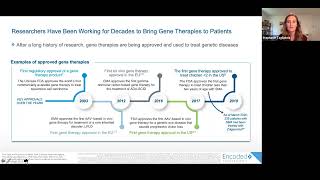
Perfect. Thank you so, so much, Misty, for this introduction and for the invitation to participate in this webinar series. We're really excited to discuss with everyone today some of the opportunities and the challenges associated with developing a one-time gene therapy program for the treatment of Dravet syndrome. So, thank you so much for having us. Next slide, Candy. Great. So, we'll start just by introducing ourselves. So, who is ENCODED? We are a biotechnology company that's focused on developing one-time precision gene therapies for pediatric CNS diseases that address essentially the root cause of the disease rather than just the symptoms. I co-founded EncodeD in 2015 along with my husband, actually, Kartik Maramamurthy. He's our Chief Executive Officer. We started as a team of 2, and we have been really very fortunate to surround ourselves with an incredible set of advisors, investors, as well as some really experienced team members to help drive our technology forward into the clinic. So we are now approaching just about 100 employees. We are— we have a lab and office based in South San Francisco. And we recently opened a site in North Carolina as well. Our name, ENCODEd, is derived from the genetic code. And so many of you are familiar with genes as kind of the building blocks of life. But what's, I think, really amazing about the genome is that it's not just a parts list. It's also an instruction manual, and so it directs you to where and when genes are expressed, and it's that underlying biology that ENCODED is tapping into in order to create more selective and specific gene therapies. So, we understand that, you know, this is a very monumental task of delivering a gene therapy into the clinic, and we cannot do it alone. We recognize the really important role that the patient community plays in the drug development process, especially in rare disease, and so we really look forward to working with, with you to answer some of these critical questions and advance a gene therapy program into patients. Great. So a little bit about myself. My background is in cellular and molecular neuroscience. I studied rare genetic diseases of the central nervous system in graduate school before starting in CODED, and I lead scientific research as well as preclinical development efforts for ETX-101, which is our AAV gene regulation program for the treatment of Dravet syndrome. We're joined today by my colleague Salvador Rico, who is our Chief Medical Officer, and he leads clinical development for ETX-101. And he will be discussing our clinical development plans with, with us in the second half of this talk. Great. So we can please advance to the next slide, Candy. Great. So, we'll be reviewing 3 main topics in this section. First, a brief introduction to gene therapy. So, there are many different modalities and flavors to genetic therapies. So, we'll take— we'll cover some of the basic characteristics and some of the differences amongst these approaches in this first part of this talk. Next, we'll cover the underlying nervous system dysfunction that occurs in Dravet and how this can potentially be addressed with some of these new genetic modalities. And then finally, we'll introduce to you a specific approach that ENCODE-IT is taking to address SCN1A Dravet syndrome and review some of the preclinical findings that we have observed to date. Great. So, you know, what is gene therapy? I think, you know, a simplistic definition of gene therapy really is a treatment that delivers genetic material to cells. And the significance of this is that for diseases in which there's an underlying mutation, this really allows you to target the root cause of the disease rather than the symptoms. And so here what you can see is that with the introduction of a gene sequence on the left, the cellular function can be restored, and the benefits of this, from what we've seen in other indications, can be quite profound. The other opportunity that's quite exciting about the potential of gene therapy is that this genetic material can persist within the cell for quite some time in certain cases, and so it creates an opportunity for a one-time treatment which requires just a single administration. Perfect. So, we are very fortunate, I think, to be witnessing a very unique time in gene therapy's history. We at Encoded fully recognize that we're standing on the shoulders of many researchers and drug developers that have come before us. So, here, this is really just an overview of some of the recent drug approvals over the past 20 years or so. There has been a lot of learning over this time, and what we are beginning to see is many more gene therapies in the drug development pipeline, with many clinical studies going on now and the anticipation of even more approvals in the coming years. And so gene therapy is becoming a much more established drug modality. The pace of innovation in this space is happening very, very quickly, And we're also collecting a tremendous amount of information of clinical data from patients that have been dosed with gene therapy vectors. And in particular, what we've pointed out here on the bottom right is that as of March 2020, there have been 335 patients that have been dosed with Zolgensma for the treatment of spinal muscular atrophy. And I think this is a really significant milestone for our field. In the sense that this is now an FDA-approved product that's really delivering very significant benefit to patients that are suffering from severe CNS disorders. Great. So, it is important to note, however, that all gene therapies are not built the same. As you can imagine, there are many different approaches under the gene therapy umbrella. We've broken this down into kind of two major categories here. First, on the left, there are many types of genetic sequences that can be delivered, and all of this can be used to achieve specific goals. So either to replace a gene that's missing or to deliver— I'm sure many of you heard of CRISPR-Cas9— to deliver molecular scissors that can edit or remove pieces of DNA. You can also deliver genetic elements that can dial up or dial down gene expression, what's known as gene regulation therapy. And in the cases of RNA therapeutics, you can modify RNA expression through various approaches like gene silencing or read-through approaches. The other important aspect of gene therapy to understand is not specifically the genetic material that gets delivered to cells, but how that genetic material is delivered. And that's described here as the delivery vehicle. There's two main categories of delivery vehicle, one of which is viral and one is non-viral. Some examples of viral gene therapy delivery vehicles include adeno-associated virus, adenovirus, and lentivirus. And some examples of nonviral gene delivery vehicles include nonviral ASOs and naked DNA. One important distinction between viral and nonviral that it's perhaps worth mentioning is that typically viral gene therapy approaches aim to be a one-time administration, whereas nonviral gene therapies typically require repeat administration. So, over the past 10 years or so, adeno-associated virus, or AAV, has emerged as an especially promising gene therapy delivery vehicle, and that's really for two main reasons. So, first, AAV is non-pathogenic, And what do we mean by nonpathogenic? Essentially, that means that it is present in our environment. Many of us actually over our lifetimes will have been exposed to AAV at some point, and yet it's not associated with any illnesses and does not cause any disease or symptoms. The second main reason why AAV has emerged as a gene therapy vector of choice is that it's very efficient in its ability to deliver genetic material to cells. And so, by comparison to some other viruses like lentiviruses or retroviruses, those vectors have some limitations with respect to— some can infect only dividing cells or have very limited spread within the body when they are delivered. And so, for both of these reasons, I think AAV has emerged as a clinical gene therapy vector that now has significant clinical validation. So, the question arises of how does this work. So, first, AAV is, it comes in contact with the cell. The AAVs that we use for gene therapy, in this case, the viral genes are removed, and so this means that the genes that are needed for viral replication the genes that end up making people sick are removed from the virus and are replaced with therapeutic genes. Once delivered into the cell, the AAV delivers that genetic payload, that genetic material, into the nucleus, and that is known as an episome. It resides outside of the chromosomal DNA, and it has the potential for very durable and long-term expression. And so, this viral vector in particular, AAV, has been used widely in the clinic and most notably has been used to treat pediatric neurological disorders with a single dose, such as spinal muscular atrophy. The notable limitations for AAV gene therapy include In certain cases where you're dosing systemically, high vector dosages are needed in order to achieve appropriate levels of the drug, both in the periphery and then in some cases in the brain. AAV also has, although it's very efficient at entering cells, because of that it does not have very good cell type selectivity, so it infects basically any cell that it comes into contact with. Redosing is typically not achievable with AAV gene therapy because after patients have been administered AAV, they develop neutralizing antibodies that typically make it not very feasible to redose. And then finally, the AAV vector itself is quite small, and so it really can only hold small genes. We're limited to about 4.7 kilobases of DNA that could be packaged and delivered with an AAV vector. So, in some cases, for genes that are small like SMN1, they can easily fit within an AAV. In this particular case, you can fit 2 copies of SMN1. But unfortunately for genes that are larger than 4.7 kilobases like SCN1A, they're unable to package and be delivered in this form. Okay, great. So next we'll review some of the underlying biology in Dravet syndrome, how it results in nervous system dysfunction and then how this biology can potentially be targeted with some creative approaches to gene therapy. Great. So, a first, a brief tour of the human genome. So, for every human cell, we contain about 23 pairs of chromosomes. These chromosomes are made up of very long strands of DNA and they contain hundreds to thousands of genes. Each of these genes occupies a particular location in the chromosome and includes instructions for the body on how to make a particular protein. Proteins then are what are referred to as the building blocks of life. They perform a vast array of functions within the body and instruct our cells and bodies and how to function. Next slide. Great. So, in the case of Dravet syndrome, it is particularly important to understand that we have two pairs of chromosomes because each of us has two copies of the SCN1A gene. And so, in this case, SCN1A resides on chromosome 2 and As many of you know, SCN1A gene codes for a protein called Nav1.1, which is a sodium channel. This particular protein, Nav1.1, is expressed within a specific cell type within the brain that's known as GABAergic inhibitory interneurons. Next slide. So again, in the case of SCN1A, We have two copies of this gene. It's located on chromosome 2. This codes for NAV1.1 protein, which functions to maintain healthy activity within GABAergic neurons. In the case of Dravet, there's one healthy copy and there's one mutated copy, and this genetic mutation is known as haploinsufficiency. The reason it's called haploinsufficiency is because typically this results in about a 50% reduction in protein, and so the healthy number of Nav1.1 sodium channels within these GABAergic neurons is altered, and that leads to dysfunction of this particular cell type. What are the consequences of this underlying biology? So, we know based on the past 20 or 30 years of research that NAV1.1 plays a very important role in the function of these GABAergic cells. And as a result, the brain can become hyperactive leading to seizures as well as many of the other clinical manifestations of Dravet. So, therefore you can imagine that a genetic approach that targets the underlying genetic and cellular dysfunction present in Dravet would really have the potential to address the root cause of the disease, and that is precisely what we aim to achieve with ETX-101 in our program at Encoded. Great. So next we will discuss at a high level the approach that we're taking to advance our program ETX101 for the treatment of Dravet syndrome. As I mentioned, the main limitation to developing a gene therapy approach for Dravet has been that the gene size is too large to fit within AAV vectors. At Encode It, we've essentially circumvented that limitation by taking advantage of that healthy copy that's present in the second chromosome. That second allele of SCN1A. And rather than delivering SCN1A directly in our AAV product, we are delivering what we call an engineered transcription factor. And that engineered transcription factor is a different protein, and it's used to dial up expression of SCN1A and subsequently NAV1.1., and that allows neuron— the number of healthy Nav1.1 channels to be restored within GABAergic neurons. And the hope is that that will really restore the underlying cause of Dravet syndrome. So similar to standard AAV approaches, ETX-101 is packaged within an AAV vector. It is delivered via a one-time administration directly into the brain. You can advance to the next slide here, Candy. Thank you. It resides as an episome within the nucleus of these cells. A couple of other important facts to highlight is that our one-time ICV administration allows AAV to bypass the blood-brain barrier, and that allows us to use lower doses of the drug to potentially improve safety. We've also developed what we call regulatory elements. These are DNA sequences that drive the expression of our transgene, and that allows us to limit the activity of our drug to these GABAergic neurons. And potentially limit the potential off-target toxicities. And then finally, I mentioned this engineered transcription factor functions to increase the activity of the healthy copy of SCN1A. Great. Our company has developed all these components from the beginning when we started this program. And really we wanted to understand, you know, all of the science is very exciting and very interesting, but really will this work in principle? When we deliver this to a mouse model of the disease, can we correct some of the underlying phenotypes? And so, you know, as a scientist, we've really tried to take a very rigorous approach to test this technology in both mouse models and non-human primates. The first question for us to understand really was, can we target expression within this cell type that's affected in Dravet, these GABAergic inhibitory interneurons? And what we've been able to show is by incorporating these regulatory elements, we can very explicitly target this particular population of cells that's impaired. In SCN1A-driven patients. The second thing that we wanted to understand was, can we increase the activity of SCN1A and NAV1.1 within the target cell types? And so we've looked at that both in cell cultures as well as in animal models. What we can see is that with our engineered transcription factor, we can effectively upregulate the levels of SCN1A and NAV1.1 protein in the brain. And finally, we've been working along with support from Jennifer Kearney's lab to understand, now that we have these components, we have a cell type selective AAV vector, we have an engineered transcription factor that can upregulate SCN1A, can we correct some of the phenotypes that are associated in the Dravet mouse model? The mouse model that we're working with was derived from Jennifer Kearney's lab at Northwestern University. Similar to Dravet patients, the mouse model exhibits some of the hallmark phenotypes that are associated with Dravet. This includes the sensitivity to febrile seizures as well as spontaneous seizures and status epilepticus. What we've been able to demonstrate so far in mice is that with a single administration of ETX101 in young mice, we have shown that we can really significantly reverse the premature mortality for over 1 year following administration. We can also reverse some of the heat-induced seizure phenotypes in these mice. As you increase their body temperature, Many of these mice will exhibit a generalized tonic-clonic seizure, and with a treatment of ETX101, we can show that the majority of the mice are seizure-free within this assay. And so finally, what we've really aimed to do is to look not only within the mouse model but to understand in the context of a large animal model can we achieve the appropriate levels of expression and distribution of our drug within the brain? What we've done to address that is to assess multiple routes of administration. We evaluated unilateral IV, which is what we are intending as our clinical route, and we compared that to a number of other routes of administration in non-human primates What we found was that with the unilateral intracerebral ventricular injection into primates, we really saw very much, much higher biodistribution within the brain with that route. Finally, we have now looked at safety in a non-GLP, a non-good laboratory practices, preliminary safety study. That has demonstrated favorable tolerability over a 28-day period without clinical symptoms. And so we've seen some, some very promising results in animal models. We're planning to submit this data for publication later this year. And it's important to remember though that mice are not humans, and it is very important to design a thoughtful and well-designed clinical study that with input from Dravet experts as well as the patient community to really be able to move this forward into the clinic. That will be all of the great work that Sal will be speaking to in preparation for that transition. Great. So in summary, ATX-101 has shown a lot of potential preclinically to provide a one-time disease-modifying therapy for Dravet. Gene therapy, although it's a relatively novel technique, it is making rapid progress in the clinic with a number of approvals both in the US and the EU. Several approaches to gene therapy are possible. And Encoded is one of the companies, I think, that is working towards some of these creative solutions for diseases which traditionally have not had access to gene therapy in a more traditional fashion. And AAVs themselves are one of the most promising and versatile viral vectors for gene therapy. ETX-101 aims to upregulate the expression of the functioning copy of SCN1A to restore the natural number of healthy sodium channels. So, in the mouse model, again, we've shown that a single dose of ETX101 normalizes survival and prevents febrile seizures. And in non-human primates, one IV injection of ETX101 allowed us to achieve broad distribution within the brain and also resulted in a favorable tolerability profile without clinical symptoms. So to summarize, I think from Encoded's point of view, from a co-founder's point of view, we're tremendously excited about the potential of ETX-101 and look forward to working with the patient community to further advance our efforts. So with that, I will pass it over to you, Sal, to discuss some of the clinical efforts around ETX-101.
Excellent, thank you for a wonderful presentation, Stephanie. That was, was incredible, and I think that offers a very useful background to then discuss our current thoughts in the clinic. I want to thank the Dravet Syndrome Foundation for opening this opportunity for us to share our current thoughts with the community. I know that these are tough times with the pandemic, and of all the face-to-face meetings that we're missing out on, this is personally one of the ones that hurt the most. And I think that all of you and all of us were really looking forward to a face-to-face biennial meeting, and sadly we'll have to wait for that. But I am very, very happy that Humans, we've been able to find ways to still interact and share. So again, thank you very much to the Travesty Syndrome Foundation. As Steph told you, I am the chief medical officer at Encodeit. I am a physician and a clinical pharmacologist by training. What I've been doing during all my professional life is develop drugs. And I joined Encodeit about 6 months ago. After having met Steph and Kartik last year, and I was just profoundly impressed with their mission to really enable the possibility of having a next wave of gene therapy products that could really change and improve the lives of patients like patients with Dravet syndrome. So really, really excited to be here today to share some of the thoughts that we have on that front with you. Over the next 20 minutes or so, I'm going to cover 3 things. The first one is I'm going to offer you some thoughts on the process that we follow to develop what could be the first potential one-time disease-modifying therapy for SCN1A positive Dravet syndrome. The second thing that I'm going to cover are the current plans on the natural history study that we've called ENVISION for Dravet syndrome. And then at the last part of my talk, I will be offering some of the considerations that we're making as we design that phase 1, 2 gene therapy clinical trial that we plan to commence next year. So I thought that the first thing that we should do, just so that you all understand where ENCODE is coming from, is to share what our aspiration is. And that is simply to alter the reality of patients and families with Dravet syndrome and offer you all a hope for a better future. And we're trying to accomplish this, as Stephanie mentioned, by developing a gene regulation therapy that is administered only once, that is cell-selective, and that potentially addresses all of the symptoms associated with the disease. Not just the seizures. We're not developing another anti-seizure medication. We're trying to look at this in a holistic fashion. So from a program perspective, our goal is— if you go to the next slide, please, Candy— is that after we complete the clinical trials, we obtain a global approval that allows all patients and families affected by SCN1A-positive Dravet syndrome and that they may benefit as rapidly as possible from these potentially disease-modifying therapies. So that's one thing that perhaps in the future we'll continue just reminding everyone in terms of what we're trying to accomplish. Now, maybe in similar talks in the past, or maybe by your own research, you've become acquainted with the different stages that biotech and pharmaceutical companies typically have to follow to develop a product. And this is not much different from the case of gene therapies, although there are some slight differences. So in this schematic, there are different phases of development that are shown. And Stephanie covered all the preclinical work that the company has been doing over the past few years to really understand what that product is going to be able to do. So we have very promising results both in the drosophila mouse model and also in nonhuman primates. So that is allowing us to really determine what is the range of doses that is safe and most efficacious for the treatment of disease such as CMAH positive Dravet syndrome. Then, and somewhat in parallel, one fundamental aspect that is very important for us to understand is how a disease like Dravet syndrome behaves and what happens over time. What is the trajectory of the different symptoms? How they change, how they worsen, how they evolve over time. So that is why it is quite essential for a good development program in any type of rare disease that we understand the natural history of this syndrome. So I'm going to be sharing a little bit of the thoughts that we have on that front. I'm really excited about that study that will commence very soon. And then we're also in parallel planning for what is going to be our Phase 1/2 clinical trial. Here, a key difference is that with gene therapies, since you can only administer it once, at least for the time being, and you cannot really take it away, one incredibly important difference from other types of therapeutic approaches is that we have to initiate with doses that are therapeutic based on the animal data. And we cannot start with healthy volunteers, as is typically the case with other types of products. So that's why we are performing a Phase 1/2 clinical trial as the first time that we assess this in the interventional setting, as we call it, the first time that we introduce an intervention with this type of investigational product. We need to also make sure that we start slowly that we start in a small number of patients, that we explore more than one dose, that we understand what the safety and efficacy of this product, ETX-101, is going to be, and then that we understand how the product behaves once this is injected into individuals. And once we have an understanding of that, and we reach what we call in drug development the clinical proof of concept, then we expand into many more individuals. And this can be done in many different ways, either by expanding this Phase 1/2 trial, by doing another study that is confirmatory. That is always a discussion that we have with experts in the field, and most importantly, with clinicians, with regulators. So we'll go to the next slide. Obviously, as we design a thoughtful and robust clinical development plan, we need to have a lot of discussions and really do our homework over years. This really starts by reviewing the literature and precedence thoroughly. This also includes having multiple meetings with individuals with expertise in different fields of knowledge. They can be pediatricians, neurologists, epileptologists, basic researchers that understand the pathophysiology in Dravet syndrome, experts in neural development, in cognition, in communication, in neuromuscular function, quality of life, genetics, immunology. And then frequently what we do is that We put many of these individuals in a room, nowadays in a virtual room, and have what we call advisory board meetings to really try to pressure test many of the ideas and make sure that the proposals that we eventually discuss with regulators, such as FDA or EMA, are productive. But there's a central role that patients and families obviously have. And so we also, as part of this process and very importantly, have individual meetings with the leaders of the patient advocacy organizations, with patients and families who are fighting the disease every day, because you are the ones who know the disease best. And you are the ones who have previous experience participating in previous clinical trials that will really help us to really polish and define what is going to be our clinical development program. So many times after those individual meetings, we also have advisory board meetings with patients and families, and we do these several times. So there are multiple iterations as we generate a refined plan, and we are precisely following that process in order to get to a final proposal that will be submitted to regulators next year. Next. So importantly, as we think about how to develop the first one-time disease-modifying therapy for SCN1A Dravet syndrome, we have to think that to assess the potential ability of a drug such as ETX-101 to address the underlying cause of the disease We have to assess the effects that this drug has on the seizure burden. In other words, how it may reduce the seizure frequency and the severity or potentially abolish, ideally, the seizure burden. But very importantly, and this is where the disease-modifying part really becomes truly important, is what is the effect that this drug can have in non-seizure-related outcomes? In other words, is it going to stop or prevent the early neurodevelopmental delay? Is it going to improve the behavioral symptoms? Is there going to be an amelioration in motor function, sleep quality, the nutritional aspects of the disease, quality of life, etc.? So it's really the non-speech-related outcomes what really becomes front and center alongside with the seizure burden. What we need to explore in our program. Next. So needless to say, we need to understand what the natural history of the disease really looks like. And I know that a lot of you study a lot about Dravet, so I have a lot to learn from all of you. But in discussing with the experts and in reading the literature, Here we present a couple of figures that you may have seen, especially the one on the left. This is from a paper by Carolina and collaborators that shows in a schematic over time what is the evolution on the frequency of the multiple types of seizures and the multiple symptoms that patients with Dravet syndrome experience. How it starts with the febrile seizures, status epilepticus, the different types, generalized tonic-clonic seizures over time, how the developmental delay really is apparent in many patients starting at 1 year of age and then it increases over time, the frequency of sudden unexpected death in epilepsy. And very importantly, and one of the key things that we want to explore is how neurodevelopmental is affected over time. So on the figure on the right, we have combined the results of 3 studies that basically are showing the same, and that is that during the first 5 years of life, there's a catastrophic decline in the developmental portions of many patients fighting trophoblast. There have been several publications that have shown the general course of the seizure burden and some of this rapid progression on the neurodevelopmental decline. However, one of the issues that we have as we're trying to develop this first-time, a first one-time gene therapy product, is that there's no contemporary, no recent longitudinal natural history study that is assessing the trajectory of the multiple aspects of Dravet syndrome in young pediatric patients. So what we're doing to address that lack of information is we're starting a natural history study that I already mentioned is called Envision, and this is truly the first step, and I keep peeling out in the development plan for ETX-101. We're going to be using validated assessments or instruments that are trusted by both clinicians and regulators to hopefully generate a data set that can be what we call an external control, something that we compare the effects of ETX-101 against for all the series of symptoms that Dravet syndrome patients experience. This study will include roughly 50 patients, all of them under 5 years of age, to really fully characterize what happens early on from the moment of the first seizure and then all the way through the 5th year of age. This is in patients obviously with SCN1A mutations due to the nature of the treatment that we're trying to develop. Since we want to truly characterize the natural history of the disease, we're not asking for a minimum seizure burden, and we are partnering with roughly 15 sites to accomplish this effort. And we have assessments that are in clinic every 6 months And now in between those visits, we're including virtual visits. This is a new development that we, alongside many of other companies, are trying to introduce in response to the COVID-19 epidemic. So we know that your life is not getting any better with Dravet syndrome, so we have a sense of urgency to really accomplish our mission. And one of the things that that we're doing is just trying to be flexible, make sure that we collect the data, but that we don't introduce more burden for the community as a whole. So the domains that we are going to be assessing in this natural history study have been selected in collaboration with multiple experts, many of whom you're familiar with and who advise the Javert Syndrome Foundation But also, we've been in close collaboration with a group in the UK that is also doing a similar effort in the UK starting in a few months. So needless to say, one of the key aspects that we're going to be assessing in this study is the seizure burden. What types of seizures? How frequently? What are the anti-seizure medications that patients are having? How frequently they get hospitalized, use of rescue medication, etc. That's only one aspect. We're also assessing neurodevelopment with different scales, functional ability and motor function, aspects on the social, behavioral, and language arenas, quality of life of patients and caregivers of patients with Dravet syndrome and safety, survival, side effects, frequency of hospitalizations, etc. So we will have a very robust body of evidence that will tell us exactly what the true burden of the disease in the different areas in a contemporary fashion really looks like. Next. Now, as the third part of my talk, I'm going to share some of the key considerations that we're having in mind as we design what is going to be our first interventional study that we will be commencing next year. So we have included 5 different buckets. One of them is study population. In other words, who will participate in this study? Second, and something that you are very familiar with with other anti-seizure medications that have been developed, is whether there will be a need for a control group and what that will look like. The third bucket is what dose or doses will be tested and what is the regimen that will be followed. How rapidly will patients be treated in this first, first time in human clinical trial? And then lastly, but also very important, how frequently do these patients need to get monitored and followed up in the clinic once the study drug will be administered. So our plans are still in discussion with experts and also with regulators, but I can share precisely what is going on in our minds as we're having these conversations. So the first thing is patient population. Because we're trying to develop a one-time disease— potentially disease-modifying therapy for Dravet syndrome. And because we need to assess whether this drug is going to prevent or stop the early progression of that neurodevelopmental decline and the appearance of the behavioral symptoms, we'll really most likely be initiating the development of this drug in young patients with SCN1A-positive Dravet syndrome, because those patients most probably will have the greatest benefit from the administration of this one-time disease-modifying therapy. As is the case in many of these first-time human clinical trials, the first study will be small. It will be 8 to 12 patients, and then once we have the what I mentioned already, that clinical proof of concept, then that number will be expanded to give an opportunity for more patients to also participate in subsequent phases of development. As Steph indicated, we found through the work that we've done in a very robust nonhuman primate study that the best way to really reach all of the key areas of the brain affected by the disease is by a single one-time injection directly into the brain ventricles. And we are partnering with centers of excellence who do this safely in a routine fashion. And this is a routine procedure done at these hospitals. So we are also having those conversations with the sites. As I said, in the first study, we'll have to assess more than one dose level. All of them will be intended to be therapeutic, you know, the word "scalable effect," but we will most likely be asked to assess more than one dose level. And this is just healthy, and that's what we call an ascending dose study. Importantly, and in keeping with current regulation and knowledge on how to conduct these studies safely, the enrollment and dosing of these patients will be staggered over time. So as you see on the schematic on the right, This is just a cartoon of what studies like these look like. So we have at the bottom Group 1 with dose X, and then patients assigned to Group 1 get dosed gradually over time until then we have a meeting with an independent group of experts who helps us assess the data, make sure that it's safe to go up, and we go up to second group. We follow the same process and then up to the third group. In the next slide, we talk briefly about comparison. So I think that this is something that you're very familiar with, and that is because we are assessing multiple endpoints, as we call them, multiple variables. That have shown to have what we call a placebo response, in other words, that patients who do not get the intervention can transiently exhibit an improvement, as it's typically the case with seizures, we will most likely be asked to have a comparison group that is untreated and where we simulate the procedure of the injection but no actual drug is actually injected. And then those patients would have to wait most probably for a few months. Nevertheless, we as a company are committed to facilitate treatment to those patients who get randomized to that delayed treatment control group to get the treatment as soon as possible so that all of the patients who participate in these first-time-in-human studies eventually receive the study drug. So those are conversations that we're having with experts in the field and with regulators, but we feel very strongly about it. Then in terms of what we will be assessing, as I said, we're not developing just another anti-seizure medication, but seizure burden is perhaps the one thing that we will be more rapidly able to witness an improvement on. So this is what we're going to be assessing in the short term. And most likely, we'll be assessing that in a period that is very similar to what has been done with recently developed anti-seizure medications. But very importantly, as I've had tried to share over the past few minutes, we will also be assessing cognition, communication, behavior, sleep quality, motor function, quality of life, etc. And that will be done over years, and the timeline to witness that potential improvement will vary by symptom, and that is fine. We just want a true characterization of the full breadth of benefits that patients may get after getting this study drug. We plan to initiate this study in mid-2021. There will be a single dose tested per participant. However, as I said, there will be more than one dose level. And currently regulators like FDA do ask that studies with gene therapy products are at least 5-year studies. That doesn't mean that we cannot expand these studies in the meantime or when we start getting that initial proof of concept. That most likely will be the case. And that also doesn't mean that we may not be able to start additional studies also in parallel with that first initial study. So, just want to make sure that you understand that this is not really relegated. Next. So, just to close, because I'm mindful of the time, what ENCODE is trying to build is a robust and thoughtful development plan to develop the first potential one-time disease-modifying therapy for SCN1A positive Jovet syndrome. The VISION natural history study aims to demonstrate the trajectory of both seizure and non-seizure related outcomes, and we will be commencing that study in fall of this year. And our Phase 2/1/2 clinical trial is planned to start in mid-2021 and is being designed with input from regulators, from the medical field, and also with input from many of you. We truly understand that we cannot do this alone, and we recognize the central role that you all have in the drug development process, and it's our commitment to work with you every step of the way. So thank you so much for your time today. Thank you so much for your interest. I see that we have a few questions. Since I was giving the presentation, I've not been able to read them, and we have just about 4 minutes, so perhaps we can respond to some of them. And we will be making sure that over time all of your questions are responded as we get ready for that for those studies, both the natural history study and our Phase 1/2 clinical trial. Okay, so Steph, are you back?
Hi, Sal. Yeah, thank you for that great presentation.
Thank you. Steph, have you been able to read the questions, and are there any of them that we can respond to in a couple of minutes?
Sure, Sal. So here, maybe I'll start with some clinical questions. It seems as though there are a number of folks that are interested in inclusion/exclusion. So I wonder if perhaps you can comment on at least how we're thinking about that at the moment.
Absolutely. So for both studies, as I mentioned, well, for Envision, we are including patients under 5 years of age with SCN1A-positive Dravet syndrome mutations. No minimum seizure number required. In terms of our thoughts for our future interventional clinical trial, I think that the patient population will look really similar. I think that we want to really concentrate initially in that first step in including patients who may get the greatest potential benefit from a disease-modifying therapy. So most likely young patients, most likely obviously with an SCN1A positive mutation. We're actively discussing what the minimum seizure burden would look like, but really as we think about the breadth of potential benefits that patients may get, I think that there will be just a strong argument for us to try to include patients without too many restrictions and really observe what it takes one-on-one is going to be able to do for them in terms of modifying the course of the disease. So that's, I think, in broad strokes what we're having in mind.
Great. Let's see, maybe we have time for one additional question. I think there's a couple of folks that have asked about the preclinical data. And maybe I'll just start by including one clarifying comment. There was indeed a paper that was published earlier this year that examined a different AAV approach for SCN1A Dravet syndrome that came out of the group from the University of Toronto. In that case, they saw sexual dimorphism So certain sex of mice responded differently than others. That was not the work that ENCODE has established. And so our preclinical work will be published later this year. And we have not seen any sex differences or partial rescue as they did in that case.
Thank you, Stephanie. Thank you, Sal. I know you guys are both time-pressed here. I just wanted to let the community know, because I do have— I know you have a lot of questions, that Encoded Therapeutics is sharing information with Dravet Syndrome Foundation, and they will continue to share the information as they have it. And as soon as that becomes available to us, we will definitely share it with you guys. If there's questions, Stephanie or Sal, that you can answer, if you want to email them to me, I am more than happy to share them with our community as well. I wanted to say thank you both for joining us today. I know everyone is super excited to hear this much-anticipated information that you've been able to give to us. Do you guys have anything you want to close with?
Yeah, just to thank UMISTI and the Jove Foundation again and all the families who called in for this presentation today. We, as I said, we have a sense of urgency and we're working hard and we want to make this a reality for all the Jove Syndrome community. So You'll be hearing a lot more from us going forward, and we are really, really excited to have reached this phase. So hoping that we can meet face to face maybe in 2021.
Keeping my fingers crossed. Perfect. And just to close for you guys, I always tell you what's coming next week. Don't forget to register. July 30th, we have special guests from Epigenics Therapeutics. And they're going to talk about the most recent updates for EPX-100 Phase 1 and 2 studies. So with that, I hope you guys have a wonderful Friday, a wonderful weekend, and we'll see you next week.
Thank you, guys. Likewise.
Thank you. Thank you.
Take care.
You too.
More from Joshua







Scientist Stories: Hans Waterham, The value of phenotypic assays in peroxisomal disorders




Scientist Stories: Joel Zlotogora, Genetic carrier screening programs for reproductive purposes