Founder Stories: Susan Desmond-Hellmann, Gates Foundation, UCSF & Genentech
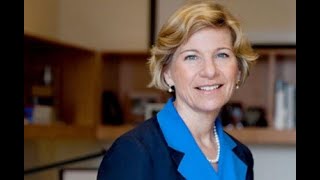
Susan Desmond-Hellmann, former UCSF chancellor and Genentech leader, describes precision medicine as integrating genomic and environmental data for better diagnosis and treatment. She launched me4u.org to get patients involved in data sharing and is running pilot networks for frontotemporal dementia and breast cancer that connect research and clinical care.
Chapters
Well, I am absolutely thrilled to be here, and looking out at all of your faces, it is with great humility that I speak about the topic I selected today, precision medicine. And I thought I would start off by giving you a little bit of context. I want to tell you how I got here and really make the move between what I consider a life in traditional medicine into a life of constantly asking, why can't we do better? Which is really the theme of my little talk today. So I got here from a lifetime of wanting to be a doctor, starting when, at least as captured in family photos, from the age of 10, where I showed two traits that stay with me. One is I'm a doctor and the other is I'm bossy. So this is a picture of me bossing around my sister and my cousin in my own little medical practice in my family basement. After doing my training at UCSF in internal medicine and medical oncology, I ended up at Bristol-Myers Squibb initially and then at Genentech where I was able to use training in clinical research to innovate in product development and drug development. So I am at my heart and soul, like many of you, a product developer. I want to make life better for patients, and that is my passion, that's what I care about. So at, at Bristol-Myers Squibb for a couple of years and then moving to Genentech for a dream 14 years of seeing science turn into great things for patients, I thought I would do that my whole life. But to my surprise, I was selected in 2009 as the 9th chancellor at UC San Francisco and the first female chancellor. And so this is me shaking the hand of my boss, President Yudof, and re-entering academia. And I can tell you that what I've tried to do at UCSF, and I want to tell you a few things you might not know about UCSF, What I've tried to do is to say, how can I add value as chancellor not being a traditional academic and really being somebody with this passion for improving health and coming with not just a business sense but a product development sense? And so I want to tap into that. And the other picture on this slide that I want you to know is, it helps understand where I'm coming from today, is that I'm convinced is that there's a whole world of technology. And this is me trying to explain precision medicine to Sergey Brin, Mark Zuckerberg, and Yuri Milner, which was a really great opportunity. And you could see how much I was focused on making sure I did a good job of that. Here's how I explain it to people who aren't immersed in what you're all immersed in every day. It really annoys me that when I get on Amazon.com They know what I want to buy before I buy it. And yet when I go to my caregiver, who is awesome, she knows almost nothing about me unless it's written on some piece of paper that someone filled out. How can we live in a world where algorithms and big data and connecting the dots is used every day to sell us things and we don't apply it to health? And so my current passion is to say that's not okay. So why UCSF? How, how can UCSF play a role in this and how do we come at this? So UCSF's a really interesting institution and for those of you who are in San Francisco, you probably know UCSF because you have a wonderful caregiver there or you've experienced it from a friend or family member who needed anything from surgery to a brain hemorrhage to transplant to something that we do well. But UCSF really aspires to be a leader in education, research, and patient care. We're the only one of the 10 UCs that has no football team, no undergrads, right? And we only do science. We only do life science. That's it for us. So we have a singular focus on health. And one of the great things that I've enjoyed as being chancellor is learning about the parts you might not know about. We have the number one NIH-funded school of nursing. Experts in symptoms, managing symptoms, thinking about human behavior, sociology, how all of these things about how we behave applies to health, extremely important and particularly important in an era of healthcare reform. Our School of Medicine is the only one in the top 5 for both research and primary care. So I call it brainiacs with a heart. Our School of Pharmacy has been the number 1 school of pharmacy for over 30 years. They care about compliance, poison control, adverse events, things that are really relevant to the work that we all do. We have a wonderful School of Dentistry. And I can tell you, I predict that stem cells will be rapidly important in the mouth. There are so many congenital defects in the oral cavity and in the mouth. And you can access the mouth more readily and see what's going on. So access is less of an issue. And we have wonderful graduate programs. And our medical center has been ranked in the top 10 for 12 years. So we literally are the kind of place where science and medicine can come together to improve health. So I think if we can't do it at UCSF, we ought to ask ourselves why not. So our aspiration is to change health, to make the lives of people better, to improve health. And coming from a product development bent, One of the most fun things about being at UCSF is I now can see a new product, which is we export a whole set of trainees every year, whether they're students, graduate students, postdocs, fellows, or residents. If we want to change the world, the fastest route to do so is to train compassionate, patient-centric caregivers who leave us every day and go to care for people all over the world and can change medicine on behalf of all of us. So what I really want to talk about in the short time I have today is that I believe we're in the middle of a revolution for research and healthcare. And if you love innovation as I do in healthcare, I love this quote from Steve Jobs: The biggest innovations in the world will come from the intersection of biology and technology, the intersection of biology and technology. And so I think that is a great driving principle for me to ask the question, what can we do with technology to advance the things that I care about? Access, affordability, every human being globally being able to benefit from our innovations. So what can we do to make that happen? So I want to talk a little bit about something that we've been calling precision medicine. And I'm going to start definitionally. So UCSF uses the term precision medicine to mean the use of genomic, environmental, molecular, and other data. So it's not just sequencing. To define individual patterns of disease resulting in more targeted individual treatment and more accurate diagnosis and unanticipated connectivity between diseases and syndromes that facilitate drug development and health. So we've always defined disease by signs and symptoms. Diabetes, your blood sugar goes up. It's juvenile diabetes or adult diabetes. It's very syndromic and very symptom-related. We measure a lab test or an X-ray and it's syndrome-related. We, we have defined cancer as where it happens in the body, where it starts in the body, breast cancer, pancreas cancer, brain cancer. What precision medicine could allow for is to connect across diseases, to connect environmental, microbiomic, proteomic, genomic syndromes in a more precise way, not limited to what's in front of us on signs and symptoms. So I was involved in a National Academy of Sciences report that grew out of Francis Collins' frustration that in 2000 we had the human genome but we didn't solve all diseases. So the report tried to call for a new taxonomy of disease using this more precise definitions to change how we diagnose, understand, and thereby treat diseases. And with Charles Sawyer as my co-chair, we called for moving into this new taxonomy of disease through precision medicine. So at UCSF, we realized that when we started thinking about the knowledge network, this connectivity we would need to make precision medicine real, that it was actually really fun to talk about. We could go on hours dreaming about the world that could be a precision medicine world. And then when you leave the room and you say, okay, now let's go for it, you realize that the dream, the vision, of precision medicine, of creating a knowledge network where data on small numbers, medium numbers, massive numbers of patients comes together to give us new insights, was a wonderful dream and incredibly challenged to implement. Everything from patient flow, absence of readily available genetic counseling, to HIPAA and the way we practice medicine in silos, everything seemed in the way. So it seemed an impossible and daunting task. So in May of this year, we did something unusual for a place like UCSF. We brought people together in a summit that IDEO helped us put together we called OM. All the East Coast people seemed to think that was weird. We thought it was normal. So it had that kind of nice San Francisco-y flavor, but OM also meant to us any omics. Again, not sequencing, anything that allowed us more insight into connecting those dots, and this OM Summit allowed for creative thinkers, literally from Francis Collins and Peggy Hamburg to Marc Benioff and Mark Zuckerberg, to come together and think about how we might tackle this problem. So I got to sit next to Francis Collins, sleeves rolled up, working at a table, which was really delightful. And we came up with a dozen ideas that are now populating many different places and starting to take off. One of my favorite was could we treat putting your sequence into a shared database like we treat donating blood? Tap into people's volunteer spirit. And it was ideas like that, really novel ideas about how to make this work. And so at UCSF we've used that energy around that and the wonderful talents of our faculty to go in directions like digital health, health computing. How do we innovate? How do we really use a lot of the new tools to change health. So the quick pitches that came about from the OM Highlights were in a number of different categories. And some of these were very technical. How to use the microbiome. Could we make a smart toilet and use microbiomics to understand people's gastric health, but also to understand general health as we learn more about the role of the microbiome in things like obesity and rheumatologic diseases. But one of the areas that was the most important for me was something that we launched and I'd encourage you guys to check into and that is a public awareness campaign. So one of the key impediments will be our ability to connect to patients and citizens, consumers, people who aren't sick, who are well, to participate in this. So we launched me4u.org And me4u.org is a way for us to connect to people who'd like to participate in this, who are interested in precision medicine, but need some definitions to understand what this is all about. I've said before and I'll say again that I think HIPAA, while well-intended, privacy rules and regulations that protect patients can at times harm patients. For two of my researchers not to be able to talk to each other and share patient data If I'm a patient in that database, I want them to learn from me. So that's not going to be a problem solved by people like me or frankly most of the people in this room. That will only be solved when patients push for change. So me4u.org and other means of patient-centered agendas can help us drive to have the right regulations and avoid the wrong regulations. So that's something I'd encourage you to check out. So in the end, how does UCSF think about this and what do we want to do? Well, we want to start a movement. And the heart and soul of this movement, our precision medicine platform, can be exemplified by two things, a pragmatic and a vision thing. So the pragmatic thing is that as many of you know, basic research and clinical care are siloed. And so how do we break down those silos? How do we change that? Well, we're doing two pilots. You got to start somewhere. One of the pilots is in the leading cause of dementia in people under 60, frontotemporal dementia or Pick's disease. We're doing a pilot to form a mini knowledge network of all the images, sequencing, clinical data on patients with frontotemporal dementia to fully understand how can a knowledge network help us gain insights into the disease. The other pilot is in breast cancer where we're much further along and again we can use everything about that patient, their tumor, their sequence, their family history to form a not many knowledge network in breast cancer. These are really pragmatic things that allow us to understand how a knowledge network can bring people together. The vision thing is shown on this slide and that is how do we make sure that every patient who comes to UCSF is able to contribute their experience, their data, something from them, and every time they see their clinician, they benefit from others' data. The social contract that brings to— truly brings together science and big data to the bedside, to clinical care. This is going to involve decision support. Think of yourself as a busy clinician. How can you cope with this? So there are a lot of elements of this that we're bringing together, and we're learning along the way with these pilots that can give us insights into how we make precision medicine not something in R&D, but a part of every patient's experience when they come to UCSF. So I always like to give homework. I'm a teacher now, you know. So here's my homework for you. So what can you do? I'm an observer of all this. I'm new at this. I'm learning about digital health and what can happen. And I have to say, as part of this, I'm absolutely thrilled that Rock Health are going to be our neighbors at Mission Bay. And so welcome to the neighborhood. What I want from all of you is I just thought I would throw out what do I care in product attributes. If you're a product developer, here are some of my product attributes I'm looking for. Think about quality of life. Help patients make their lives better and think how does my product improve quality of life. Longevity is good. I need to have both of them together, but people do want to live longer. They want to live better but longer. How do you drive down cost? It's essential. We have to innovate to drive down cost. How do you improve compliance? Much of bad medicine happens because we think people take our remedies or our prescriptions and they don't. Essential to connect to traditional healthcare. If I'm monitoring something and that's unknown to my clinician, it doesn't count. It doesn't matter when I get very sick. And here's what not to do. Don't solve problems that don't exist. Don't get amazed by the technology because it's cool, but it doesn't fix something. So I like the way of thinking of what, what problem are we trying to solve? And putting great innovation into a poor delivery system is probably not going to change medicine in the way that we all aspire to do so. And so some of the most exciting innovations today are how do we change that poor delivery system? How can my innovation not just change patients' health and improve patients' health, but in fact, in doing so, make sure it fits in with our new ways of, of delivering medicine and improve the overall health experience? So my last slide is to just tell you that how excited I am about all of this and all of what you're doing. I think precision medicine is a platform, an enabler for many of the things I care about and we care about at UCSF. And in moving from the private sector to the public sector, I've moved from EPS, NPV, quarter-to-quarter earnings, and what remains true is my most important metric for success, which is the human beings that we all work for, so that people have long, fulfilling, and happy lives. So have a great summit. Thanks for including me.
More from Joshua







Scientist Stories: Hans Waterham, The value of phenotypic assays in peroxisomal disorders




Scientist Stories: Joel Zlotogora, Genetic carrier screening programs for reproductive purposes