Founder Stories: Tassos Gianakakos, Former CEO of MyoKardia
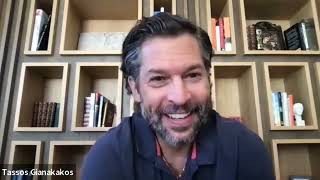
In this AZBioPeers interview, host Joan Koerber‑Walker talks with biotech founder and former MyoKardia CEO Tassos Gianakakos about his personal background, the creation of MyoKardia, and the strategic decisions that led to its $13.5 billion exit to Bristol‑Myers Squibb. Gianakakos describes how Third Rock Ventures incubated the company around a precision‑medicine vision for cardiovascular disease, the importance of a clear mission and values (patients first, lifelong learning, succeed together, imagine & innovate, passion for science), and the role of culture in scaling a team of 10‑plus to a public company. He details the fundraising journey (a $38 M Series A, later Series B crossover, IPO timing amid political scrutiny), the partnership and later fallout with Sanofi, and the board’s composition and governance model that emphasized independence and diverse expertise. The conversation covers the virtual acquisition process with BMS, the emotional aspects of selling a company, and Gianakakos’s reflections on leadership, people development, and the need for industry‑wide innovation in business models, data science, and patient‑centric care. He concludes with thoughts on future biotech ecosystems, especially in Arizona, and his personal next steps.
Chapters
So thank you everyone for joining us for the June edition of AZBioPeers. As you know, we focus on the skills, the resources, and the experiences that help life science innovators succeed, and we are absolutely thrilled to have with us today a Tales from the Road with Tasos Giannakakis, and I'm going to ask Tasos to tell a little bit about himself because if I read his bio to you, we'd use up the full hour. So with that, Tasos, welcome to AZBioPeers. Um, please tell the group just a little bit about who you are.
You bet, Joan. Thanks, and appreciate everybody joining us this morning, and I really thank fulfill for the invitation. I've been in Arizona here. My family and I moved down here. I've got 3 young boys just about a year ago. So it's been great to get to know the community, pushing biotech. And Joan, you're a force in that aspect. So I grew up in Chicago. I'm a biochemical engineer by training, started my career off working in Merck over in Philadelphia at their West Point facility doing vaccine R&D and pivoted into essentially a business development type of role where I kind of, I'll spare you guys the details on the professional journey, but through business school, I moved into more of a business side of the science, moved out to the Bay Area in 1998. And up until very recently, that's where I was, helped start up 4 companies, Most recently was MyoKardia, which we'll talk about today, which is my first CEO job. Learned an incredible amount about leadership and about culture and company development. It was an amazing experience, and I'm looking forward to sharing a lot of that with you. But entirely focused on, so far, on developing novel medicines. I've been spending some time over the last year really thinking about convergence of data science, etc., in helping increase our productivity and changing kind of the math a little bit on how— on the cost of providing amazing care. And included in that is novel therapies. But maybe we'll get into some of that throughout the course of the morning.
That would be terrific. And, you know, Tassos and I have talked about this before. So I grew up in Wilmington, Delaware, right across the state line from Philly. And he and I were both in the Bay Area about the same time. So it's, it's fun to have— see how the paths cross and where you end up connecting in your career. So when we look at Myocardia, and we decided we'd focus on Myocardia today just because we have a limited amount of time, it had a phenomenal exit, obviously one of the biggest of the year for $13.5 billion. $1.5 billion to BMS, but it didn't start out that big. You know, how did you build it and what were some of the key elements of your company culture that, that allowed it to succeed like that?
The company, I have to say, was, let's see, it was founded in, I would say, 2011, 2012, and it was incubated at Third Rock Ventures. So it's a, you guys might be familiar with Third Rock out in Boston. And I have to say at the time, Third Rock had noticed that there was a wave of precision medicine that was making its way outside of oncology. We were seeing things happening in gene therapy. There are companies like Bluebird Bio and Blueprint that they had started, Foundation Medicine that they had started. And the thinking there was, I think inspired by Vertex's therapies back then in cystic fibrosis that were small molecules but still focused on a genetic target. And the way they operated was through essentially allosteric modulation of the biological target. There was an idea there that had we advanced enough of our thinking around the genetic drivers and the targeting of cardiovascular disease to think about doing something analogous now that we're seeing in all these different therapeutic areas in CV. So that was the idea that was born. That was it. There wasn't any, like, cool technology. There wasn't, let's license something out from, you know, uh, the Hutch or from the Broad. It was, we got an important medical problem, it looks like other fields are pulling some stuff together, um, so let's figure it out. So I have to give a lot of credit to Third Rock for kind of putting that on the table. What they did was they just assembled the world's leading experts that had very complementary experience in this area, and I intersected them when there was about, I don't know, like 10 or 12 people in the company.. And it was— it had just moved out of incubation at Third Rock, and it was hardcore science. And, you know, for me, I had done a lot of leadership and management of groups. I had never managed hardcore scientists directly, so there was a lot of learning here for me. I've always been around it, but to really think about how I can support, you know, the chief scientific officer who was in the company at the time doing essentially like borderline basic research and really early drug discovery was, was new for me. And so I leaned on some things that we'll get into through the course of the conversation. But primarily one of the major aspects I brought to it was, you know, connection and development with people. I mean, I hadn't been a CEO before. I didn't have like this legacy of like, you know, success as a CEO with, you know, incredible followership. And let me just, you know, snap my fingers and I'll get the band back together. It was all new.. And, you know, that was what I was going to sink or swim on. And so making connections and understanding people's motivations, thinking about how to get the right sort of skill sets together, being very clear about the strategy, that was it in the early days. And, you know, being true to the science. So we started there and that's when I joined. It was a private company. It had just been funded by Third Rock Ventures at the time. It's funny, it seems like I spent the last year saying that this was not a large Series A round, but it feels like a large one now in this market. It was a $38 million Series A round. I think in the intervening period there were like, you know, $90 million Series A rounds that people would do. And, you know, that was a testament to Third Rock and their conviction that that size allowed us to really think big about the scientific vision. And, you know, we just needed more and more capital. And I would say maybe a few years after that, after we had some Phase 1 data from our lead program, we knew we wanted to go public. We went public. We had done one Series B financing just for context here for folks. And that was the one— it was a crossover round. And I'll tell you, it was I don't think any of our financings were pretty, frankly. I mean, I can tell you this, it was, it was 2000 and, um, yeah, it was 2008. Is that right? No, I'm sorry, it was 2000 and it was heading into 2016. It was heading into the presidential election. And if you guys recall, drug pricing always kind of comes up. Um, Hillary Clinton was very focused on this. I think she tweeted out about Martin Shkreli at the time and I'm sitting in, you know, Boston with the BlackRock PM on the IPO roadshow, and she just interrupted me 5 minutes in and she's like, look, I just have to tell you, I love what you're doing. My portfolio is down about 40% today. I'm a little distracted and think of us for the follow-on. I'm like, oh crap. So we were sitting here and we weren't sure if we were going to pull off the IPO. We priced under, which was a little bit of a theme for us because we were in a new space. That if people had some experience in cardiovascular medicine, it wasn't good. And it took a lot of convincing to get folks to imagine a development program that didn't require like 20,000 people and $1 billion in a Phase 3. So we priced under all the time. I had one board member who I really miss who told us, "Hey, congrats on doing half of the IPO. Let me know when you're gonna complete it," right? 'Cause we raised half the money But we're glad we did. And if anything, there's inspiration here to look at how you finish, not how you start. And markets will change and data and people win. And I mean, even in this market last week, right, we saw some great data and it moved the stock and people financed. And so that's gotta be our North Star.
Yep. It's interesting when we talk about great advisors and I remember, When I was in the Bay Area, we were launching a new application-specific integrated circuit segment, and I had, you know, these rock star PhDs that had to teach me everything that I needed to know about the science because I didn't know the science. And when you're making plans that involve them, you have to rely on them to help you along that journey. One of my other great advisors is my mom. My mom's favorite thing is, when you make plans, God laughs. So, tell me, you know, across this journey, how did your business plan evolve over time?
Yeah, I will say this. I think essential, as I look back and reflect on, you know, what was like super important about Myocardio Success. Recognizing that, you know, we're in a hyperdynamic context, right? I think we are in one of the most exciting and challenging industries around. I mean, we have scientific curveballs, we have legislative and regulatory curveballs, and then we have the usual stuff that, you know, market changes, people, and, you know, and it's a, it's a very dynamic landscape today more than ever as it relates to, you know, the standard of care that we're chasing to improve. If you're you're thinking about therapeutic development. So, I mean, it's really fun, but it's crazy to think about how many moving parts we have to deal with. So I would advise, and as I think about it, spend the time early on to understand what the mission of the company is and really articulate it in a way that's amplifiable. And then focus on the values that you want to concentrate in the organization. We did that pretty early at Myocardia, and it was, it was it, it was everything because as the world changes, the way you can keep momentum while you are getting whipped around here and your, your mom is wise. I mean, you know, every plan we had we knew was going to be wrong. But the discipline, the communication of the plan in particular, thinking about what could change the plan for the upside or downside. We spent a lot of time talking about this and giving everybody, as many people in the company as we could, like the full picture, the full context. We didn't sort of compartmentalize. I mean, the accounting team knew what research was doing. The research team understood what our financing strategy was, you know, what, what we wanted to do with, you know, benefits for the company. And it was that kind of culture which when things happen to you and I'll tell you some specific things, you know, I remember getting a phone call after after January 1st, you know, we wanted to get some news out that was coming around our partnership with Sanofi. We had a, a strategic relationship with Sanofi, which for us, we knew early on in the company to do the science the right way, we needed a lot of capital. So that meant we needed to kind of go public as soon as we could. And at that time, that required some clinical data. Maybe it's coming back to that.. And we thought if there was a partnership that could bring in a lot of capital and capability, we could really expand the pipeline in parallel a little more aggressively. So we ended up at the time working with Sanofi, and that was an interesting process because that happened within, I want to say, 6 to 12 months of me joining. I kind of stepped into a dialogue that a few dialogues that Third Rock had kind of started to cultivate, and it was pretty exciting. We, we ended up working with Sanofi at the time. It seems like ancient history, but, you know, completely different executive team. Like, everybody— I don't think there's anyone on that team that's still there. So Elias Zerhouni was running R&D, Chris Wiebacher was the CEO, and they were the champions along with a guy named Andy Plump, who's now running R&D at Takeda. And Chris left the company 3 months after the deal was signed. I think Andy left maybe 6 or 9 months after. Elias kind of hung on for a little bit longer. And the idea was PCSK9s, and they were going to launch their PCSK9 product and it was going to be the cornerstone of a cardiovascular kind of growth strategy. And we were going to be a part of that. Well, if you've watched the PCSK9 space, the, the commercial projections were really, really different, and that just didn't materialize. And so we found ourselves in a situation with a partner who wasn't as committed anymore, with a team that was going in a different direction. Now, of course, we, we felt this, right? When you're in a relationship, you know this is happening. You're looking for things, you're looking for reassurances, and ultimately it was really about the commitment to the disease and therapeutic area, less about like, you know, the capital, right? Because if you don't have a committed partner, what are you doing? And so we started to have conversations around evolving the relationship. And, you know, there was a scenario which we thought was, you know, essentially a net positive, right? Short of a committed partner, a net positive, which was a thoughtful dissolution. Well, it wasn't quite how the market saw it. And, you know, it was early January before JPMorgan. Let's get the news out before JPMorgan so we could talk to people. And the stock really crashed and it took us 3 or 4 months for it to recover. But, you know, you're thinking about that and you're like, all right, you know, we have a company, though, that we've invested time and energy in culture, values, people. And people didn't panic. We definitely— there were questions, right? Not everybody in the company had the same sort of like visibility and had a front row seat to kind of the dynamic that was evolving here and the strategy. But when you spend the time on the mission, that never changed. Values never change. Fundraising strategy can change. Data can come at you. That's different, you know, and you should respond to the data. Is the data positive? Do we have an upside case? Can we accelerate a clinical trial? So for us, Joan, it, it was everything, right? Spending the time with the people, the culture, the mission, and then thinking about the strategy and the various permutations that could happen at inflection points ahead of time. It just is, you know, it's classic change management if you want to look at it that way. Overcommunicate, have people think about various scenarios. So when it happens, folks are ready to sort of process it quickly and move on. And there's confidence, right, that the organization has that, hey, yeah, we thought this was a possibility and we're ready for it, right? Or we're more ready for it than if we were flat-footed.
So before we wrap out this part of the discussion, there was a question in the chat. So tell us, what was the mission and what were the values?
Yes. So the mission of the company was to change the lives of people with serious cardiovascular disease through bold and innovative science. You know, we spend time— we can talk for hours about just the process of developing mission, vision, values. But I'll— the punchline of it is must be organic, must be sort of inclusive of multiple levels in the organization. To really make it sticky and make it be real. So, and every word in that statement was carefully chosen. We were an innovative company. We were going to invest in science. We were focused on cardiovascular disease and precision medicines for cardiovascular disease. We're going to do it different. So that's basically the mission. Then we kind of distilled from that a strategic plan. And I have to say, you know, we had Initially, we had a 3-year plan that we put in place very early. And like you said, like your mom said, we were going to get it wrong, but it's better to have a map and then react, right, than to have no map at all. You know, it'll take you wherever you want if you have no map at all, right? And you won't know where the hell you are when you get there. Over time, we started to look at 5-year increments and we developed a horizon framework. Horizon 1, 2, and 3 moving out to Vision 2020 was Horizon 1. Drive to '25 was Horizon 2, and then looking out to 2030 was the third. It's important, and I'll tell you why, because you're involving people along the way. You're getting folks to— you're forcing the conversation to look ahead, which means you have to think about scenarios. So as we pulled that mission back, we wanted to bring it into a strategy, and the strategy in the first few years was we need to get our medicine approved. It was mavacamten, and, you know, thrilled, like a month and a half ago it got approved by the FDA. So that is awesome. Far more exciting than, you know, the milestone of BMS acquiring the company is this, and having people being prescribed a medicine that you discovered and worked on is game-changing. My first in my career, I can't take credit for any of the stuff we worked on at Merck. I was a member of a very large team, but that, you know, that's 25-plus years on. So it ain't easy. But the values part of it for us, was equally important because it permeated into our, our hiring plan, in our interview process, in our promotion process, in our performance management process. And we basically held people to the how they did things, not just the what. And that gets really tough when you have kick-ass executing smart people who are not a values fit, right? I think generally we all know what to do with situations where there's, you know, incompetence or something like that. You know, hopefully it happens rarely, but when it does, you know, it's not an existential crisis. But when you're faced with like super high-impact people and that happens, um, what are you going to do if they're not a cultural fit? And our values were patients first, lifelong learning, um, succeed together, imagine and innovate, and a passion for science. And so everybody from the facilities team to the finance team needed to be excited about the science we were doing. They didn't have to do the science, but they had to be excited about it 'cause we invested in it. And that was the kind of culture we wanted to bring, as an example. So yeah, they're still sort of etched in my mind, which says something too.
So we, well, and I remember a time when I was at a corporation they were bringing out the new values and the corporation was 40 years old. And, you know, and it was a video with Moses coming down from the mount with them on a tablet and then everybody got them on a tablet. And to this day, nobody still remembers them. So you really have to live the values, not just put them on a website.
Well, you're getting into something, Joan. We did So there's a moment in time to do it. It's like the values are at some point, I think we were maybe 20 or 30 people and we're like, we really need this because we're feeling disconnected at 20 to 30 people. And so it was that we pulled together a values team. That values team had, you know, various levels on it. I was the sponsor, but there was no one on the executive team that was on the committee. It was sort of director level and below. And I mean, they nailed it and it was organic to your point. It was, you know, who are we, right? And what do we think is special about this? So it was, you know, it was sort of a snapshot of reality, right? In terms of, you know, what we're doing here. And it's a great time to kind of capture it because, you know, it gets harder and harder as the company grows and scales, as you know, right? Because you can't put your finger on every single hire. So you have to sort of You really have that stuff embedded. And the last point I'll make on that, Joan, is to living it. You know, we had moments afterwards where we would do, you know, we would do sort of spot checks on, you know, company kind of temperature. We would do 2 a year. And, you know, you got to pay attention to the feedback. And some of the feedback was telling us we're not living our values. So, you know, we had to reinvigorate the team. And sort of think about where are there spots that we're missing it. And, you know, that's when we really kind of pulled it in in a more effective way in our hiring process and in our, you know, year-end reviews. It was kind of there, but it was sort of wishy-washy. So anyway, it's a process that you have to prioritize, like, you know, filing an NDA. I mean, you got to be on it all the time.
Yep, absolutely. So thank you for that. And yeah, one of the things Anne Rhodes, who was the first VP of People at Southwest Airlines, said to me one time was, You know, Joan, you can always train skills, but you can't train values. You got to hire for the values. And it's so important. So one of the questions came from the chat, and I'm going to incorporate that into our next question. So fiduciary, you know, boards of directors that have fiduciary responsibility, not advisory boards or SABs, but the people that can make truly make or break the decisions in the company. You know, how did you select your board members? What did you feel were the key values they brought to the company? And then how did they work with you when you made your biggest mistake?
So I made a bunch of them early on, and I have to say the board was just an incredible board. In that I was lucky enough, a consequence of the Third Rock investment back then, and I think they still do this a little bit, they were the only investor. So, and their model was to start the companies up and essentially to exit their position, you know, within, you know, 18 months or so of an IPO. And so for me, I, I joined the company when I had an opportunity to really help Yvette design and develop the board. And so what we— I approached it the same way we were approaching the company. We assembled a team of mission-driven, values-based leaders. So I ended up very early having an entirely independent board. I think that is huge, and I know it's not that easy when we have venture investors, etc. But I think it's important to get there. And because, you know, inevitably your, your board is a team, that team needs to be focused on the same goal. If you're not all on the same journey and at times, you know, the interests can diverge, right? You hope they don't. And it's not always the case that investors are not thinking about, you know, building a long-term sustainable great company. But for us, it was very important that the way we were gonna win and deliver our mission was to drive our own destiny and be an independent company, have a robust pipeline, invest in the science. And those like really drove a lot of our decisions. And you can imagine, you know, I've been around other company boards and if it's not always that easy to get support for investing in things beyond, let's say, the lead program sometimes. And so for me, it was really, really important to build that team with the same focus. Fortunate again contextually to be able to do that and build independence. Everybody on that board had been a CEO and a leader. And so for me personally, I learned so much from them. They were focused on part of our company culture as well as, you know, lifelong learning and developing people. And they were invested in me and my development. I, I, you know, I got a little bit better at this as I went on. I can't say I was like hyper secure and focused on this in the first couple of years. I mean, I think most first-time CEOs have this. I certainly did. And so, you know, once I kind of got comfortable being a little bit more more, I don't know, vulnerable, I guess, and just sort of saying, hey, look, I mean, I don't know everything here and you guys have experience and maybe we all don't know, but let's talk about it. I definitely have a point of view. Things really started moving in a positive direction for the board, kind of, kind of gelling as well as just, you know, trust and my own personal growth because they're amazing leaders that I learned a lot from. They were also very complementary to each other. So I think having a diverse set of points of view experience is really powerful when you're aiming it all at the same goal, right? When you're not, I don't know, you can lose some of that power. So I got to say the board, and I would encourage CEOs also to think about their board composition. And, you know, boards want the leaders to lead in the company, right? And, you know, if they don't, I think you need to have another conversation with them. But sort of, you know, think about how you want to use the board. And I will say early on that there was— and this is sometimes the necessity of the startup kind of scene— board meetings were, you know, essentially almost project management reviews, right? You're getting into detail. Where's the program? Every milestone seems existential. And there is a place for that early, but it can't crowd out like people development, culture, long-term planning, you know, planning around the teams. And, you know, that's definitely something if I could do over again, I would do try and get more of that in. Maybe easier said than done, just given the context that early-stage companies are in. But man, it really, really pays off. And so I ended up kind of feeling this board can be a strategic weapon for the company if we engage them. And we pick the right people, they will engage and we will learn. They will teach us. We'll ask them questions that they can, you know, poke holes at. And so we ended up having just a really rich interaction with the board and they spent a lot of time with the company. And remember, I think, you know, Joan, you're on some boards too. Like there's ones that you love to go to. There's probably a few where you're like, okay, I'm going to do it. But and, you know, it's like anything, how do you elevate the engagement on any team? Involvement, right? Balanced participation. They felt like they were making an impact because they were. And they looked forward to these meetings and they looked forward to the in-between conversations. So I don't know, you know, the more you put in, if you've designed the right kind of setup, the more you're going to get out. And they were amazing. The fiduciary part of it, too, Joan, is interesting because, you know, they were amazing at that, too. And for us, at least, if anyone out there is in a similar situation, You know, we were building a company to drive independent growth and, you know, we, we never had, you know, conversations about like, you know, what do we want to do to optimize a sale? I don't think that's ever a good idea, frankly, because ultimately great science and important therapies create options for companies and, you know, that's just going to happen. So the focus is on the things you can control. I don't know how Pfizer is going to feel about the world. You know, we saw our own experience with Sanofi, right? I mean, things change, markets change. It's hard enough to execute on what you can control. So if we're focused on that and really looking at important services and products to impact society, good things are going to happen. And so we're doing that. But, you know, you also want to have a good feel, and we try to help the board assess and have fluency in, you know, making value assessments on the company. And, you know, that's, you know, there's some tactical stuff around that that are a little bit bread and butter, but there's also kind of keeping them connected to the key value drivers and making sure they know them and have like a vibe for them. Otherwise, you know, how can you expect them to react to inbound and make good decisions that say, you know, we're going to say no to that offer because we have more potential as a standalone. So you have to give them the substrate to be able to have an honest kind of assessment of that. And sometimes we don't see our boards like that. Early on, I saw my board essentially as like, you know, bosses. Later on, I saw the board as peers. And I think the latter is just much more productive.
I, you know, AZBio is blessed today with a phenomenal board of directors, and we actually select our board based on diversity of experience and, and what they can bring. Because as I jokingly say, with 275 members and a community of over 300,000 employees that work in those companies, I can't solve all their problems. I can't answer all their questions. And our board is the knowledge base that we draw on. To, you know, to help all of those people. And we'd be nothing without them.
Yeah. Sounds like you've got a great board. And, you know, I'm sure you've seen all different flavors of boards, right, Joan? And so it's, you know, at times you want to have just honest conversations about people's motivations and what they want out of their professional engagement. And, you know, it's a lesson I learned along the way. I wish I would have known it earlier. But I spent a lot of my time early on, Joan, trying to just, you know, I don't know, manage and convince as opposed to listen and understand. And, you know, ultimately, you know, getting to like clarity of like a situation is a gift. And it doesn't have to be like an acrimonious thing if it's a performance fit or anything. I don't know, it's a skill that I think everybody needs to develop. It's not something I don't think— maybe you've probably met a couple of people who are just natural at this, but it's not easy to be natural at, you know, what we perceive to be difficult conversations around chemistry or motivation that are really just exploring like the truth, right? So if you look at it that way, I don't know, I think things end up much easier. And boards are that way too, right? I mean, what are we doing here? Are we on the same page? Do we have divergent objectives, which can happen, and let's just put them on the table and try and work through them. And, you know, rather than just step into a meeting knowing half the group wants to sell the company, the other half wants to kill program number 2, and then, you know, you're in neither camp. That's—
those are not fun places to be. Yeah. And, you know, it's always in the back of the CEO's mind, right? If you truly have a fiduciary board, they can fire you at any time.
You know, it's funny you say that. I knew I had a good board when, like, one of my favorite board members, after like a great kind of one-on-one, is like, hey, look, I just want you to know we're just trusting you to make good decisions. If you make, you know, more bad ones than good, I'll be the one firing you. I'm like, great. I know it's going to be— the phone call is going to be from me. It's going to be, you know, it's going to be okay. I'm like, all right, great. It's your job.
I'm good with that. Yeah. And but those are, those are things we have to look at. And, you know, I can't— as we transition to this next question, I can't end this session without pointing out that, you know, congratulations on that FDA approval. As you know, I lost my dad to heart disease. And it's one of those areas where we just were not getting enough innovation. And so it's wonderful to see that happen. And as I, you know, remind our innovators all the time, you know, a discovery is great, but it's not an innovation until it's actually changing people's lives.
And so congratulations on that. Thanks, Joan. And I, I, those are such wise words, by the way. And I will tell you If some part of you is thinking, you know, the right way for the company to move forward is, you know, after Phase 2 proof of concept data for the company to be acquired by, you know, Merck or someone, I think keeping Joan's words in mind will increase the probability of that happening. I mean, ultimately it's gotta be around important therapies that impact society. And if you approach your programs that way and your people that way, um, the world of options open up to you. And, um, the alternative is just— is not as inspiring, frankly. Um, and, and I'm not trying to be kind of, you know, uh, you know, naive about the realities, but, you know, it's, it's so much easier to move forward in such a complex industry if you're keeping your eye on helping people and reminding your teams that's why they're there. And you got to believe it, right? And if you believe it, wonderful things happen. So I don't know, maybe it's cliché, but, you know, good things happen if you're focused on doing great science for the benefit of patients and developing new therapies. And, and you'll get, you get much more interest from many, many more people. That's how it's positioned. Because I'll tell you, that's exactly how BMS looked at the world. They said, these guys have done it. This is a robust program, a medicine that really matters. And, you know, a lot— I think a lot of the driver for the value was the fact that, you know, we weren't interested in selling. And it's, it's, you know, we had an extremely viable and attractive independent plan and just could say no up until a point.
So that kind of leads into the next part of the discussion. So for many of the people on this call, they are developing either medical devices, health IT, or therapeutics that will ultimately get to global scale only through an acquisition partner because the challenge of distribution in and of itself is just so large. So a little bit without telling tales, you can't tell, A little bit about, you know, what, once you made that decision, okay, we're going to consider this office, this offer, what was that acquisition process like?
Well, I will. So one, it was bizarre because it was all via COVID and virtual. So, you know, I'm bringing us all back to that world. We had just, you know, we didn't really know what was going on, none of us, with COVID in early 2000. I remember in March, like many of you, I was thinking through what we do with the workforce, et cetera. So we had made some decisions around, you know, remote, et cetera. And we did that kind of early. We also early really dug in because we had an ongoing registration study. We had a long-term extension. We had people on our medicine that needed to come back for site visits, right? Again, not unusual. For those of you, you've lived through this. So just bringing you back a little bit to that dynamic in that crazy time. And then in May, we, we had unblinded our pivotal study. And, you know, that was incredible, right? Because it was, it was, the data was phenomenal. A lot of the hard work and execution on the study translated into every endpoint being statistically significant, primary, secondary, exploratories. I mean, it was what you want to see with a targeted medicine, right? Like, hey, this hits the target in the biological pathway and it's doing what we thought, and there it is in a registration study. So, it wasn't long after that that we— that I had— and all of this, by the way, is public. Those are really fun kind of disclosures, by the way, to look back on, like, you know, deal history. Yeah, you learn some really crazy stuff in there sometimes. So we got a— I got a call from Giovanni Cafforio, who's the CEO of VMS, and basically the dialogue was between him and I the entire time, which I don't know what that says, but I think it was great. And I really enjoyed my interactions with him. And, you know, the discussions were really early about why, why do you, why are you doing this, Giovanni? Right. What's your interest? And, you know, let me tell you a little bit of our story with Sanofi and our mission here. And, you know, it's all about the mission and the people. And so most of our conversation early, because, you know, these guys are definitely in a position to diligence the science, a lot of it was public. We were really, really believed in publishing extensively as well. And, you know, it was about really the vision and a shared vision. And, you know, the first piece of that, Joan, was getting me, I guess, convinced as I was having the conversation. But then, of course, my executive team and the board that there is— we share the same mission. It was all about that. And like, what are you going to do? Let's— that's just table stakes. Are we going to transform patient care? Is— are we going to serve the patients better, right, through a conversation and through a relationship with BMS? You know, and, and I got convinced, and I saw conviction there. I mean, ultimately they put their money where their mouth was, and, and that is, you know, saying a lot. Um, but that was the first piece. And then, yeah, and then you go to conversations around value, which which, you know, there were a lot of nos along the way because we just felt we could be a very valuable company in a short period of time. I'm going to give a little bit of plug here for the planning process and some of the things we touched on in the last 30 minutes. The board was ready for this, even though we didn't sit and have conversations about like, you know, who could potentially acquire. We talked about What was important? Where is there value to be unlocked? What are the markets missing? Are we doing a bad job communicating to the markets? We got to help them connect the dots. And, you know, we did feel we had an undervalued pipeline, but it was, you know, we had to put our finger on like what and why. And, you know, we had label expansion that, you know, the markets didn't believe until they saw data. Okay, I get that. That's a reasonable place to be. When are we going to get data? Is it the data that's going to be compelling? So we had all these conversations and that then leads you down a path to say, all right, we've got this number on the table, let's be realistic about what we can do on our own. And, you know, so that went around for a little bit and at some point it just got to a point where it made sense given the vision was shared and we got confidence that, you know, our team, our people, and I will say, you know, BMS retained the entire team with the exception of like me and my direct reports for, you know, a year plus. Many of them are still there and they are very committed to patients with HCM and the cardiovascular space. And I think they've done an incredible job since the acquisition. So it doesn't always happen that way, right? Sometimes you worry that you know, this is an asset purchase and, you know, sometimes that's okay, right? And some of the companies that— and some of the CEOs on the calls here, you know, if you've got a device platform, if you've got— it's a single asset company, I think there's nothing wrong with that at all. It's knowing what you are. And for us, we had built sort of a knowledge bank around the heart that allowed us to get at, you know, a half dozen or so really, really important disease areas where we need new medicines. And, you know, we wanted to make sure that that was going to be continued. And so we're encouraged so far. They're going to do an amazing job with, with ChemZaios, the mavacamten brand, which was approved a little while ago. And, you know, that was never really a massive concern of ours. I mean, they have, they're They're incredible commercial organization. They've done— they've innovated in oncology with precision medicine. So all of that fit. But I'll tell you, it was a roller coaster ride, Joan, during those conversations. And, you know, there was one where at some point in the process I'm like, shit, I think this is going to happen. And my first feeling was not like Yahoo! It was— my wife would say you were like depressed for a couple of days. And I don't know. I mean, I'm not trying to be dramatic about it. You know, the outcome is fantastic for patients and for everyone. So I'm not saying anything different. But, you know, it is a little bittersweet, and especially with a company like ours where we've really spent so much time kind of feeling like a family. And in the year and a half since, you know, it's been really gratifying to to hear people's perspectives on myocardia and everyone had kind of, it feels like a shared experience, which was pretty special.
Yeah, it's, I can tell you from my perspective as a grandma, 'cause I have a few years on you, you know, it's like when your kids move out and they start a life and they're not totally dependent on you anymore. And then they get married and they have their own families and this new thing blossoms. It's just amazing. But it's, it's still tough when the kids move out. And I think that when we sell companies, we, we have that experience of, of that feeling of loss. And that's a good transition to our kind of our last section because we have been talking about what was. And, um, You know, one of my very early mentors said, you know, kid, you did a great job, great success. I'm really proud of you. What are you going to do next? What's next for Tassus?
Oh, well, so I've spent some time trying to think about, you know, what, what, what did I do that was, you know, useful and important, understanding kind of my leadership impact and and what I really enjoyed out of the experience. And I'll tell you, you know, a couple of things kind of come to the top. One is the people and the culture part of it, for sure. Realizing that, you know, recruiting, developing, engaging, kind of trying to understand people's motivations and seeing, you know, if you can help them achieve their full potential as an individual individual and then in a team context. That was, that was really, really gratifying. The second part of it was, you know, strategy and they're interlinked and the complexity. We could have an hour, Joan. I am like, our industry is so fragmented. We should have way more $100 billion companies than we do. And we don't. And, you know, we can talk all day about how the science is hard and we you need a lot of capital, that just tells me that the reward on that risk profile ought to be there. And I think, and I could be totally wrong about this, that we don't spend enough time early in a company's life developing a foundation and a strategy for scale, which is enabled by people who can scale. And that is just, you know, developing people. I think as an industry, we are, you know, mature, right? And we are sometimes a bit conventional. And, you know, we can look around at almost every other industry and see very different funding models, different commercial models, all of that. Yes, we're innovative in the sciences at its heyday. I believe that. But we're not innovating in some key areas like how we design and develop our organizations, our business models, our strategies for partnering. And what's exciting right now is there is clearly a convergence right, between whether it's tech, data science, whether it's value-based care. I think, you know, maybe it's accelerated by COVID, but there is a mushrooming of new approaches and models for care provision that will pull through novel therapies in a way that I think has to happen, or else we're going to be stuck here. I mean, we're, we're still treating some of these cardiovascular diseases with beta blockers, right? And the mortality rate of heart failure is, you know, the 5-year mortality rate is worse than stage 4 lung cancer. So, you know, that hasn't changed in 40 or 50 years. It has to change. And we can't just continue to just, you know, treat people through emergency room visits, right? That's not gonna change the cost curve and it's not gonna increase standard of care. I'm spending a lot of time thinking about how do, how does that Venn diagram come together? The people, the strategy piece, the convergence of new technologies, ultimately with the goal towards, you know, providing exceptional care to everyone, right? In, you know, the outskirts of Arizona, in rural Idaho, or in, you know, inner city Chicago, you know, city where I'm from. Everyone should be able to have access to Cleveland Clinic level kind of heart treatments, right? And we can do it. I think we can do it, but we've gotta innovate. We can do so much more through remote monitoring, siteless clinical trials, all this stuff that's happening, and thinking about devices and therapeutics, and then data and care plans. So Joan, somewhere in there, there's a few projects that I'm kicking around. And I gotta say too, And I would love to have a huge presence in Arizona for that. I can tell you, again, topic maybe for another day, but it's a wonderful place to be, to live, to raise a family. I think we're in this catch-22 potentially where to attract more talent into what is a risky endeavor, you know, having more and more companies. I mean, I think when I think about it, when I moved to the Bay Area to join my first, you know, private super risky startup, I'm like, all right, you know, if this doesn't work, there's, you know, 30 companies across the street. I don't think I would have to just pick up and move and go back to where I came from, which is tough to do for families. So somehow we've got to just— and I know you're working hard at this, right? And I know you've got some good things cooking around this front, but I'd love 5 years from now to see just, you know, a 10x increase increase in the cluster of companies that then just becomes a flywheel. And I think there's a tailwind as it is for talent to want to sort of consider being here. There's no doubt. And, you know, we just gotta sort of crystallize that with some— a couple things here and there. And maybe one of— one of— one or two of the projects I'm working on can help do that.
Well, I am so glad that you're now coming and playing with us in the world's biggest sandbox. And as I hope you found out, you know, we play very well together in that sandbox. It's a culture in Arizona. And since I made you, you know, repeat your mission statement, I'll give you ours. Okay, our vision is that Arizona will become a top 10 bioscience state, and our mission is to work with our members and our partners to get us there. And that's something that our entire board has bought into. Well, let's make it happen. Absolutely. So I think that is a great place to wrap things up. Tassos, Thank you so much for joining us today. It was great conversation and definitely won't be the last one. So we'll have to figure out how to take some of those next big things for you and work them into some of the other programs and things that we have going. Um, thank you so much for all of our members for joining us today. And now I'm— I am going to ask Natalie Mitchell to turn on her camera. She's going to be so embarrassed. So that I can add her to the stage. So, hi, good morning. And so everyone, this is Natalie's very last AzBio Peer session. She is leaving us and she and her family are going on a new adventure to Greece. Where— isn't that exciting? And so while I am— we talked about, you know, having your children leave the nest. Natalie has been such an important part of our team and such an important part part of growing what is now AZBioPeers that I wanted you all to have the opportunity to say thank you. So feel free to put a note to Natalie in the chat, send her a note at Natalie@azbio.org. She's going to be helping me from Greece just for a little while as we wrap things up. But Natalie, this— what you've built and bringing someone like Kasos to the community to share his experiences is something to be very, very proud of.
And bon voyage.
Thank you very much. It's been a pleasure to work with everyone. Okay, you can turn it off before you start crying. Good luck, Natalie. Um, but with that, thank you everyone phenomenal first half of the year with AZBioPeers. Just so you know, we are going to take July off so that everybody can have a little bit of summer vacation. We will be back in August. And again, huge thank you to Tasos Giannakakis for sharing a little bit of his story from the road. And we look forward to seeing everyone in September at the White Hat Life Science Investor Conference, where you can find the next myocardia for your investment portfolio. Thanks everybody. Make it a good week.
Bye-bye. Thanks.
Thank you. Bye.
More from Joshua







Scientist Stories: Hans Waterham, The value of phenotypic assays in peroxisomal disorders




Scientist Stories: Joel Zlotogora, Genetic carrier screening programs for reproductive purposes