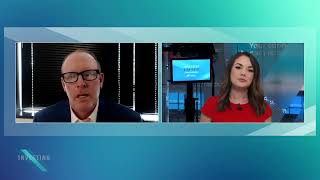
In this executive interview, Horizon Therapeutics CEO Tim Walbert discusses the company’s exceptionally strong second‑quarter results, highlighting a 90% year‑over‑year revenue increase to $636 million and a 153% jump in adjusted EBITDA to $330 million. The surge is driven primarily by the recent launch of TAPEZA, a thyroid eye disease therapy approved in January, which posted $166 million in Q2 sales and propelled the company’s guidance to over $800 million for the year. The second key product, KRYSTEXXA, delivered $108 million in sales with double‑digit growth. Walbert outlines margin expansion to the mid‑40s, a doubling of the commercial workforce to 200 staff, and amplified direct‑to‑consumer efforts. He announces two pivotal HZN‑825 programs targeting scleroderma and interstitial lung disease, and emphasizes a robust cash position of $1.7 billion that enables continued rare‑disease acquisitions in ophthalmology, endocrinology, rheumatology, and nephrology. The outlook centers on scaling TAPEZA to a billion‑dollar medicine, growing KRYSTEXXA beyond $1 billion annually, and building a long‑term R&D pipeline through both internal development and bolt‑on deals.
Chapters
Horizon Therapeutics on Monday reported a solid quarter with big beats on the top and bottom lines and raised its guidance, thanks in large part to its thyroid eye disease drug Topeza, which just got regulatory approval in January. And joining me now is Horizon Therapeutics CEO Tim Walbert. Thanks for joining me today, Tim.
Great to be on board. Thank you.
All right. So this quarter, by all indications, was an extremely strong one. You had the strongest growth for the top and bottom lines in quite quite a while. You raised your guidance. So what do you attribute the success of this quarter to?
Well, first of all, our revenue was $636 million, up 90% year over year, and our adjusted EBITDA was $330 million, up substantially, 153%. So strong top and bottom line growth driven by TAPEZA, and it's only second quarter on over a billion-dollar run rate in sales. So $287 $100 million in sales. And our second key medicine, KRYSTEXXA, delivered $108 million in sales, up substantially and back on a double-digit growth rate.
All right. So talk to us a little bit more about TAPEZA and the success that you've seen with that, this new drug this year.
Well, TAPEZA, it was approved in January of this year. It's for a very rare vision-threatening disease, which impacts about 15,000 to 20,000 patients each year. And it had dramatic efficacy improving symptom symptoms in these patients by about 80%. And what we saw is a fast uptake, reported $166 million in second quarter sales, and we had increased our guidance then to over $650 million in sales. With our results announced this morning of $287 million, we significantly increased our guidance to over $800 million, making it one of the most successful rare disease medicine launches in history.
All right. And when you're looking ahead to next year, what does the growth trajectory look like for this drug, you know, in terms of, you know, talking a little bit more about that total addressable market and then maybe the comps that we might see next year for this drug?
Well, certainly we see TAPAZA as a continued growth driver for us, along with significant growth expected in KRYSTEXXA next year. We've had significant accretion in margin this year, going from 37% up 700 basis points. To expected mid-40s this year. So we expect strong margin growth, significant increase investment in R&D. We announced today two pivotal clinical programs for our LPAR antagonist HZN-825 moving into both scleroderma and interstitial lung diseases. So exciting time as we develop our portfolio of development stage medicines, but also with TAPEZ and CRISTEXA continued significant growth.
Now let's talk about that margin growth a little bit. When you look at, you know, before this quarter, the bottom line growth was a little bit lumpy. Is that something that you expect to smooth out headed into next year, or are you taking a step back and focusing more on the annual bottom line growth?
Well, we had over 50% EBITDA margins here in the third quarter announced this morning. We continue to invest in TAPEZA as a billion-dollar-plus medicine now. We are doubling the size of our commercial organization to 200 people, significantly increasing our direct-to-consumer activities as we finish out the year and go into next year. So we expect to maintain our margins while significantly increase our top-line sales with TAPEZA and KRYSTEXXA.
All right. Well, in terms of strategic initiatives, in what ways are you planning for future growth into next year, beyond those two big drugs? I mean, you mentioned investments in R&D.
Right, so we expect to significantly increase in R&D on 18-825, as I mentioned, but importantly, we have over $1.7 billion on our balance sheet, which puts us in a great position to pursue additional acquisitions that can bring more development-stage medicines for us to bring forward. But certainly the top-line growth driven by both Tepeza and Krystexa are going to be Putting us in a great position to drive cash flow, reinvest that into R&D, and continue to drive margin expansion as we get into the mid-20s.
So you are looking to be acquisitive. What sorts of areas, uh, are you looking to expand into?
Our focus is on continued rare disease medicine acquisitions like the Tepeza, which we paid only $145 million up front and paid back quite quickly. So we're looking for rare disease medicines that may be in ophthalmology or endocrinology space, or even rheumatology or nephrology, like KRYSTEXXA is focused on. So in those areas, we're looking at development stage or R&D stage medicines, but also looking at potential bolt-on acquisitions that can accelerate our R&D portfolio.
Well, it was a fantastic quarter and the stock has made a fantastic move this year. So when you're looking ahead, if you if you could give us one final statement, I guess you could say, on what you think is the biggest key to the company's success moving forward.
Well, for us to be successful both in the fourth quarter but in the coming years is continuing to drive our billion-dollar medicine to PESA, turning KRYSTEXXA into a greater than $1 billion a year medicine here in the US, and continuing to do acquisitions and building out our R&D portfolio for the long term. So we're set up great to succeed moving forward.
All right, well, it was a pleasure speaking with you, Tim, and we wish you all the best. Thanks so much.
Appreciate it.
Hi there, thanks so much for watching Investing Strategies on our YouTube channel. If you want more executive interviews and analysis of key trends to watch, make sure you hit the subscribe button so you can stay up to date.