Founder Stories: Todd Park & Ed Park, Founders of Devoted Health
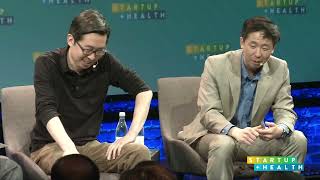
In this interview, Todd Park and his brother Ed Park recount their entrepreneurial journey, beginning with the creation of Athena Health in 1997, the development of AthenaNet—the first internet‑based practice management and billing system—and the role of trust and familial bonds in their partnership. Todd’s later tenure as the U.S. Chief Technology Officer at HHS is highlighted, emphasizing how government data releases and the StartUp Health initiative catalyzed a new wave of health‑tech entrepreneurship. The conversation then shifts to Devoted Health, the brothers’ current venture focused on senior care. They describe Devoted’s mission to treat every member like family through a “prime directive” that guides decision‑making, a tech‑enabled Medicare Advantage “payvidor” model that combines payer and provider functions, and a concierge‑style Devoted Health Guide plus a home‑visit medical team. The founders discuss how their core values—love, trust, and a family‑first culture—serve as the primary differentiator, attracting investors, employees, and provider partners who share the long‑term, moonshot mindset. Throughout, they reflect on the evolution of their relationship, the importance of building a company that can be their “last job,” and the broader impact of their work on the health‑innovation ecosystem.
Chapters
Anybody who's been around health innovation, digital health world for the last, like, 8 years and have ever seen Todd Park speak, there's always a, "Hello!" So, hello!
Hello!
There we go. So, before we get started here, I did a little bit of digging, Todd, because Barry mentioned that we've known Todd since the birth. It's actually about 3 or 4 months before the official birth of started StartUp Health in February or March 2011 down at South by Southwest. And at that time, the health track was brand new. There had never been a health track at South by Southwest. And there was literally the furthest hotel away from South by Southwest, in the furthest ballroom or conference room that they could even put in the hotel, was a whole day of speakers that were talking about the coming new age of digital health and how phones and devices and digital technologies were going to change the world. And so right after that, we walked out meeting you, Jerry, you and I met you. Mark Mansu and Shwen-Gee grabbed us for an interview and you can't, you can't make this up. I'm going to show all of you the interview from May or May, I'm sorry, March of 2011. When asked the question by Mark, what today was the most significant thing you saw or learned? So if we could roll the tape.
And pay attention to the hair.
That's all I'm going to say. And what were some of the— maybe you could sort of recap for us a little bit about, you know, what elements in the panels sort of inspired or you saw some inspirational ideas that were coming forward. Oh, wow.
The last panel of the day was actually Todd Park, who although he's an entrepreneur, he was now part of the I think he runs the HHS and he gave one of, I think, the best presentations in any health conference I have ever been at because he explained how the government for the first time has made reams of data available, data that had just been stored up and never accessible before and how over the last 12 months the government has participated in inspiring entrepreneurs and developers to start building new applications that were never before available.
Todd, for— you like that hair? And my baby brother in the middle.
There you go.
Unity. We look so young.
You do.
You look though the same as you did the day I met you. I got to tell you though, because I want to use this as kind of a framework. You have, unlike most people, lived multiple lives, both as entrepreneur, as well as somebody who served in the government for many years in multiple roles, most recently at the, uh, the end of the last administration as the Chief Technology Officer. And, um, you've always believed that it was going to be entrepreneurs that were going to change healthcare. And, um, I want to just kick off with a little bit of context because, um, I don't know if everybody knows the background of both of you, what you've created prior to, I think, when a lot of people got to know you at HHS, when you were first, I guess, uh, Chief Technology Officer, then Chief Technology Officer of the government. Could you give us a little background as to the lead-up of your working together? And then I want to talk about that relationship and why you're doing it again.
Sure. Yeah. So, Jonathan Bush and I co-founded a company called Athena Health in 1997 as a company focused on dramatically improving maternity care to help babies be bouncier and mamas be healthier and happier. And we bought a public health OB practice in San Diego County in an effort to use that as a base from which to build Athena. And basically, we realized pretty soon into it that to make this really work, to make this practice just work at an elemental level, like let alone actually dramatically improve care, we needed to build new technology to enable it. At which point, I called my brother, who was a high-flying internet dev consultant for Silicon Valley internet partners, like, you know, just out of college, making a 6-figure salary, jet-setting around the world, like rock star. I said, "Ed, I'm running a public health OB practice that's actually not doing very well." Yeah, I remember this.
I remember this call well. I was sitting around here and Todd says, "Could you come help me?" "I can pay you $20,000 a year." Steven gave me the same call. And the thing, from my perspective on it, was that, look, if I had the chance to help Todd, I was gonna do it because he's been such a great brother to me my entire life. I still remember in 7th grade, he basically came to me and said, "All of my friends treat their younger siblings like crap." I'm not going to do that. I'm going to promise I'm going to try to be the best big brother I can forever. And he meant it, and he followed through on it, and he has been. And so when he calls me up and says, I need a favor, I was like, I'm going to take a leave of absence from my job for the next 6 months to help you out. And that turned into the next 20 years of my life.
So we paid him $20,000 in cash, and we paid him in Athena stock, which actually turned out to be a really good thing for him.
Worked out for everybody.
And Ed basically took a look at this practice and said, You know, I think we need to do is build the first internet-based practice management billing system to run that across America, right? Then, like, have you seen the movie Iron Man, right, where Tony Stark in the cave in Afghanistan, like, builds first Iron Man suit? Ed pulled a Tony Stark. He went to basically a closet that we gave him in the medical group, right, and he wrote half a million lines of code and emerged with AthenaNet, the first internet-based practice management billing system on the planet, to which we then actually integrated business services. And then basically what happened is the doctors and nurses said that this practice, look, you know, you're lovely young men, right, and women, but you buying and running our practice doesn't seem like a terribly scalable model or a good idea. But this Athenanet thing, this software as a service with business services actually enables that delivered to people across the country, seems like a really good idea. So we raised money for that and then went from there.
I just can't believe that you went to him and said you're going to be a great big brother.
I didn't even think of that.
I should have thought of that.
It paid dividends, didn't it? He never explained it. He just did it though.
Yeah, I did do it.
I did it. There you go.
Yeah, that's because Barry was a good sister. Where is she?
Yay. So awesome.
Let me ask you, so you started, it's interesting that you built a company or that you were going into healthcare with Athena and Athenanet. Just out of curiosity, how did, and I know you went to Ed because of his skills as a coder. Healthcare is such a personal thing. Did part of that help? Did your relationship as brothers help sort of develop the relationships and the feel, the sort of the core values of Athena? And how does that affect what you guys are doing now?
Oh yeah. I mean, so, so first of all, I went to Ed because he's my brother. Who I love desperately and I would trust with anything, right? I mean, the fact that he had mad skills as a coder was part of that, right? But he's just ridiculously gifted across every dimension, right? So, you know the phrase that 10x engineer, right? People who are just 10x better than a good engineer because of pure technical prowess. Ed's what I call a 100x engineer, right? He adds 10 times the value of a 10x engineer because he doesn't regard tech as his domain., right? So he will invade every adjacent space and the entire business domain, grok it to the core of the earth, and come back and say, "The thing you asked me to build is actually not the thing that should be built because what the customer in fact needs is X," right? So, you know, I would pick Ed as my co-founder, right, even if he weren't my brother, right, because he's just ridiculously awesome, which none of these things he'll ever say, so I have to say them for him, right? But the fact that we built a ton of trust as brothers, right? I think enabled the relationship of total trust and collaboration being on the same page that enabled Athena Health along with Jonathan, right? And our whole team, right, to succeed. And I think, you know, interestingly, like, if you think about, like, you guys are another classic example of this, right? You know, with Barry, right? I mean, you think about like, What kind of relationship should a founding team have, right? It should fundamentally be a familial one, even if you're not related by blood, right? You're related by metaphysical blood, right? You want to have no question that you're on the same mission. You want to have no question about having common values. You want to actually have no question that through thick and thin and through the endless punches in the face you're going to experience that your brother or sister is going to be there with you., right? And so it's interesting because, you know, people would ask me when we started Athena, like, why did you start Athena, like, with your brother and your best friend, right? Like, you know, isn't that difficult? And I think they're coming from a paradigm where they think of business as a system where you systematically screw other people, right? And I come from a different place, right? Like, you have to start from a place of such trust and love that the ideal co-founders are in fact your brother and your best friend, right? And you don't have to start as siblings, but by the end of it, you don't think of yourself as siblings and something probably didn't really work.
Yeah. And the other interesting thing, as siblings, you also— because, you know, there's always arguments, there's always disagreements, you have to be able to work through those, get through it, and it doesn't affect the relationship.
No, totally. Because there's an unconditional positive regard, an unconditional presumption of positive intent. Then you disagree about particular strategic or tactical issues, but you're never disagreeing about values, right? And you never kind of think that there's some kind of ulterior motive, right, that's not the issue itself, right?
So— Just another quick— did you ever think that you would work together when you were growing up?
Yeah, I mean, I think so.
I mean, I think—
Not me. I mean, no, in the sense— no, in the kind of conscious sense, where I didn't know what the hell I was gonna be when I grew up, right? So my wife, we've been together since we were 18, she said she married someone who's supposed to be a journalist and a writer, right? And that did not become me, right? I didn't become that, and so she kinda thinks she needs to return me, right, for another husband at some point, right? But so I don't think I at least had enough sense of what I wanted to be when I grew up. To know, right? But, you know, let me just put it this way, like the first time I encountered a situation, I was 24 years old, right, that was existentially important, right, where babies and mothers were on the line and they need to find the best possible partner, right, the one person I thought of to call is this guy.
Just to explain my, like, I wasn't sure. Like kind of piece. The— so Todd was always the golden boy, right? He was the guy who won every award you could possibly imagine in school, national violin competition, spelling bees, math counts competitions, like most improved player on the soccer team.
He won— And I was the worst player on the soccer team. Valedictorian, right? I won the award for the worst player on the soccer team.
He won all of them. And so, like, as we went through life, I was always like Todd's little brother. And I'm like, "Oh," when I got to college. Then I followed Todd to college, and after that I'm like, okay, good, I'm finally going to do my own thing in life. And then I got into the world and started working, and then I found that I really enjoyed working with people that I loved and who were really competent. And so when Todd called me up, and I— you got to this point where you get, you get advice from a bunch of folks, right? And they basically say, look, working with a family member can either be the worst 'thing ever' or 'the best thing ever.' And what I found is that it is unequivocally the best thing ever. And so from then on, it's just been like, actually right now I'm having the time of my life. It's just a ton of fun. And you guys are as well, obviously. Yeah.
Yeah.
You just see it.
Yeah. I mean, like a big part of the reason why I wanted to start Devoted with Ed was after 7 years not working with Ed, right? I wanted to work with him again. Right?
Yeah.
And so, you know, do something you love with people you love. Is the recipe for professional happiness.
So, so that's actually a great, a great transition a little bit into what you're doing now, because right after the video that we showed you, a couple months later, StartUp Health launched at the White House. Actually, people saw the picture in the Oval Office, all as a result of Todd's invitation to Jerry, Unity, and I at South by Southwest to launch StartUp Health on that platform that you created, Datapalooza. And what you did over the next several years in the government was transformational for the entire industry to lay the groundwork for entrepreneurs. And a lot of the work that's being done now and the data that people have available now is because of the work you and Aneesh and the team did in the government. But you're back in the private sector. We were really happy to be and honored to be an investor in your round of financing that you closed for Devoted Health in November, December. I think what is fascinating about everything you guys just said is that's what you've kind of bottled up into a new company. Yeah. And it seems as though Devoted Health is all about family. Yeah. And the prime directive and the values and everything you're doing is about taking this philosophy and this value system, putting it into a company, and then wrapping it up and going.
Yeah.
Yeah.
Tell us what— tell everybody about Devoted. Who might not have read about it already?
Sure. Um, so Devoted is the company that Ed and I think that our entire lives have been leading up to building, whether we realized it or not at the time, and that God willing, we will be building for the next 30 years. It's the great cause of our lives going forward. Um, and it's a company whose mission is to dramatically improve health and care for seniors. By caring for everyone like they're literally family, right? So it's something that we call the prime directive, right, which is the standing order that we issue to each other and to the whole company, which is when doing anything, undertaking any action, making any decision, close your eyes, imagine the face of a member of your family you love desperately, and ask yourself if you were making the decision to impact him or her directly, what would you do? Then open your eyes, check with compliance to make sure that you're not about to do something illegal, which is important. And if it's not illegal, then do that thing. Like, no further permission required, right? And you think about, like, what would you want for your mom? What would you want for your dad, right? You would want the best healthcare in the world, right? You wouldn't settle for just average healthcare, hopefully non-catastrophically terrible healthcare, right, for mom, right? You want the best healthcare in the world for mom. Right? Which can be succinctly defined as the right care, including non-clinical care, delivered in the right place at the right time. Right? Right care, right place, right time. And as things— everyone in this room knows, right, if you actually deliver consistently right care, right place, right time, it's axiomatic that that costs a lot less money ultimately than the chaotic, fragmented, confusing, information-poor, uncoordinated, non-prevention-oriented, non-hospitalization-preventing care, right, care that most people get today, right? So we want to get people consistently the best care in the world, which happens to cost a lot less, and wrap that in a world-class consumer experience, and do that scalably, right? There are people who have done that in local circumstances. We want to do it scalably for the first time. And what we built, in a nutshell, to actually do that is something we're calling a next-generation tech-enabled Medicare Advantage Payvidor, kind of a play on the words payer and provider. It's a combination of payer and provider, right? Tech-enabled Payvidor. And essentially what that really means is we built a brand new next-generation Medicare Advantage health insurance plan optimized for value-based payment and care, for fantastic customer service, and for ultra-low admin hassle and cost. We partnered with the best providers in our markets, and We have created relationships with them where, as we collectively take better care of people, that saves money and they get to reap the savings, right? And then we complement those terrific healthcare providers with devoted care services. So specifically something called Devoted Health Guide. Every member gets their own personal devoted health guide team. It's basically a professional daughter and son service, keeping on the family theme, right? So it's a mix of insurance member service, logistical coordination, administrative support, and clinical support, a team of folks who are essentially your own personal concierge/navigator/guardian angel to not just answer every question, but to proactively block down field for you, right, and organize the chaos of the healthcare system to actually work for you, right, like finding the right provider, booking appointments, arranging transportation, filling meds, etc., right? And then we also have our own devoted medical group, which are our devoted employed doctors, nurse practitioners, social workers that we can send specifically to your home. They're a house call team that goes to your home in person for the time being, but telematically eventually, to do things that are best done at home and to fill gaps, right? So, that's what Devoted is. A health plan partnered with the best providers, with a devoted health guide concierge navigator team, devoted medical group to complement our providers, all actually powered by a brand new tech platform that we built from scratch. To bring it all together and generate awesomeness in a scalable way, right? And all oriented maniacally toward caring for everyone like mom, caring for everyone like family, right care, right place, right time.
You know what I find amazing? Just like your relationship and your ability to work together is unique, that view of how we should take care of each other, although it shouldn't be unique, sounds very unique, right? And I think that the, the thought that You're saying that being able to provide the right care at the right time at the right place is going to decrease costs when everybody's so used to their insurance companies going, "Well, we're not going to do that test because we're trying to keep our costs down." But you're saying if you do it in the right way, you're actually going to save money.
Yeah. It's actually the case that, you know, one of the things that gives us a ton of confidence is that there are existence proofs around the country. Where pioneering, generally medical groups actually, right, who are under some form of global risk, actually have split the atom, right? They've actually, for the senior population specifically, like iteratively figured out a model where they do deliver highly coordinated care that's right care, right place, right time. And their quality outcomes are off the charts good. Their costs are a lot lower, right, because basically they do the stitches in time that prevent the hospitalizations, prevent the adverse events, prevent the train wrecks, right? And their patients are a lot happier. So we are inspired by all those examples, right? And have built this specific payvider model, this tech-enabled payvider model to take all their learnings and put them in a tech-enabled payvider service that can enable everyone actually get those outcomes, right? And so it's actually really obvious, like Luke Boyette is in the audience and he's one of our trusted advisors, right? And he's been in this industry for a long time. He describes Devoted as the incredibly obvious idea that no one's done yet. And so we were inspired by the work of pioneers and we're paying our respects by seeking to scale their learnings massively.
So when I asked Ed the other day, we were talking about the uniqueness and what people would typically think, entrepreneurs typically think, a lot of investors typically think is, what's your differentiator? And you had, I guess, early on initially, the, you know, not recognizing people were not necessarily believing you were going to mean it, that you were going to take care of everyone like your mother. That became the unique differentiator in not only the fundraising, but attracting the team and doing all that. Can you touch on that? Because a fascinating way to look at what every entrepreneur would think and every investor would think would need to be part of your differentiation plan, but how that mattered.
Yeah, it's been extraordinary because the best patient care in the world is the care that does cost less. Uh, and so as we've gone out to market, the thing that's actually resonated by by far the most is that we are built on love. That it's like we want to treat every member like family, and that we're built on love. And people come and say, we haven't heard that before, and it appears that you actually mean it. And I can't tell you the number of folks that it's resonated with, from investors to employees to large health systems or individual physician partners. They just, This somehow has caught fire in the communities that we've been into. And it is sad that, like, we looked at other things that could be differentiators in there, and we have all sorts of interesting things like technology and great clinical processes, et cetera, but it's that principle that's proven to be the most resonant. And we're happy because it is in fact the most important principle in the whole company.
Yeah, yeah. It's the principle, and then people see as they go deeper that everything in our company is built to back that up and deliver on it.
Yeah.
And it's been very powerful.
Yeah.
Well, you know, it's interesting. So, you know, we have these, you might remember the 8 Health Transformer Mindsets, what the entrepreneurs who are going to achieve health moonshots, what kind of mindset they not only live in but protect and build on and get support from. And that's at the core of StartUp Health beliefs and values. And so when we, when we first heard about the, you know, the, you know, the company and this along with Andreessen Horowitz and others, this round of financing coming together, it was almost like we could take the model entrepreneurs who embody the exact Health Transformer mindset, who are doing something with the long-term commitment, with the values and the belief system, and doing it in such a thorough way that you'd almost believe it's too hard to believe, right? And so one of the things that most people that I've told about the voted, you know, as we were looking at it and asking questions to people, the big thing that people were asking was, well, why don't they just buy a health plan? Or better yet, why can't a health plan just do that or won't the health— one of the other Medicare Advantage plans do that? Can you talk on to that point about why you chose—
Yeah, why a cookie sheet of paper? Yeah, exactly. Yeah, it's interesting because it's not a mark of disrespect for the past. It's a mark of ultimate respect for the past. Basically, we have looked at the past few decades of innovation, and we've cherry-picked all the things that people learned the hard way to do. Then we said, "We're just going to take the things that were awesome and not take the things that weren't awesome." To start with a clean sheet of paper, so you don't have any legacy baggage of non-awesomeness, and then build from the ground up a service that reflects all of the best of what everyone has learned as a mark of respect, right? And critically, build technology into the service from the ground up, right? That infuses everything we do, which then enables us to iterate much more rapidly, enables us to scale much more rapidly, right? Because we think that as much respect as we have for all of the learnings of the past, right? And while you could simply just take that and scale that and save lives and improve lives and save the country money, right, at scale, right, that we as an American health system have just begun to fight, right? And that if you actually unlock the mojo of the amazing team of folks who have joined us and you put them in a construct that's tech-enabled and can iterate and scale super rapidly, right, and give them the freedom to care for everyone like mom, right, that what that team can do and what they can figure out, right, on that foundation will just be extraordinary.
I'll tell you, the ability to build that whole thing depends on a certain culture, and the reason we started, the fundamental reason we started this from scratch is so that we could affect the culture. We've been wearing our motto and our values on our sleeves. We tell everyone this is built on love. Every member is mom. And what that's meant is that the people coming on board self-select in. Investors, value-based investors like you guys, self-selected in. Our provider partners self-select in. And so there's a bunch of people for whom this is not the right thing. Like, they— and for those people, we actively don't want them in. We want to only attract people who have this long-term orientation, who want to be part of this culture that is trying to create this moonshot.
Yeah, that's sort of like what we call batteries included for StartUp Health, and everybody who's part of StartUp Health has heard this over and over again, is we try to attract the right kind of people, people who are batteries included, people who are going to bring energy to your moonshot, your project, your company, and it's exactly what you did. I wanna ask one last question, which is, so I know how Steven, and it's interesting 'cause Barry, Steven, and I have been doing this a long time too, and I know how our relationship has changed over the years as we work together and how the interactions within the company have changed because of our relationships. Looking back, how do you see your relationship is changing? Is he still the great big brother that he always was, or is he sometimes a little bit tough boss? Is he— how do you see the relationship changing over the course of the years? And is there anything that you wish you knew when you started the first company that you've learned over the course of the last few years?
Very little. I mean, it's just— I gotta say, just honestly, it's the best thing ever.
Best thing ever. It's like a fine wine, just keeps improving with age.
It just keeps getting better. I think that I have— come to appreciate even more what it means to work with— I honestly think, right, this guy's the best in the business, right, at so many things. And to have the privilege of working with one of the best in the business, like, it's just—
it's amazing every day. Ed is the smarter, faster, better-looking, more athletic, and just generally superior brother in every way. Howard told me that. True. I feel like I'm talking to Howard. And it's the ultimate privilege and honor and joy to work with him and an amazing team at Devoted to seek to save lives at scale and improve lives at scale and care for everyone like family.
Yeah. Well, we're excited because you also embody one of the C's that Steven spoke about this morning was your commitment and continuity. Your challenge to yourself and to your team that you're gonna follow this through to the end. This isn't a short-term— This is the last company we're ever gonna work at.
This is what you both have said should be the last job that you have. Yeah. So this talk, this chat, this brothers chat was actually a result of a suggestion Todd had. We were at the Biden Cancer Initiative in the lobby and we were talking about the festival and Todd's been at You were a lot of, when you were at HHS, a lot of our events and festivals and have always been such a terrific friend to StartUp Health. From the very beginning, giving us a launchpad down in Washington to really carrying that torch. I think for all the entrepreneurs who have tapped into the government data that you and the team unleashed and opened up, to everybody that both admires and follows and is inspired by your past work, but I think is going to now be as equally inspired by your current work. Thank you.
And thank you.
Thank you. Thank you. Continue to carry that torch for being here today. We cannot wait. No, not only as investors, but friends and an entire community rooting for, rallying, and want to collaborate with Devoted and you two. And I know everybody wants to now be a part of the Park family. So you're all part of our family.
Yeah. Thank you very much. Thank you.
More from Joshua







Scientist Stories: Hans Waterham, The value of phenotypic assays in peroxisomal disorders




Scientist Stories: Joel Zlotogora, Genetic carrier screening programs for reproductive purposes