Founder Stories: Uğur Şahin & Özlem Türeci, Building BioNTech into an Iconic Biotech Company
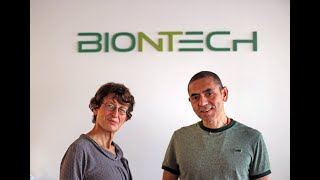
In a keynote interview at mTech Europe, BioNTech co‑founders Dr. Uğur Şahin and Dr. Özlem Türeci recount how a decade‑long focus on mRNA‑based cancer immunotherapy laid the scientific and technical groundwork for the rapid development of the world’s first approved mRNA COVID‑19 vaccine. They outline three guiding principles that steered their work: (1) deep, data‑driven understanding of the problem, (2) pursuit of elegant and simple solutions, and (3) ensuring scalability and global impact. The conversation details the technical breakthroughs that stabilized mRNA, boosted protein expression, and enabled rapid, modular manufacturing, allowing a vaccine candidate to move from concept to clinical proof in days and to full approval in 11 months. They discuss the massive manufacturing scale‑up achieved through partnerships with Pfizer and other licensees, aiming to deliver billions of doses worldwide, with a focus on low‑ and middle‑income countries and technology transfer to regions such as Africa. Looking forward, they envision mRNA platforms addressing personalized cancer vaccines, HIV, tuberculosis, autoimmune and inflammatory diseases, emphasizing adaptability to emerging pathogens. The founders also reflect on company culture—gender and ethnic diversity, collaborative ethos—and on the broader societal role of science, including public education via social media, the responsibility of scientists, and personal habits that help them stay focused. The interview blends technical insight, strategic vision, and personal philosophy, offering a masterclass in translating breakthrough science into global health impact.
Chapters
Welcome back to mTech Europe, coming to you live from Belfast, and it is my great honor to welcome two extraordinary people, partners in life. They're also married to a shared vision of the power of science to change the world for the better. They have revolutionized medicine, they have shown how technology can transform the world, and in record time. In just 11 months, they developed the world's first vaccine against COVID-19. They have quite simply changed history. We welcome the co-founders of BioNTech, Dr. Uğur Şahin and Dr. Özlem Türeci. Welcome.
Thank you, it's a pleasure to be here.
Thank you very much. So, dear ladies and gentlemen, researchers and innovators, dear colleagues, Hugo and I feel honored to be the keynoters of this conference after a year of global disruption. COVID-19 has affected all of us. At the same time, it has also taught us a lot. The pandemic has accelerated technology trends and structural changes that will help to reshape the global society and economy for good. For instance, the global pace of digitalization has accelerated. Greater value has been placed on resilience and sustainability and on living with less, less distraction, less speed, and less stuff. Now it is the time to discuss what is needed for a sustainable sustainable, healthy, and intelligent future. And yes, we believe the future is becoming brighter, mainly because of science and technology. Science and technology can make a difference by creating innovations. For example, they have led to several approved COVID-19 vaccines. Only 16 months, 470 days After announcement of a pandemic, hundreds of millions are vaccinated. People are able to gradually return to their normal lives. We, we feel blessed and honored to have made a contribution on the basis of our decade-long research and development efforts. Building on our mRNA technology, which we have developed and optimized in the course of our cancer research, We were able to make the seemingly impossible possible, to develop a vaccine for humankind in less than a year. This was the fastest development in the history of medicine. Fast while following the highest and ethical scientific and regulatory standards. Yes, that is feasible. And so science and technology led to an innovation, the first approved mRNA product ever a new drug class to medicine. Our original mission, though, was a different one: finding a better way to treat cancer patients. We became physicians, researchers, and entrepreneurs to improve the health of people worldwide by harnessing the full potential of the immune system. The one-size-fits-all all approach did not work in oncology. While we were taking care of our cancer patients in the mornings and afternoons as physicians, we spent our evenings and weekends in the lab to research new treatment options. We wanted to transform science into survival, bringing novel therapies from bench to bedside. Our goal seemed like a scene in a science fiction movie back. A patient is diagnosed with cancer, we take a sample of the tumor and analyze the mutations. Based on the analysis, we design and produce on demand a customized mRNA-based instruction of unique composition. The mRNA carries all information to reprogram the immune system, to teach it how to efficaciously fight against tumor cells like it fights against viruses. Today we know the approach of mRNA-based vaccines works. There is a proof of concept. Thus mRNA vaccines are a good example of what is needed, what it needs for a breakthrough innovation. A transformative technology and many, many steps to bring this technology from the labs to the people. Which major principles have led us through our years as innovators? How were we as immune oncologists able to develop a vaccine which is protecting hundreds of millions of people worldwide against the virus? Three principles have been our compass during the past years. And might also be helpful to you. First, before working on a solution, make sure you really, really understand the problem. We will only be able to find a suitable solution if we know enough about the problem. When you start struggling, only then you start to understand, to get to the bottom of it. Or in Albert Einstein's words, given 1 hour to save the world, I would spend 55 minutes defining the problem and 5 minutes finding the solution. For our team, Einstein's 55 minutes were 2 decades of research and of development. During those, we developed a deep understanding of the immune system and full command over the technologies we are working with. That type of investment is necessary. When we started our research in the late 1990s, not many in the industry believed in mRNA as a new drug class. mRNA was too unstable. There was no proper solution to administer it, let alone to guide it to the right cells in the body. There was a lack of immune response. The production of the delivered proteins was too low. We found solutions. By nature, mRNA not only gives the blueprint for the protein to produce, it comes with a set of instruction elements, how to produce it. Our teams spent years of research to recode those elements, which modulated the mRNA. We were able to optimize each of those elements individually. Combined, those improvements resulted in thousandfold increase of protein yield and thus potency. Also, we worked on formulating mRNA in a way that is not only protected but also delivered to those organs in the body and those cells in these organs where we want it to be expressed. We also learned how to engineer RNA such that it activates and orchestrates different forces of the immune system and creates a high-magnitude, high-precision, and multipronged immune response. And our efforts to develop individualized cancer vaccines— you remember the science fiction movie— trained our sense for urgency. For each patient, the process from sequence information to the mRNA-based vaccine candidate was a race against that individual's growing tumor. In 2014, this process took us 3 to 5 months. In 2019, we had already optimized it to 3 to 5 weeks. All those efforts paid off and led to COVID— to a COVID-19 vaccine, which at low dose levels is effective and tolerated. For us, it was just the right timing to develop a vaccine against an infectious disease, we had developed our technology to a level of maturity that allowed a rapid response. While getting to the bottom of a problem means letting science and data guide you, it also means to navigate with courage and humility through those unknown territories. Which is where scientists are most frequently found. Like many innovators, like many inventors, we had the courage to fall in love with the unknown, and we had the humility to strive for technical mastery by being teachable. We were not afraid to fail. Instead, we sought to learn from our failures and turn them into something productive. And this is the most important learning from our journey. Keep going and don't give up. The world is changing and so is the problem. Today we are discussing problems which did not exist before, but to counter them we also have science and tech that did not exist before. The nature of disruptive innovation is that it is not a single invention, a solitary discovery, the one thing by one person or one team that makes the difference. We live in times that are permissive for innovative disruptions of grand dimension due to the convergence of leap, leap advances in interrelated fields. For some of those to surface, it took a global crisis. This brings me to the second principle of breakthrough innovations, aspired to develop an elegant and simple solution. We choose mRNA technology because of its elegance and simplicity. When we initiated our COVID-19 vaccine development project, our goal was to develop a vaccine for humankind. This came with requirements: high-effective and well-tolerated vaccine. We did not know enough about the new virus. So we decided to develop more than 20 different vaccine candidates. That we could start the innovation process with a broad discovery platform was because of the simplicity of the technology we used. Rapid manufacturing. For our individualized cancer treatment approach, we choose mRNA vaccine technology. We knew for cancer patients, every day counts. In order to receive their hopeful life-saving treatment. A short manufacturing cycle was a prerequisite and an important asset to start working on a pandemic vaccine. Lastly, adaptability. Viruses mutate. This is part of their biology, some faster than others. We did not know how fast SARS-CoV-2 will mutate, but it was clear to us that an adapted adaptable vaccine might be needed. As we already were using mRNA for our individualized cancer candidates, we knew that we could design and test a new vaccine within weeks. So to wrap this up, what COVID-19 has taught us: breakthrough innovations are tailored to the needs of their users. In this case, to humankind. Breakthrough innovations will solve problems which people might not even think of yet. And this is the beauty of our jobs as researchers and innovators. However, let us not wait for the next global threat, the next grand crisis to create the sense of urgency, to become the fire baptism for all those high-potential technologies that may contribute already now to the well-being of mankind and preservation of this planet. We can work with the unknown, we can develop these solutions that might seem like out of a science fiction movie today. We can create a healthy, sustainable, and intelligent future. Ugo shares my thoughts, and he will tell about them now.
Ladies and gentlemen, dear colleagues, I can't agree more with what Özlem just stated. And I would like to add a third principle: Once a breakthrough innovation has been created, ensure that it can make a difference for many people, ideally humankind. So the question is, how can we accomplish this? How can we ensure that an innovation becomes useful for many? How can we ensure that the solution provides a sustainable difference for mankind? The answer is that we need to be patient, we need to be humble, we need to be persistent and pragmatic. First, we need to acknowledge that innovation itself is not a solution.. It could be part, an essential part of a solution. However, it often requires a whole bunch of additional discoveries and innovations to apply an innovation and to make it useful. Second, it is advisable to consider a humble step-by-step approach. Instead of trying to answer the question how, an innovation can change the world, it is easier to answer the question, how can an innovation become useful for a single individual? Once a complete solution is developed and successful for a concrete use case, we could ask the question if the solution is applicable also for the next, maybe larger use case. When Özlem and I started to work on our mRNA technology more than 2 decades ago, Our goal was to develop therapies to make a difference for individual cancer patients. We believed in the power of the immune system. We wanted to develop vaccines to redirect the patient's immune system to fight against its tumor. The unsolved biological challenge, which required true innovation, is that every tumor is different. Thus, every patient would need an individually tailored vaccine. We saw 3 challenges to overcome: to create a versatile vaccine technology which allows flexible tailoring; second, to ensure that the vaccine induces powerful immune response; and third, to ensure that the vaccine could be manufactured extremely fast while the patient's disease is ongoing. We invested decades of research, made many discoveries in the field of mRNA technologies, and connected them with other innovations to come up with the solution: an individualized mRNA cancer vaccine which could be tailored and produced within a few weeks. When we realized in January 2020 that the outbreak in Wuhan will become a global pandemic, We understood that vaccines could be the only solution which could stop the pandemic. We saw that the mRNA vaccine solution that we had developed for the cancer could be applicable for some adaptation to another use case, to develop a highly potent vaccine against the new virus while the pandemic is ongoing. We could apply our skills, the same technology, for completely different challenge. The application and the continued optimization of our technology in cancer allowed us to develop a highly effective and safe vaccine in less than a year. The use case of a pandemic vaccine comes with additional change— challenges down the road. One of our questions was, how can we make our vaccines available worldwide? How can we scale up manufacturing? How can we bring our vaccine to people at any place on the planet as fast as possible? Our solution is based on technology and collaboration. We started to execute a 3-step approach. In short term, with our partner Pfizer, we decided to scale up our manufacturing sites in 6 in total. Second, we included to continue and additional vaccine manufacturers and multiple partners in our production networks under license agreements. With these two approaches, we were able to scale up the manufacturing to 3 billion doses in 2021. In the upcoming 1.5 years, we want to deliver 2 billion doses of our COVID-19 vaccine to low- and middle-income countries. This equals about 40% of the manufacturing capacity of ours and our partners' network. The third aspect is to ensure sustainability. We want to transfer our knowledge and enable people —for example, on the African continent—to manufacture vaccines for the African continent. We believe that our innovation could help to forge a brighter future for humanity if we continue to work on it, with it, and for it. If we pave the way for it, we will find sustainable solutions to address not only the current but every potential future pandemic threat. This is why we aim in the longer term to establish a worldwide manufacturing network, which is not only suitable to address COVID-19, but also potential future pandemics. This applies not only for this type of pandemic infectious diseases, but also infectious diseases like HIV and tuberculosis, which have a death toll of millions of patients every year. Since we have founded our company, it was our goal to improve the health of people worldwide. That remains our vision to this day. As immune engineers, we will continue to work on new treatments on the basis of our technology. And we are asking what kind of other potential use cases can be addressed with our innovation. As trained physicians, we had experienced many times that patients with chronic diseases are very individual. This applies not only for cancer, but also for autoimmune and inflammatory diseases. Too often, patients do not respond well to standard therapies, and off-the-shelf treatments. Too often, patients are left behind, and they feel alone because there is no treatment option left. We aspire to develop individual treatments which can be easily adapted to the changing root cause. This could be mutated cells causing cancer, mutated immune cells which cause inflammation or autoimmunity, or mutated viruses and bacteria causing infectious diseases. We believe that this type of tailored treatment will open the door to a new era of precision medicine. Intelligent solutions such as tailored mRNA therapies can address challenges today and tomorrow. To come back to the image Aslam has raised before, this development could have also been part of a science fiction movie.— and it became reality. You as scientists and innovators, you can bring light into the dark and find ways leading us into a better future. This applies for all topics of this conference: better healthcare solutions, finding green energy solutions and balancing greenhouse gas emitters, sustainable transport, cities and food solutions, and intelligent solutions like AI. Today, our visions and ideas may seem like science fiction. Tomorrow, the very same ideas, maybe your ideas, may already become reality and help forging a brighter future. Our innovation was meant for an individual patient, and now we have started paving the way to make this very same technology to a sustainable solution for mankind. Charles Bukowski once said, "You begin saving the world by saving one man at a time." So always keep in mind, if you are able to save a single life, you might be able to save humanity.
Thank you. Thank you so much. Can I say that was really, really inspiring? And there's so many things that we can talk about. I'd love to talk about, because that was really like a masterclass in scientific insight as much as anything else, of a moment of vision and exploring how that can change the world. So let me take you back, if I may, to January 2020. And, uh, Özlem, you're in Germany, and this thing that we now think of as COVID-19 is breaking out across the world. The rest of us saw this as a crisis, to use the language you've used in your talk. You saw it as a breakthrough innovation in that moment. Where were you when you had that breakthrough innovation?
The breakthrough innovation, that's not a moment. It's not one single event. The breakthrough innovation is in principle, all the years you have invested before to optimize a potential solution. It is the understanding that this solution could help to a new problem and then invest to adapt. So I would not pinpoint one moment in which breakthrough—
in this breakthrough innovation has happened. So this was or this was a solution that you had developed almost waiting for this problem to arrive, and it did arrive, and in that moment you did see an opportunity.
Yes, yes, it is, it is indeed, indeed. If you develop a solution for a completely different problem, or for a problem which appears to be completely different, And then you see that the solution in principle, or the new problems, comes with the similar demands. And so the same solution could be applied. Of course, this is a wonderful situation. So that means you have the solution and you need just to adapt it. And that made it possible to make this vaccine available in less than one year.
And when you first read about this, this virus that was taking over the world, Özlem, how long did it take for you to make the journey from this is something we can do something about to actually getting a kind of prototype solution to it?
It depends on how you define prototype. The construction of the candidates which we then wanted to test to choose the active one in preclinical and clinical trials. That was a matter of a couple of days. So preparing the discovery space within then the big experiment of clinical trials had to be done. That was a matter, as I said, of days because all those investments months. And then it took us 10, 11 months to have something in hand to prove that we have a vaccine which is efficacious and get approval for it.
Days to get to that kind of prototype solution, but I take your point, days based on years, many, many years of research and development to get to that point. I get the impression as I hear you both talk, or that in addition to being great scientists who want to do something, intellectual entrepreneurs as it were, you're driven by a moral vision here as well. That's part of your DNA, isn't it? A moral vision of what technology and science can do for the world.
Yeah, absolutely, absolutely. So, so we both, our, our whole team, our company One wants to be useful, to do something useful, and I think this is the greatest privilege of science, to be useful, to make a difference for individuals and for humanity.
The teams that you have created, Özlem, the company that you have created, is also wonderfully balanced, isn't it, in gender terms? Is that accidental?
Is that part of the, the ambition for your company? It's, yes, it's wonderfully balanced in gender and in any other terms also, in terms of ethnicities and nationalities and, and skill sets which are represented. And it did not happen as part of a master plan. Happened by just looking for people who would fit the culture and who would bring the skill sets we needed to the table. And it turned out that if you seek for this, you get a wonderful heterogeneous mixture, and there is no reason to discriminate anyone for anything.
Yes, human diversity is part of the solution, not just the science, but human diversity. Absolutely. Can I ask you a couple of questions that people will be wondering about as we go forward? And you hinted at some of the possible other uses for this. I heard an interview with Dr. Fauci the other day, Özlem, who wondered if we could see major developments in terms of HIV vaccine development. Using messenger RNA. What do you think? How far ahead is that kind of thought process?
It is definitely feasible to see a major, to make a major difference, and we are working on it. However, HIV is a much higher hanging fruit due to its biology, so it will not happen in light speed. Within 10 months.
And when it comes to cancer therapies, I'm really taken by the fact that both of you were inspired by the failure of previous therapies to want to do better, to want to kind of fill that gap in, in scientific terms. Or are we looking at a moonshot moment coming up with messenger RNA in terms of the rollout of cancer therapies?
Yes, we believe that, that personalized immunotherapies could really make a difference. At the end of the day, we have really to see the root cause of cancer treatment failure. The root cause is that every patient has a different tumor, and the tumor consists of tumor cells, billions of tumor cells, which are, each of them are different. So that means the only solution that we can see to address this root cause is really to tailor the immunotherapy to the patient's tumor. And this is now technically possible. And of course, we have to see whether this type of solutions could improve the survival of cancer patients. And the aim is to use this type of solutions, particularly in early stage of cancer. After surgery, we know that about 30 to 40% of patients undergoing surgery after cancer have relapses, and our goal is to avoid these relapses by personalized cancer vaccines.
It's fascinating for the rest of the world, and I know what you must know, that on social media particularly, there are so many experts in virology now, so many experts in epidemiology and biology who've never taken a class of the subject, but everyone has a view, everyone wants to get involved in this thing that has happened to the world. Some of that's very negative, obviously, in terms of conspiracies and misinformation, Ozlem, but another aspect of it is very positive, isn't it? Which is we are going through a major sort of laboratory of public science education, aren't we? People are understanding aspects of science and the creation of solutions in a way we haven't really thought about as the public.
Previously? Yes, absolutely. We are in the process of becoming educated global citizens, and part of this is the availability of data and the availability of analysis of situations and opinions online and in the data and public comments. We will, and I believe in this, over time structure this process and make sure that people can use the data which is available in a better way to really understand the details and soberly look at this.
Yes, soberly is the key term there, isn't it? And I'm not sure how both of you are coping with the relative fame that comes with being the people at the centre of the development of the first COVID-19 vaccine? I mean, there's upsides and downsides to all of that too. Or how has it been?
Are you enjoying the fame? We are too busy to think too much about that. It is, it is, it feels good that we, that we are able to help. That's the I think that's the most important aspect. We are focusing on our work and everything what happens outside is like a little bit noise, yeah? And we will certainly have time in many years to think about that and to revisit what happened just this year.
So I guess that's also one of the aspects of both of your personalities that's part of the success of the science story here. The ability to compartmentalize, the ability to focus, the ability to kind of shut down that noise, or as, as you say. What's it been like for you, Özlem? I didn't get that, sorry. What's it been like for you, this, um, all this media coverage and people talking about you?
The same as for Ugur, as you said, Compartmentalization and focus is part of working on a solution for a problem. And this problem now is not at its touchdown. We have still unknowns we need to answer, and we have parts of the world we need to supply with our vaccine. So the focus is on that. There's not too much time to Google what out there is said about us.
It's mostly good, I can assure you. You're doing, you're doing very well at the minute. Can I ask about boosters and, and the future of COVID-19, or is this just going to be part of our lives in the way that influenza has become part of our lives in terms of vaccines as well?
It could be, it could be. So, so the first goal of course is, is to ensure that everyone on the planet who wants to receive a vaccine gets a vaccine. So this is the first thing. And if this happens, we will have a basic immunity, and this basic immunity will protect us against severe, deadly disease. And the second aspect, of course, is to deal with the changing virus. Viruses change, so we know that from influenza.. And SARS-CoV-2 will also change. And the way how to address that is to have variant vaccines, which might be seasonal, which might be every 2 years. We have to see. The scientific community is collecting data and we are prepared to make vaccines against variants in an extremely fast fashion.
And as it stands right now, Özlem, the variants— your vaccine is doing very well against the variants that we know of, the variants of concerned right now?
Yes. So the data which comes in also from real-world studies does not give us any concern that we need to adapt our vaccine just right now to the variants which we know and for which data is available. However, we, we are scientists and we have to follow up and observe the immunity against variants which also will continue to emerge. The good thing is that the technology allows fast and rapid response, but an important part of this is to make an educated decision when we need to react.
And it is not now. It's all incredibly— it's wonderful. It's a wonderful scientific success story. Just finally, from me to both of you, or first, if I may, what do you do when you're not revolutionizing medicine? Or how do you, how do you relax?
So, so I love to read. I— so curiosity is driving my, my, my my other time. So, if I don't work on working on biotechnology and immunotherapies, I'm reading what is happening, what kind of science. I'm interested in mathematics. I'm visiting seminars, online seminars. It's wonderful to see how the scientific evolution in many, many different disciplines is ongoing.
I thought you were going to say football, but yes, you're reading mathematics and going to online seminars. It was my fault for asking scientifically brilliant people what you do in your downtime.
Özlem, what do you do to relax? Yes, so science, as Ugo said, science is our hobby, also for me. And another way to relax is is sports, getting out of my head into my body as a way to relax.
And getting that balance right. Yeah, exactly. Guys, it's been wonderful talking to you. On behalf of everybody, thank you first of all for everything that you and all of your colleagues there at Biontech have done. And we're looking to you for more solutions in the future. Really big solutions.
Thank you very much.
Thank you very much.
It was a pleasure to talk to you.
A pleasure to talk to you.
More from Joshua







Scientist Stories: Hans Waterham, The value of phenotypic assays in peroxisomal disorders




Scientist Stories: Joel Zlotogora, Genetic carrier screening programs for reproductive purposes