Founder Stories: Vicki Sato, Chairwoman of Vir and President/CSO of Vertex Pharmaceuticals
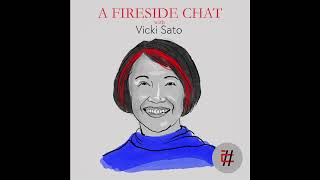
In this Science Rehash podcast episode, hosts Shenning and Mehdi Jorfi interview Dr. Vicki Sato, a pioneering biotech executive who has shaped the modern life‑science industry. Sato recounts her early life as a Japanese‑American student, her academic training in biology, physical chemistry, and immunology, and her eight‑year tenure as a junior faculty member at Harvard. She describes the pivotal moment when a colleague’s biotech startup (the precursor to Biogen) sparked her curiosity about commercializing biology, leading her to take a sabbatical, join a startup, and eventually assume senior R&D and CSO roles at Biogen, Vertex, and other companies. Sato reflects on the cultural shift in the 1970s‑80s that made moving from academia to industry possible, the strategic thinking required to manage that risk, and the skills she had to acquire—people management, strategic career planning, and cross‑audience communication. She discusses her later return to academia as a professor at Harvard Business School and Harvard’s molecular biology department, motivated by a desire to improve the perception of biotech and to mentor the next generation. The conversation also covers her views on diversity, equity, and inclusion in science, the responsibility of institutions versus individuals, and the importance of science education to restore public trust. Finally, Sato shares personal passions, notably ballet and ballroom dancing, as a creative outlet that balances her scientific career. Throughout, she emphasizes the interdisciplinary nature of modern biotech, the need for both collaborative teams and space for solitary creativity, and the ongoing challenge of aligning scientific curiosity with commercial impact.
Chapters
When we think about academia and industry, we think about those two as very different things. But there's this intricate and collaborative dance between academia and industry that has greatly benefited society. Today, we're delighted to interview one of the pioneering biotech leaders, Dr. Vicki Sato, who paved the way for the current biotech industry as we know it, and to learn about her journey to mastering this dance. This episode is made possible by the Blavatnik Fellowship in Life Science Entrepreneurship at Harvard Business School.
Science. Innovation.
Technology.
Cashflow.
Investments.
Discovery. Rehashing Science. Hi, happy New Year! Welcome to another episode of Science Rehashed. I'm Shenning.
And I'm Mehdi Jorfi, and happy new year, everyone. We are looking forward to bringing you the science behind recent discoveries in 2021. Stay tuned.
So at Science Rehash, we're a team of passionate volunteers who want to bring new science and scientists' journey through this podcast to you. We would really appreciate your support in the form of being our patron or simply spreading the word about us to your friends. You can find more information about our Patreon account on our website, ScienceRehash.com, under the Support Us tab. I think you can already tell that our guest today is an inspiration across different generations, and we're delighted to introduce Madhura Lollicar. Hi everyone. And Vici Lo.
Hey, excited to be here.
Of course. Thanks for joining us today. Madhura is our coordinator and staff writer and a budding scientist at MGH. Vici is our director of business development and a MS/MBA dual degree student at Harvard Business Together, we had the opportunity to speak with Dr. Vicki Sato.
Yes, and I am very excited about our guest today. Dr. Vicki Sato is currently the Chairman of Board of Directors of Denali Therapeutics and Vero Biotechnology. Where scientific boards see a lack of diversity, Dr. Sato impacted millions by holding leadership positions like the Chairman, Senior Vice President of Research and Development, Chief Scientific Officer at numerous public and private companies, including Biogen and Vertex. She has turned basic science of discovery from academic labs to the science of solutions in several companies.
On the same lines, I think I should mention that some of my experiences recently have opened my mind towards why science needs more academia-industry collaboration so they can learn from each other and make an impact on patients' lives earlier. So far in my academic training, I've found very little information about how the science I do is actually going to be translated. So recently I've, you know, really started learning more about this and participating in various programs to learn about this. And I started really appreciating how much teamwork is required and the rigor the science must go through to be a potential product in industry. And undeniably, COVID-19 has really opened my eyes to this, and it's a really great example of how these collaborations can tremendously benefit society.
Totally. You know, organizations are realizing more and more that such partnerships are important in accelerating the commercialization of innovative ideas. Luckily for us, our sponsor for this episode, the Blavatnik Fellowship in Life Science Entrepreneurship at Harvard Business School, started doing this work 8 years ago under the direction of our current guest, Vicky Sato, who served as the program's founding faculty chair. This 12-month salary program offers young entrepreneurs a bunch of resources, including operating funds, access to experts, and a community of mentors as they launch their ventures and hone leadership skills. To date, Blavatnik Fellows have started 23 companies and collectively raised more than $370 million in funding. From now until February 12th, HBS alumni and Harvard-affiliated postdocs can apply to be in the 8th cohort. For more information, please go to hbs.edu/blavatnik. B-L-A-V-A-T-N-I-K.
That is fantastic, and this is why I'm excited to meet Dr. Saito, who is a role model for commercialization of science. While researching for her, I realized that she carved a career path for herself. She took so many risks with respect to transitioning from academia to industry to managing life science businesses, and she has mentored many future business leaders. And after learning about her, I was really inspired since I'm at an inflection point in my career where I'm thinking of ways to combine basic science with public health to have broader impact on patients' lives. And I hope that our listeners who are at the brink of transforming and taking a leap in their careers also get inspired as I am by Dr. Vicky Saito. Well, thank you, Vicki, for joining us today. We're super excited to have you on Science Rehash. Would you start off by telling us a little bit about yourself and your career journey?
So my name is Vicki Sato. I'm now officially in a semi-retired situation. I'm Japanese American by, by background, grew up in Chicago and went to the public school system in Chicago and then came to what was then Radcliffe to go to college. And majored in biology. Like many people of my background, I think there was a big push to go into the sciences. And so I was pre-med for a large part of my college career, but discovered research as I was a second-year student, I guess. I had a really inspiring biology teacher at Radcliffe Harvard and decided at the last minute in my senior year to apply to grad school instead of med school. So I got a PhD in biology. And in those days, when we're talking 1970s, early 1970s, there were no careers aside from academic careers in biology. With a PhD in biology, the career was pretty specifically focused on an academic path. Because in a certain sense, applied biology was medicine. I committed early, by default, I suppose, to an academic career. I got my degree at Harvard, my PhD at Harvard, went to Berkeley to do my first postdoc there in physical chemistry, and then switched fields and did a second postdoc, which today is pretty common, but in those days was not. I decided I wanted to switch out of studying the light reactions of photosynthesis, which was the biophysics of my thesis, to studying immunology because I'd always been— I hadn't really abandoned my interest in medicine, although I had abandoned my desire to go to medical school. So I switched and did a second postdoc at Stanford Medical School in the area of immunology and came back to Harvard as a junior faculty person. So I then spent the next 8 years at Harvard in the biology department. Running a lab, just doing, doing the academic thing. I wrote R01 grants. I got some. I didn't get others. I had grad students. I had postdocs. I had some great undergraduates in the lab. I taught. I had a really good time, unlike what people warned me about. Things like, you won't get any grad students because you're a junior faculty member. None of the senior faculty will talk to you because you're lower than low. None of that was true. I had really great grad students. I just was doing my science. I wasn't even thinking very— in retrospect, I wasn't thinking very strategically about building an academic career either because I was pursuing what I liked. There are problems in immunology that really interested me. I built my lab around that. No one said to me until much later, in a funny conversation I had with a colleague, well, the system that you're working on, which was the development of the immune system, these experiments are 2 weeks long. Did you ever think about this as you were thinking about how many papers you had to publish when you were an academic? I went, no, I just thought the development of the immune system was really interesting problem. It fit with my training, and so I was doing curiosity-driven. The realization later that there might have been better career planning involved in managing even a straight academic career.
But it worked out for you.
Yeah, I was going to say, well, it wasn't so much the issue. I got some papers published and I got grants and life was not, life was not bad. So I actually had a very fulfilling time. I think what changed for me was that near the, near my 7th year, Wally Gilbert, who some of you may know, he won the Nobel Prize for DNA sequencing, Wally and I were teaching immunology together, undergraduate immunology. We shared the lectures, life was great. It was really a learning experience for me as a teacher as well. But then he got involved in starting what has become Biogen. I tell the story often that all of a sudden we went from being equal lecture partners to Wally calling me up and saying, I'm in London, I'm raising $10 million from blah, blah, blah. To, you know, for the next round of funding for the company. And I'm going, what is this? This, you know, Wally's the quintessential academic scientist. If he's interested in the industrialization of biology, there must— maybe I should learn something about it. And so it was that, Mark Ptashne, who was working on lambda repressor all his life and started Genetics Institute with Paul Marianas. So it was an unusual time when really dyed-in-the-wool, top-of-their-field academic scientists were looking outside of the halls of academe and saying, gee, this new science we've created actually can not only push the boundaries of knowledge, but it can actually lead to synthetic problems. Biology suddenly became a synthetic science, not just an observational science. And we could solve problems with this. It was a new, it was a new thought. So my curiosity and my colleagues got me interested in just wanting to explore that. While I really enjoyed being an academic, I realized at the age of 30-something that, that the rhythm of my life wasn't really going to change, right? I mean, I have a lab, I'd get some grants, I wouldn't get others. I'd publish some papers, you know, I'd be fighting with editors. On the other hand, I have grad students and postdocs, they come, they go, some would be great, some would be less great, but that the rhythm of my life wasn't really going to change for the next, I don't know, 35 or 40 years. And that was kind of a shocker of a thought, which was like, is this it? This is it. I didn't dislike it, but I didn't know whether I was going to I don't know.
Yeah, I'm curious. So when you first were approached regarding these, the commercialization of biotech, what were your thoughts? Like, you know, were you thinking, oh, these people are crazy? What, you know, how are we going to commercialize biology? What kind of, what are kind of the current trends at the time? Because now it's very different. And so how did you, you know, either you shift or how did the mentality of the general community shift?
Well, I think that the mentality of the community was shifting and shifting with a kind of wild, unfettered enthusiasm of pioneers in any field where you're not thinking about the limitations of the technology, you're thinking first about potential. So Wally's lab was working on cloning insulin, human insulin, because diabetes had been treated successfully for years but with porcine and bovine. Insulin, which ultimately raised antibodies from people that are treated. So Wally's lab committed to express high levels of the human gene in bacteria so that there would be a human source of insulin for a therapy, which a priori felt like an advance. Other groups were looking at similar problems, which is to say, using recombinant DNA technology as a way to manufacture human proteins that otherwise be manufactured in large quantities. That was one set of problems. Then there was the— doesn't have to do with biology and medicine at all. It has to do with much bigger problems. There was a group at MIT that Professor Danny Wang, they were looking at bioremediation. Can you actually create bacteria that would clean up oil spills? Could you make that cheap? Bacteria that could secrete unusual fungicides or other antiparasitic molecules that could be used in agriculture? Could you make plants resistant to pathogens? So there was this whole kind of what I call the season of brainstorming. Where the breadth of this new ability to stick genes from one species into another species and produce it in unfettered quantities, more or less, was just limited. The boundaries were limited by your imagination as a scientist. So that was changing, right? So people were no longer thinking, well, how do genes get regulated? How do we make mutants in Drosophila to really understand complex developmental processes? Processes. There was a whole new set of thinking around what can we do with this thing, this technology that we've created that can, in a melodramatic way, can solve problems. So, and that surprised me, but that interested me. I always sort of viewed myself as a scholar, someone who was interested in studying because Learning has always been really important to me, and pushing back the boundaries of knowledge was really important to me and a part of what's exciting about science. It doesn't happen often, but every now and then when an experiment actually works, you know that you're the only person in the world at that moment who actually understands something that nobody else understands. That doesn't happen often, but when it does, it's pretty cool. That was the driver for my pursuit of science. This idea that I could use science to actually do medicine. I mean, maybe it was that, you know, the path not taken thing, coming back and saying, well, I can't treat patients, I'm not sure I want to treat patients, but maybe I could do something else that would be more directly, directly effective for people who are sick. And part of my interest in immunology was driven by that impulse, which is the immune system is the thing that protects you from stuff on the outside that wants to make an attack, and also is the stuff that can cause problems with stuff on the inside that are under attack. So medicine, I never strayed too far from medicine, and this idea that I could think about making a medicine was pretty interesting. So I took a sabbatical year and helped start a company. But this is the first time during that sabbatical when I talked to lawyers and business people people and investment bankers. And I'd written all these people off as, you know, when I was an arrogant scientist, but they were, they're really smart. They know what they're doing. And it was really exciting to meet them and to try to build something.
So it sounds like you were exploring new path for your career and you were trying to understand the field that was constantly changing around you. And you're testing your interest in the realms of life science businesses. So you are getting out of your comfort zone and thinking both about basic science as well as applied science at the same time. And right now it seems quite feasible because of the role models like you exist, and the face of biotech industries have changed, but not at your time in early '70s. So what convinced you to take this leap and then stay in industry for years?
You're right. Back in the early '80s, late '70s, you didn't leave academia and go into industry in biology. That was, you know, that's what the B-minus people did. So it wasn't something that you did without concern about the cost to one's career. I mean, and the couple people who were leaving were doing were not necessarily leaving their academic jobs. They were starting companies, but keeping their academic jobs. A couple of people like Richard Flavell, now continuing to be a famous scientist, left his very famous scientist position and came to be the CSO at Biogen. Julian Davies also. But they were incredibly well established in their field. So if they changed their mind, there was no question that they could go back and be very famous and successful. But for someone at my stage, hardly world famous in anything, to say I'm really going to leave this and try to do this other thing full time was a significant risk. And that did concern me because I felt like if I lost credibility with my peer group, the credibility that I fought so hard to get through years of postdocing and years of being a junior faculty member, then what was I going to So what if this is like some kind of midlife crisis and, you know, it's just like a bad idea? So I did the mental calculus that said I probably could leave academia for a couple of years, experiment in this new field, and if I was terrible at it or if I hated it, then I could probably go back to academia in some kind of lateral position. But that if I stayed out for more than 2 years, was this completely arbitrary analysis that I did, then it was going to be a lot harder. So that's why I took the sabbatical, because that was one year in which there was very little risk in doing that. And then it became pretty clear to me that while this startup that I was doing, which was a huge learning experience, wasn't necessarily the company of my lifetime, I really liked dealing with my science in a in a framework that was much more real world. And I didn't know how I'd feel about that. I didn't know whether I'd feel like this is— like I failed in some way, or that I was giving up, or whatever. But it just— it turns out that what I love about science, what I still love about science, is the diversity of science. And I'm not one of those people who who wants to study a thing or has the ability to study a thing for 30 years. I actually like different problems. I got to think about science across a much broader array than I ever thought would be possible. I also like working with people. I got to collaborate with people that did very different things than I did. It was We had a common goal. The enemy was external, not internal. It was just— so for all those reasons, I figured out pretty quickly that I liked the environment, A, and B, and maybe this is really A, the quality of the science that was being done and that I could do was as demanding, if not more demanding, than the science I was doing in academia. Because there is this belief as well, industry science is easy, right? It's easy. I was going to say it's like engineering, which makes the assumption that engineering is easy, which it's not. But this idea that you could do it— let's face it. We've all published papers where you've done a few experiments. You pick the best-looking ones. You write your paper. And then you explain in the abstract, in the summary, about someday this might have a great impact on diabetes or whatever. But it's a long way. I mean, in industry, suddenly, If your experiment, if your methodology isn't robust enough to actually create something under conditions where you'd be willing to take it yourself or give it to somebody you love, it's 4 out of 5 times not good enough. We're reading about all this vaccine stuff now. No experiments are perfect. But the robustness of the science that you have to do and the kinds of problems you have to solve in science are every bit as challenging.. And I think it's almost more challenging. They just have a different purpose, right? So like I said, there's science for the advancement of knowledge, where you put data out there and then scientists debate about it. That's what you're supposed to do. And other people will try to reproduce your results and you'll try to reproduce your results. But it's a discussion about whether this new fact is a fact or whether this new fact is a perspective on a fact. And your colleagues help build on it, and there's a discussion. And this is the fertile aspect of knowledge-driven, curiosity-driven science. In industry, it's like, does it work? And does it work well enough for people to actually pay you for it? Which is an interesting moral question. In academia, it's always sort of a game. Can I convince the government to pay me to do this work? It's a much more deliberate equation. I'm making a medicine. One of the most important projects I worked on in industry early in my career was HIV. This is a moral obligation to do science at a level that makes a difference because people are literally dying in front of your eyes.
Yeah, there's a lot more at stake, right? Do you feel that pressure more because you know that if something went wrong, if you made a mistake, it could actually lead to side effect?
It never goes away, right? It— I think for all the years that I was running R&D at Vertex, there was not a night that I went to bed where the realization that we had hundreds of patients on clinical trials with an experimental drug didn't weigh on me, or that tomorrow some new patient was going to be the first person on the planet to take a molecule that some chemist had made in our labs. I love the immediacy of what industry is about. I like using science to really solve problems. The highs that come from making a medicine that actually has an impact that hasn't been seen before, for me, it's both personal and profound. I love the truly interdisciplinary nature of making that science work, and of the even more interdisciplinary nature of making that science work within the creation of— work within a business enterprise, because the business of the enterprise is, in the end, to make money. So you kind of can't just say, you know, I don't want to worry about that.
You do it.
You have to worry about building the business, and you have to worry about how you're going to build that business using the best science that you can. So That still fires me up every single day. And that's what fires me up on the boards of the companies that I, that I work with.
That's amazing. So it sounds like taking risks and being open about the changes in the field really worked out for you. So at Science Rehash, we're a team of passionate volunteers who want to bring new science and scientists' journeys through this podcast to you. We would really appreciate your support in the form of being our patron or simply spreading the word about us to your friends. You can find more information about our Patreon account on our website, science-rehash.com, under the Support Us tab.
Vicky, after making a significant impact through various industries for about After 2 decades, you returned to Harvard University to be a professor of business management and molecular and cellular biology. What was the motivation behind this?
I came back to academia maybe because it was in 2005 and Vertex had just seen the first data from our Hep C drug. We had started our cystic fibrosis program. But the pharma and biotech industries were now being ranked right alongside tobacco companies in the eyes of the public. The days of Merck being valued as the most valuable company in the world by readers of Time and Newsweek were long gone. And this was making me crazy because the people in these companies are incredibly passionate about the work that they do. They're incredibly committed to doing good. Doing good science, but doing, doing good in the world. And it just like was really making me crazy that the industry was being viewed the way it was. And, and we deserve some of it, right? We— there's still— there's things that we're not doing as well as we could, and that needs to be championed. So my thought was that if the industry is in this bad shape, how do you get young people like you guys to come and work in the industry. Who wants to go work for Philip Morris? Nobody wants to go work with Philip Morris. Nobody wanted to work with Dow Chemical. So I thought, well, in some ridiculously naive way, I'll go— if I go back and teach, maybe teach some young people, I can get some of them to understand that doing science in this environment is every bit as challenging and rewarding as doing science in academia. And maybe I could— The thought about teaching at the business school was just crazy. That just came out of left field. But we need new business models too. So there was, I don't know, something like 1% of Harvard Business School graduates could even spell healthcare. Everybody was going off to be an investment banker or a consultant. And when the dean at HBS called and asked me if I'd be interested in a faculty position, I told him it was crazy. But he said, no, they really wanted to start getting HBS more involved in thinking about science-driven businesses. And that sounded like kind of an Everest of a project. So I said, yeah, sure, why not? But it was really that. It's really— and I think one of the best moments of my post-industrial life was when one of my undergraduates spent the summer on an internship at the FDA. And he wrote to me and he said, here I am, I'm at the FDA, and I just got asked to actually participate in the review of an antibiotic application and just to listen in on the hearings. And he said, nobody at my level gets to do that. Nobody gets to do that. And the only reason is that I'm convinced the only reason I get to do this is because the stuff that I learned in your course made me sound half intelligent. And he said he just, he would never have thought about doing anything at the FDA.
That's awesome.
That's awesome. I'm amazed with your career journey for two things. The first thing is you moving from plant biology to human biology and then to immunology. This is not easy. And the second thing, on like late '70s, you take this faculty job at Harvard where at that time people or your colleague, professional colleague, consider this is a job killer. There are few junior faculty that would get tenured at that time. And as you mentioned, there were few women. Your academic journey reminds me of Bob Langer, who was educated as a chemical engineer at MIT at that time. And most of the chemical engineers looking for the oil companies and industries, and then and he got this offer from a lab at MGH for drug delivery. And then Bob Langer became the Bob Langer that we know today, one of the pioneers in the field of drug delivery and pioneers of a lot of startups. This is great that sometimes we think that the likelihood that someone can climb the ladder successfully is very tiny because they are not focused or they shifting gears from one, one discipline to another discipline is kind of wrong.
Well, you know, I think it's always this delicate balance between people telling you you need to be focused and people telling you you need to take risks. And so I think finding, finding your internal tolerance and your internal judgment about when it's when it's time to take a risk and when it's time to dig deep is one of the skills I think one needs to develop.
One of the big questions for me, like for someone who does actually want to transition from academia to industry, what did you find to be some of the necessary skills that you had to develop out of academia as you transition?
I think Two of them, one of them which you will relate to because they teach you this at HBS, is to think strategically about your career, which is think about what's the kind of job that you want and the path to get it, as opposed to what I was doing was kind of rolling along. I'll get my PhD, I'll go do a postdoc, I'll do a faculty, you know, you're just sort of on this track like a bowling ball and either you hit a strike or you fall into the gutter, but that's track that you're on. I think thinking much more, being much more in control of what it is that— what do I want to do ideally, or what's the set of things that I want to be able to choose among it? And then talking to people who are on those paths or really thinking more about what's necessary. And so I think thinking strategically about your career as opposed to just letting it kind of move you along is pretty important. The second, and I always say this to people, is that in business, communication skills are really essential, and communication skills are essential in academic science as well, and we see that, but in science, it's kind of a double standard that we always a little bit make fun of or distrust or devalue people who are exceptionally good communicators, so whether it's— there are just always people who you hear say, "Oh, well, yeah, well, he's really— she's really good at—" popularizing science or whatever, and always done with a little bit of a curl of the lip. I don't buy that. I think communication in science is extremely important because if you want your ideas to impact others, if you don't communicate them, if you just hide the light under a bushel, it won't have the impact that you want. That's even more true in a multidisciplinary effort like the company where So work on your ability to communicate across different audiences, verbal communication, written communication. That's just really important. And I think I am still constantly learning how to do that effectively. Teaching when I was a faculty member, a young faculty member, wasn't important. I mean, to get up and give a lecture. 3 times a week, lecturing in the pit. It just— these things hone your communication skills. But I can't emphasize enough, you can't just speak your private science language to the people who are fluent in it. You've got to speak a language that is effective to different audiences. So that's just another, I think, key key skill. I don't think it's highlighted as much as it should be, partly for this double standard reason, partly because the emphasis on just get the data, right? It's the old, the data will speak for itself. Data rarely speaks for itself. The data benefits a lot from an effective interpreter. So I just don't— I don't think in our scientific training of academic scientists we emphasize it enough. I was lucky that I had some mentors who were brutal, who were brutal about reviewing my manuscript for publication. Every dangling participle, every split infinitive, they would yell at me about. And the same thing about making me rehearse talks at conferences. And so I had really good mentors. And I think as mentors, that's something in science, in any sphere, we should be working on more deliberately than we do to train the next generation to be articulate and organized and deliberate.
Yeah, that's great advice. It was really important to emphasize that we need to strategically plan our career moves rather than blindly following the created paths. So you are trained as an academic scientist, but you do not have any formal training in business. So how was that process of transformation from academia to business? I'm sure you had to learn a lot of skills.
There's always that moment, and people ask me now, should I go to business school? And there are lots of different answers to that. It depends on the individual. I was too late in my career to think about going to business school, but there were— I did take some workshops. I did go to this one, this Sloan program for people who are already executives, but who were scientists or who were lawyers or who were trained in other skills, not management. And that gave me some vocabulary, I suppose, and kind of a quasi-credential. I think the most important thing, the most important skill that I had to learn, again, coming back to academic science, was how to manage people. I mean, you can learn how to read a financial statement. I still don't read them well, but enough to get the gist. But managing people is essential. It's essential to running an academic lab, but people don't train you for that either. But if you're going to take any kind of leadership role in a company, you need to really develop the ability to set objectives, learn how to motivate people, learn how to give good feedback, learn how to resolve conflict. So those are some of the hardest lessons for me to learn, and I had to learn those on the job. And I learned them because I had bosses, basically, who wouldn't let me get away without learning them. And some of those lessons were pretty painful and difficult. But I did see pretty clearly that if you don't learn them, your ability to advance is limited. And I actually have to say— and I'll say this is an interesting group to say this to— being an Asian woman was not an advantage. Not an advantage because so many of the cultural attributes that I had been raised with run counter to the idea of— well, not the idea, run counter to being effective in an American business. And it took me a while to figure that out. I had some people who just told it to me straight out. But mostly it took me a while to come to grips with that because there is this, am I forsaking my cultural heritage by developing these skills? So there were a couple of long nights of the soul on that one. But I think that was another maybe more personal to me thing that I had to deal with.
Yeah. So what was that like in terms of the challenges and how did you personally get yourself to kind of overcome them? Or did you say, oh, you know, gender doesn't matter.
I'm just going to be a part of this group of advisory team and gender matters more and more and much more now than I thought it would, you know, 34 years ago. I think you can't ignore it. So I think you have to pay attention to it. You can't get— my own view about this is you can't let it get in the way of getting the job done. And luckily for me, I guess I've always been— of the things that I've decided that I wanted to do, whether it's a faculty position or sitting on a board, that the purpose, the purpose of the responsibility was exciting enough to me, and my desire to have an impact doing it was great enough that I— it helped me get through the What kind of impression am I creating? Am I being overlooked? I mean, there are lots of things that can cause you to second-guess what you're doing. If you really are committed to what you're doing, these things tend to— this sounds stupid, but they do tend to work themselves out. You figure a way through it, which, you know, which is— which there's a shorthand that goes, look, I'm going to say this, and it's important to me that I say this because I believe in this. If they think I'm a bitch, So be it. You know, when I was younger, it was much harder for me to get to the so be it part. It would be like, oh, what if they think I'm a bitch? And then I wouldn't say it. So confidence, and I think maybe more than anything else, commitment makes a difference. Because at some point, what you have to contribute and the intensity of what you want to say and the intensity of what you want to what you do will put in perspective the risk of what other people may or may not think about. I wonder if you could share your take and insight on, like, in your opinion, what is, say, the individual's role versus the organization's role in increasing equality and equity in science? And since you've been through so much and seen so much and actually imparted change in so much, what do you think, like, the roles are for those I think institutions can do a lot more than, you know, the role of the institution is to create an environment that's permissive and that provides a level playing field, whatever level looks like to you, right? Because level sometimes can give a leg up to people who haven't had one or provide childcare, as I was talking at the end. So I think the institution has a responsibility for creating what geneticists would call a permissive environment. You know, if you're in an environment where there's just no way it's not going to happen. And when I first started going to Japan, for example, on behalf of the company, I was the only woman in the room. I was a senior woman. These male executives had to talk to me. They could not look me in the eye. It was really difficult for them. So creating an environment where it's more permissive for people of identifiably different groups, that's the responsibility of the institution.. And that means a level playing field, as I said, and level doesn't necessarily mean flat, right? I think it's the role, the responsibility of the individual to take some risk, to speak out when speaking is necessary, but also to understand pretty clearly what the rules of success are and to ask yourself, okay, if I want to I want to succeed in this company, this is what I know about this company or this institution or whatever. If I want to succeed here, do I understand what it would take on my part as an individual to succeed there? And am I okay with doing those things? As opposed to saying, well, I think all those things are wrong, so I'm going to ignore them. You can take that attitude, but then you have to deal with the consequences. So it's kind of like coming to Harvard where there weren't any women tenured, saying, well, okay, I could not go there, right? If it's going to bug the hell out of me, that the chances that I'm going to get tenure are, I don't know, 1 in 10,000. If that's going to bother me, I should go someplace else. If I go there, I go there knowing that that's the norm, being willing to operate at the best of my capacity even given that norm, not being crushed when the expected happens, but not not giving up the fight either. I was the first— I was the grad student representative to the first committee on the status of women at Harvard. And it was, you know, and it was faculty as well as students. And it was just— it was important to me that to participate like that. But it was also important that I as an individual understood the realities of the situation. Again, level to me doesn't mean it's flat, but the people who are without opportunity are provided with tools that bring them up to a competitive level. That kind of equality of opportunity and environment, institutions can and should step up to that. They need to step up to that. And we need to create institutions that are better at it and that can help do that. Individuals, I think, need to take some responsibility for making the choices. For understanding. It's kind of, you know, the old analogy is if you're going to play Monopoly, you got to play Monopoly. If you spend the entire game arguing about the rules, you're not going to win. So if you want to win, and if you don't like the rules, don't play Monopoly. Play some other game. Harsh, maybe a reflection of my age, but so I don't know. So I don't know if that's— that's a personal perspective. Let's put it that way.
It's not the gospel. Vicky, what change do you envision for life science businesses stemming from academia and industry? Do you think that we should cultivate more interdisciplinary academia-industry collaboration and care more about direct impact on public rather than racing for publishing in high-impact journals or paying thousands of dollars for the COVID of the journals? It is certain from your motivation to teach business that you want more scientists to be trained as business leaders, right?
No, we definitely shouldn't be training people to be business leaders. I mean, people who want to be business leaders will self-select. I think that I would very fundamentally like us to get back to a place where science is valued in society. And right now, the level of And this isn't over the last 4 years only problem, but the level of distrust between the populace and science and scientists has only been growing. And ironically, because we live in an increasingly science-driven world, right? Science and technology-driven world. So this starts with better science education, you know, really back in first and second grade. Think about why you all decided to become scientists. It's something that something that excited you when you were probably quite young, and the ability to pursue your curiosity. The first thing I'd like to see is just, as scientists, we all have a responsibility to make the world understand what science is, and the good, the bad, and the ugly, and to help foster educational methods where people learn the critical thinking that comes with being a scientist. So, in a very meta sense, I think we got a lot of work to do there. I think that I'm also caught between the tension of some of the big problems we have to solve are going to get solved by big teams of people. And so, whether it's an academic institute or a company that can pull together teams of people with different contributions to solve those problems, let's do it. Do it. I'm all for that. We should be able to fix type 1 diabetes. We should be able to figure out neurodegenerative diseases. Probably not in my lifetime, but we should be able to do something about that. On the other hand, I also want to make sure that we have room for the loneliness and the creativity of the individual scientist. And I worry a little bit in the rush to multidisciplinary everything that we lose It's a value system, right? Even as I worried about the value of going into— my value as a scientist that I went into industry, I think we need to worry about are we creating an environment where lone independent thinkers are being devalued implicitly? An obligation of scientists is to push our knowledge and to create solutions. But how we go about those two things not necessarily congruent. Overlapping maybe, but not congruent.
And we need, we need room for both. Okay, on to my last question. This will be a little bit away from your career, more about your hobbies. We know that you are a longtime ballet and ballroom dancing enthusiast, so tell us a little bit about how that interest developed.
Um, I've always liked dance. I started dancing when I was very little. You know, my I was a clumsy child, so my mother took me off to ballet class in an attempt to make me somewhat less clumsy. And I just really liked it. I wasn't particularly talented, but I really liked— I like dance. I like moving to music. I like the art form of ballet. I always have, but I was sensible enough to know that I was not going to earn a living doing that. So, but I always— I think except for college, when I just was too buried in college and all that, that when I really stopped dancing. And I had a college roommate who was actually a ballet dancer, and she continued to dance, and I didn't. And then sometime when I was a postdoc at Stanford, I went back to taking ballet lessons. So, and it's just for me, I am not an athlete. I hate, I'm incompetent at sports. So it's been both a physical outlet for me, but also just an artistic one, an artistic and creative one. So dance has always been important, and as you well mentioned, it still is. And I like it. It's a great outlet, and I love the beauty of it. And I love the challenge of it. I mean, dancing is a complex thing to do. You can't do it— you have to think about it while you're doing it. You can't— I think that's always what I liked about it. I used to take ballet class every day that I was an assistant professor, but just because for that hour and a half, I could not obsess about my life. I just, if I wasn't thinking about my dancing, it wasn't gonna happen. So it's always been that for me, rewarding in itself and also an intense distraction.
That's for sure. Yeah, it just takes so much. I mean, for me, it's almost meditative because then I don't have to think about whatever I've been stressed about just because I need to devote 100% of my attention to figuring out how to move my foot. I've always wondered, because there's so many people into the creative arts and the sciences, how those two connect. Because I mean, from a neuroscience perspective, you're using very different parts of your brain. But maybe that is not the case. Maybe you're very much— I mean, with science, you definitely have to be creative. So maybe there's kind of an attraction from that perspective for for scientists who also do a lot of artistic and musical things?
A lot of scientists do. Yeah. And some very seriously. Yeah.
Very successful.
Yeah, absolutely. Awesome. And with that, we thank you for joining us today at Science Rehash and sharing such an inspirational journey with us. Thank you, Vicki. So at Science Rehash, we're a team of passionate volunteers who want to bring new science and scientists' journey through this podcast to you. We would really appreciate your support in the form of being our patron or simply spreading the word about us to your friends. You can find more information about our Patreon account on our website, sciencerehash.com, under the Support Us tab.
Thank you everyone for listening to another episode of Science Rehashed. Thank you to Dr. Rudy Tenzi for providing us with the music for our intro. You can find us on Facebook, Instagram, or Twitter. You can also visit our website at sciencerehashed.com.
We would also like to thank all the members of Science Rehashed who contributed their time in making Science Rehashed possible. This includes our writers Madhura Lollicar and Cara Brenner, our marketing director Carla DiAvanzo, our sound editors Tavi Pollard, Jared Warsaw, and Sophia Nastri, our assistant Rebecca Solison, our creative director Emma Brand, our producer Shuang Zheng, and our business development director Vichy Lo. Our show is available on Apple Podcasts, Spotify, and Google Podcasts. Please subscribe and recommend our podcast to your friends and send us your comments and feedback.
Thanks for listening.
More from Joshua







Scientist Stories: Hans Waterham, The value of phenotypic assays in peroxisomal disorders




Scientist Stories: Joel Zlotogora, Genetic carrier screening programs for reproductive purposes