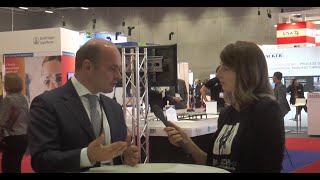
In this BIO Europe interview, Werner Lanthaler, CEO of Evotec, explains why the company, originally a contract research organization (CRO), now invests heavily in innovation to remain a valuable partner for pharma, biotech, and foundation clients. He describes Evotec’s strategy of building internal discovery capabilities, launching the nanoparticle‑focused spin‑off Topaz Therapeutics, and creating academic partnership platforms such as Lab282 with Oxford and Lab150 with Toronto. Lanthaler emphasizes that these bridges accelerate translational science by moving academic experiments onto industry‑standard platforms, providing rapid validation, de‑risking projects, and creating licensing or spin‑off opportunities. He notes that the main operational hurdle is trust—trust in science and in the partner institutions—rather than regulatory or logistical barriers. Finally, he highlights infectious diseases and novel anti‑infectives as a personally compelling, under‑served therapeutic area where Evotec aims to make a significant impact.
Chapters
Hi there, I'm here at BIO Europe with Werner Landhaller, the CEO of Evotec. Evotec started off as a CRO, but now it has invested a lot in innovation. It has its own discovery pipeline, and it's partnered with a lot of industry and academic partners. So why is it important for you at Evotec to invest in innovation, and what's your strategy to do so?
If you want to be a partnering organization for your pharma, biotech, and foundation clients, it is key to be on the forefront of innovation. So no service company on the planet ever was able to create a long-term sustainable business if you're not also leading innovation. For us, it's natural to invest in innovation in order to make every partnership with every company who we work with even better. And if one aspect of that is that we first have to invest before we can offer services to others, then that's just natural for us.
Okay, you've even launched your own spin-off company, Topaz Therapeutics. Can you tell me a bit more about it?
Topaz for us is coming out of the thought that we want to partner when we feel that a technology is at a certain maturity and where biology hypotheses are at a certain maturity that you can really say that's the hypothesis that you want to bring together with your partners. Topa Therapeutics is a company focused on nanoparticle biology, which is highly innovative, which is absolutely disruptive in its field, but it's in no way core to Evotec's service offering. And that's why we thought it's a good idea to partner with very smart venture capital firms and to build around a very strong management team a company which goes down this validation route now first, fully supported as a spin-off company of Evotec and also funded by Evotec. And we are waiting, I would say, for the biology validation points before we then together with Topaz will form the long-term strategy for that company.
Okay, and so you've also launched like a new form of partnership with academia. The first one is Lab 282 with the University of Oxford. How is the program going so far?
With Lab282, we are very, very successful at this stage because we were able to launch already more than 7 work packages out of the academic institutes on our platform to fast and very, very high quality-wise make the validation experiments that really tell us, are there experiments that we can ultimately bring into spin-off situations or into licensing situations out of academia into the pharma or biotech world. That's, I would say, the platform marriage that was able to be made between Oxford University and EvoTech. Academic platform, science platform out of Oxford, execution platform out of EvoTech. This is of course a marriage which cannot be only done between Oxford and EvoTech. It's something that can be done in many other places because science is not only in Oxford, despite the fact that it's fantastic there. So we are very happy that we were also able to launch just recently what we call Lab 150. In Toronto where we were able to bring the 15 top academic institutions out of the area around Toronto together and to do the same principle that we say early academic science is put on the platform of EvoTech, evaluated there, and then biology decides what's the next data point that we're all looking for together or what's the next funding point that we're all looking for together there. So it becomes very, very rapidly a very informed process for academics for us as a platform and co-investor, and also for future investors into the companies that will come out of these labs. And I think I'm not telling you a secret if Lab 282 and Lab 150 are not the only ones that we are building in this academic bridge strategy going forward.
Okay, so, but what do you, would you say, is the, the importance of making these partnerships from industry and academia?
It really helps every academic institution to progress top science beyond the valley of death of no funding. Because what we do, we bring experiments immediately on a top industry standard platform where we say, here is the industry platform that is also used by pharma companies, by other biotech companies, or by foundations, where you can immediately validate your experiment out of the academic lab on an industry platform. And if you get this insight into your experiments, you are all of a sudden on a much, much higher insight if you are able to raise funds from venture capitalists, if you are able to get future grants, or if you are able to get a license from pharma. And that's really the shortcut to insight that we are providing for academics together with the platform of Vivotech. And it's really a superior additional tool in the industry to basically help this translational science to have a much, much faster progress going forward than it was done in the past.
Yeah, but this model you're setting up seems to be quite new. What would you say are the main challenges to set up such a program here in Europe?
I think there is not a real challenge. It's only a question of trust. That you have to, as a company like Evotec, trust the power of science to create innovation. Because what we are doing at Evotec, we work together with academic institutions like Oxford or Toronto without earning money. So we will only make money out of these bridges, how we call them, if ultimately there are licensing deals or company formations coming where our return is coming back in a multiple fold. And we believe in these academic institutions who we work with very much, and we also very diligently pre-select them where we want to build bridges. So that's why there is no obstacle to that. It's really just something where we say, let's be fast in exploiting the science that is out there. And with this, help everyone, because the scientists get a very fast answer. Is my experiment ready to go forward, or do I have to do more basic science, which is not a bad thing. And we and industry partners get very fast answers by saying, okay, this is biology that can be translated with more investments into a larger effort, but it's a de-risk effort then. And that's why it's a new tool which was a lot of work to really come up with it in the past years, but I really think that we are now ready to roll it out Globally.
Yeah, hopefully so. And so last question is, you are at EvoTech, you have a lot of disease areas you're working on, but for you personally, which one has more potential or is more exciting?
That's not how I look at the world because I also have two children and you don't make the choice, do you love your daughter or your son more, but there's always a different moment in the life stage of a project or a company where you say now there is more attention needed, now there is less attention needed because they are running on their own. For me, there is always one personal challenge in the industry where I say that's where we all collectively have to do more, and this is the disease areas where the market is not working. And if you think about disease areas where the market which clearly is not working with respect to the needs that we all have, and I also alone as Evotec cannot solve that problem, it's infectious diseases and novel anti-infectives. Because there you know that many pharma companies have pulled out of the sector, you know that there's a dramatic medical need coming, but we also know that the pipelines of novel drugs that are developed there is totally insufficient. So if you ask me what is my next child that I want to give birth to, then it's clearly to help, to do something in this field, because that's, that's very, very important for all of us.
Thanks a lot for your time and enjoy the rest of your day here.