Founder Stories: Winston Yan, Co-Founder of Arbor Biotechnologies & CRISPR Discovery
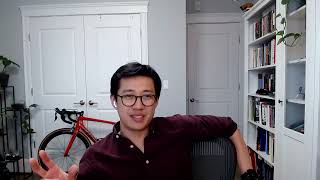
In this Slice of Life Sciences interview, Winston Yan, co‑founder of Arbor Biotechnologies and an MD‑PhD trainee at Harvard, shares his personal and professional journey. He recounts his upbringing in a Chinese‑American family that prized education and curiosity, early inspirations from his parents and a Bill Gates anecdote, and his academic path from physics to medicine. Yan describes pivotal mentorship under Feng Zhang, where he transitioned from neuroscience to CRISPR gene‑editing, and how his physics background fostered a deep interest in genetics. He explains the genesis of Arbor: recognizing that the field’s reliance on a single Cas9 enzyme limited therapeutic reach, and seizing a unique moment when metagenomic data and high‑throughput experimental capacity could be combined to discover a diverse toolbox of CRISPR proteins. Yan outlines the decision‑making process behind founding a company versus staying in academia, the role of co‑founders David Scott, Feng Zhang, and David Walt, and the importance of venture backing to scale both computational and wet‑lab pipelines. He reflects on how his role and the company culture have evolved from an all‑hands‑on‑deck startup in a Boston apartment to a 80‑person biotech with defined leadership, emphasizing the founder’s responsibility to maintain long‑term vision while supporting new leadership. Finally, Yan shares his excitement about the clinical impact of CRISPR, the safety record of early trials, and the promise of programmable, N‑of‑1 medicines for ultra‑rare genetic diseases, positioning Arbor’s work within a broader movement that could transform drug development.
Chapters
All right. Well, hi everyone. Here we are on episode 5 of Slice of Life Sciences. Today I'm joined by Winston Yan, co-founder of Arbor Biotechnologies, who took an idea and expanded it himself and his co-founder to about over 80 employees now for the past 5 years. And currently Winston is finishing up his last year of MD training at Harvard Medical School, which he originally put on pause to found Arbor. So Winston, thank you so much for joining us today.
No, it's really a pleasure. This is, it's pretty great how you're digging into the stories of the life sciences and I appreciate you inviting me.
We're excited for this particular conversation. So I thought today's conversation makes for a great opportunity to hear about your experience, background, and just inspiration, especially for listeners who are navigating the waters of being a founder and even a first-time founder, particularly in the life science or of a life science company. So if that sounds good to you, I thought we'd kick off by just learning a little bit about you. Does that sound good?
Sounds great to me.
Awesome. So to start off, where did you grow up? What were your interests early on in life? And did you have particular people or one particular person that inspired you along the way?
Yeah, so I think for me, well, first I was born in Boston, actually at the Brigham, but really I'd say I grew up in the suburbs of DC. And I think to understand me, it's probably best to understand my parents. Like many of, you know, Chinese parents of their generation, they actually came of age right during the Chinese Cultural Revolution. And what that meant was all during their teenage years, Normal learning at school was interrupted, intellectuals, teachers, professor, all that learning was shunned. So my mom and dad, both of them had developed this tremendous, like, pent-up appetite for learning. And when the university entrance exams, you know, the big exam that you take to get into school, they finally restarted, they just studied like hell and managed to make it to a really excellent medical school, which is where they met. So my dad then came to the US to get his PhD, and my mom came with shortly thereafter. And so that's where I was born in Boston. I think from them, it's really, I've inherited the sense of urgency of really not taking things for granted and of the value of education. And so my interests when I was little, to answer that question, like I was a science nerd. I really enjoyed the biology, the physics. I would say like, The part that I really valued from my parents is, you know, there's this Asian parent stereotype, right? I think it's like they're really draconian about schoolwork and achievement. Then it's like you get 3 choices of a career, doctor, lawyer, engineer. And I gotta say, like, to be honest, for me, despite being surrounded by medicine, my family with my parents and like my grandparents, I truly never felt that pressure to become a doctor.
Were there specific moments or memories with your parents that kind of molded what you wanted to learn about, or even, I guess, think about entrepreneurship or take on that path?
Yeah, I think that that's, and again, this is something that's easier told in retrospect than living it in the moment, but I mean, I mean, some of those conversations I remember most deeply with my dad are about this world beyond medicine, right? We, in our house, we had all these biographies of scientists, but also entrepreneurs, and I would stay up at night reading them. I just remember in high school, my dad, he's reading this article and he said, "Look, Bill Gates is gonna have more of an impact on human health than any single doctor for the last century." And I felt like the lesson there was that there's so many different ways to help people in this world, and it's not just through being a doctor. Maybe encouraged by that, I actually tried to find my own path. I became really interested in physics. Obviously, when you have doctors at the dinner table, there's a lot of conversation about biology. So all that felt natural and just instinctive to me, but I was really drawn to the elegance and explanatory power of physics. I mean, realistically, another reason of that is probably growing up next to the Air and Space Museum in DC, and it's just, When you live in DC and you have all these museums in your backyard, it's a fantastic learning experience for a kid. But anyways, getting off topic here. I mean, I think, going back to that conversation with my dad, and then just in generally the focus that he provided was, it's just this permissiveness of entrepreneurship, right? When he's talking about Bill Gates as somebody who has this impact that you want, what he was saying is that it's okay to do this. That it's not throwing away my education or the life that they worked so hard to build for us in the US. I mean, I think the other thing that bears repeating is that my parents were constantly framing success as not just living for yourself or making that living, but it's the act of helping others and to have that broader impact. I'm sure that was shaped by their medical training as well. Yeah, so anyways, long story short, my background, I was born in Boston to these fam— I just really felt like I won the ovarian lottery, so to speak. My parents were super intellectually minded. They instilled in me that sense of ambition and also wanting to help others. But with all of that, they weren't prescriptive about telling their only child exactly how to achieve that.
Yeah. Was that Bill Gates or was that quote that your dad said, was that just kind of at dinner table, just brought it up, or was it a conversation that you were having that kind of led him to kind of feel that Winston may be asking about what is okay for me to do with education and not waste my whatever?
Yeah, I mean, I think for him, he just reads constantly. And it was just at that time when I was in high school, it was Bill and Melinda Gates, well, like Bill Gates then, I think is still one of the richest people in the world, right? And he was starting the Bill and Melinda Gates Foundation. So we were reading about that and it was just, it was, I think, a pretty casual offhanded remark that I just remember, right? It's funny how maybe as a parent, you don't remember the things you say to your kids, but like what they pick up and what sticks with them is very unique.
That's funny. I was just thinking, I was wondering if you ever brought that up I brought that up to him later on, said that really resonated.
Um, yeah, I'll send them the link to the podcast.
Um, so you went to Harvard undergrad, um, and then received a PhD and are currently getting your MD at Harvard as well.
Yeah. They, they call it Preparation H. Preparation H.
I'll have to look that up. Um, uh, so tell us just a little bit about the, different projects and studies that you've had throughout your time at Harvard, whether PhD, MD?
Yeah. All right, let's see. Well, I think the best place to start is, yeah, probably the most informative things for listeners of the podcast would just be the transitions, right? Because remember, I started off, going to Harvard thinking I was gonna study physics, and I actually did major in it, how did I end up in med school, right? And then how did I go from, like, when I was entering for MD-PhD programs, I proposed that I was working on the physics of medical imaging, which I did do with, you know, my knowledge of physics and then working on MRI machines. How did I go from working on MRI machines that are like the size of small trucks to then in my PhD, working with molecular scissors and CRISPR, that literally is, you're manipulating DNA and RNA, that's the smallest unit of biological information, right? So again, I have to emphasize that, like, I've tried to read about the lives of a lot of people, and I think it's always so clear when you tell the story in, like, retrospectively, and it's like very tidy, but when you're moving forward, it's really hard. And for me, that, it was definitely the case, right? I entered med school and it was super overwhelming. I like whatever biology I had basically was from high school and pre-med coursework and it's fairly basic. And I joined this MD PhD program and the med school program that was a part of it was called HST, like Health Science and Technologies with this specific focus on the next generation of how do we bring science deeper into medicine. So I had these amazing classmates that are essentially the, they're like tops in their class. You know, so many of them had literally Nature Cell Science papers from when they were an undergrad. And I had this tremendous anxiety about how do I keep up with them?
Yeah, I was gonna say that must have been stressful just thinking that you're farther behind than everybody, right?
Yeah, well, I mean, I had, I had, I just remember when I first started the program, I was having lunch with one of my classmates and she was just like, wait, so you don't know this? Like we were talking about something. I was like, oh, what's this? And then she was like, oh, you don't know what shRNAs are? I'm like, no, but you can teach me. So yeah, but you know, like thinking about this, I think the pieces of, so again, thinking about transitions, right? The key pieces of advice that really helped me, I think really two of them, right? The first is from my friend Vanita. This is actually Vanita Agrawala. She's a partner at a16z now, but we first met when she was my undergrad advisor, and then she became one of my close friends and mentors in the MD-PhD program. She said to me, or I would say like she also came from a physics background, and she told me, you gotta treat med school like you get the privilege of doing another bachelor's degree, except this time you're just focused on human physiology and disease. You get this amazing panoramic view, and there's really a few experiences that have this breadth, so cherish it. Thinking about it that way really helped me focus more on learning and understanding rather than just trying to pass tests, of which there were many in med school. I think the second thing was maybe less advice, but more of a perspective that I got, and that came from the physics degree. The unexpected benefit of a physics degree degree, I would say, is just this. You always keep asking why or how until you can try and understand how something works, right? So much of modern biology to me feels like alphabet soup, and I felt like the way that I could understand it would be through principles and patterns that I could formulate. I think from that, I got the sense that when you asked why enough times, you almost always got down to the level of the genome and how it was regulated. So that's where this intuition started of having genetics be the central place to do important work understanding, I would say, both how the body functions normally as well as how it breaks down in disease.
Did you, did you realize, given you just said retrospectively a couple times, did you realize this at the time, or is this looking back you realize some of these helpful traits that you had you had from your other studies earlier on?
I think definitely looking back, and certainly it's something where I try to tell people who've had maybe more non-traditional paths into medicine or into the MD-PhD program that these perspectives really, you don't realize at the time, but they just shape who you are, right? And again, it's that like Steve Jobs quote of him talking about how he took a typesetting class in college and then that, made him just decades later, he was working on, you know, making, I'm probably butchering the story, but it was like how he made typesetting for the Mac so beautiful is because that random piece of knowledge that he accumulated at that time was important to making a great product.
And so when we were chatting earlier, you said that, or you told me a little bit about your PhD advisor and you mentioned, he took a huge chance on you. So can you just tell us a little bit about how you met, how that happened, and why he took a chance on you?
Sure. So I think, you know, I was talking about genetics and it's super convenient to talk about, you know, oh, I asked why a bunch of times and it led me to genetics and my physics background wanted me to perturb genes very precisely, which meant joining Feng's lab to work on gene editing technologies was the perfect you know, intersection of that. That wouldn't be fully correct, right? Like, the truth was I was actually first fascinated by neuroscience and understanding brain circuitry. And it's amazing that Feng has had so much— so Feng Zhang, he has had so many, like, just contributions to science overall. He was one of the pioneers of optogenetics, and this was while he was a grad student at Stanford. This is a tool where you can use light to control neural circuitry. You turn on lights and you see like a mouse goes in a circle, right? Amazing stuff. So I first rotated in Feng's lab in the summer of 2012, about a year after he became a PI. And what I was working on was how do you develop tools for labeling circuits that are active? They're called activity-driven circuits in the brain. I mean, I truly am forever appreciative that Feng took a chance on me as a mentor. And I was one of his first PhD students, but because I had done physics projects, I literally had to learn how to pipette, run PCRs, like run gels, all the basic things that you might pick up in undergrad.
Wow. So after this lab, did you— was this the moment where you decided, that you were going to found a company, or was that— how did that come about, I guess, the foundation of Arbor or the idea?
Well, going back a little bit to, you know, so first joined the Young Lab. This was something where just pure luck that I joined right before the CRISPR revolution as we know it, right? So I'd finished my second year of med school, came back to the lab in 2013, the first seminal CRISPR paper was literally just published. And to me, it was pretty clear that this would be a transformative time in science. So I put aside all those circuit neuroscience questions that I had and just buckled in to work on CRISPR technology development. My focus then was really that, you know, that MD-PhD background, I think, helped inform things. And again, weaving it together in retrospect, is that I kept on thinking about what do we actually need to build therapies using CRISPR? This, while it started in grad school, this is something that I've continued working on through Arbor. And then even in what I'm working on now with the N-of-One Collaborative of how do we build these ultra-rare treatments for ultra-rare genetic mutations. I think that's an arc that we'll continue tackling in my career. So I feel like Arbor is a piece of that. And, um, the, you know, we, we can get into the, the inspiration and stuff there. Um, yeah. Which parts would you like to learn about?
Yeah, I, I guess, yeah. Tell us about a little bit about the inspirations and then we'll get into, I guess, what exactly Arbor is, but just what leading up to that and then what it's turned into, et cetera. We can cover in a little bit.
Sure. So I think the, the first thing is how do we get to starting a company, right? And, and I think in recent years it's become like starting a company right outta grad school has almost become its own career track in a way. Maybe a different podcast altogether to talk about why that's the case. Like, but my, my perspective still remains that, you know, you shouldn't go to grad school to say you're gonna start a company, and also that there's many ways of solving the problem. Just starting a company should not be this like final solution. Just purely from like advice on starting companies, right? Like you actually wanna start from the goal and the vision you want to achieve and then critically evaluate whether or not a company is the right vehicle to achieve that. Maybe your project actually makes more sense staying in academia where there's a lot of advantages. Or maybe it should be a project within a bigger biotech or pharma company. I mean, it could even be a nonprofit, right? So I think I caution against this idea of just defaulting to knowing you want to start a company without too much time spending, too much time really thinking about what you want to achieve and whether the company is the right path to that. So, you know, for Arbor, I think, I can talk about exactly our thinking that went there, but just big picture, it was David Scott and myself. So my co-founder David Scott and I, we were grad students in the lab together and we co-founded Arbor with Feng Zhang and David Walt. David Scott and myself were the boots-on-the-ground founders and the academic co-founders, David and Feng, we had a lot of Davids in the company, They just brought so much thoughtfulness and engagement to the early days of Arbor to help us answer exactly that question, like whether the company was the right vehicle for achieving the goals that we wanted.
And so that's super interesting that, so you went into it without knowing that you wanted to found a company that just came throughout your years together. So Arbor was founded, what, in 2016? So in 2016, you founded Arbor. I mean, just from what I know, it was to scale up the discovery and development of new genome editing tools for genomic medicines. And you've obviously, like we mentioned earlier, grew from 2 co-founders to 80 or so people now. So yeah, what was the genesis?
I would say your research was really good. That's exactly the, you know, that's exactly what we're going after. In a little bit more detail, right, the genesis came from this observation we had firsthand working in the lab at that time. I would say that vanilla Cas9, as we called it, right, or not as we called it, I guess it's called spCas9. Everyone used that in the early days, starting with the start of the, the CRISPR revolution. And we just felt that there's a lot of things it could do, but when you're thinking about treating this huge diversity of genetic disease, you would need a similarly wide range of gene editors, right? So, like, take gene editing, and if you think about gene editing is genome surgery where you're just making these micromanipulations of someone's DNA, a surgeon wouldn't operate with just a single scalpel., right? There's a range of tools that you use to help patients and to achieve the goals that you want. So likewise, we felt like there is this major flavor of Cas9 that everyone's using, and that's from— I called it spCas9 because it's from Strept pyogenes. That may work really well for some early applications. Actually, we're seeing the fruits of that right now with, you know, the first companies like Editas, Intellia, CRISPR Therapeutics, just making Amazing progress there. But additional tools will really be needed to fully realize that vision of CRISPR for treating genetic disease. There's a lot of diversity in types of edit you need to make. There's different mechanisms of treatment. There's the organs that you need to get to with these tools in order to make that edit. So, you know, where I've described the problem, right? But where was actually the opportunity? Early on, even when we were just in like the 2013 timeframe in Feng's lab, we started to explore the space of other CRISPR proteins. One of my grad school projects early on was working on developing a smaller Cas9 that fits inside an AAV viral vector that can get to different places in the body more easily. Other students in the lab were working on like like totally, I would say, like different families of CRISPR proteins that not like Cas9. There's Cas12a. The opportunity was really that nature over 3.5 billion years, you've evolved so many different types of gene editors and it's just waiting for us to discover them. The amazing thing is that we're starting to just sequence the world and uncover all of nature's diversity, right? This, there's this tool called metagenomics sequencing, which is essentially, it's like I could literally go to the Charles River, I could scoop up some river water, sequence that to a great depth, and find out all the, like, see all the DNA that makes up these amazing inventions of nature. So we were watching in real time this exponential growth of bacterial sequences and data that was available.. And we thought that there was a really unique moment in time to efficiently search all of that for finding new CRISPR systems and bringing that toolkit to helping patients with genetic disease.
And obviously not being an expert in this field at all, were there other companies doing something similar, or I guess Was it more that you were the first company doing this, or were there competitors and yours just had a differentiator?
Yeah, so I think this kind of gets back to— so to answer your question directly, at that time we were one of the first, if not the first company who went out at scale to do this, right? And I think that's one of the key like terms there. It's doing it at scale. The, you know, that exponential growth means that in the future there will be more and more and more genetic data. And we didn't want to just build an academic project where, you know, somebody writes a piece of code, they leave the lab, it's not really maintained, and suddenly, you know, that process is not sustainable. And then the other thing that we recognize is that in order to actually capitalize on the scale of computational data, you needed to hook it up to an equally large pipe of experimental capabilities, right? I think there's been so many instances or things, at least I hear in lab of, you know, somebody finds this new amazing dataset, they do a computational analysis and finds them literally hundreds of exciting things that they would go after. But in an academic setting, there was only the budget, manpower, whatever, to maybe try out a dozen, right? So you get this huge funneling effect where there's a rich ocean of possibility, but you can't explore it because of limitations. So this is where I think one of the really, really two things come to mind, right? It gets back to that question of why did we start a company? Well, we thought that it's really necessary for us to find the tools and the resources in order to do this fast and at scale, we needed to have the resources that a venture-backed company would enable. And then the second thing is that this is where we were having these early discussions with Feng, David Scott, and myself, and Feng was like, why don't we talk to David Walt? And we're like, wow, David Walt, right? I mean, he's a, I mean, he's a legend in the biotech space. He's founded Illumina, Quanterix, a number of other successful companies, and hopefully Arbor will be among them. But he's just this pioneer in high-throughput assay development. Our early chats with him really helped us focus in on how do we, instead of having that funnel, we can widen the pipe of experimental, evaluation of all these different proteins. So this is where the 4 of us, we had these discussions and we're like, a company is really the right setting to do this. And to get back to your, how is it different? In 2016, we didn't see companies that were at the scale of data evaluation as well as at the scale of experimental evaluation that we wanted. Yeah, we incorporated in 2016, kept things at pretty high level while David Scott and I finished our PhDs just with very basic company formation activities. And then when David Scott and I graduated and defended and then graduated, it was early 2017 that we were working out of his apartment in Porter Square, putting together the pitch decks, but also building the architecture of the platform. Planning the science, et cetera.
It wouldn't feel right if you weren't working out of an apartment together as two co-founders. Yeah, exactly. So I guess fast forward as you get into your, or as you got into Arbor and re— or not, you put the MD on pause, but then later on, so I guess over the years, how's your role shifted within the company? How has the culture of the company evolved? If you could just tell us a little bit about that, leading us up to the present.
Yeah, that's a really good question, right? Because I think it's a, it's a, it's something that I ask myself a lot. And there's this David Scott and myself, like we are continually very like self-reflective on our evolving role. So, you know, going back to founding, Feng and David were just, and we still feel incredibly lucky, Feng and David Walt, I should say, we feel incredibly lucky to be just, they lowered the activation energy for so many conversations and introductions as well as they just provided their experience with company building. But at the same time, there's boots on the ground work that had to get done, right? So this is everything from preparing board decks to having legal discussions, real estate, as you're very familiar with, setting up the lab, planning and actually doing the experiments. I would say early days, it was that role that we both had. You have your own areas of expertise, but it's a very fluid, like all hands on deck work. I think how it's evolved is, it's probably pretty N of 1 and everyone has a different experience. So the role of the founder is interesting because when a company grows, you definitely start having more defined tasks of what would be experts that you hire. You know, you're bringing in more senior leadership. What do you do then as a founder, right? My take on it is that your role ends up really about how do you continue to like have that guiding hand in ensuring the long-term success of the company? Biotech is really difficult. Drug development is really difficult. And there's so many things that are just, I would say it's a very multidimensional problem. So it's very easy when new leadership comes in or new teams come in, you just get sucked into a very near-term problem. And you get stuck at some of these local maxima at the expense of really building long-term value. So I think as a founder, one of the important things you want to continue doing is just having a voice that can help shape that long-term success of the company. And it's important to do that while supporting the CEO and not just being like a force that is unintentionally creating some rifts within the plans and the trajectory of the company. So yeah, I would say the, I mean, certainly for me, as I went back to medical school and became more on the consulting side, I've had to reestablish myself of where do I provide value in terms of providing clinical insights and shaping how do we get to patients. I know David Scott has had similar thinking about how does he continue bringing all of his innovative thinking and capabilities. So he's the head of innovation now. While we brought on some really amazing leadership in terms of experience to help drive Arbor towards actually building genetic medicines.
Well, that's super interesting, and I think great advice for a lot of founders because I imagine it's hard to step away to some capacity or kind of divvy up the responsibilities. So It's really interesting to hear that. I know we're running up somewhat on time, but I could keep the conversation going very, very much longer. But look, just hearing your journey, I mean, you know, I've told you it's really inspirational. And I know that this was really short form of kind of a snippet into your early life. And how you got to where you are. I was just curious, just to, as we finish up, just with all the personal, academic, professional experiences that you just shared with us, if there's anything or any areas in biology that excite you, and if anything just in particular you're working on at the moment that you didn't really talk about.
Yeah, the long-term question.
Hmm. So the long-term question.
Yeah, yeah. I got to say, like, I think the thing that still excites me the most is continuing to see the real clinical impact of CRISPR, right? And I think it's worth keeping in mind just how young this entire field is. 10 years ago, CRISPR-Cas9 hadn't even been shown to work in a human cell. And that's just for like 10 years in drug development, 10 years feels long, but in the span of drug development, it's really not that long. And in those years, we've already seen these positive results, really just like a tantalizing glimpse into what's possible. And more importantly, I think the safety has been really excellent in a number of these early clinical trials, both with ex vivo gene editing as well as in vivo gene editing. So if CRISPR generally can be shown, and this is a long-term piece, right? If CRISPR can generally be shown to be safe and well-tolerated, I think there's a real opportunity to make possible this idea of programmable medicines, right? And people have thought about this for a while of how do you make bespoke medicines for everyone's unique mutations? But with CRISPR, I think you can really, I mean, you realize that dream. This is made possible because you can decouple what's the therapeutic effect on the target with that guide that you can reprogram easily to the compound itself, which is your delivery vehicle and the enzyme. What that means is ultimately you can really shorten the drug development cycles and you'd reduce the cost of developing new medicines for new patients. I mean, to me, I mentioned this thing of the N-of-1 collaborative and these ultra-rare diseases. I think this is an area that's going to be huge for these programmable medicines. Right now, all these patients who have a super rare mutation, there's really no commercial incentive to develop a drug just for them, right? We call them super rare genetic mutations, but when you actually add up the amount of people who are affected, it's that problem with the long tail. There's a couple of these really, you know, big cost or big, like, high prevalence diseases, but when you sum up that long tail, it becomes an incredibly, like, sizable population too. So if there's a way for CRISPR to actually be that that tool that unlocks these treatments for this population, that's something I get, I'm really motivated to see that through and I want to be a part of that future. So I think maybe summing it up is that this is still early days. I am a founder of a specific biotech company, but at the end of the day, I'm just rooting for the entire field because I do believe that this rising tide will float all boats, and in that case will help us really to treat as many people with disease as we can.
Well, that's a good wrapping point. Well, thank you so much, Winston. It's been awesome talking to you, and I think a lot of the listeners, particularly a lot of the early-stage founders, are going to find this very powerful. So thanks again.
Slice of, um, really appreciates it. Well, thanks for the opportunity. And, uh, yeah, I— it's always a great opportunity for me to be reflective on where I've come. So, um, you know, keep on doing the work that you're doing as well.
More from Joshua







Scientist Stories: Hans Waterham, The value of phenotypic assays in peroxisomal disorders




Scientist Stories: Joel Zlotogora, Genetic carrier screening programs for reproductive purposes