Founders Stories: Paul Stoffels, CEO of Galapagos NV
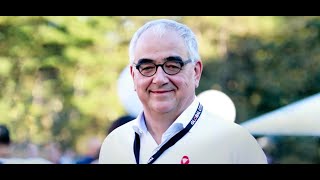
In this BioCentury Show interview, Steve Austin talks with Dr Paul Stoffels, CEO and chair of Galápagos NV, about the company’s recent strategic overhaul and broader industry issues. Stoffels explains how Galápagos shifted from a small‑molecule fibrosis/kidney pipeline to a focused immunology and oncology platform, acquiring CellPoint (point‑of‑care CAR‑T manufacturing) and Abound (discovery) to accelerate transformational therapies. He describes the decentralized CAR‑T workflow (7‑day vein‑to‑vein, 30‑40 patients treated, low severe CRS, high in‑patient expansion) and the highly standardized, digital‑enabled quality system that supports multi‑site production. The conversation moves to the business model, potential cost advantages, and the vision of democratizing CAR‑T for middle‑income markets. Stoffels outlines Galápagos’ acquisition strategy (cell‑therapy platform, bispecifics, ADCs, solid‑tumor programs) and early non‑oncology CAR‑T work in lupus. He then discusses European pharmaceutical law revisions, expressing cautious optimism about incentives for innovative medicines while acknowledging challenges for small‑molecule products. Regarding the U.S. Inflation Reduction Act, he notes short‑term neutrality for Galápagos but foresees longer‑term valuation pressure and acquisition opportunities in a buyer’s market. Stoffels defends strong IP protection, arguing that patents enable long‑term investment and that IP waivers would not have accelerated COVID‑19 vaccine development. He recounts the rapid, collaborative pandemic response, the erosion of public trust in science, and the need to rebuild confidence through transparent, evidence‑based communication. Throughout, he emphasizes patient access, accelerated development, and the importance of global health equity.
Chapters
This is the BioCentury Show. Brought to you by BioEquity Europe. BioEquity is Europe's premier international showcase for financial dealmakers and biopharma executives to meet rising biotechs.
I'm Steve Austin, BioCentury's Washington editor. I'm speaking today with Paul Stoffels, CEO and chair of Galápagos, a company that despite its name is headquartered not off the coast of Ecuador, but in the heart of Europe in Belgium. Dr. Stoffels co-founded Galápagos in 1999 and went on to do a variety of things, including serving as worldwide chairman of pharmaceuticals and chief scientific officer at Johnson Johnson. He left J&J to take on the task of revitalizing Galápagos about a year ago. Prior to all of that, early in his career, he treated AIDS patients in Africa for 4 years. That led to a lifelong passion for developing effective AIDS therapies and to addressing global health challenges. Dr. Stoffels, I want to ask you today for your thoughts about enhancing European competitiveness in biopharma, the upcoming revisions to European pharmaceutical law and global health, some other issues. But first I've got questions about Galapagos. You arrived at the company after the company experienced a string of setbacks and you very quickly reimagined it, dropping programs in fibrosis and kidney disease, moving into oncology, acquiring capabilities to exploit new modalities. To start with, what, what was the process of devising that new strategy like? How did you decide what areas to abandon? And which new directions to take?
Thank you, Steve. It took some time, but at the same time, we went fast because the company needed it. And the directions we took were— Glabkos was all focused on new targets with small molecules. And that's a very long path to success. Typically, it takes 15 years to get to result there. So we needed to accelerate. And Second, fibrosis is a very challenging disease where targets are not very clear, limited biomarkers. So again, an area where it took a long time to make a breakthrough. And as a company which had the setbacks, we had to revive the company. And then you focus on, first of all, what you're good at and then what could be new in the company and be very meaningful. And first, we reduced the pipeline to the immunology pipeline where we had Jyselica, have Jyselica in the market. We have a TIK2. Which we're now starting Phase 2 studies. And so that is one of our therapeutic fields. The other one was we chose let's move into oncology. But at the same time, if you go into oncology, we wanted to make sure we had fast results, but also transformational results. My background in J&J where I focused on bringing CAR-T amongst other products, and especially with CARVICTI, the company made a huge success in multiple myeloma, where from a clinical perspective, this was transformational. Learning from that said, if I do something, let's see whether we can bring on top of making transformational CAR-Ts also something on manufacturing. And that's where we went to point of care. Quite a challenging start. But at the same time, there was a company available, Cellpoint, which had been working for 2 years on that. And within the first 2 months, we acquired that company. That's now 12 months ago.. And they just started in the clinic. And today we do CAR-Ts in hospitals in 3 countries, in 6 sites, decentralized. We do it 7 days vein-to-vein, and we have very nice results. We published already 2 posters on different meetings, one in NHL, one in CLL, with excellent results. So hopefully we can continue to do that. And with that, we launched in oncology. In the meantime, looking at a lot of new business development opportunities, and soon a lot of new activities will follow. But focusing on therapeutic area oncology, immunology, and started with CellPoint and Abound, which was the complementary discovery team, which we brought on board and have done a lot in the last 12 months.
Yeah, there's a lot. And I'm really interested in CellPoint and in this idea of bringing CAR-T to point of care. It seems that there are a lot of challenges there, right? But First of the opportunities, you've talked to some of my colleagues at BioCentury in the past about this, and you've said that you think that there can be benefits in terms of safety and efficacy from this kind of point-of-care CAR T therapy. Are you seeing those in practice now?
Yes, of course. Data are initially— initial data. We have now treated somewhere between 30 and 40 patients and going. But what was already clear from the academic research in this space is that when when you use fresh cells, you seem to have a better expansion in patients. And let's say we have been able to industrialize that. And where we are in the hospital, cells are taken, apheresis is done from the patient that goes into the incubator. It stays 7 days in the incubator and a lot of quality samples are taken, but also the vector is input, put in and transfection. 7 days later you have cells. And what we see is that we cannot we can administer lower number of cells and most likely of higher quality. And what happens in patients is significant expansion. And when we use between 30, 50, or 100 million cells, we see up to a billion cells expansion within the first 2 to 3 weeks in the patient. That gives that expansion time allows to have a time for the immune system to remove cancer cells. And we don't see CRS, at least not serious CRS, not grade 3 or 4. We always We see some fever, of course, that's part of the therapy, but it's very well tolerated. And so far we see very good results also. So it's early, but in the first 2 dozen patients, we clearly see the benefit of no CRS, good clinical result.
And we can see— CRS, that's cytokine release syndrome.
Yeah. Yeah.
Cytokine release syndrome.
Yes.
Is there a clear regulatory pathway to getting a decentralized therapy like this approved? You know, presumably you're going to have some way of standardizing manufacturing across sites.
Well, let me start with that. The production is highly standardized. The quality testing is— the quality release testing is highly standardized. And monitoring is both the oversight and monitoring are local but also central. We as a company oversee all of the production because because it's an integration of a biological incubator, but also a very good data system and digital system capturing all the data, including the manufacturing data, the quality data, the quality release data, which allows us to give good oversight. Of course, it are GMP sites, so local GMP. We do the training, we validate, and we do the SOPs, the training, the GMP. The incubator is end-to-end sterile, so minimum handling. And then also the testing for quality release. We are standardizing step by step every test to make it simple. Cartridge-based, cartridge-based, most of it push the button, measurement is done and data are uploaded. And the governments are working on the regulatory pathway and regulatory guidance on how to do this. It has to be validated side by side. It has to be quality controlled side by side. But so far so good. We are in 6 sites. It works really well and it works because it's highly standardized, simplified, hands-off, and yes, hands-off and in a GMP quality environment.
Is the business model for this different from centralized CAR-T products? And will the price point of it be different from what we're seeing from the traditional CAR-T products?
The principle is not going to be different from a product perspective. So we as a company will get the approval registration. But the difference, of course, is that we decentralize, do the production decentralized close to the patient. That has many, many benefits, especially the fact that you don't need to transport and can treat people in very bad conditions, even with a very short life expectancy. The approval will be obtained by us in the end, and then we are responsible locally for the manufacturing. And that is still work in progress with the regulators on how to deal with that. And from a cost, it's too early. It's too early. The fact that we do it decentralized, no logistics involved or minimal logistics involved, that we can automate a lot. In the end, we hope to be able to have a significant cost benefit. But today that's not the first objective. The first objective is getting the huge clinical benefit to patients.
But I'm wondering in the long run, is this something that could lead to more of a democratization of CAR T therapies where you might be able to bring it to patients in middle-income countries, for example, where it's not possible now because of the cost?
Yeah. In my 30 years of pharmaceutical working career, it always has been— it starts always as a very complicated intervention. I started with HIV with 18 pills twice a day, and in the end it becomes 1 pill once a day. It becomes available globally and it reaches many patients. And you hope that this type of science will lead to democratizing across the world and making it more available. But it's not always possible day one. It will take its time. But that's also the goal. How can you have so many more people benefit from transformational cancer therapies?
So at the beginning, you mentioned about BV opportunities and you said basically that you're just getting started. Can you talk a little bit about what kinds of acquisitions you're looking at? What should we expect? Is it going to be transformational technologies like CellPoint and Abound? Are you going to be looking more for specific assets that you can develop and at what stage?
Both. We have now a cell therapy platform and we hope to find additional opportunities to develop on the platform. We have the capacity and the capability to do that. But also in addition to that, we have good research capabilities now in the biological space. So we'll look at what can we do with bispecifics, maybe in the space of ADC, because it's all around cancer. How can you target hematological, the liquid cancers, but also liquid tumors, but also solid tumors? And there we are building on— we are hoping to build additional platforms to tackle that. So really strongly working on on new opportunities in cancer. But we have a gateway to patients now with our CAR-T systems, and that attracts a lot of interest from other companies who are looking for opportunity to bring cell therapies to patients.
And I know you're also, you're looking at CAR-T outside of cancer, right?
You've got a program in lupus. Yes, we started a program where we tested, we are testing a CAR-T in lupus, and they're also in immunology or immune diseases, there might be some additional space for that. On top of what solid tumors could bring also in immunology, there is, there is, but it's early on. So with lupus, the first 5 patients were published with very good results. So we are looking into that on how to, how to repeat that experiment and build on that.
Well, great, thanks. We're gonna take a break now. When we come back, I want to talk to you about these other issues that we talked about, I mentioned at the beginning, about European innovation, also about the Inflation Reduction Act, global health, and some others. We'll be, we'll be right back.
The 23rd Bioequity Europe Conference heads to Dublin, Ireland in May 2023, with a program focused on how to create a new playbook for biotech success in Europe. In 2022, over 800 industry leaders from 30 countries joined BioEquity in Milan, Italy for 2+ days of strategic panels, one-to-one partnering meetings, and C-level networking. More than 150 biotechs selected by BioCentury presented their story to investors and potential partners. Don't wait, 2 of the last 3 in-person BioEquity conferences sold out. Register today and join BioCentury EBD in our Dublin regional host committee at the industry's premier C-suite and investor conference. Visit bioequityeurope.com for more information.
I'm back speaking with Dr. Paul Stoffels, CEO of Galapagos. Dr. Stoffels, you are and you have been an advocate for European innovation. How do you assess the climate for biopharma in Europe now?
I remain very positive. We have gone through ups and downs over 30 years, and always as an industry, we have found solutions for the challenges which were there. And on one end, I like it that the interface with government is focused on how can you get access to more patients. And I worked worldwide in HIV, in TB, in all diseases. And if you have a transformational innovation, how can you bring it to more patients? And so the fact that it focuses on innovative therapies and in fact providing priority to innovative therapies and bring those to more people, I'm not against it. It is at the same time, it's a challenge for small molecules, for shortening what people are doing with the exclusivity time, et cetera.. But I find it an opportunity for us as an industry to show that we are joining in doing our best for bringing the best innovation to patients in the fastest possible way.
So what you're talking about is the, of course, is the leaked drafts of the European pharmaceutical law revision, which some of your colleagues have been very negative to me about. And they basically said that they They say, well, look, it's cutting the IP protections, it's undermining incentives to develop treatments for rare conditions, and it's setting an incentive for launching within the whole European Union that isn't realistic, especially for small companies.
What do you think about any of those? I don't say that there are no challenges. Yeah. And no, and I don't like some of the the topics either. But at the same time, it is a framework which if you are a young new company in novel space, you can deal with it, especially if you are bringing transformational products. And transformational products are still very much in favor, let's say in a positive way looked at, both by the regulatory agency as by the countries.. And it's up to us as an industry to manage access and in collaboration with the payers. There are challenges in that. And if I was in my previous job at J&J, I would say yes, big challenges because it would challenge a lot of our existing products with shorter life cycle, et cetera. In my new job, I say yes, I will work on it. We work on it and make sure that we operate within those challenges and try to to make it work, not just in Europe, but also in the US as we try to get to global products. Yes, let me say in Europe, you asked me what is the environment. There is very strong academic science ongoing, very strong development capabilities in Europe. The regulators, although we have some hiccup, I mean, in the speed of starting trials now because of all the changes in in governance and guidance, we have been able to always do very fast and very successful developments here. We have very good talent who grew up in large pharma, small biotechs. So if you look at the overall environment, I think it will remain very productive. Whether overcoming those new regulations and constraints, I think we'll find positive solutions to it with strong new innovation in cancer, infectious disease, immunology, in all different areas. I like a few things like putting in place a voucher for the antibiotic resistance. I've been fighting for a long time for that. Incentivizing also the more, let's say, disadvantaged fields, which are very difficult to tackle. They put in some— they are taking out or putting in some incentives and take out some barriers. But yes, in the mainstream business, we are going to have a few negatives, but also a few positives, I think, on facilitating innovative medicines.
And so what are your thoughts about the IRA, the Inflation Reduction Act? You're headquartered in Europe, but obviously you're a global business and you're going to be looking at presumably at launching drugs in the United States. Perhaps acquiring assets in the United States. What effect do you see the IRA having on your business and more broadly on biopharma?
Yeah, I think first, as a human being and a person, I think hopefully there is a move to provide more patients with access to medicines in the US, and that by taking away some of the self-pay for patients. Also, I think, yes, providing more access to more patients, I find a positive. Still, I think all the elements of accelerating science to the FDA, to the market are still going to be there. So they won't affect us in the first next 10 years, I think. So I'm staying positive as a biotech company that we will be able to bring innovation to the US as before. The longer term, if you have a business today in the US and your life expectancy, your exclusivity is shortened, that's of course cutting in your existing business. At the moment, we don't have that. So I can't complain about that because we are launching new products and I'm mainly looking at that. How can we bring new products, transformation, new products to the US market in a fast way, I think there is not much in the way of doing that. For me, it's like time to result on the market and then growth in the market. I expect that if we bring a transformation oncology product, we'll still have the benefits from the market. It's suffering in the longer term on some of the value, and that will have impact on value of pharmaceutical companies and biotech companies. But with access to more people, I think we'll compensate for that.
And, and does it, on the kind of the flip side, does it create opportunities for you? Because you said, you know, it's going to have impacts on the valuation of companies and on assets. Does it create opportunities for you to acquire companies or acquire assets?
I think— I don't think whether it's a consequence of IRA or some— I think it's more the consequence of the economic problems at the moment in the world, and started with the financial crisis and the war in Ukraine, et cetera, that caused the drop of the valuation of biotech companies. That is absolutely an opportunity for us. Companies have difficulties to raise money, and many companies need money. That is very good innovation in the market which wants to partner. And there we have the balance sheet to do that. And that gives us an opportunity to accelerate value creation. Yes, that's what we see today. We are approached, we get inbound call, a lot of inbound calls on collaboration. And we have more—
it's a buyer's market. Well, that's interesting. And do you think that, you know, one of the things that sounds like you're suggesting is that there's going to be a faster turnover of innovation if companies have to get their— have a shorter period of exclusivity in the United States, and perhaps it's going to happen in Europe also, that to compensate, one of the things they're going to have to do is to get quicker at launching new products. Do you think that that's— is that realistic?
Is that going to happen? Yeah, it's realistic in a way that we have seen this before. And you know that at a certain point we had these long tails on products with, when exclusivity was lost, we still were able to sell 3, 4, 5, 6 years. That at a certain point became zero one week after loss of exclusivity. And we adapted to that. And what else? With our Janssen teams in those days, we looked at how can we accelerate innovation? First of all, by the choice of the fields we work in, high medical need, unmet need, life-saving, years of life saved, quality of life. And then we accelerated our programs by program management and making sure that we counted days and hours instead of weeks and years. And we were able to accelerate product development. So it will push an innovation on the development side to accelerate new products. And then also on efficiency today with all the electronic systems, with new ways of doing clinical trial, we should further optimize that, that we can do clinical trials recruitment faster in having the right patients on a global basis, readout faster, make sure that the overall process of that accelerates. And if we do that well, and then we can do more products in a certain time frame and compensate for the growth. But it requires for supporting the growth. It will require investment in R&D, innovative mindsets on how to deal with it, both with the regulators and with the companies. And I think we'll, as an industry, we'll find the answer to that. We should find the answer to that.
I want to switch over to another policy issue, which I know is something you've had a longstanding interest in, which is global health. One of the things that came up in the pandemic tonight was a concern about inequitable access to pandemic therapies in developing countries and developed countries. One set of ideas that came up about that is around IP, including treaties that would require the companies share their IP for certain products at no cost with manufacturers in developing countries. What's your thought about that? Is that one, is IP, is patent protection really the rate-limiting factor for getting these kinds of therapies to developing countries?
And is mandatory relinquishment of IP around pandemic products a good idea or a bad idea? During COVID IP would not have played a role at all in order to accelerate time to market. Yes. So it was more the experience experience which teams had before on doing that type of work in the vaccine world or in drug development to accelerate to the extreme medicine and vaccine development. For us at J&J, it took us from January 10th to end of the year to do— to develop that vaccine. And it was like the excellence in the teams who had done cancer drug and HIV drugs before were able to to count every hour, every day in the process and shorten this time continuously. And so we ended up being able to do it in 12 months. IP didn't play a role at all. Everyone could have run away with their IP, but nobody would be able to do that product development in 12 months. It would have taken other companies 3, 4, 5 years even if they had the IP. So I'm not a believer that IP is the challenge. IP is needed to protect and give people the opportunity to develop technology. If IP is taken away from technology, no one will develop it. And that is why I'm like, when a product is fully in place, like with HIV, and you then deliberately decide, let's give it to generic manufacturers to make it available, like in HIV, it brought access to the world. But it didn't accelerate time to having those medicines. The access to the world is a deliberate decision. What we did then at Janssen with HIV, we give the license to a free license or 1% license, whatever it was, to a developing country producer. And then they made it available at cost or even— and that worked very well for HIV. We did that in tuberculosis with tiered pricing, which was public, almost tenfold difference between the between high income, middle income, low income. That was a way to give access. And in COVID, we decided to do it not-for-profit in J&J from the beginning to avoid the problem with the access. But IP would not have made a difference. So I am a very big proponent to make sure IP stays in place to allow people invest in technology and bring it to the point. For our platform, the PERSIS-6 and the AT26, it was probably 20 years of investment to the point we made the COVID vaccine. We did Zika, we did Ebola, we did influenza, a lot of different vaccines before in research development. And it's built on that experience that we could do COVID. So if the IP of the AT26 platform would not have been there, never would have happened.
Yeah, one of the other things I wonder from your perspective, because you've seen so much, at the beginning of the pandemic you could have looked at it and said, well, look, the whole world's going to come together, you know, we've got this existential threat. It really is— was an existential threat, at least people felt it was— that the whole world would come together and get behind science and get behind, um, accelerating the development of vaccines and therapies and on. That's not what happened at all. It really, especially in the United States, it tore the country apart, you know, and it's created an environment now where there's less trust in science, there's less confidence in companies than there was to start with. What do you think can be done, if anything, to get that trust, to get society's trust in science and in the companies that create medicines back.
Yeah, it's unfortunate that the trust suffered there, but it was really essential and necessary to save my mom, probably many of your family members, to get back out of isolation because the vaccine was there and people could survive. So it was a technical, let's say, intervention, a technical medical intervention the world needed to make to protect against the pandemic. And unfortunately, that went with a lot of loss of trust. Because people thought we went too fast. But at the same time, it was a decent process, both governed by the US FDA and by the European agency and by other agencies in the world, where there was no shortcut at all. And all the science was seriously vetted. We with our vector were already on the go for 20 years in the discovery and development of that. That. I think the world came together on developing it together. I still remember this fantastic time that the FDA was available on call, EMA was available on call. We could work, deliver this file Saturday afternoon, 3 o'clock to the FDA, 4 o'clock they were working, 3 o'clock they would start working on it and have an answer on Monday on the next step in the clinical that this happened never before on how the world worked together. On the different drugs, what happened between 20 companies, the NIH, and the industry was that 25 drugs were tested within a 24-month timeframe on whether they could find a medicine. And that was done pro bono. It was like, hey, everyone was at the meeting 2 times a month with Francis Collins, myself, and we were co-chairing that. And the heads of industry, the heads of government, EMA was there, FDA was there. It was the world really coming together to save the world. And that was— nobody ever talked about money. It was all about the science. How can we accelerate here in the benefit of the world, both the vaccines and the drugs? So the world came together to save the world. That the trust there was probably lost to a certain extent. But at the same time, I think we saved probably millions of lives by doing what we did. To do with the community. So it's my view on this and my experience through this very challenging 12-18 months.
It is fascinating. Yeah, you had a front row seat, you know, at the most important—
I was chairing the industry side, Francis was chairing the government side, and together we governed the process of 30-50 people on the phone every second week and people where we 6 platform trials where 24, 25 drugs were tested. And somewhere from industry was working with the government to find the studies to do besides the vaccines, because that was another— we used the US government viral network in the world. It was in fact the HIV clinical trial network. Probably most people don't know there are 200 sites in the world who are connected to each other and with the NIH to do this network. And so, We did in the US, South America, South Africa. And we were able to start these sites within 1 month, 200 sites in the world. We had military planes, we had the private jets from J&J, we had everyone going around to drop these packages with vaccines. They were trained, people got their protocols, their ethical committees. And in the end, we were able to recruit 50,000, 60,000 people in 6 weeks in a clinical trial because of a big investment between government and ourselves. And never seen before, Steve, on having that done. I could talk for hours about on what was needed. And then as a next step, we were in South Africa. In South Africa, it showed that South Africa contributed significantly. And then they had a new strain in South Africa and our vaccine showed to work on the strain. And the government asked to vaccinate all the healthcare workers. So in 6 weeks, we vaccinated vaccinated 500,000 healthcare workers. They all showed up in the weekends, 10,000 at a time. And we have planes flying, bringing the vaccines over, the local community being organized. And that study served for us as a big safety study to measure the safety and efficacy in the South African healthcare workers. They have an electronic medical record. We could capture the data. We had safety, the efficacy, and they added another 500,000 people to the file. So this was really, if you ask, did the world come together? Yeah. And it was Ramaphosa who got the first vaccine.
And where do you see things now? Because it's very difficult to kind of understand even for people that follow where we are in the pandemic and where we are in the response?
Yeah, I think we are done with the pandemic, but it's like with influenza, you're done until the next strain comes. So I think Omicron did a lot of good to the world because it was a strain which was not very pathologic and still gave everyone a good boost, including myself. And so we had all 3 or 4 vaccines, then Omicron, and that did the job. To protect us all until there is the next round. Also, I think China, I think 80% of people got COVID in a month in China. And we will never know how many deaths there would be. I think I am going to use the wrong word, but many, many elderly people must have died, many, many in our communities. But because of that infection, you've got your protection. And so I think we are done with the pandemic. Not for the elderly with bad immunity. So I'll make sure my mom gets her vaccine again. My mom of 92 will get her vaccine. But I think we can be reasonably okay now. But we forgot about it already. Nobody— it's gone. It's long gone. Gone. And the old preparation for the next pandemic is— I'm not involved that much anymore, but I don't see the infrastructure maintained to do it another time.
It will— And I think the problem is that when it comes up again, there'll also be resistance. There'll be more resistance to accepting public health measures and more resistance to accepting medical countermeasures than there was.
Yeah, but it will be to the detriment of the individuals who resist because, um, yeah, it, it, you, ah, if you don't control as a human, you can resist, but you don't control. In the days of the past, the day of TB, the day of, of COVID or influenza, influenza, you are subject to it. And if you resist because you're different-minded and say, hey, I'm opposed to vaccines, yeah, thank you very much. But then you have the consequence. I have seen polio patients in Africa. I have seen measles patients in Africa. I have seen the consequences of non-vaccination in Africa on the ground, which was causing huge damage. And all these people who protest now COVID, they have had 25 vaccines when they were kids, which have protected them already from 10 diseases before they get to the age age of 10. And they could have been dead 10 times already. That was already taken out by vaccines. People forget that. Small kids with tetanus when they are born in the field and they come in the hospital with tetanus, all dead. You have to work in Kinshasa for a year and then you know what vaccines mean. Good vaccination means. Yellow fever, all of that, all solved by vaccines. And people still think that they can fight vaccines because it might do something wrong with your body. I'm like, come on, guys, vaccines saved your life already 10 times before you could talk.
Well, thank you, Dr. Stoffels. That's all the time we've got today. But I really appreciate your thoughts and thank all of you for for watching.
Thank you for this interview. The BioCentury Show is brought to you by BioEquity Europe. BioEquity is Europe's premier international showcase for financial dealmakers and biopharma executives to meet rising biotechs.
More from Joshua







Scientist Stories: Hans Waterham, The value of phenotypic assays in peroxisomal disorders




Scientist Stories: Joel Zlotogora, Genetic carrier screening programs for reproductive purposes