How Our Microbiomes affect Nutrition & Pharmacology with Peter Turnbaugh
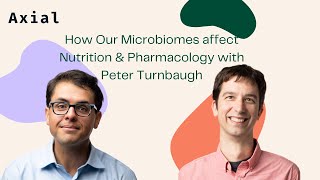
In this Axial Podcast episode, host Joshua Elkington interviews Professor Peter Turnbaugh, a microbiologist at UCSF, about his unconventional journey into science and his pioneering work on the gut microbiome. Turnbaugh recounts his liberal‑arts upbringing at Whitman College, a transformative stem‑cell research stint in Australia, and the challenges of gaining admission to graduate school, which ultimately led him to Washington University in St. Louis. There he joined Jeff Gordon’s lab, where he helped launch early metagenomic sequencing of gut microbes, including the first reference genome for Bacteroides thetaiotaomicron. Turnbaugh describes his graduate research linking diet‑induced changes in the gut microbiota to obesity, the technical and cultural push‑back he faced, and how he leveraged mentorship, collaborations (e.g., with Ruth Ley, Ed DeLong) and a hands‑on, trial‑and‑error approach to develop new protocols. After a Bauer Fellowship at Harvard, where he shifted focus to microbiome‑driven drug metabolism (xenometabolism) and a high‑throughput digoxin‑microbe screen, he moved to UCSF as a faculty member. He discusses building a lab, the relentless grant‑writing grind, establishing the Nobiotic Facility and the Benioff Microbiome Center, and expanding research into phage engineering, diet‑drug interactions, and immune‑microbiome crosstalk. Throughout, Turnbaugh reflects on the importance of curiosity, low activation energy for new ideas, mentorship, and the need to view the microbiome as a community rather than a single pathogen. The conversation ends with personal notes about his podcast "Science is Fun," family life, and advice for early‑career scientists.
Chapters
Welcome to the Axial Podcast. Axial is an early-stage investment firm based in San Francisco. We partner with great founders and inventors investing in early-stage life science companies, often when they are no more than an idea. Axial is fanatical about helping the rare inventor who is compelled to build their own enduring business. Hey Peter, we're recording now. Great chatting up for the last like 10 minutes. Uh, thanks for doing this. Awesome to have you on the podcast, and we'll do this 2 years from now and just get the update. But maybe start with a quick introduction about you and your work, and then we go from there.
Sure, yeah, so I'm Peter Turnbaugh. I'm a professor in the Department of Microbiology and Immunology at the University of California in San Francisco.
Cool, and so maybe we can transition towards like first of all, how you got into science before we talk about your research and your lab and whatnot.
Oh man, yeah, way back.
I'm gonna learn a lot here.
I'm really feeling your work.
Thanks for teaching me some papers.
Yeah.
But I'm gonna learn a lot in this conversation myself.
Yeah, I was never really like a born scientist. I think I kind of, you know, I went to liberal arts school for undergrad called Whitman College, which is in a small town famous for its onions in eastern Washington. And I didn't really know what I wanted to do with my life. I was a typical kind of liberal arts student, you know, just kind of exploring. And I kind of like, you know, just got interested in science classes without really thinking about whether or not it was a career. It was, you just curious about the topics. And also, you know, I was kind of turned off by the more humanities classes where there was a lot of blue book exams. And so, you know, I didn't really like, you know, I kind of felt like the grades were arbitrary. I really liked the fact that in science it seemed like the grades meant something. And so that just kind of steered me towards majoring in science. And I wasn't even really planning on doing it as a career until I was a junior. I did a study abroad in Australia and I got a chance to do some research in the stem cell lab there led by Peter Rapton. And that just kind of like ignited my excitement about basic research and I had a really fun time and I ended up staying for a whole year and just doing research the whole time.
So in Australia, what was the spark? Like some scientists just find out they're really good at it. Some people find— I find a common thing is like a lot of scientists get a kick out of knowing something no one else knows. But what was like the trigger like in that stem cell lab that kind of got you hooked?
Yeah, it was exactly that. Like, you know, I think in the coursework it all seemed like just a series of facts that we were trying to memorize, and, you know, I was really good at memorizing things, so I like that. But yeah, I mean, going into more of a research lab, the lab at the time was trying to take embryonic stem cells and make them into neurons that would produce dopamine and be useful for treating Parkinson's. And so I was kind of immediately excited by the potential implications for changing how we treat disease, but also just the fact that nobody can do that. And so it was really exciting to be trying to do something that nobody else had done before. I never really thought about that, you know, in terms of my basic coursework. Cool.
And so maybe we can then transition towards like your graduate career. And so you have either one of the luckiest careers as a graduate student or one of the most like thoughtful and like just like, you know, mastermind graduate careers ever. So let's figure out what it was, maybe somewhere in between, but how did you make that transition from, you know, college, doing exploratory research, getting experience in laboratories, to then making a decision to go to grad school? Not, you know, or did you do something in between? And how did you figure out to go to like St. Louis?
Yeah, I mean, I was like, after that year abroad, I was really excited about doing research. So, you know, I applied to grad schools But, you know, it's even more competitive now that, you know, I was, you know, I had 1 year of research experience and a lot of people are coming out with 4 years of experience and, you know, lots of publications and maybe even like extra years after undergrad. And so, you know, I applied to a lot of schools and got rejected from almost all of them, including UCSF. And so I basically applied, you know, on the whole Western, you know, all the way from Washington down to Southern California and just got rejected from every single school. And so, you know, the two I got in, you know, I got into two schools in the Midwest and I ended up at WashU in St. Louis, you know, and I'm really happy that that happened. Although, you know, at the time it seemed like You know, he's moving into the middle of nowhere or something.
I'm gonna say Louis. It's a beautiful campus, but the city's pretty rough, and so it's just like, you gotta— I remember somebody told me in St. Louis, don't go past the street. There's like a street you don't go past.
Yeah, yeah, there's a lot of borders you have to know.
And yeah, exactly.
My first weekend there, it was I had driven my car. I had this beat-up Dodge Neon and I parked it next to the place I was renting. And then I flew back to my parents' place to get some textbooks and stuff. And over the weekend, I got a call on my phone and the guy said, you know, hey, did you park in my yard? Like, no, I parked in the street. And he's like, well, your car is in my backyard. And so, you know, after, you know, a couple of days in the city, my car had been stolen and dumped in somebody's garden. So yeah, we definitely, you know, it was a dangerous place, but the school was amazing. And I really am lucky that I ended up there.
St. Louis is awesome. Also, just to give a positive on St. Louis, you can be a grad student there and also buy a house.
Oh yeah.
I know people like that. They live in like a, they live in some of these smaller towns and go to grad school and they just have a mortgage. It's like insane for like people who go to UCSF or Stanford for grad school.
So yeah, my now wife bought a house just right south of campus and so we lived, you know, we could walk to the lab and we had lots of space and plus or minuses. It was awesome.
You're in St. Louis and this is like 2006 or 2007 or—
I got there in 2004.
2004. Okay. And so you're there in 2004. St. Louis had become like the epicenter of sequencing, mainly because no one else wanted to do it. From my understanding, they did the grunt work for the Human Genome Project and a bunch of other stuff. You know, what was your experience in that backdrop and how did you pick labs and how did you figure out to ultimately work with Jeff Borden?
Yeah, that was kind of, you know, so I was really, really excited about genomics and, you know, also being at WashU, with all the sequencing happening. I was really interested in computers and so I wanted to do some kind of bioinformatics. And so I ended up kind of rotating. In the program I was in, we had to rotate in 4 different labs. And so I did it. I started in kind of yeast transcriptional regulation, and then I went to a zebrafish lab, and then ultimately for the third rotation went to the Gordon lab. So I wasn't even really thinking about microbes at the time, I just wanted to look at genes basically. But, you know, Jeff, you know, really was— had a lot of— was very like forward thinking in that, you know, at the time everybody was really focused on eukaryotic genomics and he really thought that DNA sequencing would teach us a lot about the microbes that live in and on the body, and he thought that would be really important for medicine. But most people disagreed and, you know, thought we should be spending our money sequencing more eukaryotic genomes, and so he was really like pushing towards studying microbes at the time.
So maybe that too, that's a really important part of history, you know what I'm interested in, was metagenomics a term? Was it a thing that was popular or was it kind of criticized? And it seems like around 2010, metagenomics became more mainstream. But at least at the time you were in grad school, what was kind of the status of the field of sequencing microbes with just shotgun tools or just kind of different types of more agnostic measurements?
Yeah, I mean, I would say even at the time, like, sequencing isolate genomes of microbes was rare, you know. So like, this happened right before I joined the Gordon lab, but, you know, Abigail Saliers, a really famous microbiologist, had developed this bacterium, Bacteroides thetaiota omicron, as kind of the workhorse member of the Bacteroidetes phylum that is in all of our guts. And, you know, they'd done all these really nice kind of basic science studies and learned about how it eats sugars and does all sorts of interesting things, but nobody had sequenced the B. theta genome. And so a few years before I joined the lab, you know, Jeff was sort of begging the Genome Center to sequence B. theta, and they kept turning him down. And so, you know, ultimately he had to— I think he got like a leftover sequencer that was gonna be thrown out and they sequenced it in the lab themselves, and then, you know, that kind of became the first reference genome for one of the major players within the gut microbiota.
Wow, okay, I didn't know that.
So yeah, I mean, I think even isolate sequencing was really rare, and then when I started in grad school, really nobody was doing metagenomics. I mean, there were people in the kind of environmental microbiology community, you know, applying that kind of approach to, you know, study the ocean and other aquatic systems and, you know, studying soil and, you know, acid mines and all these interesting samples. But not much going on in terms of the human body.
If my understanding, a lot of it was like microbial ecology. Then, yeah, like you said, people were kind of trying to study microbes in the context of like ocean metabolism or stuff like that. And so, okay, you're in Jeff Borden's lab.
Yeah. And at that time, like one of the big projects was the, you know, Venter had bought a sailboat and he was sailing around sequencing seawater, you know. So I mean, there was a lot of really exciting environmental microbiology projects.
Yeah, I think the Craig Venter thing was getting a little— it was very interesting, but he also, from my understanding, it was on a yacht and he had some really like— I don't think it did the field too much good in terms of perception. But maybe you can— I remember also the class you were part of, Peter Gerges, he did really cool research on biogeochemical cycles.
Right, yeah, and looking at the deep sea.
And yeah, it was some really cool work.
And so basically all of these microbial ecologists were going to really cool places. They weren't studying the gut.
I remember Michael Gilmore, somebody told me, told everyone, if you want to be a scientist, try to like be Darwin or get on a boat somewhere and do PCR in the ocean. Don't do PCR in a lab.
Right.
That's a pretty good argument. But then we can— okay, so how did you end up wanting to work with Jeff? Of all the labs you rotated in, and, you know, for that initial project, did you just jump all in on like sequencing microbes, or was it pitched to you, and did you have to like work your way towards it?
Yeah, I mean, I think the thing that really attracted me to Jeff was really his attitude. Just, I don't know if you've ever met him, but he's an incredibly kind of charismatic an engaging person. He's, you know, you just, as soon as you meet him, you want to spend more time with him. And he, even when I was rotating in one of the other labs on the floor, he would always walk by my bench and, you know, say hi to me. And he called me professor for some reason. You know, he's like somebody you want to be around. And, you know, he's also, you know, he has such a good vision. The future, but it's really inspiring. And then the other thing that really attracted me to the lab was that Ruth Ley had joined as a postdoc, and she came from Norm Pace's lab and brought with her all of these tools for measuring microbial communities and also a lot of knowledge about ecology and how microbes communicate with each other and the environment. And so, you know, it was definitely kind of a right place at the right time kind of situation.
For context, Norman Pace and along with Carl Woese are kind of like the key figureheads in microbiology. So it has a really cool— I remember I read this review, really fancy, something that Epitheus and had some really fancy Greek name.
I'll link it in the description, but Lucky for us, you know, Norm had been doing this like amplicon sequencing stuff since the '70s, but he really had not looked at humans. You know, he kind of left a big hole in the field.
Maybe we can give context in terms of like, you know, the real revolution happened in the '70s where people were sequencing ribosomal DNA of microbes. They didn't classify them, and that led to like a whole reclassification of like microbial life and the discovery of archaea. And so maybe in the context of using these tools and those methods for the human microbiome, what was kind of Jeff, yours, and Ruth's vision and plan to probe the human microbiome? And what kind of hypothesis did you have in the beginning?
Yeah, actually the first product I worked on when I was a rotation student was I guess bigger than that. Ruth really wanted to get a sense for what the gut microbiome looked like in many different mammals. And when I started, the first day in the lab for me was Ruth had already gone to the St. Louis Zoo and collected poop from a lot of different animals. And so she had a -80 that was just full of animal poop. And she said, here you go. I mean, she gave me a protocol for how to extract DNA and, you know, and then do 16S amplicon sequencing and just, you know, set me loose. And then, you know, part of the time I also, you know, we did a second expedition to the zoo, so that was really fun. We got to sample more animals, and then later on extended that study to the San Diego Zoo and to Africa. And so it was a really fun kind of like real microbial ecology kind of survey project. And then that kind of got, you know, helped me learn the basic techniques and start thinking about microbial communities. And then for my own kind of thesis work, like, you know, even I think when I was, or shortly after I joined the lab, like, you know, Ruth had Jeff had been really interested in a long time in kind of how microbes affect energy balance. And so they'd been studying this, you know, I guess a really key paper that had happened, or I guess came out like around the year I joined the lab, was led by Frederick Backett. And, you know, he did a really simple experiment where you just compare germ-free mice to mice that are living without a microbiome to mice that have a microbiome, and he found that it really affects how fat the mice are. And so that showed that the microbiome somehow plays a role in controlling body fat. And so Jeff immediately thought, oh, maybe that means that microbes can play a role in obesity. And we sort of turned to modeling that in mice and also were able to look at that in humans.
Cool. And then so you published some key— you and Ruth published some key papers, 2006 to 2009, kind of establishing a core microbiome for obesity. And could you describe like that work, but more importantly, the challenges and the pushback you get Because when you measure a large ensemble of microbes, and how do you establish which species and which populations are actually driving the phenotype?
Yeah.
How did you— especially this is what? This is like 15 years ago. What was seen easy now was really hard then. So how did you deal with those challenges of establishing the core microbiome? And linking it to obesity?
Yeah, I mean, I think it was, I mean, it was both exciting but also, you know, kind of wild to think about in hindsight that like, we didn't really have any, you know, we didn't even have any protocols for any of this stuff. So like, you know, we didn't know how to actually generate the data. There were no like software tools to deal with the data. So, you know, we were mainly doing like sequencing-based approaches, either like sequencing just 16S or sequencing the whole microbial community. You know, nobody had kind of figured out how to do that well, and so, you know, we were kind of just like doing everything from scratch. And, you know, I'm sure making a lot of mistakes. You know, now, and how, you know, a decade later, there's, you know, all sorts of fancy bioinformatics tools that you can use. But, you know, that was really fun because, you know, there wasn't really, you know, you didn't have to follow a checklist. It was just like everything we did, we could do whatever we thought seemed right. And then I guess conceptually, we kind of touched on this earlier, but I mean, we got tons of pushback just with the idea of studying microbial communities. And I kind of still face that every day.
Really?
I think that the world obviously is excited about the microbiome, but I think that a lot of scientists are really worried about how come, you know, the complexities once you have like many different microbes interacting and they also have a host. And so there's this perception that you're never going to be able to make sense of anything. And so that, you know, that's what we faced from the very beginning. People said, you know, you're wasting your time doing metagenomics. You should just be doing, you know, genome sequencing. You know, just focus on a single organism. You know, there's always this push towards reducing it down to something that's really tractable, you know? And then we also got a lot of pushback in terms of the specific things we found. So one of the things I found as a graduate student was that eating a high-fat diet really rapidly changes the microbial community in the gut. And some of those changes can then increase body fat in the host. And then I remember the first time I presented that at a graduate retreat, the first question was like, oh, that's obvious, like, obviously diet matters. And so there was sort of both like the idea that it was going to be too complicated, but also like the that the things we were studying just weren't novel or interesting. And so, yeah, we had to kind of just— I mean, I think what I had in my corner was Jeff, who was always so encouraging. And I mean, whether or not he believed it or not, no matter what we would do, it would always be exciting. And he was just a really good cheerleader. And that always kept us going through all the negative feedback.
Awesome. So when you're looking in an uncharted scientific territory where there's no protocols, there's no playbook, who do you lean on? Do you lean on some sort of text or prior literature and try to get inspired by? Do you lean on certain mentors or maybe do a peer like Ruth? But what was kind of the, like, you know, over that course of those few years early on, like, how did you manage to navigate through this maze of, like, unknown territories, which is, like, extremely hard in science? Because most science protocols already kind of have some body of literature behind it. You're kind of pioneering a new field. How did you do that from, like, a, like, what resources did you rely on? To like just get a sanity check, to get verification, to get people to, like you said, be encouraging to move forward.
Yeah, I think like, you know, I don't know, maybe it's a strength of mine, but I'm not— I've never been shy about like asking people for help. So like, you know, I mean, I had Ruth that I could talk to every day and then I, you know, I bothered a lot of other faculty all the time. So, you know, in the, you know, we were in the Genome Center and so that, you know, there were people like John Eddy that were just nearby that knows a lot of computational biology and, you know, people that I could just pester for advice. And then the other thing that I did a lot of was like reaching out to people in the microbial ecology field, the environmental microbial ecology. And so, you know, one of the guys who I still talk to is Ed DeLong and he was really a pioneer in studying microbial communities in the ocean and really graciously responded. My wife, or girlfriend at the time, we were going on a trip to the Northeast, just a road trip, and I was going to Boston for the first time, and so I emailed Ed, who was at MIT at the time, and said, hey, I'm going to be in town, like, can I pick your brain about, you know, how to do metagenomics? And he replied and like showed me the lab and like, and then, you know, has continued to support me and write letters of support for decades, you know. So I mean, you know, just like kind of relying on these other people that I, that I thought had kind of done similar approaches but in other systems.
Did you, um, when you reach out to people, get help? Were people generally encouraging, like, keep on going, or did you get pushback, like, hey, this is a stupid idea, you shouldn't do it? Because often science, even from their mentors, get this feedback that don't do that project, it's never going to work. And then they do it anyways and it works. That's like a common motif in science. Did you get a lot of that, or did you get a lot of like, oh, it's a great idea, keep on going, Peter?
Yeah, it was definitely a mix. I mean, I think the environmental microbial ecologists were like, they were super excited. Because they're like, you know, they know that those communities matter and they, you know, they were already drinking the Kool-Aid, I guess. But the, you know, a lot of the other people I would talk to that were, you know, maybe like on the human side or, you know, hadn't really thought about microbes before were very discouraging. You know, some of them I kind of kept trying to get them engaged, but I mean, you kind of get in the cycle of trying to do whatever you can to make them— I mean, I think it was motivating in a sense that I wanted to do better. I still am trying to do better to make the people that are skeptical think that this is legitimate.
Makes total sense. Yeah. I think it was Sean Eddy was at St. Louis. He's maybe the best or one of the best bioinformatic tool developers ever. So like, you're really in the right place at the right time.
So yeah, definitely. Yeah, I think another nice thing about WashU, which is also true at UCSF, is like, you know, people are really willing to talk to you. I mean, even if they're, you know, even if they're negative, you know, they're willing to like sit down with a grad student and talk to them. So yeah, I had a lot of, you know, free access to lots of really good faculty.
So around grad school, you're trying to grad school. I don't know when the microbiome got really popular in popular culture. I don't know, 2009, 2010. I don't know which year. You know, you publish this work and you do your thesis. What was the kind of the, like, what was the key moment in your graduate career that made you like realize, hey, maybe I should like do this myself. Maybe I should start my own group versus other, a bunch of other options you had, probably had.
Yeah, I mean, I was always kind of curious about industries, so like I was part of this bioentrepreneurship club when I was in grad school. But, you know, I think like the research I was doing was going well enough that like I never really thought about that as a serious alternative. I mean, it was really from like that first year in grad school, I was all in, you know, I just like I mean, I wanted to like keep going as far as I could go, you know. And so, you know, if they would have me, I wanted to be faculty, you know. So, so yeah, I never really like considered alternative careers.
Yeah. When you definitely have like, when you pioneer in a scientific field, I think you should be a professor. Yeah. You know, somewhere in the middle. It's always, you know, but like if you're productively discovering, publishing papers in like something that's unknown. Yeah, definitely. It's easy. So how did you pick Harvard? So after grad school?
I mean, I think my biggest fear was that the whole field would disappear.
Really? At the time you were scared that like this would just kind of get old because like, I would think you're around the time you're in grad school. The human microbiome, microbiome in general, is getting a lot of attention.
It was, yeah. There was the big NIH microbiome project that was launched, and so there was a lot of excitement. I mean, I think if you think about the history of microbiome research, there was a huge— not as big as today, but there was a big burst of activity from like in the '60s and '70s, 1960s, and then the field really disappeared. And so, you know, I was kind of definitely afraid that that would happen again, you know, and I still don't really know why it happened last time, but, you know, so far it seems like we're, you know, we're pretty stable. But it makes sense.
I don't know, some of these older microbiologists like Carl Woese in particular were kind of ornery.
Yeah.
Like they just weren't willing to like engage the public. I don't know. Yeah, maybe.
I don't know. Yeah. Yeah. Hopefully the ball has been rolling fast enough that nobody can stop it now.
I think there's some success at least. I guess C. diff. That's on the product side and scientifically. I think there's a lot of cool discoveries and you're kind of leading. Yeah. So I think there's pretty good momentum where it's real, it's reproducible. That's right.
Yeah. And so, well, I think also this time, you know, which is very different from the '70s, like we've now kind of infiltrated all sorts of established fields. So, you know, I think like there's a little bit of microbiome in kind of every area of science. Yeah, it's gonna be, it's gonna be harder to get rid of us all.
Okay, so you're in St. Louis, you get your PhD, wrap your thesis, and you become a fellow at Harvard to run your own group. How did you make that choice? You know, why become a fellow versus get a postdoc versus try to become a professor? Why a fellow at Harvard of all places?
Yeah, I mean, I was Yeah, I think I was like very excited to become— to have my own research group. And yeah, I had heard about these programs you can apply for where they'll give you a lab right after your PhD. I mean, I was definitely thinking of postdocs as, you know, as another option. But, you know, I put in applications to Whitehead, the Bauer Fellows Program at Harvard, and the UCSF Fellows Program. And I actually ended up interviewing at Harvard and UCSF, and UCSF rejected me. So sort of, you know, attempt number 2. But, you know, I'm very persistent, so I got there eventually. But yeah, so, you know, Harvard was basically my— it was either that or APISAC. But, you know, I loved it. I mean, I was thrilled that I got in. I mean, it seemed like a miracle at the time. It was like, you know, I got my own lab space and, you know, over a million dollars to do research, you know, 5 years of protected funding. And the best thing about the Vaira Fellows Program too is like, there's really no other like obligations. You don't have to teach or like, there's no committees, you know, you don't do any of the other parts of being a faculty. You're just, you know, you just have money to do research and they let you do whatever you want.
Yeah, totally agree. I think I'm a big fan of these fellowship programs. The coolest one is the Harvard Fellows or whatever, like the really fancy dinners.
Well, that was the other program.
Yeah. So I just have the one.
The Howard Fellows, we didn't get the fancy dinners.
Yeah, you don't get fancy dinners.
The junior fellows, the Harvard Fellows get the dinner.
Exactly. But what was it? Exactly. So as a Bauer Fellow, how did you learn how to start a group? Did you like get Jeff to help you? Did you like take class? How did you like learn how to like recruit people, lead them, and set like a research vision? Not just, you know, versus, you know, being a grad student where you're often just doing the work.
Yeah.
Participating. But how did you learn how to like lead a group?
Yeah, I mean, I've always been a fan of kind of learning by doing, so most of it was just kind of on-the-job training, I guess. I mean, I did try to do some reading, like I, you know, I got the At the Helm book that a lot of people read, and I forget who the author is, and then I, you know, downloaded the Making the Right Moves guide from HHMI and You know, I tried to prepare myself a little bit, but yeah, most, you know, I was really flying blind, I guess, for the most part.
And so, you know, when you set your group up, what was the kind of the initial research approach, research like focus? Was it intersection of microbiome and diet, or was it something more broad and narrow? But early on, what was that kind of like focus area?
Yeah, yeah, it's interesting, kind of like I was just recently looking back at my application, so I had to write like a 3-page research plan. And then, you know, the whole idea when I moved or started on the fellows program was I wanted to switch from thinking about diet to focusing on the role of the microbiome in pharmacology. And so, you know, I was really interested in the sort of almost a century-long history of, you know, evidence that the microbiome affects drugs. And this was also kind of inspired by the, like, some of the early work we did sequencing the human microbiome. We found all these genes for xenobiotic metabolism, and xenobiotics are defined by substances that are not normally in the body. And so unlike something like carbohydrates or amino acids, it just seemed really weird. Why would bacteria that live in the gut have evolved all these enzymes and other proteins that deal with compounds that are not supposed to be in us? I was really interested in studying how microbes interact with drugs. In the beginning when I started the lab, I was trying to set up high-throughput screens where we would look for induction of gene expression or metabolism of drugs using methods where we could clone DNA from different bacteria into a host like E. coli. And then we kind of, I guess, as we were trying to develop those methods, realized that there wasn't a lot of like positive controls we could use. Like we didn't really— there wasn't really enough like known about how any bacteria interacts with the drug aside from antibiotics. And so that kind of forced us to narrow in and focus on this cardiac drug called digoxin. And how it interacts with one particular member of the gut microbiome.
Interesting. So, and then how did it like— I didn't really actually— so you had a key paper in 2013 out of the group. It was more focused on how diet affects composition of human microbiomes. Maybe you could talk about some of the work that came out of your group as a fellow. So it seemed like some of it was focused on diet and then The xenometabolism stuff I'm not as familiar with.
Sure, yeah, yeah, we've never been able to kind of kick the diet side of the lab. So, you know, we're still working on diet today. We're mainly working on ketogenic, kind of high-fat, low-carbohydrate diets. And when I, when I was a Bauer Fellow, you know, we did do additional work kind of following up some of the stuff I'd done in grad school looking at high-fat diets. As well as other aspects of obesity. We had some work together with the Kaplan Lab at MGH looking at gastric bypass surgery. But yeah, I think the paper you're referring to is, I mean, part of what, you know, so we had done a number of studies at the time, you know, showing that in mice you can really toggle the microbiome using diet. So if you switch from a low to a high-fat diet, Within a day, you get this massive difference in the gut microbiota. But nobody had really shown that same kind of switching in humans. And so we wanted to do a diet intervention study in humans to try to see if we could push the microbiome in different directions. And I was luckily kind of connected with General Mills, the food company. And they, you know, at the time they were really excited about the microbiome. And so they provided some funding for us to kind of design and do our own human intervention study in the lab. So we actually, that paper was all done by us. We designed the diets and we cooked them and we recruited all the people and then we fed it to all the people. And so, you know, we were kind of our own nutrition study center.
What would you feed them? Like in a soup center or like they come to the lab or you go to them?
Yeah, yeah, in our building. Yeah, so we, um, some of the meals are in the cafeteria and, and some were, um, kind of up in the lab, like the common area.
Um, okay, I, I didn't read the method section. How did you, uh, I need to read the method.
Yeah, I don't think it does it.
How did you ensure like compliance, uh, You're like, like, do you have to monitor? You're doing— it's like you're running your own trial yourself. That's like a lot of work.
Well, yeah, it was a lot of work. And yeah, in hindsight, you know, now we're collaborating with people that do that for a living. So, you know, I don't know if I would do it again. But then, yeah, I mean, the nice thing is we were, you know, we were there for every meal, you know, so everybody, you know, it was only The diet intervention was only 5 days, so people would come in and eat together. So, I mean, we could actually see them eating, which is really different from how most diet studies are done. You typically can't, usually they're out, they're at home eating. So yeah, I think it had some advantages in terms of that. And I think also that, I mean, it was both a strength and a weakness of the study, but then the people we recruited, We kind of recruited from within the Harvard science community. They were pretty invested in the study, which you don't always get if you just have a general recruitment.
That seems to be a common theme, at least early on in human microbiome research, is that the participants are the scientists or close. And then that's probably changed in the last decade. Any funny stories of like soft experimentation, or I remember you kind of walked through that paper where the rumor is the lead authors were the samples over a year. But any like funny stories of like microbiome researchers like stealing poop maybe, or thief, or, you know, crazy?
I don't know. Yeah, I don't know if anything particular comes to mind, but Yeah, it was definitely interesting to like kind of see, you know, that particular paper we're talking about, we had decided to really push the microbiome, you know, to have a strong dietary intervention. And so one of the diets was all vegetables and the other one was all meat, meat and cheese. And so we went to kind of the two extremes of diet. And so, you know, it was kind of funny to see, like, you know, our participants kind of fell into camps, you know, who's on the veggie side and the meat side. So, you know, I love meat. I learned that I'm happy to eat meat for a week, but I'm pretty miserable on veggies.
That's hilarious. Okay, so you're at Harvard and you publish your research, run a lab, and then after your fellowship ends, you have to figure out what to do next. I'm sure you had a lot of offers. I think Harvard offered you. How did you end up choosing UCSF to kind of become a professor and get on that journey?
Yeah, I mean, I think I was, like I said, I'd been trying to come here ever since grad school. So, you know, I had always, I guess, been enamored by San Francisco. Like, I really love the city. I grew up in Oregon, so, you know, I wanted to come back to the West Coast if they'd have me. And, you know, as you know, like UCSF is just such a powerhouse for biomedical research. It's, you know, it's number one and the number one most funded public school It also, I think, has a really nice balance of like really amazing research, but also then the kind of people are very modest and, you know, very willing to collaborate. And, you know, just the environment is very positive. And so, you know, I felt like it was somewhere that I would really fit in.
Cool. Yeah, UCSF is awesome. The one— it's like probably the best translational research institute in the world. Maybe Scripps is up there too. But like, the only thing about UCSF is there's no college kids there. Like, you're definitely a grad student. At least you're the dumbest person on campus. You know what I mean? Like, at least when you go to like Berkeley or Harvard or Stanford, you have college students, and at least, you know, they're still the noobs. You know, grad students are now the low level, and they have to like you know, just, it just kind of creates a different type of dynamic where there's no college kids, so it's more, it's kind of a little more intense sometimes, you know, you go in there and, but then it's very collaborative too.
So it's not like, right, yeah, I agree, it is a very different feel, um, and it, you know, it doesn't really feel like you're on a, at a college. Yeah, yeah, you know, I mean, it's very like research focused mission-driven, and there's not a bunch of people playing Frisbee or what you would get if you go to a normal— Yeah, exactly.
Very professional. You're here to get to work and make an impact. Yeah, it's not like a fraternity vibe or something, college vibe.
Right, yeah. So yeah, I think that has pros and cons. I definitely miss kind of interacting with undergrads as much as I did when I was a Bauer Fellow, and You know, we had two really amazing undergrads work in the lab. And so I've tried to— you know, UCSF has a lot of programs to bring people in from San Francisco State or from the, you know, the city college. And so, you know, we're trying to still, you know, connect our lab to younger scientists, you know, and help kind of boost their careers.
That's awesome. So at UCSF, you continued your research and expanded it. I think your group publishes like 10, 20 papers, or involved in 10 to 20 papers a year or something. It's hard to keep up. But you also helped establish two things, the Nobiotic Facility when you began, and recently the Benioff Microbiome Center. What's your experience been at UCSF? In terms of building your lab, scaling it up? What have you learned? And then, you know, what have you learned in terms of leading other institutions along with being a professor?
Yeah, I mean, yeah, I guess there's a lot to talk about. But I guess just in terms of like starting the lab, I mean, I kind of had a very, you know, I didn't have to kind of learn a lot of the like lab management things until I was already here because I had mainly grant writing was the big thing that I struggled with because I did get an NSF fellowship when I was a grad student, but that's a really short application. And then I only had to write 3 pages for Harvard. And then I really didn't write a lot of grants when I was in Harvard. And so I think that was maybe one of the downsides of the path I took. A lot of the postdocs that train in our lab now they've written a lot of postdoc applications, they've maybe helped with R01s, they learn a lot of the mechanics of grant writing. And so when I started here in 2014, I wanted to try to get support for the lab and make sure that we'd be financially stable. And that those first couple years were pretty brutal in terms of just everyday writing grants and just constant stream of rejection. And so that was kind of the hardest. I think part of so far of setting up the lab. I think, you know, I'd already gotten the experience through the Bauer Fellows Program to like, you know, I knew how to hire people and I knew how to like, you know, get projects going and had learned something about mentoring. But yeah, the financial side was really the challenge.
I think, yeah, grant writing is always the— any professor you talk to, especially early on in their career, it's like, it seems to be Beyond brutal. Something, something else. Something indescribable. I don't even know. I can't even empathize with you at all, but you know, you did it.
Um, I did it. Yeah. And I, well, I think the big thing that I really have realized over time is like that it really is a skill.
Yeah.
You know, I think in the beginning the thing that was very frustrating, you know, it kind of gave me flashbacks of my humanities classes in college, like You know, I felt like I was writing stuff and getting scores that, you know, I didn't understand what I was being judged on, you know. But, you know, it is really a skill and like, you know, there's a right way to do it and a wrong way to do it. And so, you know, I think once I sort of figured out that there's things I can do better, that really helped, you know.
Did you have to like— did somebody tell you, give you feedback, or did you pick it up?
It was mainly just practice. Yeah, yeah. I mean, I'm a big believer in like, you know, the Malcolm Gladwell, well, what is it, 10 years or 10,000 hours or whatever. You know, I think you just need a lot of, you know, some people are great at it right away, but, you know, I think a lot of it is just iterating, you know, practicing writing, you know, trying things, failing, and trying again. It makes a ton of sense.
So maybe we can— what's going on in the lab right now? What kind of research threads? You know, so focused on diet, metabolism, and then how it intersects the microbiome. Anything new or anything kind of adding on top of what's been your experience from, you know, pioneering the field in like the mid-2000s to now? What do you see as the opportunities in microbiome research? What do you see as kind of the challenges and the core problem, core questions maybe to pursue?
Yeah, so our lab after we moved here kind of continued to work on food and drugs and how they interact with the gut microbiome. And then the area that we kind of started on that was really new kind of arose out of interactions with another person here that's now a faculty member in our department named Joe Elkington. And he came in and he had done a lot of research on CRISPR-Cas systems and bacteria and bacteriophage. And I'd always been really excited about phage as a way of maybe more precisely changing the microbiome. And so together we've done some initial work trying to develop ways of engineering phage to target members of the microbiome and deliver genes into the gut microbiome. And then we're also starting to think more about kind of more exotic phage that are normally found in the system and try to understand what determines whether or not they can or cannot act on their targets. So yeah, I think that's opened up a whole new area in the lab of thinking about viruses and you know, how bacteria defend themselves against them.
Maybe we can also talk about like, um, there's all these connections between the human microbiome and everything from diabetes to autism, um, but trying to establish a causal link between populations of microbes, even certain like species of microbes, to those diseases and establish a mechanism that can be drugged or modified in some way. What's the progress there? It seems to be there's more success with something like C. diff because the link is very clearly established between the microbe and disease. It's in the name versus something like obesity and diabetes where the connections are still yet to be made by groups like yours. What do you see as the big problems or surmount, hopefully get to a place where we can know which microbes are causing which disease and then figure out how to modify them?
Yeah, I guess I can tell you two things. One kind of relates to my general philosophy or how I think about the microbiome, and then I can tell you what we did in our lab to deal with that problem. So I guess to start, one of the things that kind of I think Jeff, from the early days working in the Gordon lab, I think he immediately appreciated that community is going to have a function. And I've only recently kind of come to terms with that because I think that a lot of us are influenced by kind of classical studies of bacterial pathogenesis, like you mentioned C. diff, like the paradigm that I think a lot of us have in our mind is that a single microbe induces— there's like a one-to-one relationship between microbe and disease. And I think what's really transformative about the microbiome is that it's not one-to-one, that it's actually many different microbes acting together to either prevent or drive pathogenesis. And I think that really requires you to kind of rethink how you study the system. And maybe it's, there's an analogy in human genetics, right? Like in genetics, like I think a lot of people are now comfortable with the idea that many different genes act together to drive a disease. But that's kind of what we're trying to move, I think moving towards as we think about the microbiome. And then in terms of like our own strategy, that's part of the reason why we want, or why I wanted to kind of focus more on pharmacology because I think part of the issue, especially in nutrition, is that there's like so many different, you know, that kind of diet itself is too complicated. So it's very hard to reduce it to mechanism.. But, you know, if you focus on a single drug, you know, then that really narrows the scope of what you're talking about. And, you know, a lot of drugs are only affected by, you know, a finite number of microbes. But, you know, it allows you to kind of more quickly get to mechanism. And I think the other advantage of focusing on treatment as opposed to risk of disease is that it's a lot easier to study. You can recruit patients and study what happens before or after a treatment, whereas it's really, really hard to study what happens in the microbiome before you ever get sick.
Interesting. Yeah, I think— yeah, I can understand where you're coming from in terms of using a drug and then that kind of helps you narrow down what's causing the microbial factors when we study something like obesity. It's amazing. Your papers are amazing. Right. I can understand why they got so much pushback in the beginning because it's such a complex disease phenotype. And then to be able to even just narrow down to certain classes of bacteria, pretty amazing.
Yeah. And I think a general problem for— I mean, they're called complex diseases for a reason. Obesity is It's not really a single phenotype.
No.
I mean, it is. It's like excess body fat, but like, you know, there's so many different ways you can get there. And so, you know, I think a lot of, you know, there are diseases that are much more specific, but, you know, for something like metabolic disease, it's really hard to kind of pull apart all the different levers that are happening, you know?
One quick question is just like, how do you think about adding another layer of complexity like the immune system. There's all this kind of other research around certain helper T cells in the gut playing a role in immunity and interacting with microbes. How do you wrap your head around not only how microbes interact with humans, but then how immune cells also play a role in that whole dynamic?
I can tell you a funny story. At UCSF, we do these pizza talks. For first-year graduate students where, you know, two faculty get to tell grad students about what we work on. And I went first and, you know, gave a talk talk. And the whole thing I was trying to get across, the concept is that the microbiome affects all sorts of different organs and different diseases. And so we ended up with kind of microbiome on the board and arrows to, you know, everything you can imagine. And then the next speaker was Ari Milosky, who's an immunologist here, you know, just stood up and erased microbiome and wrote immune system. But yeah, I mean, you know, maybe it's like part of what your training is and kind of what direction you're coming at the system from, but, you know, I mean, I think of the immune system in a lot of ways of being controlled by microbes, and so, you know, they're kind of able to adjust the levels of different cells or the expression of different cytokines or trafficking of cells, you know, and, you know, kind of indirectly through the immune system have an effect on disease. So yeah, I don't think it's necessarily like an either/or.
Interesting. Yeah, I just, just from my perspective, immunity is one of the hardest like things to wrap your head around.— all these sort of cytokines and immune cells. And so, you know, to try to like— and then the microbiome is really complex. So just try to like— when things intersect, it gets really hard. And I mean, that's like your career is acting at the intersections and then like establish paving your own path where it's really hard.
But maybe, you know, yeah, and it's hard to kind of like— I mean, I think what What I find difficult about immunology is that there's so much, so many kind of layers of jargon that it's very hard to like kind of penetrate it in a way that is understandable.
And it was so hard. I didn't like IL-6R, IL-6, 7, what, which, what, which one's which? And some are inhibitory, some aren't, and depends on which cell. And it was just too much for me. But personally, it was like way, it was way too hard.
Yeah, but a lot of immunologists I talk to say the same thing about microbiology. We have our own barriers.
But you can tie it all together, and you've had this really— I mean, you were at the right place at the right time in Washington, and that really set up your career arc. And I'm sure you have so much more left to work on, and you have all the creativity to explore new areas of the microbiome and probably more. Any kind of key lessons you've learned so far in terms of, you know, choosing a career, what projects to work on, who to work with, things like that?
Yeah, I mean, I think like, well, it really, you know, people are motivated by different things. So then, you know, for me, like, I was excited about science because I felt like I could be creative and kind of you know, freely explore new areas. And so, you know, that's still what really motivates me now. I really like working, like you said, with people in different disciplines, like, you know, learning about immunology or learning about neuroscience or learning about a new type of disease and that kind of pushing the microbiome into new areas, you know, phage biology. And so, you know, it's fun to like to have a job where you get to learn, learn all the time. I think, yeah, I guess it's also, you know, I'm fortunate that I was around people that were really encouraging and kind of, you know, helped cheerlead me through the hard parts. And yeah, I think as a junior faculty, it's really important to, you know, to meet to get mentors that are going to help you through the hard times, and, you know, or even friends that are not scientists that can, you know, tell you it's going to work out. Um, but yeah, I don't know.
That's awesome. Uh, yeah, I think you chose the right people to surround yourself with, and it seems also a common theme is practice, right? Keep on doing it and practice, because I know most people, excluding myself, if something's not working out perfectly, I tend to like try to get like a survey of people. Hey, what do you, what do you think? What, you know, so what I'm doing, is it, I'm in the right direction? Just hearing you out seemed like you just keep on, you know, you kind of, you have a, you have a good, you have a good nose for knowing which direction to go into and just keep on going at it. I think that's kind of hard sometimes, is like knowing if you go in the right direction at all.
I think, right? Yeah, I definitely think talking to people helps though. Like, I also feel like one of, one of my I guess strengths or weaknesses depending on who you're talking to, is that one of my friends used to, or said to me once that I have a really low activation energy. You know, I mean, it really doesn't take that much, like, you know, if I get a little bit interested in something, like, you know, I'll just do it right away. You know, I'm really a doer. You know, I like to be busy. I like to kind of push projects forward. You know, I'm not the type of scientist that kind of sits back and ponders, you know, and so, you know, I think that has been helpful in that we, you know, we're just always kind of pushing the projects forward, you know, you know, the downside is that, you know, maybe we miss the really exciting questions because, you know, we're not planning enough, but—
What's the point of like just doing things? Do you have like a hobby on the side that's like related to that? Do you like going, you Do you like motorbiking or something? Like do something really kind of extreme or what kind of hobbies do you have outside of the lab?
Yeah, I don't know if I'm that intense in my normal life. We have 2 kids and then yeah, I have a podcast now, which is sort of a side hobby, Science is Fun. And I also am really into movies and I watch a lot of movies.
Cool. Last point here is, yeah, so Peter runs one of the best podcasts I listen to, where he's the inventor, he's the professor. He actually can go deep into the science credibly more than anybody. So we'll put in the link and we're going to promote it. Science is Fun. Peter did all these interviews during COVID and I think just being consistent is so hard, so hard to be consistent on this. Because we all have day jobs, right? And so to just do this on a regular basis, uh, but yeah, listen to Peter's podcast, Science is Fun, and we'll put it in the description. Like, one of— I listen to like 5 podcasts and like you're one of them. So like, there you go.
It's like really good. Yeah. And if anybody out there wants to be the producer, I'm gonna help you funding.
I have a friend, I have somebody to help you with funding. And then get a whole studio and an editor. And, you know, I, I think, yeah, I think HHMI could do it too. I think they would be interested in that. But Peter, thanks for doing this. I know you're super busy, you have kids and all. I really appreciate taking time. Absolutely.
More from Joshua







Scientist Stories: Hans Waterham, The value of phenotypic assays in peroxisomal disorders




Scientist Stories: Joel Zlotogora, Genetic carrier screening programs for reproductive purposes