Precision-First Therapeutics: Building the Next Roche
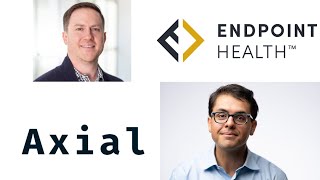
In this Axial podcast episode, host Joshua Elkington interviews Diego Rey, co‑founder and CSO of Endpoint Health and former co‑founder of GeneWeave Biosciences. The conversation traces Rey’s journey from an electrical engineering undergraduate at UC Santa Barbara, through a biomedical engineering PhD at Cornell, to the creation of GeneWeave’s phage‑based “SMARTicles” diagnostic platform. Rey explains the scientific rationale behind non‑replicative transduction particles, the challenges of building an infectious‑disease diagnostics company, and the strategic fit that led to Roche’s acquisition (valued at over $400 M). He describes the post‑acquisition integration, the role of a banking advisor, and cultural aspects of joining a large Swiss pharma organization. After Roche, Rey served as Y Combinator’s first life‑sciences visiting partner, an experience that broadened his perspective and inspired the founding of Endpoint Health. Endpoint’s “precision‑first” model is outlined: it aggregates electronic health record (EHR) data and transcriptomic (RNA‑seq) data, applies unsupervised clustering to stratify patients with acute respiratory distress syndrome (ARDS) and sepsis, and uses these phenotypes to guide both diagnostic development and therapeutic selection. Rey discusses the platform’s modality‑agnostic stance, the pipeline strategy of in‑licensing de‑risked clinical‑stage assets and later pursuing de‑novo drug discovery, and how this approach addresses longstanding business‑model challenges in critical‑care therapeutics (e.g., lack of approved drugs, reimbursement complexities). The interview concludes with Rey’s excitement about building Endpoint’s clinical‑development and commercial teams and his vision of creating a “next‑Roche” that unites diagnostics, data, and therapeutics under one roof.
Chapters
Welcome to the Axial podcast. Axial is an early-stage investment firm based in San Francisco. We partner with great founders and inventors investing in early-stage life science companies, often when they are no more than an idea. Axial is fanatical about helping the rare inventor who is compelled to build their own enduring business. Hey Diego, how are you?
Hey, good Josh, how are you? Doing pretty well.
Okay. Housekeeping first, so I can protect you. If you can click on my profile and make me a moderator.
All right. There you go.
Cool. Okay. Now we can just have a great fun conversation. How's your day been?
Good. Everything's going well. How about you?
Doing pretty busy, to be honest. It's kind of end of the year race to like get paperwork done and deals and stuff. But, uh, Yeah, really excited to talk. I mean, it's been a long time since you caught up and to be honest, Diego, you're like one of the most generous people I've met in this whole business. So in terms of being helpful and giving advice, so just really excited to just talk about your career and what you do at Endpoint. But let me set the stage and then we can kind of get into it. So everyone, really excited to have Diego Rey here, the co-founder and CSO of Endpoint Health, as well as GeneWeave and a bunch of other stuff. And we're going to talk about his career from being an engineer to building really great companies, to being part of and helping other startups. And then also then spend a lot of time talking about the business of drug development, especially for infectious disease, because Endpoint has such a unique business model. And that's what makes me really excited to see you execute. But Diego, do you want to do a quick introduction and we can go from there?
Sure, sounds good. Yeah, and thanks, Josh. Uh, and likewise, uh, feel the same way about you, about your generosity to the community, always out there being helpful. So thanks for that comment. Uh, and by the way, congrats on the recent recognition, uh, with Forbes. It's pretty awesome.
I really appreciate— I mean, I got a lot of help too, just, you know that. I got a lot of my friends helped me. I got Alec Nielsen, Jason Kelly, a few other folks. And Nibia really helped me. So shout out to Dev for the help.
Yeah, no, that's awesome. Good. Yeah, so quick intro. So Diego Rey, I'm the currently Chief Scientific Officer at Endpoint Health heading up research activities at Endpoint that deal with data science, bioinformatics, in vitro diagnostics, and early therapeutic pipeline work. And prior to Endpoint, co-founded a company called GeneWeave Biosciences in the infectious disease diagnostic space. I think Josh maybe will get into that in a little bit. And the company was acquired by Roche in 2015. I joined Roche as head of research for the GeneWeave division. We were part of Roche Molecular Systems. And then I stuck around for 2 and a half years at Roche. Phenomenal experience there, great colleagues. And, but then stepped off and joined Y Combinator as their first life sciences visiting partner. And then did that for about a year. The visiting partner role is come and be a partner until you figure out your next thing. And so we figured out the next thing, which was Endpoint Health. And there we actually got the GeneWeave band back together, so to speak, same co-founders from GeneWeave to start Endpoint. Awesome.
Well, I think usually it's really useful always to kind of understand people's like kind of origin stories and how they got interested in biology. And love to learn more about how you got into biology, especially from an engineering background. I think you went to Santa Barbara for college, studied electrical engineering, and then went to Cornell for biomedical engineering. How did you just get into biology? What was kind of the initial—
Yeah, yeah, so yeah, that's right. I studied electrical engineering at UC Santa Barbara, and then while I was there, During the summers, my last 2 years, I applied for what was then called the Research Experience for Undergrads program, REU program, might still be around. And, and these, this was the nanotech days. This is, you know, when a lot of grants were coming in for academic work when it had to do with combining microfabrication from borrowed from the semiconductor industry, and doing work that would interface with biology, I guess simply put, because you could build small things at that scale. And, and so I ended up at Cornell for, while I was at Santa Barbara, but during the summer, for this REU program at the Cornell Nanofab facility. And there they had this thing called the Nanobiotechnology Center. Which is exactly what I mentioned earlier, kind of interface between microfabrication and life sciences. And so I got a bit of exposure there to that. I did that for 2 summers, and then that's how I ended up at Cornell. When I applied to grad school, I ended up applying to the biomedical engineering program and ended up at Cornell given that exposure that I had there. And what drove me towards biology, one was just kind of the curiosity of it, the interdisciplinary nature that's required in that space. At Cornell, so my major was biomedical engineering. I had a couple of minors in applied engineering physics and biophysics. And so a big part of it was just that, just that the fact that you got to touch a lot of different areas when tackling problems in the biology space. The other piece was kind of a bit of an odd rationale, honestly, was as an engineer, as an electrical engineer, I felt that I would maybe end up working on a subcomponent of a subcomponent, for example, in some sort of a system. That may be far removed from whatever ended up interfacing with an end user. And, you know, that's not, of course, always true, but it was kind of the thought process that was going through my mind. And given that I had an interest in life sciences, the opposite scenario for me was, well, if I studied medicine, there'd be nothing between me and the end user because it would be my patient, essentially. And so it kind of— a good in-between felt like biomedical engineering, where I would work on problems in biology that had to do with medicine, but I would still get to build things. So that's what drove me towards that major.
It's really interesting. Yeah, I think just sometimes patients, you know, there's blood. I have friends who are like, who do MD PhDs and they're like, yeah, I like the PhD part better because the MD, they kind of like, you have to really interact with patients. They can get kind of, uh, kind of nasty sometimes. And so I have friends who don't like blood, so like, I can't be a doctor anymore. And so things like that, finding that right balance and just kind of, I think just finding what you can be the best at and what fits your personality. I think that kind of really shines through. And so you're at Cornell, you're doing your PhD in biomedical engineering. How did you meet your other two co-founders for GeneWeave and Endpoint with Leonardo and Jason?
Yeah, yeah. So, um, you know, so actually the almost the first day that I landed at Cornell, uh, I, I pitched my advisor, uh, an idea for what was a really crude version of what would later become GeneWeave. And it was motivated by kind of thinking of unmet need, uh, you know, that what, what popped into my mind was— and, and I landed in, by the way, My lab was a microbiology lab at Cornell. My thesis advisor was in microbiology. And so I was thinking bacteria, and I was thinking bacterial detection. And the biggest problem I could think of in terms of unmet need was tuberculosis. You know, the areas that are endemic are very resource limited. And if you end up defining a kind of product requirements to try to tackle that problem from a bacterial detection point of view, you end up kind of designing this idealized solution in order to really tackle that problem. And because of the needs in that environment. And so I had come up with some ideas for how we might be able to do this. And I was pitching these to my advisor and he essentially basically gave me the feedback of, you know, it's real cute that you're coming up with neat ideas, but I got this other project that's already funded that I need you to go and work on. So that was kind of step one, uh, was, uh, kind of that interaction. So I had this in the back of my mind. I ended up working on other work in the lab that had to do, again, nanotech days. So I was working on quantum dots, carbon nanotubes, gold nanoparticles, etc., attaching biomolecules to them, using them for diagnostic and therapeutic purposes. But in the back of my mind was this idea for this bacterial detection concept. And along the way, I met Leo, who was a labmate of mine. He was studying to get a PhD in bio— actually, sorry, in microbiology in the lab. And so, and I learned that he kind of had the same curiosity of, you know, another motivation for this idea was, what would it take to actually go from lab bench to a product in someone's hand? And what's the process of going through that? You know, once you've turned this into a commercial product, then it could be actually useful to somebody. And so I learned that Leo had the same fundamental motivation. So we started hanging out, and the two of us started going to the business school and just sitting in the back of classes and just kind of soaking it in. To try to get a better idea about what this process was like on the commercial side. And along that journey, we ended up interacting with a few business school professors, and we basically were telling them, hey, do you know any business school students who are kind of entrepreneurially minded that we can talk to that might be interested in the sorts of things that we're interested in? And so we were introduced to a few, MBA student. One of them was Jason, and we really kind of clicked from the beginning when we met Jason. There was some real chemistry between the three of us, and that's how we all got together initially. This kind of crude idea for bacterial detection ended up evolving into something closer to what we ended up getting off the ground for GeneWeave. And, but that's how we all initially met.
That's really awesome. We'll get into GeneWeave, I think, in terms of your technology and kind of the experience of building and selling it. One question I have, I did an internship at Beckman Coulter, so like I remember getting exposed to GeneWeave and hearing about it. And then when you guys got acquired, Beckman was really, you know, surprised, not surprised, but they were very, they felt left out. But who named it Smarticles? Was it you, or who invented smarticles?
Yeah, I was calling them internally non-replicative transduction particles because that's exactly what they were, you know. This— so that maybe for background for folks in, in the, on the call, uh, so the technology that GeneWeave developed was a transduction-based system. We basically engineered viruses, but in this case ones that would only infect bacteria, phages. And we engineered them to get rid of their native genetic material and replace it with reporter DNA instead. And so you ended up with basically this chassis of a viral particle carrying only reporter DNA. And so that's, you know, for that reason we call it non-replicative transduction particles. They would deliver non-viral DNA, so transduction, and they couldn't replicate because we got rid of their genome. And so NRT-P for the acronym, but SMARTicles, that came from actually our then CEO, Steve Tablak, his daughter. So his daughter came up with a name, mentioned it to Steve at one point, he brought it back into the office. And, you know, we had an interesting debate at the time 'cause it was, Some people thought it was silly. Some people thought it was a great name. And what really made it stuck was that a lot of the key opinion leaders that we were working with, they loved it. And so we're like, hey, they like it. You know, these are the closest thing to end users 'cause they were lab directors at clinical microbiology labs. We'll run with it. And so that's how SMARTicles ended up sticking.
That's hilarious. I mean, honestly, Gene, we've had a really, breakthrough technology where you generate fluorescence with a biological process, not a chemical one. And so the premise, you have more rapid detection of something like MRSA. And so it's very compelling. And so for GeneWeave, what was your experience just building a diagnostics company in infectious disease? Two really tough markets, then and kind of now. What was your experience getting something off the ground? Any types of lessons you've learned that then probably inform Endpoint. But what was kind of that experience from just going from zero for GeneWeave to then like a successful company? And then we can talk about the Roche acquisition.
Yeah, sure. So I guess one thing that really helped along the way is that the reason we were developing the technology for GeneWeave the way we did was motivated from the very beginning and kind of throughout with the idea that this approach would allow us to essentially skip sample prep. So that was kind of the core thing, was that, you know, we're looking at different ways of developing diagnostics, and one of the key bottlenecks in terms of cost, complexity, and so on, and then adoption, had to do with the sample preparation piece, especially when you're thinking of if or you're talking about nucleic acid detection, you gotta extract the material from the organism, maybe isolate the organism first from the specimen first, extract the genetic material from the organism, amplify it or other means of detecting it. And that sample prep piece, at least at the time, translated into a really complex system that ended up being expensive and complicated. And took time to develop and to use to deploy. And so the motivation that we had from the very beginning was, how do we get rid of sample prep? And that's how we landed at this phage-based approach, because it allowed us to get this reporter material into an organism directly in a crude sample and have it produce a detectable signal. In this case, it was luminescence. And in that way, it ended up ended up allowing us to make a test that was literally just a tube where you would add a sample and a reagent, and that was it. And so I think that the kind of sticking to that throughout really helped was one of the, I guess, lessons learned is that, you know, at the end of the day, designing into kind of everything we did the end result how this thing would get translated into practice and sticking to that concept really helped us along the way. It definitely was, you know, diagnostics are tough. It's a tough area in terms of revenue generation, adoption, et cetera. Infectious disease, tough as well. You know, things are very different nowadays with COVID of course, but back then, you know, when we first got started and, you know, even to this day, diagnostics are still pretty tough. And what happened along the way was that, and this is kind of another maybe lesson learned, which was, you know, there was somewhat right place, right time serendipity in that by the time the Roche acquisition timing came about, it was, you know, things had somewhat changed on the ground from this is an area that no one really cared about to drug-resistant organisms are the biggest threat to modern medicine, quote, the World Health Organization. And so that started getting folks to pay a lot more attention and could chat about some more details of the Roche acquisition in a moment. But I guess the lesson learned there was that We were sticking to our guns in terms of what we thought was right, the right product we were building, but at the same time, certain things were just serendipitous. Interesting.
That's a whole nother conversation. It could last probably a few hours in terms of diagnostics, but maybe then we can shift gears. GeneWeave's really hyper-focused on solving a specific problem and then build on the technology to do it. How was that experience with Roche, you know, in terms of, you know, anything you want to talk about in terms of how the deal came up, you know, acquisition talks, and then even post-acquisition of kind of integrating GeneWeave into just a very large organization?
Yeah, yeah. So the acquisition, so, you know, we were talking to lots of parties at the time. Roche was one of them. And each party had a, each company had a different motivation, I would say. And in Roche's case, there was, and maybe this is common for folks who were developing nucleic acid-based diagnostics, was that when it came to clinical microbiology and bacterial detection, there was a nucleic acid approach, or at least a nucleic acid amplification-based approach, would only get you so far. In that it would essentially tell you, you know, for example, it definitely could allow you to identify an organism, but when it came to whether the organism was going to be susceptible to an antibiotic or not, you know, so in other words, when it came to guiding therapy, it fell short. And the reason is that, you know, you can detect a drug-resistant gene, in an organism, and then you can deduce that if the organism is expressing this thing, then it may be not susceptible to the antibiotic. And so in any case, you know, if you jump to that conclusion, what it's telling a clinician is what drug not to use, right? And what they really want to know is what drug do I use? What antibiotic is the organism actually susceptible to? And so the way to do that traditionally is with, you know, classic microbiological techniques that require you to isolate an organism and grow it over several days often. And so what GeneWeave's technology allowed you to do is it was because it was a live cell assay that did not require growth. It allowed us to get that same information that you would from growing an organism, but directly from a specimen in a matter of hours. And it would tell you what the organism was actually responding to or was susceptible to. And so from Roche's point of view, this was a complementary technology to what their bread and butter is, which is PCR. Roche acquired the rights for in vitro diagnostics use for PCR from Cetus. And that became really Roche Diagnostics by and large, or Roche Molecular Diagnostics specifically. And so the GeneWeave technology was really complementary to that and really would allow Roche to round out the portfolio in clinical microbiology and have a means of getting information that you couldn't get with a nucleic acid amplification-based approach. So that's kind of why they were looking in the first place. So I guess fast forward, or going through the deal process, and then integrating within the Roche organization. And maybe I'll touch on a few different things and happy to dive into some of them if it's of interest. But so one of the things we did was we hired a bank. We worked with Barclays and to really organize the potential acquisition process in talking like companies, with companies like Roche. And that really helped. You know, the, you know, as an entrepreneur, you do a deal like this maybe once, maybe a few times, and these banks are doing them all day, every day, and they have the direct relationships and just open communication channels with the key execs at the companies. And so, you know, it was really, really helpful to engage with a bank to manage the acquisition process. So that was one thing. And then, yeah, fast forward, the acquisition happens. It was a great fit again because of this complementary nature. And, you know, going from 50, we were 50 people at GeneWeave at the time, and going from 50 to, you know, at the time it was, I think it was 96,000 people in the Roche organization. We were founded in, GeneWeave was founded in 2010. Roche was founded in 1896. So big, big difference between the two companies, obviously. But what was interesting was that Roche Diagnostics, I think because it came essentially, there's that Cetus connection, and Cetus is really kind of a legacy biotech company from Silicon Valley, really the contemporary with Genentech and Biogen and so on. And so there was a little bit of that culture really there. And so it didn't feel like we were joining, you know, a Swiss pharma company when we joined, when we joined Roche. And in fact, actually, there's folks from the Cetus days still working on the bench at Roche Molecular in Pleasanton, which is pretty cool. So yeah, the other piece I guess I could comment on is that because of that complementary nature of the technology, We were integrated into the Roche organization to varying degrees, at least in the early days. Certain aspects of the company, like the quality system, et cetera, more integrated, and others like the actual research, a little bit less integrated because, you know, they were bringing in something totally different than what they were used to doing. So we actually, Gene, we've had two buildings in Los Gatos. We kept those buildings for some time. And, uh, you know, we were reporting into Pleasanton, but, um, but GeneWee was physically still located in Los Gatos for the first few years.
That's really exciting and interesting. I did not know about the Cetus connection and how it was just like the culture persisted for so long. That's really awesome. Um, I would love to get a Cetus shirt because Cetus had a cool logo, it was like a big whale, right? If you ever find me a Cetus shirt, I'll buy it you. I mean, whatever price you want. I've been trying to find one of these Cetus shirts. I'm trying to get the whole collection of the old-school biotech companies in the Bay. But, uh, yeah, maybe we can then kind of think, talk about that transition from GeneWeave and selling GeneWeave to Roche for, I think, over $400 million. So congrats on that. And then making that transition towards I think you had a period in time where, you know, you said you were, I think, a visiting partner, you were the bio partner at Y Combinator, and then that didn't set up Endpoint Health. Kind of what was that experience kind of selling GeneWeave, working at Roche, kind of doing the integration, and then making a transition period as an entrepreneur where you just sold one company. How did that set up Endpoint Health? And then what kind of things did you find helpful in that interim period that helped you get new ideas and meet new people?
Yeah, so I guess in between, you touched on it, did the stint at YC, which was amazing, amazing experience. Not something I was planning on doing. I thought I was gonna take a little bit of a break after Roche, but then got to meet a few of the YC folks, through Jose Oneta from Shaski, who introduced me to some of the folks at Y Combinator. I met Jose through, through Dylan Morris, folks who know him, you know, the guy's good at connecting folks. And so chatted with Jose and then chatted with some of the YC folks. And I came in as the first life sciences visiting partner at YC. They already had other part-time partners and other, what they called experts with life sciences experience already working there. And by the time I joined, there was already 140 life sciences companies at YC. I didn't know what to expect going in whatsoever. I actually didn't know much about YC other than, you know, what I knew, you know, by the periphery. And so my impression prior to really seeing what was going on at YC was that it was all tech, right? And really no life sciences. And when I got there, that was totally wrong. They were already well underway with several life sciences companies. So great critical mass of founders already building great companies in the life sciences space and tools, diagnostics, therapeutics, devices, et cetera. Actually, and then the other misconception that I had was that even if they had life sciences companies, it was probably all healthcare IT. And it turned out that actually a minority of the healthcare companies were IT-based. Most of them were hard tech in one form or the other. And so that was a really great experience. The partnership at YC also was phenomenal. Diverse in every sense of the word, from a background, experience, et cetera. Great culture, I guess, is the best way to put it. Like, YC was the type of company that I'd want to join just because of its culture in terms of the partnership. So that was all really great. And there, I got to kind of, you know, take the GeneWeave lenses off, you know, 'cause after working on one thing, you know, completely focused and intently for so long, I really kind of needed that, you know, broadening horizon and kind of seeing a lot more things. I got to learn a lot about obviously things outside of diagnostics, which was the main focus at GeneWeave. And so that was a really, really great time. At that time also, Jason had since left Roche. He left about a year before I did actually. Yeah, before I did. And so he, so actually he was busy. He and his wife had their first daughter. And so I joked that we left Jason in the room alone too long and he started cooking up some ideas, which was, the genesis of what we ended up doing at Endpoint that we can talk about more in a moment. And then Leo left actually after I did, and he joined IndieBio. So had a similar experience to what I did at YC, but at IndieBio in a similar sort of role there. And so I guess going into Endpoint, So one of the things we saw while at Roche was that, you know, while we were at Roche, they ended up partnering with and then acquiring Foundation Medicine, Flatiron Health. They have the diagnostics piece. Roche was creating a new department focused on data. And of course, there's Genentech and Roche Pharma. And so we kind of saw all of these elements of data diagnostics and therapeutics. And, but since we had stepped off, one of the things we were asking ourselves was, you know, what if you started Roche today? What would it look like? And, you know, would you build it differently? Would it end up looking differently? And of course the answer was yes. You know, in 1896 there wasn't machine learning and low-cost sequencing and et cetera, et cetera, and all the enabling technologies. And so, you know, the, the idea was that if you had, you know, if you start from a point of view of all these new enabling technologies and you want to build a company like Roche that has all, you know, diagnostics data and therapeutics all under one roof, how would you build this? So that was the very kind of beginnings of how we started thinking about endpoint health. And we really landed on, unmet clinical needs that really required that integrated solution that, you know, it wasn't, it didn't totally make sense to start with a molecule and then figure out, you know, which patients it might help. Instead, we were thinking, well, why don't we start with patient data, understand the clinical needs initially, and then back into, you know, we stay agnostic to the molecule or the modality, then back into what is the right therapeutic solution for these patients. And one of the important things that came out of this was that sometimes it wasn't a pharmaceutical solution. Sometimes it actually was avoiding a pharmaceutical solution, withholding a certain therapy from a patient if they're not going to respond or they're going to have an adverse response. And in other cases, It was ruling in an intervention, but again, not pharmaceutical in nature. You know, it could be optimizing supportive care like ventilator settings for a patient with a respiratory issue. But of course, it also did include definitely pharmaceutical interventions. And then the idea there was, well, who really needs the therapy? Who's actually going to respond? Who's not going to respond? Who might have an adverse response? And how do we use data and diagnostics to develop the therapies from the very beginning with the data and the diagnostics integrated into the plan, into the development plan. And then at the end of the day, have a way of guiding these interventions in a clinical setting to get the therapy to the right patients and avoid, you know, interventions and therapies that a patient might not need or might be harmed by.
It's really exciting. I mean, that's a really compelling pitch, isn't it? Just to build the next Roche. That's a great— I mean, what a pitch. And so within that, where you're coming from is using both drugs and diagnostics and merging them together from day one. Can you talk more about how Endpoint thinks about its platform? You have this concept of precision-first therapeutics and kind of a concept of every patient you interact with, you want to make sure they're a high responder. And so how does endpoint, what kind of technology do you need to build out? And you've also said you need to start, maybe you have to start differently. You have to start at the biomarkers, you have to start at the patient data, but what are the prerequisites to actually design precision-first therapeutics?
Yeah, I can provide a couple of examples. The, uh, you know, again, kind of with this idea of modality agnostic and then backing into the therapy, we also started off with, you know, omics agnostic, I guess you could say, uh, data agnostic, and then figuring out, well, what, what's the right data that we need in for the, for the specific, uh, needs that we're trying to address. And so, uh, two specific examples of where we landed, you know, at the end of the day, you do end up with a very specific technological approach that is best suited for the application. And so I can describe a sepsis example and an acute respiratory distress syndrome example and touch on some of the chronic inflammatory disease work that we're looking into as well. So on the sepsis side, actually, maybe I'll start off with the acute respiratory distress syndrome side. So the ARDS side, and this is, by the way, all pre-pandemic, right, that we went down this avenue. We started in critical care for a few different reasons. One was that that's where we came from. These are the sorts of patients we were already working with at GeneWeave. We understood those patients, we understood the needs, we understood the needs of the providers, how you would implement technology and guide therapy in that sort of a setting. We understood how those markets worked as well, how the payment worked and so on. So, you know, we, we, we had a, we had a good background in that space to, to make it obvious, an obvious space for us to look into. The other piece was that it was a glaring, glaring unmet clinical need that there, you know, for example, in sepsis and ARDS, there's essentially no therapies approved, right? There's, there's supportive care, there's antibiotics, fluids, antibiotics to deal with the infection that causes sepsis, which, you know, you really, which should categorize as a dysregulated immune response due to the infection. So the antibiotics deal with the, with the actual insult, the bacterial infection. And then the supportive, the interventions available are all supportive. They're all fluids, pressors, etc., keeping blood pressure up so you get oxygen to your vital organs, but not anything to deal with the host response. That are usually, you know, need to be immune modulatory agents or dealing with coagulation, for example. And so huge unmet need given that, that, you know, very high mortality rates, no therapies approved as a consequence, really not much of a therapeutics market in the space. So just a different topic we can chat about. And so that was another reason why focus in critical care. So in acute respiratory distress syndrome, what we found is working with only electronic health record data, we were able to use that data and an unsupervised clustering approach with that data to look for patterns in these clinical variables that would allow us to cluster patients into different groups that seem to behave differently based on that underlying data. And this, The concept of unsupervised clustering, the idea there really is ignoring any clinical features, outcomes, treatment information, biological features, and just looking at the data in and of itself to essentially try to uncover fundamental biology or try to tease apart fundamental clinical phenotypes if they're there. And not bias the technique to making a purpose-built test for a specific intervention, right? It's first look to see are there different patients fundamentally and then see, well, what, what are their differences? And do they respond differently to different therapies? And so we've done that with only electronic health record data for ARDS can identify a, what you could call a hyper in a hypo-inflamed group. If you measure their plasma pro-inflammatory cytokines, which are not part of the modeling, we just look at those after the fact, after we cluster these patients using only the clinical features, you see that one has upregulation of these pro-inflammatory cytokines and the other one downregulation. One is more severe with a higher mortality rate than the other. And then we also see that they have, they respond differently to different therapies, these two clusters. And the therapies, or I guess you should say more broadly, the interventions that we see differences in are things like ventilator settings for mechanically ventilated patients, feeding strategies when you're applying nutrition to these patients, and things like this. We actually have a paper just accepted that's gonna be published in a few days, in a few weeks in B&J Open. We did a preprint of that already. And we have 4 abstracts on this work being presented at the Society for Critical Care Medicine Conference in early February in Puerto Rico, early next year. So if anybody wants to take a look at those, we'll be presenting those there. In sepsis, we've actually worked instead with, or maybe not only with, electronic health record data, but also gene expression data. And here, the reason for this is that we found that there really is a need for therapeutic intervention that is pharmaceutical in nature, so actually using a molecule to modulate, in this case, host response in these patients, and that the electronic health record data didn't seem to be enough to really give us the insights we needed about what molecules might help these patients. And instead we used gene expression data. So there we're working with full transcriptomic datasets that we generate through RNA-seq from peripheral whole blood from patients. We then use same fundamental approach, unsupervised clustering to uncover hopefully underlying fundamental biology in these patients. And we can see in those patients that they're, you know, within a sepsis cohort, that there is definitely different clusters of patients that each have differences, very stark differences in biological characteristics in terms of their innate versus adaptive immune response. Whether they're immune active versus immunosuppressed, and whether they're exhibiting a coagulation disorder or not. And so once we saw that, it was kind of obvious that, well, that, you know, why hasn't anything worked in the past? If, you know, as an example, if you give a patient that— if you give a sepsis group, a group of sepsis patients an anticoagulant, and, you know, it really is only a subset of these patients that are exhibiting the coagulation disorder,, then those patients may in fact benefit from the anticoagulant, but you might cause bleeding in the other ones that don't need it. Uh, and so it's a, it's a good example for, well, why hasn't anticoagulation approaches worked in the past in these patients? And so that's some of the initial, um, insights that we started seeing. So, uh, maybe I'll pause there, answer any questions, but, uh, I could talk about, well, how do we use that to actually develop the therapies. Exactly.
I think what you're describing is a pretty revolutionary approach, especially for infectious disease, but then immunological disease in general is just like measuring our host response instead of just trying to diagnose the infection. And so maybe GeneWeave was trying to find the measure of the exact bacteria causing the infection, whereas maybe a host-based response allows you to infer whether you have an infection or not. One question on that point though is like, you describe this whole workflow to take an EHR data and maybe gene expression data for sepsis patients. Why weren't other companies doing this? Or why is it kind of easier to do this now? Is it just because there's cheaper sequencing or is there some sort of other unique market timing insight you have here for Endpoint that allowed you to kind of be, you know, kind of a pioneer for this type of—
Yeah, so I think, so a couple of things. One important piece is that, so we definitely are complementary to things that, for example, detect sepsis or determine sepsis severity or develop prognostics. We don't do that sort of work. We come in essentially after that. Where, you know, you got a sepsis patient by one way or another, you've recognized that. Now what do I do? What therapy do I give this patient to address the underlying issue caused by sepsis, right? So just wanted to highlight that difference in kind of what we do. I think it ties to your question, which is that I guess maybe it's a combination of things. The way I see it is a combination of things. One is that, yeah, there's definitely, enabling things that have happened more recently that weren't available previously that kind of make it, you know, why now? One of them is that there's a lot of data out there that's available to get started. So a lot of folks that do work in this space, you start with publicly available gene expression data. It's a great resource. It's data that's maybe not the best data in terms of quality, But it's a great starting point for proving a concept, gaining some insights, and coming up with hypotheses that then you can validate in prospective studies. And that's a consequence of NIH funding initially microchip or gene expression chip-based work. And anybody who got NIH funding needed to eventually make this data publicly available. So you go to The Gene Expression Omnibus or ArrayExpress for some of the European data. And there's a rich body of data out there that anybody can access to start doing some work in this space. So that's something that has become more available. The other piece is making sense of that data, of course. So machine learning techniques and so on that just continuously advance and become more and more usable, I guess I would say, or broadly usable for folks that aren't just complete experts in the space. You know, you always need, you do need to be extremely careful with the, like any other tool, in that you use the tool appropriately and don't trick yourself in what you think you're seeing with something like a machine learning technique, of course. But it, but it is much more accessible, I would say. To research groups. That's another thing that's newer. Another one is even on the, just actually building a diagnostic, until somewhat more recently, the patent landscape in the in vitro diagnostic space for developing a PCR-based test were really limiting, you know, in terms of who can do what with what technology. That's become less of an issue as patents started expiring and so on. You know, in our case, you know, GeneWeave, we were building our own diagnostic from scratch because it was this new technology, the transduction particles, and so we couldn't take that off the shelf, obviously. But at Endpoint, our in vitro diagnostics our RT-qPCR-based, and that is an off-the-shelf technology, so to speak. We don't develop it ourselves. We've partnered with a company that actually has a system already FDA authorized, and we develop an assay onto their system. We didn't need to reinvent that wheel. So that's another piece that's been very enabling that wasn't so much the case until somewhat recently. So there are definitely all those enabling things that are more accessible now than they were previously. The other piece I think I would say is that, you know, if you're— we are building a therapeutics company, right? So we're developing the therapies, we're running the interventional trials, we're taking the therapies through FDA approval, and we're also commercializing the therapies. And so in, at least in the critical care space, this is not a mature therapeutics market, given that it's, there's been so much difficulty in getting, having clinical success in this space. And so it's not an area that everyone's running towards, I would say. And so it's another piece that, you know, given our maybe unique background of where we came from with GeneWeave, having a diagnostics background as well, and understanding these patients and the markets around it. It's an area that we just went into, you know, headfirst, willingly, as to building a commercial therapeutics company in this space. And so there's, I guess as a consequence, there's just not much competition, at least not now, in that space. Hopefully if we show some signs of success, that'll change and that'll be good for patients. But I think that's another reason why, you know, why haven't folks been doing this? You know, why hasn't this been done before?
Yeah, really interesting. I think it's always in biotech, business model innovation takes 20 years or something for a lot of the foundational patents to expire and then it becomes open source in some ways. So it's like, you know, every 20 years there's this proliferation of business models because some key IP is available. Maybe we can shift gears and talk more around how Endpoint thinks about its pipeline, because you are a drug company. You're using data and diagnostics to make medicines for patients. And so how does Endpoint think about designing a pipeline, not only for critical illnesses, but then chronic illnesses as well?
Yeah, so this is an area that I think kind of the double-edged sword that I was alluding to earlier, an area with limited past success, but that doesn't mean that there folks haven't been trying, right? And so this creates a bit of an opportunity in this space in that almost every therapeutic approach has been attempted in a lot of these indications in the critical care space. And so there's a rich body of information and specific data available even for very specific assets. And so the model that we're starting with in regards to pipeline is that we're, rather than using the insights we generate from gene expression data and so on to develop new therapies de novo, we're using that information to generate evidence of where might have some of these previously attempted therapeutic approaches actually have worked. So in other words, the fundamental hypothesis for the therapeutic approach was correct. It's just that you didn't get the therapy to the right patient. And so if we can, if you can connect those dots, we can identify specific assets that we then may be able to in-license that have since been taken somewhere else. Usually they ended up being developed for another indication. And so that's been our model initially. And so we're working towards in-licensing therapies that we would then develop for the indications that we're interested in, in partnership with companies that are developing the therapies in other indications. What this will allow us to do is essentially go directly to clinical stage assets. The assets that we've identified to do this are all clinical stage assets. And so that's where we're, we'll be starting. It's a, it's as a consequence, we would have gone from essentially zero to clinical stage company. It's going to be in less than 3 years from, from our, from when we started the company. Which is another interesting conversation, probably won't have enough time to talk about here, about rapidly building a clinical development organization from scratch. But the, that's, that's how our first assets in our pipeline are going to be derived in that way. Moving forward, we can in fact still use the insights that we generate from the fundamental platform to actually— to, in fact, actually gain insights into what might be novel targets. So as you can imagine, if we were able to stratify patients using gene expression data into different biologically defined groups, we can look at the differences between patients who are responding to therapies and the ones that are not. Gain insights into what pathways are up versus downregulated in one patient versus another. And what this essentially is is a list of putative targets of, you know, if we have an understanding of what the clinical characteristics are between those two different groups, say one is actually doing better, the other one's has a higher severity mortality rate, and we see what is lacking in that group in terms of gene expression, that gives us some insights into, well, what might be some ways to therapeutically intervene that might improve the outcomes in those patients. And so we can use that information then to engage in de novo drug development. As I mentioned earlier, those are putative targets. We can then start with target validation studies and go from there. And so looking ahead, We are identifying areas for these patients where existing therapies may be suitable, and then other areas where there aren't existing therapies that really are best suited based on what we're seeing in this data. And there we would seek to actually develop new therapies potentially, and likely in partnership with companies that do earlier clinical development work. So just some preliminary thoughts about how the pipeline will be built out. We haven't announced anything yet along these lines, so a bit of a preview. I think in coming new year and throughout 2022, we'll start making some specific announcements about this topic. Awesome.
Yeah, I think, you know, be able to in-license assets especially as a startup, allows you to become a clinical stage company very quickly. Recursion did this, BioAge did this. So as long as you have a platform, I think in-licensing works, but in-licensing in isolation might not work. It might be a little too risky. And so when you think about making that transition from in-licensing to developing your own therapeutics or internally generate therapeutics, what's been the core metrics of the platform that in terms of like, is it data in terms of like the number of patients you can sequence or number of EHRs you can aggregate? Is it kind of the quality of that data in terms of like how annotated each patient is? But what's been kind of the, from the platform side, what's been kind of the jet fuel, the key metric that then is, leading to better candidates, uh, for all kind of the variety of diseases you're pursuing?
Yeah, so I think at the end of the day is actually a little bit of everything. You do need enough patients to have sufficient power, uh, to have a degree of confidence that, that is really useful. Um, the quality of the data, absolutely critical, because if we don't have good response labels, then we don't know whether— for example, we don't know whether a patient is what happened to that patient when they got the intervention or not. If we're doing a retrospective analysis of a past trial, for example, that where patients are randomized to one therapy versus placebo, we do need that full data set, clinical data set, including outcomes. And so the quality of that data's gotta be, it's gotta be there. But I think maybe to answer your question, the, a key thing of how do we,, rank order specific assets to go after. One of the ways we do that is we look to see, is there a past randomized control trial where the asset has been tested? And there's, in addition to that, there's also direct evidence that if the trial was not successful, and typically in this, in this space, all the trials are equivocal, that there is direct evidence that a subgroup of patients within that trial population actually did have a benefit from the therapy. And do we understand, you know, why that is? You know, is there a specific clinical phenotype? And what we found in some cases is that there is that evidence, but it's only suitable for a retrospective analysis because the clinical features necessary to identify those patients are only available after you would have enrolled that patient. And so then the next question is, can, can we, with our gene expression-based approach, prospectively identify that same population? And so if we— so that's been the— maybe that's a good way of describing a bit of a metric of, or maybe a bit of a methodology for, you know, what assets to go after first. It's the ones that we think are most mostly de-risked based on that level of evidence.
And that probably connects to just drug development in general for infectious disease. How do you think about solving some of the challenges past companies have faced? I think antibiotics, there's a big gap because of the pricing and the business model of antibiotics. For sepsis and ARDS, maybe somewhat similar, but a little different. But for endpoint, as you develop these medicines and bring them to the clinic, how do you think about reinventing or trying to think about solving some past problems of just the business of drug development in infectious disease?
Yeah, I think this space, unlike antibiotics, one of the biggest challenges with antibiotics is that you're usually not developing a first-line therapy. There's already an antibiotic that's standard of care or in a guideline. And so that poses a challenge when you're developing a new antibiotic because you may run into a situation where you can't have a true placebo group in a new trial for a new antibiotic since you're comparing yourself to existing therapies. And in the sorts of indications that we're looking at and the sorts of therapies that we're looking at, there are no approved therapies. So actually there is the opportunity and is a bit of a first mover advantage to be the first approved therapies in the space. You then become the first line therapy and then folks coming behind you actually run into the same problem that you know, anyone now runs into with antibiotics in trying to develop a new therapy for this space. So I guess that's actually just to contrast that, um, that difference. Uh, the— I think that there is, there is a very broader topic we won't be able to get into too much detail here, and the way that things are paid for in hospitals is different than the ways that things are paid for outside hospitals. And, and so you do need to have a business model that works within that framework and that budget that a hospital has. So there's some challenges there. Although for, for that, I would maybe invite some of my colleagues, such as Kirsten Dietrich, who we recently recruited in from previously Takeda, that's launched blockbuster therapies in the space and has working out that strategy for us. She might be a good guest for you.
Cool. Yeah, I'll send you an email on that. I think, yeah, I totally agree. I think for antibiotics and just in general, showing non-inferiority is really tough. So I think if you can kind of just be first in line therapy for infectious disease, that's a great strategy. Maybe to kind of tie it all together, you're building endpoint and kind of over the next year or so, I think you've already kind of maybe touched upon this, kind of what are you most looking forward to?
Yeah, so, you know, it's what I'm most looking forward to is that this is very different than what we did at GeneWeave. You know, we're building a commercial therapeutics company from scratch. That has been done too many times in the past, and so it's, it's an amazing learning opportunity. You know, we're, for myself at least, It's the same strategy we took at GeneWeave, which was when we built GeneWeave, we know we had never built a diagnostics company in the past. And so the trick was actually recruiting in the right folks who actually did know what they were doing and or could know in a much faster way than us learning on the job. And so I'm really just looking forward to building the company. I mean, we're about to embark in building out the clinical development team. We already got started with a commercial piece, as I mentioned, and it's just gonna be amazing to see how, how this evolves. Um, the, um, I think that's, that's really the part I'm most excited about.
That's really awesome. I think just Endpoint is just a full manifestation of Genevieve's vision and just taken all the way to the, all the way to the goal line or all the way to a touchdown, you know, not only doing diagnostics aggregating patient data, but then making the treatments to actually help these patients. And then I think along the way pioneer a whole new business model in infectious disease, to be honest. And so, and I think if you can have more business model innovation there, I think you've alluded to this too. You can have more competition hopefully, and more people trying to do this. And then at the end of the day, more patients help get, you know, patients get help because of that.
Yeah.
But, okay, really cool, Diego. I'll send you an email on the, on the other guests, But thanks for taking the time to talk, and I know you're really busy, so just keep doing great work and we'll talk soon.
Thanks, Josh.
Really great to be here.
Awesome, Diego.
Have a great day.
We'll talk soon. All right. Talk to you later. Bye. Bye.
More from Joshua







Scientist Stories: Hans Waterham, The value of phenotypic assays in peroxisomal disorders




Scientist Stories: Joel Zlotogora, Genetic carrier screening programs for reproductive purposes