Scientist Stories: Alan Saghatelian, Chemical Biology & The Role of Peptides/Metabolites in Disease
In this Lipid Maps webinar, Professor Alan Saghatelian (Salk Institute) presented a comprehensive overview of his laboratory’s chemical‑biological approaches to discover and characterize bioactive lipids and their metabolic regulation. He began with a historical perspective on lipidomics, describing how untargeted LC‑MS combined with genetic knockouts enabled the identification of novel substrates for lipid‑modifying enzymes. This strategy led to the discovery of fatty‑acid‑esters of hydroxy‑fatty acids (FAFAs), a large family of endogenous lipids whose circulating levels correlate strongly with insulin sensitivity in both mice and humans. Saghatelian detailed the functional validation of FAFAs, showing that synthetic 9‑PASA improves glucose tolerance in mice and that FAFAs exert anti‑inflammatory effects via GPR‑40 signaling. He then described the enzymology underlying FAFAs: activity‑based protein profiling (ABPP) and CRISPR‑generated knockouts identified two serine hydrolases, AIG1 and ADTRP, as primary FAFAs hydrolases, with tissue‑specific expression and isoform‑specific effects on 9‑isomer FAFAs. Quantitative analyses revealed that FAFAs are present at nanomolar concentrations in plasma and are ~100‑fold less abundant than conventional fatty acids or triglycerides; most FAFAs are stored in triglyceride pools, a previously unappreciated depot. Building on this platform, Saghatelian introduced a new, unpublished project on age‑related brain lipids. Using untargeted LC‑MS, XCMS, LipidSearch, and Skyline, the lab performed PCA and co‑expression network analysis across multiple mouse ages, uncovering modules of lipids that increase or decrease with age. A novel class of sulfonated glucosyl‑diacylglycerols (sGDGs) was identified, showing brain‑specific, age‑dependent accumulation and up‑regulation by caloric restriction, and displaying potent anti‑inflammatory activity in macrophage and microglial assays. Throughout the talk, Saghatelian highlighted methodological advances (improved MS sensitivity, synthetic standards, targeted assays) and collaborative efforts across chemistry, biology, and bioinformatics. The Q&A addressed detection of FAFAs in circulation, enantiomeric composition, phospholipid and phosphorylated variants, transport mechanisms, sex differences, and the role of polyunsaturated FAFAs, underscoring ongoing gaps and future directions.
Chapters
Okay, I guess we can, we can kind of get started with the introduction anyway. So, um, welcome everybody to our Lipid Maps webinar today. I'm delighted to present Professor Alan Sagetelian from the Salk Institute at San Diego. And before I start, my name is Valerie O'Donnell, I'm from Cardiff University in the UK. We're going to record the webinar to be uploaded onto our website and YouTube channel. It'll be around 45 minutes with about 10 minutes for questions. And if you have a question, what I'd encourage you to do is post it in the chat or in the Q&A, it doesn't really matter, during the talk, because I'll take the questions in the order they're posted. And it just means at the end I can give you permission to unmute yourself and you can ask your question in person, you know, you can speak to Alan. So please go ahead and post questions as you think of them. So I'd like to introduce Alan. So I'm delighted to introduce him today. Alan attended UCLA from '93 to '97, where he earned a BS degree in chemistry. And then he obtained his PhD also in chemistry at Scripps in 2002. He then stayed at Scripps working as a postdoc fellow with Ben Cravatt, where he developed lipidomics methods to profile novel molecules in cells and tissues. In 2006, Alan began his independent faculty career at the Department of Chemistry and Chemical Biology at Harvard. His research program there identified novel human peptides and small proteins encoded by small open reading frames called microproteins, or SMORFs. It's a good name. And the discovery— he also focused on the discovery of structurally novel bioactive lipids, which I think we're going to hear— I'm excited to hear more about today. And at that time, working with Barbara Kahn in 2014, Alan published a seminal paper in Cell which described a group of new bioactive lipids as in fatty acid esters of hydroxy fatty acids, or FAFAs. Abbreviated to, which are from the esteride family. These were reported, and at that time, I think there was around 16 reported in that paper. But since then, the field has shown that there are many more. Theoretically, every kind of possible combination of fatty acids with a hydroxy fatty acid attached is conceivable. So there's many forms of these in existence. These appear to be synthesized in vivo. They're regulated by fasting and high-fat feeding. And in the original work, Alan and his colleagues showed that their levels correlate highly with insulin sensitivity and that they reduced adipose tissue and serum of insulin-resistant humans. So, the applicability of the work to diabetes is really interesting, and hopefully we'll hear more about the translational aspects as well today. It would be great to hear more about that. So, as Alan's research became more focused on the biology of lipids, he decided to move to the Salk Institute in San Diego to pursue emerging biological questions. And there, his lab has identified enzymes responsible for novel lipid regulation,, and he's also uncovered thousands of new microproteins. Alan is a recipient of the NIH New Innovator Award, a Searle Scholar awardee, and a Sloan Foundation and American Academy— I just keep getting this one confused, sorry— the AAAS fellow. I'll just leave it at that. I had it right earlier on, I don't know why I'm getting a bit tongue-tied now. Anyway, so apologies for that, Alan. I'm delighted to introduce you for your talk today, and I'm going to hand over to you. Now.
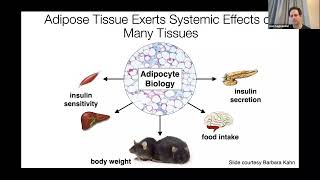
So thank you, Val. I really appreciate it. I just want to say thanks to the organizers of the Lipid Maps group for inviting me. Lipid Maps started while I was a postdoc in Ben's lab, and, you know, was super educational for me learning about lipids. And, you know, since then, I think I visit the website, you know, 2 to 3 times per week. So, you know, I think it's a fantastic group, and it's really an honor to be here today. So as my title kind of alludes to, I'm really going to end up talking about some particular lipids, and I think the way that I've decided to divide this up is into kind of 3 groups. I'd say the first half or maybe two-thirds of the talk is published and kind of more history and background to just kind of teach you about the different ways which we can go about studying lipids, but also lipid regulation in terms of finding enzymes that regulate bioactive lipids. And then the last third is going to be a new story that's unpublished from the lab regarding, you know, showing how lipidomics can be used even in kind of the most fundamental of biology, you know, and I'd love to get feedback from you on that as we go through it. So, you know, I think everybody on this call probably appreciates that lipids have many roles, structure and membranes, they provide energy, and they also signal. And, you know, as a chemist kind of coming to biology and to lipid biology, it was really this interest in the fact that there's there's all these endogenous small molecules, very much like the drug-like molecules we make to treat disease, that the body naturally makes to regulate various aspects of biology. And I really became enamored when I was in Ben's lab with the ability to kind of find and annotate new versions of these using untargeted mass spectrometry. The story when we first started, and the reason we first got into this, was really a biochemical question. And that is that, you know, Ben's lab had been publishing a ton on developing new proteomics techniques to find active enzymes in cells and tissues. And one of the questions had been for many of these, what are their endogenous substrates? We could tell from homology, for example, that they were lipases or lipid-modifying enzymes, but their particular biological or biochemical activity was unclear. Now, at the time, the state of the art was really to kind of essentially take— recombinantly purify your enzyme or make it, and then essentially screen substrates. But we realized that there's probably a lot of substrates we don't know about, and that would be missing a lot of information. And so really what we developed, and the reason we developed some of the lipid profiling technologies, was to basically be able to combine knockouts with global lipid profiling so we could see changes in either substrates or products of a particular enzyme or a particular pathway to give us some insight into the biology of that. And we applied this to an enzyme that Ben had been studying for a while called fatty acid amide hydrolase. What this enzyme is known to do is take these N-acylethanolamines and hydrolyze them to free fatty acids. The methodology in many ways hasn't changed. And I can find papers 30 years earlier than this that showed similar methods using GC. But essentially what we're going to do is we're going to take tissues from whatever comparator set we have, look on an LC-MS, and really try and quantify differences between the sample sets to try and identify changes. At the time— This was very rudimentary. It also involved me doing a lot of manual analysis of data. But as you'll see in later slides as I go through, this has really advanced quite a bit, as have the mass spec technology as well. I remember requiring hundreds of milligrams of tissues to get good signals. Now my students are regularly doing this with a fraction of that, maybe 10 times less, and getting 10 times more signals. So one of the first things we discovered using this is when we knocked out FAO, we actually discovered a novel set of substrates that the enzyme had in these N-acetyl taurines. And the reason we could pick these up is that, again, these weren't known prior to our work, was that we were just looking in cells and tissues for things that were elevated when FAO was, was absent. So essentially, these substrates would accumulate in the absence of a degrading enzyme. Since I left the lab, and then other groups, including Ben's group in collaboration with Matt Gilliam's lab, and Matthias Tschopp and Axel Wals have taken this forward and shown that these actually are biologically active lipids that are able to regulate, for example, things biology related to metabolism. And so this was a really exciting project for me as a trainee, and kind of learning about all this. And so when I started my lab, really one of the, the focuses was to see where else could we apply some of this technology. In a lot of ways, the lipidomics part of it has, as I said, has been fairly robust. It was really finding basically the ideal model systems to work with. With that, that's where it was a real fortune for me to be in Boston because there are so many excellent labs and so many potential collaborations for for somebody with my background to work with somebody with much more expertise. And Barbara Kahn, who's at Beth Israel, and I connected one day for a totally separate set of experiments. But after one of her clinical fellows learned about the work, he suggested a project that we could do together to answer a longstanding question that they had in adipocyte biology. So Barbara's lab is very focused on essentially understanding the role of adipose tissue in systemic biology. The goal is to think about the adipose tissue as more than just a fat depot, but as one that's a central endocrine organ that will actually, you know, communicate with other cells and tissues. And, you know, over time, you know, this has maybe become more accepted, obviously, as we find more protein hormones or other things that are able to signal between the adipocyte and other tissues to regulate a variety of biology. Barbara is an MD, and so one of the questions that she was really focused on is how does obesity lead to insulin resistance and type 2 diabetes? Basically, how can we explain what's going on in humans that are obese and why are they developing diabetes? And the system that she focused on is, is a real central one, probably the primary one involved in insulin signaling in the primary glucose-regulating tissue, so muscle, fat, and the liver. And that is that insulin here, shown in these, these blue squares, will bind to the insulin receptor. And what that does is it basically shuttles the GLUT4 transporter from these endocytic vesicles to the membrane where glucose can now enter tissues, basically lowering its blood glucose levels. And so, you know, many labs have looked at the various aspects of this that could be involved in leading to insulin resistance. So what happens if you have insulin around, but you're not getting normal glucose transport? So you can imagine there's a variety of different signaling pathways from the insulin receptor to these vesicles, you know, transporters and things like that. And almost every aspect of this has been kind of looked at in one sense or another. But again, you know, as a clinician, you know, really Barbara grounds her work in the area of human biology. And one thing that was noticed in both humans and rodents that are put on high-fat diets or are pre-diabetic is that in obesity or type 2 diabetes, the levels of GLUT4 expression goes down in adipose tissue, but not so much in muscle. And so one hypothesis is that basically insulin resistance is appearing because you just don't have enough GLUT4 to make up for the fact that, you know, even though insulin signaling properly, you know, you're, you're not able to take the glucose up. So her lab has, you know, developed and used a variety of different animal models, mouse models, to study this. And one of the models, and the model that we ended up collaborating on, is one where you overexpress the glucose transporter in fat. Now, these mice are incredible in that basically no matter what you do to them, they will always have enhanced glucose tolerance. So, you can give them as much glucose as you want. They take it up in their fat readily. Blood glucose levels stay low, and other tissues besides the adipose tissue remain fairly healthy. Now, one of the interesting things about these mice is that they actually end up putting on a lot of weight. So that glucose goes into the fat, but it's got to be converted into something. So it's converted into lipid. So basically the triglyceride synthesis and de novo lipogenesis is turned on. And this is what this paper led by Mark Herman in 2002 was studying, were the transcription factors and metabolic pathways involved in that. So one hypothesis that came out of that work was that Basically, they noticed a lot of the enzymes that were involved in de novo lipogenesis were elevated. And what they wanted to do was get evidence for this. And the way you do that in vivo is you can feed mice radioactive glucose, and then basically measure the incorporation of that radioactivity into fatty acids, and that's a quantitative measure of relative de novo lipogenesis. And what you see here is in the, the, the WAT tissue, so either white adipose tissue or brown adipose tissue, fat tissue, where you have the glucose transporter overexpressed, you see greater incorporation of the radioactivity into the fatty acid, suggesting increased de novo lipogenesis, whereas in the liver you don't see a significant difference, but again, there's no real glucose— glucose transporter overexpression there. So that led to a hypothesis, because these animals are obese yet insulin sensitive. You know, the current model is that obviously if we put mice on a high-fat diet, they'll develop diabetes. But this is a situation where we're saying now endogenously these animals are producing more fat, but yet they're insulin sensitive in other tissues. So what's going on? And the hypothesis was that there was a lipid or lipids that were getting made in the adipose tissue that could be protective instead of causing diabetes. And when we first started these experiments, we didn't anticipate finding anything new. What we were really doing— you know, Barbara got— as I said, we were already collaborating. We started talking about this. What we expected to find were things like omega-3 fatty acids were elevated in these animals or something like that when we went into the—
sorry.
Okay. So in this experiment, what we did was we took subcutaneous tissue from wild-type mouse and this transgenic mice overexpressing the GLUT4. For transporter, we use the lipidomics platform and we try to identify what's changing between the two samples. What's shown here is essentially a volcano plot of the data at the time. And everything to the right here is elevated in the transgenic mouse, everything to the left is elevated in the wild type mouse. Statistical significance is here, so really anything above 0.05 or above here is probably statistically significant. Now, when we've done these experiments a number of times, times, you know, on different samples, and typically what you find is something that looks like what we see in the middle here, things changing about, you know, 2 to 4-fold elevated. What was really unusual about this sample was that there was this group of lipids here in red, meaning it was in negative ionization mode, the blue is positive ionization mode, that were strongly upregulated, essentially undetectable in the wild-type mouse using the kind of broad lipidomic profiling. We got the accurate mass from the datasets. We went to all the common databases, including LipidMaps at the time, and Metlin, and the Human Metabolite Database. And we plugged in these molecular formulas. And really, there were no hits coming back. And so we realized that perhaps we were on to kind of a novel lipid, and we needed to actually characterize its structure. Having done this for a while at this point, one thing you can pick up right away from the molecular masses of the groups that were changing is that we most likely had an acyl chain on there. These mass differences of 2 correspond to double bond, 509 to 537 is 28, which is 2 CH2 groups. We knew we had some fatty acid-containing lipid from the accurate mass, we could calculate a molecular formula as having 4 oxygens in there, and a hydrocarbon. Really, we needed to figure out a way, after we got some more data, of how to create a molecule with 4 oxygens that was basically a fatty acid. What happened next was that we went and— there's not enough material, for example, to purify to do NMR or anything like that. So we really rely on a combination of mass spectrometry and chemical synthesis to do structural identification. Oops. So what we did is we— sorry, I'm missing a slide here. So what we did is we basically fragmented this. And what we figured out was that basically what we were looking at were hydroxy fat esters of hydroxy fatty acids, or as we ended up calling them, fatty acid testers of hydroxy fatty acids or FAFAs. So one of the first things, again, with Barbara being an MD, you know, we found these lipids in mice, but we really wanted to know if these were A, in people, and B, whether there was any relevance to human biology. And so what we did here is essentially with Ulf Smith, who's a longtime collaborator of Barbara's, we were able to essentially obtain blood and tissue samples, adipose tissue samples, from insulin-sensitive and insulin-resistant people. And then, basically, that were pretty well matched, except for one difference, this glucose infusion rate, which is essentially a measure under an insulin clamp of how much glucose you need to basically maintain blood glucose levels. And what you see is in the insulin-sensitive people, you can infuse a lot more glucose and maintain a normal blood glucose level. In insulin-resistant people, they're not responding to insulin as well, and so the glucose infusion rate is much lower. And when we broke these down and we analyzed the lipids, the FAFAs in these samples, what we saw was that the insulin-resistant people had lower levels of these lipids here. And if we did a correlation between the concentration of these lipids, both in— again, this is in serum, but it works well in fat as well— versus the glucose infusion rate, we find a very linear correlation, suggesting that, you know, this is at least a marker of insulin sensitivity in the human. Now, one interesting thing that comes out in the pattern that started to emerge is that we have these animals that are obese yet insulin sensitive, and they have higher levels of Fafas. And then in these insulin-resistant people, we have lower levels of Fafas. So the hypothesis was that basically, if if Fafa levels could be causative, if they could improve metabolic metabolism. So what we did— and sorry, here are the structures here. So with the Fafas, we find, as Val had mentioned, almost every combination of acyl chain. So this is palmitic acid hydroxysteric acid. We find various isomers here. So this is at the 9 position. This is another isomer at the 5 position. These are all endogenous. And we have a variety of these. We picked these to study initially because at the time we could tell the molecular formula, but we couldn't tell, for example, the position of the double bond on a lipid. And so we wanted to make sure we were studying the, the most accurate representation of what was going on in vivo, so we picked the saturated lipids to focus on. I'm not going to show you all the data, it's all been published for a while now, but essentially these lipids show both anti-inflammatory and anti-diabetic activity. So here in this data, for example, we treat mice with 9-PASA, and then about— after about 30 minutes, we come in with a bolus of glucose, and we measure their glucose tolerance. And what you see is that the animals treated with 9-PASA have an improved glucose tolerance versus the vehicle-treated mice, consistent with these molecules having a functional role in the biology of of these animals and maybe having an effect as predicted. For example, in Barbara's AG4x mice, we find that these PASAs are highly elevated in circulating levels of these animals. So again, I won't go into everything. There's been a lot of work since this original story, either on looking additionally on roles of FAFAs in the inflammatory response or immune response. Work here in collaboration with Diane Mathis's lab. Barbara and I showed that passives can actually slow the development of type 1 diabetes in an animal model. And then also more mechanistic studies to try to understand what's going on, at least pharmacologically. Here we see that the fatty acid receptor GPR-40 seems to be involved in some of the effects that FAWAs have in the pancreas. And so we've been making great progress in this area, and Barbara continues to work on this. But one of the things we've shifted our attention to at Salk, and there's a paper coming out of Barbara's lab shortly as well, has been in trying to understand how these lipids are actually regulated metabolically. So in the case of FAH, for example, we started with an enzyme and then we went and found a novel lipid. However, in these cases with the FaFAs, really there was nothing known about the metabolism of these lipids, how they were made, how they were broken down. And in a lot of cases, you know, lipids themselves as drugs are are somewhat questionable. I mean, there haven't been many, though there are some now, and maybe that's starting to change. But one idea was that if we could understand how they were regulated, maybe we could control FAFAL levels endogenously for therapeutic gain in diseases, inflammatory or metabolic diseases. So one of the reasons for doing this was that we found, at least in several assays— so this assay here is looking at a macrophage cell line treated with LPS, which induces IL-6 or cytokine production, and we either treat with the linoleic acid, hydroxylinoleic acid, or hydroxylinoleic acid alone. And you see that they have different activities. The FAFA is more active than the hydroxylinoleic acid in inhibiting the biology of these lipids, suggesting that, you know, this— the FAFA species is the one we really want to try and maximize when we go in vivo, and it's not some of the other maybe perhaps metabolites that are in there that are also that could be beneficial. So one of the first things we wondered about was whether or not, you know, FAFAs, because they are essentially branched fatty acids, act like other fatty acids. That is, can we see them being incorporated into other lipid classes much like a fatty acid would? And there are a couple of different ways of doing this. We could have tried some untargeted methods, but we really decided what we needed to do for this, because some of these lipids are getting very big, and it'd be hard to really conclusively distinguish from just a mass spec alone that we had the lipid we thought, was to go ahead and synthesize a couple of lipids that might be possibilities here. So FAFA derivatives of triglycerides or FAFA derivatives of cholesterol esters, develop targeted mass spec methods for being able to detect and quantify these, and then go and look in tissues to see if we have any evidence that they're actually made in vivo. So here we have our synthetic standard. It fragments much like a triglyceride does in positive mode. You get neutral loss of the, of the, of the FFA, which you can see here. And then when we go and look in tissues, for example, in this case adipose tissue extract, we get the same lipid out. So this validated that cells are able to make essentially triglycerides containing FAFAs in them. And the next question we had was, you know, how much of the FFA is in this ester form versus how much of it is actually free and may be available to signal. We tested these molecules, for example, in some of our assays, and we never saw activity for them. So to do this, we actually took advantage of the fact that under mild hydrolysis conditions, this ester bond of the FAFAs can be— is stable relative to the glycerol ester. And so what we could do is we could hydrolyze these or do a partial hydrolysis at least, liberate the FFA and quantify it. And we had an internal standard for being able to do this with absolute quantitation. So the way we do this is first we enrich the FAFAs. To basically remove the free FAFAs so they're not contaminating our sample. We can then take those and quantify them. And then we come through, we do the lithium hydroxide partial hydrolysis. We then enrich the remaining FAFAs, which were the ones that presumably were on the triglycerides. And what we found, which was— maybe not surprising, but the magnitude of it really surprised us, was that there's a lot more FAW contained within triglycerides, about 100 times more in abundance than free FAW. So it looks like, you know, FAW, just like fatty acids, can be stored in triglycerides, you know, released upon kind of all the same conditions that you'd normally get fatty acids to be released as well, but revealing a new depot for these, for these lipids in there. Now, the next thing we did is we went ahead and said, okay, fine, we know that we have a ton of this in, in these triglycerides. And I'll say I'm not going to talk about the work today, but we've been starting to make derivatives, synthetic derivatives of FAWFAS. And we're really guided by these experiments. So for example, we're making derivatives where we're masking the carboxylic acid or finding a bioisostere so that we don't get incorporation into the triglyceride pool so that we can maintain more, more biological activity for the synthetic lipids that we're making. Now, the next question we had was, what about the hydrolysis of the ester bond? So this is a very unusual lipid, but we assumed that there was going to be enzymatic machinery if these were actually endogenous lipids for both this biosynthesis and the degradation of these. And for doing this, and the reason we selected the hydrolysis first is that we had some very good technologies which were developed in Ben's lab that we could use to figure these out, and that is this activity-based profiling technology. So Ben developed this as a means to measure active enzymes in cells and tissues. In particular, it worked very well for lipases and other things like that. And so what they would do is they would throw in this chemical probe into a cell lysate. It would covalently label all the active enzymes. They could then either run a gel or do mass spec to detect those enzymes. Well, in another iteration of this, what you could do is you you could actually do a competitive experiment where you could actually identify inhibitors for some of these enzymes without ever knowing their endogenous substrates. So for example, here, what I'm showing is that if you take the, the serine hydrolases in the proteome, you add an inhibitor, those that get their active sites blocked will no longer react with this probe, and therefore they'll disappear from this gel. And so we used a modified version of this essentially to kind of figure about basically what enzymes could be possible FafA regulators. And so what I'm showing you here is that this is essentially tissue lysate here, or this might be HEK293 cell lysate. And then what we did is basically, if you add in this FP rhodamine, which I showed you on the last slide, we completely block FafA hydrolysis activity. So we know that one of the enzymes that is targeted by these fluorophosphonate probes is actually the enzyme responsible for this. Then Ben's lab has a nice library of compounds, and they know the targets of all of these different compounds because they've done all the profiling and the competitive ABPP to figure that out. So we screened through several of these, and we found, for example, PALM-B and PALM-M are both able to reduce Fafa hydrolysis while these other and other lipases did not. And so essentially what you could do is do a Venn diagram to see, you know, which ones are in these pools that we shouldn't look at and which ones are shared with the Palm B and Palm M that we should look at. We came up with a handful of different lipases shown here, ABDH3, 13, 17, FAM108B, so forth and so on. And the way we did this experiment was we essentially overexpressed these, created a lysate, and checked for Fafa hydrolysis. And what we saw was clear clear in this experiment is that these, this enzyme, androgen-induced gene 1, is really a very potent FAFá hydrolase. So we were able to create lysates with this enzyme, and we were able to show that it readily hydrolyzes FAFás, but if you look at other substrates, it's not really a very good lipase for any other substrates. There are actually two family members to this, so AIG1 is one, and then ADT ADTRP is the other. As I'll show you in the knockout mice, ADTRP tends to be the dominant enzyme. It's found at mostly higher concentrations than AIG1, and it can actually— does a fair job of regulating on its own. We haven't found anything, any changes, as I'll show you in a second, for AIG1 on its own without the loss of ADTRP. But we're still not sure whether we should be— we're looking at the right conditions in these animals. So again, these in vitro experiments suggested AIG1 and ADTRP are the potential Fafa hydrolases, but really to get evidence for this, we need to look in vivo. We generated AIG1 and ADTRP knockout mice using CRISPR-Cas9 technology. We were able to show by Western blot lot that both enzymes are missing from their respective mice. We also created a cross set of mice that are double knockouts that lack both enzymes as well. And so in the data slide where I show you substrate concentrations, what you'll see is that basically that we have a DKO in there, which is the AIG1 ADTRP knockout. So the enzymes have slightly different tissue concentrations or distributions. AIG1 tends to be more in the brain and lung, and maybe the spleen, whereas ADTRP is liver, BAT, and white adipose tissue depots. We went ahead and we measured— I'll take you through a lot of data. We didn't find any other substrates for these, so we did global lipidomics on these. And one interesting thing that happened is when we went and did the Fafa measurement, We did find a change in FAFAs, again, mostly in the ADTRP knockout mice. But what you see here in these— in the brown adipose tissue, for example, that you get an additive effect when AIG and ADTRP are both missing, supporting a role for AIG1 as well in FATA hydrolysis, whereas in the subQWAT and PGWAT, we really don't see much of an effect of AIG1 at all. But the interesting thing about this, and what, you know, something we still don't fully understand is that the only FAFAs that we saw that were elevated were the 9-isomers. The 9-PASA or the 9-oleic acid hydroxysteric acid. We didn't look at all the FAFAs by any means, but definitely out of those groups, those were the ones that were changing. This either suggests that this enzyme in vivo is somehow specific for the 9-isomer or the 9-isomer localizes specifically with these enzymes, or that when we lose the degradative activity for For some reason, the 9 seems to be upregulated specifically versus the other lipids. And so we see— I'm not going to show you the data, but we've used chemical inhibitors of ADDRP and AIG, and we see a very similar trend, though a weaker effect, that if we knock— inhibit these enzymes, that basically we'll see an elevation in the 9 PASAs and so and so forth. So to summarize, you know, so far we found two enzymes that break down the FAFAs. DGAT will synthesize these, but not completely. You can knock out a DGAT and you still get FAFAs. And we see some work on ATGL hydrolyzing this, but the story for ATGL is actually going to end up being much more complicated. And as I said, Barbara and I have a paper that's pretty late-stage review that will be coming out. But what I'd like to do in this last section is shift a little bit away from, from FAFAs to kind of show a new lipid and kind of show the generality of the approach. So, you know, we started very much with kind of using lipidomics to find enzyme substrates. We then went to kind of a disease model, you know, of diabetes where it was genetic knockout. And now I'm going to tell you a story that was really spearheaded by a fantastic postdoc in my lab, Dan Tan, who's been just amazing and really kind of, I have to say, with very little input on my behalf, kind of run with this project. And she came to the lab very interested in kind of looking at lipids that were involved in neurodegenerative diseases, and so started a bunch of experiments kind of looking at basically young mice and old mice, and their brain lipidomes and really made, I think, what's a fairly interesting and novel discovery. So one of the things that we had to kind of think about as we were doing these experiments is what age groups do you want to look at? So we focused on trying to find age groups that really covered kind of the healthspan, I guess, not necessarily the lifespan of mice. So 4 weeks, 12 weeks, 25 weeks, 48, and 78. So we're not talking about geriatric. We're probably talking about mice that at the oldest age are probably like 60-year-old humans. So the idea here was that we were going to go in, we had some disease models in here, but really the only thing that ended up showing up was really a really profound and really interesting age-related phenotype. Again, the lipidomics is very much hypothesis generating. We tend to find things that are changing. But often, as I'll show you in this case, even though the lipid was known before, it's— I would say it's understudied. And so we didn't really fully and still don't fully appreciate what it's doing in vivo, but I think it's a good start. So again, the, the, the pro— the way we do this is, is, you know, we do the LC-MS much the same way. Our mass specs again have gotten much, much better. In terms of, of, of software and data analysis, we now kind of use We use a variety of different tools. We still use XCMS for kind of the untargeted analysis. We've switched and began using a lot of LipidSearch just because it's very useful for kind of getting a 30,000-foot overview on known lipids, and it does a good job of identifying those. And then when we come back in, we still kind of manually validate things, and we use Skyline for that. Now, one of the things I want to show you here is that these are the different age groups colored, and we do a PCA just because we want to ask the question If we look globally at the lipids or the lipidome, are we actually seeing changes in the lipidome that would correlate with the ages? And we can do this either with all the features or with just identified lipids, and we get a very similar plot suggesting that the things that are changing that correlate with age are happening both within the known lipid pool as well within features. Now features, you know, here, they're either ions with a You know, they could be a variety of different things. They could be novel lipids. They could be, you know, signal redundancies like adducts, isotopes, and fragments, informatic artifacts, chemical contaminants, or the such. But again, we're, you know, we're confident that the lipidomics data is actually separating these animals because both either with identified or unidentified elements, we're getting still a good separation. These. Now, you know, when we normally have done these experiments, and I would say both in the two previous examples I showed you, really the way we kind of did the analysis is that we did an AB comparison. So, you know, is something significantly up in the knockout versus the wild type or the transgenic versus the wild type? But here, because, you know, we're not really looking at any kind of unnatural perturbation, there's no knock-in or knockout here, we really wanted to do a different type of analysis to make sure that we weren't missing things that were interesting that might be a little bit more subtle. And so it turns out that Dan's husband is an expert bioinformatics— bioinformatician, and was very good at doing kind of a co-expression network analysis that is typically used for gene expression. So in this analysis, essentially what you're doing is you're looking for genes that are correlated with each other that is, if their levels go up or down together. It can be a positive or negative correlation. And then you can create clusters based on genes that are connected to each other or connected to other genes by additional nodes. And that defines a module. And then basically what you can do is you can ask the question of whether a module is kind of statistically significant or statistically important with the biology you're looking at. And the reason I like this is it tends to be, as you'll see in the data that comes out, a little bit more holistic, and we actually get a feel for an entire pathway, not just a single lipid that's kind of being perturbed here in these aging mice. So when we do this analysis and we generate modules, we can generate up to 23 different modules. Some of these will stick out to you by eye pretty quickly, so Module 1, which I'll focus on a little bit, is this turquoise one. You can see that it's increasing. Module 7 in black, which we'll focus on mostly today, is decreasing. Module 9 as well. But then others really don't— they have patterns, but they don't look like it's anything very significant, at least from beginning to end. And that proves true in the actual data analysis. So then what we did is we basically took these modules and we asked, are they actually significantly changing with respect to age? And what we came out with were really, again, some modules that worked really well. So one that was going up was this turquoise module. None of the other ones that were going up were significant. And then the most significant module of things that were decreasing was this module 7 in black. Now, if you want, we can look through individual lipids here. Here you can see the various lipid families. What you'll notice is that some lipids are in both, let's say, the black and the turquoise, meaning that they're going down and going up. So here what you're seeing is that the acyl chains are changing. So there's certain species within the phosphatidylethanolamine family, for example, that are going up while others are going down. And so this kind of lipid remodeling. But then there's other species, for example, like these MGDGs that are going down and they only seem to be going down, and we don't have a counter to that as well. So what we wanted to do with this is, you know, we focused first on the known lipids, but we could go back and do this analysis and throw in all the unknowns as well and see if we could find anything that was not readily available or not present in datasets. And the one thing we found is we found a group of lipids with a very unique fragmentation pattern that suggested that they contain this hexacyl sulfate on them. And so when we did the structural analysis, what we were looking at were basically these diglycerides where instead of having, you know, kind of normal phosphate or things that you'd find in a phospholipid, we have this glucosyl sulfate. And there's two variants to this, one where we have the diacyl chain and one where we have an acyl alkyl chain here as well. And if we put those in there, we see that they basically fit right in between. You know, they're derivatives of these MGDGs. So if you sulfate an MGDG, you get what I'm going to refer to as sGDG as well. And so you can see that we've now kind of uncovered this pathway of lipids that really has, to our knowledge, never been kind of closely linked to aging before. As well. Now in terms of the novelty of these lipids, so at first we could not find these in any of the kind of common databases, but after we got a little bit more structural information, we did some searches, there are a few papers published in the mid-'70s that basically describe the discovery of these lipids, the structural annotation, at least to the level of what you could do well in the mid-'70s, and some biology that these were coming up during the development of young mice. So these are all fairly significant. I'm going to wrap up soon. So we did this structure idea. I'm going to skip ahead. And we validated these. And then we went ahead and we started quantifying these across the different species using a heavy label standard. So we were able to synthesize these for both quantitation and for biological studies. And what you can see here is that these lipids really are correlated with the age of these animals across a bunch of different acyl chains. And it seems to be very specific to the nervous system. So the one other place we see these lipids are in the testes, but we don't see any age regulation there. So there's really something unique about them in the brain. Now, one of the things that has been interesting about this, and this data has been coming very late, was that, you know, one question was if they're age-related, are they actually perturbed by anything that is associated with aging. And so a great model for this is caloric restriction. And I have to say, in this project, I've really benefited from— we've benefited from really having very generous colleagues around the world. And so essentially, we contacted a lab that does this a lot, and they were able to provide us tissue samples so we didn't have to generate these mice ourselves. And what you see is under caloric restriction, which is known to extend lifespan, we also see higher levels of these lipids, again, kind of correlating with the levels of these. I'm going to skip that. These are not just in rodents. We can find them in humans and macaques as well. So these are found in primates, though their levels are lower. We're not sure 100% yet if the levels are lower and we need to look at different acyl chains or some sort of modification which we're missing. So we might be missing higher abundant variants of these in these higher organisms, but nonetheless they are present in in these tissues as well. So we looked for some biology for these, and again, we turned to inflammation, mostly because aging is related with an increase in inflammation in tissues, and so we want to see if these lipids had any effect on that. So the first experiment we did, again, we went back to these— this macrophage cell line. You add LPS, it stimulates both cytokine release, and then we can look at the effect of this lipid or dexamethasone as our positive control here, and we see a very good effect. Better than the FAWAs, actually, in these assays inhibiting here. What's interesting is that the MGDG, again, which is the one that lacks the sulfate group, is inactive here. So it's really very structural specific. We also repeated this experiment in a microglial cell line and see similar effects, again, between SGGG and dex. So this is very new. Again, this paper is under revision right now, or under review. And so we're really just starting to learn about these. But I think it still highlights the power power of the lipidomics technology and lipids themselves for kind of making new discoveries and developing new hypotheses that can open new avenues of research in different fields. And so with that, I'd like to end and really thank, as I said, like, you know, a lot of this work, as you can see, is in collaboration with really great biologists and with Ben's lab and a whole bunch of other people. So I'd like to really thank everybody on this slide and thank Dan and Maric, who really did most of the work that you saw in terms of the Fafa story and the in the SGDGs. And I'd be happy to answer any questions in the time remaining.
Thank you. Thank you, Alan. That was really interesting. I've got loads of questions, but I can see lots of other questions in the chat. So I'm going to go to them first. So the first question is from Hong Yin. You should be able to unmute yourself now.
I can read the question. So the question is, in circulation, what's the—
Well, I think he's come on there. Are you there, Hong? Yeah. Yes, I am.
Can you hear me? Yeah.
Hi. Hi, Evelyn. Great talk. I have a couple questions. Number one, are the FAFAs— can you detect FAFAs in the human systemic circulation under health, in healthy condition? Second one is, how abundant are those, the ester-containing tags, compared to the non-ester containing tags? More attacks? Systemically?
[Speaker:JOSHUA_ELKINGTON] Good question. And it also reminds me that I forgot to mention one thing. So, FAW/FAO concentrations in mice and humans are about nanomolar circulating concentrations. The one thing I forgot to mention, so Barbara's mouse has a phenotype in it in terms of beneficial metabolic biology, and that has higher circulating levels of FAFAs. Our mice where we knock out the AIG1 or ADTRP, we have higher tissue levels, but we don't have higher circulating levels, and we don't see any beneficial metabolic phenotype so far. So, you know, so we do think circulating levels are very important. So I'm really glad you brought that up because I forgot to mention it. And then as far as the relative TG, they're much lower than normal TG. So FAFAs are about, I'd say, you know, about 100 times less than fatty acids, and it's about the same for the FAFA TG. They're about 100 times less than normal TGs. And then we've looked in— for circulating levels of FAFA TGs, but haven't had very much luck. But again, I don't know that we— we might have to fractionate, you know, to isolate different lipoprotein fractions to basically pull it out. Okay.
Thank you so much. Ali Hajeh, you should be able to speak now. Yep.
Hello.
Hi. Yeah, my question is, have you detected phospholipids?
So we haven't looked. So I don't know the answer to that. So we should be, we should look and we should check at some point, but we haven't done it yet.
Okay. Yeah, that would be interesting. Carol Lee Lilium.
Fantastic talk. Thank you. Very interesting. I was just wondering whether any time phosphorylated variety of these SOFs were into the picture. Because many times in, for example, in sphingolipid signalling, phosphorylated and nonphosphorylated, like sphingosine and sphingosine-1-phosphate, for example, bioactive lipids are having just the opposing physiological effects. So what about this, any knowledge about this or not? Yeah, we haven't looked. So again, I think all these are all possibilities. But again, like I said, for some of these things, if you're not— we picked them up in the first place just because their levels changed so much in Barber's transgenic mice. And we didn't detect, for example, phosphorylated version in that. But as you suggest, that they could have very different activities. And so I think what we'd have to do targeted or specifically go after it. But we haven't done that yet. But that's a good suggestion and something that, you know, we can think about looking into. Thank you very much.
May I have another question? Okay, go on.
Just came into my mind that this glyco—
sulfonated glyco— I don't know the name of this—
the glucose with the sulfonated variety, it looks like a phospholipid mimicking a little bit of the phosphate group.
Is it true?
Or not? Yeah, I agree with you that they look like it. And, but we haven't, we know that there are, so the one experiment I skipped over really quickly just because I was running out of time is that it looks like their sulfatides also have the same sugar group and they are found in the myelin. And there's a mouse model where you can get that they lack myelin. And if we get that mouse model, we see that the levels of these lipids are way down. So we know it's part of the myelin. And, but, you know, what the relationship is with phospholipids or anything like that, we haven't been able to—
Thank you. Alison Ondros. Okay. Yes, I can read your question, Alison. So are the FAFAs produced a single enantiomer? And if so, do the enantimers have different activities?
Great question. Yeah, so we've done this for one of the FAFAs. So first, to do the enantimers, we had to be able to isolate enough from tissues. So that really kind of limited us because some of them are very low abundant. And so what we did is we were able to, in the transgenic mouse, which has way higher levels of these, we were able to purify enough 9-PASA out of their adipose tissue that we could derivatize and get a— by mass spec, by derivatization, that they're mostly the— it's mostly the S-isomer as far as we can detect. We've done— and Barbara, I think, just published earlier this year a paper on the different enantiomers, but we haven't seen, again, again, very many differences, but again, that was kind of in a couple of different assays. So how they're exactly working, we don't know whether the, you know, ester part is necessary for binding a protein, or, you know, whether they're having broader effects that we don't understand that are just at the membrane, where maybe chirality is less important. We still have work to do in that area, but it's a great question.
Inez, we'll give her a second. Inez, you just need to unmute yourself. I think you are able to now. Okay, well, we'll come back to Inez. I think she's struggling to unmute herself there. So, Alan Brash, I'm just going to give you— oh no, sorry, I have skipped somebody. Jen, you should be able to unmute now and ask your question. Hi. I kind of had the same question. But since some Fafa level can be detected in the blood circulation, but now I wonder what's the route of transportation where it was synthesized in the red blood cells in some way.
Would you comment on that? So, you know, we haven't done a lot of work in that area. And Barbara's focused a little bit more on this than we did. We had a couple of, I would say, in the beginning somewhat contradictory results in the sense that, like, you know, we could stimulate lipolysis in adipocytes and we would see release of FAFAs into the media. And then, you know, but it wasn't super consistent, but we didn't follow it up. So, you know, we think they probably follow similar pathways to what would happen with the fatty acid in terms of being released. But we don't know that for a fact and we don't really have a great idea of of how they're entering circulation. But it's a good question, something we've thought about, just haven't had the bandwidth to kind of work on, or we're not experts at it either. So, you know, there are probably people out there that are much better than ourselves at doing that kind of stuff, but it's a good point.
And Ines, are you able to unmute yourself now? Okay, I did. I managed. Okay. OK, first of all, great talk. I am more about the brain lipid analysis, more like conceptual. So you mentioned, rather it was like written on one of the slides that you only took females for your studies. So would you expect to see the same trend also for the males, or what is your expectation?
Sorry, yeah, we did males and females. The slide only had the female data. It's consistent in both. We don't really see a sex-specific difference for these particular lipids.
Bit. Okay, I see. Okay, thank you. So, Alan, you should be able to unmute yourself now, and I think you're asking a similar question to one of mine, so go ahead.
Yeah, it's the question about the monohydroxy saturated fatty acids, which are a little bit unusual in structure. Do you know the enzymes involved, and what about the levels of the free versus the esterified, uh, monohydroxy fatty acids? Yes, so the free I can't remember offhand. The free, I think, are higher, but not like, not like 2 orders of magnitude higher. I think, you know, whereas FAFAs, I think, are— actually, that's not true. Yeah, we're in the tens to 100 picomolar, and then per gram of tissue, I think the hydroxyfat acids are like low nanomolar. But they're They're not— so we measure that. We have no idea what the enzymes are. I mean, so what we've done— so it took us a really long time to figure out the lipolysis enzymes. We've then— Barbara, I think, has got the biosynthetic enzyme. It's a little bit weird. So it turns out that it's adipose triglyceride lipase, hydrolyzes TGs, but it also has a secondary activity where it does a transesterification and transfers a fatty acid from a TG to hydroxy fatty acid, and that's how FAWAs are made. And if you knock it out of adipose tissue, for example, you see no FAWAs anymore. But the hydroxy part of it has been really, really unclear to me. And so what we're doing now is we're collaborating with a group at Wisconsin who basically, they have a diversity outbred strain of of mice. And the idea is that we're going to look across 400 to 500 different mice that vary genetically for changes in FAW levels to try and identify then which, by genetics, which enzymes are possibly related to, you know, controlling FAW levels. And hopefully from that, we'll be able to kind of land on some, you know, oxidases of some sort, but, but, um, or lipogenases, but I'm, I'm not right now. We don't have any idea, but it's a, it's—
Yeah. I'm also intrigued by this. I think lipogenases, I mean, that's unsaturated fatty acids, not completely saturated ones. So I think, yeah, that's, that's unlikely.
I wondered whether you guys— The other possibility was that, that I've hypothesized, but again, I have no evidence for this, is that, you know, during fatty acid synthesis, and you get hydroxy fatty acids that are then eliminated, reduced to give you a saturated fatty acid. And because we see things that, you know, but the weird part is you would only then expect to see, let's say, even-chain hydroxy fatty acids, 2, 4, 6. So, you know, maybe these are missed elimination steps during biosynthesis because wherever de novo lipogenesis goes up, we see this, but I'm really not sure.
A question related to that. I can't remember whether you were looking at plasma or serum, but you see differences in levels in plasma and serum, because that might tell you whether there's a role for white cells or platelets or any circulating blood cells involved. We haven't all got switched on when you make serum.
Yeah, we haven't looked carefully, but we should. Yeah, we should. We'll definitely check it out.
Okay, Alan, have you any other comments or questions?
That's it, thanks.
Oh yeah, okay. So, um, yeah, we still have more. So Betty Rostandi, I just need to give you permission to— you should be able to unmute Now? Oh, you're very quiet, we can hardly hear you. Get closer to your microphone. Okay, can you hear me better? Not really. Maybe I'll read your question if that's okay, because it's very quiet, Alan, I can't hear.
Can you?
No, I can't. Okay, in your workflow you use XCMS for peak alignment and LipidSearch for ID. I wonder why you don't use LipidSearch as a one-stop platform for alignment and ID.
So we do. I think the problem is we haven't figured out a good way for LipidSearch to give us lipids that it doesn't identify, at least as far as output goes, whereas XCMS gives us the lipids, and then basically any adduct, any other thing that's going on in the unknown lipids that don't show up come there. But Dan's figured out a way— Dan Tan, the postdoc in my lab, has figured out a way to basically just on Excel to take an XMS output and then basically combine it with LipidSearch so we know which ones have been identified before. But it's just basically if we want to know more than kind of the— if there's anything changing besides the kind of main lipids that LipidSearch can ID.
Ali, you wanted to make a suggestion about P450s. Do you want to raise that? Yeah, some cytochrome P450s can hydroxylate even like saturated portions of fatty acids, like 20 heat. So maybe they are also involved in hydroxylating these other saturated fatty acids. I don't know, those would differ between human and mice. That will be tricky.
Okay, no, that's a great suggestion, something we should keep our eye out for, for sure.
And I think we've got 2 more questions. So Tong Shen, you're able to unmute already, so come back. Yes, thanks. And I remember in heat maps for the 2 clusters who change the opposite trend, and there are certain classes that show up in both trends like PA, PCP, etc. Could you elaborate on, do you see any commonality on the pattern? What drives the opposite trend? Is it unsaturation or specific fatty acid or chain length?
Yeah, I think Dan just did this, but I'm not fully remembering the data right now, but I do think it has to do with, like, I think if you split it up into monounsaturated versus unsaturated, polyunsaturated versus saturated, I'm not remembering which one goes up or down, but there is a change that has to do with the fatty acids, as you've correctly suggested. So I think Basically, when you see them kind of in both directions, it's really a shift in the acyl chains on the lipids. We weren't really paying attention to those at the beginning, but, you know, one of the reviewers for the paper asked, and we did that, and I'm forgetting the data right now, but there is a— you can cluster them or at least separate them based on their fatty acid patterns of what goes up and what goes down for sure.
Yeah, so that's— I think you're partly answering the final question, question, but we'll ask it anyway. Hong, would you like to unmute yourself again and ask your question? I think it's related to this. Yeah, I can. Can you hear me?
Yep.
Yep. Okay. So, Alan, do you see in your detection—
have you seen—
you show the Fafa with like most abundant fatty acids. Have you seen those Fafa species with polyunsaturated such as DHA, EPA, AA? I mean, DHA is one of the most abundant —fatty acids in brain?
Yeah, so this isn't our work, but Andrés Cuda has published on this. They've kind of done more of this than anybody. They've seen, you know, DHA. I don't know that— I don't remember EPA, but AA, PFAAs for sure. And they've seen, for example, like if you supplement mice with DHA, you'll get even more, you know, you'll get both the hydroxy lipid having a DHA and the fatty acid. So they'll find like DHA with hydroxylinoleic acid or hydroxy DHA with various fatty acids. So he's done all that work and he's done a really nice job doing those. They've probably, he has a good combination, so they've synthesized a lot of these. You're very confident in the IDs. And then as Val kind of mentioned in the beginning, there's also been a lot of several other groups that have really kind of tried to develop, I would say, better, more sensitive, and broader targeted mass spec conditions and have gone into both plants and tissues to basically detect as many possible FAW combinations combinations they can. I think Oliver, who's going to speak at the next one of these, has done this as well using a really interesting computational approach, and they found almost any combination you can imagine, I think, that they've picked up. So, and even in plants. So these are fairly ancient lipids. We actually have found that in yeast, for example, that you can see some of these. You have to feed the hydroxy fatty acid, but yeast will make FAFAs, for example. Um, it's interesting. So, but yeah, yeah, they're all there. Yeah, that's—
yeah, and I've got one, one question, I guess, related to that. We could maybe finish off because we're gone 5 past 6. So, um, yeah, you know, you, you were just talking there about the polyunsaturated fatty acids. Again, it comes back to Alan's question about how these are formed, because, I mean, we know that monohydroxy forms of polyunsaturated fatty acids tend to be, to a large extent, except for maybe linoleic acid, relatively low until you have an inflammatory challenge. And then you get like oxygenase activities in platelets or whatever. And the, you know, the cell expression of the enzymes that makes those is also very, very restricted. So I guess I would expect that the ones that contain monohydroxy versions of those, their production and their cell partitioning and their relationship to inflammatory responses might be very different to the ones that are containing monohydroxy forms of palmitic or stearic acids. I mean, do you see that?
Yeah, we have a— one of the— Maric has some data in the lab that under kind of inflammatory conditions, we see exactly how you'd predict the linoleic acid, hydroxylinoleic acid ones tend to increase over time. You know, it depends. We've been looking mostly in fat, so it's a little bit dependent on when it comes out. But yeah, she's got that story going. So it's exactly you, how you predict. I'm still very curious, as Alan and you are too, about the saturated ones. I'm dying to know where those are coming from.
Just because, yeah, yeah, I mean, and coming back to the plasma serum thing, that if, if the monounsaturated ones are coming from those monohydroxy PUFA serum versus plasma is probably worth looking at. Okay, yeah, because of all— you've got all of the enzymes there in the white cells and platelets. So, okay, um, thank you very much. That was, that was fascinating. I know it's, you know, working in this area area, uncovering new structures and trying to work them out is a massive challenge, as I know and Alan knows and many other people who are on this call today. So congratulations, excellent talk, really enjoyed it, and thanks to everybody who came today, and we'll see you in another month, I guess, for, yeah, for I think Oliver's talk, which is next. So thank you, bye.
Thank you for having me.
More from Joshua







Scientist Stories: Hans Waterham, The value of phenotypic assays in peroxisomal disorders




Scientist Stories: Joel Zlotogora, Genetic carrier screening programs for reproductive purposes