Scientist Stories: Alfonso Martinez-Arias, On the Self-Engineering of Embryonic Stem Cells
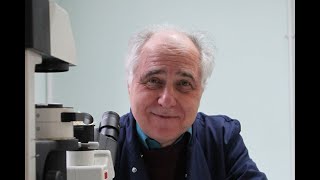
In this informal yet insightful talk, Alfonso Martinez‑Arias explores the concept of "self‑engineered" biological systems, positioning them between fully engineered devices (e.g., computers) and purely self‑organized phenomena (e.g., clouds). He argues that living tissues, such as the intestinal epithelium, blood, and bone, exemplify self‑engineered systems: they are reproducibly assembled from identical starting cells each time, yet they retain a degree of autonomous organization. The speaker critiques the current organoid field, noting that most organoids (e.g., brain‑like "mini‑brains") are highly variable, whereas intestinal organoids display remarkable reproducibility. He stresses that genetics alone cannot reconstruct these systems and that engineering‑style, quantitative approaches are needed. Historical analogies to Descartes’ mechanistic view of organisms and early automata illustrate the long‑standing desire to build biology. The talk then focuses on gastrulation, the pivotal early developmental event, describing its conserved molecular code and its relevance to disease. Ethical constraints, especially the 14‑day rule governing human embryo research, are discussed, along with the promise of using embryonic stem cells to model early development without embryos. The centerpiece is the development of "gastruloids"—aggregates of mouse (and potentially human) embryonic stem cells that self‑organize an anterior‑posterior axis, express key patterning genes (Brachyury, Hox, Sonic hedgehog), and recapitulate somite and spinal‑cord formation. The speaker emphasizes the importance of precise initial conditions (cell number, volume, timing) for reproducibility, and highlights collaborations with engineers, physicists, and computational biologists to quantify these parameters. He concludes with a call for new, quantitative, engineering‑driven strategies to decode the self‑engineering logic of cells, beyond genetics, to enable reliable disease models and drug testing.
Chapters
It's very, very kind of her. I've had a lot of issues with my presentation and I'm waiting for it to come up. And I can see that, I mean, we just spent— it's coming. So I, as I said, I have to apologize. I don't know what's going to come out in the screen. I think scientists are not very good at following instructions. I think that's why we find interesting things. If we followed instructions all the time, we would never find anything. So I missed one crucial thing about the instructions. And this morning I've been given a lesson on the fight that is going on between Microsoft and Mac. And I've been a victim of that this morning. You've been a casualty, a collateral casualty of that. And I'm really hoping— I mean, everything seemed to be working by the time I came in. I just would like to know if we're going to have a presentation. I can't hear. Okay, well, let me tell you in the meantime while we get there. I think it's quite a good example. I think I called this talk the self-engineering of biological systems. And I think this is a very interesting example of what is a self-engineered system, you know. The Macs are engineered, or the computers are engineered, which means that they have very little repair. They have the possibility of very, very little self-repair. I mean, you can put two Macs together or two computers together and they will never make another computer. And when you have a problem, as you can see, the problem sort of tends to amplify because the system is relying on a set of instructions that are very, very rigidly put into the system. I mean, that's what it's an engineered system. You can have self-organizing systems. If you look at the clouds outside, you will see that the clouds, for example— I mean, the presentation was full of interesting movies. I don't know whether we will have a presentation, but I hope that we can have at least a discussion. I think that clouds, for example, are very good examples of self-organized systems. You look at the sky, and you can see that the condensed water is forming these very beautiful shapes that play on our imagination. And what you will find is that every cloud is different and suggests something very different in your— there are many examples of self-organization. Biological systems are neither self-organized, and I'll give you some examples of that, I hope. If not, I will tell you about them. And they are neither engineered. They have elements of both, but what is interesting about the biological system is that it's absolutely reproducible. That is to say, it looks as if it's assembling itself in a very interesting manner, but it does it every time it starts, it's going to produce the same thing. And it does it from a system that is completely of identical elements at the beginning. So that's very different from a self-organized system, and that's very different from an engineered system. And this is what I'd like to call self-engineered systems. Now Andrea has given you very good examples of the field of organoid development, which is one that excites a lot of people. And I think there was a question that was asked by a chairperson to Andrea, which I thought was very relevant. And I would take that, in a way, my talk was going to address some of these issues. Which system is harder to produce? I hope that I can show you some examples of what the state of the organoid field is, because there is a lot of what the Americans call baloney. And I will explain that. I think apart from the intestinal organoids, there is very little that actually is useful or reproducible. People will tell you, I mean, that's why I do like the term self-organization for a lot of this current state of what Matthias likes to call V1.0 organoids, because they are self-organized, which means that every time you do the experiment, you will get something completely different. The exception is the intestinal organoids. And I have some examples which I hope to show you of what's that. One of the most famous cases is the mini brains. You all see the poster child of the mini brain thing. Now, if you try to do the experiment at home, at home not, but in your lab, what you will find is something completely different. And I've heard many people complaining about that. Because we have no control, no absolute control over what's happening. And I think the intestinal organoids are a particular case. Now, if you want to think just for a second about what we can actually— what's going on in your— looks like I'm not going to have a presentation. But I hope you don't mind that I tell you some of my thoughts about the ability of systems to self-engineer. And I'll be happy to show you the presentation. We can go to a corner later and I can show you the presentation with the movies. But just think about your body for a second. Think about your body. Take the intestinal epithelium. And I'll come to the point that I wanted to make with the talk. I think that— think about the intestinal epithelium. You get a new intestinal epithelium every week. Your whole intestinal epithelium is completely replenished any week. Unbelievable. As you are listening to me, and we are waiting for the presentation, Your system is making 200 million blood cells every minute. I mean, that is remarkable. No engineering system can achieve that kind of faithfulness and that kind of similarity. The intestinal organoids that Andrea has introduced and that are by far the most reliable and the best with the very good, they are imperfect. And I know that Matthias' lab is working with whom we collaborate and we have a very good relationship and I learn a lot from them. They are trying to improve them because they don't have the most differentiation differentiated part of the system. They can regenerate, they can reproduce the stem cell part. The reason why your body is so able to basically every 10 years you get a new body. That's very good for me. When you get older, you think about your bones, you know, when the clothes don't fit and you think you are getting fat, that's really that your bone structure is changing because every 7 to 10 years you do get a new set of bone structure. So don't worry if your pants don't fit. I mean, that has nothing to do with what you eat. It has to do with your bones changing. So if you think about that, it is absolutely remarkable that your body is changing over the course of your lifetime without— I mean, with a great precision because the bones are growing at the same time that your gut is changing. That when you think about this, this is a remarkable feat that evolution has adjusted. And what you have is a self-engineered system. And what you do have— we could have the timer on by now. By now we know that there will not be a presentation. But as I said, if you want to see the movies of what I'm going to tell you about, you will be very, very, very, very welcome. But let me tell you, just bear with me. If you want to see the movies, you can go. But if you think about it, that's very the reason for this very perfect— it's like a symphony if you think about it. The body is like a symphony in which there are different parts of the orchestra are playing and everything sort of plays in a very according to some score which is somewhere. Where is that score? That score is in the DNA. And you know what? We have no idea of how that score is translated. This is a meeting of genetics. I am in the Department of Genetics, so as I say, I can say anything I want about genetics. If I wasn't in the Department of Genetics, I couldn't. But because I am in the Department of Genetics, I can. And really, genetics has been great in telling us what the elements of the system are. But genetics is no use when we try to reconstruct the system. This is why the engineering approaches are much more interesting. For example, if you want to know how a car works, you can remove a screw here or there, run the car, it will smash against a tree or against another car, and now you look at this wreck and you try to figure out what the role of that screw was. That's genetics, okay? You will never learn how a car works. You will learn what the different pieces, how important the different pieces are. Sometimes you will remove a screw and nothing will happen. Sometimes you will remove screw and something very dramatic will happen. That's what we've been doing for the last 30 years when we try to understand how organisms are made. I think lately some of us have realized that it is much better to try to build a car from its component parts, and that's the way you get— sometimes you will get parts together that work, And sometimes you will get parts together that don't work. You have a reference, which is a car that some person has built, but that's the way you learn. And that's the kind of approaches that Andrea has shown you. The problem is that there are two kinds. I am a developmental biologist, which means that I want to understand how organisms are made. And a lot of this field has been run by genetics. And right now, I think we need to change. We have the pieces. Let's try to put the pieces together. What is important when we try to bring these pieces together is that we have to realize that the real protagonist, the real elements of these systems are not genes, they are cells. And we understand very little about cells. Cells are like computer chips. Don't tell me that we have a presentation. Now, I didn't know that I was going to come to Milan to be challenged. So I don't know, I'm pressing here. So I don't know what's going to come up here, OK? I don't know. Oh, good. We can all be happy. But I think I've told you a lot of this at the moment. Let me see. So you know, that's engineering that I was telling you about. This is what we think. There is only, I think, one movie that is going to play. But it's an interesting movie, OK? This is slightly chaotic. But you know what? The body is— development is slightly chaotic, and order appears. So I hope that order will appear here. So this is what we think when we think about engineering in terms of— of biological systems. But you know, people have been thinking about engineering for about 300 years. About the 17th, 18th century, people started to think that human beings, that organisms were mechanical devices. This is when Descartes or La Mettrie start thinking about this. And these men, people started building what they call automaton, which is that they could rebuild. I mean, this is really what we are doing with organoids. In the 18th century, they were doing it with with metals and springs and little cranks. And this man was very, very famous. He devised very famous things. One of his most famous creations, which I think we can see here— it actually is one of the few movies that play— was this duck which ate and defecated. And this was a great attraction in Paris. You see, this was like the intestinal organoid of the time. I mean, they could actually— I mean, you can see, there it goes. So they were very, very happy. Everybody was very, very excited. I missed it on the point of the thing. And really what has changed, what has changed in— I mean, these are the real DACs, which of course you can put two of those DACs and they will not generate DACs, but the DACs generate DACs. That's a very important realization. And really that's the question. I'm rushing over what I was telling you before. And really that's the question that we have today. I mean, how do this is sort of a single-cell RNA-seq sort of device, and how do you transform that into that? I mean, we know from the, you know, strange numbers appear. I mean, I expect anything happening in this presentation. So do you, of course, by now. You didn't expect this present on a Sunday morning at 9 o'clock, did you? Neither did I, but we are earning our coffee together. So, you know, John Gurdon taught us many years ago that somehow that is in the DNA because his cloning experiment tells us. But I don't think we know how to unwrap that, and this is the way This is the way I see it in— that's as I said, fine. So this is really what I've told you. I can see the intestine. This is an intestinal organoid, and you can see here the stem cells that form the crypts and that are the real great devices of the system. Now, this is interesting how we know this, but that's what it says, an eye lasts forever, but this is a liver. And this is realization over the last 20 years have told us that every part of our body is being replenished with a very, very reproducible— your bones are changing at the same rate that my bones, your intestine is changing. And in fact, when those rates go off, we get sick. So it's very— I think sometimes it's important. This is my interactions with engineers and physicists are very helpful because they make me think about numbers. I think biologists think very little about numbers. And it's very remarkable. How the biological systems have been fine-tuned over the course of evolution to produce numbers. And the secret of the biological systems is in those numbers. So the reason why the body is— because there is these entities. Yeah, I can see that this is not what I expected, but every part of your body is maintained by population. Okay, sorry. I'm just amused about this. So here we go. So you didn't know you were going to be a collateral of the war between Mac and Microsoft. Neither did I. So we're getting there. So there is— the stem cells are the ones that are maintaining this. Oh, God. Now it decides to do this. So I just was trying to tell you that all the genes do is to generate nanomachines. Those nanomachines assembled into cells and are the cells that are at the heart of everything that happens during the development of an organism or the development of a— okay, that seems to be more stable now. And this is really what Andrea has shown you, that it's about intestinal organoids. Now, The stem cells are very, very good and are very interesting because they are programmed. Somehow they are programmed to give rise to particular organs. But they have an internal dynamics. Never forget the timing. At the moment, we don't understand where that timing is encoded. And it is that timing, when you put it in space and in the context of an organ, that determines that you are what you are. And of course, there is one cell that is more striking than any other cell, and is the zygote. And the zygote gives rise to the whole organism, to all the tissues and organs. And that's a human being. And the key process, the key moment in the development of any organism is what happens this very, very early timing. I mean, in the early parts of development, in particular during this process that is called gastrulation. Because at that moment, at that moment of gastrulation, which is indicated here, and this would be a movie now, this is actually a frog egg that some of you might have seen in your lectures. You can see that it's a ball of many, many cells. It develops a little hole, the movie will not play, and what you will see is that all of a sudden this ball, in a very dramatic and very well choreographed manner, transforms itself into what looks like a tadpole. Which doesn't look very different from what you are, with the head at one end, the trunk in the middle, and the back end. And that's what the process of gastrulation is. It's what I like to call a process of cellular origami, in which you take a population of cells and you transform it. What is interesting is that the embryos of different organisms are very different in the beginning. So a frog is a ball, but a human being is a disk. It's a flat disk, as you can see here, which is why Andrea likes to mirror, to model his things on these flat situations. And what you can see is that in the process of a week, these flat cells transform themselves into this structure where you start to recognize the head at one end and the tail and the trunk in the middle. That's the somites that will give rise to the trunk. That's the heart sitting there. So it's a very dramatic and very interesting process. If you get this process right, you're going to go ahead and become a human being. And indeed, when you think about gastrulation, we know very little about gastrulation in humans for reasons that I will tell you in a minute. We know a lot about other organisms, but it's interesting that a lot of the pathologies— this is from a textbook of human embryology— a lot of the pathologies associated with humans don't happen just at implantation where a lot of the embryos are lost, but it happens during gastrulation. Gastrulation is the art of fixing the relative position of the primordia for the different organs. So there is an imperative to understand gastrulation. We already know from different organisms, from our studies of different organisms during time, is that although the different organisms look— they act differently, the basic code seems to be conserved. And we need to understand this paradox. Between the conservation of a molecular network and the very differential acts of cellular behavior. The reason for that is that the real drivers, the computation happens in the cell. I mean, after all, when you run, that's an irony that I'm gonna say what I'm gonna say, different programs in your computer, they should use the same hardware that is running the different softwares. And in a way, that's what we have to understand. So over the last few years, there has been very great advances in our understanding of human development. And in fact, this was work from Ali Emati-Rivandu that showed that they could culture human embryos in vitro until about the time of gastrulation. At that point, you have to stop the experiments, and the reason for that is the Warnock Report. The UK has probably the most advanced legislature in the world concerning embryology and concerning human development. And many years ago, in 1984, and between 1984 1984 and 1990, it was a lot of discussions between the scientists and politicians in the UK laid down the guidelines for the way we think about development, particularly with human. And one of the things that was very, very important is what is called the Day 14 rule. And the Day 14 rule says that if you ever— because at that time I don't think it was contemplated what the human embryo would be, but they decided that human life starts at the beginning of gastrulation. And there are several reasons for that. That's the moment where you get an axis. That's the moment when you get a brain. And that's called the day 14 rule because it is at day 14 that human gastrulation starts. Now, one of the things that has happened with studies like the one from Ali Hemati-Rivandlou is that there is a question to actually revisit the 14-day rule. And this is now a matter of great discussion and great because whether we should revise this rule to allow us to study this absolutely crucial process of gastrulation, but as I have mentioned to you, not only fundamental biological processes are taking place, but there is also a lot of pathologies and a lot of interesting views of human development. In the meantime, the alternative would be to use embryonic stem cells. And the reason for that is that, and this in a way connects with what, Andrea has been doing, if we are able to reconstruct these early events in vitro from embryonic stem cells, we don't need embryos. And that's something that some of us have been interested. From a point of view of developmental biology, I never thought that we could deal with the, with the law at many levels over time. So embryonic stem cells, just to remind you very quickly, are clonal derivatives of very early mammalian blastocyst. I think people talk about pluripotent stem cells from other organisms, but mostly it's And you can differentiate them in vitro into anything you want. And this is true of mouse as it is of human. What interests me always is that they will not make a mouse in vitro. However, if you put them inside the mouse, they will make a mouse. And this has always been a little bit of a paradox for me. So the interest in the context of humans and in the context of ethics, a great breakthrough was achieved by the development of human iPS cells. Because in that manner, you don't need to make an embryo. There is also a very interesting experiment from Robert Lanza with single cells from embryos, which allows us to also think of the cells from embryos in a very different manner. So this is encouragement for us to develop in vitro systems for these very early stages of development and see what we can learn with that. And Andrea, has introduced to you one of them. One of the remarkable things that has happened over the last few years is that all of a sudden when we leave cells in vitro, and I mean leave, I mean, I really always get very bemused when these people talk about organoid technology. Because this is like talking about children's architectural abilities when they are building Lego blocks in the thing. I mean, all we have is the ability, privilege, if you want, to watch these cells do things. We have very little ability to control what they do because we don't have— and so we have these very disembodied brains and disembodied optics, which I think pose more questions than we think. But don't think that we do very much to get these observations. And you know, you can get a lot more different organoids. I mean, that goes to the question of our chairperson about really, but if you leave the intestinal organoids to you are in the chance saloon, in the last chance saloon. I mean, these things don't work as advertised. And I think one of the reasons, and Andrea brought up the issue of the mesoderm, I mean, the brain and the optic cup, it seems what we've learned from development is that that's what cells will do and want to do when you leave them alone. In order to get the rest of the body right, of course you're going to get something. By now we know embryonic, I mean, adult stem cells will generate these organs. Things happen. Biology has a tendency to organize itself. You ask, whenever you hear a talk about organoids, you should ask one question to the speaker. What frequency do you get those organoids from and how reproducible they are? And if they tell you that they are reproducible and that they have an orphan, you know they are lying. So I did encourage you to ask that question. Or they are EPI who have never been in the lab for the last year. I mean, that's the two things that can happen there. So the reason for that is that the system, in order to generate all those organs, needs some axial organization. And I like to show the diplodocus because that's the relative size of a brain, which is what people brag that they can do to the rest of the body. So if we could get the rest of the body, we are going to relate the spatial organization of the system in whichever way you want. And really, what— this was again the movie of gastrulation. And what you're going to see, what we need is to get an axis. Axis. This is just to highlight that there is a very important gene which tells us that we've got an axis, and Andrea has introduced this. This is a gene called Rac1, which is the one that drives this process of gastrulation and ends up always— whether you are a chicken or a sheep or a mouse— it always ends up at your posterior side. What Andrea was showing you is a radially symmetric human embryo, whether you believe that such thing exists or not, it's up to you and to Andrea, but we can talk with him later. But what I want to tell you is that this Brachiori has this, this symmetry broken and this disability. So the question is whether we can use what we are learning from ES cells to generate this. The reason why I put the alchemic symbols plus chiron, PDO3, leaf, and IFTF is because at the moment, to me, the state of the, of the ESL field is very much like the state of alchemy in the 17th century. But as a friend of mine says, don't worry, Alfonso, remember that chemistry is alchemy plus numbers. So in a way, if we put numbers into what we're doing with the ES cells, we might get something like the chemistry of the ES cells. This is what I really— I've been very dumbfounded that we can't get the movies to play, although I think there is one that may play. But over the last few years, and in collaboration with the lab of Matthias and a lot of help and inspiration, we've been developing this systems that we call gastruloids. And the reason why we call it gastruloids is because they reenact the process of gastrulation. And basically, we start with— we've been doing this with mouse. We start with mouse embryonic stem cells, and we let them aggregate in, in microwell dishes. And remarkably, I think this is a movie, what you are seeing there is Brachyury, and you can see that Brachyury, if you look carefully, is being restricted to one side of the, of the, of the aggregate. And I don't know how long this will get. You can also see that this starts to elongate towards the one part, and as you will see in a minute, you can see that that brachioradialis is really localized to one side. So it's acquiring a polarity that is like the embryo, and then it will start elongating. And in fact, as I hope to show you— as I said, I'm not sure what's going to come next— we can get them to grow in the laboratory for about 5 days, and you will see what happens with this very interesting interesting organs. These are movies that will not play, so we'll jump them. This is how the cells aggregate, but I don't think that they will play anymore. This is just to show you that we can do these experiments with different genes and that different genes will position themselves relative to this axis that emerges very early on in a manner that mimics very much the embryo. So gastruloids are— we are using them to study. You can see how they elongate over the process over the course of a few days. And really all we do, you might say, what do we do? What is very important, and this is maybe the lesson that we have to learn, and I'll come back in the context of the organoids that you are more familiar with, we have to be very careful about the initial conditions and the states of the cells in those initial conditions. The number of cells, the volume in which they are, the timing of the chemical events that we do. But if once the system gets going, which is after 3 days after the pulse of chiron, the system is running autonomously on its own. So very much like an embryo, which I just showed you how gastrulation is a very important moment in the life of an embryo. And if you go through gastrulation fine, you have a very good chance of making an embryo. This is something I should say that we would never see in a model organism because in a model organism, we are tailoring everything for everything to go right. It is the experiments that we can do with humans because it's a natural occurring population that we realize how important gastrulation is. So this was just to show you the similarity of— this is in a plate and you can see brachyury is located at one side, the cells are coming at the end, and basically that's very early. One of these gastruloids very early, you can see that the cells are moving around. They are coming from this point. There is two axes. We know that there is three, as I will show you in a moment, but there is two axes of symmetry. So we are able to reproduce a mouse embryo in the dish. And this is not a complete embryo. These embryos do not have a brain. There are reasons for that, which has its advantages from the ethical point of view. But I think we are in a very interesting position to understand some things about development. If we let them grow, this is work actually from Mehmet Görgen in Matthias's lab. I told you we are working together. And it's very remarkable that after a week, we basically generate what is the equivalent of a whole spinal cord from your occipital region all the way to the end. And I will show you more things. This is the kind— there is gut structures organized. There is a dorsoventral. There is not only this axis. As I told you, if you go through a gastrulation normal, you seem to be able now to run on a berry. Now, it was just to show you that this actually might play. This is an example. This is a very famous reaction. It's called the Belousov-Zhabotinsky reaction. This is a chemical reaction that runs by a process of reaction diffusion. And this is a self-organized pattern. And you can see there is a man that every now and then goes with a needle and puts a prick. And you get these patterns, which the physicists get very besotted by. And they tend to think that this is really organization in a biological scale. But you can see that every pattern is slightly different. This is very different. So in a way, I've given you the abstract of the talk, now I'm giving you the talk. Now, this is an engineered system. Sorry. This is an engineered system. And you can see engineered system requires a huge amount of control to make them reproducible. And that's really in a car factory, and it's remarkable. I mean, all these are— are being, with the digitalization, they are being much simplified in many ways. But these are self-engineered systems. Here at the top you have a worm, and I think this might even play. These are Xenopus and X, and this is Drosophila. And it's the beauty of the process and the fact that every embryo will do it exactly like that without any external intervention. Somehow, All these processes start in instructions to build proteins that are in the DNA. But I don't think we understand yet the next, the next stop and the next gap. But it's very remarkable and they all do it at the same time. So I think there is much that we can learn about. And these are examples of our gastruloids. Our gastruloids are reproducible, which is a very important thing when you want to study something. I mean, the reason why we've been using model organisms for many years, it's because they are reproducible. Therefore, we know when something goes wrong. If we're going to have an engineered system to study whatever we want to study, whether it is to apply drugs or to study disease models, we need it to be reproducible. That's one of the advantages of the intestinal organs, which, as I say, are by far the best that you can do. Now, I think we have got a system now in hand to study the early events, at least in in mouse. We are starting to extrapolate it to human. But it's very, very important. And that's very reproducible. It allows us to do measurements. When we look at them in terms of gene expression individually, they're all going at the same rate. And when we've compared it to the embryo, they are going at the same rate of the embryo. So this is telling us many things, but in particular that once you activate this machine, this self-engineering the machine is going at the same rate that the embryo. So these are— we've looked at gene expression. This is in collaboration with Denis Duboul, which some of you might know. Matthias, his lab and ours are working together in taking this forward. And these are— if you knew the mouse embryo, you would see a very uncanny similarity. So there are anteroposterior axes. These are genes that are expressed in the posterior part. This is a gene that is not expressed in the posterior part. This is sonic hedgehog, which is expressed on the ventral part. These are genes that are expressed in the dorsal ventral axis. So at least there is only— and this is much later, the system has managed to take this forward in a rather unbelievable manner. We can also let it grow for a little bit, and then that is the spinal cord there. And if we let it, you can see these balls here, that is mesoderm. We know there is mesoderm on the side, and all of a sudden it's start to form these epithelial balls which resemble somites. So we do think that in terms of the mouse, we've triggered the internal programs in a manner that we can now study in vitro and create these things. And this is just to show you most remarkably that not only they have an anteroposterior and a dorsoventral axis, but they have also bilateral symmetry. They have a midline which allows them to organize the system in a— in a rather midline manner. And you can see basically every gene that we have looked in our gastruloids from the embryo, they contain pretty much everything spatially and temporally organized. Most remarkably, and this is the specialty of Denis Dubulle, and this is the work of Leonardo Beccari in his lab, some of you may know about the Hox genes, which are a hallmark of bilateria development, which are activated in space and time in a progression from anterior to to posterior. And basically what we find in our gastruloids is that every single cluster, it's activated in time and in space as it is in the embryo, saying that they are managing to recapitulate all the earlier stages of development. So I think we have a system which is going to allow us to tackle this self-engineering. And that's, I think, where we are in. We really need to to hack into that self-engineering the same way. And this is what I hope that these engineering approaches that we are taking, particularly with Matthias's lab, are going to help us. We do need new approaches that go a little bit beyond genetics, in which genetics becomes a tool to understand how these systems are made. And I do hope that we shall make— we shall get some insights into what the cells do. And as I said, they are the ones— it's not here. The DNA only makes the elements that self-assemble themselves, and this is really the realm of cell biology, the proteins that are encoded, that's all DNA encodes. Somehow there is a new level of organization in which these proteins, which are nanomachines, self-assemble into cells, and then the cells start processing that information and start building the tissues and organs. And it is this interface that I hope we'll be seeing in the next few years. And I think the reason for that is this. You know, this is the poster child of the mini brains that you get in Time magazine. This is what you're going to get if you do it in the lab. This is if you are lucky. And I can assure you, because I've heard it for many different things. So we do need to hack into this. We shouldn't be complacent about getting structures from this and photographing them. We should be— I mean, science progresses because we challenge ourselves. And I think the intestinal organoids, where there is an element of luck, there is always an element lacking the science, but are providing the model to which we should apply. So the things— not only— I think the reason for the reproducibility of the organoids is that it is all in the earliest stages. And if one thinks about it, it is the same with the Crips. If you get right the earliest stages of the system, the rest is going to follow. Somehow the system needs to get its bearings. It needs to get— it's like everything. And the same thing, if you think about it, is the same in life. And really, I mean, that's the way these gastruloids form, and then they will go on. Pity that I don't have to show the movies. And that's probably because, as the famous Louis Wolpert said once, it's not birth, marriage, or death, but gastrulation that is truly the most important time in your life. So with apologies for the rather disorganized and slightly chaotic organization of the talk, but I hope that I have— at least given you some elements for a discussion that we can have in the next few days. All that is left for me is to thank the people, particularly people in my lab, in Matthias's and Denis's lab, with whom we are having a fun collaboration. That is, it's good to work particularly with engineers because they are interested in this element of reproducibility and in understanding the reproducibility of the numbers and the space and time which we need in biology. So thank you very much.
More from Joshua







Scientist Stories: Hans Waterham, The value of phenotypic assays in peroxisomal disorders




Scientist Stories: Joel Zlotogora, Genetic carrier screening programs for reproductive purposes