Scientist Stories: Andrew Fire and Craig Mello, Pioneers in RNA Interference
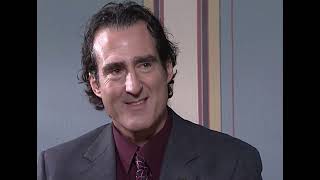
Nobel laureates Andrew Fire and Craig Mello discuss their surprise at winning for discovering RNA interference, a tool that silences genes but whose mechanisms remain incompletely understood. They warn against over-hyping applications, describe what they look for in students, and reflect on the challenge of explaining science to the public.
Chapters
Andrew Fire, Craig Mello, welcome to Stockholm. When we spoke a couple of months ago, just after you'd heard the news that you'd been awarded the Nobel Prize, you both sounded quite surprised that it had come as quickly as it has done. Has that surprise subsided at all?
I'm still surprised by the whole thing. I mean, it's obviously a really major honor to be honored by by one's colleagues in such a way, but at the same time, there are a lot of other scientific discoveries and other contributions to the field we're in that are probably no less deserving. So it's an interesting situation to be in.
I agree. It's just been really— you know, every day I'm still not sure it's really me that's the recipient of this recognition. I really feel it's more the prize is is awarded for the science, and in that respect, we're representing many researchers, and it's a great honor to be here to be spokespeople for the discovery, really, and to bring some attention to the science and the fun of science.
And how have the last couple of months been? Have they been whirlwinds, or—
Very much so.
We each have our scientific day-to-day lives, and intertwined with that has been a lot of interesting other things and also planning a trip to Sweden. The combination of things has made for a busy couple of months for both of us, I think.
I imagine. The prize was awarded for a very concrete discovery, a single event, if you like. Is there a moment you can recall when the penny dropped that RNA interference was what you were looking at and you understood how it worked?
Certainly not, because we still don't understand how it works. I think it's been very, very exciting and fun to be part of this field because of all of the, you know, the interesting interrelationships between, you know, the RNA interference phenomenology and then the developmental mechanisms that are related to it. And I think we have so much still to learn about the basic mechanism of gene regulation, even going beyond RNAi as playing a role in that process. But we— honestly, I feel that it's been exciting at many steps along the way. But I can't think of a single point where we felt we understood the mechanism really. I mean, I still feel we don't understand the mechanism fully, that we have a great, much better idea about the underlying mechanism now, but we have so much more to learn that it's, I think, it's just still a lot of fun. It's a very exciting field.
But there was an insight gained that it was double-stranded RNA doing this. —It's interesting to think about the path that led to your ability to come up with that insight. Would you put it down to the fact that the two of you came together, perhaps, to work on this problem?
—Certainly a major part of it. The other major part of it was that the groundwork that had already been laid in the puzzle, primarily by other people, A major part of it was the people that worked with us that all had very significant contributions to it. It was really a matter of being in the right place at the right time. Particularly the work that had been done in plant systems and in fungal systems, and some of the work that was done elsewhere in the worm system by, for instance, Su Guo and other people, really set it up so that we could just inject RNA that we would make in the lab and then get a result in a couple days or a day, what happened, and that made a very sort of efficient system to begin to test hypotheses.
I think that the understanding that there was an organismal response to the injected material was part of what was very exciting to me, even though I didn't understand certainly what was happening. The observation that the silencing signal could spread from cell to cell and even be transmitted in the germline were extremely exciting. And yet, we didn't understand how the silencing was triggered. And in fact, we were not focused on double-stranded RNA. In my case, we were thinking more in terms of double-stranded RNA as a— potentially as a replication intermediate or something that was produced during the amplification process that was necessary for the inheritance to occur. And we thought more of double-stranded RNA, therefore, as an intermediate in the silencing. And Andy really deserves credit for the, you know, thinking, well, perhaps the double-stranded RNA is an important trigger as well, because in some organisms like ourselves, there's clearly a double-stranded RNA response that had been studied previously that's involved in antiviral mechanism. So we were thinking more of it as an intermediate, which it really is as well. It's interesting. There are more than— double-stranded RNA is not only— it is a trigger, but it's not the only trigger for this type of silencing. So I think that also was an element that added to the confusion in the literature on the earlier work done in plants, because it wasn't clear when a virus or a transgene was introduced into an organism, what the trigger was. And I think the reason some of that confusion exists is because there are more than one trigger, triggers for this. So it's an interesting twist, really, that we still don't understand all the different ways that you can trigger the silencing. But double-stranded RNA is, in fact, an intermediate in many of these related silencing pathways. That's one of the elements we still are very much in need of understanding.
You emphasize the basic science aspect of all this, and that there's a lot still to be understood. I suppose the world has really embraced RNAi as a technology and an application. Do you find that worrying that people leap on it in its partially understood form and want to use it?
I don't find it a worry. I think it's natural for people to want to use— I mean, hope is, especially when you have a sick family member, you know, this sincere desire for some sort of a treatment or a cure. And I think it's important for the scientists to make sure that that doesn't get blown out of proportion, that that hope doesn't get overstated. I can totally understand the excitement. I think that if anything, we really need to focus on— it really is an exciting discovery, and there are many applications that it can be put to. I think we need to get that message out. I don't think there's anything to fear except perhaps going too far and being too hyperbolic in promoting it. But I do think we need to get the message out because it's very important as a research tool, certainly, and potentially as a therapeutic. So I think it's important.
I think, I mean, it's almost a humorous thing, but one of the things I found is that when I've gone to lecture in classical genetics, which is a tool, many of the tools of which were preexisted us by several, you know, decades and 100 years or whatever. One of the things I find is the students will suggest, well, why not do everything by RNAi? And that certainly isn't— there's still very much room for classical genetics. It's really the basis for a lot of what we do and what we think about. And so— and other techniques of genetics that also have come up in the next— the last few years, targeted gene disruption, which is extremely valuable technology and useful and a number of other things. I think that students realize that when they get into the depths of research problems, that they really have to understand not only what's been developed in the last few years, but also things that were developed 100 years ago.
Do you think the funding climate is as accepting of basic research as it used to be?
Well, I think that the funding climate is tight now, in part because of the tremendous wealth of information that we have about the human genome, for example, the sequence of every gene. With more— with that as background and the information technology that we have for searching that database, I think it's harder to get funding to do the kind of work that Andy and I did. Quite often, it's a priority that has to be made to fund this or to fund that, and both really should merit funding, but there just isn't enough funding, money. In a way, I think we're being strapped in part through the success of the scientific enterprise as a whole, creating more good science that can be done. And I think that's an— it really can be looked at as an opportunity, and the message that we have to get out to the people who make policy in terms of the politics and the funding decisions, that there's a great opportunity with the advances that have been made in medical research, you know, the genome sequence and the information technology, the gene profiling technology for looking at the expression of genes in cells, and things like RNA interference that allow you to shut off genes to study their function. These provide opportunities that, you know, make it actually harder to get basic science funding because now you can do a lot of these experiments in human cells, and that's not always good. I mean, the fact is, if you're taking away the money from the very basic science that could lead to new technologies, new discoveries, that would be very hard to get in a vertebrate cell system. So I think we, as in the peer review process, we've seen this. I know that I have, where they're just, you have to make a decision and they're just all, you know, several grants that should be funded and they're just not going to make it no matter what, because there's all these others that need to be funded. So these priorities, it just becomes an impossible situation. We really— and to fix that, we just need to get the message to the public, I think, to support science more so that we can continue to get the funding we need.
Does your funding come mainly from basic research funding from NIH, or from— is there also an industrial component to what you do?
Our funding comes from nonprofit sources, both completely. My lab is funded completely by NIH. Right.
I have funding also from the NIH and Howard Hughes Medical Institute, but the work that was done really was funded privately, some private grants other than those mentioned as well. So philanthropic support for disease-oriented grants like the ACS, the March of Dimes funded some of my research, and also the Pew Charitable Trust. —so to mention, I think, all of them. Right.
So those are all, you know, they're charitable organizations and they're public organizations, but they're all toward the goal of improving healthcare in a general way.
So when you bring new people to work on the problem into the lab, I was interested to know what you look for in those people. Students coming in.
I learned a lesson from a mentor of mine, a gentleman named Donald Brown. If someone walked up to the door and said, "I want to learn," that was a really major feature. Even if the person might not come in with the most spectacular of previous mentorship or whatever, that was a really major thing, and I think that's something that one looks for as someone that really wants to learn?
Yeah, it's very hard. I think sometimes students who are very bright are not motivated enough. And some— I think so the major ingredient is motivation and a desire to follow through with an experiment. And those are qualities, frankly, that you cannot glean in an interview. I think some of the best scientists struggle sometimes getting actually into the lab because the interview process might weed them out, or they may not have the patience for it, or to go through it. But I find it is once you work with someone, you really get to know what they're like. So most laboratories have what we call a rotation process. So students will get an opportunity to work with you in the laboratory. As they decide on which group they want to join during graduate work. And so I think that's been for me the most important aspect, is having time to spend with the student in the laboratory, find out what they're like.
And I suppose that recommendation must become a very important part if you're looking for somebody's long-term commitment to problems. You need to know that they've done that before.
It can be, but they're so unreliable. Right.
It's hard because the recommendation letters often say as much about the person writing the letter, and so you have to factor two different, basically, components into the equation.
It's sometimes difficult to parse out which is which. Many letters from Asian laboratory heads are incredibly brief, and it's hard to read into the line what they really mean. I think it's just stylistic choice that they make not to overstate anything. Then sometimes in the U.S., you get these letters that go on and on and on, and you don't know how much is genuine either. There's no perfect way. I really feel that it's hard to tell.
And advance. You mentioned mentorship, and obviously you've both been the recipients of great mentorship. What's that taught you about your own practice of mentoring?
That's a great— I feel so fortunate to have had great mentors along the way, and still colleagues really, that I've learned so much from. Very, very important. But I could spend hours talking about mentors.
Could you summarize just a couple of the things perhaps that you try and practice as a mentor for your students?
Do you want to take a crack at that?
Yeah, I think that one tries to listen to what people are thinking. Because first of all, that's part of the mentorship process, and second of all, it's part of the scientific process. No matter who it is, even somebody who's just walked into the lab with— we've had high school students working in the lab. And the other thing is that you try and work with people as colleagues for each other and get them to ask each other questions, because again, I don't necessarily provide the best mentorship for people in the lab, the best advice. Getting advice from each other has always been really critical. And that's one of the nice things about running a research lab, in some cases, that you can't just sit back and let the ship run. But on the other hand, there are a lot of cases where the really important critical suggestions come because one person on one project suggests something to another person working on another project. So it's a really important aspect of it is to keep it a collegial environment where people are comfortable talking to each other and suggesting things to each other. And I've just been very fortunate in having had people in the lab who are both outstanding scientists and also outstanding mentors to each other, to me as well, in a lot of cases.
I think it's so important, you know, that the conversation that you have in the laboratory with your students or with your advisor, as I can recall in my own past, those are so important as a way of learning and as a way of coming up with ideas. It's interesting. Because the two people walk into the room and the idea is not there. It's not, it's not always brought there by one individual. Usually the idea materializes in the room or in the discussion group. And the one thing that I really fear is coming in with my own idea that's wrong and pushing it too hard. And so when you're mentoring, it's important not to be too forceful about pushing your idea and to try to let people know that they should voice their ideas. Sometimes that, for me, has been the most difficult part, is getting the people in the lab to say what their ideas are. A lot of times, their idea is wrong, and my idea is wrong, and the other person's idea is wrong, but you put them all together, and all of a sudden there's a new idea.
That might also be wrong, but it's still worth it. It's a lot of fun.
At least maybe there's an experiment you can do. Will distinguish. That's the fun— that is a really fun part of the process. And one thing I fear, and I've heard that once you have this kind of a prize that your students are too respectful and they won't question, you know, you say something and they'll actually believe it. You know, science is all about, you know, questioning things, and if you don't question it Doubt it, yeah. And so I think we need to reinforce that message to our students after we come back from this brief period of celebration. We'll need to go back and make sure that we get right back to the questioning.
Well, that neatly brings me on to the question of your youth. You're both very young, and this is going to bring considerably greater notoriety. How do you think it's going to affect your future research paths? And that question of distance from your students is certainly one aspect.
I hope it's not too much in that respect. I feel, you know, that it's like having a new job, you know, an additional job, you know, in addition to running a lab and trying to be a good advisor and leader for your group to have this new responsibility to be a spokesperson for the science and to try to do the right thing in terms of promoting the understanding of the science, which we just had a very interesting discussion in Parliament. I actually felt a little bit guilty during the discussion because scientists really haven't done a very good job of educating the public. About science. That's partly because it's nobody's job. They don't really make that your job. Somehow, it's supposed to be part of your job, but that's not the part that you get paid for. You get paid for doing the research and publishing the papers, which are read by your peers, not by your neighbors. I think it's an important responsibility, I feel, but I hope it doesn't distract too much from the science. I'm very excited all the time by what's going on in the lab. I want to get back to it.
Yeah, I think, I mean, I really like my day-to-day life of teaching and research and family, and that's a pretty full life for both of us. And so adding, as Craig says, an extra job to that, I'm not quite sure how it's going to work, but somehow we'll probably manage.
When you talk about education, educating people about science, Is there a particular target group you think of? Is there one group of people who you think need this more than any other?
No, I think it's a lifelong process to be educating yourself constantly because knowledge, you know, science is a fluid thing. And it's not just science, it's all realms of knowledge really. There's all kinds of interesting things to learn in this world, and I think we need to make our children into lifelong learners somehow. Don't lose them along the way to the interesting world that you can expose them to. It's very difficult. There's no easy solution, I think, to this question of how best to educate. That's what we also were talking about earlier today. I'd be interested to know how the Swedish people have solved that problem. It's interesting to learn about different cultures and how they approach learning, but it's very important.
What turned you on to being a lifelong learner? What was it that happened to you that made you— was there a single event that made you want to learn?
I hate to say it was a single event because it was a lifetime, it's a lifelong thing. I think one thing that in terms of lifelong learning is that it's surprising how little you need to change a description of a piece of science between talking to the Nobel Assembly of the Karolinska Institute, which is one of the highest audiences in science, and people that are extremely knowledgeable about everything you're talking about, down to kindergarteners. Actually, if you just change some of the language, you can use almost the same discussion for both groups and have a significant fraction of them probably at least come away with some understanding of what you talked about, probably the same fraction in each case.
I think science as a process, though, it naturally tends to make you want to be a lifelong learner. If you're going to enter into an enterprise where there really are no right answers, I mean, That's what science is all about. It's testing ideas. It's trying to disprove an idea. Once you have an idea, the first thing you do is try to test it to see if it's right. The most fun thing is when it's wrong, and then you have to come up with a new idea. It's a constant process. If you ever thought that you would understand everything, certainly that would be very boring to be part of. A science that is now a complete understanding of a process. Fortunately, I don't think that's going to be our problem for many, many, many years to come. I think it's a natural process once you've decided that you would like to be involved in science. The nice thing is, every day it's an exploration. It's a new discovery out there waiting to be made. Just the process itself, I think, is lends itself very well to the basic human nature of liking to explore and to understand and to see new things. That's what science is all about. I think we can do a lot better in terms of recruiting people into the sciences if we could somehow project that at an earlier level in education. Right now, I think too much of our education is focused on memorizing facts and not enough on the exploratory process of science and what a real scientist does is so different from what you're exposed to when you take science in high school or grade school. I feel that for me, in my own understanding of what it would be like to be a scientist, I was fortunate to have a father who was a paleontologist, so I was aware of science going on at the Smithsonian where he worked, the museum. Where he worked and going on field trips with him. Getting to see that real scientists don't just read books, they actually do things, is so important.
I'm interested in this idea of being able to explain the work to any audience. I think Ernest Rutherford said that you shouldn't be doing science if you couldn't explain it to your tobacconist, which is kind of an antiquated concept nowadays perhaps, especially especially in the US, but your field doesn't lend itself immediately to simple explanations. There's a lot of jargon associated with it. The fact that you feel that you can, with few alterations, explain it simply is a very encouraging message.
I think it takes a little bit of time. One of the things that's that's challenging is to explain things in a very short time. You need to be able to go back through some of what's been learned, often with a group that's not as aware of the history, and go through that. I think with that, it becomes more straightforward. What I think is a challenge, and is often impossible, is when people say, "Can you tell us in a few words," you know, The one that struck me in the few days after the announcement of the award was thinking about the scientists or the mathematicians who solved the Poincaré conjecture, which is a very important conjecture in mathematics, and thinking about someone walking up to them and saying, "Well, in a few words, can you explain to the general audience both the conjecture and the proof of it?" Of course, that certainly is doable in a little bit of time, but it's It's difficult in a short period. And when I thought about that, I was a little bit more relaxed about my somewhat ineptitude in once occasionally when I'm asked to explain things in a few words, being able to do that totally clearly to everybody. It can be a challenge.
I think one of the real interesting things about talking to people about your work is, you know, you're right, there's a lot of jargon. And a lot of times that's just very distracting. But, you know, I find that sometimes children even ask the better questions because they don't— you know, they just don't know what a word means, for example, and they say, "Well, what is DNA?" or "What is RNA?" You know, "What is a protein?" And you could then spend, you know, hours and hours discussing what it is. And as long as the child or the adult continues to ask questions,, you'll find this wonderful conversation that can go on for quite a while. I think that I agree with Andy. It just takes time, and it takes the audience also being curious enough and not afraid of asking a question. I think most scientists are happy to spend some time discussing their work. Quite often, they wonder why no one asks a question. Well, they didn't understand something very early in the talk. They stopped really listening, and it's important to sort of raise your hand and say, "But can you explain this one thing?" And quite often that's a really good question. So the hard part is losing people, and it's a two-way thing. So conversations with a child can sometimes be even easier because you know how to track the conversation to keep them engaged.
I suppose they lack the fear of asking the silly question, which science must suffer from a lot, that people feel excluded from it and therefore feel they'd make themselves look silly if they asked a question.
Yes, there are very few really silly questions. Some of the very silly questions that you might ask a scientist, like, "How do we really know the world is flat?" for instance, at some point in ancient history, that kind of question is valuable at some point.
Terrifying, because they reveal the fact that one can't explain it oneself. Yes. One of the things we did this year for the first time was to invite some of the public to ask questions via the internet. I'd like to, if I may, just pose a couple of those questions. So first of all, the specific one from Carrie Austin in Texas who says, "What application in genetics will offer the most effective use of RNA interference?" I think there are probably lots of—
in the field of genetics, there are probably many different applications. Again, combined with the tools of both classical genetics and the sort of more modern set of technologies that don't necessarily involve RNAi, like gene disruption. I think altogether they give us a really good toolbox. Not something that in 20 years we're going to say, "You were doing that?" You know, that's the— these were the crude tools we had in 2006 to do experiments. I think that they'll also improve over time. So I'm not sure they'll just— there'll be one best application in research genetics. I think there'll be many applications, but they'll be combined with all the other tools. And will always be wanting better tools.
Yeah, I think it's— certainly it's speeding, I think, the use of vertebrate cells as genetic tools for studying the function of genes. And there's some really exciting technologies that have been developed that allow it to be applied fairly broadly in studying genes in cells in culture. So I think that that's helping a lot. But by itself, it's really— it's just the first step. So I think it's being used primarily as an inexpensive but fairly rapid way of doing genetics, and really needs to be backed up ultimately with other kinds of genetic tools, such as real knockout cells, and perhaps even animals to test these ideas. Long before you really understand what's happening, you have multiple lines of data or investigation that support your work. So, but RNA interference is an important tool, I think, for doing that first round of genetics where there are, you know, 20,000 genes and you want to know which ones are important in tumor or, you know, in some other disease, so you have to sort through a lot, and it's a quick way of doing that, maybe a new way that would have been fairly— would have been impossible earlier. So I think it's providing an important function there.
There was a time when people were talking a lot about the need for standards for such experiments. Is that time past? Are they now widely accepted for the publication of RNA?
No, I think there's still a need for it for There are publications that have a very high standard for proving something, and those cases you really are quite sure that what they're reporting is indeed due to a decrease in a specific gene. And there are some cases where, because of the system, in a few cases where it's actually quite difficult to do the kinds of controls you'd want to do, and for other reasons too, you come away not being as sure of the results. You're certainly sure that the observations are correct, but whether the results are indeed due to a specific gene, I think that there's an interesting give and take amongst people writing and doing work in the field.
Okay, and finally, Bob Found from Calgary in Alberta, Canada, asks a question which we've touched a little bit on already: has winning a Nobel Prize changed your work ethic at all?
Well, I guess certainly not. If anything, maybe getting less sleep is the main way it's changed my work ethic. But, you know, it really is a tremendous honor to have this kind of recognition, and I think I lost a lot of sleep over trying to figure out how to deal with the issues of what to say to policymakers and so on, and how to take on this new responsibility. I think there's a new type of work rather than a work ethic that's changed. Hopefully, we'll do well at that. It's early to say.
It's an interesting challenge for us.
We didn't go to school Some of these things. It's that lifelong learning again.
Yes, lifelong learning.
The hard way.
Okay, well, I see that we're running out of tape, so I'm afraid we have to draw this to a close. But thank you very much indeed for taking the time in a busy week to talk to us. And once again, many, many congratulations. Thank you.
It's been a pleasure.
More from Joshua







Scientist Stories: Hans Waterham, The value of phenotypic assays in peroxisomal disorders




Scientist Stories: Joel Zlotogora, Genetic carrier screening programs for reproductive purposes