Scientist Stories: Ardem Patapoutian, Mechanotransduction and how we sense Touch, Pain, and Sound
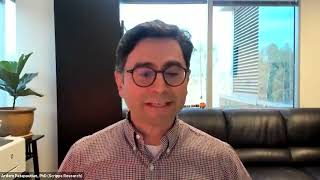
In a virtual Scripps Research presentation, Nobel Laureate Ardem Patapoutian shares his personal background, scientific journey, and the discovery of mechanotransduction receptors (Piezo1 and Piezo2) that underlie touch, proprioception, blood pressure regulation, bladder stretch, and immune cell function. He explains the reductionist cell‑line screening approach that led to the 2009 "eureka" moment identifying Piezo2 as the key pressure sensor, and discusses the broader physiological relevance of these channels. Patapoutian emphasizes the translational potential of targeting Piezo2 for neuropathic pain, hypertension, and other conditions, while noting challenges such as side‑effects and the need for topical delivery. He reflects on why mechanosensation has been an overlooked sense compared to vision, advocates for continued basic research funding, and outlines future directions, including collaborations with Scripps' Calibr drug‑discovery wing. The session includes a moderated Q&A covering topics such as the inspiration behind the discovery method, therapeutic implications, the impact of his Lebanese upbringing, and the broader significance of mechanosensation research.
Chapters
I'm just absolutely thrilled to, uh, introduce my colleague, Artem Katapushin. It was pretty clear when Artem came to Scripps, first came to Scripps in 2000, that he was going to make fundamental contributions to of science. And what's more fundamental than understanding, you know, how we sense external stimuli? And the importance of that contribution and discovery in human biology was underscored today by the awarding of the 2021 Nobel Prize in Physiology or Medicine to Artem and David Julius. I should point out though that, that Artem not only is an extraordinary scientist, but he's just a wonderful mentor to his students and colleagues, as well as a great colleague. Artem has played the major role in building, you know, the terrific neuroscience department we have here at Scripps today. And finally, I should say that Artem, and although last but not least, is just a wonderful person and a terrific friend. And without further ado, Artem.
Hi everyone, I'm so thrilled to receive the phone call and the award today. I guess I wanted to start with a personal story. So my name is Ardem Patapoutian, and I'm of Armenian origin, and I grew up in war-torn Lebanon. I came to U.S. when I was 18, and I guess I carry with me perspective that is maybe different to many here. And as almost a refugee from Lebanon, I've, I guess, learned not to take things for granted, but also have been really appreciative of the opportunities that I have given in this country. You know, I did get educated by public funding and national funding at the UC system. And since then, you know, the last 20 years, my whole independent career has been at Scripps Research Institute. And I owe a huge thank you to Pete Schultz, who just introduced me, has been my mentor and colleague this whole time. And all the other colleagues at Scripps, including all my neuroscience colleagues and the people in my lab who did the work. Oftentimes this prize is given to one or two people, but I just want to emphasize that there's a whole field behind these studies, and specifically within my lab, a big group of young, enthusiastic, smart scientists of graduate students and postdocs who actually do the work, and I share this with all of them, of course. I think I'm not going to talk about this very long, just to give a quick introduction of what I think the Nobel Committee gave this prize for. We are interested in the sense of touch and pain, and this is in a way the fifth sense, perhaps the sense that people take it for mostly for granted. But the reception of this is they do something very unique. So most of the cells in your body communicate through chemicals. This could be hormones such as insulin or neurotransmitters such as dopamine. But your sense of touch has to sense physical stimuli such as temperature and pressure and translate this to a chemical language that your cells and your body can understand. And when we say touch, it actually encompasses many different aspects and submodalities. There's the ability to discriminate small differences in texture. This is called discriminatory touch. There is affective touch, which is a hug from a friend that, of course, during COVID many of us missed these kind of social interactions. That's very important for our emotional health. As well as senses that many of you might have never heard about, such as proprioception, which is the sensation of where your limbs are compared to your body. And this is how, without opening your eyes, you can stand up and walk. Again, things you take for granted, but you can't do it without these pressure sensors. So for all of these senses, we knew there were receptors that do the sensing from either temperature or pressure, but their identity was not known. And my lab and David Julius's lab and again, others contributed by identifying these receptors. And identification of these receptors, of course, opens up the door to study physiology and disease. What are these receptors important for? And what happens when things go wrong? For example, if one of them is mutated. And we have learned a lot studying the last 10 years about without this, you can't sense touch, you don't have proprioception, but also very unexpected places this investigations have taken us. For example, that blood pressure, hypertension is affected by these receptors, as well as when your bladder is full and you need to go to restroom. All of these, if you think about it, are pressure dependent. And again, we're exploring both the basic science, but we're actually at a transition where also with Caliber, the drug discovery wing of Scripps, we're exploring ways to translate these discoveries to the bedside, hopefully clinical studies where we can help people. And this could be in areas of neuropathic pain, for example, but also many other directions that this is taking us that I'm happy to talk about more in the question and answers. So I was just going to stop there, and if there's questions, I'm more than happy to answer them.
Thanks, Artem. My name is Jamie Williamson. I'm an executive vice president here at Scripps, and we're going to do Q&A now. We're going to mediate this through the chat or, or the Q&A, and I will tee up the questions. For a discussion with Artem. So the first one, I think it's a general thing that everybody wants to know, is how did you hear?
Interesting story. I had my iPhone on mute at night so I can sleep, as I do every night, and so I missed a bunch of phone calls from Stockholm at 2 AM Pacific time in the United States. They somehow got a hold of my 94-year-old father who lives in Los Angeles, and I guess even if you have do not disturb, people in your favorites can call you and wake you up. And so my dad actually was able to call me and let me know, which ended up being a very special moment. And I heard it just 2 minutes before they went out to publicly announce the news. So it was a fantastic 2:00 AM moment.
Terrific. Great, great story. So here's a question from Tina Say. So can you talk about the inspiration for the method you use to discover these channels, the touch receptors?
So many times in science, we have to look at a problem and ask the question— the word we use is how reductionist of an approach do we want to take that can satisfactorily answer this question? And for the pressure sensors for sense of touch and pain, we had tried to work directly with the sensory neurons to find them, but this is a very difficult approach because they're very rare. These molecules are, of course, very tiny, and manipulating these neurons is hard. So we took an approach of asking, what if we find any pressure sensor and then look in vivo in the body to find out where and how they are relevant? And so we worked with a very simple cell line that you can culture in a test tube in the laboratory and found one that responds to pressure and then simply what we call knocked them down or deleted them one by one and see when we delete which one this pressure-sensing ability of the cell goes away. And the eureka moment in a way was my postdoc Bertrand Coste, who has a lab in Marseille, France now, after working on this for a whole year and getting one negative result after another, the 72nd candidate that he tested actually wiped out this ability of pressure sensing. So we knew we had something very interesting in hand.
Right. So we're going to try a little experiment here and have Chris unmute somebody with their hand up and see if we can have direct dialogue. Issam Ahmed has a question for you.
Hi, thank you so much for doing this, Dr. Pata-Patil, and congratulations again on the win. Could you please talk a little bit about what the state of the science is when you came into this question and what sort of was the innovative approach that you brought in? I know that you just alluded to that just now in the answer. But yeah.
So I think the, you know, overall in the United States, there has been a very healthy sponsoring of basic research. And over the last few years, this has waned a little bit, but we always try to emphasize the importance of funding basic research, science for science's sake, as I like to say. And that these discoveries find a way to find their practical applications in the coming years. So, you know, my lab is really interested, fascinated in the question of how do you sense this? This was a very big unknown question for us of how you translate physical stimuli into chemical signals. So we're really interested in the basic science, but as you can see, we're very excited to now use this information to do more translational research. And so my message, if anything, is to continue to support basic science. It's a great way not just to satisfy human curiosity, but as we talked about, to translate these into hopefully future drugs that would help patients.
Maybe a perfect segue to the next question from Jonathan Wosen. So can you say a bit more about the therapeutic implications and what we're talking about treating? Is it chronic pain, heart disease? And what, what would be the next steps in going toward translating this into medicine. Are you working with CALIBR?
Yes. So one obvious place is neuropathic pain. So patients who suffer from neuropathic pain have this major symptom called tactile allodynia, and it's a complicated couple of words, but it all means is that when innocuous touch becomes painful. So you all experience this, for example, after an injury or sunburn where just a touch on the shoulder or just wearing a shirt can become painful. And folks who suffer from neuropathic pain have this in a chronic state, and there's no good medications for this. We all have heard about the opioid epidemic, and we really don't have drugs that address this. So we believe from our data and others that blocking one of these receptors, PSO2, could really help these patients. One of the complications is that it's very difficult to find small molecules against it, but together with Caliber, as we mentioned, the Scripps translational wing, we're actually actively looking for such molecules. But also one has to realize that you cannot take this as a pill for your whole body because you will have on-target side effects such as not sense touch, which nobody wants. It has to be more topical in nature of the application of the drug. But this is just one application. As I mentioned, piezos seem to be involved in hypertension.
We also—
one of the beautiful things about basic science is that it takes you in directions that you never anticipate. For example, we have shown that piezo1, the sister molecule that's involved in touch, is expressed in red blood cells and immune cells and is actually involved in potentially protection from malaria, as well as controlling iron levels in your, in your blood. So I think the actual implications of where this could go and where the benefits to humanity could come is just starting to figure out. So there's a long way ahead of us to figure out what indications this could be useful for, as well as actual treatments that we could develop.
Let's try— we have a live question from Gary Robbins. In a 2018 speech, you referred to the area in which you work as an ignored part of biology, and I wondered exactly what you meant and how an area so important can go ignored.
I guess it's ignored in the sense that compared to other senses like Vision. No one on this planet doesn't know about vision because you see, but you close your eyes and then you don't see, so you know exactly what it does. Part of what we study, this proprioception that I mentioned, for example, without which you cannot stand up, you cannot walk, you can never turn it off. And so you take it for granted. Most people don't even know about it. It's not on people's radar. Also, as, you know, neuroscientists, a lot of the focus is on the brain, which is very important, of course, and for very good reasons. But the peripheral nervous system is sometimes not at the forefront. I agree with you that it's very important, and maybe completely ignored is not a completely fair thing to say, but it's been difficult to it has been difficult to address partly because we didn't know what to expect. We know these receptors were ion channels. Other than that, we didn't know anything about them. So, it was difficult to get an entry point. I sometimes compare the finding of the receptors, which is what my lab did and David Julius's lab did, as finding a key to a door to a room. So, this door was kind of a black box in the sense that we didn't know what some of the importance of pressure sensing in the bodies are. And it's very difficult to to do that till you open the door, turn on the light, and figure out what's going on. So these receptors are kind of these keys where enable you to understand more deeply the biology and the disease. Thank you.
So next up, we have a text question from Emma Tobin. Can you talk a little bit more about that eureka moment and what was going through your head when you realized that your team had made this discovery?
It was a wonderful moment. You know, my postdoctoral fellow, Bertrand Coste, who I mentioned, found— he's a very low-key guy. So he came into my office and just said, "Ardem, I think I found it." And I didn't— he was so calm that I didn't even get it. And so, but when he finally told me what really went on and showed me the data, we were, of course, so excited and literally jumping up and down. So it was something we were looking for for years. Years, specifically for him, for over a year of work. So it was a wonderful moment indeed.
What year was that?
So that was in 2009.
Terrific. Another question from Megan Multaney. Congratulations. Can you share a little bit more about what you and your father talked about?
It's funny because one of the things he did is apologize that he shared my number with the guy from the Nobel Committee, which I assured him it was totally fine to do.
Okay, okay.
Um, he was, he was, he was actually very emotional. He was very proud. And, um, and I actually have yet to be able to call him back and talk to him, but I will do after this. I'm looking forward to talking.
Yeah, make some time. Okay, I see we have another hand up. And that is Tina. Say hi.
I was just wondering if you could— I'm with Science News magazine, and I was just wondering if you could talk a little bit about how you can use these molecules in medicine when they seem to have such wide-ranging effects on the body. I mean, if you're trying to treat, you know, nerve pain, but they're affecting your bladder and your iron concentration in your blood, can, can you really target these molecules? To just deal with the pain and how would you do that?
Indeed, it's a challenge. As I was mentioning, I think the only reasonable way forward is to think about it as a topical application. You wouldn't affect the whole body, but just the affected area. You could potentially do this to an elbow, for example, that suffers from pain, or you could specifically deliver it to to the bladder, for example. These are things that have been done in the field, but not minimizing the problem, that is indeed one of the challenges of drug discovery to this group of molecules.
Okay, we have— Gary's typed in another question, Gary Robbins. So you grew up in Lebanon during this period of civil conflict, and so, you know, could you just relate how you saw your life developing and you know, could you imagine this day?
Um, I certainly could not have imagined this day. Uh, not just this day, I couldn't have imagined living the life of science. I mean, that was not something that, um, I knew any scientists in Lebanon. I didn't know that was a career. Actually, even after coming to United States and I was an undergraduate at UCLA, thinking I was going to medical school, I was a pre-med And honestly, the only reason I worked in a laboratory was to get a good letter of recommendation for medical school. But I really fell in love with bench science and basic science, and, and my career has changed to what I consider a very privileged place where we can do science that is both extremely gratifying and as well as has interesting applications.
Great. Issam has another question. Issam Ahmed, unmute.
Hi. Yeah. Can you hear me?
Yes.
Yeah. It's a quick two-parter. So, in terms of proprioception, how could your discoveries about the mechanism of proprioception translate therapeutically? What applicability could that have? And the second part is your colleague, David Julius, he talked about this sort of supermarket moment with capsaicin and wandering through the supermarket and thinking about capsaicin. Do you have a similar or an analogous kind of, not maybe supermarket moment, but something which is similar to do with you know, in terms of pressure? I know you were talking about, you know, all the things at the beginning, the top of the call, the hugs and so on. Did you have a sort of similar kind of moment which led you towards this?
Um, I'm sorry, I've been awake since 2 AM.
The first question was, um, the applicability for proprioception. Yes.
So one of the interesting things that I didn't mention yet is that there are people out there who have no functional PSO2. So this is the sensor for touch and proprioception. And interestingly, clinically, these individuals weren't assessed as being touch insensitive because this is such a— going back to the ignored field— if you go with these symptoms of uncoordination haven't learned to walk till 5 or maybe never learned to walk without help, clinicians usually look at this and say it might be motor neuron disease or muscle problem. Nobody thinks of the sensory side, which is required for these pathways. I would say that just the identification of this and sequencing of the mutations of these individuals have already helped the clinicians in understanding what is wrong and what needs to be done. For example, So if you don't have proprioception, your only way to be able to deal with this is to compensate with another sensory system, in this case, the visual system. So you have to constantly look at your limbs to get this information of where they are instead of inherently feeling that sense. So I would say that, you know, just for these patients, understanding what's wrong and building on this biology that we understand is already, I think, a very important part of the translational part of this study. I will not go into futuristic ideas of making super sensors of this where you have excellent proprioception and you can break all the records of basketball greats such as Kobe Bryant, but let alone that, again, Lots of people from the VR type of studies, virtual reality, are very interested in the sensors from that perspective as well.
Yeah, and the other part was, did you have an analogy to the sort of something analogous to the supermarket moment? What that led you towards thinking about these questions?
I mean, it's— I don't have one actually, because it was on the platter kind of the whole time, because we were studying temperature sensation together with David Julius's lab, and we knew the other big elephant in the room was mechanosensation, and lots A lot of people were interested in this, and we just didn't know exactly how to approach it to get to it. And it's this kind of— after going through various reiterations, just realizing that the reductionist approach of these cell lines in a culture dish was the simplest way to approach it was kind of the only eureka moment, I guess I would say, that we had.
Thank you.
I see there's no other questions. Maybe I'll just ask one wrap-up question. Obviously, these seminal studies were done many years ago and your lab is firing on all cylinders now. What are you doing now and where do you see your lab going?
I think there's two perspectives I'm very excited and interested in. One of them is The identification of these receptors, yes, answered this big unanswered question of how do you sense touch, blood pressure, and bladder stretch. What the future holds that's really exciting to us is areas that pressure sensing was important, but we didn't know about it. I quickly touched upon this with how immune cells use this receptor to decide how much to gobble up other cells, and this is a mechanical process and consequences, as I mentioned, are things like how you regulate your blood iron levels. And so I think this is just one example of many that we're going to find that pressure sensing in our bodies, in our cells, are important, but we had no idea. And of course, the other is to try to translate some of these studies. I already mentioned the studies were initiated with Caliber that we obviously want to pursue.
Terrific. Well, I think, I think the general public can really relate to this particular prize. Everybody understands the sense of touch at a visceral level, so it's, it's really great to see your accomplishments rewarded. It's a great day for you, it's a great day for Scripps, and thank you all for coming to this, this virtual conference. We will have a transcript of, of the Q&A and the whole proceedings available, and we'll be putting this out on YouTube. Thank you all for coming. Congratulations, Artem.
Thank you, everybody.
More from Joshua







Scientist Stories: Hans Waterham, The value of phenotypic assays in peroxisomal disorders




Scientist Stories: Joel Zlotogora, Genetic carrier screening programs for reproductive purposes