Scientist Stories: Benjamin Kleinstiver, Nucleases used for Gene Editing
Benjamin Kleinstiver describes how his lab engineers CRISPR nucleases to improve gene editing. SpRY, one variant, recognizes four times more target sites than the standard SpCas9. High-fidelity versions eliminate off-target cuts while keeping editing power.
Chapters
of Gene and Cell Therapy. My name is Hildegard Bühning. I am Professor for Infection Biology and Gene Transfer at Hannover Medical School and currently the President of the ESCT. The European Society of Gene and Cell Therapy is a nonprofit organization. We promote fundamental and clinical research in gene therapy, cell therapy, and genetic vaccines, and part of our mission is education. We therefore launched the eSchool in May this year. Today, we will focus on design and nuclear aces. Our speaker, Professor Dr. Benjamin Kleinstaiver, is a well-known and highly recognized expert on this topic. He studied biochemistry and human biology at the University of Toronto. And after a postdoctoral period time at the University of Western Ontario, he moved to Harvard Medical School. Presently, he is assistant investigator at Massachusetts General Hospital and assistant professor at Harvard Medical School. He has an impressive publication record, holds a great number of patents, and has received numerous awards. Today, he will introduce us into the field of designer nucleases with his talk entitled Nucleases Used for Gene Editing. We are very much looking forward to your lecture.
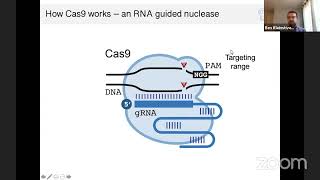
All right, thank you for that very kind introduction. And of course, thank you for the invitation to speak in this eSchool virtual lecture format. Excited to participate in this lecture series full of very prestigious speakers. So my name is Ben Kleinstiver. I have a lab at MGH and Harvard Medical School in Boston. Really, the focus in my lab is trying to apply protein engineering to make more effective CRISPR technologies. So just a quick disclaimer, conflict of interest. I have some outside activities where I receive fees for consulting or advising for different companies, and I am an inventor on patents or patent applications describing some of the work that I'll speak to you today about. So as an outline of what I hope to accomplish today, I'll give you a general background to genome engineering technologies, both nucleases and base editors and epigenome editing technologies. And then in the second half of the talk, I will tell you about some of the protein engineering work that we've done, either through structure-guided molecular engineering or through directed evolution, to make CRISPR enzymes that have improved properties. To make them more useful for research and potentially for therapeutic use. So Dan Bauer gave a really beautiful lecture last week, so I won't describe this in too much detail, but I think it's worth mentioning again that CRISPR enzymes, or any other genome editing platform for that matter, the purpose of the technology generally is to introduce precision chemistry in DNA. This can be either a DNA nick or a DNA double-strand break, but essentially that's largely the goal of the genome editing platform is to introduce some sort of perturbation into the DNA sequence. From there, the endogenous DNA repair pathways in the cell take over, and they can repair the DNA in multiple different ways depending on the type of DNA repair pathway that is used. Um, for trying to disrupt a gene, you ideally would like the cell to use a pathway like non-homologous end joining or microhomology-mediated repair that will lead to variable length insertion or deletion mutations. And these mutations are often largely dictated by the sequence context of the DNA around the break. And this is an active field of interest and really interesting work to understand how the cell repairs the DNA based on the sequence context. So again, these types of breaks generally lead to out-of-frame mutations that can be useful for knocking out genes. There are other types of DNA repair pathways in the cell that are far more precise, like homology-directed repair, where in the presence of a donor DNA template encoding some sort of change, the cell can use that molecule to repair the DNA break and then essentially transpose that change into the genome. So you can use homology-directed repair pathways to make small changes, or even large multi-kilobase changes to introduce genes into specific parts of the genome. All of these methods are permanent, heritable ways to make changes to the genome. There are several new platforms beyond just genome-editing nucleases that allow us to make very precise changes to the genome. So these are base editors and prime editors and a few other enzymes. I'll describe these in more detail in a few slides, but just introducing them here to say that these are other ways to make permanent heritable changes to the genome. Between nucleases and other adaptations of these enzymes, we have this really rich toolbox of ways that we can manipulate DNA sequences to make permanent genetic changes. Beyond this class of genome engineering technology, there are other types of tools that allow us to make more transient perturbations to the genome, one of which is called epigenome editing, where you can take a CRISPR molecule or any type of DNA-binding molecule and fuse some sort of heterologous effector protein to that DNA-binding domain. By tethering that to certain positions in the genome, you can perturb transcriptional states. So you can activate or repress gene transcription. You can modify histones based on positioning histone-modifying enzymes in certain positions of enhancers. You can fuse fluorescent proteins to DNA-binding domains and tether them to parts of the genome to image where that DNA exists in the cell. And there's really a very rich array of ways that you can functionalize the genome using these dead Cas9 molecules or other DNA-binding domains that allow you to functionalize parts of the genome. So to summarize this slide and really the genome engineering field as a whole, there are lots of different ways that we can make permanent heritable genetic changes. So mostly these enzymes on the top here, or transient perturbations to the genome to understand the biology of the cell. Dan Bauer also nicely described these technologies last week, but I think it's again worth mentioning that there were several methods to edit the genome. Prior to CRISPR. One of the first platforms that was discovered and characterized to make designer changes to the genome were these enzymes called homing endonucleases or meganucleases. These are still fairly widely used for genome engineering. And then after that, there were zinc finger nucleases and TALENs that are these dimeric nucleases that require the positioning of this dimeric Foc1 nuclease domain. To summarize essentially all of these platforms as a class, they are enzymes that make really extensive protein-DNA contacts to the target site. This is nice because this allows you to understand how these proteins interact with their substrate, but this also makes retargeting to them— retargeting them to different sites in the genome somewhat challenging because they do make extensive protein-DNA contacts. For zinc finger nucleases and TALENs, throughout their description and evolution, They became more easy to program to different sites, but overall compared to CRISPR, genome editing with these platforms was, was more difficult because you had to essentially build an entirely new enzyme to make new protein-DNA contacts to different target sites. So genome engineering simply was not quite as scalable as it was prior to CRISPR because of the, the need to reprogram protein-DNA contacts instead of RNA-DNA contacts. And that's why CRISPR has actually been so revolutionary, is that the vast majority of the target specificity, or the ability of the CRISPR enzyme to recognize a DNA target site, is largely programmed by a guide RNA molecule. So most of the target recognition you can encode in a single guide RNA, which you can synthesize and clone into a plasmid and have that be expressed in cells. You can do that for several dollars and in a few days, which really changes the scope and scale and pace at which genome engineering can be performed with CRISPR-Cas molecules. And again, the fundamental difference here is that the majority of the target specificity is encoded within the guide RNA of the Cas molecule instead of requiring extensive protein-DNA re-engineering with all these prior platforms. Okay, so beyond just CRISPR nucleases, this extends to TALENs and zinc finger nucleases as well. There are a handful of properties of these systems that we think about in the laboratory to make them more effective for genome engineering. One of the most important and primary considerations that we think about is on-target editing, or essentially how well can the enzyme edit at a given site in the cell. Ideally, you would like your enzymes to be highly active so that you can edit a very high proportion of your cells. Another really important consideration is targeting range. This question essentially is where in the cell can you target with your platform, or is there some inherent constraint of your CRISPR enzyme or your TALEN that prohibits you from targeting precisely where you need to, to make a change of interest or to understand a certain part of the genome. A third important question is the specificity or safety of genome editing. So, knowing that we can target where we'd like to, the question then becomes where else in the genome are we targeting? What other sites in the genome potentially are receiving DNA double-strand breaks, and what are the consequences of this so-called off-target editing at other sites in the genome that generally resemble the intended on-target site? And one final property that I think is worth mentioning is the edit outcome or the genetic consequence of editing. This is largely important for the permanent genome editing technologies like nucleases and base editors and prime editors. But a few slides ago, I described to you the many different ways that a cell can essentially repair a DNA break. Often the cell doesn't choose just one way to do this. It can provide a mixture of different outcomes in a population of cells. But ideally, as a researcher, you're trying to achieve one single genetic consequence. So, when thinking about the type of enzyme or platform that you're using to make a change, you really have to consider the efficiencies or the dependencies of these different pathways to achieve the highest probability of achieving the edit that you want in the vast majority of your cells. There are, of course, other properties that I'm not describing to you here, like delivery. And I believe you've heard lots of lectures on viral vectors and delivery, either for gene therapy or gene editing. So those are extensively described elsewhere, but this list here is not meant to be comprehensive, but just properties that we think about and how we can use protein engineering to improve these in the context of CRISPR genome editing. Okay, so some background on how CRISPR enzymes work, just to frame some of the protein engineering work that we've done. Here I'm showing you a cartoon of a Cas9 molecule. So this is the CRISPR effector that introduces DNA breaks into cells. So with this blue blob, that's the Cas9 molecule. I'm showing you here the guide RNA in dark blue. The 5' 20 nucleotides of this guide RNA is what we can reprogram to virtually any different sequence to target this Cas9 molecule to different sites in the cell. When the Cas9 molecule is programmed with this guide RNA, what it does is then begin to search DNA for specific sequences called these protospacer adjacent motifs, or PAMs. For the commonly used Cas9 from Streptococcus pyogenes, so spCas9, it requires this guanine dinucleotide PAM of the form NGG. So N being any nucleotide, and this guanine dinucleotide is nearly essential for the Cas9 protein to bind and recognize DNA. When the Cas9 guide RNA complex recognizes a PAM, And again, the Cas9 does this by protein-DNA contacts. The protein will begin to unwind the two DNA strands and pair the 5' end of the guide RNA with the target DNA strand. So you get about 20 bases of specificity here between the guide RNA and the target DNA. When sufficient pairing occurs between the guide RNA and the DNA, the Cas9 protein undergoes several conformational changes to activate its nuclease domains And that leads to a nicking of both DNA strands and the generation of a double-strand break in DNA. So coming back to those properties that I showed you on the last slide, just to reiterate, the targeting range of CRISPR-Cas enzymes is largely dictated by the availability of these PAM motifs. Again, for Streptococcus pyogenes Cas9, that's this guanine dinucleotide, meaning that Cas9 can really essentially only target sites in cells that harbor this NGG sequence, and that the vast majority of the genome-wide specificity or the safety of the platform is dictated by the fidelity with which the guide RNA can pair with the target DNA. It's really important to note that CRISPR-Cas enzymes are not perfectionists. They can make mistakes. So the Cas9 protein can make mistakes when it's recognizing the PAM sequence and lead to recognition of non-canonical PAM sequences. And also, the pairing of the guide RNA with the target strand DNA can often tolerate substitutions. Both of these will consequently lead to recognition and potential editing of off-target sites that have mismatches compared to the on-target site. OK, so just to give you a sense of what types of enzymes are out there, there's a lot of different CRISPR-Cas enzymes in the natural diversity of CRISPR systems. I just showed you this cartoon of spCas9 on the last slide. I'm listing several properties that I think are important for genome editing, whether it be the size of the enzyme, which can have implications for the ability to package these enzymes into viral vectors, the PAM of these enzymes, which again means where in the genome they can target, the type of DNA break that they generate. So this has implications for the types of edit or the edit outcome, how the cell resolves different types of DNA breaks, the type of guide RNA that these different Cas9 molecules use. Some use very long guide RNAs and some require much shorter guide RNAs. This has implications for synthesis of the guide RNAs, either by in vitro transcription or through commercial vendors. And then some CRISPR enzymes are much more adaptable for multiplex editing, meaning the ability to target several sites in a cell at the same time. So these properties here are shown for the commonly used SP Cas9. You can think of this Cas9 from Staphylococcus aureus, or SaCas9, sort of as a cousin of SpCas9, but it has several different properties. It's quite a bit smaller than SpCas9, which means it has advantages for packaging into viral vectors, but there's a trade-off because it requires this longer PAM motif, which means it can't be targeted to as many sites in a given random sequence genome. And then there are largely very different Cas enzymes like Cas12, that have numerous different properties versus Cas9. They recognize a very different PAM motif on the opposite end of their spacer. So generally, they recognize T-rich PAMs. They're relatively large enzymes. They leave a very different type of DNA break. So in contrast to Cas9s that mostly leave blunt DNA breaks, they leave a break with a 5' DNA overhang, which again has implications for edit outcome. They require a much shorter guide RNA, which again has advantages for synthesizing these molecules. And these enzymes are naturally very effective at multiplex targeting in cells, which means they can edit more than one site simultaneously in a cell because they can process a transcript of several guide RNAs into single guide RNAs. I won't expand on that, but there's a lot of literature describing how you can target efficiently several sites in a cell with Cas12. Molecules. Okay, so those are just a few of the very many different CRISPR nucleases that are out there with different properties. In the next few slides, I'll just describe to you some of the common adaptations of CRISPR molecules for different functions in genome engineering. So one that I briefly described to you before is epigenome editing, where you can convert your Cas9 molecule into a programmable DNA binding platform You do this by inactivating the two nuclease domains of Cas9. So this becomes essentially a dead Cas9 programmable DNA binding module. To that, you can fuse different effectors. Here, this is depicting a gene activation molecule, whereby using a guide RNA that targets this dead Cas9 activator to the promoter of a gene, you can upregulate transcription several-fold. So this is a very early paper from the Cell paper back in 2013 where with a pretty unoptimized system they were able to achieve 25-fold increases in transcription of this gene by targeting a dCas9 VP64 activator fusion to the promoter of this gene. In the time since, these systems have become far better in terms of their ability to titrate gene expression, and there's a much more known about how to leverage these systems to perturb genes beyond just functionalities like gene activation. So you can repress genes, image genes, perturb histones, all kinds of other functionalities. One other platform that's certainly worth mentioning is base editors or base editing. So these molecules are fusions of a nickase version of Cas9 to a deaminase domain. And these deaminase domains perform chemistry on the accessible single-stranded R-loop of DNA, again because the guide RNA occupies the target strand DNA of the target site. So this leaves the single-stranded DNA accessible to the tethered deaminase domain, which allows this deaminase to perform chemistry on DNA bases within the accessible part of this R-loop. There are two different main flavors of base editors that have been described. So there are these cytosine-based editors that generate C-to-T edits and adenosine-based editors that generate A-to-G edits. These deaminase domains can only act within actually a very short window of the accessible DNA, which means that their editing profile can only exist in the short edit window of usually between 3 to 5 nucleotides. So what becomes very important when using base editors is the availability of PAM sequences because the Cas9 enzyme must recognize the PAM, and the DNAse domain is essentially positioned at a fixed distance from the PAM motif. So to be able to make precise edits with base editors, you have to have a PAM motif at a defined distance upstream of the edit that you want to make, or the base editor cannot generate the C to T or A to G edit that you are interested in. And then finally, one very recent new genome editing platform is called prime editing, or these prime editor molecules, which are fusions of Cas9 to a reverse transcriptase domain. These molecules are really interesting because you can encode genetic changes within the 3' tail of your guide RNA, and then essentially the reverse transcriptase will take that information and write that into the genome where your Cas9 molecule nicks the DNA strand. So these are potentially very powerful tools because they now allow you to make all kinds of different point mutations. So not just the common transitions that are enabled by base editors, but all types of single nucleotide substitutions. And they also are capable of writing in short insertion or deletion mutations based, again, on encoding those in the 3' tail of your guide RNA and the reverse transcriptase writing that sequence into the genome. This platform was only described a few months ago back in the fall. And I think there's a lot of exciting potential for this platform. And hopefully we'll learn lots more in forthcoming publications. So to close the summary of genome engineering technologies, just a few points to make that these technologies are very powerful. They allow us to make precise permanent changes to the genome. This field did exist before CRISPR, but really the adaptation of CRISPR for genome engineering has changed the scope and scale at which these experiments can be performed because it's, again, as simple now as reprogramming a guide RNA to target new sites in the cell. Naturally, the diversity of CRISPR systems is truly incredible. There are lots of different enzymes that exist in nature, meaning that I think there's lots to be discovered and understood about other types of CRISPR molecules that might have different properties. And of course, the applications of these technologies are nearly endless. So Essentially, you imagine it and someone has probably already functionalized the CRISPR molecule to perform that function in cells. So things like epigenome editing, base editing, and prime editing, and many others, these are very exciting applications of genome engineering technologies that allow us to make really precise and unique edits to cells. OK, so that's just a brief introduction to lots of the different platforms that exist for genome engineering. And I'll now tell you about some of the work that I did both as a postdoc and now in my lab, where we're using protein engineering to enhance different properties of these CRISPR enzymes. So coming back to one of the slides that I showed you in the introduction, there are several properties of CRISPR enzymes that we'd ideally like them to have, both for use in the laboratory but also therapeutically. We'd like them to be highly active so that they edit the vast majority of cells. And we would like them to be broadly targetable so that they are not constrained by a PAM sequence and can edit virtually anywhere in a given genome. And then finally, we'd like them to be very safe and specific, editing only at the site that we want them to in the cell and not editing other sites in the genome that look like the on-target site. Unfortunately, all of these designer properties that we want for genome editing tools in the lab essentially don't exist in nature because these properties would be contrary to the fitness of the CRISPR system. CRISPR is a bacterial immune system for bacteria to defend themselves against invading phage and other types of DNA molecules. And if these Cas9 proteins actually were highly active and broadly targetable and unable to tolerate mismatches in their target site, they would be a very weak immune system because phage can evolve much quicker and because they'd likely be able to self-target their own chromosomes, and that would lead to cell death. So all these designer properties that we want in the lab mostly don't exist in nature because these would make the CRISPR system a low-fitness system. So what we do actually in the lab is use protein engineering to now impart these desirable properties into these CRISPR enzymes. We can make the enzymes more active, more targetable, and much safer. And this has obviously no impact on the natural biology of CRISPR systems because we've taken them out of that context to use them in the lab. So I'll describe to you 3 short stories about how we've been able to make more broadly targetable CRISPR enzymes, where we've gone from the relatively restrictive NGG PAM requirement to be able to target many more sequences than any given genetic sequence. I'll describe to you how we've been able to engineer more highly active CRISPR enzymes. So this is work that we did in, uh, on Cas12a molecules. And then I'll describe to you several different pieces of research where we've been able to design safer CRISPR technologies that now eliminate off-targeting but retain high levels of editing at the on-target site. OK, so in the first of these three short stories, I'll talk about targeting range. And coming back to that question, it simply is, where in the genome can you target? If your application of interest is to knock out a gene,, it's actually very likely with the common Streptococcus pyogenes Cas9 that you'll find an NGG PAM. We expect this sequence motif to occur roughly once in every 8 bases of DNA in a random sequence genome if you consider both DNA strands. So for gene knockout applications, it's very likely actually that you'll find this PAM several times in the first couple coding exons of your gene, allowing you to knock out this gene by generating a frameshift mutation. But for some of the other Cas9 or Cas12 proteins that I described to you earlier on, many of these recognize or require longer extended PAM motifs, which means that they're less likely to be found as often in the genome, meaning that sometimes you might actually find a sparse availability of PAMs limiting the types of editing that you can perform. For applications beyond nuclease-based gene knockout, like making changes by HDR or trying to differentiate two alleles that differ by single base pair changes, or even for base editing where you have to position the deaminase in a very short sequence window, some of these enzymes, including SpCas9, can actually be very restrictive in how you can use these enzymes for genome editing. This also becomes very important in how you envision perturbing non-coding parts of the genome as well. If you're trying to interrogate transcription factor binding sites or microRNAs, you need to be able to position edits or indels in very defined sequence windows, often sometimes as small as 5 or 6 bases. So again, the PAM requirement can limit lots of different applications if you're not able to identify a PAM near your target of interest. So what we did a few years ago is we undertook a protein engineering effort to try and relieve this constraint by engineering Cas molecules that could target new sequences. So we did this by directed evolution in bacteria. We used the system to evolve Cas9 proteins to recognize new PAMs. I won't describe to you the details of the study because it's been published for several years, but the upshot was simply that with a wild-type SB Cas9 protein that requires this NGG PAM, it across these 8 sites was very weakly able to recognize 3 of the 5, but completely unable to recognize the remaining 5 sites. So if you are trying to use SpCas9 to target sites with NGAPAMs, that's largely very inefficient because the enzyme simply is not good at recognizing NGAPAMs. But what we're able to do through molecular engineering and directed evolution is to develop a protein that now had efficient activity on sites with NGAPAMs, allowing us to now access very efficiently these sites in the genome with NGAPAMs that were largely inaccessible to the wild-type protein. So the consequence of this work was that we essentially doubled the targeting range of genome editing with Cas9 because these enzymes, the wild-type SpCas9, where it could recognize NGG, we had now engineered this variant that could recognize NGA. So we basically doubled the targeting range of Cas9. So that work, again, was described back in 2015. In follow-up work, we described a version of the smaller SA Cas9 that had roughly 3 to 4 times improved targeting range. So this is a smaller ortholog that has advantages for delivery and viral vectors but has a longer PAM motif. We're able to relax that motif slightly to enable it to target more sequences. And then with the Cas12 proteins that recognize these extended T-rich PAM motifs, we published a paper last year showing that we could improve its targeting range by about 5 to 6-fold through protein engineering. Collectively, all this work, what this means is that with the wild-type enzymes, you generally have, for most applications, an often useful targeting density, but for some applications, an inability to target specific sites of interest. With all of these new engineered proteins, you have a much greater targeting density across any given a genomic amplicon between all of these different platforms. So most of that work that I just described to you there is essentially the efforts to alter the PAM requirements of different Cas molecules, where we get this useful but somewhat incremental improvement in targeting range because we knew— we engineered new proteins that recognize different sequences, but not one protein that has vastly expanded targeting range. So beyond just altering the PAM, there's been a lot of effort to relax the PAM requirement. So you now have one enzyme that can recognize many sequences instead of several enzymes that recognize different sequences. So I'll describe to you some of our recently published work that essentially takes that second approach, where we tried to make a version of spCas9 that could target many sequences and was no longer constrained by a PAM. To do that, we used crystal structures through a rational directed engineering and basically asked if we made amino acid substitutions in parts of the protein that are important for contacting the PAM, can we essentially relax the requirement for a PAM and allow or develop CRISPR molecules that can target more frequently throughout the genome. So what I'm showing you here is data in human cells with wild-type spCas9 where it very is effective at targeting sites with an NGG PAM but is largely ineffective at targeting sites with NGA, NGC, or NGD PAMs. This is widely known and has been known for several years for wild-type SB-Cas9. So in this work that we just published a few months ago, we engineered one protein that we call SPG, and this stands for SB-Cas9 protein that can target NGN PAMs. And what we found with this protein actually is that it can now very effectively target sites with NGA but also NGC, NGT, and NGG. So with this one enzyme, we basically quadrupled the targeting range of Cas9 because it can now access all of these sites at much higher efficiencies than the wild-type protein could before. The obvious exception here is that the wild-type SpCas9 protein is still more effective at its canonical NGG PAMs compared to our new SpG protein. But in aggregate, the SpG protein is far more active across these NGN PAMs compared to wild-type SPCas9. But we didn't feel like stopping there. So SPG gives us 3- to 4-fold improved targeting range throughout the genome. But we wondered if we could now use this SPG protein as a molecular scaffold to further relax the PAM requirement of SPCas9. So SPG is very effective at targeting sites with NGN, but what about NAN PAMs? These are— had been basically been completely inaccessible to Cas molecules prior to this work. So what I'm showing you here is the activity of wild-type spCas9 again, where it can efficiently target sites with NGG and weakly target sites with NAG or NGA PAMs. So in the second protein that we engineered, again using SPG as a scaffold to engineer a new version of Cas9, we called this protein SPRY, where it now is able to target sites with NAN PAMs and NGN PAMs. So with a single protein, in aggregate, actually is able to target this class of PAMs called NR, where R is A or G, where it can very effectively target most of these sites at levels previously impossible with wild-type spCas9. So the reason that we call this protein SPRY is that it's an spCas9 variant that can target sites with NR PAMs, where R is A or G, and also in data that I'm not showing you, very weakly target sites with NYN PAMs. PAMs where Y is C or T. So this is an spCas9 variant that could target NR PAMs and NY PAMs. We think this CRISPR molecule actually has a lot of utility for genome engineering because for the first time it can access nearly all of the genome. So this is one protein that can access nearly all PAMs instead of having lots of proteins that can access many different PAMs. So And one of the genome editing contexts that's largely constrained by the requirement for a PAM is base editing. So I described to you earlier how base editors can really only position their deaminase domains to make edits at a defined distance from their PAM. You essentially get about a 5-nucleotide window with these C-to-T base editors and a 3- to 4-nucleotide window with this A-to-G base editors. So if you have enzymes that can recognize more PAM sequences, this allows you to make precision edits at many more— many additional places throughout the genome. So what we did in our recent work is essentially test whether or not these new PAM variants were compatible with base editing. What we found here is that the SPG protein shown in blue was very effective as a CBE across sites with NGN PAMs making C-to-T edits, and it also was very effective as an ABE on sites with NGMPAMs making A to G edits, all at levels previously impossible with the wild-type SB Cas9 protein. We also found that the SPRY protein was very effective as a CBE and ABE, both on sites with NR PAMs and sites with NY PAMs. So again, these enzymes can access nearly all of the genome and allow us to position base edits far more precisely now than before because we can access a much greater PAM density than the wild-type Cas9 protein or the wild-type base editors. So to summarize some of our recently published work, what we're able to do is engineer a version of Cas9 that takes the required NGG PAM and relaxes that down to NGN, and this is the variant that we call SPG. And we're able to use this protein as a molecular scaffold to further engineer that down to a protein that can recognize NR PAMs and weakly recognized NY PAMs. We think this is really interesting because this allows us, again, to access nearly all of the genome. And there are lots of different applications where this improved targeting range would be really tremendously beneficial. And these are areas that we're currently exploring where we can leverage these near-PAMless variants to make previously impossible edits. To summarize that part, essentially we have lots of different options now to edit new sequences in the genome that we couldn't before with naturally occurring proteins. So moving on to thinking about the activities of these proteins. So essentially the second question that we think about is the on-target activity of CRISPR enzymes. How efficient can they edit at a given site in a cell? Of course, again, we would like our proteins to be highly active so that they can edit as efficiently as possible. What we were able to do just last year is engineer a version of Cas12a that not only had improved targeting range, but also had about a 2- to 3-fold improved on-target editing compared to the wild-type Cas12 protein. So this data set here with the wild-type Cas12 protein, we saw about an average 25% editing across these 20 sites. But with our enhanced Cas12a protein shown on the right here, For most sites, we saw a 2- to 3-fold improved editing at the on-target site. This means we can edit much more efficiently in cells with these enzymes. So that's activity as a nuclease. We also use this enhanced Cas12 protein as an epigenome editing technology. So again, just as a reminder, we take the nuclease-inactive version of Cas12, we fuse an activation domain to it, and we target it to the promoter of a gene. What we were able to observe here is that with the wild-type Cas12 activator, we saw about 100-fold improvement in gene transcription, but with our enhanced Cas12 protein that has improved activity, we saw about 1,000-fold improvement or 1,000-fold gene activation. So about a 10-fold improvement in activity compared to the wild-type activator. Across additional genes, we saw essentially the same trend where we saw anywhere from 100 to a 10-fold improvement in gene activation with these enhanced Cas12 molecules. And then finally, some collaborators and other groups in the field have shown that they can use these enhanced Cas12 proteins that have improved on-target activity in the context of genome-wide screens. For the sake of time, I won't belabor this point, and I encourage you to check out these papers. But essentially what they show is that by using this enhanced Cas12 protein that has higher on-target activity, they can achieve much better performance in their genome-wide screens compared to the wild-type Cas12 protein. So to summarize the work to improve the activities of different Cas molecules, we were able to engineer a version of Cas12a that had much higher on-target activity. In our paper, we showed that we could use this both for nuclease targeting, for base editing, and for epigenome editing. And then in follow-up work with collaborators and several other groups in the field, they're showing the utility of these proteins in other applications like CRISPR screens. So having a more active protein allows them to edit more efficiently across the genome. Okay, so I've described to you how we can make more active proteins and more broadly targetable proteins. The question then becomes, how safe and specific are these enzymes? And of course, this is a very important consideration both for research and for therapeutics. Ideally, we want an enzyme that targets only one site in the cell and not an enzyme that targets other positions in the genome that have a sequence that resembles the on-target site. So what we did a few years ago is essentially ask a simple question: does the wild-type CRISPR protein target other sites in the genome that look like the intended on-target site? What I'm showing you here is editing at the on-target site with wild-type Cas9, well above the background error rate in our sequencing at that site. At 8 off-target sites in the genome, what we found is that SP Cas9 could efficiently edit all of these sites, again, at levels well above the background error rate in our protocol. What this did is motivate us to engineer a version of SP Cas9 that had reduced off-target effects. Because this was published several years ago, I won't describe to you how we did this. But essentially, through protein engineering, we were able to make a version of SP Cas9 that had much greater specificity. So this high-fidelity version of Cas9 maintained on-target activity at levels comparable to the wild-type protein but now exhibited no detectable off-target editing at these off-target sites at different positions of the genome. So much greater specificity compared to the wild-type Cas9 protein. So how we observe those off-targets was through targeted sequencing. One other way to look for off-targets are using these unbiased genome-wide methods One of those methods that we like that was described by Shender Sai while he was a postdoc in Keith Jung's lab is called GUIDE-seq. So GUIDE-seq essentially is a method that allows us to look for DNA double-strand breaks in a cell and to tag them with this short double-stranded DNA oligo, allowing us to identify both the location and frequency of on- and off-target cutting throughout a cell. So with the wild-type protein, what we found is that you could very efficiently observe on-target editing, so high levels of tag integration into the on-target site, so several thousand times in this population of cells. But also, we were able to observe off-target editing at many sites, sometimes as efficiently as the on-target site when we used the wild-type protein. But when we used the high-fidelity protein that we engineered, we are still able to observe high levels of on-target editing. But now essentially no levels of off-target editing as detected by GUIDE-seq. Across additional sites, we saw essentially the same trend, where with the wild-type protein, we observed anywhere from 4 to 25 off-targets. But with the high-fidelity protein, for most of these sites, we completely eliminated off-target effects. So essentially, the upshot here is that the high-fidelity protein is a much safer version of Cas9. Because we no longer observe off-target effects or editing at other sites in the genome. So in that work and in follow-up work, we're able to extend this hypothesis to different platforms. So with Cas12a, we're also able to make high-fidelity versions of these proteins. But the summary of this work is that essentially these enzymes that naturally are able to recognize other sites in the genome we're able to engineer them to make them much more specific and able now only to edit at the intended on-target site. OK, so just in the last minute or two, I'm going to tell you about some of the recent work on some of these minimal PAM enzymes and our work to understand and improve their specificity. So as I described to you earlier, we engineered this version of Cas9 that had a 4-fold improved targeting range and then almost a 16-fold improved targeting range. And the hypothesis here is that if we engineer a version of Cas9 that can target more sites in the genome, it stands to reason that it should be able to recognize more off-target sites as well. So Madeleine in my lab, what she did is she performed GUIDE-seq on wild-type Cas9. And what she found is that, much like I showed you on the last few slides, we observed editing at several off-target sites. And then when she performed the same experiment now with the SPG protein that recognizes NGN PAMs and SPRY, which recognizes NR and NY PAMs, we did observe an increase in off-targeting. So again, this fits our hypothesis that the expanded targetability of these enzymes means that they can recognize new sites in the genome that they couldn't before. But what we're able to do then is take the high-fidelity proteins and combine them with our expanded targeting range proteins to now eliminate all of these new off-targets that appeared with the expanded targeting ranges of SPG and SPRY. So by combining our high-fidelity or safer enzymes with our expanded targeting range enzymes, we now have these proteins that can frequently target throughout the genome but now retain a relatively safe genome editing profile. Okay, so to summarize part 2 of the talk, we're able to engineer versions of Cas9 that can target many new sequences that were inaccessible to the wild-type proteins before. We're able to engineer proteins that are much more active in cells, and we now have a good understanding of how to tune the safety or specificity of these Cas proteins. And to do all of this, we use protein engineering to impart these characteristics into these proteins because they simply don't occur naturally with many of these characteristics. So just as a summary and a quick description of the things that we do in the lab, We work on different genome editing platforms, whether, you know, they're genome engineering or epigenome editing or new platforms. We're essentially trying to develop functionalities that don't exist in the CRISPR toolbox. We also use protein engineering to improve all of these different properties and many others by using things like molecular engineering or directed evolution to evolve proteins that have new characteristics. And we're also exploring the utility of these new proteins in many different disease contexts, whether it's using proteins that are more exquisitely specific for different alleles or in different disease applications where we can now target new disease sequences that we couldn't before with these enhanced enzymes. So with that, I'll just quickly acknowledge some people in the lab. So Russell actually is no longer in the lab, but he left to go to grad school, but he largely did a lot of the work to describe those SPGN SPRY proteins. Katie also did a tremendous amount of work on that paper that was just published. Madeline did some of the work to understand and improve the specificity of those proteins. Just quickly acknowledge the funding sources that we have in the lab right now, people that contributed to the prior work that I described to you while I was a postdoc. Worth noting that all of our plasmids are available on Addgene, so I encourage you to order these and test them out. We're hiring, so if you're interested in protein engineering and building new and interesting CRISPR tools, please feel free to send me an email. And with that, I guess I'll turn it over for questions, and I'll leave it on this slide.
Thank you very much, Ben, for this wonderful talk and this deep insight. And I encourage our audience to send questions via the chat. And while they do so, I would like to start with one. So you said epigenome editing, of course, in comparison to the classical gene editing, is transient. Can you comment on how long this modification stays? Of course, it's context-dependent, but maybe you can comment a bit.
Sure. Yeah, so I think it depends on the type of molecule that you're recruiting to a part of the genome. Many epigenome editing perturbations can be very transient. So for things like the fusions of activation domains like BP64 to dCas9, that perturbation generally is believed to only exist as long as the activator is expressed in the cell. So if you deliver this by plasmid and the plasmid gets diluted or degraded over time, then the activation should also decrease because you're no longer increasing transcription of that promoter. There are some types of epigenome editing perturbations that actually have been shown to persist beyond just the existence of the activator or repressor molecule. So things like DNA methylation or even some histone-modifying enzymes, those perturbations can last much longer than things like gene activation.
Thanks. So we have a question from Felix Langsingh of the Buchholz Lab in Dresden, which are doing a lot of recombinases. And he's asking, is there any evidence that the Cas9 protein can use other RNA molecules from the cell instead of the gRNA to perform editing?
That's an interesting question. I think I can't answer that in absolute terms. But from the published literature, I think it says that the Cas proteins are generally quite specific for their prototypical guide RNA. And the way that the Cas9 protein recognizes its guide RNA is by recognizing these hairpins or a specific structure of the guide RNA. So if you had a molecule in cells that resembled the guide RNA just serendipitously, then it's possible that the Cas9 protein could bind that specific transcript. But I think largely what people have found is that when you just overexpress Cas9, you don't really observe large transcriptome perturbations in the absence of a guide RNA. So this essentially says that Cas9 isn't binding random RNAs, that it largely requires a specific confirmation of its guide RNA to be programmed in cells. But I don't want to speak in absolute terms because there are other types of RNA molecules that CRISPR can recognize in their endogenous systems. But largely, it's really confined to their specific guide RNAs. Thanks.
Next question is from Alessandro Umbach, who is a PhD student from the University of Trento in Italy. He said, very nice presentation. Did you compare SPG on-target activity with X-CARS and spCARS9-NG variants?
Yeah, that's a great question. So this data is all in our paper. I think we compared on about 80 sites in human cells, and what we found is that XCas9 of the three— so between XCas, Cas9NG, and SPG— that XCas was the lowest activity of the group. We found that SPG had comparable and often slightly improved activities compared to Cas9NG. Both of those proteins we think can efficiently target NGN PAMs in different contexts. So yeah, there's lots of data in the paper comparing them as base editors, as nucleases in different contexts.
Thanks. Axel Scharnbrach from Hannover Medical School says, Ben, wonderful talk and work. Thank you. Where do we stand with CRISPR transposons? Do you think there will be a way to adapt them for the use in human cells?
That's a great question. This is an area that my lab currently is not doing research in. But obviously, we follow the literature. It's very exciting, the prospect of using, whether they be transposases or recombinases or any type of molecule that allow us to make precise larger nucleotide changes in the genome. I have not seen any published work yet that shows that the Cas transposase molecules work in human cells, but I'm sure given the excitement around these molecules that we will see something soon in the literature. So I think obviously those there's a lot of barriers for translating these molecules given things, you know, like their size and other parameters, but I don't think it's anything that's insurmountable that can't be overcome to make these molecules effective.
Thanks, Carsten Lederer. First of all, said thank you very much for a very informative and well-structured talk. Thank you. And his question is regarding high-fidelity versions, and he's asking, in addition to creating high-fidelity versions of spRNA, SPRY. Have you tried to use SPRY as a dimeric nickase for double-strand-based editing? Dimeric CRISPR-Cas is rarely used these days. What do you see as a reason?
Sure. Yeah, we have not tried making dimeric fusions of SPRY or SPG, whether they be FOC1 fusions or whatnot. I think it certainly should be possible. I don't see any reason why these enzymes would not perform efficiently as nickases. In the context of base editors, they function efficiently. Those are nickases. So yeah, I think it— my lab is small, as you saw. There's lots of different things we like to do, but we're limited obviously by the number of hands in the lab. So yeah, if you're interested in trying, I encourage you to to try and make new versions of these proteins that have new functionalities and really testing them out. Thanks.
One question also regarding how you do these modifications. So how much is educated guesses? How much depends on the known structures? How much is evolution-based? So you don't have to go into details, but just give our audience a little bit of a feeling how this engineering is done?
Sure. I guess two main approaches. So we essentially, for Cas9 proteins where there is a crystal structure or where there are several crystal structures, we prefer to use rational structure-guided engineering because generally that's an informed approach that allows us to sample a smaller space. But that imposes a bias or a constraint on the engineering because we're focusing only on certain parts of the protein. Other ways to engineer the proteins that we use are directed evolution in bacteria, and there are lots of different ways to do this, but essentially what we do then is mutagenize a region of the protein and then impose some selection in bacteria to select for variants of that protein that have a new function. Generally, we pursue both directed evolution and structure-guided engineering in parallel because I think you can obtain very different types, but complementary types of information from both approaches. And, you know, I guess the, the early work with SpCas9, there weren't crystal structures that allowed us to do the rational engineering, so that was a proof of concept that you could engineer by directed evolution. But now, given, you know, the vast amount of structural information that we have for proteins like SpCas9, I think it's much easier given our knowledge of how the protein interacts with its substrate to use directed engineering. But I think there are definitely merits to both approaches, and depending on the functionality you're trying to evolve, I think there's ways that you can pursue both approaches in parallel.
Thanks. And one question also regarding the delivery, because one, there are two, I would say maybe two, two parties saying why not using the protein and then do a protein transfer, while the others use or like to use viral vectors or nonviral vector-based delivery of the coding sequence. So what is— can you comment on these two, at least two ways to deliver the CARs enzymes?
Sure. I think that largely depends on your application, right? So if you are working in, you know, a tissue culture context, an ex vivo context where you can transfect by lipid or electroporate the cells. I think it's generally easier to use the protein because, you know, the likelihood of off-targeting is lower. You can deliver a higher effective dose into the cells in a very short time window. But that obviously requires you to have protein for that Cas variant that you're using. What we found with our Cas12 experiments when we used RNPs is that we could observe very high levels of on-target editing, and in a short time window. And I think, again, that offers the benefit of reducing potential off-targets. For viral vectors, I think there, that obviously is, I think, better suited for in vivo applications or cell types that you simply can't transfect or electroporate with the RNP. So I think it depends on, you know, your application and your your editing context, whether it's ex vivo or in vivo. I think both approaches work very well, and we're exploring now the ability of these new SPG and SPRY proteins as RNP in cells as well. So I think lots of exciting work forthcoming, both for SPG and SPRY but other Cas molecules as RNPs in cell models.
Thank you. And by this, I really would like to close your excellent lecture. So it was really fascinating. Thank you very much for giving this lecture. And I would like to say goodbye to you and our audience and for the summer break. And I hope to see you back at the 2nd of September when we start our Series 4, which is dedicated to safety aspects of gene therapy and gene editing.
Bye-bye. Thank you.
More from Joshua







Scientist Stories: Hans Waterham, The value of phenotypic assays in peroxisomal disorders




Scientist Stories: Joel Zlotogora, Genetic carrier screening programs for reproductive purposes