Scientist Stories: Bruce Levine, Mentorship, Immunology and Vaccine Development
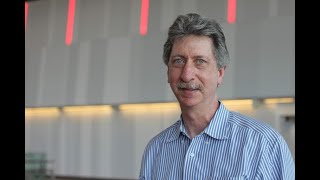
In this hour‑long mentorship interview, Dr. Bruce Levine recounts his 35‑year career in immunology and cell‑based therapies, beginning with high‑school lab work at the Wistar Institute, a research‑technician stint at Children’s Hospital of Philadelphia, and graduate studies at Johns Hopkins. He describes his post‑doctoral work with Carl June, where he helped create the magnetic Dynabead artificial dendritic cell that enabled ex‑vivo T‑cell expansion and later became a commercial reagent. Levine explains how he transitioned from basic T‑cell signaling studies to establishing a clinical‑grade cell‑manufacturing lab at the Naval Medical Research Institute, leading early adoptive immunotherapy trials in HIV and eventually moving to Penn to launch CAR‑T programs targeting CD19. He outlines the evolution of the manufacturing environment from a modest hood in a hospital hallway (1996) to a fully accredited clean‑room facility (≈2005) and discusses the regulatory ripple effects of the Jesse Gelsinger tragedy on their GMP practices. The conversation moves to scientific challenges such as antigen escape, dual‑CAR strategies, oncolytic‑virus combinations, and PD‑1 checkpoint inhibition versus genetic knockout in CAR‑T cells. Levine shares operational insights on quality‑management systems, SOP proliferation, and accreditation, as well as the perennial staffing and funding hurdles of academic cell‑therapy programs. He offers career advice, emphasizing breadth of expertise across discovery, manufacturing, and regulatory domains, the importance of clinical‑trial exposure, and the reality of persistent hiring competition from industry. The interview concludes with personal rapid‑fire questions about hobbies (cycling, clarinet), favorite books (Yuval Noah Harari), favorite quotes (Benjamin Franklin), and mentors (parents, Carl June). Throughout, Levine balances technical depth with candid mentorship, providing a roadmap for aspiring scientists in immunotherapy and cell‑gene therapy.
Chapters
Ever wonder what makes the greats great? What makes the successful successful? What makes the brilliant brilliant? Our Tuesday meetups with the celebrities of pharma industry and science are your one-stop shop to all these answers and more. Join us for Pies of Life, an initiative of the Biopatrika Industry Mentorship Program., where we bring your dream mentors to you.
So thank you, Bruce. So, um, so, you know, I— like I mentioned to you in the email, uh, we generally meet on these Wednesday evenings at 8 o'clock, um, and we meet a lot of different people from different walks of life, primarily in the pharmaceutical and biosciences groups, and a lot of people wanted to meet with you, especially the people at Penn had indicated, you know, that when we looked at who we want to meet, so your name came up quite often. I mean, you and I have known each other for many years, and I think without going through a lot of detail, I think one of the things that I thought would be useful for us to hear from you is so your journey in your career and maybe some of the challenges that you might have faced because a lot of students are facing those challenges of, you know, deciding what job to take and how to proceed and things like that. But they'll ask you all kinds of questions afterwards. So with that quick introduction, maybe you can give a little bit of your background. In your—
Yeah, I, uh, I'll try not to go on too long. You can stop me, but I'll give the abbreviated, uh, 35 to 40-year history. So I actually started working in the lab summers in high school at the Wistar Institute. My father is a retired research scientist, and not in his lab, but the lab of a colleague. I've worked there as an undergrad at Penn and had an interest in going to grad school, but my father suggested first take a research technician job so you really know what working in the lab is like before you take on graduate school. That's what I did. I got a position at Children's Hospital of Philadelphia working in the Division of Infectious Diseases. And I don't know, Naren, if you know my prior Merck connection, but my job there was to do the immune assessment on samples from subjects enrolled on clinical trials of the varicella vaccine and the MMRV vaccine. And this was with Stanley Plotkin and Stuart Starr, and Paul Offit was in that division at the time. He's in the news these days because he's on the Vaccine and Related Products Advisory Board.
Yeah.
So I applied to a number of grad schools, got accepted at Johns Hopkins School of Public Health in the Department of Immunology and Infectious Diseases. Picked a lab in the hospital because my time at CHOP you know, you ride the elevators up and down and you see kids in wheelchairs or stretchers, and it really drove home to me, why are you doing the research anyway? So the laboratory that I chose was in the bone marrow transplantation research labs, and again, you had to walk past the patient ward before you got to the labs, and While doing my thesis project on T-cell signaling, I read papers by a guy named Carl June, and I applied to his lab for a postdoctoral fellowship and started with Carl in 1992, so 29 years now. And my first projects with Carl were hematopoietic stem cell signaling, calcium flux, and Then he put me on a project working on a method to efficiently grow T cells ex vivo using an artificial dendritic cell that was a magnetic bead to which we conjugated two antibodies, one directed against CD3 and one directed against CD28. So that was my postdoctoral project, one of them, that became the Dynel beads that are used in many, many clinical trials and commercially now. And after being on that project a while, he asked me how I would like to start a lab that manufactured cells for a clinical trial. Now, we were at the Naval Medical Research Institute in Bethesda, part of the Department of Defense, They do infectious disease research, and this was in HIV subjects. So long story short on this part, we conducted the clinical trial and showed that we can increase CD4 count and immune function, and that adoptive immunotherapy— again, this is polyclonal non-G-modified cells— would have application in other areas. So CAR was recruited many places. One of them was Penn, where I went as an undergrad, and I told him he didn't need to convince me to come back to Philadelphia to try and convince him to go. And so we moved in February, March 1999. I set up the lab, and we'd begun clinical trials in cancer. And we had been collaborating with CellGenesis in the late '90s on their very first CAR T-cell trials, and we began our own in HIV in 2003, and then in cancer targeting CD19 preclinically in 2004, and then the clinical trials in 2010. So I'll stop there. There may be some blanks, but happy to take questions or prompting on any of that. Yeah, um, so how was that experience for you, um, after working in a hospital to going back to research? Was that a— and working for someone like Carl June, was that quite a huge transition? Yeah, you know, Carl is an MD, uh, the, uh, and, um, I should fill in a little bit. He was at the Naval Medical Research Institute in Bethesda because he was active duty Navy, and the Navy put him through medical school. He had an obligation to serve. He trained in Switzerland and in Seattle at the Fred Hutch and was brought to Bethesda to, to set up a Bone marrow transplant research program to protect sailors and soldiers from radiation injury, and this is during the Cold War. When the Berlin Wall fell, he had to totally reconfigure his research into immune cell biology and HIV. So I knew he was an MD, and a little bit of his interest, and I just took it as an interest in immunology. We didn't talk much about immunotherapy then. We were just looking at basic aspects of T-cell biology. So the lab was actually in Bethesda Naval Hospital, so it wasn't like I was moving to a strictly research lab. It was a totally different type of hospital, but still a hospital. And then for a while we did have a lab in a research building, and then we moved up to Penn in a research building. So I've had that exposure off and on, and, and, you know, always thought— and I don't I don't mean to pick on any particular area of science, but let's say there are people working on frog egg development and, you know, what makes a blastocyst, and that's very interesting, but I always wanted to work on something that might one day or soon have application in humans.
One question is typically I started my PhD and career as a gene therapy scientist. Later on, I'm now becoming an immunology or applied immunologist in the form of CAR-T cell therapy. So it was always the case when a gene therapist is not a cell therapist is a, is a kind of, uh, you know, tag been given. So how is your experience from a basic science or a basic immunology signaling, um, uh, studying person to a bioprocess kind of a person? Because now, uh, you're more into a manufacturing kind of a role that, as we understand from your advice throughout, you know, when you are helping us for Immuneel. I understand one thing is that, you know, when you connect a heavy chain with the light chain with the linker and then spacer is as good as connecting the tubing sets. So there is an enlargement of the same molecules in the form of a bigger tubing, but how is that scale difference you manage, or how you are you know, interest helped you? Because I am seeing a couple of my juniors, they are not that willing to take up a bigger scale. How you mitigated that fear of, you know, growing cells at, say, 200 mL rather than just 1 or 2 mL?
Yeah, so the first example you mentioned is molecular engineering, and the second example is tubing engineering. And so in, in grad school, in the lab, in, in the BMT research labs, there, you know, there was a lot of talk of clinical applications at that time— cyclosporine as an immunosuppressant. There's also people working on graft engineering with allutriation, and there was talk about selecting CD34-positive cells or depleting CD3 cells and how to have the graft-versus-leukemia effect without the graft-versus-host disease. So, I had a little bit of that that I was absorbing in grad school, and Then when Carl asked me to set up the lab, it wasn't like we think of a GMP lab now. It was two rooms separated by a public hallway in the hospital, and we spent $19,000 to vent a laminar flow hood to the outside, but— and there was a lock on the door, but it was in no way a controlled space. There were wooden shelves, and it was really, you know, almost just one step above from doing it in your garage. And we had sterile tubing, of course, and we were working in the hood, but that evolution to what we think of working in clean rooms doing cell therapy, that that occurred over many years. And our first, to give frame of reference, our first T-cell infusion was August 29th, 1996. And so we moved to Penn in '99, and we moved into our first clean room space, I think it was, 2005 or so. So up until that time, we were working in tissue culture rooms and research buildings or in the hospital that were off public hallways. Very interesting.
Yeah. Indy, can I ask one question? Because you mentioned these dates, 1996 to 2005, and you were at Penn. So Bruce, how— what was the impact of Jesse Gelsinger's situation when you set up your GMP facility in the same Maloney Building, right?
Yeah, so, well, one impact was, as you know, Jim Wilson's program was the clinical program was shut down, and so the use of the space that we inherited, it was used as a vector production space, as a cleanroom space. And then when it wasn't being used, the department, the school, uh, said, uh, there is the space and you can expand, because we were in two small rooms. So that was one, I guess, from Jim's perspective, unfortunate side effect of the clean room being transferred. It was fortunate for us at the time. I'll say Jesse Gelsinger case had many ripple effects locally, nationally, and globally on the conduct of clinical trials. Penn could have given up and said, well, it's too risky, we're not going to do clinical trials. But instead, they really invested in the clinical trial and regulatory infrastructure and oversight. And I think in the long run, we benefited from that. The FDA came out with additional requirements. There was a March 6th, 2000 Dear Gene Therapy Investigator letter asking for information on all clinical trials, and we submitted for that. So there was an increase in regulatory requirements then. And then just thinking, locally to globally, right? At meetings during that time, and even now, people bring up Jesse Gelsinger, the gene therapy accident at the University of Pennsylvania, and you're thinking, well, you know, that we're doing something different. We're at Penn, but that wasn't our trial. So it was you know, something extremely unfortunate that the field had to deal with and, and the university had to deal with, and, and Jim had to as well. So there are big books written about this, and there are even chapters in books written about this, right?
Yeah, yeah. No, I just wanted to get your perspective of, you know, you, you went through the whole You had to sort of inherit that perception and then, you know, build your own organization there.
Yeah, and, you know, in some quarters it made people gun-shy. We had someone in our program that was looking at every little thing and thinking it was an FDA violation, and maybe it should be reported. Then there's the legal infrastructure that doesn't want to take any risks. So, you know, in research, and especially clinical research, if you don't take risks, you don't make progress. And it's fortunate that the investment was made in that clinical and regulatory infrastructure to allow us to proceed with clinical development. Yeah.
All right, any, any other questions?
Yeah, I had a very specific question pertaining to CAR-T. So for example, uh, if the antigen— after you've treated the patient, if the antigen on the, uh, the cancer, the type of cancer has mutated, then, uh, what path forward?
A few things can happen. Um, an antigen can become downregulated. There can be an antigen-negative clone present at very low levels that expands. And the answer to that is to have another CAR in the garage, and that can be a subsequent CAR T cell or a dual CAR T-cell, and there are different models of dual CAR T-cells on the same construct, on different constructs, or different cells. Um, there can also be a frameshift mutation specifically in CD19 that removes the epitope that's seen. So our belief is that it's almost always going to require complementary, either complementary therapy or targeting two antigens or a combination of those. We've also seen in, in one case where inadvertently a B cell was transduced with a CAR targeting CD19.. And then the CAR bent over and masked CD19 and allowed that B cell to grow out and unfortunately was the cause of a relapse in a patient. Now we've changed the manufacturing since then. I mean, you can imagine patients with a very high leukemic load, if you're depleting some of the cells but not all, or you're selecting a not very much enriched population, that could happen. We've now switched our manufacturing where we are doing selection of CD4 and CD8 cells, and while it's not impossible for there to be B-cell carryover, I'd say the, the risk of that type of event is reduced probably around a million-fold or so. And, and there are other mechanisms of resistance beyond these cases with the antigen. Another case I'll mention: in solid tumors, you have to choose your antigens carefully. CD19 is present on B cells, healthy B cells, as well as leukemic cells and lymphoma cells. It's not expressed on any other tissues with the possible exception of neural cells at some uncertain or low level in the brain, and that may be the cause of neurotoxicity in some cases. But let's take, for example, in glioblastoma, the epidermal growth factor variant 3. That's only present in 30 to 35% of glioblastomas, and in those patients, there's heterogeneous expression.. So what's the approach? You take the approach of targeting another complementary antigen. Another combination approach would be to use another type of therapy with the CAR T cells, and that could be a vaccine, it could be an oncolytic virus. In fact, in one of my favorite papers that I was not a co-author on, from Carl June and Sonia Gudim. They did a combination of a CAR T-cell targeting one antigen, I believe it was HER2, and then an oncolytic virus that encoded a bispecific antibody that targeted another antigen. So that's really a 3-for-1. Because you have a CAR targeting one antigen, bispecific targeting another, and then the oncolytic virus, by virtue of lysing tumor cells, releasing a whole bunch of antigens and heat shock proteins and inflammatory factors that hopefully induce epitope spreading. So I think that's a very elegant type of approach to address this problem of antigen escape.
I wanted to know when antigen-dependent proliferation happens, so in case of when you infuse the CAR-T in a patient, so then the patient acts as a bioreactor and cells proliferate. So if we mimic that in our in vitro bioreactor, wherein if we create an artificial B cell by putting a CD19 ligand onto a Dynabead, And if we add such Dynabits into the culture, will they give better proliferation or better expansion per se?
In that case, well, ideally you need some activation up front in order to transduce the cells. It's possible to do it without activation, but it's much more efficient with activation. And so, if you're going to use a bead or an artificial antigen-presenting cell expressing CD19, you would be stimulating twice, and then probably expanding the cells longer, and the longer they're outside of the body, the more they're differentiating away from a naive stem cell memory phenotype and more into a effect or terminal effect or phenotype. Now, there are different ways of, of doing that, and some groups are doing selection, but our approach has been not to extend the culture but to allow the CAR T cells to be selected in vivo.. Now, if you go back a few minutes to our discussion of the inadvertent transduction of the B cell, one reason we thought having a few B cells around at the beginning of the culture might not be a bad thing is that once the T cells were transfused with the CAR, any residual B cells would be seen by the CART19 cells, and then that would aid in their growth. And surely by the end, there wouldn't be B cells. But again, there was that one case of the B cell transduction. Yeah, I hope that answered your question.
Yeah. All right, indeed. Yeah, so I just have, I guess, like a follow-up question. So sometimes, like, when patients are treated with CAR-T therapies, they enhance or upregulate PD-1. So the idea is the patients would be given CAR-T therapies, and subsequently, they would be given an anti-PD-1 therapy. So what's your opinion on maybe using genetic tools to knock out PD-1 and then give to patients?
Yeah, so a couple approaches are possible there. I think you mentioned PD-1 antibody, and we've tried that in lymphoma and glioblastoma. In lymphoma, it's possible to reinduce a response, but it's disappointing that it doesn't happen all the time. The knocking out of PD-1, we're going to be doing that in CAR T cells, but we've done it in T cell receptor modified T cells. That was our CRISPR paper, the multiplex gene editing knocking out T cell receptor alpha, beta, and PD-1. I want to go back to using an antibody, and some people might say using an antibody, it's an FDA-approved drug, isn't it easier than doing all this CRISPR genetic knockout? And there's a risk, but there's also a risk using a PD-1 antibody because you're letting the brakes not only off the car, T cells or the tumor-specific T cells, but all T cells. And we know that with checkpoint antibodies, there are frequently autoimmune sequelae that patients see. So by doing a genetic knockout, you're just knocking out the CAR or the TCR T cells, and that allows that effect of checkpoint blockade or checkpoint knockout to occur only on the antigen tumor-specific cell.
Maybe I'll switch gears and ask a question related to careers. So Bruce, over the years you probably had a lot of graduate students, postdocs, from all over the world who come and spend time in your labs, right? So any advice for anyone in this group or larger group if they want to do an internship or if they want to do graduate school?
Any advice on that front? Yeah, so I should say a little bit about our Center for Cellular Immunotherapies and the organization. In 1999, we were 6 people. It was Carl, 4 of us postdocs, and a technician. Today, there are 24 investigators, most of those research laboratories looking at applications of immunotherapy, cellular immunotherapy, or conventional standalone immunotherapy. We have a process development lab, we have the manufacturing facility, which is the one that I'm a founding director or director emeritus, the QC/QA lab, we have regulatory specialists, clinical monitors, so I've I've, um, I've not had a grad student like a research laboratory would have a grad student for a thesis. I have had master's students and certainly have interacted with grad students and postdocs. Now, if you ask me from a hiring point of view, what do we look for in technicians to work in the lab. It's cell culture, immunology, GMP, GDP, some experience such as that. I, I used to say if I had a nickel for every CV with PCR, then we'd be very rich. But if we could turn those PCR CVs into immunology, flow cytometry, GMP, we'd be doing really well at recruiting. Now, as far as the stage of your career where all of you are PhDs, postdoctoral fellows, we're looking for not just that immunology, gene therapy, gene editing expertise, but have you had some exposure to clinical trial development? Have you had training opportunities such as the courses you've been taking or involvement in a professional society like the International Society for Cell and Gene Therapy? So I'll get on my ISCT soapbox because I'm currently the ISCT president and We are a global society built on three pillars: the scientific pillar, mostly in academia, a regulatory and quality operations pillar, and a commercialization pillar. And the key is, in cell and gene therapy, you need to be an expert in at least one of those and conversant in all of them. So I'd say the more exposure and experience you can get in the cell and gene therapy development landscape that includes multiple skill sets, the better prepared you'll be for a career in the field.
Yeah, okay, thanks.
Yeah, that's very useful. Yes, I have a quick question. So Bruce, you have been in the immunology field for a very long time, so what are some of the biggest challenges you faced in your career and how did you overcome them?
Well, um, I'll pick, uh, two. One is getting the funding to do the research and, and the responsibility for that mostly fell on Carl as the PI writing the grants. And of course, I was helping with the editing and putting in the expertise for the manufacturing and the testing and so on. And, you know, back in the mid to late '90s, early 2000s, this was a backwater field. At meetings, we'd be in the session on the last day in the room no one could find, and everyone in the room knew each other, you know, and you were mostly friends and colleagues. And then you put in a grant to NIH, to NCI, to NIAID, and you get comments back, you know, this is far-out stuff that's never gonna work, and funding was tough for a while. Now, I will say that sometimes the reverse happened, and, and we were approached by a friend and colleague from Celgenesis, Dale Ando, who had moved to a new company called Sangamo. And one day he came to visit Carl and talked to Carl about this newfangled thing called zinc finger nucleases that could knock out and edit genes. And I remember when he came out of Carl's office and he left, and then Carl came into my office that was next door at the time, and he said, uh, yeah, right, like that's going to work, because the efficiency at that time was on the order of 0.1% or 0.2%. So how could you, you envision that could translate to a clinical trial. Well, in the long run it did, because we had a research collaboration with Sangamo. We got the efficiency into the single digits and then into the double digits, and that allowed us to do the first gene editing trial.
And the second challenge—
that was CCR5, right? That was— yep, that was knocking out CCR5. Yeah. And so a second challenge, by far not the second of two, but the second of many, I'd say, is recruiting, hiring, training, and retaining staff to meet the demand of clinical trials. And it takes a long time to train people to work in a cleanroom facility. And especially now, what we're facing is the field is so hot. We train people at Penn, and then they get recruited away by industry. And every time that happens, it's like being a hamster on the treadmill. You've got to, you know, start all over again. And we've gotten better at training, and we've also made some progress in the a little bit of progress in the compensation of them, but we'll never close that gap with industry. So what we have to offer is we're in the setting where people can see everything from A to Z, from the discovery to the innovation to the first in human to the correlative results, and, and then, uh, you know, spitting it out and transferring it to to industry. There are many more challenges, of course, but yeah, yeah, good, good ones. Yeah.
So, uh, as you talked about, uh, like a setup where, uh, clinical trial has been done in an academic institute, so I just want to know how— what is the level of quality management system you have, uh, with respect to, you know, like Do you keep on doing some internal audits or some sort of rigorous SOP-based trainings or versionizing these SOPs, doing some KAPAs or deviations?
Do you really strictly do all these things, or is there some sort of a laxism? Yeah, Imant, I think I have the gist of your question. The audio was Breaking up a little bit. I think you were asking about the level of GMP that we have in an academic facility. Yeah, and it's gotten a lot better than it was in 1996 when we had 10 SOPs. We now have approximately 160 with hundreds of forms. We have electronic document management. We have electronic— other electronic systems. We have formal training. We have accreditation by the Foundation for the Accreditation of Cellular Therapy that requires a robust quality management system. And I would say, uh, oh, and as far as infrastructure, we now have true clean rooms with HEPA-filtered air, surfaces that can be cleaned monitoring systems for all of the equipment. And I would say we're at an appropriate stage for Phase 1 academic clinical trials. We have supported a few, very few, multi-center clinical trials with academic centers. One of those was sponsored by Novartis. But when you get to that stage of a Phase 2, a multicenter, then the expectations of quality are ramped up. And then we also have to think about our funding and, you know, grants to support quality assurance programs or very few and far between. So we've, we've stuck to that first-in-human Phase 1 sweet spot. That's really the mission of the university is R&D, and once it moves beyond proof of concept, then it really is at the point where things should be transitioned to industry.
So, um, what's your advice for young scientists?
Don't do it. You know why? People ask me, they come to me, should I go to graduate school? And I say, don't do it. And then if they ignore me, that means that they really want to go. And you'll have to really want to go because you have to persist in graduate school which itself is an exercise in frustration. You get a PhD in frustration along with whatever your discipline is. So it's, it's really outlasting that. And people have said, and I think Carla said, you know, when you're in research, you have to be prepared for failure 90 to 95% of the time. Of course, that's not true in clinical research, but in research and in PhD, you expect to fail and to find a solution to the problem. I actually had a thesis project that I knew was going to take about 15 years to complete at the rate because I couldn't get good viral cultures in the rat model of cytomegalovirus. And so that's why I switched to the T-cell signaling project. So yeah, that's what I see. But then, yeah, if people ignore me, then, you know, the message is you have to have that passion. And if you're not into it, then I think it's hard to make it through.
So I mean, as you know about Narayan, so he is deeply involved in music and other art forms, and I myself also into music, like, and So, and it's that spontaneous. So, um, so I just want to ask, what is your hobby and/or any sports that are currently playing?
I don't have my kazoo here. I played the clarinet in middle school and high school, but not since then, and I wasn't playing very well. As far as outside activities, It was only about 10 years ago that I really got into cycling on a regular basis. And I had a standard hybrid bike that I was riding around the neighborhood, and I felt like I wanted to go farther, faster. And I asked— Naren, you remember Dave Almond? Of course. Yeah, yeah. So Dave and I shared an office, and I knew he was a cyclist. And sometime in 2011, I, I contacted him and said, I'm looking for a bike, maybe a road bike, I don't know what I'm looking for. And he said, well, I have a Lightspeed that's just sitting around, do you want it? And I said, what is that? Because I didn't know anything about bikes. And Lightspeed is a really high-end titanium bike, and so he sold it to me. I got it third hand, and, and I got on it, and it was, uh, like a machine. And so then I was hooked, and I was riding for a while. And then Carl, who's been riding since he was a teenager and has very competitive long-distance, almost semi-pro cyclist. He knew that I had a bike. He invited me to go riding with him. Now, uh, no one knows, knows Carl fairly well, and, um, the remarkable thing about going riding with Carl is that I did not get injured. So that, that was a success. And then he invited me over again and he said, well, I bought this carbon frame and it's too small for me, it might fit you, bring your bike over, we'll measure. I said, well, I already have a bike. Well, all right. So I listened to him, I brought it over, it matched dead on, and he said, I'll build you the bike. I said, well, that's very nice, but I have a bike. I'll build you the bike. So then I picked up the bike, and it has these special carbon wheels on it where you glue the tires on. And, and okay, uh, so I took that for a ride, and, and that was really special. Now the wheels, I don't know how much everyone knows about bicycle tires. Normally there's a rim and a little lip, and you pry it off, and there's a tube inside. Well, with these, they're so-called tubeless, and you glue them onto the rim. And if you get a flat, you have to pry it off, and then you have to glue the new one on. And then he's saying, okay, so if this happens, don't make any sharp turns because the tire will come off. So as I'm riding for a few weeks, I'm thinking Do I really want to flat 10 or 20 miles from home and not to be able to deal with this? Then I looked up those wheels. They're Zipp 303. I looked them up online. How much do you think they were for the pair, these carbon wheels? Like $200 or? $3,000. Okay, so that gives you a sense for the rest of the bike. So I wound up asking Carl if I could lend those wheels to Dave Allman, who gladly took the wheels, and then I bought my own conventional wheels to go on that bike. And the latest thing I'm doing is friend of mine told me about gravel biking and gravel trails. There's a Rails to Trails movement, and you can ride through state parks and forests and so on. So I've been doing a lot of that lately, almost, almost exclusively gravel biking now.
Nice, nice, nice. And I remember a couple of years ago now, I think You were speaking about not having an accident. Carl had a big— like, he broke his hand or something like that, right, at some point, like, in his—
Oh, well, there's a number of those things happen. But one happened shortly after we moved to Penn. Yes, I know. And he was riding with Craig Thompson, who was director of the— Scientific Director of the Abramson Family Cancer Research Institute. Now, Craig, his athletic pursuit in college was he was a boxer. If Carl is competitive, then Craig is competitive to the umpteenth degree. Of course, they went riding and they were racing each other and they got too close and locked wheels and they both crashed. Craig fractured his collarbone and had to be airlifted out. Carl cut his leg, his shin, to the bone and had to get IV antibiotics and be in a boot for a while. So yeah, that's why I said it's fortunate not to be injured after riding with Carl.
I know, I remember, I remember that actually. Yeah, anyway, we are coming out to the end of the end of our hour, so I've asked Zahra to do the rapid fire this time.
So, Zara, okay, over to you. Yeah, so, uh, which is the book that you are reading right now?
Oh, I might have to go get it. Um, uh, it's a book by a historian, Yuval Noah. Yes. Yeah. Uh, it's his middle book. Uh, it's 30 feet away, but I can't remember the title. So I think it's, uh, 21 Lessons for the 21st Century.
Yeah.
Okay, so if you have to define yourself in one word, what would that word be? Just one word. Impossible. Okay, uh, and did you play any sports growing up?
Yeah, I was on the track team for a while.
I really enjoyed ultimate frisbee and volleyball. And, um, if you're not doing science, what else you could be doing apart from cycling?
We know about that. Well, when I was growing up, it was the Apollo era and rockets were going to the moon, and I thought, wouldn't it be cool to be an astronaut or an astronomer? Because you have all these pictures of planets and stars. And then I figured out how much math was involved in astronomy, and it wasn't really looking through the telescope all the time.
And so that scuttle that idea.
Okay, so what's your favorite food? Uh, yeah, a lot of them. Um, what, what would I eat so much until it made me sick?
Probably, uh, nacho-flavored Doritos. Okay.
What's your favorite season?
Season has to be spring, I think. Okay. And, uh, what's one superpower that you wish you had?
Oh yeah, why don't I prepare these answers in advance? Oh, mind reading. Yeah, that would be a great one. Well, sometimes you get an answer that you don't want.
Yes, yes, that's great. And, uh, what's one favorite quote that keeps you going no matter what? What, uh, a favorite quote or a saying that keeps you going?
Oh, you know, um, any of, uh, the Benjamin Franklin quotes. Um, On 37th Street, there is a walkway on the Penn campus, and there are about 15 quotes from Ben Franklin. And, um, it's not intellect, but intellect without education is like silver in the mine. I'll have to look it up. That's not the exact word. You all know an ounce of prevention is 'Worth a pound of cure.' 'Wasted time is never found.' Yeah, 'Lost time is never found.' That's also Ben Franklin. And many of the quotes in Poor Richard's Almanac.
And the genius— I really like that walkway.
They've got nice sayings in that. Yeah, you know, the genius of Ben Franklin is that he could say so much in so few words.
Yeah. And, um, did you envision yourself where you are right now?
Did you always know? Um, no, I didn't know because there was no field of cell and gene therapy. And, uh, it's a genius without education is like silver in the mine. So, um, when I was an undergrad at Penn and I was majoring in biology, I asked one or two of my professors, and this was freshman or sophomore year, what field do you see as up and coming in the next 20 or 30 years? And the answer I got back was immunology. So then I took the immunology course. I didn't do very well in it. I found it confusing. This was just at the time that there weren't even CD4 and CD8. It was T4, and, and there was a lot unknown about how the immune system worked. And, and if you think about the other sciences, physics and chemistry, and you know those things, and, and things are fairly certain, even areas of biology, you know those things. And there's some tiny details here and there, um, to to be discovered, but there was so much unknown about how the immune system worked, and it turned out to be a good call.
Yeah, one last question. Okay, go ahead.
No, no, go ahead, ask the last one. Okay, so one last question that I have for you is, uh, is there a person you look up to in your life or who inspire you?
Well, that would start with my parents. My, my father's a retired scientist, my mother's a retired nurse, and then she worked for an insurance company looking at workman's compensation claims. And then, you know, Carl is a mentor for 30 years, and, you know, what you learn from Carl is he's not quite human, so there's no living up to— he's basically a walking immunology Wikipedia, and that, that's setting apart, you know, his cycling and running the Boston Marathon several times and, and all of that. And, uh, then, you know, all of the, uh, authors and, and books and stuff I read.
Yeah, thank you, Sarah. Um, thank you, Bruce, so much for taking the time on this late night. I know you have busy days, and spending an hour with, with us was really, really precious.
Thank you so much. Yep, thanks, Darren.
Good to meet everyone. A network should last a lifetime. Let us help you create lasting professional relationships with our world-class mentors through the Biopatrika Industry Mentorship Program, a strategic guidance program unlike no other, full of expert interviews, industry internship opportunities, CV writing, inflection point analysis, life maps, and of course, the gateway to your dream career. For a limited time only, all our services are freely available for you, as we truly want you to succeed.
More from Joshua







Scientist Stories: Hans Waterham, The value of phenotypic assays in peroxisomal disorders




Scientist Stories: Joel Zlotogora, Genetic carrier screening programs for reproductive purposes