Scientist Stories: Bruce Levine, Transforming Lives With Personalized Cancer Therapies
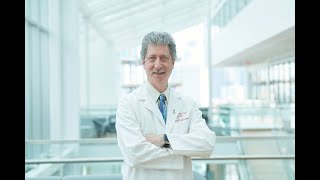
Dr. Bruce Levine, a pioneer in CAR-T cell therapy at the University of Pennsylvania, traces his path from high school lab assistant to leading the development of Kymriah, the first FDA-approved CAR-T cancer treatment. He discusses scaling living cell therapies, combination strategies for solid tumors, and efforts to make these expensive treatments accessible globally through partnerships in Costa Rica and India.
Chapters
Welcome to another episode of Progress, Potential, and Possibilities, discussions with Fascinating People Designing a Better Tomorrow for All of Us. I'm your host, Ira Pastor. Welcome everybody again to another episode of our show, bringing you another fascinating guest today who has been involved in and continues to help create a better tomorrow for so many people. As a little background to today's episode, one of the major advances in the oncology space in recent years has been the development of chimeric antigen receptor T-cells, also known as CAR T-cells, which are in essence T cells from our immune systems that have been genetically engineered to produce novel receptors that ultimately enhance their ability to attack and bind cancer cells, focusing on specific antigens that are not found on normal cells, as well as help stimulate the immune system for heightened response, for use in so-called immunotherapy and destruction of these cancer cells. In just recent months, the first child ever to receive CAR-T therapy here in, in the city of Philadelphia celebrated a 10-year anniversary of being cancer-free. And one of the major thought leaders behind the development of this technology that we're honored to be joined by today is Dr. Bruce Levine, who is the Barbara and Edward Netter Professor in Cancer Gene Therapy and the founding director of the Clinical Cell and Vaccine Production Facility in the Department of Pathology and Laboratory Medicine Abramson Cancer Center, University of Pennsylvania. Dr. Levine received his bachelor's in biology from Penn, also PhD in immunology and infectious diseases from Johns Hopkins, and is responsible for a range of the important therapeutic firsts surrounding CAR-T technology, including first-in-human adoptive immunotherapy trials, including lentiviral vector, the first infusions of gene-edited in cells, and also the first use of lentiviral modified cells to treat cancer, Dr. Levine is the co-inventor of the first FDA-approved gene therapy, Kymriah, the CAR-T cell that's for leukemia and lymphoma that was licensed to Novartis. And he is also co-inventor on dozens of patents, co-author of over 200 manuscripts and book chapters, co-founder of a couple of companies, T-Immunity Therapeutics and Capstan Therapeutics, both spinouts of UPenn here in Philadelphia. He's been awarded numerous awards over the years. Honored to have him with us today to talk about these themes. Dr. Bruce Levine, thank you so much for taking time to come on our show.
I want to thank you so much for the invitation and the opportunity to speak with you, and I'll just note that I'm a representative of a very large team here at the Center for Cellular Immunotherapies that's directed by Carl June. We have 25 laboratories directed by principal investigators looking at all aspects of cancer immunotherapy, T-cell biology, and metabolism, identifying new targets, and that research is translated into clinical trials by a product development laboratory that scales up from millions of cells to billions of scales— cells, from research reagents to clinical reagents. We have a manufacturing facility, the CBPF that you mentioned. We have a quality control laboratory, a quality assurance group, regulatory support, and that's not to mention the clinical PIs. So a very large team here, well over 200 people just in the center that make these therapies happen.
It's an amazing ecosystem, and I'm proud to say that it's happening here in Philadelphia. So it's always exciting to see technology and innovation on the home front. You know, Bruce, I would love to start off, though, before we get into these topics. I spent a little time beforehand just getting up to speed, you know, going into PubMed and going through your, you know, several hundred peer-reviewed articles in there. And, you know, the one that stood out to me at the very beginning, I have to say, was this paper that I bumped into from 1986, Journal of Pediatrics, where You and Stan Plotkin published on a combination measles, mumps, rubella, and varicella vaccine. And I have to say that I guess if you weren't into immunology then, I assume that's sort of the event that started it all. But can you take us back a couple of decades to the beginning and how sort of your evolution into this area of immunotherapy, immunology in general, got started?
Yeah, so that it is, uh, more than a couple actually, and, uh, it started in the lab, uh, summers in high school. My father was a research scientist at the Worcester Institute, and he said to me one summer, uh, I found a job in a lab for you. I would have preferred to go to overnight camp, but that's what things held in store. And this was with a colleague of his at Wistar, Vince Cristofalo, whose work was in the biology of aging. And I learned tissue culture in the late '70s, '78, '79, at Wistar, and then worked there summers while I was going to Penn and, and also during the academic year. I was interested in, in science, not medical school, and wasn't sure about going to graduate school. And he said, well, if you want to go to grad school, you want to be a scientist, you should work in a lab and make sure that's what you really want to do before you go to grad school. So I applied a few places. I interviewed at a company, I interviewed at the med school at Penn, I interviewed at CHOP, and it just felt like a good environment at CHOP. And this was in the Division of Infectious Diseases with Stanley Plotkin and with Stuart Starr. And Stanley said to me during the interview, or maybe the second interview, I talked with Vince and he thinks you can do the job, so if you'd like it, it's yours. And, and what it was, this was back when Merck was doing clinical trials of the varicella vaccine standalone and then in combination with measles, mumps, rubella. And my job was to do the immune assessment on the serum samples from subjects, kids who were enrolled in clinical trials of those two different formulations, standalone and in combination. So I was looking at antibody levels, doing titrations of the serum. So that was my initiation into clinical trials and correlative studies of clinical trials. And so this was when CHOP was just one building. Now it's many, and they're building a new patient tower, as you know, and you had to ride the elevator often with patients and their families, and here are kids in wheelchairs and on stretchers, and it just drove home to me, why are you doing the research, right? And so that sparked my interest in doing translational research and clinical trials.
And, you know, you're— you do a postdoc Naval Medical Research Institute, start working with Carl June, who you mentioned, uh, in the intro. And then at the end of the 1990s, you come back to Penn. And this was kind of a tough time because it was that year that, you know, we were beginning the gene therapy stuff, and we have the Jesse Gelsinger incident here in Philly. A tough time. Talk about the early days, if you would. I mean, you're now— you come with, um, a new concept of immuno-oncology and sort of a novel approach that combines immunology, gene therapy together. Talk of what those early days were about. So when you first got back to Penn and were proposing this new concept.
Yeah, sure. So I had done grad school at Johns Hopkins and in the laboratory of Alan Hess and the bone marrow transplantation research laboratories. Started off looking at a rat model of cytomegalovirus infection. That didn't work out so well. We had problems with the virus titers, and I think I was looking at a 10- or 12-year thesis at that point, and changed projects to look at T-cell signaling using Jurkat T cells as a model and briostatina-4 malesters, and for that, read papers by a guy named Carl June, and so I applied to his laboratory for a postdoctoral fellowship. He accepted me, and I, and I started in early '92 looking at signaling in hematopoietic stem cells and then in T cells. And project— one of the projects was creating artificial dendritic cells to which we conjugated two antibodies, anti-CD3 and anti-CD28, and that system actually grows T cells really well, really, really well, and so while I was working on that, he said to me, how would you like to start a lab that grows cells for adoptive immunotherapy trials? And we were at the Naval Medical Research Institute, and this was in HIV because the Department of Defense, as you may know, does great work on infectious diseases— yellow fever, malaria, HIV— and we conducted that clinical trial, showed that we could increase CD4 counts, CD4:CD8 ratio, immune function, and Carl began being recruited all over, uh, NIH, Harvard, all over the U.S. And then the opportunity came up at Penn, and that came up because of philanthropy from Leonard and Madeleine Abramson, who donated $100 million to start the Abramson Family Cancer Research Institute. And recruited for the scientific director was Craig Thompson. Now Craig and Carl have been fellows together at the Hutch in Seattle. So Carl tells me about this opportunity at Penn. I say, you're not going to need to recruit me to Philadelphia. Let me tell you why you want to be there, and no trouble for me to join you. So we came up in early 1999, March 1999, to do this work in adoptive immunotherapy, this newfangled concept, in cancer. And it makes sense. How could you augment the immune system, right? Adoptive immunotherapy. Well, I should say it makes— made sense to us. To others, grant reviewers, others in the field, this was like, okay, That's really cute, nice idea you have there, but is it really going to work? At Penn, we had a really nice reception. There was enthusiasm for translational science in cell and gene therapy. And then in September, Jessica Enrolled in a clinical trial and And, you know, you mentioned that very unfortunate outcome, and that had an effect in that the FDA put a hold on all gene therapy protocols. So we were shut down at Penn, but across the US. And there's a long story behind what happened, of course., and, uh, it's not clear that had everything been in compliance that, uh, a death that was due to a massive immune overreaction could have been predicted or prevented, uh, and once that gets out into the press, that backstory doesn't matter really, um, so we did, uh, at Penn, across the U.S., we were able to start back up there were additional requirements that came into place for gene therapy trials. Now, you think about that environment, Penn could have said, well, we're not going to do this risky research, we're not going to do clinical trials, but instead they invested massively in clinical trial infrastructure, in regulatory infrastructure. We were able to start back up other work began to start back up, and we were doing clinical trials in chimeric antigen receptor T cells in HIV in the early 2000s. And so some people may not realize the first clinical trial was in HIV with a tiny company called CellGenesis out of San Francisco, and we have been collaborating with them in the late '90s when we're at the Navy and would continue that in the early 2000s. And while not as jaw-dropping as the work we know now in cancer, in HIV we did see some modest effect, and we published later that we were able to track those CAR T cells in the HIV patients for a decade. So that to us gave a prelude of what could be possible, might be possible in cancer.
And you, you persevere through the 2000s. Um, you demonstrate the technology, you have initial success in the clinic. There's this other aspect of it that is so important to point out, and namely, uh, production, but not just good manufacturing production, but also on a large scale. Because ultimately, you partner with Novartis later on, but pharma companies, obviously they want to see that, yeah, aside from these amazing results, that we can do this at scale. You've been instrumental in that. As I mentioned in the beginning, you have the development of the group. Outbound, the clinical cell and vaccine production facility. And, you know, you're dealing with therapeutic moieties here that are, one, living, two, genetically modified, and three, ultimately, you can't just infuse 10. You need a lot of them to have these effects. Talk a little bit about some of the challenges pertaining to how you had, you know, your job in scaling up during the whole clinical development process in the early days. And then I noticed some recent papers. You have this one in terms of looking at quality of the manufacturing using some of the new tools we discussed on the show in terms of artificial intelligence. And so if we talk a little bit about some of how the technologies that are coming online now can help enhance and improve some of the things you're doing in terms of the manufacturing processes.
Yeah, sure. I can talk about some of the challenges, and, and if I could start off with some of the opportunities and how things grew. So we got to Penn, we had this hiccup in gene therapy trials, we were able to proceed, and we had some early results in the CAR-T work in HIV that I mentioned. We were doing non-gene-modified trials in cancer showing that we could augment immune function, also in the combination with putative cancer vaccines. This was work in myeloma with Aaron Rapoport, with Ed Stadtmaier, here at Penn with David Porter, and then some pediatric trials with Steve Grupp, again all not gene modified. And so When that work was presented and word got out that we had a system that could grow T cells from millions to billions, and that we had a clinical trial infrastructure that had been invested in by Penn, that we had clinical PIs of great expertise in hematologic malignancies and other cancers, we began to be approach by collaborators, by companies who had new technology but had no idea how to translate that into a clinical trial. And I can give a few examples of that. One is, uh, Phyrexus, who had developed a lentiviral vector. This was the first lentiviral vector used in humans. It was in HIV. We have been working in HIV It was an antisense against the HIV envelope gene, so we scaled that up, we translated, we conducted the clinical trial. Another was with Sangamo. Now Dale Ando had been at CelgeneSys, we'd worked with him before. He went to this company called Sangamo, came to see Carl with this new technology called zinc finger nucleases. That was zinc finger proteins conjugated to bacterial endonucleases that could induce a double-strand break, and through non-homologous end joining, you get insertions and deletions. You can knock out a gene, or if you supply donor DNA, you could correct a gene. So the efficiency that they had at Sangamo at the time in the early 2000s was 0.1%, 0.2%. No one had done this before. Dale meets with Carl, Dale leaves, Carl comes into my office and says, uh, yeah, like that's gonna work, right? Skepticism, right? We face skepticism, but we knew Dale, uh, and We said, let's give it a shot. So slowly we got the efficiency up from 0.1, 0.2 to 1, 2 single digits, translated it to large scale, got it up to double digits, and we conducted the first gene editing in humans. Adaptimmune had T-cell receptors affinity enhanced. They had no idea how to translate to clinical trials. They had a contact with Jim Riley, brought them in, worked with them, conducted a T-cell receptor trial targeting NYE. So little by little, with these collaborations of companies and collaborators coming to us, we were able to establish that credibility in translation and adoptive immunotherapy. Trials. Now, to your point about challenges and scaling up, um, not every patient every time you're able to grow their cells. Healthy people, there's a lot of variability in the percentage of T cells and the percentage of healthy T cells. In patients with cancer, certainly those who have gotten multiple rounds of chemotherapy and immunotherapy, we know that affects the health of their T cells. So it is challenging, and it's challenging when you want to be able to enroll and treat every single patient on a clinical trial, and then you have some failures. So we take that and we go back and we say, what could we have done differently in the selection and the expansion in the culture conditions. And we have a bank in our freezers now of the several hundred patients who have been enrolled in our clinical trials. And so that's the ability of the product development laboratory in collaboration with the correlative studies laboratory. We learn from every patient. If we have a success where we're able to infuse and Hopefully we have a clinical response. We bank that information as well as the cells. If we have a failure, either a failure to expand or a failure in the clinical response, we bank that. We bank the information, we bank the cells, and when new assays, new technologies become available, then we're able to go back to that bank pull out cells, run the new technology, whether it's NanoString or single-cell sequencing or some other technology, and then not only at the clinical trial stage and the follow-up, but years later, we're able to go back and learn from every patient.
Outstanding. Bruce, in, um, In your literature, there's clearly a tree here of all the possibilities that come off the work you've been doing to date in terms of combination therapies with the CAR T cells. I have a basket of sort of solid tumor interest and then sort of the non-oncology interest. I wonder if we could just talk a little bit about each of these. And I'll just, you know, one of your papers talked about anti-CD19 CAR T cells in combination with a BTK inhibitor for CLL, chronic lymphocytic leukemia. Could you talk a little bit about, are these clinical models that you are developing with the folks at the cancer center? Are these other oncology companies that are coming that want to collaborate? And talk a little bit about some of the things that you're discovering in terms of what works best, what doesn't work as well when you start making these unique combinations with the CAR-Ts.
Yeah, I'll give you two examples of that. One is the ibrutinib, the BTK inhibitor, and then I'll talk about cardiac fibrosis. So with the BTK and CLL, we had treated three CLL patients in 2010 and reported on them in 2011. Relapse refractory, no other options. 2 complete responses, 1 partial response out to 8 months. We ran out of money, so there was skepticism at that time on this approach. Grant reviews came back, program project grant with Carl June, David Porter on the grant proposing CAR T-cells and CLL and other hematologic malignancies and a clinical trial design. The critique came back, too risky. Remember, Carl June and David Porter on the protocol, consult a hematologist on the clinical trial design. Now, come on, you're just looking for an excuse not to fund the grant because you don't like that idea. So we had some funding published on these 3 patients. The clinical trial was designed for more, of course. We were able to get some additional funding through Philanthropy Alliance for Cancer Gene Therapy, Leukemia and Lymphoma Society, and then finally an NIH grant, treated more patients. And then the next few patients didn't respond. So David Porter, Carl June said to me, you must be doing something wrong in the lab. I said, we checked, we're not doing something wrong. Turns out we got lucky. In those first 3 patients and the response. CLL is very challenging. In CLL, those T cells, they're, they're really rendered dysfunctional by the disease. They have disruptions in the immune synapse and repertoire, and that's been shown by Jack Ribbett. Now, the development of ibrutinib and other PTK inhibitors was going on. And I don't know the backstory to this, but somehow there was some communication from John Byrd at Ohio State and Carl June and Joe Freyda and others. And they said, you know, let's look at ibrutinib and the effect of T cells. And it turns out, in work that Joe Freyda published, ibrutinib enhances T-cell function. Even patients failing ibrutinib, it enhances T-cell function. So then we have the idea with Saul Gill and other collaborators here at Penn to begin a clinical trial in patients on ibrutinib and they may be failing. And it turns out that the low response rate in CLL can be more than doubled in terms of complete clinical response rate in patients who are on ibrutinib. And other centers have also shown this. So that's one example of something that is not working well, and then you make a change and then you get it to work better. And then there's another example of the integration of knowledge here. We're working in cancer. One floor above me is John Epstein's lab. John is a cardiologist. He had a postdoc, Nick Akkajanian, who knew of the CAR T-cell work, said to John, you know, I wonder if we could use CAR T-cells in fibrosis. Is there a target we could fine. So John is riding the elevator with Carl, who says, do you think we can do this in cardiac fibrosis? And one thing leads to another, and then Steve Albelda and Ellen Piray at the Vet School—Steve is at the Med School—experts in fibrosis and targets and fibroblast activation protein. And so that leads to a collaboration to show in a mouse model with ex vivo activated T cells and a chimeric antigen receptor targeting fibroblast activation protein that, lo and behold, you can target other diseases if you have a good target like fibroblast activation protein. And so they showed in this mouse model with induced fibrosis that you can repair it with ex vivo activated administer T cells in mice.
Yeah, I thought that was such an elegant application of your tools. And, you know, it's interesting because we had spent a little time with some researchers in sort of the regenerative biology space that study organisms like salamanders and other amphibians, which have, you know, this unique ability to regenerate their hearts without scarring. And once again, the story comes back to this unique sort of modularity modulation of the immune system in these species. Why they're very good at sort of generating stem cells and all that stuff, but the ability to fine-tune the immune system so the scarring doesn't happen and regeneration can happen, it echoed a lot of that. So I was very impressed to see you also working in that area, Bruce. So that's very exciting.
Yeah, and that was part 1 of the happenstance story, or I should say the collaboration story. Part 2 is John Epstein is thinking and knows about Drew Weissman and his work on mRNA and nanoparticles and says to Drew, you know, this paper where we had CAR T cells targeting FAP, we grew the cells ex vivo, could we do that with RNA? Drew looks at him and says, why not? So then that begins the second part of the collaboration, which is now a multifocal collaboration, and taking the RNA to encode the fibroblast activation protein CAR, putting it in, converting it to RNA, putting it in a lipid nanoparticle, and then showing that you can generate in vivo CAR T cells targeting fibroblast activation protein in the same model and have that same effect.
Bruce, say a few things about HIV, because, you know, you also recently published CCR5-edited CD4 T cells augmenting HIV-specific immunity, helping post-rebound control HIV replication. And just the other day we had, I guess, our fourth case of the very unique situation in terms of an HIV cure affected by bone marrow transplant combined with, you know, the unique CCR5 stem cells in these particular patients. But talk a little bit about sort of the resurgence of this aspect of your work in light of what we've seen with a few of those cure patients in the news as of late.
Yeah, so this originated from the Sangamo collaboration and has really been spearheaded by my long-term colleague Jim Riley, who also was a postdoc with Carl at the Navy, and Jim came up to Penn with us in 1999. And so I'll continue with the Sangamo story in the collaboration. We did translate that zinc finger nuclease technology to a clinical trial. The target was CCR5. Jim and I, while we were postdocs with Carl, had shown that those anti-CD3, anti-CD28 beads that I mentioned that are able to very nicely expand T cells ex vivo— the trial, remember, the trial that we did at the Navy was in HIV. So as part of the scale-up to that, Carl said, we're going to get some HIV-positive subjects, we're going to get some blood, and you're going to show that you can grow those cells in the lab with these beads, and, and, and that'll be the part of the validation that we can actually do this at a clinical trial. And the thinking at the time, the knowledge at the time, was that you activate CD4 T cells from HIV-positive subjects, you're going to get virus to come out because there's going to be some virus there. You're going to activate the T cells, that's going to generate a lot of virus, and you're not going to be able to grow those cells unless you have antiretroviral drugs in the culture media to suppress the virus. So he said to me, do a condition with the drugs in the culture media and then without, that's going to be your positive control that the drugs are working and that the T cells are still going to be able to grow in the presence of the drugs. So I did the experiment, sent the samples off for analysis for levels of HIV, and there's no virus in either condition. And he said to me, you're doing the experiment wrong. I said, well, I'm not. I checked my calculations. I know I added the antiretroviral drugs, uh, and that's the result. So some time passes, and, and I go, uh, back to visit my parents in New Jersey for a long weekend, and I come back and I didn't say anything and eventually came to believe what I had done. And the reason, I found out later, is that he went behind my back and did the experiment himself and got the same results. And that was in '95-'96, and just at the time of the discovery of CCR5 as the co-receptor, the major co-receptor for HIV entry, and also publication— and these are multiple reports— of a rare population, 1% of Caucasians, that are highly resistant to HIV because they have this naturally occurring mutation called Delta 32 that results in a non-expression of CCR5 and the inability of HIV to get in because HIV could bind CD4 but not CCR5 to get entry into the T cell. So that's a long prelude to say that the target with these zinc finger nucleases was CCR5, and this was the rationale because these papers that were published in '96 and '97 showing that CCR5 was a validated target and a validated drug development target. And so we conducted the clinical trial and showed that we could gene edit, we could knock out CCR5, that in the design of a clinical trial— and this is common in HIV trials looking at new interventions— there's a structured treatment interruption where the patients went off their antiretroviral drugs that had been controlling their infection. And then what do you see when that happens? Well, what do you see? Like clockwork within— or calendar— within 2 weeks, the viral load comes back, and it comes back to the level that it was before these subjects were on combination antiretroviral drug therapy. So if you see a delay beyond 2 weeks, or if you see a reduction in the viral load below that level that they had as their set point before they went on drugs, then you can say that you have an effect. Well, what else? Because you're gene editing, you're making CD4 cells resistant to HIV. So if viral load is coming back and it's infecting CD4 cells, in theory, the cells that you gene edit to knock out CCR5 should have a survival advantage over the cells that are non-edited. And in fact, that's what we found and was reported. So that led to SANGAMO-2. Conduct additional trials. And there's an interesting patient that we didn't know had a total suppression of virus even when off drugs. Turns out that that subject was a heterozygote for Delta 32. Okay. So they had a 50-yard start in the 100-yard dash or 100-meter right? And so they conducted a clinical trial looking at heterozygotes, and then that also led to a long-term interest by my colleague— now we're both professors, we started out as postdocs— Jim Riley, to lead these trials targeting CCR5 and looking at the repertoire, looking at the reservoir, and looking at combining zinc finger nucleases with other approaches in HIV.
Amazing work, really amazing stuff, Bruce. Where, uh, could you give us sort of the, the lay of the land of where we are in 2022 in regard to solid tumors? Because I know that's one of the, the holy grails that's put out there in terms of the things that CAR-T could ultimately do, whether it's the tumor itself or metastases. Where do things stand in terms of the, the non-hematological malignancies?
Yeah, you know, we started in blood cancers because we had a great team of enthusiastic clinicians when we got here who had had experience in stem cell transplant and graft engineering. So this concept of adoptive immunotherapy wasn't a great leap for them. And in hematologic malignancies, we have pretty much the ideal target, which is CD19. Also, CD20 has been targeted, but CD19 and CD20, they're present on leukemias and lymphomas. They're also present on healthy B cells, but they're not present on any other tissues, although we know there is— we know now through work of Avery Posey and Carl June that there is some expression on the neural cells of brain. But targeting CD19 and targeting B cells, people can live without B cells. They're given supplemental immunoglobulin. So the off-tumor, on-target toxicity is not significant in that you can live without B cells. You can replace immunoglobulin with IVIG. In solid tumors, that unique target has been much, much harder to find. There are some targets. An example is EGFRv3, or epidermal growth factor receptor variant 3, that is unique, but it's only present in about 30 to 35% of glioblastomas, and its expression is heterogeneous within those tumors. So while it's not present on healthy tissues, it's not an ideal target in that it's not present in 100% of tumors or 100% of the cells within those tumors. Now, other targets in solid cancers, they're expressed bright on tumor, but they're usually also expressed at lower levels in healthy tissues. And so how do you modulate targeting the tumor but not the healthy tissues? So that's one problem, which is the antigen expression. There's also antigen escape. We saw that in the glioblastoma trial that we did targeting EGFR. B3. And there's also a much more intense immunosuppressive tumor microenvironment in solid tumors compared to most hematologic malignancies. And then we have the problem of geometry. In most blood cancers— leukemia, myeloma, even lymphoma, which is accessible, you have a single-cell suspension. You have access from all angles. You have access in the peripheral blood. You have access in the bone marrow. In solid tumors, you've got a much more significant mass of tumor, and the T cells need to enter it and gain access and particularly in some tumors like pancreatic cancer. They're very fibrotic. There are cancer-associated fibroblasts. There are macrophages that are immunosuppressive and walling off the tumor from access by those T cells. So we've got to solve those problems, and we can solve them in a number of ways. We can directly inject the tumor, but you need to know where the tumor is to inject it. Metastases, you would need some access to those or some abscopal effect. We can enhance CAR T cells potency by integrating switches that function in an and/or/not fashion that then gives some Boolean logic, some specificity to the targets. We can also enhance potency by creating a force field, if you will. So prostate cancer secretes high levels of TGF-beta. TGF-beta suppresses T cells. What if you enhance the potency of a CAR T cell by integrating a dominant negative TGF-beta receptor that acts as a decoy or a force field? So now those anti-PSMA dominant negative TGF-beta CAR T cells are impervious to that mechanism that tumors use to suppress the immune system. So you really have to think about cancer from an evolutionary perspective. Those cancers that are successful from their point of view have evolved ways to hide from, to suppress, and evade the immune system. And now we can use synthetic biology to engineer into T cells ways to counteract that. And we can knock out PD-1, we can add the dominant negative TGF-beta, we can create so-called trucks. So those are T cells with cytokine killer capacity, right? We can add in IL-15, IL-12 to enhance function, but locally so that we don't have the massive toxicity that you would if you systemically administer it. And certainly that's been shown with IL-12. We have— I'll give another one, which is IL-18. So we have a clinical trial combining a shortened culture system of 3 days, which Mike Malone and our group here have shown. If we take the ex vivo culture from 9 days down to 5 days or 3 days, we enhance the potency of CAR T cells, and we combine that with an anti-cancer cytokine IL-18 to enhance the potency. So you'll see some data on that towards the end of the year. Excellent, really excellent.
A whole unique domain that you're unraveling there. So it's, it's about force fields and trucks, but really the details behind it all are really fascinating, Bruce. I appreciate you sharing that, that all with us. One other thing I wanted to ask you about it while I have you, you know, a couple months ago I had Ambassador Dr. Micaiah Hayes on the show from Costa Rica, and he was talking all about your visit with you and your team down there and what you're going to be working on in terms of sort of internationalizing these tools in Costa Rica. But at the same time, you just published a couple of days ago this paper on the European Union hospital exemption rules for advanced therapy. Medicinal products. I was wondering what— if you could— whatever you can say about, you know, how things are going, what you're going to be doing in Costa Rica. But at the same time, um, great, we, you know, we talked about sort of, okay, Novartis has created a brand and a product with the CAR-T, but what are some of the, uh, whether I call them loopholes or sort of the alternative regulatory systems that you're seeing out there in terms of how, uh, these are going to be implemented in, in some of these different countries?
Yeah, so thanks, Ira, for the question, and it's a very complex issue of patient access and ethical issue. The loopholes touch on the ethical issue, and I'll get to that. Okay. The access is related to the hospital exemption, and what that is, is a regulation through the European Medicines Agency and then individual countries on how they interpret that on allowing hospitals to manufacture a drug product where there is a market failure or to give access to patients who otherwise would not have access. And so we have that market failure, and you can see it in Bluebird pulling out of Europe for development of their gene therapies. You can see it in Orchard dropping the gene therapy for severe combined immunodeficiency. That's a rare disease. So One is related to cost and reimbursement. One is related to the ability to commercialize for a very rare disease. So the idea beyond this hospital exemption is to allow hospitals to manufacture and develop drugs to give patients access. Now, in terms of loophole, there is a loophole. There has been that the FDA has been attempting attempting to close in the difference between what some interpret as minimal manipulation, and I can give cells to treat anything I want from Alzheimer's to autism, and the more than minimal manipulation, which is the clearly regulated good manufacturing practice to which all cell therapies and gene-modified cell therapies where there is a change in function. And so that relates to homologous use and non-homologous use. So homologous means same. So let's say I have a knee and I have a ligament that's torn, and I can take another ligament or a donor ligament and replace, replace it, or same surgical procedure. Now, what that environment and, and some lack of oversight by the FDA has facilitated for the past 10 to 15 years is an explosion in the so-called strip mall stem cell clinics that market and sell direct-to-consumer and promise a so-called stem cell, but it's not really a stem cell that can treat Alzheimer's or autism or orthopedic indications. That's led to many and severe instances of physical and financial harm to patients from these clinics. And that's a very serious issue that at the International Society for Cell and Gene Therapy and other societies, but at ISCT, We have a committee on the ethics of cell and gene therapy that is educating patients and the public on these issues to be able to protect patients and ensure that we have access to scientifically and clinically validated therapies, but we don't have a situation where someone is promising everything under the sun, and this one cell that's not really a stem cell to be able to cure every disease.
Say, you know, you are a researcher, you're a professor, an entrepreneur. Say a couple words about how you balance all this because it really is an amazing caseload of things that you have responsibility for. And a lot of things in between. Just say a couple words for us about how you have, have balanced this all so well and kept your sanity along the way.
Well, I think there's an assumption in there on sanity, and I'll leave others to judge that, but it really comes down to having this huge team, this infrastructure supported by the university, invested in by the university, invested in by grants. Philanthropy especially has been so important. I mentioned the Abelson family. We have others who have supported our work along the way. And, and so at Penn, we've really become a center of excellence in cell and gene therapy, known not only in Philadelphia and Silicon Valley, if you will, but across the U.S. and across the world. And so because of that, we get the best applicants to medical school, to fellowships, to grad school, uh, recruits who want to come here because of the center of excellence that we have established. And to go back a little bit to one of your earlier questions about Costa Rica and how that connects to Philadelphia, what we see as our mission is to innovate, to translate, to demonstrate, to validate, and then to disseminate. So we aim now in this next phase, we're continuing to innovate, but if only patients in Philadelphia or the US or Europe can have access to these advanced therapies, then we haven't really innovated. And so we need to ensure that we can provide these advanced therapies across the US at centers, even regional medical centers, even patients living in rural areas. We need to ensure that in Latin America, in South America, and we have— Carl June and I serve on the scientific advisory board of a company in India, Immunio, bringing CAR T-cell therapies to India. And we need to ensure that we can disseminate this technology around the world. So that's really behind the efforts of where I see and important need is to give access to patients around the world now. And how can we improve these therapies? How can we automate? How can we shorten the culture? How can we look at the possibilities of in vivo targeted lipid nanoparticles? How can we bring these therapies to as many patients as possible?
Outstanding. Outstanding. Uh, Bruce, final thing, any, um, anything else, um, hot for 2022 conferences that you're going to presenting at, places we could hear you, meet you, um, anything else that I missed, please take the floor.
Uh, well, I'm going to be speaking at places virtually and in person around the world now, you know, during the pandemic, uh, there wasn't travel. And I joked I had the most travel because I could speak in Brazil and Thailand on the same day and not have jet lag. The travel is picking up now. We had a very successful ICT meeting in person in San Francisco. Next year we'll be in Paris in May. And a number of things have are happening to bring awareness of CAR T cells, as we just spoke about. And that is with Emily Whitehead, our first child patient treated in 2012, who's now celebrated her 10-year cancer-free anniversary as of May. And then in June was the world premiere of a documentary film feature of Medicine and Miracles at the Tribeca Film Festival. This week it's at the Woods Hole Film Festival. It will be next month at the Woodstock Film Festival, and then another one in, in the state of Washington. It's available online, by the way. You can stream it through these various film festivals. And that's a 10-year journey. And pick up People magazine, there's a story about Emily Whitehead. Now, I don't normally recommend articles in People magazine, but this week, if you'd like to read about Emily in People, you can do so. And so the, the story continues. It continues through the young investigators here, and it continues through the early stage professionals at the ICT, and we're training the next generation, and we're disseminating. So it's really a point of pride, I think, that we have, that we have so much interest in people coming to Penn, and that we're able to leverage our expertise and to bring CAR T cells to Costa Rica, to India, elsewhere around the world. And the final thing I'll say is that we need to make sure to recognize the patients who enroll on our clinical trials. They place their faith and hope in us. There's no guarantee. I can tell you the informed consent, it makes very clear this may not work, and yet they volunteer. They place their faith and hope in us, and we thank them for that because without them volunteering, we would not be able to make progress in the development of new medicines.
Absolutely, absolutely. A very important message there. That's an amazing story, Bruce. And I, you know, being a local, I'll continue to root you and your team there on to continue to meet these challenges in different therapeutic areas. With vigor, and it's, as it once again, it's just so exciting. Um, for everybody that is going to be listening, uh, to this particular episode, uh, of the podcast across the various podcast networks or watching on our YouTube channel, uh, again, you've been listening to the amazing Dr. Bruce Levine, Barbara and Edward Netter Professor in Cancer Gene Therapy, Founding Director of the Clinical Cell and Vaccine Production Facility University of Pennsylvania. Check out his spin-out companies, T-Unity Therapeutics and Capstan Therapeutics. Bruce, I want to thank you for taking the time out of your schedule to come talk to us for a while about all these topics. Obviously, thank you and your team for doing what you've been doing. And as we like to say on our show, thanks for helping to create a better tomorrow for so many people based on what you've done. A really amazing story.
Thank you, Ira. Pleasure to speak with you today. Good seeing you.
More from Joshua







Scientist Stories: Hans Waterham, The value of phenotypic assays in peroxisomal disorders




Scientist Stories: Joel Zlotogora, Genetic carrier screening programs for reproductive purposes